
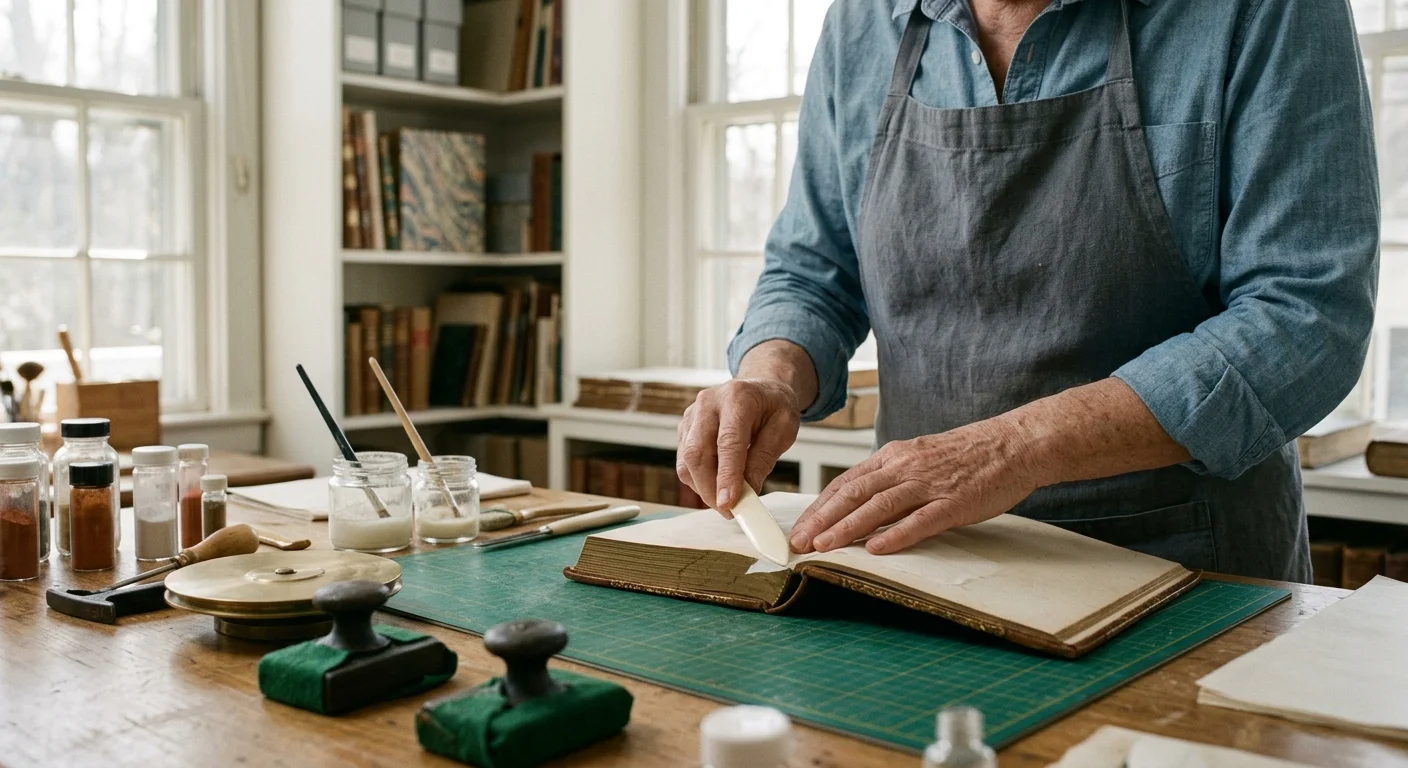
You spent decades safeguarding rare collections inside institutional archives. Now, your retirement offers the ideal opportunity to transform your preservation knowledge into a profitable home archival restoration practice.
Running a solvent home conservation workshop requires treating professional bench skills as lean, billable shop operations rather than museum budget line items. You can launch your studio on a modest tooling budget without compromising archival integrity.
By building your own bench presses and establishing disciplined project formulas, you can preserve irreplaceable regional heirlooms while generating reliable retirement income.
Transitioning from Institutional Vaults to Home Benches
Retiring from an institutional conservation lab allows you to reclaim hands-on bench work without navigating administrative approvals.
Many former professionals find that engaging in inspiring hands-on craft projects restores the creative satisfaction often lost in large bureaucratic institutions.
Making the leap from institutional protocol to an autonomous studio mirrors the journey of many professionals reinventing themselves in retirement through creative callings.
In municipal or academic archives, preservation projects frequently stall behind committee assessments, budget cycles, and departmental priorities. At home, you control the workflow, the project timeline, and the selection of historic artifacts directly.
Launching a bookbinding second career lets you apply decades of material science knowledge to overlooked regional treasures. Family heirlooms and historical records across your community regularly deteriorate from neglected attic and basement storage.
You enter this market with an undeniable advantage over hobbyist binders: a rigorous background in ethical conservation. Private collectors and families need skilled practitioners who prioritize chemical reversibility and historical accuracy over aggressive cosmetic alteration.
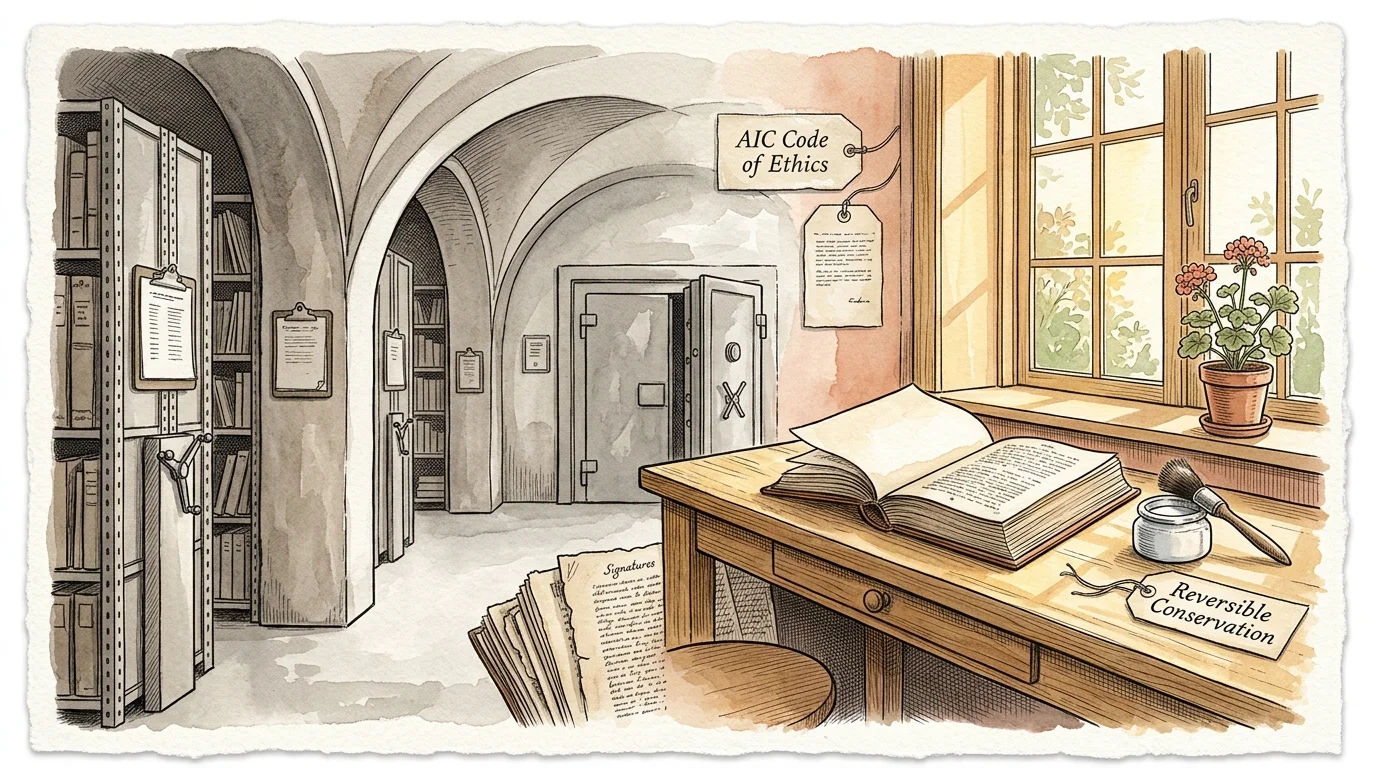
The American Institute for Conservation establishes in its Code of Ethics and Guidelines for Practice that all interventions must remain reversible. Your home archival restoration studio can uphold these institutional standards while operating on a lean, self-sustaining financial framework.
Essential Tooling: DIY Budget Builds versus Commercial Machinery
Equipping an efficient home bindery does not require spending thousands of dollars on antique cast-iron equipment. Historic binderies relied on massive cast machinery, but well-engineered wooden fixtures deliver equivalent mechanical pressure.
Fabricating custom hardwood presses also introduces many retirees to the joys of functional home woodworking.
Working carefully with sharp edge tools at home calls for the same disciplined precautions explored in kitchen table printmaking setups.
Much like setting up a compact linocut printmaking studio, curating a productive book arts space is entirely achievable on a tight footprint and budget.
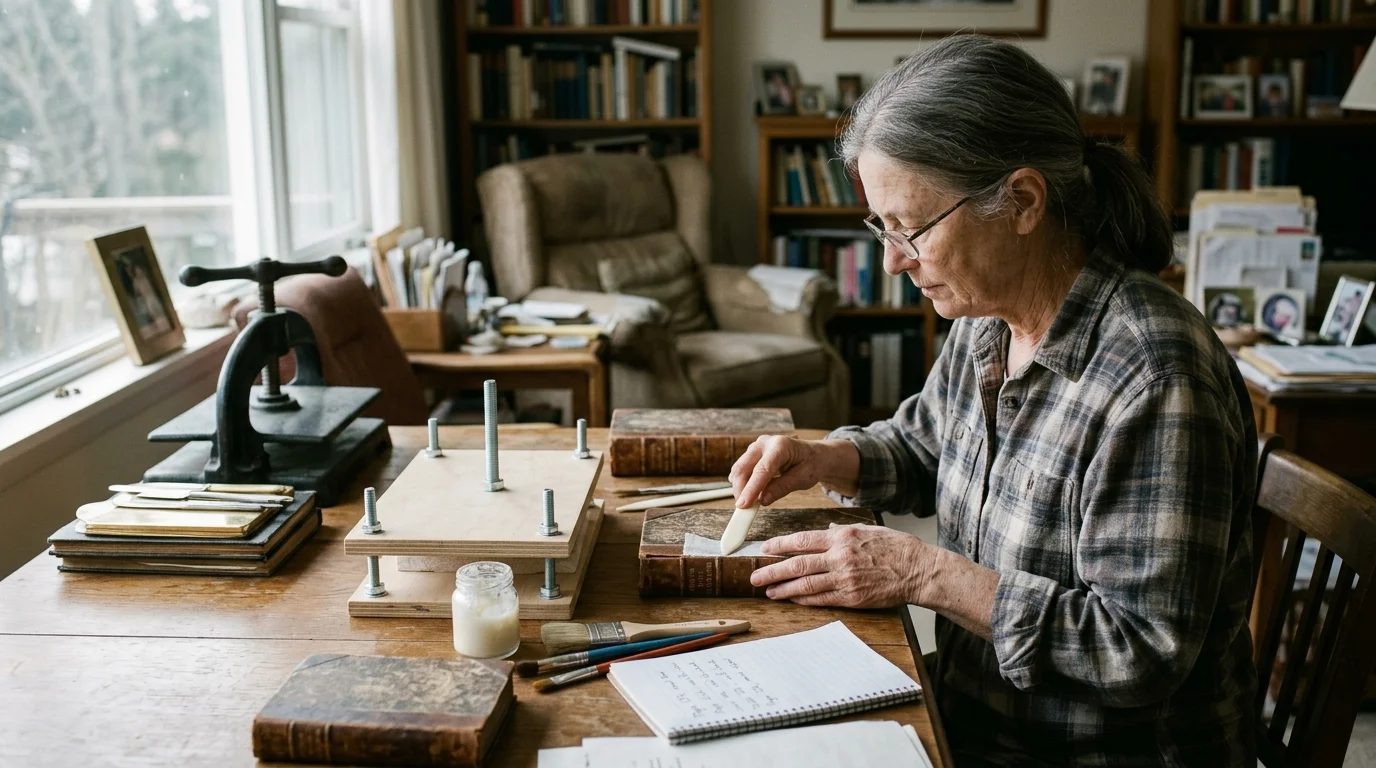
Commercial standing presses and vintage cast-iron nipping presses cost between $300 and $700 on secondary auction markets. You can build a sturdy, manual wooden book press for approximately $85 using locally sourced materials.
Using two 12-by-16-inch pieces of 1-inch thick birch plywood, two 3/4-inch threaded steel rods, and brass nuts produces an exceptional press. This manual assembly generates balanced, distributed pressure across textblocks during critical pressing and casing-in stages.
Antique board shears from makers like Jacques or Robinson cost between $1,500 and $4,000 refurbished. You can avoid this upfront expense by pairing a heavy-duty rotary bench trimmer with precision Japanese utility knives.
| Equipment Category | Commercial Benchmark | DIY or Alternative Solution | Estimated Tooling Cost |
|---|---|---|---|
| Nipping Press (12×15 in.) | Vintage Cast-Iron Press ($450–$900) | Hardwood Plywood & Threaded Steel Rod Press | $85 |
| Board Shears (30 in. cut) | Robinson 30-inch Cast-Iron Shears ($2,000–$4,000) | Alvin Rotary Trimmer & Japanese Kiridashi Knife | $165 |
| Finishing / Lying Press | Beechwood Bookbinder’s Press ($350–$600) | Rock Maple Dimensioned Lumber & Acme Screws | $95 |
| Job Backer / Backing Irons | Free-Standing Antique Job Backer ($800–$1,600) | Hardened Backing Irons Clamped in Woodworking Vise | $115 |
A curated hand-tool kit completes your essential workshop layout. Allocating $300 to $600 covers professional-grade knives, bone folders, and specialized sewing equipment.
- Bone and Teflon folders for scoring hinge lines and flattening fragile leaves without burnishing the paper fibers.
- English paring knives and French lifting knives for skiving replacement leathers to feather-thin margins.
- Linen sewing frame built from scrap pine and wooden dowels for resewing multi-signature textblocks.
- Cast-iron backing irons used with wooden cheeks to hammer crisp, symmetrical shoulders onto rebound spines.
- Variable-temperature preservation spatulas for setting heat-activated tissue patches over delicate manuscript fractures.
Formulating Reversible Pastes and Sourcing Raw Materials
Commercial craft glues ruin historic artifacts and have no place in a professional antique book restoration business. Commercial white adhesives release destructive acetic acid vapors that embrittle fibers as they break down.
Mastering starch chemistry and temperature stability shares much in common with precision culinary transformations in artisanal home production.
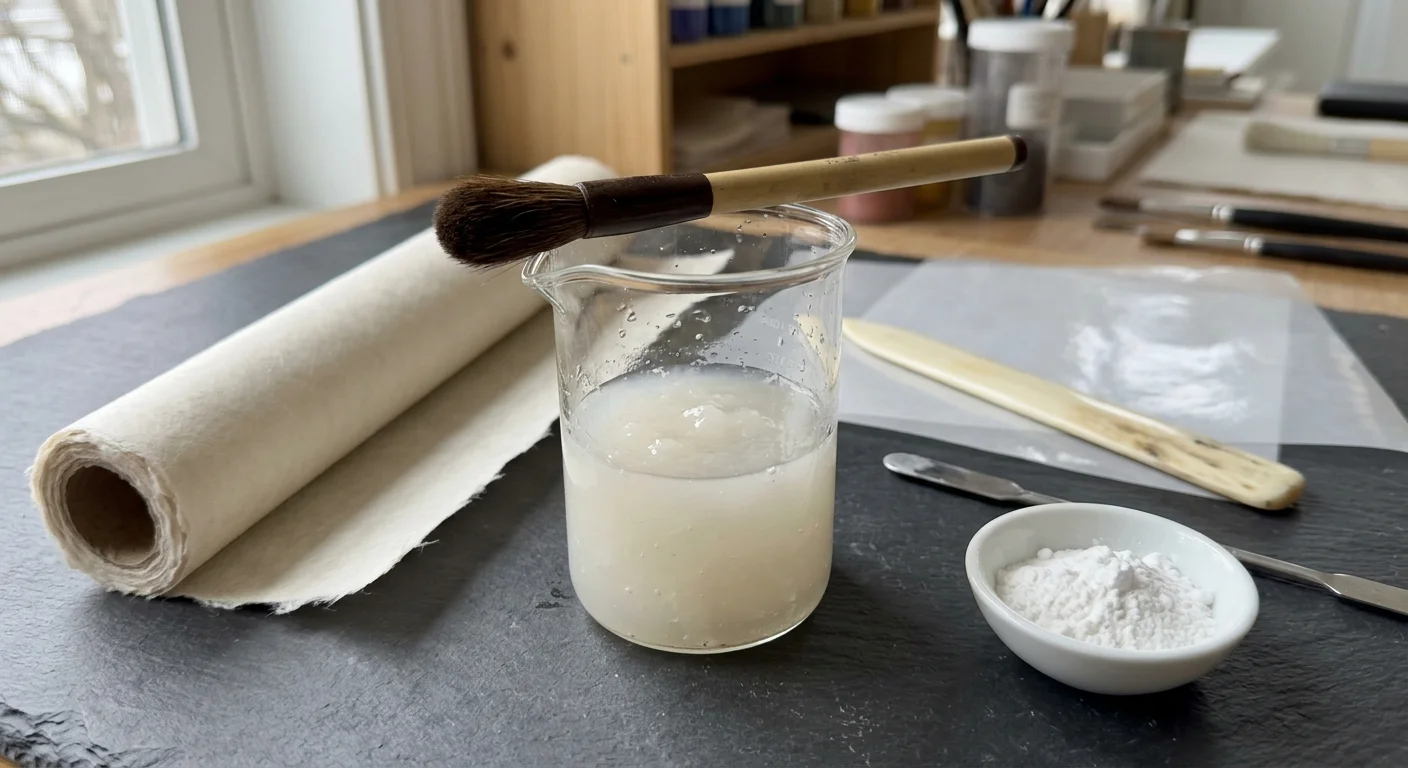
Archival book repair depends on purified, acid-free wheat starch paste mixed fresh in small bench batches. Pure starch produces strong, non-staining adhesive bonds that dissolve smoothly with clean water decades later.
Cooking wheat starch paste demands precise heat control and pure distilled water to eliminate mineral staining on historical rag paper.
- Whisk one part pure wheat starch powder into four parts cold distilled water until smooth in a glass bowl.
- Transfer the slurry to a stainless-steel double boiler over medium heat and stir steadily with a silicone spatula.
- Cook the paste until it thickens into a glossy, translucent gel, which takes roughly 8 to 12 minutes.
- Let the paste cool to room temperature, then force it through a Japanese horsehair sieve to remove gelatinous lumps.
- Transfer the strained paste into an airtight glass jar and store it under refrigeration for up to five days.
Pair your wheat starch paste with Japanese kozo and tengujo papers for invisible, structural leaf repairs. Tengujo paper weighing just 9 to 11 grams per square meter repairs fractured inner hinges without adding bulky thickness.
When executing leather repairs, purchase vegetable-tanned archival goatskin or calfskin from certified conservation suppliers like Harmatan or Hewit. Avoid modern chrome-tanned upholstery leathers, which release sulfuric compounds that degrade historic textblock paper.
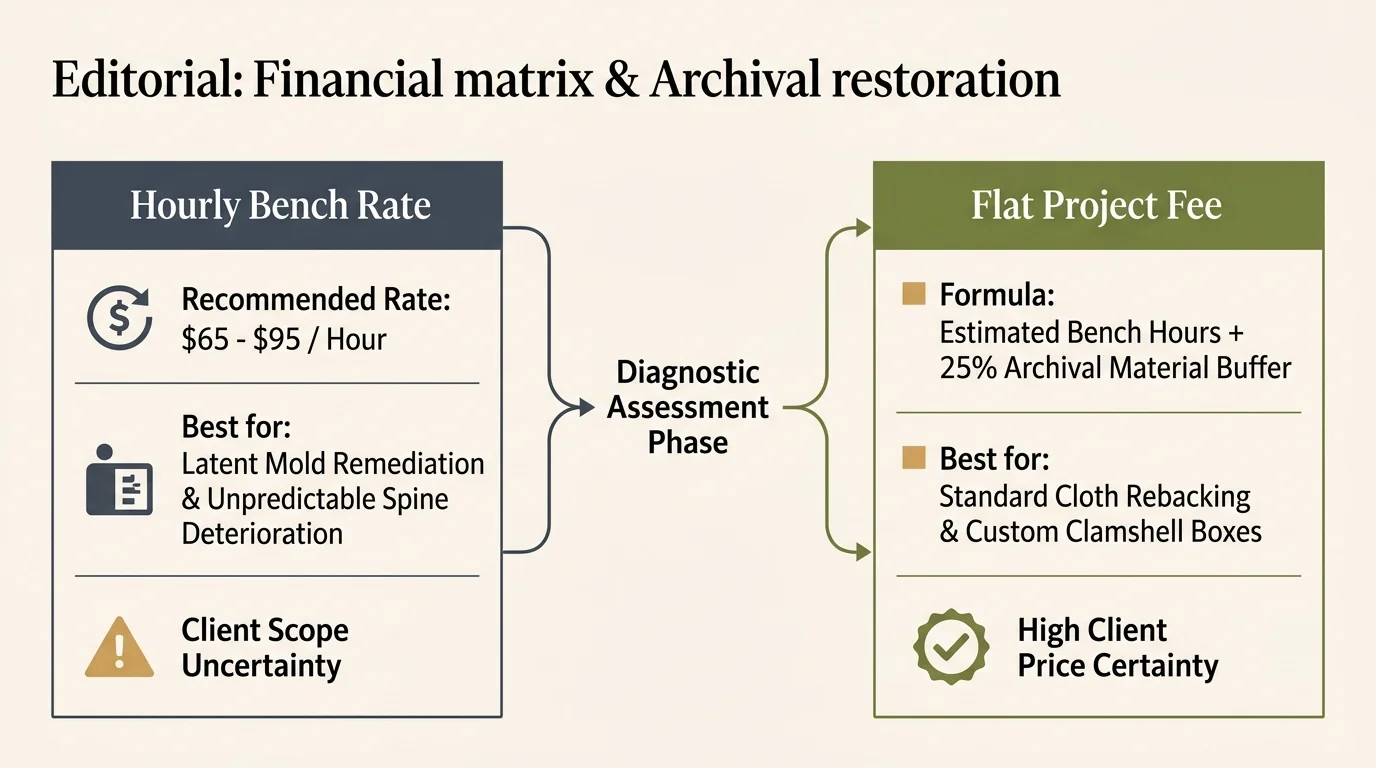
Pricing Your Labor: Hourly Bench Rates versus Flat Project Fees
Retired archivists entering private practice often undercharge out of modesty or unfamiliarity with commercial markets. Underpricing your specialized labor devalues your hard-won expertise and undermines your business sustainability.
Establishing sustainable rates is a universal milestone when reinventing your career through part-time work.
Just as home-based technicians learn to manage diagnostic and flat-rate bench fees, setting structured project tiers ensures your shop remains financially solvent.
Independent conservators in private practice bill bench time between $50 and $125 per hour. Large conservation firms working on high-value institutional contracts bill rates between $150 and $250 per hour.
Setting your baseline bench rate at $45 to $65 per hour establishes competitive value while funding workshop consumables and tooling wear. Most private clients, however, prefer guaranteed flat-rate quotes before leaving valuable family treasures in your care.
You can deliver accurate estimates by breaking complex conservation treatments into standard diagnostic operations. Clear project brackets help clients understand the material requirements and labor involved.
- Cloth Rebacking and Recasing: $120 to $250 per volume, covering spine reattachment, new cambric hinges, and original cloth remounting.
- Leather Rebacking: $220 to $380 per volume, including spine leather lifting, custom-dyed calfskin underlays, and blind edge tooling.
- Custom Drop-Spine Clamshell Boxes: $140 to $260 each, using acid-free binders board, archival bookcloth, and stamped foil titling.
- Full Family Bible Restoration: $480 to $850+, addressing leaf washing, resewing loose signatures, leather consolidation, and clasp stabilization.
- Document and Map Stabilization: $60 to $120 per sheet, including dry mechanical cleaning, tear repair with kozo tissue, and flattening.
Mentors at SCORE Mentoring offer free guidance to help retirees calculate workshop operating costs, draft client service agreements, and build sound fee structures.
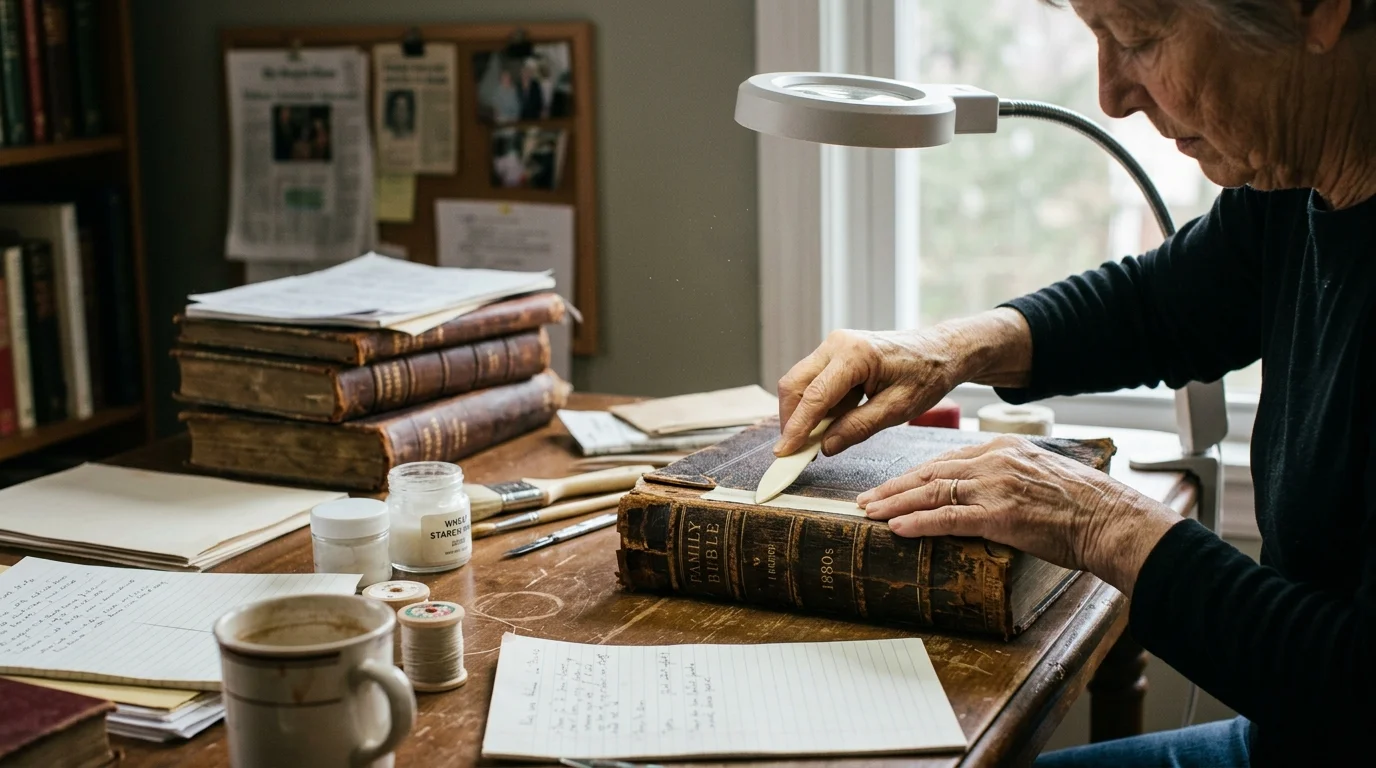
Step-by-Step Restoration Case Study: An 1880s Leather Family Bible
Examining a real-world project demonstrates how bench workflow, tooling efficiency, and client billing integrate in a home studio. A regional client commissioned the stabilization of an 1880 illustrated family Bible with detached boards.
Bringing aged items back to life mirrors the broader community spirit found in suburban repair café initiatives.
Much like the patience demanded by restoring a classic automobile, methodical assessment and phased execution prevent irreversible missteps on delicate artifacts.
The volume measured 11 by 13 inches with a 4-inch spine thickness. The original calfskin suffered severe red rot, the original sewing cords had snapped, and 14 leaves in Genesis were torn.
The conservation treatment followed five documented phases, tracked meticulously in shop bench logs:
- Diagnostic Intake & Condition Reporting (1.5 hours): Photographed the volume from all angles, conducted dry sponge surface cleaning, and cataloged damaged leaves.
- Leaf Mending & Paper Stabilization (2.0 hours): Repaired 14 torn leaves using 11 gsm tengujo paper adhered with cooked wheat starch paste.
- Textblock Resewing (3.5 hours): Resewed disconnected signatures across five heavy unbleached linen tapes on the shop-built sewing frame.
- Leather Rebacking & Consolidation (4.0 hours): Lined the spine with kozo paper, inserted a dyed vegetable-tanned goatskin underlay, and readhered original spine fragments.
- Corner Rebuilding & Dressing (1.5 hours): Rebuilt delaminated board corners with archival millboard paste fills and sealed degraded leather with Klucel G consolidant.
Active bench time totaled 12.5 hours. Billing the client at $48 per hour resulted in a labor fee of $600.00.
Direct workshop consumables totaled $84.00, including vegetable-tanned goatskin ($42.00), Japanese mending tissues and paste ($14.00), linen cords and tapes ($12.00), and archival marble endpapers ($16.00).
The final client invoice came to $684.00. This single commission stabilized a family treasure for generations while returning substantial value for three days of focused bench time.
Navigating Tax Codes and Business Infrastructure for Retirees
Transforming your preservation skills into an enterprise requires maintaining clear boundaries between personal retirement assets and professional shop operations. The Internal Revenue Service examines creative ventures under Internal Revenue Code Section 183.
Under the IRS 3-of-5-year safe harbor rule, the agency presumes an enterprise operates for profit if it generates positive net earnings in three out of five consecutive tax years.
If you fail to demonstrate a clear business intent, the IRS can classify your practice as a hobby. This classification strips your ability to deduct tooling investments, dedicated workshop space, and consumable materials against business earnings.
Maintain an independent business checking account, record time in bench logs, and issue written client estimates to establish undeniable profit intent. Community-driven platforms like Encore.org highlight how retirees successfully channel professional backgrounds into viable second careers.
You can also expand your professional credentials by joining the Guild of Book Workers, founded in 1906. An annual membership of roughly $100 connects you to regional chapters, discounted group supplier rates, and specialized conservation exhibitions.
Attracting Private Collectors and Regional Historical Societies
You do not need a commercial storefront or paid advertising to build a reliable pipeline of book conservation projects. Your previous career as an institutional archivist provides immediate credibility with custodians of historical material.
Begin by connecting with regional institutions that manage historical paper collections but lack certified preservation personnel on staff.
- County Historical Societies and Small Museums: Offer conservation assessments and custom clamshell enclosure construction for fragile municipal ledgers.
- Genealogical Groups and Heritage Organizations: Deliver educational lectures on preserving family documents to secure private Bible and family diary commissions.
- Estate Planning Attorneys and Rare Book Dealers: Offer artifact condition surveys for high-value historic libraries passing through probate or liquidation.
- Public Library Local History Archives: Contract overflow mending projects that full-time librarians cannot address due to routine operational workloads.
Maintain a digital portfolio showcasing high-resolution before-and-after photographs of your structural interventions. Demonstrating clean, reversible repairs on torn leaves and broken hinges earns client trust and justifies your professional rates.
Frequently Asked Questions
How much space do I need for a home book restoration workshop?
A spare room or workshop corner measuring 100 to 150 square feet provides adequate space for a workbench, book press, cutting mat, and paste station. Ensure the space maintains stable relative humidity between 45% and 55% to protect fragile historic paper.
What is the difference between conservation and general bookbinding?
Archival conservation prioritizes preserving original historical materials and guarantees that every repair remains fully reversible over time. General trade bookbinding often discards original bindings and employs permanent synthetic adhesives that compromise historical integrity.
Can I restore valuable books without a specialized university conservation degree?
Yes. Decades of institutional archival experience combined with strict adherence to American Institute for Conservation standards qualify you to treat regional private heirlooms safely and competently.
How do I safely transport fragile antique books between clients and my studio?
Transport historic volumes flat inside custom-fitted, acid-free storage boxes lined with unbuffered tissue paper. Avoid wrapping damaged leather volumes directly in synthetic bubble wrap, which traps moisture and accelerates fungal growth.
Disclaimer: This article is for informational and inspirational purposes. Life decisions are deeply personal, and we encourage readers to pursue their dreams while considering their unique circumstances, health, and financial situation.


1 Comment