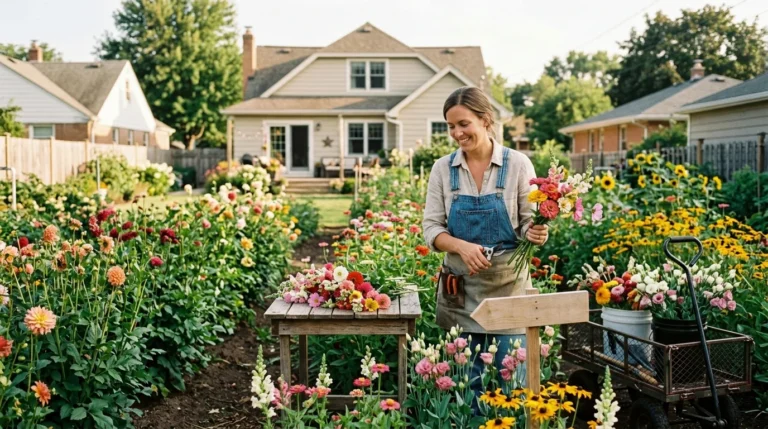
After decades of fluorescent lighting and twelve-hour ICU shifts, trading clinical monitors for morning harvest baskets offers a revitalizing path forward. Starting cut flower farm in retirement allows you to direct your seasoned triage skills toward productive, living beauty.
Converting a one-acre hayfield into an intensive micro-farm does not require endless capital or exhausting physical labor. By capping field work at twenty weekly hours through drip automation and keeping net earnings beneath Social Security thresholds, you build a sustainable enterprise.
Commercial cut flowers after 60 offer high-yield potential on minimal acreage when you pair strict bed layout with upfront subscription models. Here is the operational blueprint to build your own thriving second act.
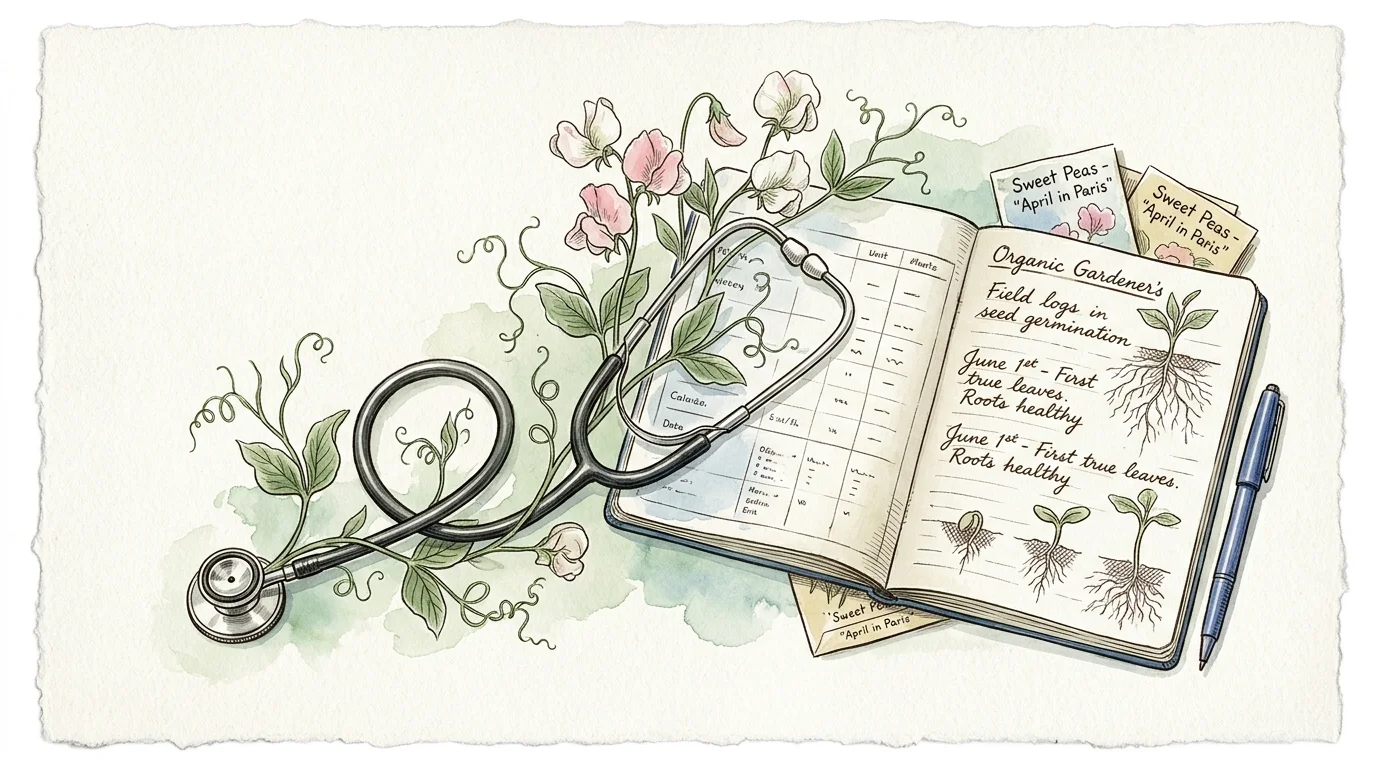
The ICU-to-Field Transition: Cultivating Longevity at 62
Decades in intensive care instill rapid assessment skills, disciplined record-keeping, and grace under pressure. Those exact competencies translate seamlessly into retirement second act farming.
Plants respond to consistency just like critical care patients. Monitoring ambient humidity, soil microbial health, and seedling emergence relies on the diagnostic mindset you already possess.
The 2022 USDA Census of Agriculture reveals that the average American producer age has climbed to 58.1 years. Over 1.29 million farmers nationwide are 65 or older, proving that agricultural enterprise thrives on mature wisdom.
You are not starting behind schedule. You are entering the agricultural sector alongside a vast demographic of experienced professionals who demand purposeful, outdoor enterprise.
The National Institute on Aging emphasizes that purposeful daily physical movement supports cognitive sharpness and cardiovascular health. Flower farming delivers functional exercise without the sterile environment of indoor gym machinery.
Your work now takes place under open skies. Fresh air, tactile contact with organic soils, and visual beauty replace ringing alarm pumps and nocturnal shift work.
Site Preparation and Soil Renewal on a 1-Acre Hayfield
Converting a compacted hayfield requires smart soil biology rather than brute physical force. Deep mechanical rototilling destroys native soil aggregates and stirs dormant weed seeds into the germination zone.
Retirees working with smaller properties can see how grossing $13,000 on a half-acre suburban backyard plot uses similar high-density bed cultivation techniques.
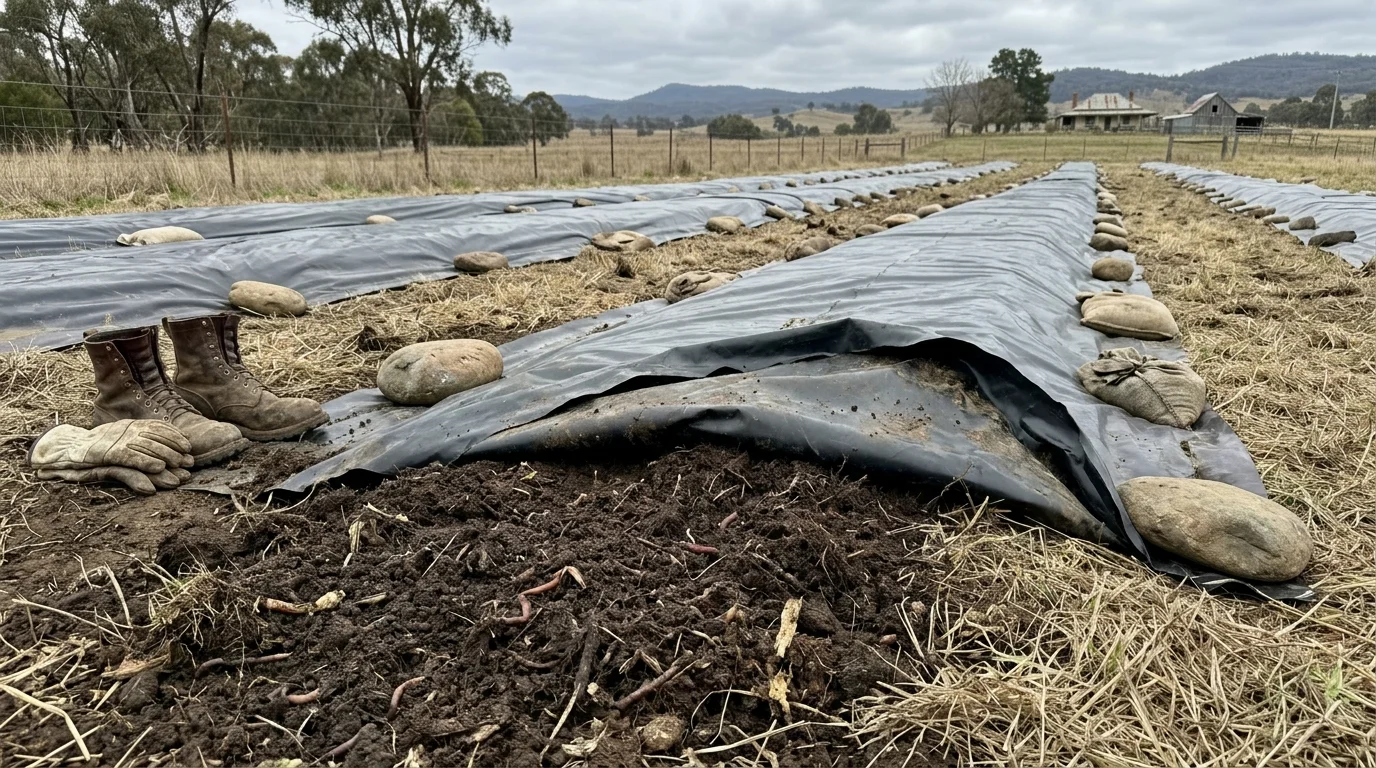
Use occultation tarps instead. Covering your growing plots with 5.5-mil UV-stabilized black silage film smothers perennial pasture grasses within six to eight weeks.
Soil microbes and earthworms digest the smothered vegetation under the dark plastic. This biological decomposition creates loose, friable tilth without lifting a spade or running a heavy tractor.
- Mow the existing hayfield turf to the lowest possible setting in late autumn.
- Broadcast organic pelleted poultry manure and green waste compost across the target rows.
- Anchor 24-foot by 100-foot silage tarps using heavy sandbags placed every four feet along all perimeter edges.
- Peel the plastic back after eight weeks to expose clean, bare, worm-aerated planting beds ready for broadforking.
- Shape forty permanent growing beds measuring 30 inches wide by 100 feet long.
Standardizing beds to 30-inch widths creates permanent 18-inch walkways. You never step on your growing zones, which eliminates future soil compaction permanently.
Broadforking each bed once loosens the subsoil to twelve inches deep. This single manual step opens pathways for deep taproots without inverting subsoil layers.
Itemized Startup Costs: Cold Frames, Seedlings, and Storage
Commercial cut flowers after 60 require lean capital deployment. You can launch a fully functional one-acre specialty cut flower operation for under $16,000 without incurring long-term commercial debt.
Allocating capital toward reliable post-harvest cooling and micro-propagation tools preserves your profit margins. Cheap tools break quickly and increase physical strain on aging joints.
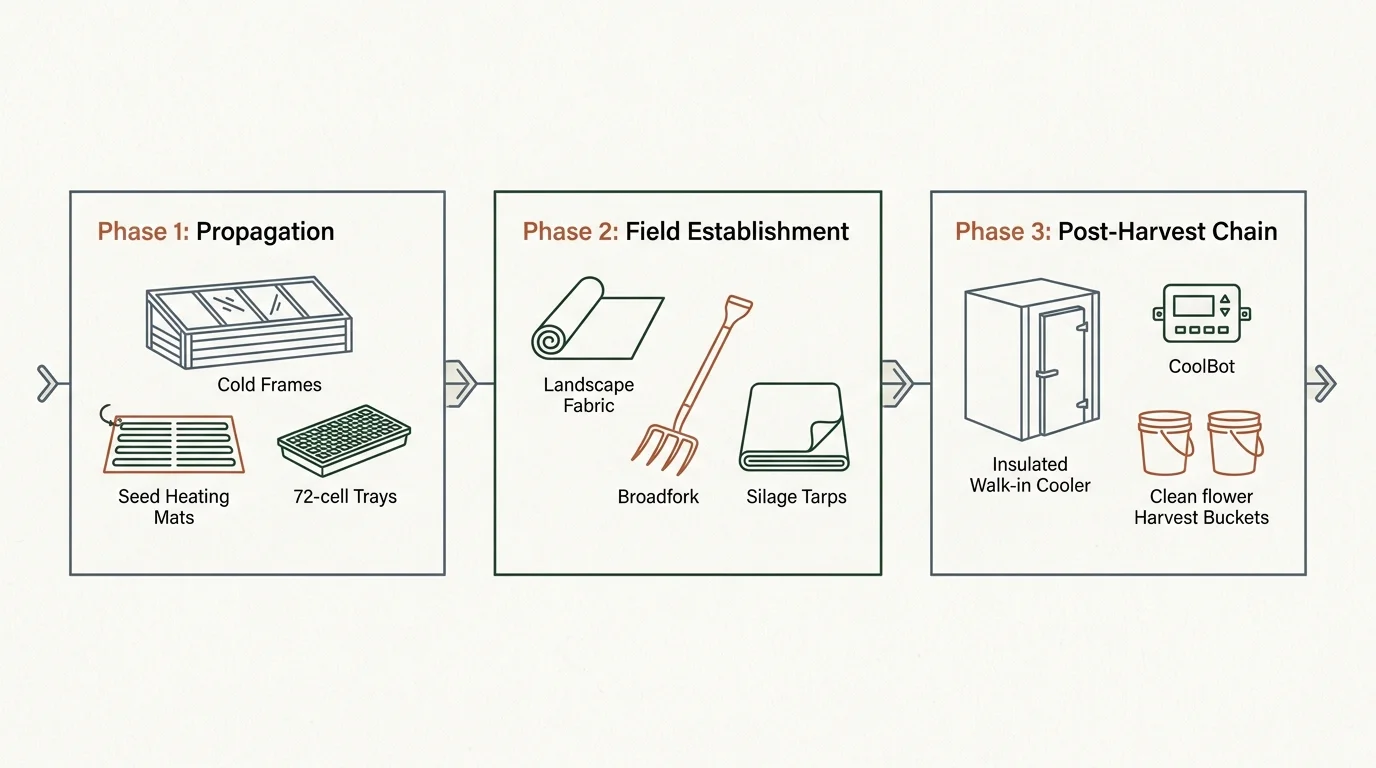
- Nursery Propagation: Two 14×20-foot PVC low-tunnel propagation cold frames fitted with automatic thermostat heat mats ($1,450).
- Specialty Seed Stock: F1 hybrid sunflower seeds, focal snapdragons, branching cockscomb, and certified dahlia tubers ($2,200).
- Bed Amendments: Twenty tons of certified bulk compost, rock phosphate, and micro-nutrients ($2,800).
- Occultation Tarps and Ground Fabric: Heavy-duty woven polypropylene ground fabric and black silage plastic ($1,750).
- Drip Irrigation Setup: Complete header assemblies, filters, pressure reducers, and 10,000 feet of drip tape ($1,850).
- Post-Harvest Cooling: An insulated 8×10-foot shed retrofit featuring a CoolBot digital temperature controller ($3,900).
- Harvest Gear and Hand Tools: Japanese carbon-steel snips, clean harvest buckets, and ergonomic broadforks ($1,250).
Your total upfront machinery and equipment cost remains approximately $15,200. This low infrastructure threshold keeps your break-even point achievable during your inaugural growing season.
Compare this startup budget against traditional retail franchises. Micro-farming offers sovereign ownership, direct cash revenue, and zero corporate franchise fees.
Drip Irrigation Blueprint: Low-Pressure Delivery for Intensive Beds
Hand-watering forty 100-foot beds is physically unsustainable for an encore entrepreneur. Drip irrigation automates hydration while delivering water directly to root systems, keeping foliar canopies dry.
Dry leaves dramatically reduce fungal pathogens such as powdery mildew and botrytis blight. You eliminate chemical fungicide sprays while maintaining immaculate, certified organic stems.
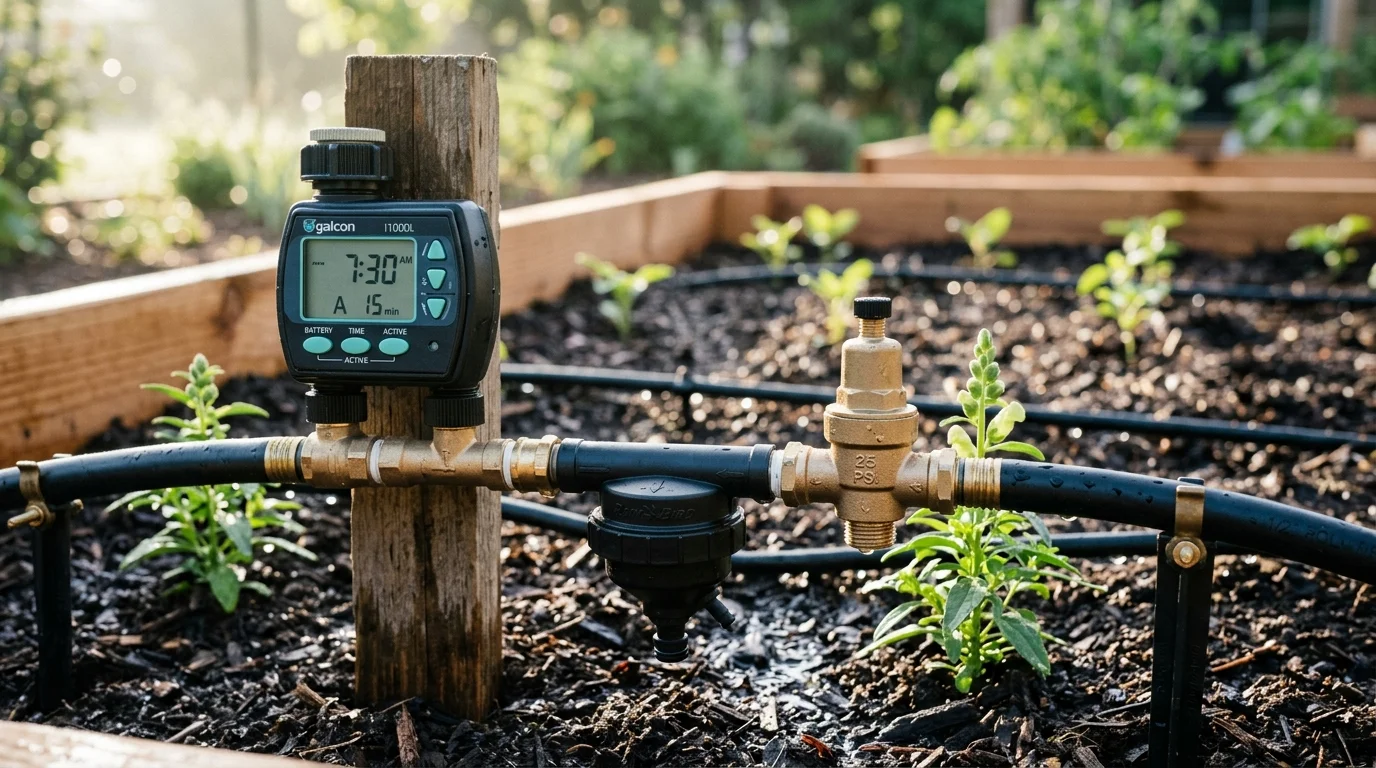
- Connect your primary wellhead to a 100-mesh disc filter to capture mineral sediment and sand.
- Install a commercial 25 PSI pressure regulator to protect thin-walled field tape from pressure blowouts.
- Run a 1-inch Schedule 40 PVC main supply line along the head of your forty permanent beds.
- Insert individual barbed ball valves into the mainline header for each distinct bed row.
- Lay two lines of 8-mil drip tape with 8-inch emitter spacing along each 30-inch planting bed.
- Cap the tape ends with simple figure-eight closures for rapid seasonal flushing.
Individual shut-off valves allow you to hydrate moisture-hungry hydrangeas while keeping ripening sunflowers dry. You control field zones with a simple quarter-turn of a valve handle.
Automate your main water line with a multi-station, battery-operated timer. Your irrigation runs at 5:00 AM before you step into your boots, conserving water and energy.
The USDA Natural Resources Conservation Service (NRCS) offers cost-share grants through the Environmental Quality Incentives Program (EQIP). This program often covers between 50% and 75% of your micro-irrigation hardware costs.
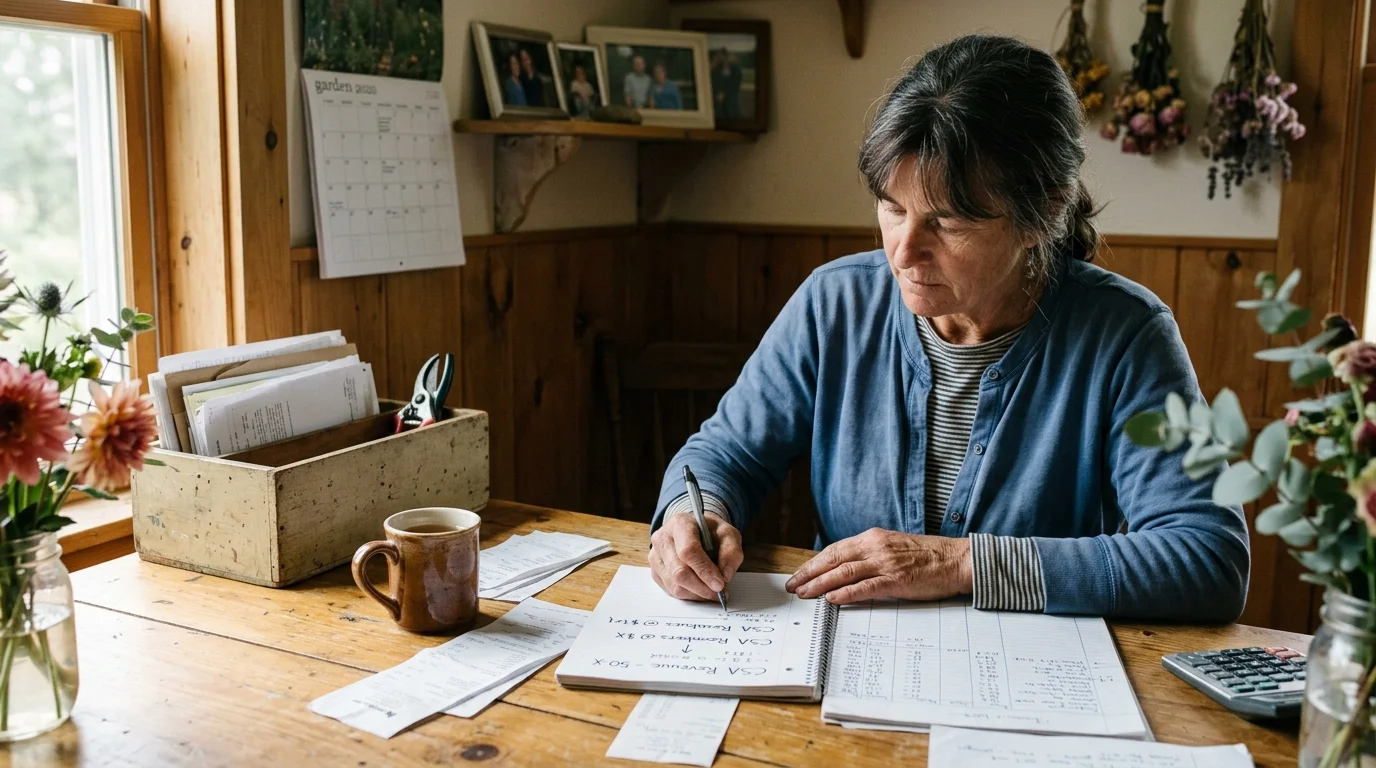
The Economics of a 50-Member Bouquet CSA
Starting cut flower farm in retirement becomes lucrative when you collect member capital before planting your first seed. A Community Supported Agriculture (CSA) model secures direct customer commitments during late winter.
Securing upfront subscriber capital illustrates a reliable framework for turning hobbies into retirement income without taking on unsold inventory risk.
Selling weekly seasonal shares bypasses intermediate floral wholesalers. You retain 100% of the retail dollar while building deeply loyal community connections.
Consider this concrete operational model: an intensive 16-week harvest subscription running from mid-June through late September. You cap membership at exactly 50 community subscribers.
- Weekly Bouquet Price: $28 retail per 18-stem hand-tied bouquet.
- Member Subscription Total: $448 for the full 16-week seasonal harvest share.
- Gross Pre-Season Cash Flow: $22,400 deposited directly into your farm account by April 1.
- Seed, Compost, and Packing Costs: $4,200 for the season.
- Net CSA Return: $18,200 cash margin prior to depreciating long-term irrigation lines.
Fifty subscribers require cutting, conditioning, and wrapping roughly 900 stems per week. Working two harvest mornings provides plenty of time to assemble these shares without physical exhaustion.
Professional mentorship through organizations like SCORE Mentoring helps you polish your direct-to-consumer farm agreements. Structured CSA member policies establish clear pickup expectations, ensuring smooth distributions.
You eliminate unsold inventory risk through pre-paid memberships. Every stem clipped during your morning harvest route already has a paid home awaiting it.
Navigating Social Security Limits and Equipment Ergonomics
Claiming Social Security at age 62 provides early financial freedom, but you must respect federal earnings limitations. For 2025, the earnings limit is $23,400, rising to $24,480 in 2026 for beneficiaries below Full Retirement Age.
Earning more than this threshold results in a $1 benefit reduction for every $2 earned above the line. Structuring your CSA to net $18,200 keeps your micro-farm profits entirely beneath the federal reduction cap.
Consult a certified tax professional to record appropriate farm depreciation deductions. Deducting irrigation lines, cold frames, and organic soil amendments legally optimizes your reported net schedule F earnings.
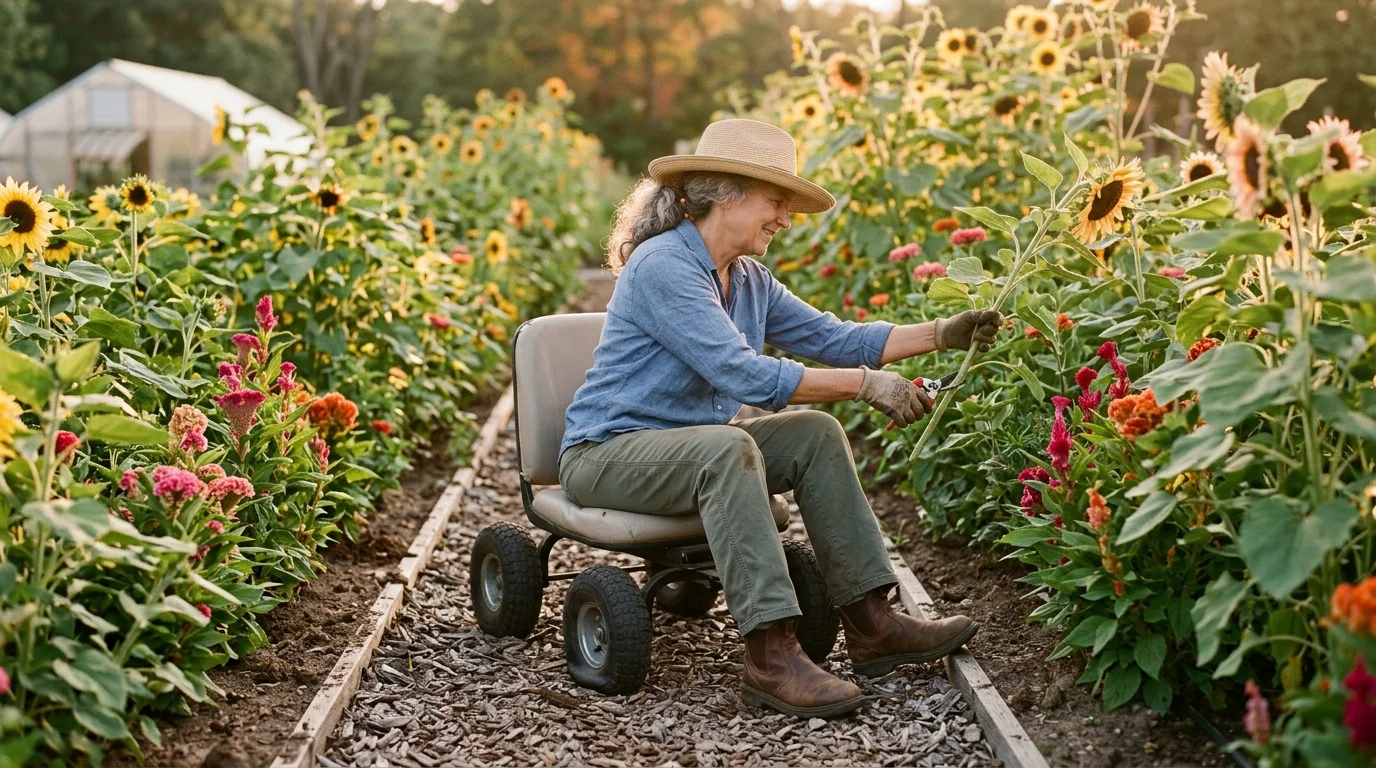
Preserving your physical stamina requires strict ergonomic adjustments. Replace low ground work with standing-height sorting stations and long-handled European garden tools.
- Oscillating Stirrup Hoes: Weed between rows from an upright posture without spine flexion.
- Pneumatic Wheelbarrows: Transport heavy harvest buckets using dual-wheel carts to reduce shoulder stress.
- Adjustable Packing Benches: Build sorting tables matched to your hip level to eliminate stooping.
- Precision Japanese Snips: Use spring-loaded shears to harvest stems with minimal repetitive grip fatigue.
Set a strict twenty-hour weekly physical cap. Morning field chores conclude by 10:30 AM, leaving your afternoons open for rest, family, and personal leisure.
Your retired nursing career taught you the price of physical overuse. Smart tools and paced work routines safeguard your spine, knees, and vitality.
Cold Storage and Season Extension Infrastructure
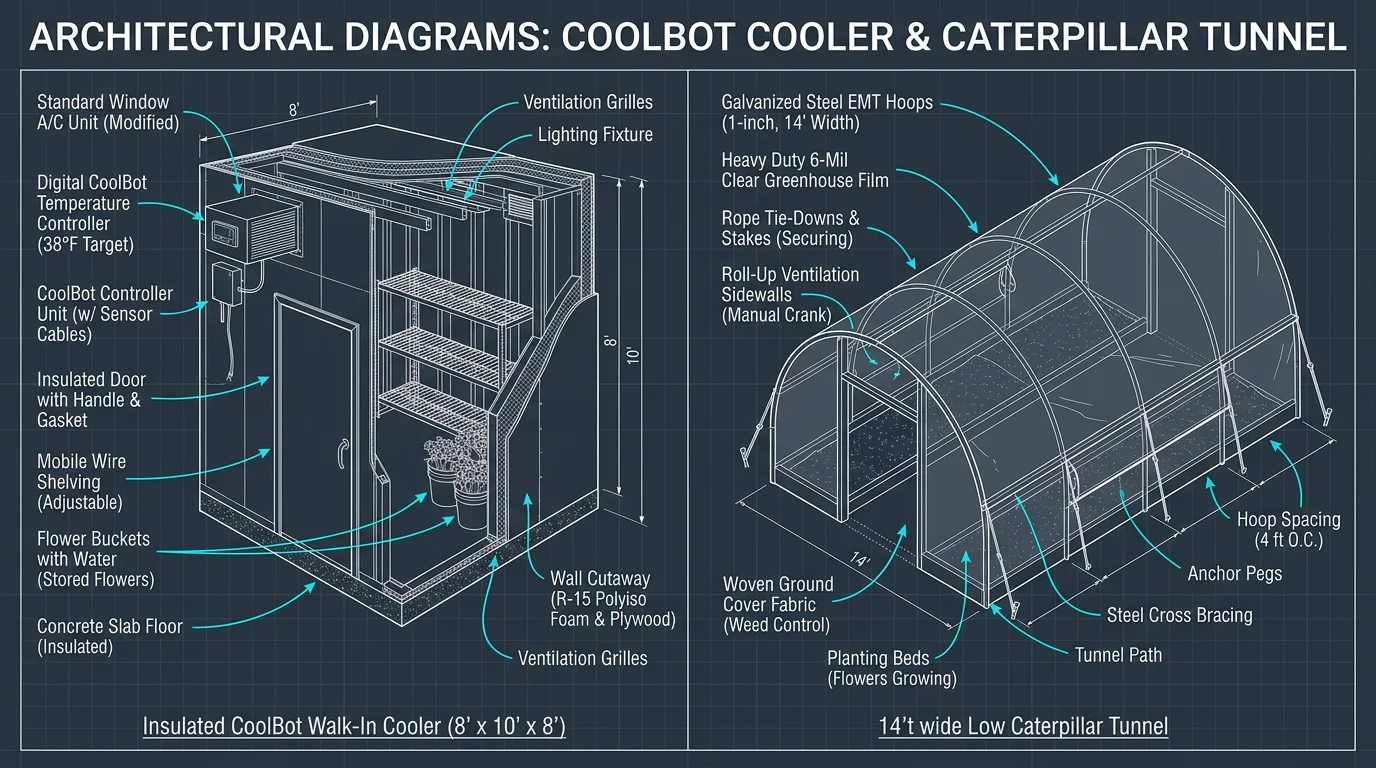
Protecting cut stems and extending your shoulder seasons requires deliberate infrastructure choices. The table below compares four distinct field investments across cost, temperature control, and weekly physical upkeep.
| Infrastructure Asset | Capital Investment | Thermal Performance | Labor Demand |
|---|---|---|---|
| DIY CoolBot Insulated Shed (8×10) | $3,500 – $4,500 | Holds steady at 38°F to 42°F | 1 hr/week cleaning |
| Commercial Walk-In Cooler | $11,000 – $16,000 | Holds steady at 34°F to 38°F | 1 hr/week service |
| Low Tunnel Wire Hoops & Agribon | $450 – $750 | Adds 4°F to 6°F frost buffer | 4 hrs/week adjusting |
| Gothic High Tunnel (16×48) | $6,500 – $9,000 | Adds 8°F to 12°F thermal lift | 2 hrs/week venting |
The DIY CoolBot room represents the most cost-efficient refrigeration investment for a micro-farm. It transforms a standard window air conditioner into a precision floral cooler, saving thousands over commercial units.
Cooled flowers drink deeply, firming their vascular stems and extending indoor vase life up to ten days. Your CSA subscribers will notice the extraordinary vase longevity of properly chilled blooms.
Frequently Asked Questions
How does farm income impact Social Security benefits at age 62?
If you claim Social Security at 62 before reaching your Full Retirement Age, your earnings are subject to the annual Retirement Earnings Test ($23,400 for 2025 and $24,480 for 2026). The Social Security Administration deducts $1 in benefits for every $2 of net self-employment earnings above that threshold.
Can a single person manage a one-acre cut flower farm without full-time physical labor?
Yes, by restricting intensive production to 40 standard 100-foot beds, laying drip irrigation on automatic timers, and using silage tarps for no-till weed suppression. These systems cap physical labor at roughly 20 to 25 focused hours per week.
What are the most profitable low-maintenance cut flowers for older growers?
Branching sunflowers, zinnias, celosia, and cosmos yield high stem counts per square foot with minimal bending when grown in raised or supported ground beds. Perennials such as peonies and hydrangeas also reduce annual seeding labor after establishment.
Does the USDA offer financial grants for retirement micro-farms?
The USDA Natural Resources Conservation Service (NRCS) provides cost-share assistance through the Environmental Quality Incentives Program (EQIP). This program covers 50% to 75% of the expenses for high tunnels and micro-irrigation installations for qualifying growers.
Disclaimer: This article is for informational and inspirational purposes. Life decisions are deeply personal, and we encourage readers to pursue their dreams while considering their unique circumstances, health, and financial situation.