
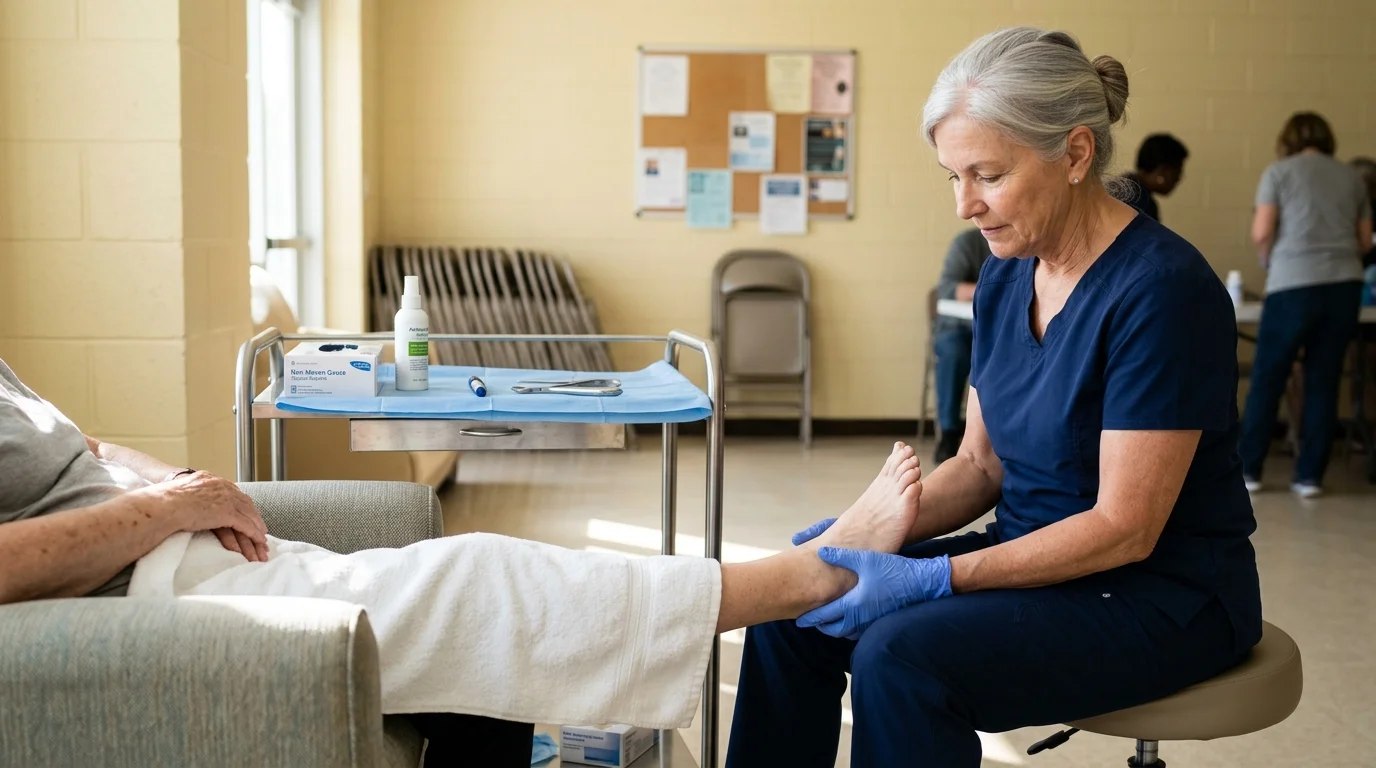
You can transform decades of bedside nursing experience into a vital community lifeline by launching an independent senior foot care community program. While standard advice tells you to join existing hospital volunteer pools, you can establish an autonomous weekly clinic inside a senior center.
For many retired healthcare professionals, establishing a grassroots clinic fulfills a personal desire to make meaningful retirement bucket list contributions through direct community service.
Operating under statutory liability protections, you can serve high-risk seniors safely for less than $1,500 in startup capital. Your clinical expertise can prevent severe complications, keeping vulnerable neighbors mobile and active.
This guide reveals how one retired RN used federal statutes, autoclave partnerships, and community grants to build a thriving second act.
The Hidden Crisis: Medicare Exclusions and Diabetic Foot Vulnerability
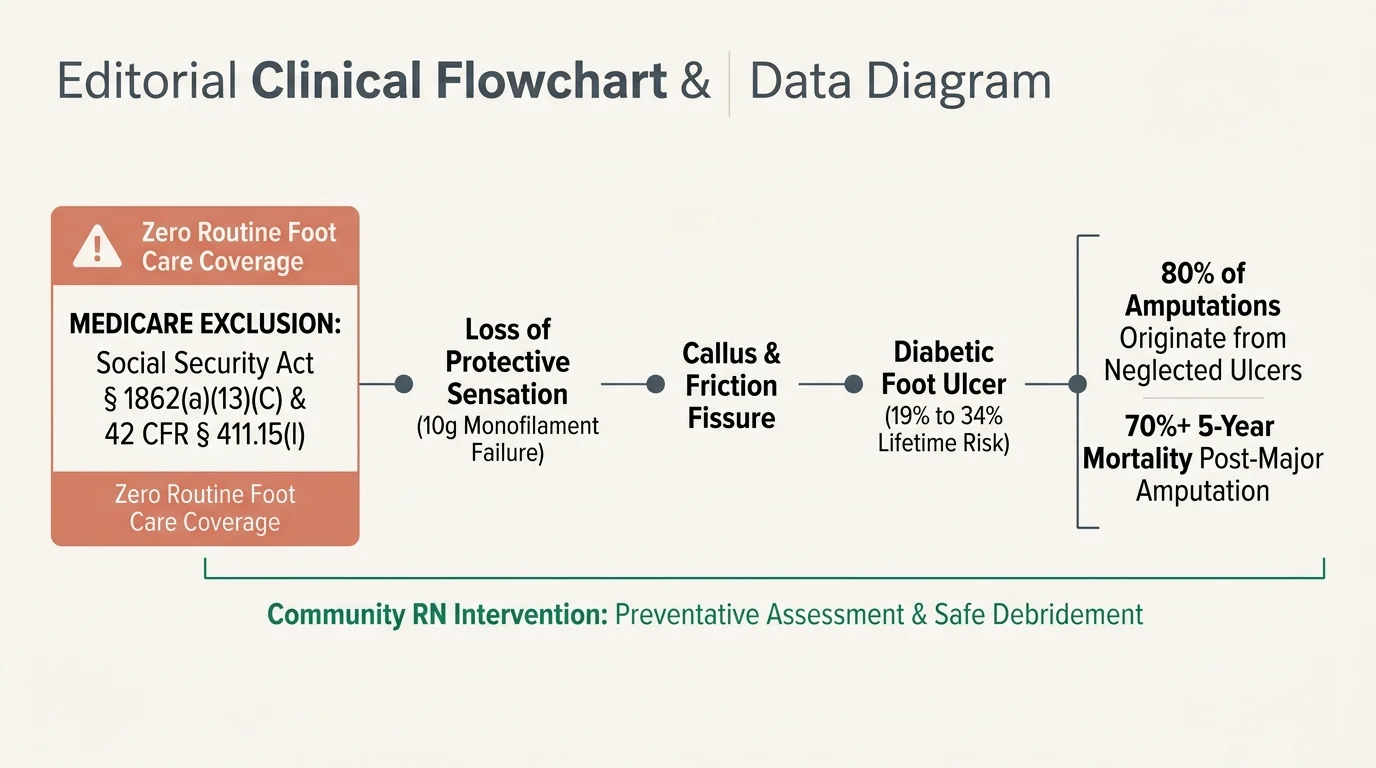
Medicare leaves a dangerous gap in preventative healthcare for older adults. Under Social Security Act § 1862(a)(13)(C) and 42 CFR § 411.15(l), Medicare strictly excludes routine foot care services.
Many healthcare retirees find that volunteering serves as a gateway to new skills and professional networks that enrich their post-work years.
Channeling decades of specialized clinical training into underserved areas is a prime example of volunteering smarter by matching career skills to local needs.
Basic nail debridement, callus shaving, and hygienic care receive zero reimbursement unless a patient demonstrates advanced systemic disease. Even then, strict medical documentation thresholds leave millions of vulnerable seniors without basic care.
When chronic osteoarthritis, diminished flexibility, or failing eyesight prevents older adults from reaching their feet, routine self-care ceases. A minor fungal infection or thick nail plate turns into a source of constant pain and functional limitation.
Untreated minor lesions rapidly escalate into limb-threatening ulcers. Research published by the CDC and the Journal of the American Medical Association reveals that diabetic individuals face a 19% to 34% lifetime risk of developing foot ulcers.
Furthermore, approximately 80% of lower-extremity amputations in diabetic patients begin with a minor, neglected foot ulceration. Following a major lower-extremity amputation, five-year mortality rates exceed 70%.
A retired nurse volunteer clinic fills this devastating gap. Skilled preventive assessments, monofilament sensory testing, and safe nail trimming stop trivial friction injuries before they evolve into catastrophic tissue necrosis.
- Loss of protective sensation detected via 10-gram monofilament failure
- Subungual hematomas beneath thickened, mycotic nail plates
- Callus buildup over prominent metatarsal heads indicating pressure points
- Early skin fissures on xerotic heels vulnerable to bacterial colonization
- Dependent rubor or pallor on elevation signaling peripheral arterial insufficiency
Shielding Your Practice: The Volunteer Protection Act and FTCA Coverage
Stepping outside hospital employment raises natural concerns regarding malpractice exposure. Fortunately, statutory protections exist to protect your personal assets while you provide uncompensated community care.
Similar liability waivers and municipal agreements apply when retirees organize other neighborhood initiatives, such as launching a community repair café with simple tool bins.
Understanding your legal protections ensures you can enjoy the emotional fulfillment of volunteering for a cause without risking your personal financial security.
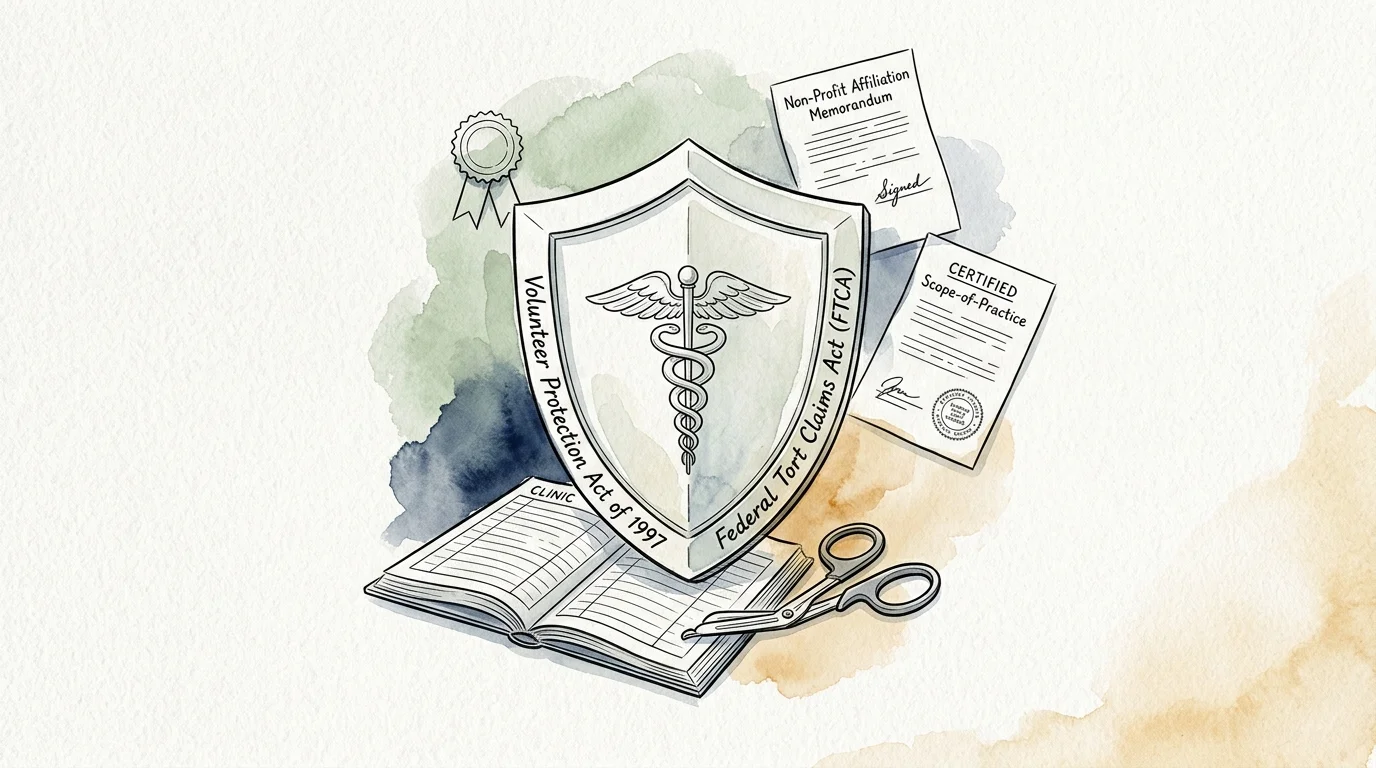
The Volunteer Protection Act of 1997 (42 U.S.C. § 14501 et seq.) provides a robust federal shield. This statute protects licensed healthcare volunteers from personal civil liability for harm caused by acts of ordinary negligence.
To qualify for this protection, you must serve without compensation for a 501(c)(3) nonprofit or government entity. You must also hold an active license and operate entirely within your legal scope of practice.
The volunteer protection act healthcare framework contains one crucial limitation: it protects individual clinicians, not the host organization. Sponsoring community centers must maintain their own entity-level commercial general liability insurance.
For broader protection, free clinics can leverage the HRSA Free Clinics Federal Tort Claims Act Program. Authorized under Section 224 of the Public Health Service Act, this program extends deemed federal employee status to volunteer healthcare providers.
When HRSA deems your clinic and staff, the federal government assumes financial responsibility for medical malpractice claims. The Department of Justice defends the action, insulating both the clinician and the clinic from litigation defense costs.
| Legal Framework | Coverage Scope | Entity Protection | Primary Filing Requirement | Direct Patient Notification |
|---|---|---|---|---|
| Volunteer Protection Act (42 U.S.C. § 14501) | Shields individual clinicians from personal liability for ordinary negligence | No; host entity remains liable for civil damages | None required; operates automatically by statute | Not federally mandated; optional clinic waiver recommended |
| HRSA Free Clinic FTCA Program (42 U.S.C. § 233) | Complete federal defense and indemnity for covered clinical services | Yes; covers deemed entities and credentialed volunteers | Annual electronic deeming application submitted to HRSA | Mandatory posted clinic signage and written consent forms |
| State Volunteer Health Care Acts (e.g., FL § 766.1115) | State sovereign immunity or statutory damages caps on uncompensated care | Varies by jurisdiction; often protects registered clinics | Formal contract with county health departments or state boards | Statutory notice signed by patient prior to care delivery |
Dozens of state legislatures have enacted supplemental sovereign immunity protections for uncompensated care. Coordinating these federal and state layers gives you impenetrable protection while delivering compassionate care.
Maintaining Your Edge: Licensure and Foot Care Nurse Certification
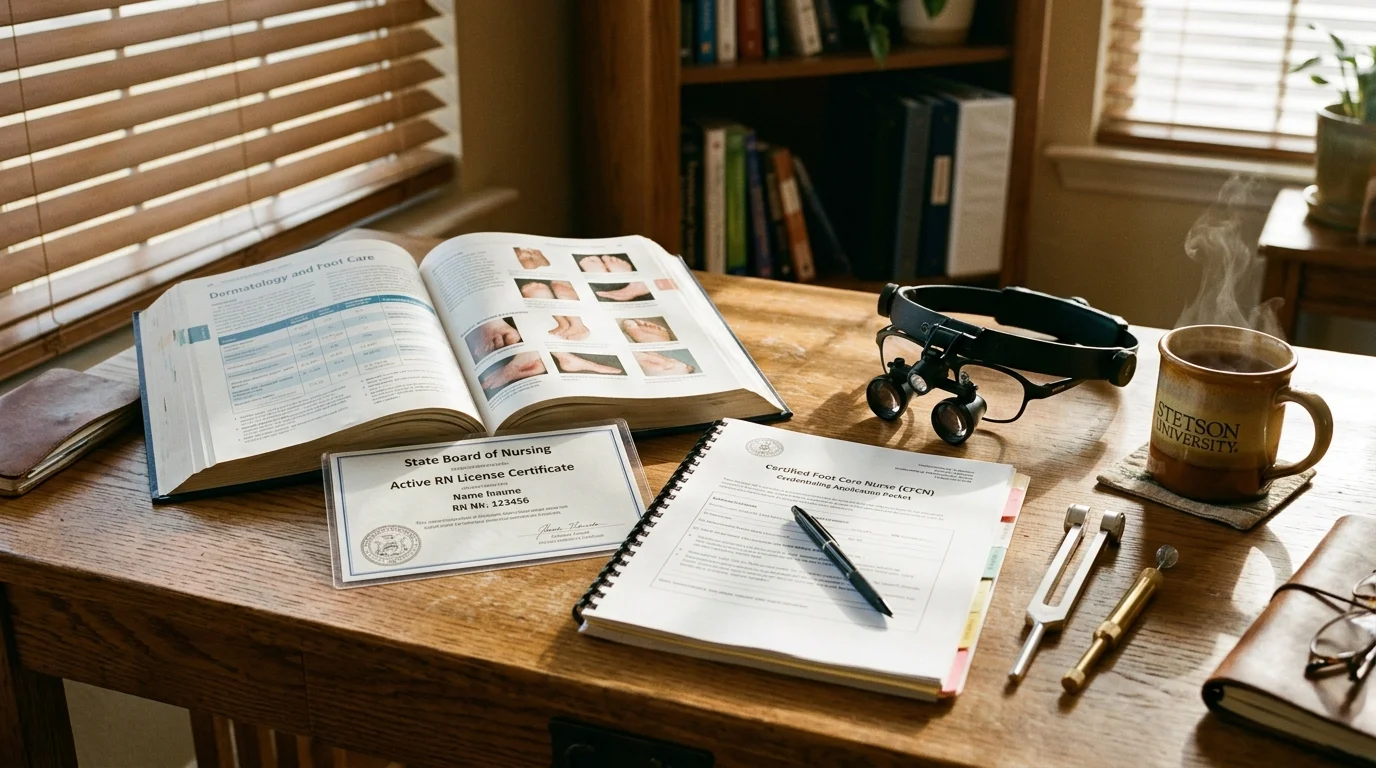
Volunteering clinical services requires maintaining a valid nursing credential. You cannot provide nursing assessments or nail debridement on an inactive or lapsed license.
Nurses who prefer advisory positions over hands-on clinical shifts can also consider starting an independent consulting business to advise community wellness boards.
Just as retirees who transition into dispute resolution benefit from structured community mediator credentials, holding recognized healthcare certifications establishes vital credibility with community partners.
Many state nursing boards offer an Active-Retired or Volunteer Nurse license status. These specialized credentials provide substantially reduced renewal fees while requiring focused continuing education credits.
Your practice boundaries depend entirely on your state’s Nurse Practice Act. Registered nurses can perform non-invasive nail trimming, callus reduction with rotary tools or foot files, and monofilament screenings without physician orders.
However, sharp surgical debridement using surgical blades to remove necrotic tissue or deep calluses crosses into advanced practice. Keep your community station focused on conservative, preventative intervention.
Earning specialized certification demonstrates mastery and bolsters institutional trust. The Wound, Ostomy and Continence Nursing Certification Board offers the Certified Foot Care Nurse (CFCN®) credential.
Earning your CFCN® requires a current RN license, a bachelor’s degree or higher, and specific training. You must complete 24 contact hours of foot care education alongside 40 supervised clinical hours within the preceding five years.
- WOCNCB Certified Foot Care Nurse (CFCN®) specialized examination
- American Foot Care Nurses Association (AFCNA) clinical education modules
- State-specific continuing education units focusing on diabetic lower-extremity care
- Annual cardiopulmonary resuscitation (CPR) and basic life support re-certification
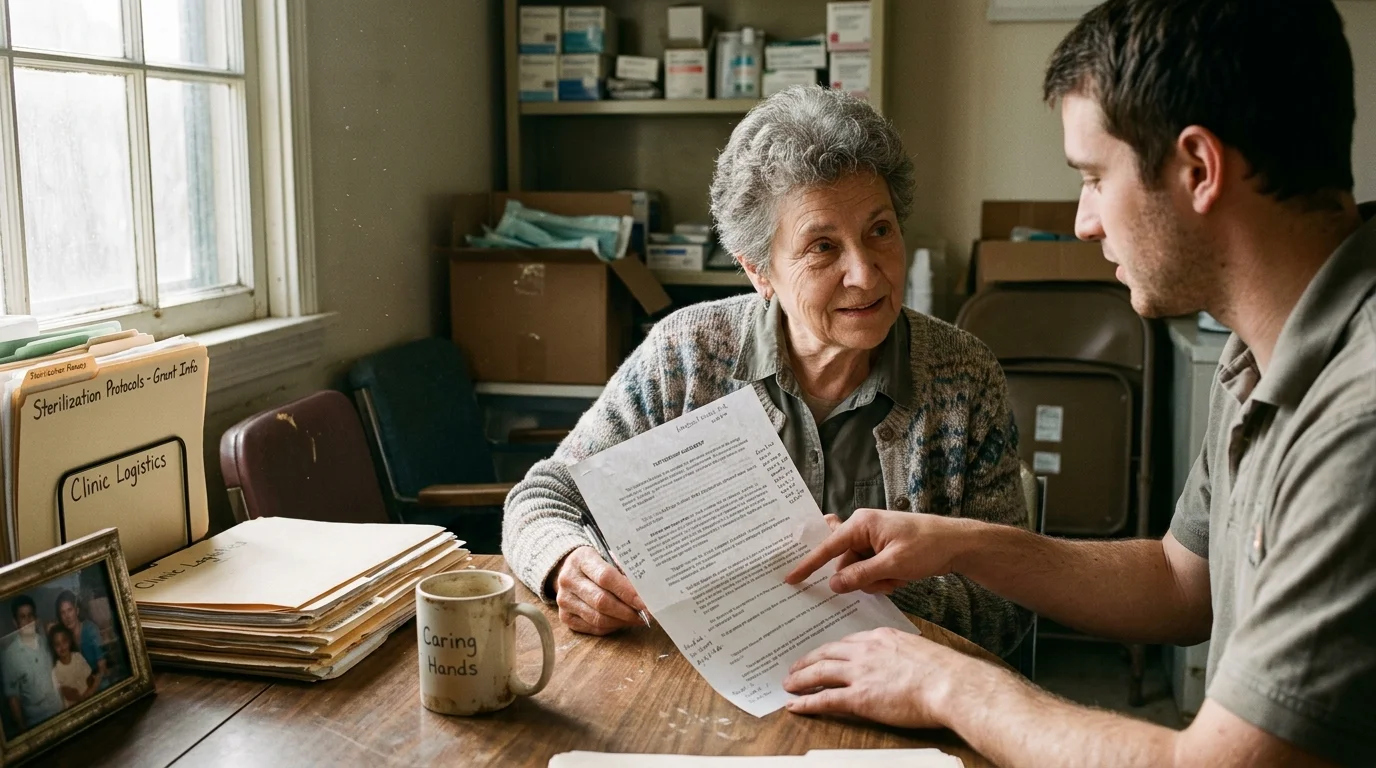
Solving the Autoclave Hurdle: Clinic Sterilization Partnerships
Infection control represents the greatest logistical obstacle for an independent community foot clinic. Tabletop steam autoclaves cost between $2,500 and $6,000, creating an insurmountable barrier for modest budgets.
Working with partner facility teams provides an ideal setting to embrace the power of mentorship by guiding younger healthcare staff while processing supplies.
Rather than buying costly machinery, you can establish an instrument sterilization partnership with an established healthcare facility. Local Federally Qualified Health Centers, outpatient podiatry clinics, and ambulatory surgery centers run high-capacity autoclaves daily.
Most community-minded health directors will gladly process two dozen wrapped instrument sets alongside their daily surgical loads. This arrangement eliminates autoclave capital costs, maintenance contracts, and mechanical spore-testing requirements.
To establish this partnership, present a concise infection control protocol to the partnering clinical administrator. You provide your own instrument pouches and indicators, requiring only excess chamber space during their scheduled runs.
- Pre-clean instruments at the senior center using enzymatic spray to prevent organic bioburden drying.
- Transport soiled tools inside a locked, puncture-proof, biohazard-labeled transport container to the partner facility.
- Manually scrub instruments using neutral-pH surgical detergent and run an ultrasonic cleaning cycle.
- Rinse tools thoroughly in demineralized water and dry them completely with lint-free surgical towels.
- Package individual sets inside self-sealing sterilization pouches with built-in Class 4 internal and external chemical indicators.
- Run packaged sets through a validated steam autoclave cycle (typically 132°C for 4 minutes in pre-vacuum sterilizers).
- Inspect pouches for dry condition and indicator color change, then transport sterile sets back in a sealed tote.
Always inspect pouches before touching a patient. If an instrument package shows moisture, punctures, or an unchanged chemical indicator strip, discard the pouch and reprocess the tools immediately.
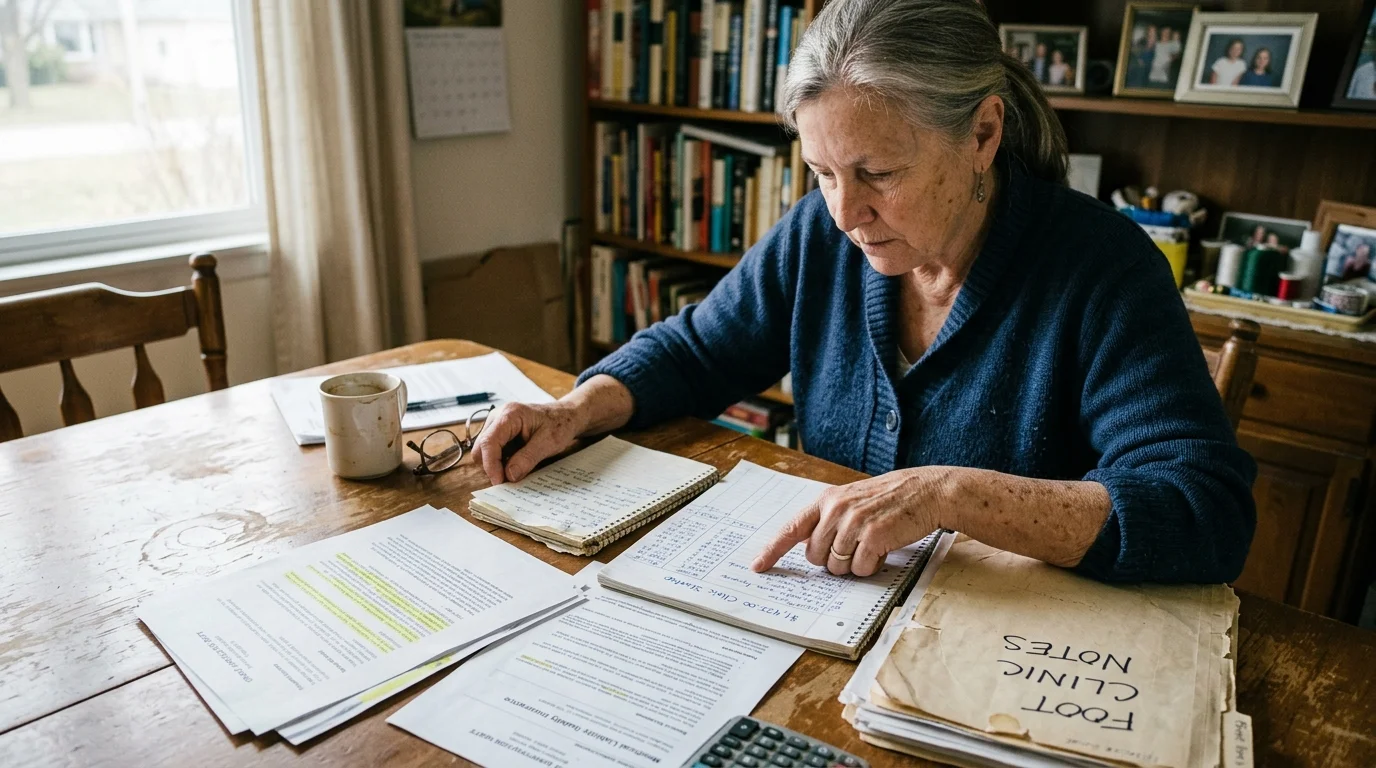
Financial Blueprint: A Real-World $1,425 Launch Budget
Launching a single-chair foot care station does not require thousands of dollars in commercial financing. By setting up inside a donated room at a municipal senior center, you reduce facility rent to zero.
To help self-fund early clinic expenses, some retirees take advantage of flexible gig economy roles designed for seniors to earn extra seed cash.
Much like retirees who launch suburban community repair cafés using donated public spaces and simple toolkits, starting your clinic with a lean equipment setup keeps operating risk low.
The following worked budget supported an independent retired nurse launching an eight-patient weekly session at a local center. This realistic inventory equips your station for six months of continuous, fully compliant clinical operation.
| Item Description & Specific Model | Quantity | Unit Cost ($) | Total Cost ($) |
|---|---|---|---|
| Miltex 5.5-inch Concave Stainless Steel Nail Nippers | 8 units | 28.50 | 228.00 |
| Miltex Double-Ended Excavator / Curette Instruments | 8 units | 13.50 | 108.00 |
| Crosstex 3.5″ x 9″ Self-Sealing Steam Sterilization Pouches | 1 box (200 ct) | 24.00 | 24.00 |
| Microflex Ultraform Powder-Free Nitrile Examination Gloves | 2 boxes (200 ct) | 17.00 | 34.00 |
| Baseline Semmes-Weinstein 5.07 (10g) Sensory Monofilaments | 1 pack (5 units) | 32.00 | 32.00 |
| Graham Medical 13″ x 18″ Tissue/Poly Disposable Towels | 1 case (500 ct) | 45.00 | 45.00 |
| Medline Sterile Disposable Mini-Curettes (#0 / 1.5mm) | 1 box (50 ct) | 28.00 | 28.00 |
| Cetylite Cetylcide-G Hospital-Grade Surface Disinfectant | 2 gallons | 38.00 | 76.00 |
| Partner Clinic Instrument Autoclaving Service Fee (6-Month Agreement) | 26 cycles | 5.00 | 130.00 |
| Pedi-Caddy Pro Height-Adjustable Mobile Footrest with LED Lamp | 1 unit | 185.00 | 185.00 |
| Sharps Recovery System 2-Gallon Mailback Biohazard Disposal Kit | 1 unit | 115.00 | 115.00 |
| State Board Active-Retired RN Renewal Fee & Foot Care CEUs | 1 renewal / 24 hrs | 420.00 | 420.00 |
| Total Startup Capital Required | — | — | $1,425.00 |
This lean operational budget bypasses unnecessary luxuries while prioritizing absolute clinical sterility and personal ergonomic safety. Operating with eight dedicated instrument sets ensures that you never run short during a busy clinical morning.
Reusable stainless steel nippers and excavators last for years when cared for properly. Disposable single-use towels and surface disinfectants guarantee that you maintain strict infection control boundaries between patients.
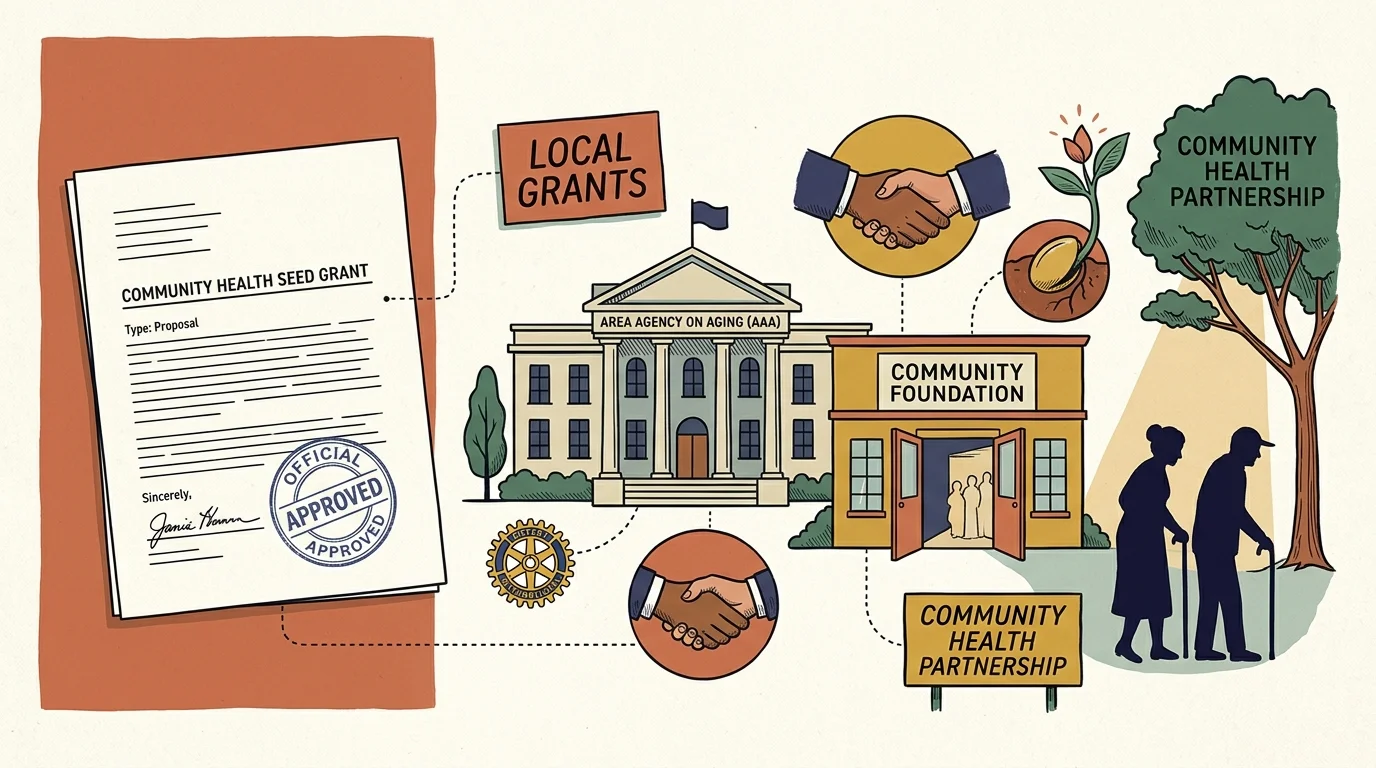
Securing Capital: From Seed Grants to Area Agencies on Aging
You do not need to self-fund your clinic supplies. Philanthropic organizations actively search for practical, low-overhead healthcare projects founded by experienced professionals.
Your primary public funding source is Title III-D of the Older Americans Act. Administered through local Area Agencies on Aging, these funds support evidence-based disease prevention initiatives for adults aged 60 and older.
Local Area Agencies on Aging distribute annual allocations ranging from $1,500 to $10,000 for localized preventive programs. Contact your regional coordinator to position your foot clinic as a falls prevention and chronic disease management initiative.
Another strong funding ally is the National Association of Free and Charitable Clinics. The NAFC coordinates educational support and distributes micro-grants across their network of more than 1,400 free clinics nationwide.
National recognition programs also reward experienced change-makers. The Purpose Prize celebrates social innovators aged 50 and older who leverage their deep life experience to resolve entrenched community problems.
To turn your clinical vision into an attractive proposal, connect with free local business mentors. Mentors at SCORE Mentoring offer personalized coaching to help you build budget sheets, write grant applications, and structure your nonprofit model.
- Rotary, Kiwanis, and Lions Club community service grant pools ($500 to $2,500)
- Local hospital community benefit funds earmarked for outpatient preventive services
- Community Foundation donor-advised funds dedicated to senior wellness and mobility
- Municipal senior center auxiliary program funds and private memorial endowments
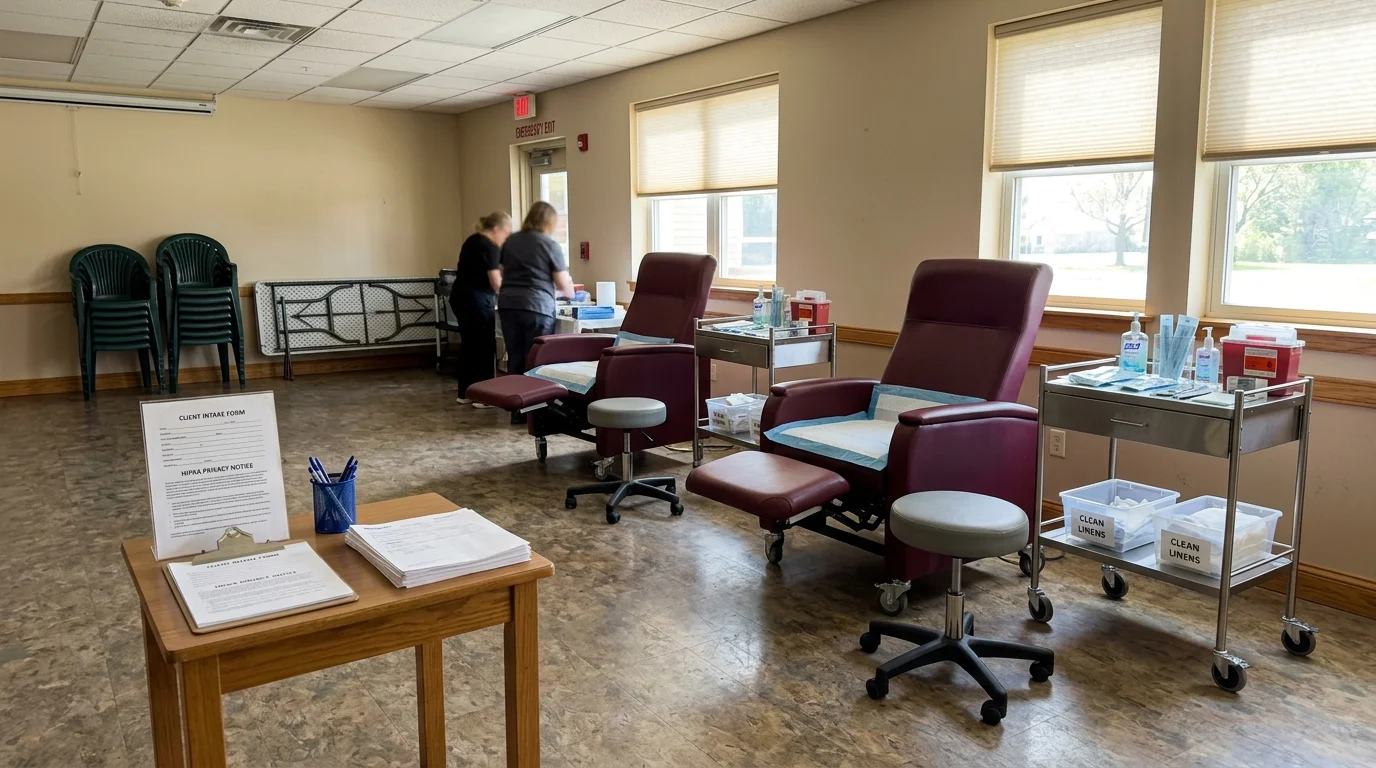
Step-by-Step Clinical Launch: From Site Agreement to First Patient
Launching your volunteer foot station requires an orderly, sequential rollout. Moving methodically ensures that all legal agreements, sterilization routines, and intake protocols are fully operational before your first client arrives.
- Negotiate a Memorandum of Understanding (MOU) with the senior center defining room allocation, cleanup duties, and liability allocations.
- Submit your volunteer registration and professional nursing credentials to state regulators or county health officials to secure sovereign immunity status.
- Sign a sterile processing service agreement with a neighboring health clinic and run test cycles using biological spore monitors.
- Establish an emergency escalation pathway with a local hospital wound care center or podiatrist for immediate referral of ulcerated lesions.
- Assemble your treatment station with appropriate lighting, ergonomic seating, disposable barriers, and biohazard containment.
- Conduct intake evaluations, monofilament sensory screenings, pedal pulse checks, and toenail debridement on 30-minute appointment rotations.
Scheduling 30 minutes per appointment ensures ample time for holistic assessment and patient education. Never rush through nail trimming; hurried clinical interventions dramatically increase the risk of accidental lacerations.
Always inspect the interior of your patients’ shoes during the appointment. Worn insoles, protruding seams, or foreign objects inside footwear cause severe skin breakdown in neuropathic feet long before the patient feels discomfort.
By transforming clinical retirement into purposeful community action, you keep seniors upright, active, and free from amputations. You become the frontline barrier between an overlooked senior and an emergency room admission.
Frequently Asked Questions
What legal liability protections shield retired nurses offering free foot care?
The federal Volunteer Protection Act of 1997 shields properly licensed healthcare volunteers from personal civil liability for ordinary negligence when serving 501(c)(3) nonprofits or government entities. Free clinics can also secure deemed federal status under the HRSA Federal Tort Claims Act program.
Can a retired registered nurse legally trim toenails for diabetic seniors?
Yes, provided the nurse maintains an active or active-retired nursing license and practices within their state Nurse Practice Act. Routine, non-invasive nail debridement and sensory screening fall within standard registered nursing scope, though sharp surgical scalpel debridement requires specialized delegation.
How can a startup volunteer foot clinic sterilize surgical instruments without buying an autoclave?
Startup clinics can establish formal sterilization partnerships with local community health centers, outpatient surgery facilities, or private podiatry offices. These clinics process packaged instrument pouches in their daily autoclave cycles for a minimal batch fee or as an in-kind community benefit.
Which grants fund disposable medical supplies for community senior foot clinics?
Funding options include Older Americans Act Title III-D disease prevention grants administered through local Area Agencies on Aging, seed grants from the National Association of Free and Charitable Clinics, and civic micro-grants from organizations such as Rotary and Lions Clubs.
Disclaimer: This article is for informational and inspirational purposes. Life decisions are deeply personal, and we encourage readers to pursue their dreams while considering their unique circumstances, health, and financial situation.



1 Comment