
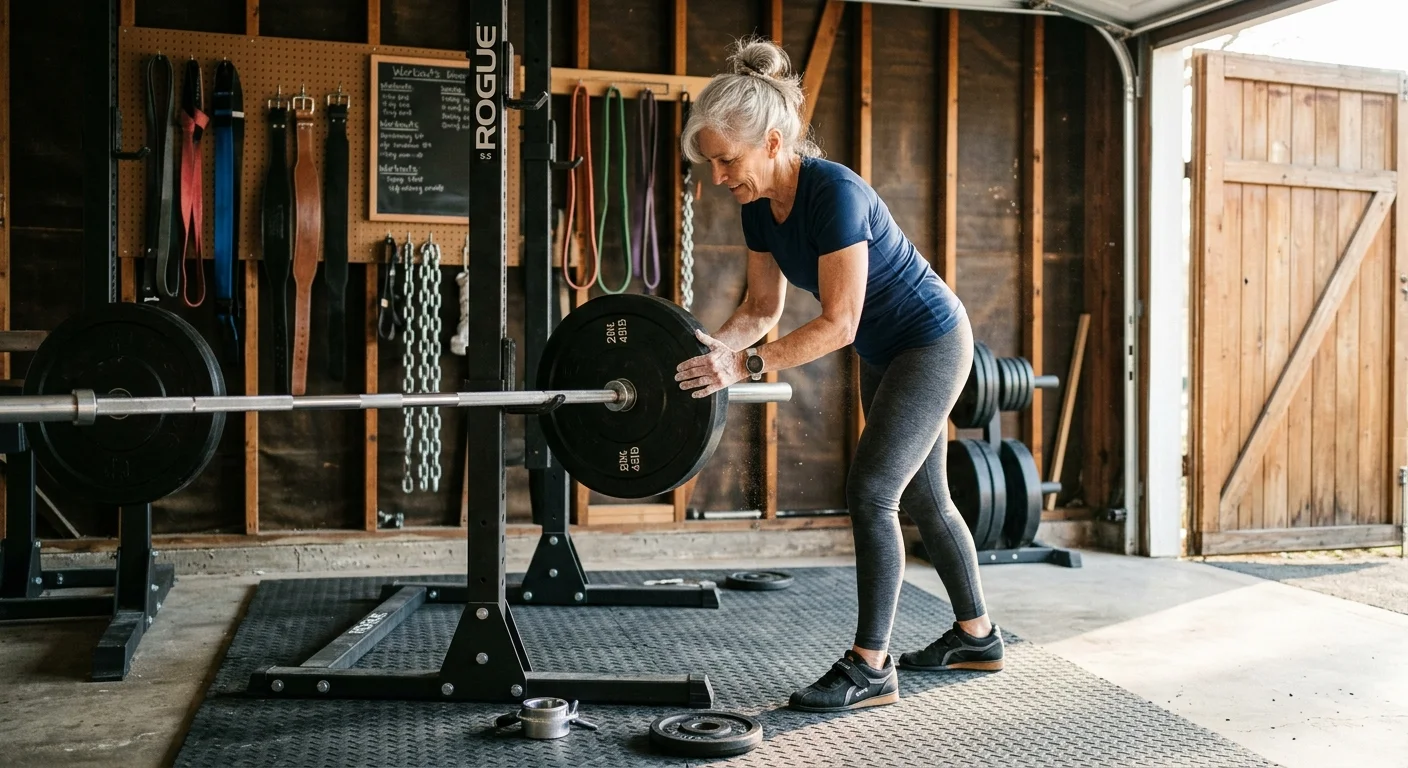
You can rebuild bone density and reclaim physical sovereignty at 65 by lifting meaningful loads rather than settling for timid movement. While standard advice recommends light resistance bands, true skeletal remodeling demands progressive mechanical tension through compound barbell lifts.
Regaining physical power through the barbell provides the stamina required for rekindling adventurous passions in retirement.
Committing to compound resistance training forms the cornerstone of proactive fitness after age 65.
This guide delivers the exact starting loads, equipment dimensions, and micro-loading schedules necessary to safely advance from a 15-pound aluminum bar to structural bone adaptation.
By coordinating your lifts with precise Medicare-aligned DEXA timing, you transform vulnerable bone into a resilient, fracture-resistant foundation for decades of bold adventure.
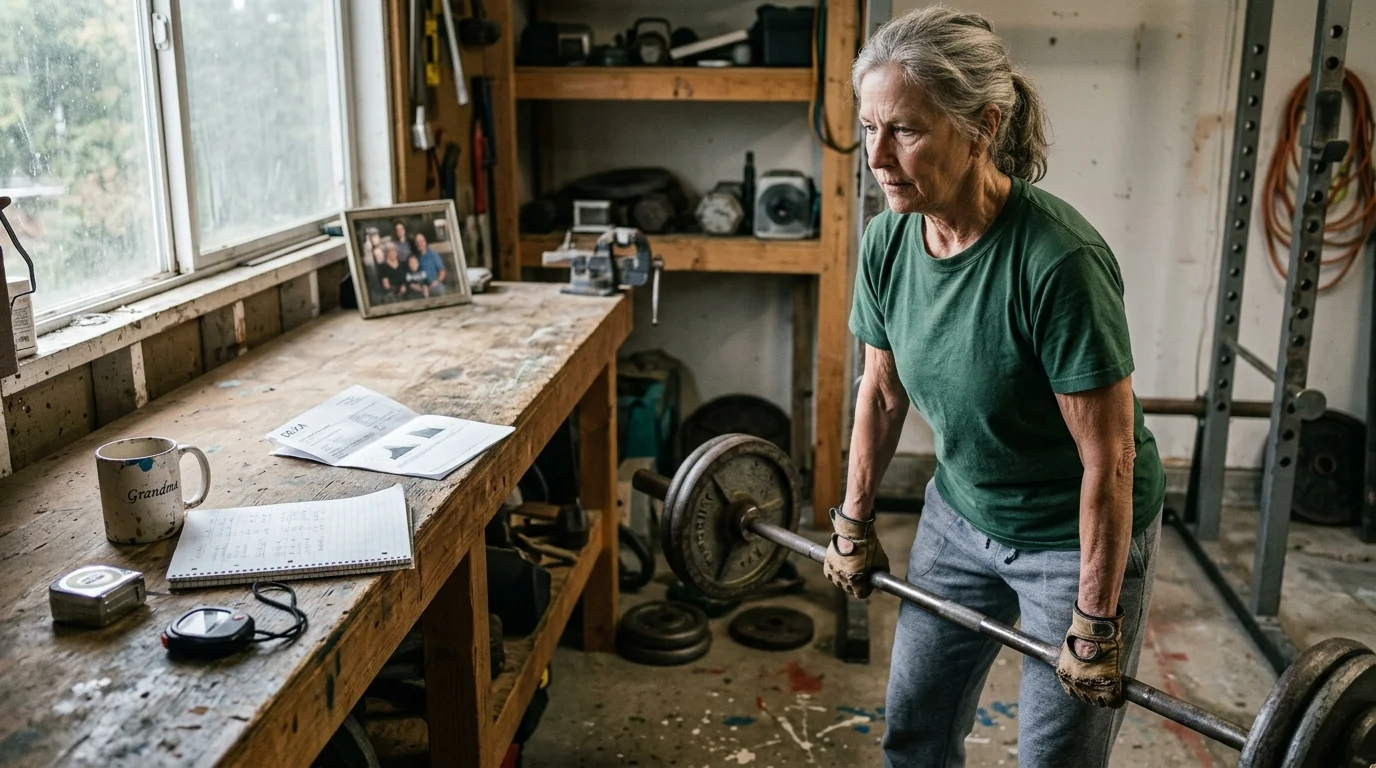
The Clinical Case for Heavy Mechanical Tension Over 60
A diagnosis of low bone mass often triggers fear and unhelpful advice to avoid physical stress. Yet dynamic skeletal loading remains the single most reliable catalyst for trigger-site osteogenesis.
Reinforcing your skeletal structure works best alongside dedicated vestibular and ankle balance exercises to prevent trips and stumbles entirely.
Pairing skeletal strengthening with comprehensive fall detection and home safety systems creates complete protection against fracture risk.
According to data from the Centers for Disease Control and Prevention, low bone mass affects 43.1% of American adults aged 50 and older. This condition impacts 51.5% of women and 33.5% of men across the nation.
The World Health Organization defines osteopenia as a bone mineral density T-score between -1.0 and -2.5 standard deviations below young-adult norms. Falling into this bracket does not mean your bones are fragile glass.
Bone tissue is dynamic, living structure that adapts continually under physical strain. German anatomist Julius Wolff demonstrated in the nineteenth century that bones remodel along lines of mechanical stress.
When you place heavy axial loads on the spine and hips, fluid shifts within the bone matrix. This fluid displacement alerts osteocyte cells to pull calcium into the protein scaffolding, reinforcing structural density.
Groundbreaking clinical evidence validates this exact physiological pathway. The landmark LIFTMOR randomized controlled trial published in the Journal of Bone and Mineral Research tested high-intensity resistance training in postmenopausal women with low bone mass.
Participants performed 5 sets of 5 repetitions at greater than 80% to 85% of their 1-repetition maximum twice weekly. The results shattered prevailing clinical caution.
Lifting heavy compound loads produced a 2.9% increase in lumbar spine bone density compared to a 1.2% loss in sedentary controls. Crucially, the protocol logged zero serious adverse events.
To establish durable skeletal resilience, you must challenge your neuromuscular system with targeted forces. Resources cataloged by the National Institute on Aging reinforce how strength development preserves functional mobility and skeletal health throughout retirement.
“Do not go where the path may lead, go instead where there is no path and leave a trail.” — Ralph Waldo Emerson
Relying solely on walking or low-resistance exercise fails to meet the mechanical threshold required to trigger bone deposition. True remodeling demands compound movements that recruit large muscle groups against gravity.
Essential Barbell Equipment Sizing for Beginners
Stepping into a barbell weight room requires clarity about equipment dimensions. Walking straight toward a standard gym barbell can overwhelm a novice lifter who lacks calibrated starting gear.
Just as musicians choose low-tension guitar setups to protect vulnerable fingers, lifters must select proper bar dimensions to protect delicate joints.
Selecting tailored bar dimensions mirrors the ergonomic adaptations used when navigating thumb arthritis with smaller-gauge instruments.
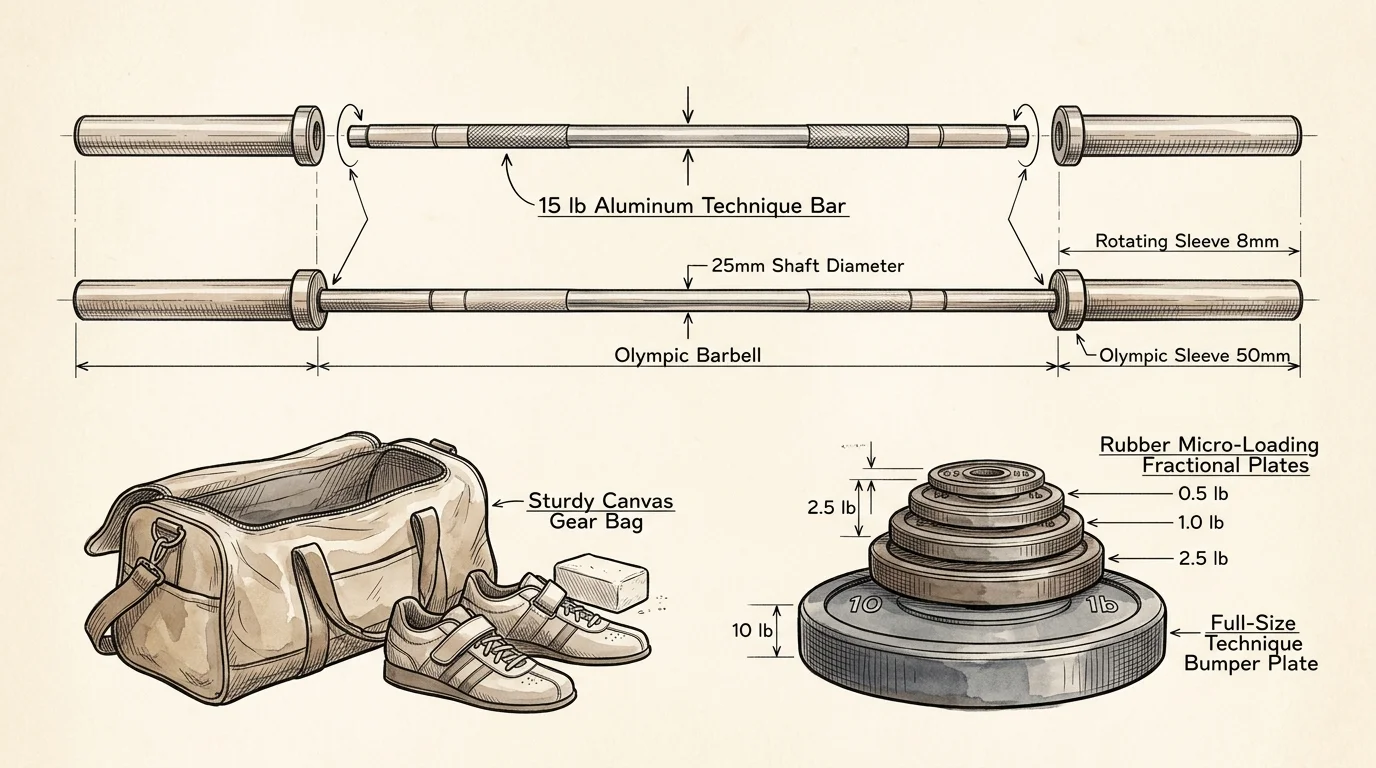
Standard men’s Olympic barbells weigh 45 pounds (20 kg) and measure 28 to 29 millimeters in shaft diameter. This starting resistance often exceeds the structural baseline of a 65-year-old beginner with osteopenia.
A women’s Olympic barbell weighs 35 pounds (15 kg) and features a thinner 25-millimeter shaft. The narrower grip allows better leverage and hand security for lifters with smaller hands or joint stiffness.
For your initial sessions, you should bypass both standard options in favor of an aluminum starter bar. Aluminum technique bars weigh between 11 and 15 pounds (5 to 7 kg) while retaining standard Olympic sleeve dimensions.
Technique bars accept standard Olympic plates, allowing you to establish correct barbell geometry from floor height without carrying prohibitive starting weight. This setup ensures pristine movement mechanics.
Senior linear progression also demands fractional micro-plates. Adding standard 5-pound gym plates forces a 10-pound total jump, which quickly stalls progress and strains vulnerable connective tissue.
Acquiring pairs of 0.5-pound, 1-pound, and 1.25-pound micro-plates allows you to progress in modest 1-to-2.5-pound increments. Small jumps accumulate immense structural strength while keeping joint stress well within manageable margins.
| Barbell Category | Base Weight | Shaft Diameter | Load Capacity | Optimal Application |
|---|---|---|---|---|
| PVC Pipe / Dowel | 0.5 lbs (0.2 kg) | 25.0 mm | 0 lbs | Initial hip-hinge coordination and movement pattern practice |
| Aluminum Technique Bar | 15 lbs (6.8 kg) | 28.0 mm | 150 lbs | Weeks 1–4 foundational loading for squats, presses, and deadlifts |
| Women’s Olympic Bar | 35 lbs (15.9 kg) | 25.0 mm | 1,000 lbs | Intermediate progression for lifters graduating past technique bars |
| Standard Olympic Bar | 45 lbs (20.4 kg) | 28.5 mm | 1,200 lbs | Advanced deadlift and squat loading as structural adaptations solidify |
Equipping yourself with appropriate tools removes intimidation and prevents technical breakdown. Respecting baseline loads allows you to pursue aggressive bone adaptation without unnecessary joint irritation.
Core Movement Mechanics: Squats, Presses, and Deadlifts
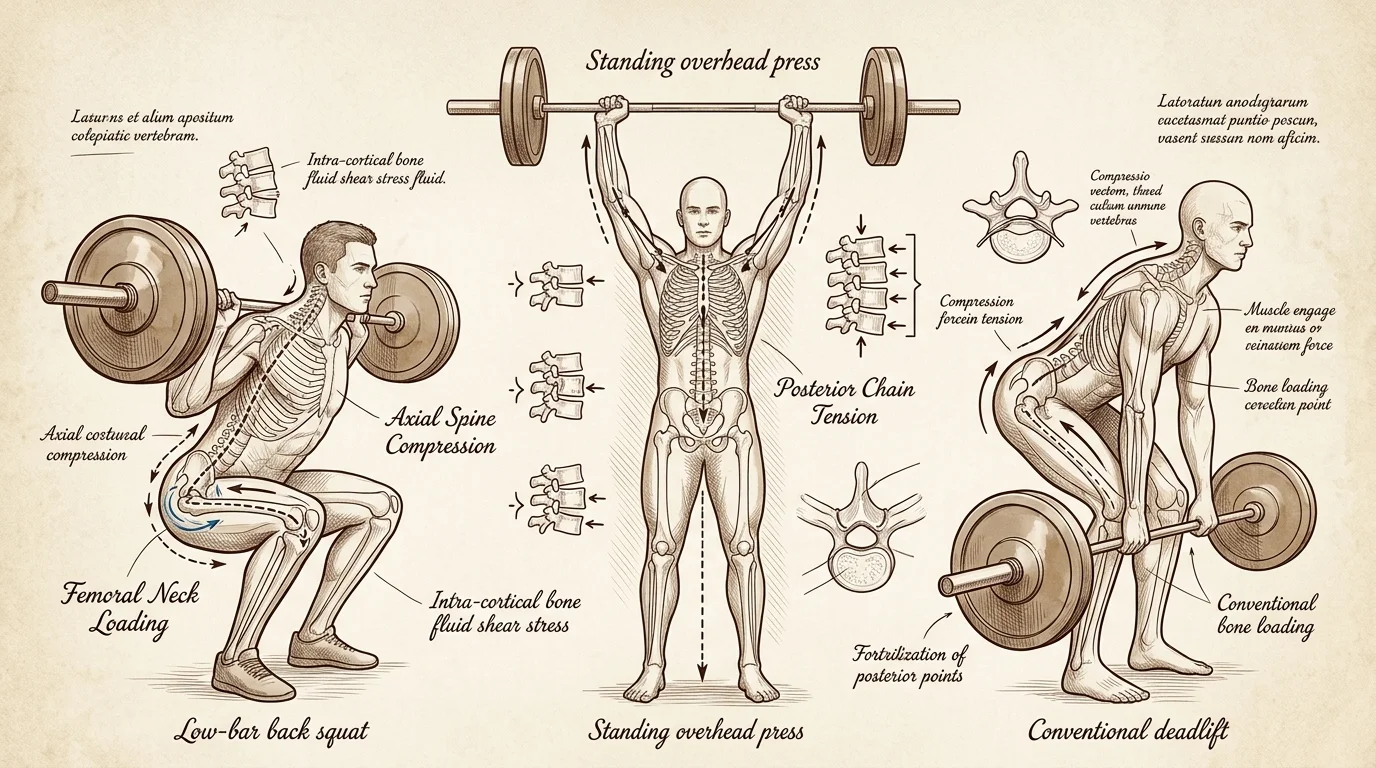
A successful bone density lifting protocol centers around multi-joint exercises that load the axial skeleton directly. Three foundational movements generate maximum mechanical tension across the hips, femoral necks, and lumbar vertebrae.
Anchoring your training sessions into a defined weekly schedule helps overcome morning time paralysis in early retirement.
Building reinforced hip and spinal integrity lays the groundwork for high-mileage adventures like walking the Camino after joint replacement.
The deadlift represents the premier exercise for rebuilding bone mass in the posterior chain. Pulling weight directly from the floor applies powerful tensile force across the hips, sacrum, and mid-spine.
Set up with your midfoot directly under the bar, positioning your feet hip-width apart. Hinge deeply at the hips, grip the bar just outside your shins, and bring your shins forward until they touch the steel.
Squeeze your chest up to flatten your entire spine into rigid extension before initiating the pull. Drive the floor away through your heels, keeping the bar in continuous contact with your legs until you stand tall.
- Position the mid-foot directly beneath the barbell shaft with a four-inch heel separation.
- Hinge at the hips without bending the knees until your hands grasp the knurled bar.
- Bring your shins forward to touch the bar without displacing it from its mid-foot balance point.
- Squeeze the thoracic spine upward to lock the entire vertebral column into rigid extension.
- Push the floor away through mid-foot pressure, dragging the barbell vertically along your shins.
The squat complements the deadlift by placing compressive axial load across the femoral neck and lumbar spine. Beginners should start with a box squat to guarantee depth and eliminate knee shear.
Set a sturdy bench or plyometric box at parallel knee height. Descend under total control by driving your hips back and spreading your knees outward until your glutes brush the box.
Pause briefly on the surface without relaxing your trunk musculature or rocking backward. Drive directly upward through your mid-foot, maintaining a rigid torso until you lock out your hips and knees.
The overhead press targets the upper cervical and thoracic spine while enhancing balance and shoulder girdle integrity. Stand tall with your heels hip-width apart and grip the bar across your anterior deltoids.
Squeeze your glutes and pull your chin back slightly as you drive the barbell straight upward in a vertical path. Once the bar passes your forehead, push your head forward beneath the bar and lock out your elbows overhead.
Mastering these movement pathways creates rigid neuromuscular coordination. Flawless technique protects joint structures while directing every ounce of mechanical tension into targeted skeletal zones.
The 12-Week Starting Linear Progression Protocol
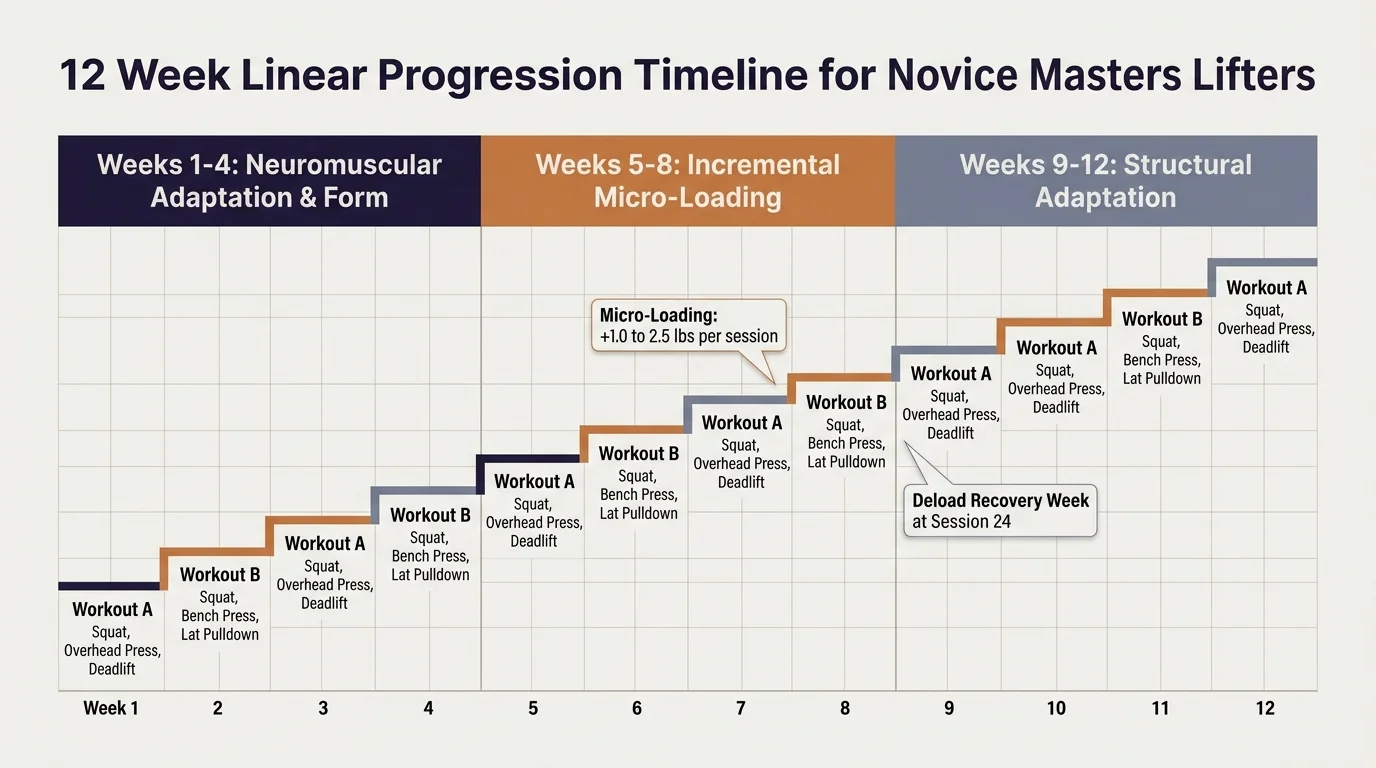
A systematic starting strength senior progression relies on predictable, consistent overload rather than exhausting novelty. You will train two non-consecutive days each week, providing adequate recovery for joint and bone tissue synthesis.
Quality overnight rest drives bone remodeling, making it critical to resolve early morning sleep disruptions for optimal neuromuscular recovery.
Scheduling lifting sessions twice weekly easily fits within a structured three-block daily retirement routine.
Allowing 72 hours between intense training bouts prevents chronic fatigue and supports systemic remodeling. Every session follows a simple template combining one lower-body press or squat, one upper-body press, and one pulling movement.
During Weeks 1 through 4, your primary objective is technical mastery and neurological coordination. You will move through full ranges of motion using the 15-pound aluminum technique bar and light bumper plates.
- Train two non-consecutive days each week (such as Tuesday and Friday or Monday and Thursday).
- Perform warm-up sets using an unweighted dowel or empty technique bar before loading working sets.
- Rest a full three to five minutes between working sets to replenish cellular energy reserves.
- Increase deadlift loads by no more than 2.5 to 5 pounds per training session.
- Advance squat and overhead press working loads by 1 to 2.5 pounds using fractional plates.
- Log every completed repetition, set, and barbell load in a dedicated physical training journal.
Weeks 5 through 8 represent the structural loading phase. You will systematically add fractional plates to the bar each workout, moving your body past familiar physical limits.
This steady linear accumulation creates the mechanical strain required to activate latent osteoblasts. Because the additions are small, your connective tissues adapt without triggering inflammatory setbacks.
Weeks 9 through 12 consolidate your adaptations into peak bone remodeling zones. At this stage, your working sets will reach the 80% intensity threshold validated in bone density clinical literature.
You will execute 3 sets of 5 repetitions on the squat, 3 sets of 5 repetitions on the overhead press, and 1 heavy set of 5 repetitions on the deadlift. This low-volume, high-tension configuration delivers pure osteogenic stimulus.
Worked Example: A 65-Year-Old Athlete’s 12-Week Journey
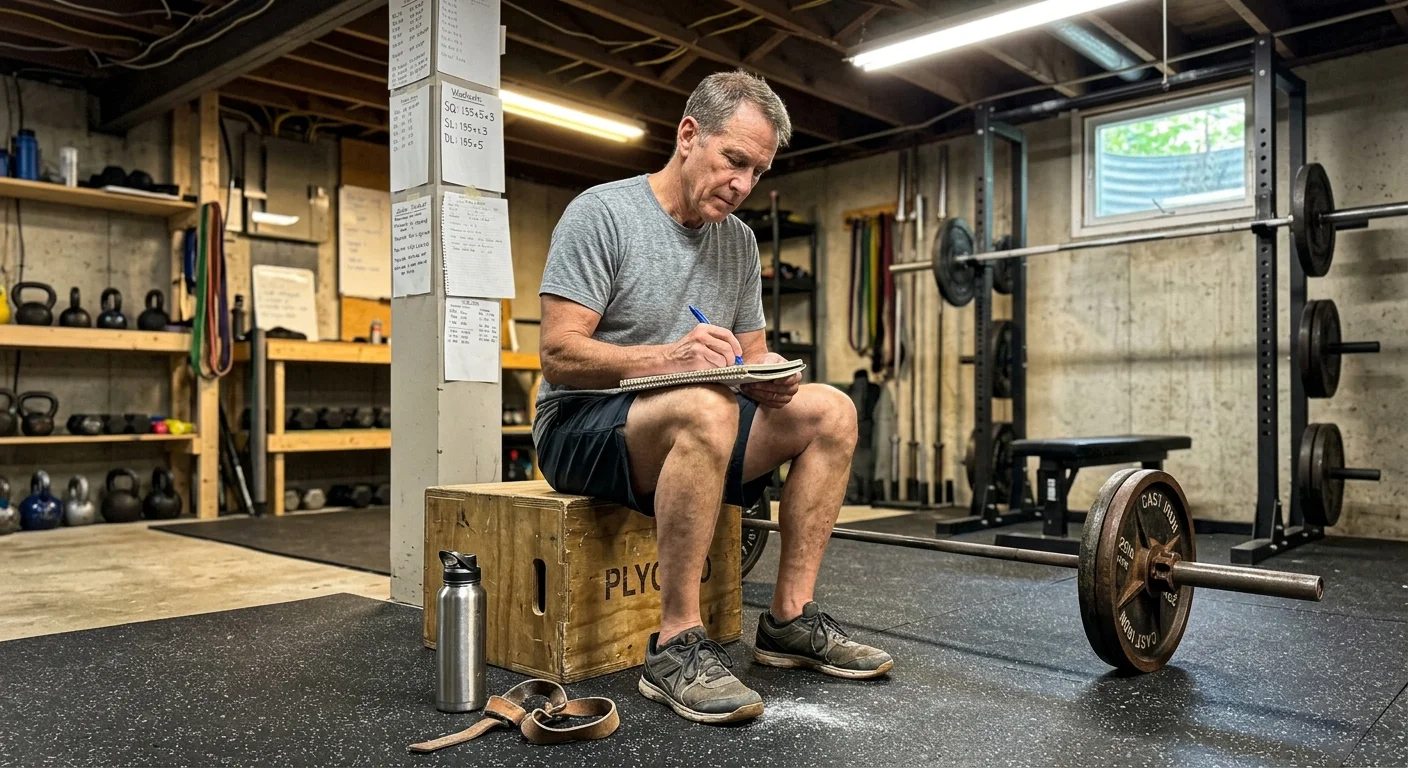
Consider the concrete training journey of Margaret, a 65-year-old retired school administrator. Margaret received a DEXA report showing an L1–L4 lumbar spine T-score of -1.8 and a femoral neck T-score of -1.6.
Margaret’s breakthrough highlights how taking control of bone health reinforces broader mental and physical wellness throughout retirement.
Refusing to accept physical decline, Margaret secured clearance from her physician to initiate barbell strength training. She began her protocol in September, utilizing an aluminum technique bar and a pair of 5-pound technique plates.
On Day 1 of Week 1, Margaret established her deadlift baseline at 25 total pounds (15-pound technique bar plus two 5-pound bumper plates). Her starting squat used the 15-pound bar descending to a 16-inch plyometric box.
Her starting overhead press utilized a 10-pound weighted training bar for 3 sets of 5 repetitions. She performed each repetition with deliberate control, resting three full minutes between working sets.
Margaret advanced her deadlift by 2.5 pounds per session using two 1.25-pound fractional plates. Her squat advanced by 2.5 pounds once weekly, while her overhead press advanced by 1 pound per week using 0.5-pound micro-plates.
By Week 6, Margaret comfortably transitioned from the aluminum technique bar to a 35-pound women’s Olympic barbell. Her squat working sets reached 37.5 pounds for 3 sets of 5 repetitions.
Her deadlift working load reached 55 pounds for a crisp, confident set of 5 repetitions. Her movement patterns were now fluid, automatic, and stable under load.
By Week 12, Margaret completed her final workout of the introductory cycle with remarkable numbers. She deadlifted 85 pounds for 5 perfect repetitions from standard floor height.
She executed 3 sets of 5 squats at 62.5 pounds to full depth without needing the box. Her overhead press advanced to 32.5 pounds for 3 sets of 5 repetitions.
Across 12 weeks, Margaret moved over 24,000 cumulative pounds of volume across her hips and spine. She experienced zero joint injuries, eliminated nagging lower back aches, and built the physical capacity to lift her carry-on luggage overhead with ease.

DEXA Scan Timing and Medicare Coverage Rules
Many beginners make the mistake of scheduling a follow-up Dual-Energy X-ray Absorptiometry (DEXA) scan within three to six months of starting their lifting routine. This premature scheduling produces frustration and misleading clinical data.
Bone remodeling operates on a deliberate biological timeline. Osteoclasts require several weeks to clear older micro-damaged matrix, while osteoblasts take four to six months to lay down and fully mineralize new collagen scaffolding.
Meaningful changes in bone mineral density require 18 to 24 months of consistent mechanical loading before registering above the scanner’s least significant change margin. Scanning too early yields statistical noise rather than genuine adaptation.
Federal regulations align directly with this biological clock. Under Medicare Part B guidelines (42 CFR § 410.86 / CMS Guidelines), routine DEXA bone mass measurement tests are covered once every 24 months for qualified individuals.
Medicare grants coverage for at-risk groups, including estrogen-deficient women at clinical risk for osteoporosis and individuals with baseline osteopenia. More frequent scans are covered only under specific medical exceptions, such as monitoring high-dose glucocorticoid therapy lasting over three months.
Institutions examining healthspan trajectories, such as the Stanford Center on Longevity, highlight how sustained lifestyle adaptations outshine short-term tracking interventions. Commit to the process before worrying about testing.
When your 24-month scan window opens, take specific steps to ensure precise measurement consistency. Schedule your follow-up scan on the exact same scanner model at the identical imaging facility whenever possible.
Different DEXA manufacturers—such as Hologic and GE Lunar—employ distinct calibration algorithms and edge-detection software. Comparing results across different machines introduces baseline discrepancies that can mask real skeletal improvements.
Schedule your scan at the same time of day and maintain consistent hydration levels. These precautions guarantee that your follow-up T-score reflects genuine bone mineral accrual rather than instrumentation variance.

Fueling Bone Mineralization: Nutrition and Recovery
Barbell training supplies the mechanical stimulus for bone remodeling, but adequate nutrition provides the raw construction materials. Without sufficient dietary protein and micronutrients, your skeletal system cannot synthesize new bone matrix.
Older adults require significantly more dietary protein than sedentary younger individuals due to age-related anabolic resistance. Aim for 1.2 to 1.6 grams of protein per kilogram of body weight daily.
Distribute your protein intake across three to four meals, aiming for 30 to 40 grams of high-quality protein per feeding. This threshold triggers muscle protein synthesis and supplies essential amino acids for collagen formation.
Calcium forms the inorganic mineral lattice that gives bone its hardness and compressive strength. Target 1,200 milligrams of elemental calcium daily through a combination of whole foods and targeted supplementation.
Incorporate dairy products, canned wild salmon with bones, dark leafy greens, and fortified foods into your regular meals. If supplementing, divide your calcium doses into 500-milligram increments to maximize intestinal absorption.
Vitamin D3 acts as the critical gatekeeper for calcium transport across the intestinal wall. Maintain serum 25-hydroxyvitamin D concentrations between 40 and 60 ng/mL by supplementing with 2,000 to 4,000 IU of Vitamin D3 daily.
Pair Vitamin D3 with Vitamin K2 (specifically the MK-7 form at 100 to 180 micrograms daily). Vitamin K2 activates osteocalcin, a protein that binds ionic calcium directly into bone matrix rather than soft arterial tissue.
Finally, protect your systemic recovery through disciplined sleep hygiene. Growth hormone and bone remodeling factors peak during deep, slow-wave sleep cycles.
Prioritize seven to eight hours of uninterrupted sleep each night in a cool, dark environment. Consistent restorative rest transforms your hard training efforts into dense, structural bone tissue that supports your most daring retirement ambitions.
Frequently Asked Questions
Can I start lifting barbells if I have never lifted weights before?
Yes, you can safely begin barbell training at any age by starting with an aluminum technique bar or light dowel. Linear progression allows you to master correct joint alignment at low loads before gradually adding weight.
Will heavy compound lifting increase my risk of spinal compression fractures?
Controlled axial loading actually strengthens spinal vertebrae when performed with a flat, rigid back. Compression fractures typically occur from uncontrolled spinal flexion under sudden loads, which proper barbell mechanics actively teach you to prevent.
Why won’t daily walking or water aerobics reverse my osteopenia?
Walking and water aerobics fail to deliver the mechanical force required to trigger osteoblast activity. Reversing bone mineral loss demands multi-directional strains and high-intensity loads that exceed everyday baseline physical stress.
How soon can I expect measurable bone density improvements on a DEXA scan?
Bone mineralization requires 18 to 24 months of consistent heavy loading before changes exceed the measurement threshold on a DEXA scan. While neural strength surges within weeks, true skeletal remodeling follows a slower, biological timeline.
Disclaimer: This article is for informational and inspirational purposes. Life decisions are deeply personal, and we encourage readers to pursue their dreams while considering their unique circumstances, health, and financial situation.






3 Comments