
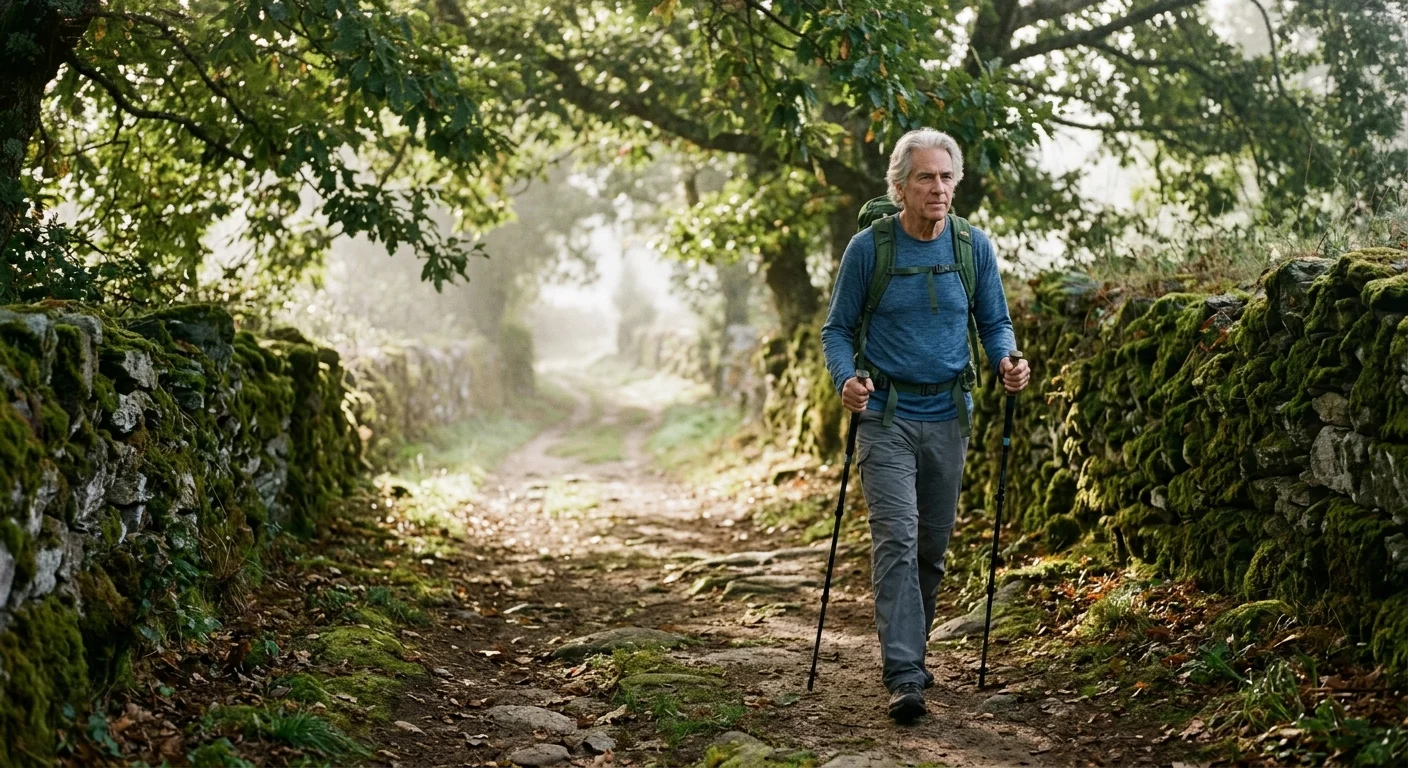
You can walk the historic Camino de Santiago comfortably at 68, even after a total knee replacement. Capping your daily distance at 8 miles and forwarding your main luggage protects your prosthetic joint while keeping your pilgrimage achievable.
Most guidebooks push a standard five-day itinerary from Sarria averaging 15 miles daily. Those grueling stages overload healing tissues, trigger tendon flare-ups, and risk early polyethylene wear on your implant.
This 9-stage itinerary stretches the 71-mile route into manageable distances. By combining moderate stages with door-to-door luggage transfers, you will safely earn your official Compostela certificate at the Santiago Cathedral.
Biomechanics and Trail Realities: Protecting Your Knee Replacement
Modern total knee arthroplasty provides excellent stability, but prolonged impact on uneven terrain tests surgical repairs. Orthopedic surgeons advise waiting 6 to 12 months after joint surgery before attempting multi-day endurance trekking.
Galicia features ancient stone corridors, sunken farm tracks called corredoiras, and steep asphalt descents. Walking downhill places compressive forces across the patellofemoral joint exceeding three times your body weight.
Trekking poles alter these biomechanical forces. Clinical studies show that dual trekking poles absorb 15% to 25% of compressive joint loading on downhill grades, sparing your quadriceps tendon and joint components.
“Of all the paths you take in life, make sure a few of them are dirt.” — John Muir
Paving stones near Portomarín and Palas de Rei become slick after rain. Maintaining an unhurried cadence allows you to plant each foot with deliberate control, preventing shearing stress across your tibial baseplate.
Research published by the National Institute on Aging emphasizes that consistent, low-impact exercise preserves mobility and surrounding bone mineral density in older adults. Pacing yourself guarantees longevity on the trail.
Credential Logistics: Securing Your Compostela with the Two-Stamp Rule
The Pilgrim’s Reception Office in Santiago requires foot pilgrims to complete at least 100 kilometers (62 miles) to earn the Compostela. Sarria sits at kilometer marker 114, satisfying this requirement.
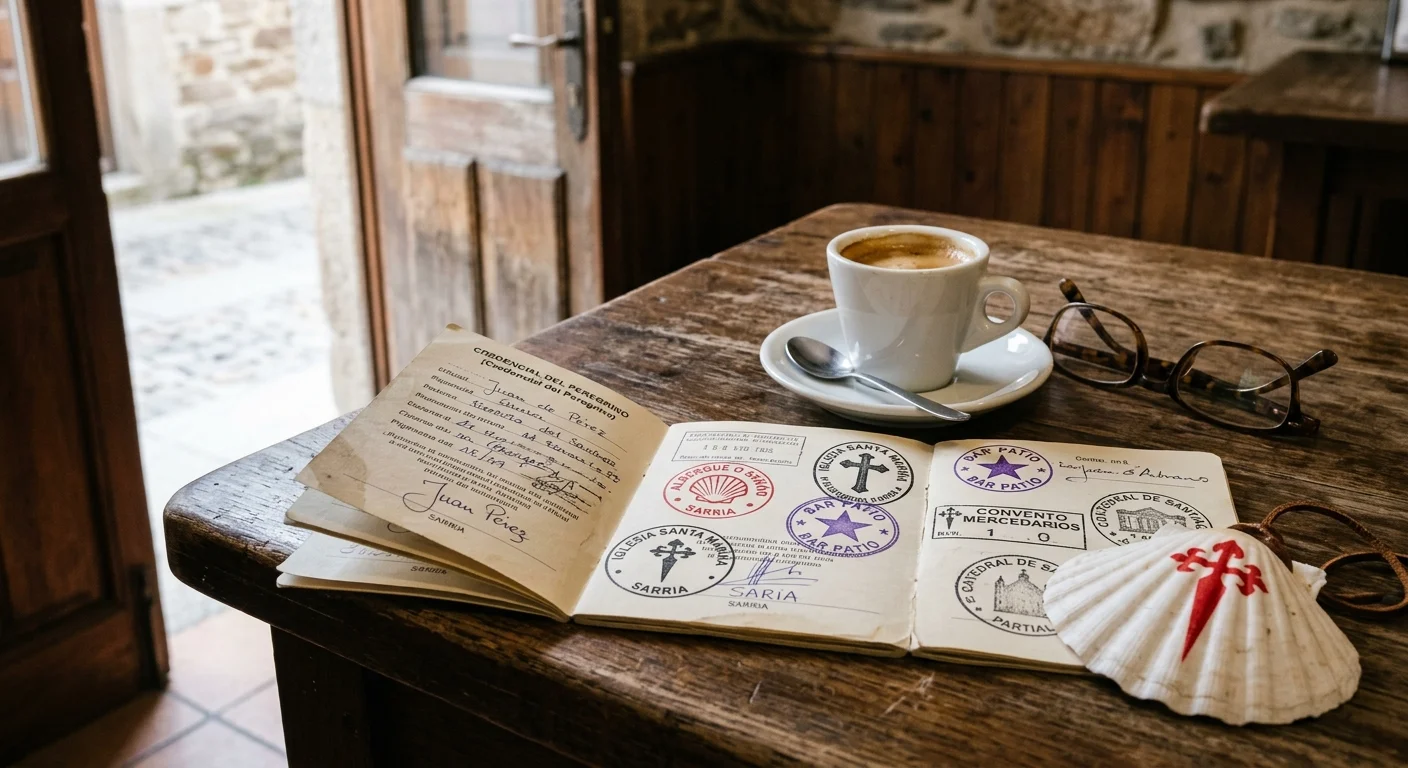
You must record your journey inside an official Pilgrim Credential (Credencial), which costs €2 to €3. Buy this document at your local pilgrim association before leaving or at churches and shops in Sarria.
The Pilgrim Office enforces strict stamping regulations over the final 100 kilometers. You must collect at least two stamps (sellos) per day from cafes, churches, chapels, or guesthouses along your route.
According to official registration statistics, over 530,000 pilgrims completed a Camino in 2025. Walkers over age 65 constitute a rapidly growing segment, and Americans represent the largest non-Spanish nationality on the path.
When you reach Santiago, avoid waiting in long lines at the Pilgrim’s Reception Office on Rúa das Carretas. Scan their digital QR code at the entrance to reserve a numbered time slot on your smartphone.
The 9-Stage Itinerary: Capping Daily Walking at 8 Miles
The traditional 5-day Sarria-to-Santiago plan demands 14 to 15 miles each day. That pace overloads prosthetic joints, so this 9-stage itinerary caps daily walking at roughly 8 miles (13 kilometers).
- Stage 1: Sarria to Morgade (12.1 km / 7.5 miles): Climb gently through oak woodlands past small stone villages. Rest at the chapel in Morgade, which offers private rooms and quiet farm terraces.
- Stage 2: Morgade to Portomarín (10.4 km / 6.5 miles): Descend toward the Miño River reservoir over gentle gravel. Cross the modern footbridge into Portomarín, avoiding the steep old stone stairs by using the adjacent road ramp.
- Stage 3: Portomarín to Gonzar (12.3 km / 7.6 miles): Ascend along the paved shoulder of the LU-633, taking frequent breaks. The steady 2% grade allows a slow, rhythmic gait that protects your surgical knee.
- Stage 4: Gonzar to Palas de Rei (12.7 km / 7.9 miles): Walk through Ventas de Narón and over the Ligonde pass. Granite markers guide your path across rural pastures with minimal abrupt elevation changes.
- Stage 5: Palas de Rei to Melide (14.2 km / 8.8 miles): Enter the province of A Coruña across dirt paths and quiet side roads. Stop in Melide to sample fresh Galician octopus at historic pulperías.
- Stage 6: Melide to Arzúa (14.1 km / 8.8 miles): Cross several small river valleys through eucalyptus forests. Take the dip into the Ribiso valley slowly, relying on your trekking poles for balance on wet cobblestones.
- Stage 7: Arzúa to Salceda (11.2 km / 7.0 miles): Enjoy rolling countryside on dirt pathways running parallel to the N-547 road. Short stages here prevent cumulative muscular fatigue around your knee stabilizing ligaments.
- Stage 8: Salceda to O Amenal (12.6 km / 7.8 miles): Pass through Santa Irene and Rúa beneath shaded canopy trees. The gentle, flat terrain makes this an easy day before your final walk into the holy city.
- Stage 9: O Amenal to Santiago de Compostela (15.0 km / 9.3 miles): Climb gradually toward Monte do Gozo to view the cathedral towers. Descend paved urban streets into Plaza del Obradoiro to complete your 71-mile journey.
Luggage Transfer Services: Cost, Logistics, and Carrier Comparison
Carrying a 20-pound backpack increases ground reaction forces on your prosthetic knee with every step. Forwarding your primary suitcase between guesthouses reduces daily spinal compression and keeps joint fatigue minimal.
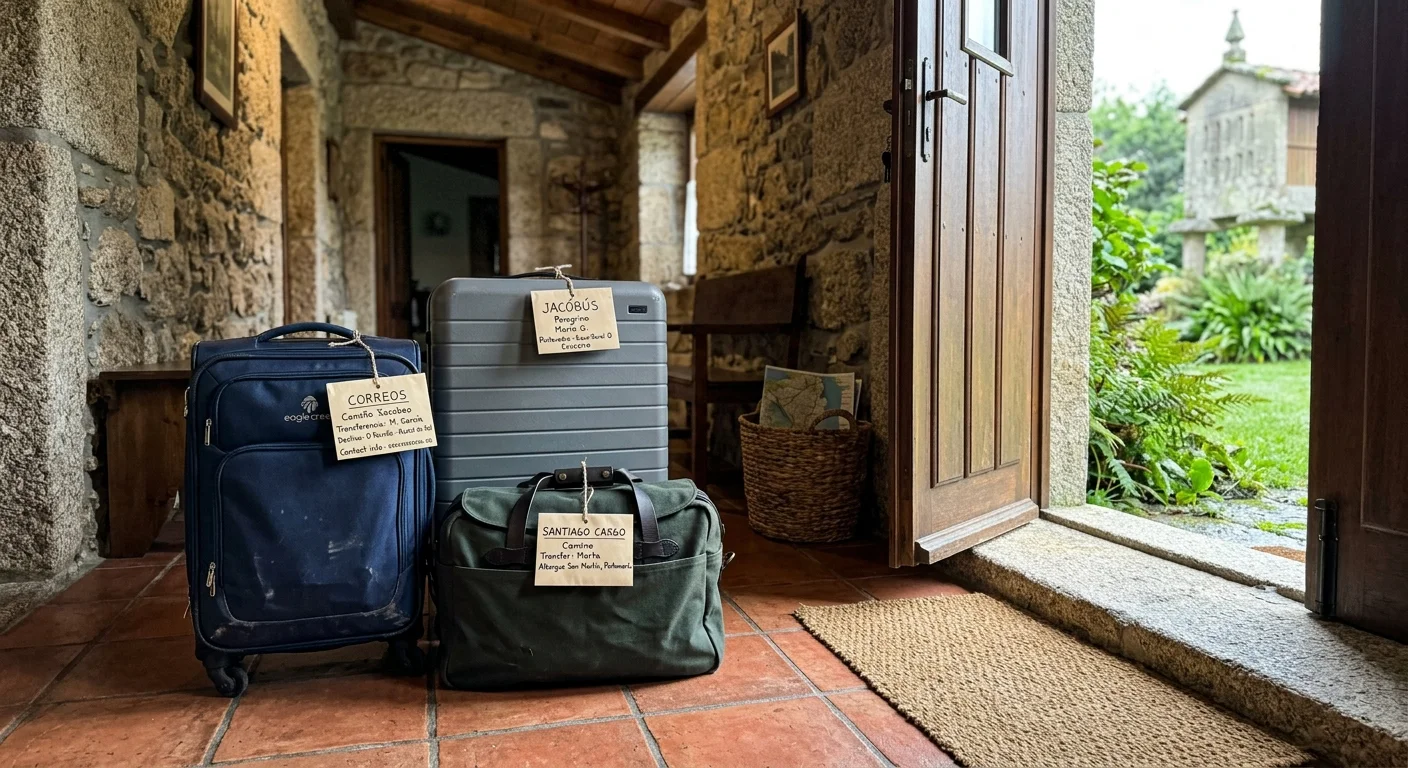
Spanish transport providers service the Sarria-to-Santiago route seamlessly from March through October. You simply attach an identification envelope to your bag, pay the fee, and leave your pack in the hotel lobby.
Compare the leading three Galician luggage transport services below to pick the option that best matches your itinerary and lodging reservations:
| Carrier Service | Price Per Stage | Weight Cap | Morning Drop Deadline | Afternoon Delivery Time |
|---|---|---|---|---|
| Correos (Paq Mochila) | €5.00 to €6.50 | 20 kg (44 lbs) | 8:00 AM | 2:30 PM |
| Jacotrans | €5.00 to €7.00 | 18 kg (40 lbs) | 8:15 AM | 2:00 PM |
| Pilbeo | €6.00 to €7.50 | 20 kg (44 lbs) | 8:00 AM | 2:00 PM |
Private transport couriers require advance bookings for small rural hamlets like Morgade or Salceda. Confirm that your chosen countryside pension permits external delivery drivers before finalizing your booking schedule.
Worked Scenario: 9-Stage Transfer Logistics and Daily Schedule
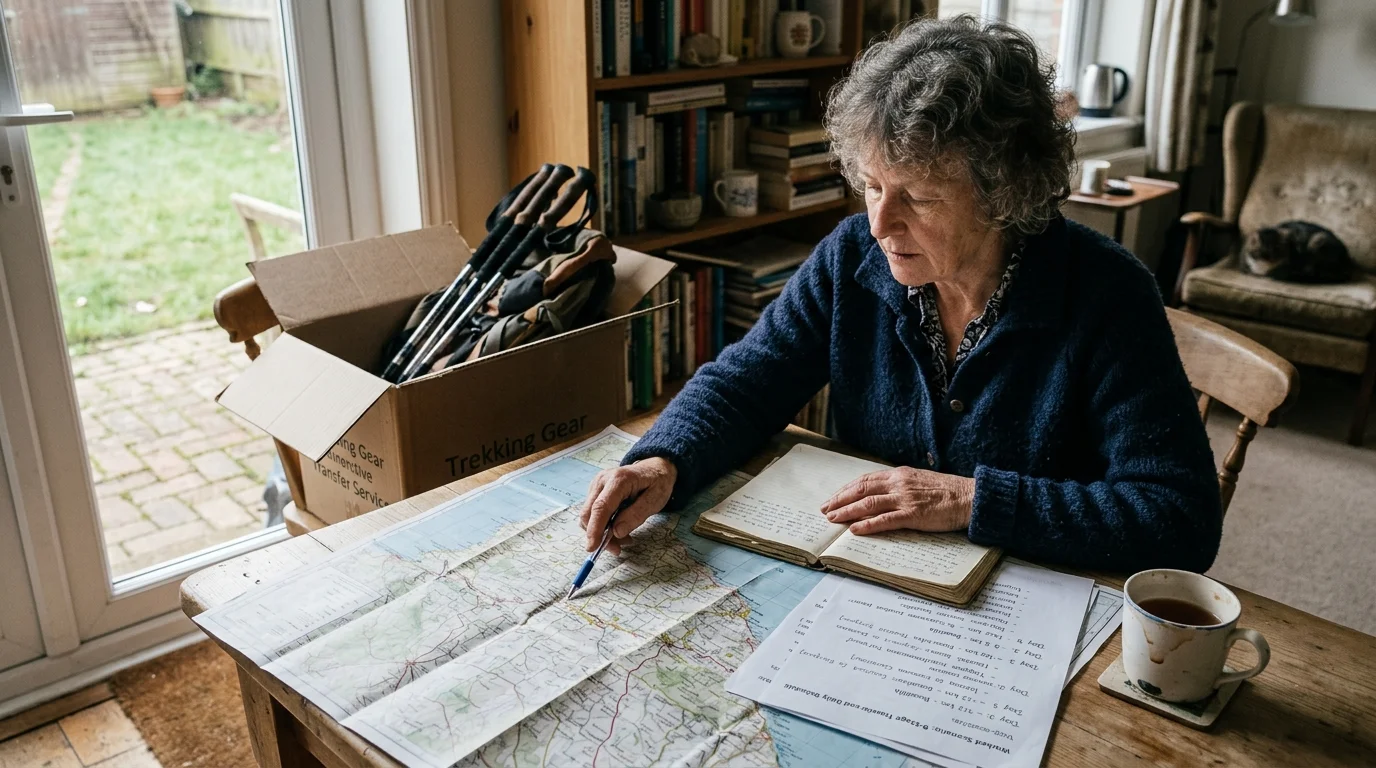
Consider the schedule of a 68-year-old hiker who completed a right knee arthroplasty 14 months prior. This hiker books nine consecutive nights in private rooms with private baths along the trail.
The total luggage forwarding cost through the Correos Paq Mochila service runs exactly €54.00 (9 stages at €6.00 per transfer). The transported duffel bag weighs 14.2 kilograms, well below the 20-kilogram regulatory ceiling.
The daily routine follows a structured, low-stress operational rhythm:
- 07:30 AM: Deliver the heavy duffel to the guesthouse reception area with the pre-printed Correos routing tag attached.
- 08:00 AM: Start walking while morning temperatures stay cool and Galician mist dampens trail dust.
- 10:15 AM: Stop at a cafe after four miles for coffee, hydration, and elevation of the surgical leg for fifteen minutes.
- 12:45 PM: Arrive at the destination hamlet, having maintained a comfortable pace of 2.0 to 2.2 miles per hour.
- 01:15 PM: Check into the guesthouse, where the forwarded duffel is already waiting behind the front desk.
- 02:00 PM: Apply a reusable cold pack to the knee for 20 minutes to prevent post-exercise inflammation.
The AARP lifestyle resources highlight that active travel planning and deliberate recovery windows help older adults finish challenging physical adventures without injury or burnout.
Essential Joint-Preservation Gear: Poles, Footwear, and Daypacks
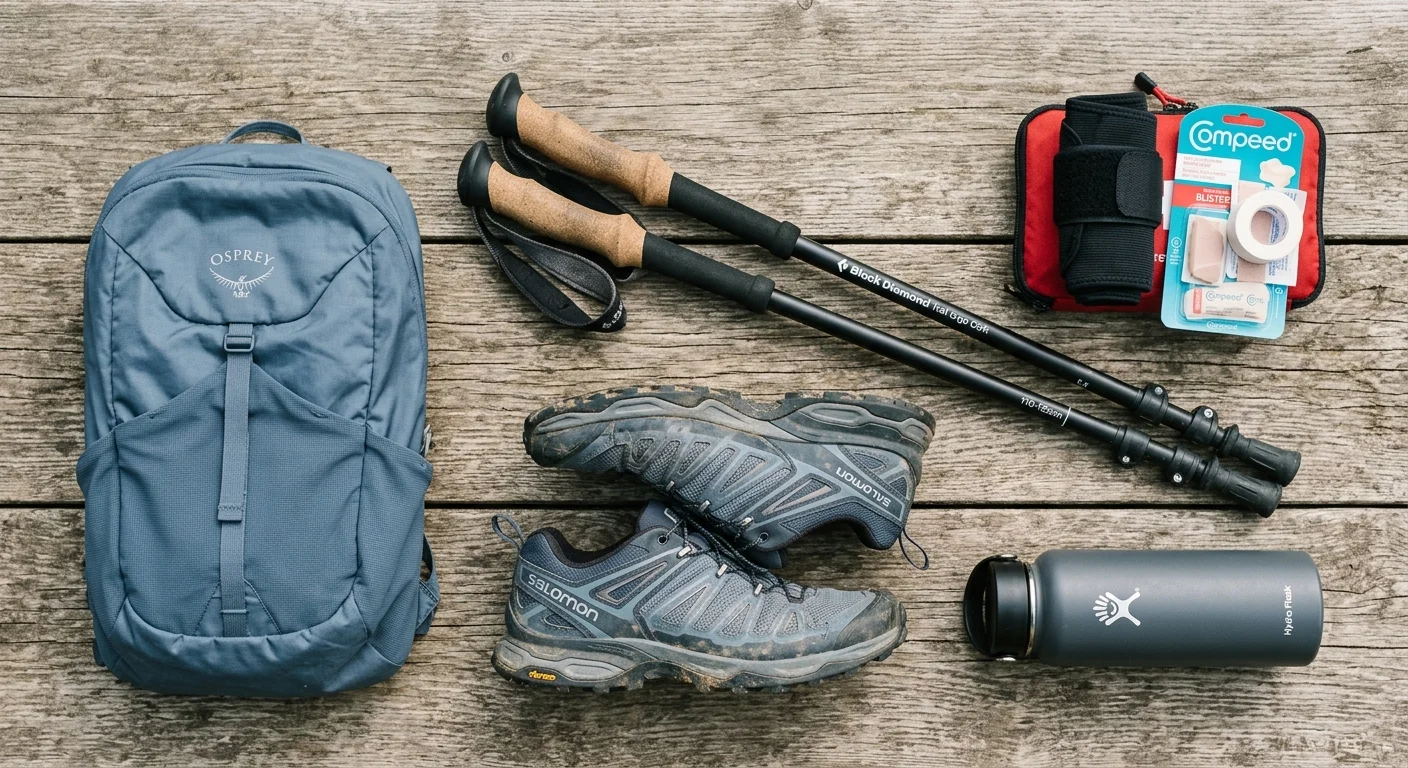
Never walk the Camino with standard street shoes or heavy leather mountaineering boots. Maximize cushioning and stability by choosing road-to-trail hybrid shoes with wide forefoot platforms and responsive midsoles.
Models like the Hoka Bondi 8 or Altra Olympus 5 absorb repetitive foot-strike shocks on hard asphalt. Pair your shoes with double-layer anti-blister socks to avoid gait adjustments that twist your knee.
Trekking poles must offer secure locking mechanisms and vibration dampening. Select aluminum models like Black Diamond Trail Pro Shock poles, which incorporate internal elastomers to soften impact across wrist, shoulder, and knee joints.
Limit your daypack weight to no more than 7 pounds total, including trail snacks, phone, paperwork, and water. An ergonomic daypack like the Osprey Talon 11 stabilizes water weight against your center of gravity.
Pack these mandatory medical and recovery items inside your daypack for daily access on the trail:
- Two collapsible Black Diamond trekking poles with durable rubber pavement tips.
- A lightweight neoprene compression sleeve or Incrediwear knee brace for continuous joint stability.
- A reusable gel ice pack that your guesthouse host can freeze overnight in their kitchen freezer.
- Single-use packets of topical non-steroidal anti-inflammatory gel (such as Voltaren / diclofenac).
- Miniature blister treatment kits containing pre-cut hydrocolloid bandages and antiseptic wipes.
Medical Infrastructure: Health Centers and Support Along the Way
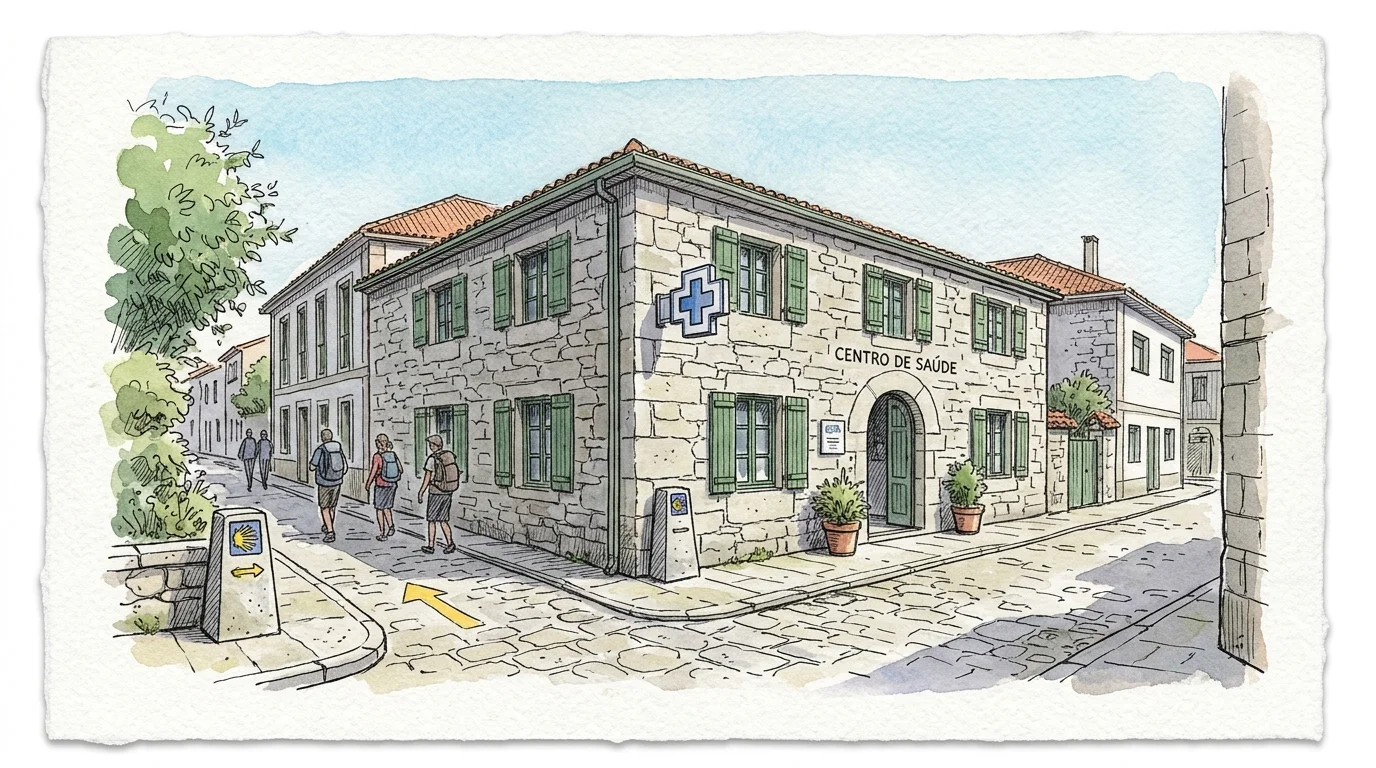
Galicia maintains an extensive public healthcare network throughout the Camino Francés corridor. Small rural clinics (Consultorios Médicos) and larger regional health centers (Centros de Saúde) operate across every major municipal hub.
You can locate staffed health clinics in Sarria, Portomarín, Palas de Rei, Melide, Arzúa, and O Pedrouzo. European Union citizens carry EHIC cards, while American travelers present private travel insurance documentation for billing reimbursement.
Spanish pharmacies, identified by glowing green crosses outside, provide first-line care for minor ailments. Licensed Galician pharmacists sell joint wraps, antiseptic washes, and orthopedic pads without a doctor’s prescription.
If acute knee pain develops along a rural trail segment, follow this emergency support protocol:
- Stop walking immediately and sit on a stone wall or trail bench to rest the knee joint.
- Dial 112 on your mobile phone for medical emergencies; English-speaking dispatchers handle urgent ambulance requests.
- For non-emergency joint exhaustion, call a local taxi driver to transport you forward to your evening accommodation.
- Request that your taxi driver drop you directly at the local municipal Centro de Saúde if swelling persists.
Local taxi operators monitor the Camino constantly. Fares between trail hamlets average €15 to €25, giving you peace of mind if your joint demands an unexpected rest day.
Frequently Asked Questions
Can I walk the Camino Francés with a total knee replacement?
Yes, many hikers with total knee replacements complete the Camino Francés successfully. You should wait at least 6 to 12 months post-surgery, walk shortened stages, use dual trekking poles, and transfer your luggage.
How far is the walk from Sarria to Santiago de Compostela?
The walking distance from Sarria to Santiago de Compostela measures approximately 114 to 115 kilometers (71 miles). This distance exceeds the official 100-kilometer minimum requirement to earn the traditional pilgrim Compostela certificate.
What happens if my knee swells during a stage?
If your knee swells, stop at the nearest cafe, elevate your leg, and apply a cold compress. Local rural taxis can drive you directly to your booked guesthouse or the nearest community health clinic for roughly €15 to €25.
How do luggage transfer companies deliver bags between hotels?
Transport companies like Correos, Jacotrans, and Pilbeo collect labeled bags from your accommodation lobby by 8:00 AM. Couriers drive your luggage ahead by van and deposit it at your destination hotel before 2:30 PM each afternoon.
Disclaimer: This article is for informational and inspirational purposes. Life decisions are deeply personal, and we encourage readers to pursue their dreams while considering their unique circumstances, health, and financial situation.




1 Comment