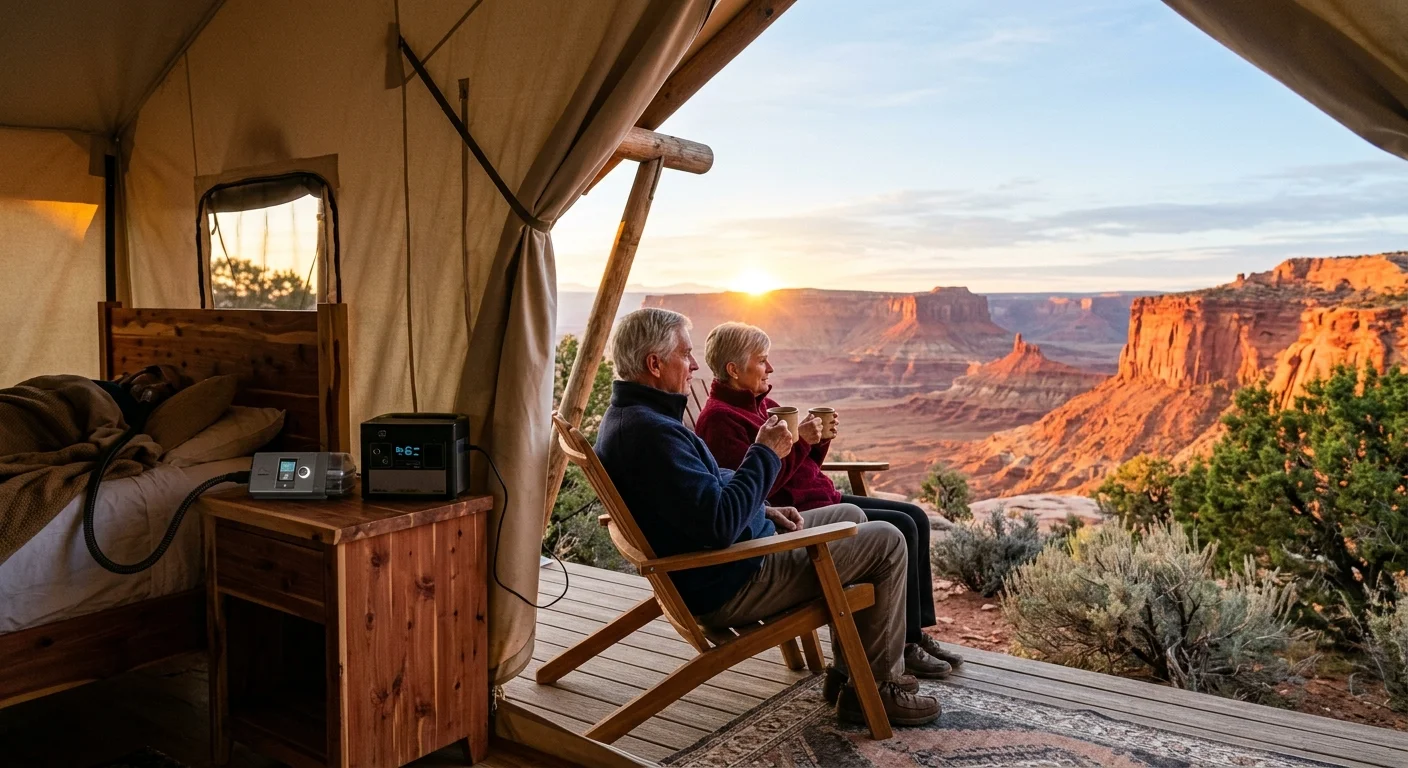
You can wake up to red rock sunrises in Moab without risking CPAP battery failure in the freezing desert night. A four-day glamping journey across Utah’s canyon country is entirely feasible with the correct equipment.
Properly powering medical equipment opens the door to embarking on the ultimate US road trip for retirees without health compromises.
These electrical calculations also serve as an essential reference if you are folding Moab into a longer [Grand Circle road trip] with family.
Most outdoor guides fail to account for how Moab’s 40°F nocturnal temperature plunge increases sleep apnea machine power draw by up to 800 percent when humidifiers activate. We solve this exact math.
This technical field guide delivers precise watt-hour sizing calculations, cold-weather efficiency tactics, and a directory of verified desert glamping sites providing reliable bedside 120-volt shore power.
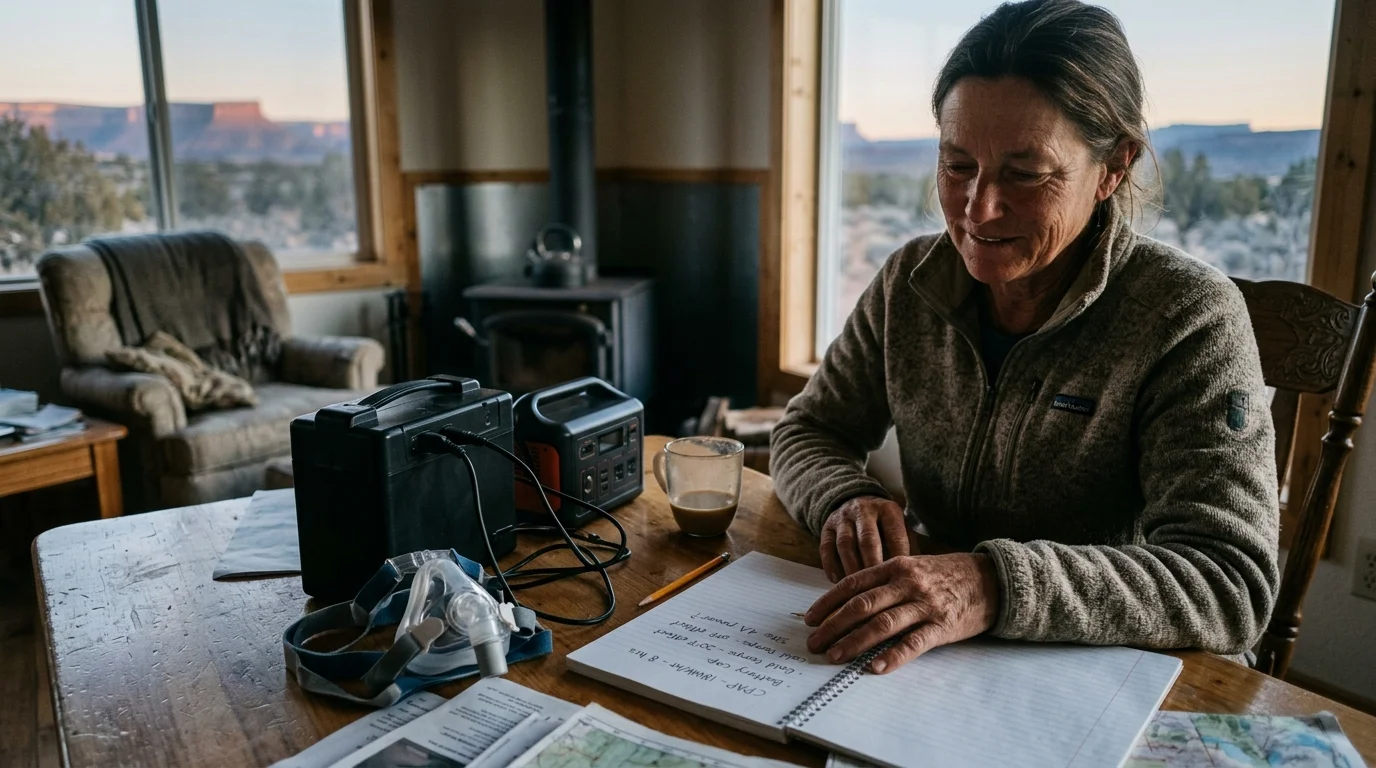
The High Desert Energy Equation: Cold Air and Watt-Hour Realities
Moab rests on the Colorado Plateau at an elevation exceeding 4,000 feet. The region delivers dramatic temperature swings where sunny 75°F afternoons plunge into 35°F to 45°F overnight chills.
Much like preparing for high-elevation terrain when visiting Machu Picchu with joint concerns, adapting your body to dry plateau air demands deliberate pacing and proper nighttime oxygenation.
For retirees planning nocturnal stargazing alongside their desert camping, consulting a dark-sky expedition gear guide highlights similar cold-weather battery management strategies.
If your journey is part of touring Utah’s Mighty 5 accessible driving circuit, preparing for these high-elevation temperature drops will ensure comfortable recovery between park visits.
Low relative desert humidity accelerates airway dryness. When you sleep in arid conditions, your body demands consistent air hydration to prevent nasal congestion and airway resistance.
Research curated by the National Institute on Aging emphasizes that high-quality, uninterrupted sleep preserves physical stamina and cognitive clarity during demanding daytime activities. Skipping positive airway pressure therapy during wilderness travel compromises your safety on canyon trails.
Modern therapy units like the ResMed AirSense 10 and AirSense 11 utilize internal heating elements to vaporize water inside the chamber. These heating plates draw significant electrical currents when cold ambient air enters the device.
Under warm indoor conditions, an unheated CPAP operates efficiently on baseline energy. However, when frigid desert air enters the chamber, the device forces its heating elements to run continuously at peak capacity.
Understanding this thermal reality prevents battery depletion in the middle of the night. You can master this dynamic by calculating precise energy consumption under actual outdoor conditions.
Calculating Your Energy Budget: DC Inverters Versus AC Wall Outlets
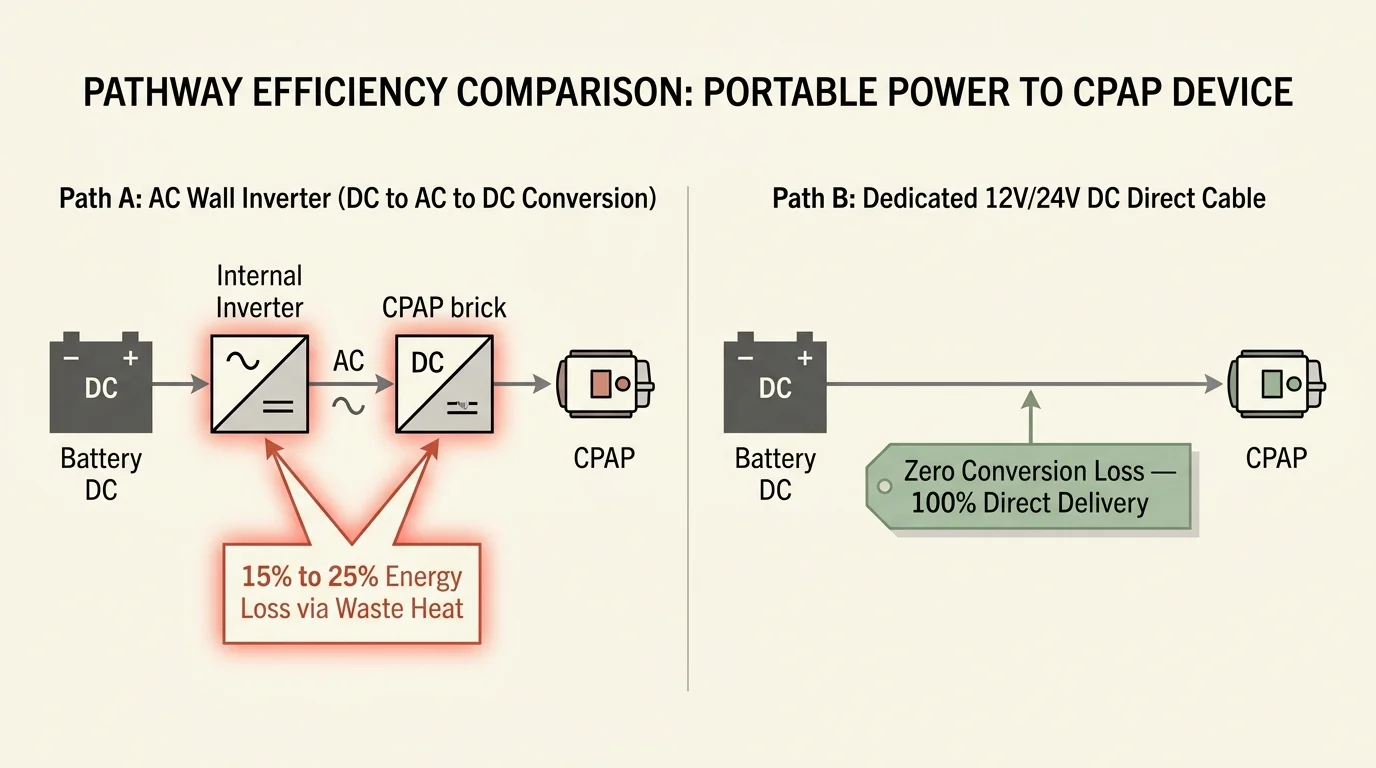
Selecting the right power delivery method determines whether your battery lasts through the night. Plugging your machine into an AC wall inverter wastes substantial stored electricity.
Proactively managing medical equipment outdoors follows the same safety principles as getting scuba certified with high blood pressure, proving that age and health conditions need not limit outdoor adventure.
Your portable battery stores energy as Direct Current (DC). When you use an AC three-prong plug, the station converts DC to Alternating Current (AC) before the CPAP brick converts it back to DC.
This dual conversion cycle produces waste heat, draining 15% to 25% of your available watt-hours. Using a dedicated 12V or 24V DC converter cable bypasses the inverter and preserves battery reserves.
Consider the measurable electrical difference between operational modes on standard machines:
- Unheated Base Operation: Running a machine at 10 cm H2O pressure without heating elements draws 5 to 15 continuous watts, consuming 40 to 120 watt-hours across eight hours.
- Humidifier Only Enabled: Power consumption rises to 35 to 55 continuous watts, requiring 280 to 440 watt-hours per sleep cycle.
- Heated Humidifier and ClimateLine Tubing: Power consumption jumps to 50 to 90+ continuous watts, consuming 400 to 720+ watt-hours per night.
- DC Cable Efficiency Bonus: Eliminates power conversion loss, directly extending runtime by up to two additional nights per charge.
Retirees seeking the ultimate senior glamping outdoor gear setup must prioritize DC adapters over standard wall plugs. This single operational change doubles off-grid reliability.
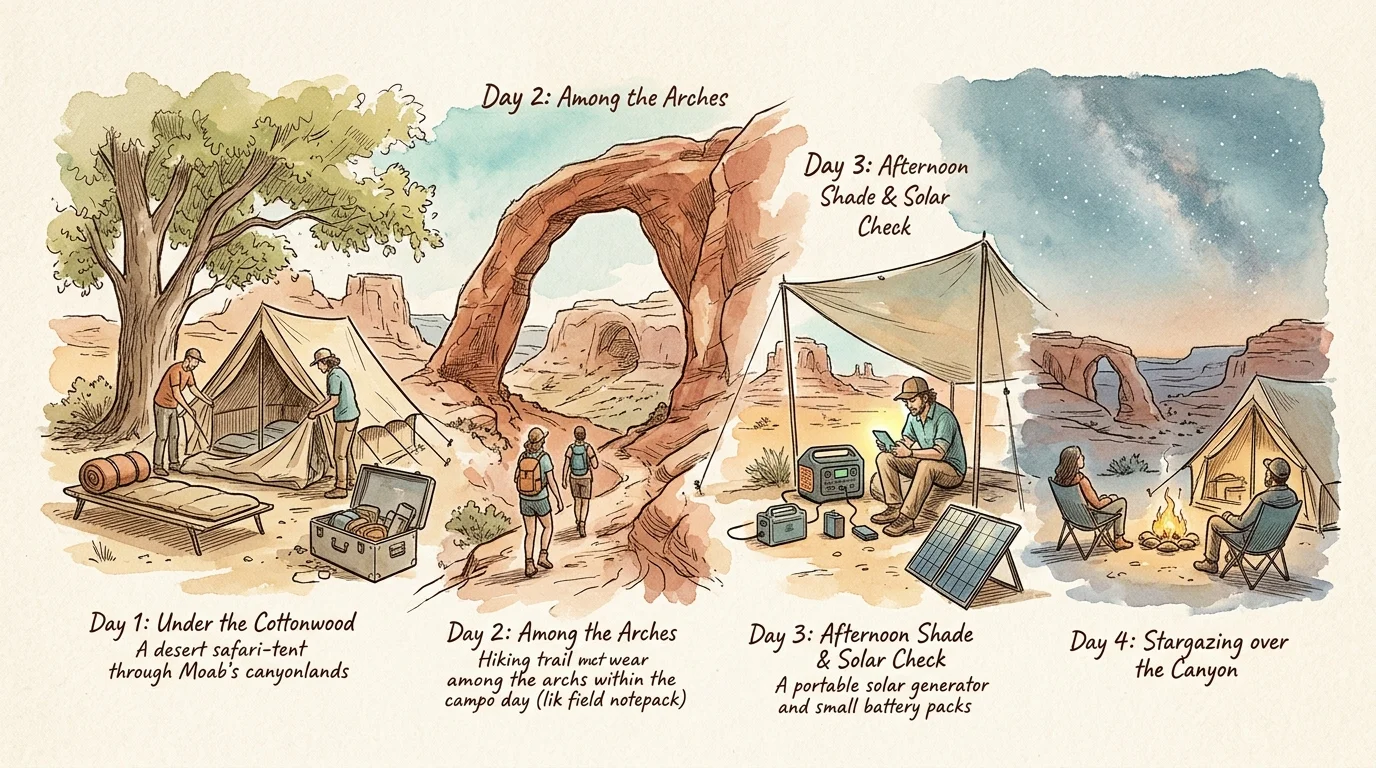
Worked Scenario: Sizing Power for a 4-Day Moab Glamping Trip
Consider this practical scenario: a 64-year-old traveler sets out on a four-night autumn glamping adventure near Klondike Bluffs outside Moab. The itinerary spans Thursday afternoon through Monday morning.
While your solar panel recharges your power pack during peak daylight, you can capture the canyon scenery using an ultralight plein air painting rig.
Factoring precise watt-hour draws into your broader [retirement travel planning] prevents unexpected power outages in remote canyon terrain.
The traveler uses a ResMed AirSense 11 set to a fixed pressure of 10 cm H2O. Nighttime temperatures inside the glamping canvas tent average 42°F.
The traveler chooses to use a DC converter cable while disabling the heated tubing and internal humidifier. The machine draws a consistent 8 continuous watts.
Calculating the required baseline capacity follows this exact formula:
- Nightly Watt-Hours: 8 watts multiplied by 8 hours of sleep equals 64 watt-hours per night.
- Four-Night Total Consumption: 64 watt-hours multiplied by 4 nights equals 256 watt-hours of required energy.
- Battery Safety Overhead: Quality LiFePO4 batteries feature an 85% depth of discharge efficiency rating, requiring a gross capacity of 301 watt-hours (256 divided by 0.85).
- Cold Weather Buffer: Add a 20% margin for cold-weather performance drops, yielding a minimum battery requirement of 361 watt-hours.
If this traveler chooses to run heated humidification at setting 4, the calculation shifts dramatically. Consumption jumps to 60 watts continuous, requiring 480 watt-hours per night.
Over four nights, heated therapy consumes 1,920 watt-hours. Supporting this load requires a massive 2,400 watt-hour battery system or active daily solar generation.
A 100-watt rigid or portable solar panel yields approximately 350 to 450 watt-hours across six hours of direct Utah sunlight. Recharging your station daily makes extended off-grid stays effortless.
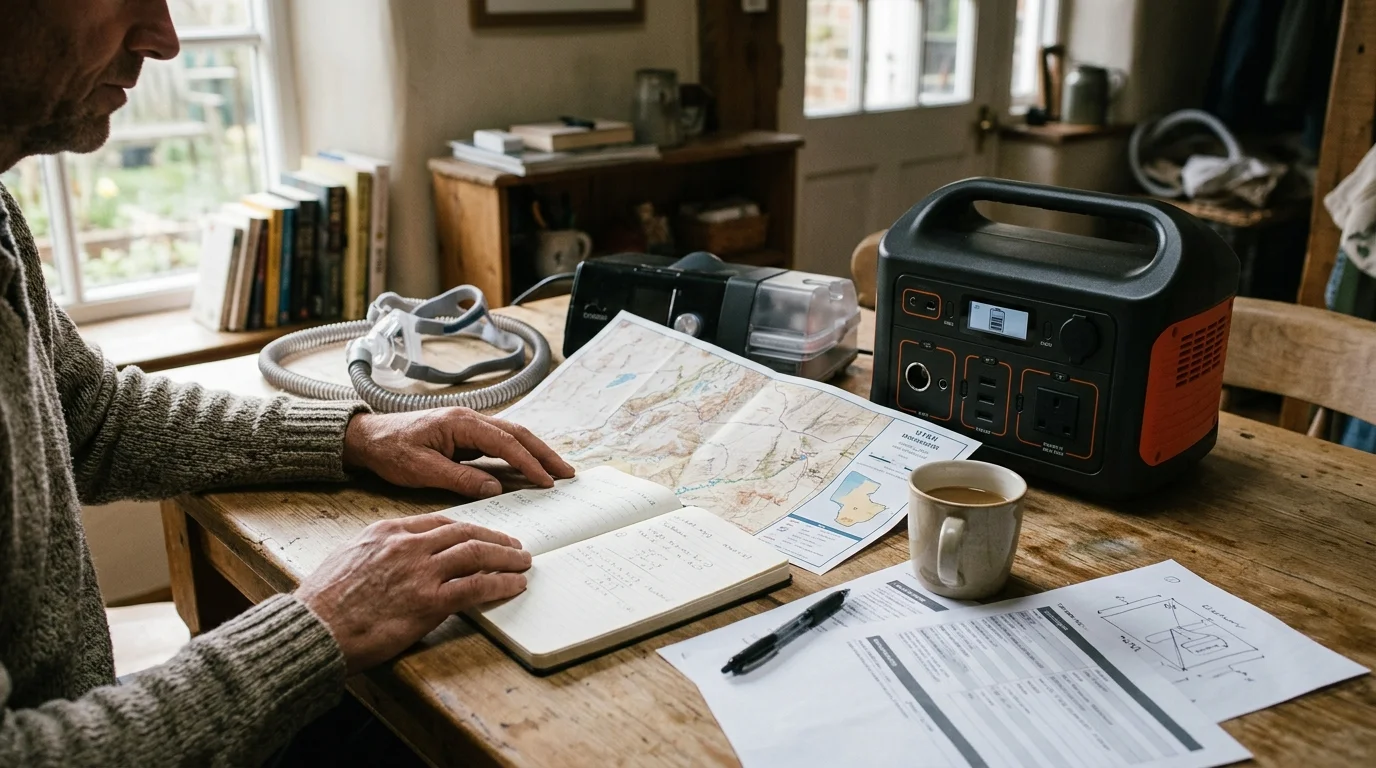
Portable Power Station Specifications for Desert Glamping
Modern lithium iron phosphate (LiFePO4) power stations outperform older lithium-ion packs. They tolerate high temperatures, deliver over 3,000 charge cycles, and maintain steady voltage output during heavy discharge cycles.
These thermal protection principles mirror the cold-weather battery precautions necessary when organizing an Alaska northern lights trip on a budget.
Selecting the optimal cpap camping portable battery requires analyzing usable capacity, direct 12V DC ports, and solar recharge speed. The following comparison highlights top power stations for medical therapy in desert conditions.
| Power Station Model | Battery Chemistry & Capacity | Unheated DC Runtime (8W Draw) | Heated Humidifier DC Runtime (55W Draw) | 100W Solar Input Recharge Time |
|---|---|---|---|---|
| EcoFlow River 2 Pro | LiFePO4 / 768 Wh | 81 Hours (~10 Nights) | 11.8 Hours (~1.4 Nights) | 8 to 10 Hours (Full Sun) |
| Jackery Explorer 1000 v2 | LiFePO4 / 1,070 Wh | 113 Hours (~14 Nights) | 16.5 Hours (~2 Nights) | 11 to 13 Hours (Full Sun) |
| Bluetti AC70 | LiFePO4 / 768 Wh | 81 Hours (~10 Nights) | 11.8 Hours (~1.4 Nights) | 8 to 10 Hours (Full Sun) |
| Anker SOLIX C800 Plus | LiFePO4 / 768 Wh | 81 Hours (~10 Nights) | 11.8 Hours (~1.4 Nights) | 8 to 10 Hours (Full Sun) |
Never charge any lithium battery pack when ambient temperatures drop below 32°F. Sub-freezing charging causes permanent lithium plating inside the battery cells, destroying capacity.
Keep your portable power station inside your sleeping shelter during the day. This simple step keeps the battery within safe operating temperatures for daytime solar charging.
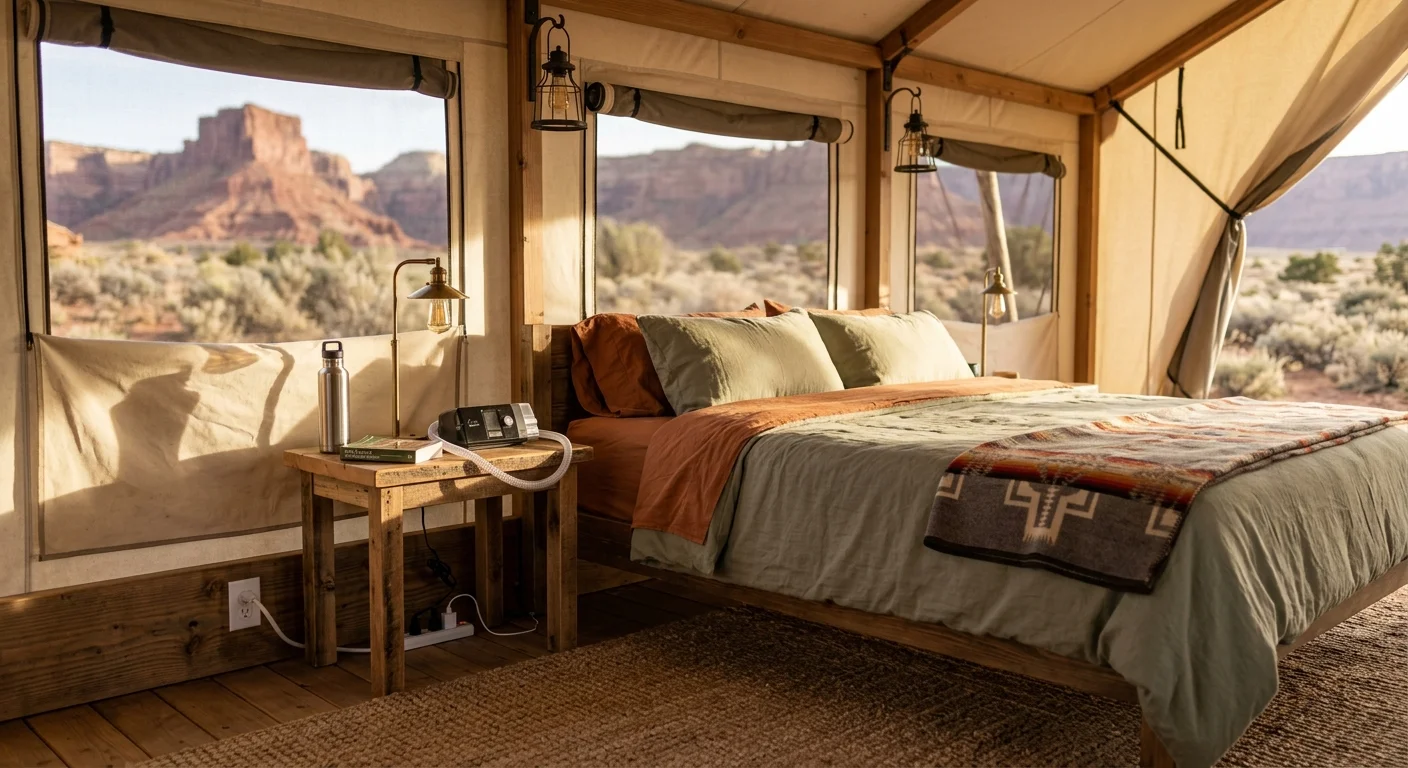
Verified Moab Glamping Accommodations with 120V Shore Power
If you prefer skipping solar panels and battery calculations, choose moab glamping with electricity directly at your bedside. Several premier destinations near Moab provide verified 120V electrical infrastructure.
If you enjoy scenic overland travel without personal driving stress, exploring an accessible senior cross-country Amtrak route offers reliable onboard electric outlets alongside stunning national park views.
Many long-term travelers offset accommodation costs by exploring RV campground host opportunities that include free full hookups and continuous electrical access.
For retirees embracing [RV living on wheels], securing a campsite with verified pedestals eliminates the need for standalone battery packs entirely.
These luxury desert accommodations combine rugged red rock scenery with the peace of mind that comes from uninterrupted utility power.
- Dead Horse Point State Park Yurts (Moenkopi & Wingate): Located 30 miles northwest of Moab, these climate-controlled yurts feature interior 110V wall outlets, interior lighting, heating, air conditioning, and a mini fridge. Nightly rates average $150 ($100 off-season), with Wingate Yurt 6 and Moenkopi Yurt 1 providing full ADA accessibility.
- ULUM Moab (Looking Glass Road): Positioned 25 miles south of town near Looking Glass Arch, this ultra-luxury safari resort equips every tent with bedside 110V electrical outlets, wood stoves, and private en-suite bathrooms. Medical machines plug directly into standard wall plugs without adapters.
- Moab RV & Glamping Resort: Situated in Spanish Valley, this property provides furnished glamping tipis and luxury safari tents equipped with dedicated in-tent electrical outlets, space heaters, and cooling fans.
- Dead Horse Point Campgrounds (Kayenta & Wingate): Ideal for travelers who prefer luxury campervans or outfitted rooftop tents, providing dedicated 20/30/50-amp electrical pedestals at every site.
Pay close attention to property policies when booking accommodations. Standard canvas units at Under Canvas Moab provide low-voltage USB ports rather than standard 110V wall outlets.
Under Canvas Moab provides loaner medical battery packs for CPAP machines upon request. Reserve these battery packs with guest services prior to arrival to guarantee availability.
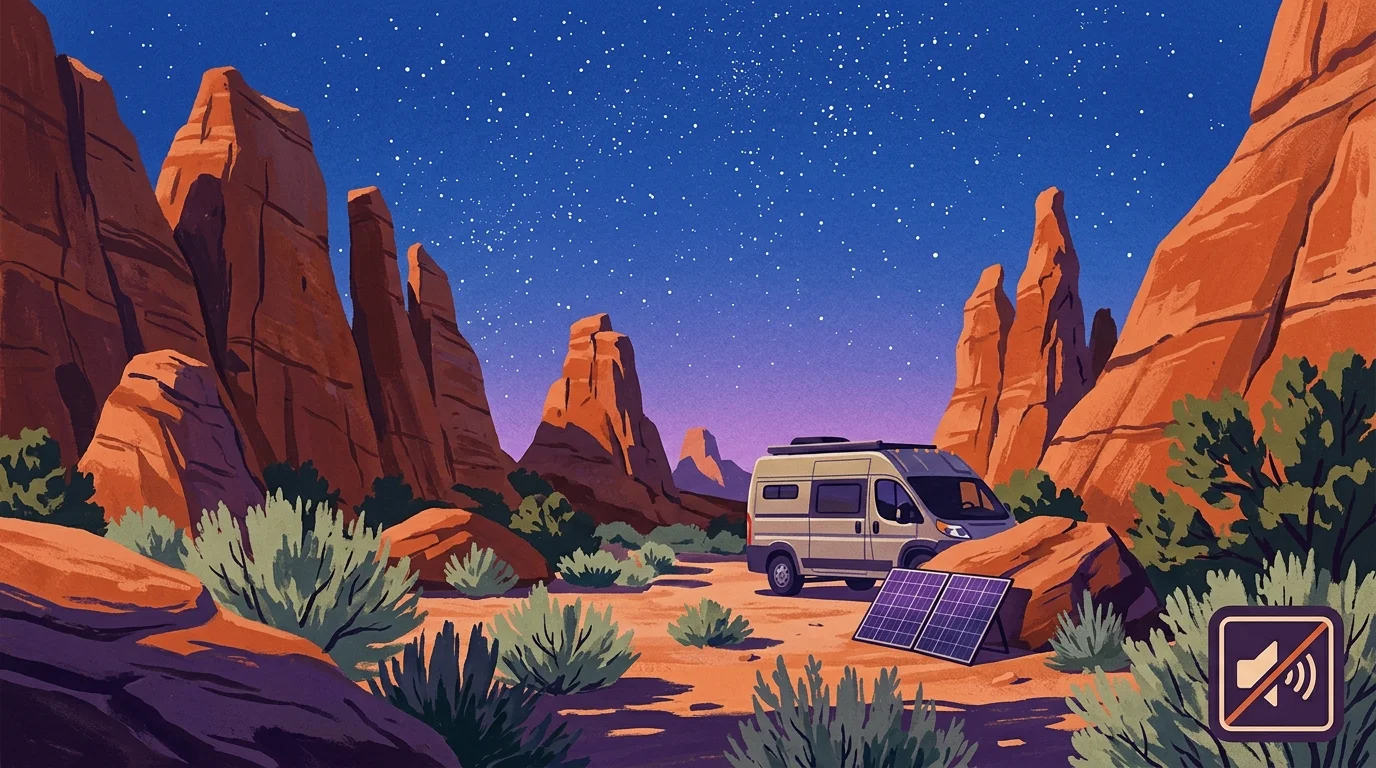
Navigating BLM Land and Arches National Park Power Restrictions
Venturing into public lands requires strict adherence to federal and state park regulations. Knowing power rules in advance prevents disruptions to your nightly medical routine.
Much like preparing for a [solo dark-sky expedition], camping on primitive desert lands requires silent battery storage to respect nighttime noise ordinances and protect dark sky conditions.
Devils Garden Campground represents the only designated camping area inside Arches National Park. Situated at 5,200 feet elevation, its 51 campsites offer no electrical hookups or utility pedestals.
Arches National Park enforces strict generator hours between 8:00 AM to 10:00 AM and 4:00 PM to 8:00 PM. Park rangers strictly prohibit generators overnight, making silent battery banks mandatory for CPAP users.
Federal pass discounts help stretch your travel budget across public lands:
- America the Beautiful Senior Pass: U.S. citizens aged 62 and older can acquire an annual pass for $20 or a lifetime pass for $80, granting free entry to Arches and Canyonlands.
- Campground Discounts: The Senior Pass provides a 50% discount on standard non-electric site fees at Devils Garden Campground.
- State Park Fees: Dead Horse Point is a Utah State Park and does not honor the federal Senior Pass. Entry requires a $20 state vehicle permit.
Dispersed camping across Bureau of Land Management (BLM) territory along Willow Springs Road or Klondike Bluffs offers complete solitude. These primitive desert sites demand full self-sufficiency and silent battery power.
Many active travelers combine public land exploration with programs run by Road Scholar, pairing educational excursions with comfortable, power-ready lodging. Proper planning lets you explore remote canyon territory with confidence.
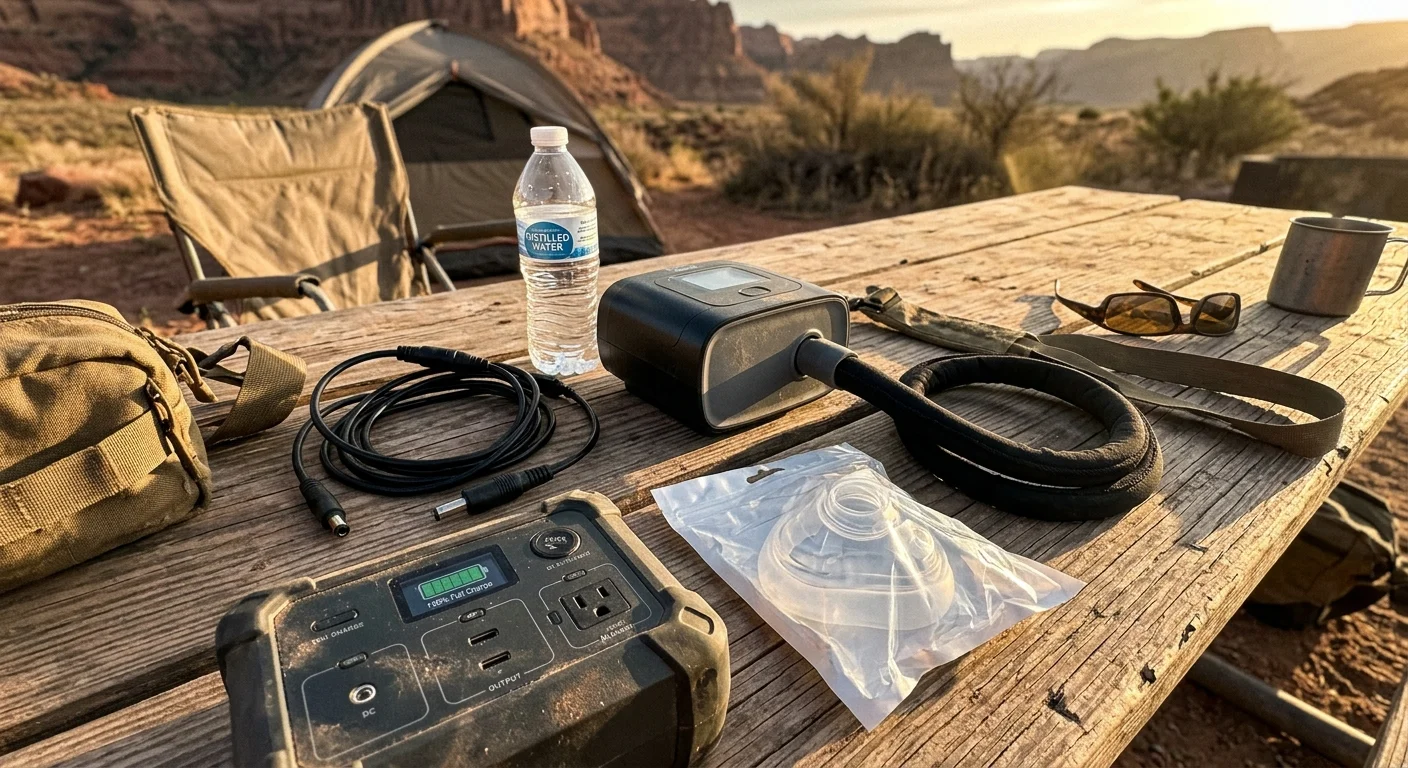
Essential Field Setup Checklist for Desert Glamping with a CPAP
Preparing medical equipment for remote desert conditions requires methodical planning. Fine red sand, low temperatures, and dry air present unique environmental challenges.
Follow this field checklist to protect your equipment and ensure seamless therapy across your trip:
- Bench Test at Home: Run your CPAP on your portable battery for an entire eight-hour night at home before traveling. Confirm your voltage settings and cable connections work properly.
- Acquire OEM DC Cables: Purchase the official 12V/24V DC converter cable designed specifically for your CPAP model to minimize energy loss.
- Pack Distilled Water: Tap water in Moab carries high mineral concentrations that degrade humidifier tubs. Purchase distilled gallons at City Market along Main Street upon arrival.
- Elevate Battery Stations: Never place your power station directly on cold canvas tent floors. Position the unit on a wooden nightstand, camp table, or insulated closed-cell foam pad.
- Install Fine-Particle Filters: Fine desert silt bypasses standard foam filters. Install hypoallergenic fine-mesh intake filters to block fine sandstone dust.
- Bring a Tube Jacket: Use an insulated neoprene sleeve around your hose to eliminate internal condensation when warm air contacts cool tent air.
Keep a non-electric backup system in your vehicle, such as a custom-fitted oral appliance. Having an alternative treatment option guarantees peace of mind throughout your canyon country adventure.
Desert travel rewards thorough preparation. Equipping yourself with verified power reserves turns desert glamping into an invigorating, life-affirming journey.
Frequently Asked Questions
Can I fly into Salt Lake City or Moab with a large LiFePO4 power station?
FAA and TSA regulations prohibit spare lithium batteries exceeding 160 watt-hours in checked and carry-on baggage. Power stations larger than 160 Wh must travel by ground transportation.
What happens if desert sand enters my CPAP machine?
Fine quartz sand damages internal motor turbines. Keep your CPAP inside a sealed travel case during the day, and use fine-particulate hypoallergenic filters throughout your stay.
How do I run heated humidification without draining my power station overnight?
Lower your humidity setting to Level 1 or 2, and switch off the heated tubing. This reduces continuous power draw from 85 watts down to 25 watts while still providing moisture.
Are electrical outlets inside Dead Horse Point State Park yurts reliable for medical equipment?
Yes, Moenkopi and Wingate yurts connect directly to the regional electrical grid. They supply clean, continuous 120-volt alternating current capable of running medical devices.
Disclaimer: This article is for informational and inspirational purposes. Life decisions are deeply personal, and we encourage readers to pursue their dreams while considering their unique circumstances, health, and financial situation.