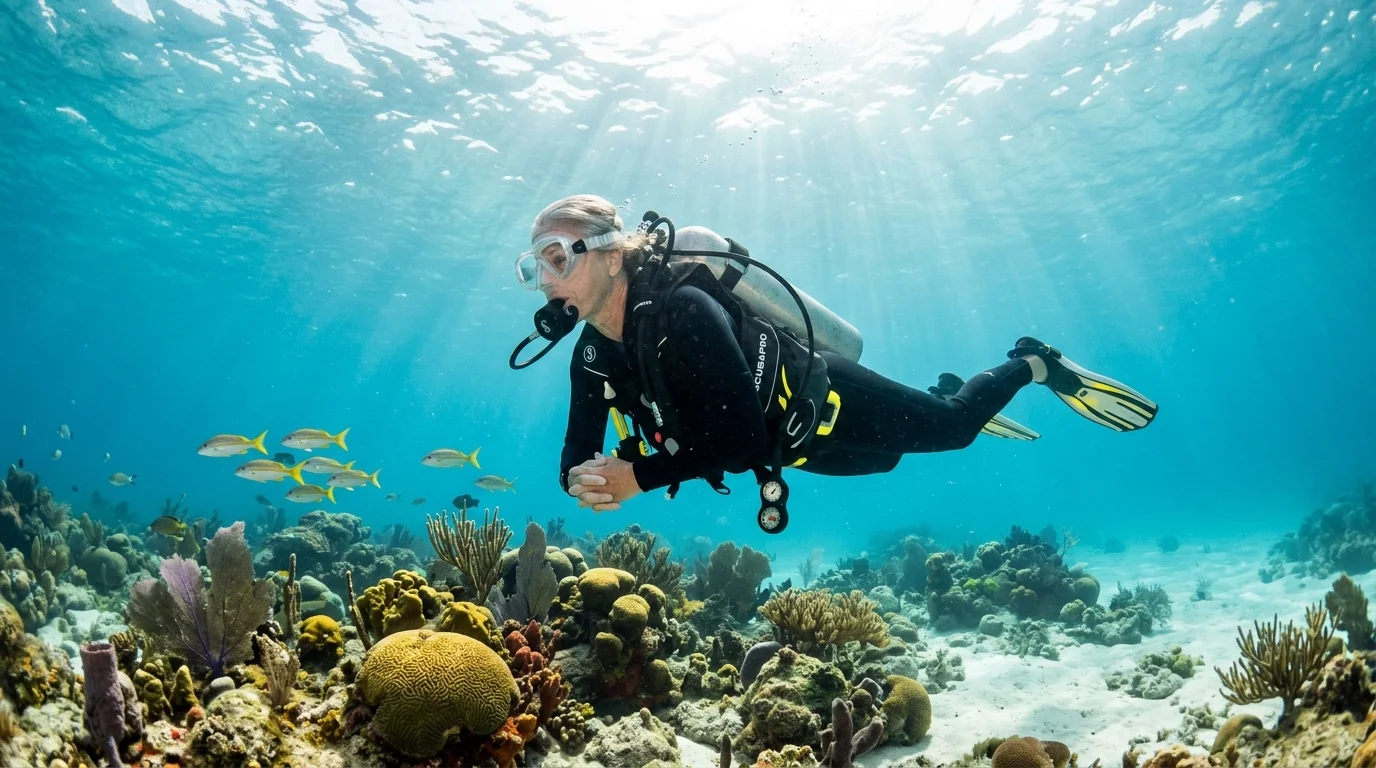
You can earn your PADI Open Water diver certification at 63 while managing stage-1 hypertension. Controlled blood pressure does not bar you from the underwater world when you follow modern hyperbaric cardiology protocols.
Most diving guides offer generic health warnings or dismiss mature adventurers entirely. This guide outlines the exact Divers Alert Network clinical clearance steps and pairs them with shallow, low-stress Cozumel shore reefs under 35 feet.
By eliminating boat rolling, heavy currents, and cold-water cardiovascular constriction, you protect your vascular system and unlock vibrant coral kingdoms on your own terms.
Navigating the 2020 Diver Medical Questionnaire After 60
The dive industry completely overhauled its medical screening process in 2020. The Diver Medical Screen Committee developed an evidence-based system adopted worldwide by PADI, NAUI, and the Undersea and Hyperbaric Medical Society.
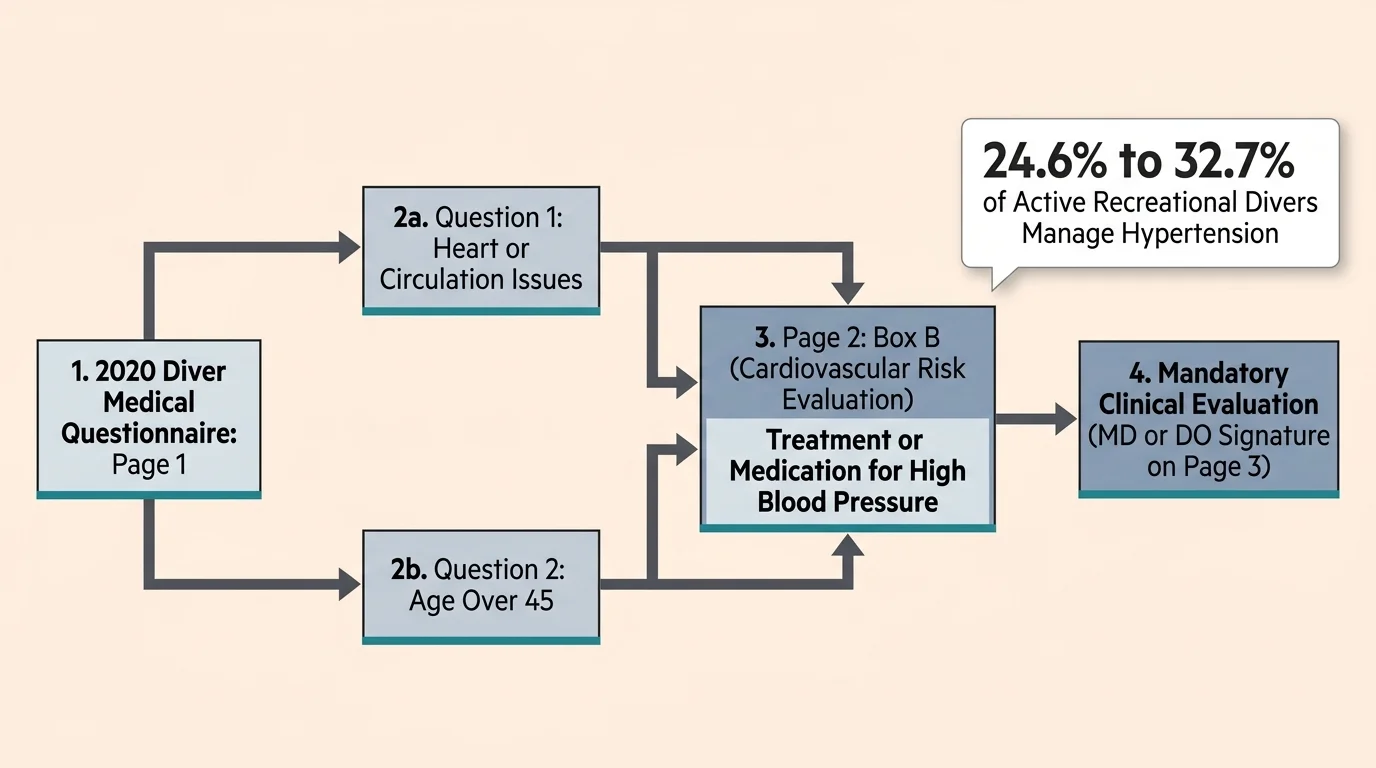
As a 63-year-old diver, you start by completing page 1 of the standard Diver Medical Questionnaire. Question 1 asks if you have had issues with your heart or blood circulation.
Question 2 asks if you are over 45 years of age. Answering yes to being over 45 directs you immediately to Box B on page 2.
Box B evaluates cardiovascular risk factors directly. It asks whether you currently receive treatment for high blood pressure or take medication to control your blood pressure levels.
Answering yes to the hypertension question does not disqualify you from diving. Instead, it triggers a mandatory clinical evaluation by an MD or DO before your first pool session.
Divers Alert Network research reveals that between 24.6% and 32.7% of all active recreational divers manage hypertension. You are joining a substantial community of active, certified divers who balance medical vigilance with exploration.
The form requires your examining physician to complete and sign page 3. Your dive instructor cannot accept verbal clearance or a simple prescription pad note.
“The sea, once it casts its spell, holds one in its net of wonder forever.” — Jacques Cousteau
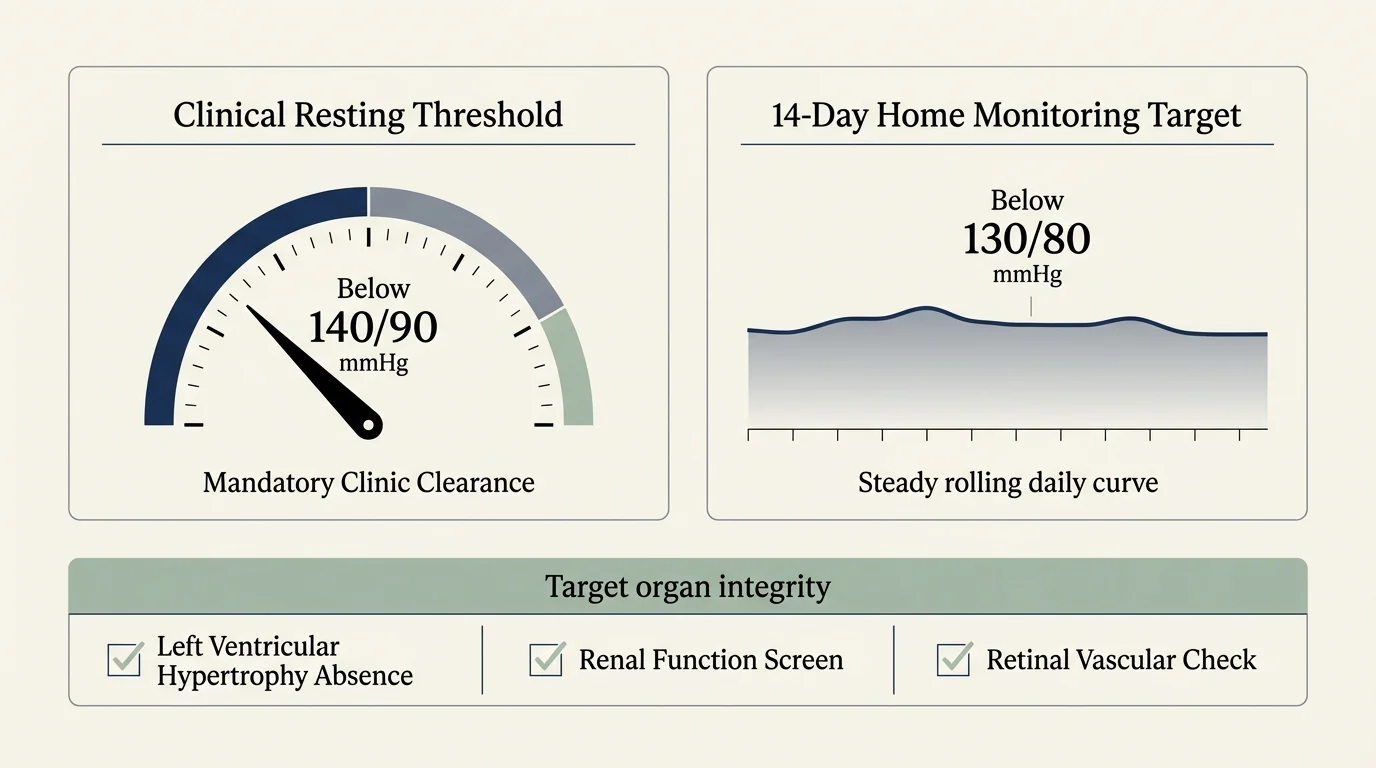
Blood Pressure Numbers and Medication Profiles Under Water
Hyperbaric medicine establishes clear cardiovascular thresholds for recreational diving. Diving medical organizations mandate resting clinic blood pressure below 140/90 mmHg before clearing a candidate.
Physicians prefer to see a 14-day home monitoring log showing consistent readings below 130/80 mmHg. Stable control demonstrates that physical exertion underwater will not trigger dangerous hypertensive spikes.
Your physician must also verify the absence of end-organ damage. Target organ checks ensure that chronic blood pressure has not caused left ventricular hypertrophy, renal disease, or retinal vascular changes.
Different blood pressure medications alter human physiology under depth pressure in unique ways. Hyperbaric physicians evaluate your specific pharmaceutical profile against the physical demands of scuba diving:
- ACE Inhibitors and ARBs: Drugs like Lisinopril and Losartan represent the gold standard for scuba divers. They manage vascular resistance without blunting your exercise heart rate or promoting electrolyte loss.
- Beta-Blockers: Medications such as Metoprolol and Atenolol reduce your maximum heart rate. Because they cap aerobic output, your physician must verify that you can sustain moderate swimming without exhaustion.
- Thiazide Diuretics: Hydrochlorothiazide and similar diuretics cause fluid and electrolyte excretion. Dehydration underwater significantly raises your susceptibility to decompression sickness and muscle cramping.
- Calcium Channel Blockers: Agents like Amlodipine lower vascular tension effectively. However, they occasionally produce peripheral ankle swelling and orthostatic dizziness when climbing boat ladders in heavy gear.
Never change your medication dose immediately before a dive trip. Medical protocols require 30 days of consistent dosing on any new prescription before issuing scuba clearance.
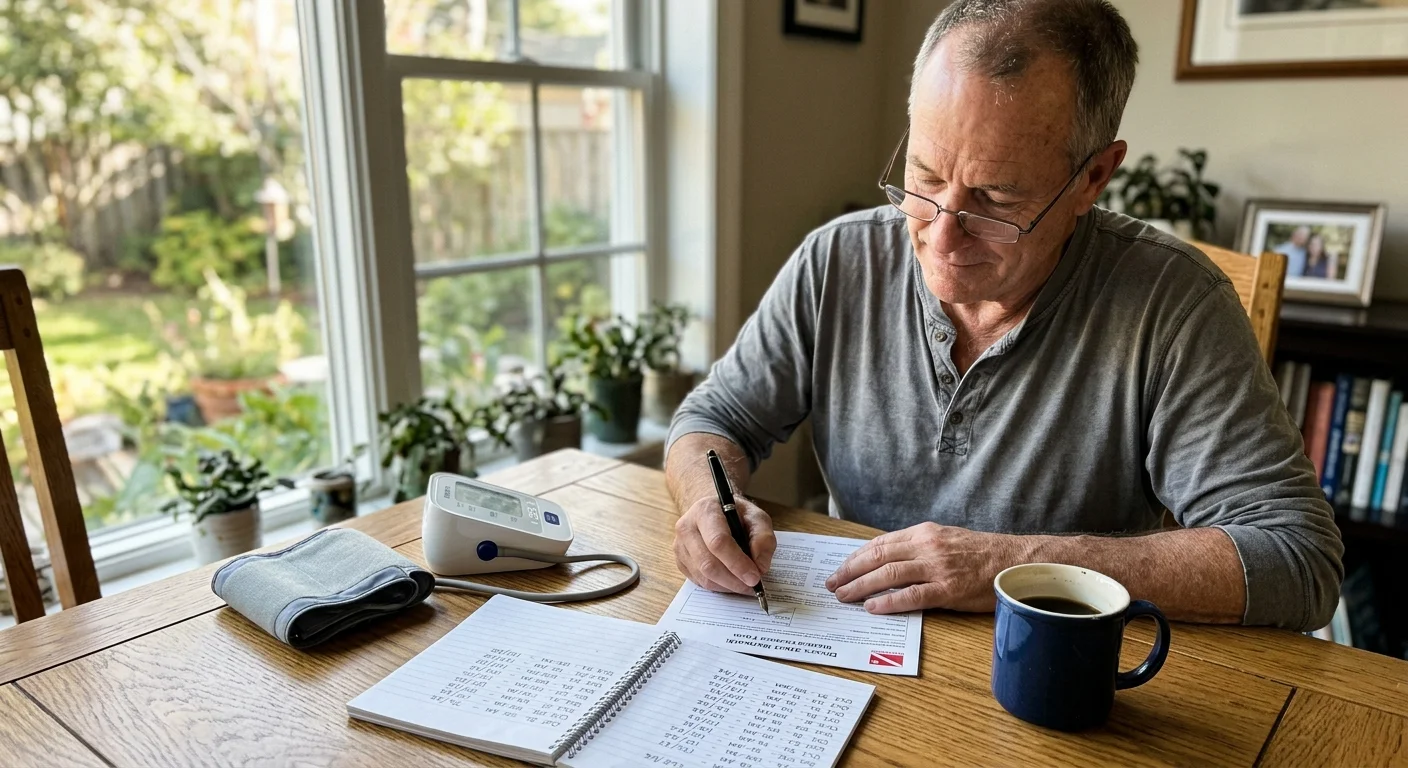
Step-by-Step Medical Clearance Protocol with Your Physician
Do not show up at your doctor’s office unannounced with a blank PADI medical form. You must approach this appointment with documented physiological data and diving-specific medical guidance.
The National Institute on Aging highlights the importance of maintaining structured aerobic fitness and vascular health as you enter your sixties. Presenting objective fitness data establishes credibility with your physician.
- Log your home blood pressure twice daily for 14 consecutive days: Record resting morning and evening pressures using an automated, calibrated upper-arm cuff. Bring this comprehensive log to your clinical visit.
- Download the complete 2020 DMSC Medical Guidance Package: Print all four pages, including the physician guidance notes. These notes educate non-diving clinicians on hyperbaric physical stresses.
- Request a resting 12-lead electrocardiogram (ECG): Your doctor uses this baseline tracing to confirm normal cardiac rhythm and exclude silent ischemic heart disease or electrical conduction delays.
- Complete an exercise stress evaluation: Physicians often prescribe a Bruce treadmill test to evaluate cardiovascular reserves. Achieving 10 metabolic equivalents (METs) proves you possess the stamina required for open-water emergencies.
- Review kidney function via routine blood panels: Serum creatinine and estimated glomerular filtration rate confirm your kidneys handle blood pressure regulation and hydration shifts without impairment.
- Obtain the signed page 3 approval form: Ensure the doctor checks Box A indicating full recreational diving clearance and adds their medical license number and clinic stamp.
Keep the original physical form inside a waterproof document wallet. Bring two physical photocopies with you to the dive resort to prevent administrative delays.
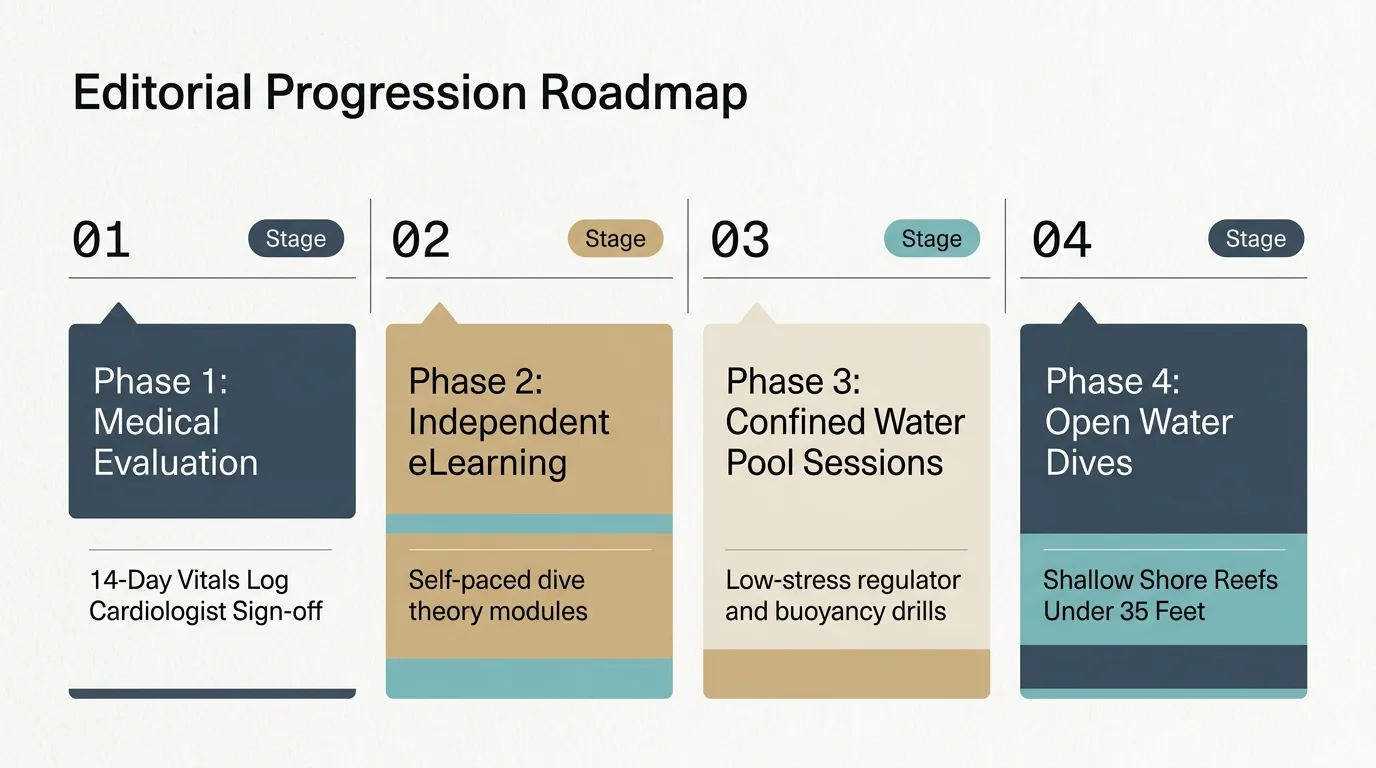
Worked Scenario: Total Time, Cost, and Vitals for a 63-Year-Old Diver
Consider this concrete path for a 63-year-old retiree managing stage-1 hypertension on 10 mg of daily Lisinopril. This scenario details the exact financial expenditures, diagnostic milestones, and training calendar.
Our diver began home tracking on March 1. Over 14 days, morning blood pressure averaged 124/76 mmHg, and evening readings averaged 128/80 mmHg.
On March 16, the diver completed a clinic evaluation. The physician recorded an in-office resting pressure of 126/78 mmHg and ordered a Bruce Protocol treadmill test.
During the stress test, the diver achieved Stage 4 (10.2 METs) at a peak heart rate of 144 beats per minute. The ECG confirmed zero ST-segment depression and no premature ventricular contractions.
The physician signed the PADI Diver Medical form with no activity restrictions on March 18. The diver immediately enrolled in the online academic program.
- PADI Open Water Diver eLearning academic package: $230
- Confined-water pool sessions at local dive center (six hours across two days): $250
- Preventive cardiology consultation and treadmill stress test co-pay: $185
- Divers Alert Network (DAN) annual standard membership: $45
- DAN Master Plan annual dive accident medical insurance: $85
- Four open-water checkout dives in Cozumel with a dedicated private divemaster: $340
- Cozumel Marine Park access bracelets ($6 per day for two days): $12
- Rental dive computer (Suunto Zoop Novo) and shore tank fills: $90
The total investment for the complete, medically validated certification came to exactly $1,237. The diver completed the entire process in six weeks while working at a relaxed pace.
The academic coursework required 12 hours completed over ten comfortable evenings. Confined pool work took place over one Saturday and Sunday morning in heated, controlled water.
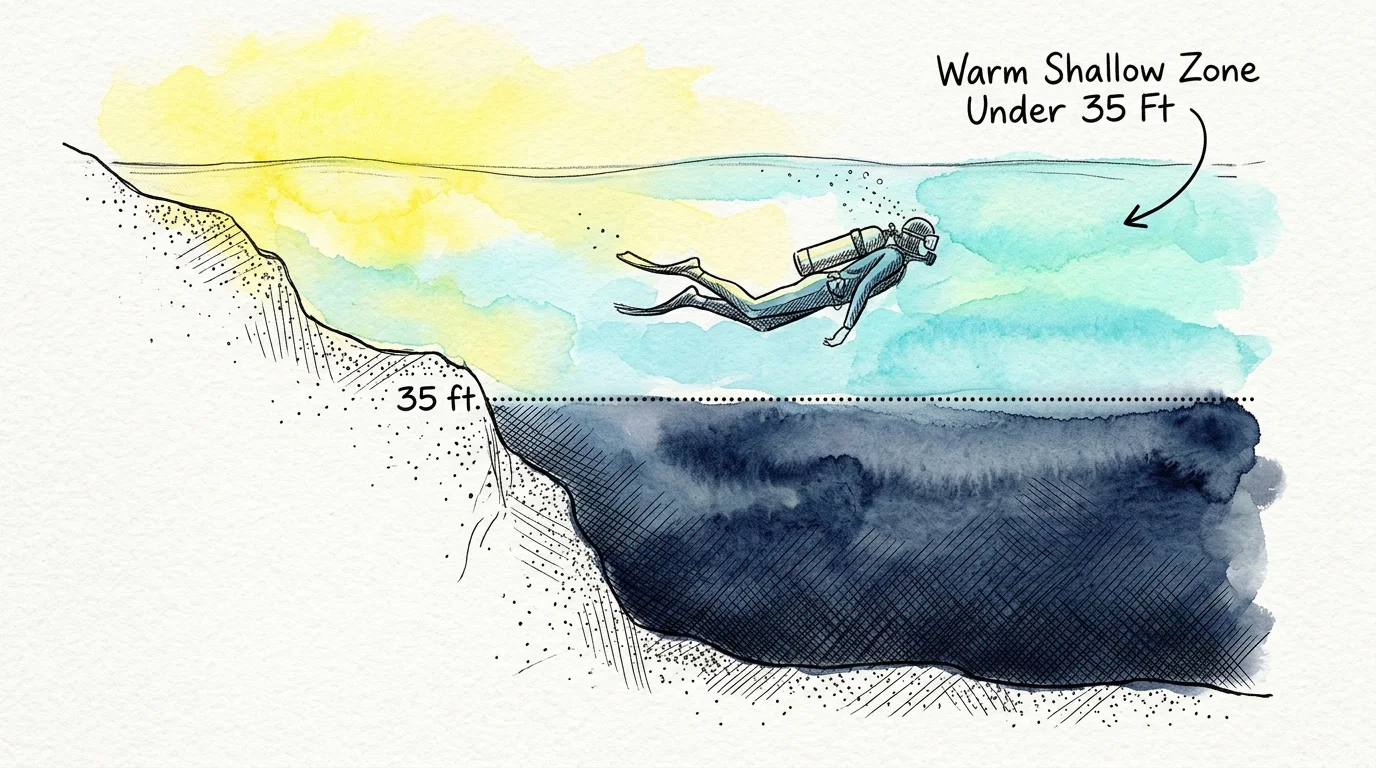
Mitigating Immersion Pulmonary Edema: Why Warm Shallow Water Matters
Immersion Pulmonary Edema (IPE) represents a serious concern for divers over 50 who carry a diagnosis of hypertension. IPE occurs when bodily fluids accumulate within the lung alveoli during submersion.
When you submerge your body in water, hydrostatic pressure shifts between 500 and 800 milliliters of venous blood inward toward your chest cavity. This fluid shift increases blood volume inside your central heart chambers.
Cold water amplifies this shift through peripheral vasoconstriction. Chilly temperatures narrow skin capillaries, forcing peripheral blood deep into the thoracic core and dramatically spiking pulmonary capillary wedge pressure.
If you possess pre-existing systemic hypertension, your heart works against higher arterial resistance. This increased afterload causes fluid leakage across lung capillaries, producing sudden breathing difficulty underwater.
You can prevent IPE entirely by managing three environmental factors: water temperature, dive depth, and physical exertion. Diving warm waters between 82°F and 85°F stops cold-induced vascular constriction from developing.
Limiting your depth to shallow reefs under 35 feet minimizes overall ambient pressure shifts on your lungs. Shallow diving also reduces breathing resistance from your regulator, keeping myocardial oxygen consumption low.
Shore-entry diving removes the physical strain of hauling heavy steel cylinders up rocking boat ladders. You walk gently into calm water, float effortlessly, and keep your pulse steady throughout the dive.
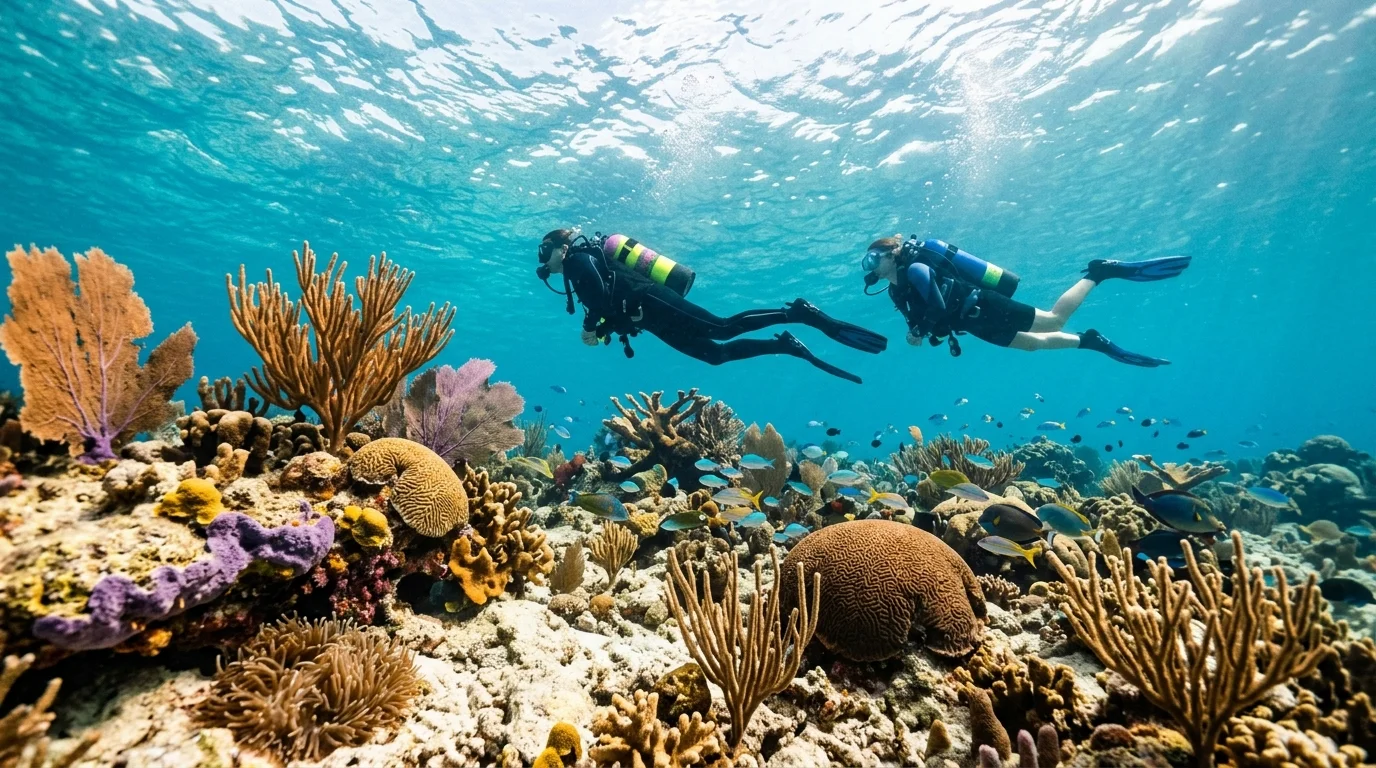
Top Shallow-Water Shore Dives in Cozumel Under 35 Feet
Cozumel offers some of the clearest, warmest waters in the Caribbean basin. While famous for deep walls and swift drift dives, its western shoreline features exceptional shallow reefs perfect for relaxed diving.
These sheltered shore locations eliminate open-ocean swell, heavy down-currents, and steep surface ladders. You enter the water at your own pace from stable platforms and shoreline entries.
| Dive Site | Depth Range (ft / m) | Current Velocity | Entry Method | Bottom Time (80 cu ft Tank) |
|---|---|---|---|---|
| Tikila Beach (The Money Bar) | 15–28 ft (4.5–8.5 m) | 0.0–0.2 knots | Concrete stairs with double steel handrails | 55–65 minutes |
| Villa Blanca Shallow Reef | 20–35 ft (6.0–10.6 m) | 0.2–0.4 knots | Protected dive shop ladder or gradual ramp | 50–60 minutes |
| Chankanaab Bolones (Shore Entry) | 18–32 ft (5.5–9.7 m) | 0.1–0.3 knots | Carved limestone steps into sheltered lagoon | 52–62 minutes |
Tikila Beach sits directly off kilometer 6.5 along the southern hotel zone. You walk down wide concrete steps fitted with sturdy stainless-steel handrails directly into 12 feet of crystal water.
The reef bottom slopes gradually outward to 28 feet across white coral sand. Giant sea fans, French angelfish, and juvenile spotted drum populate limestone outcroppings without requiring any kick against currents.
Villa Blanca Shallow Reef lies just south of San Miguel. You enter using a wide, stable boat dock ladder in calm harbor-protected water.
This site features scattered coral heads and extensive seagrass meadows between 20 and 35 feet deep. Resident green sea turtles graze quietly here, offering world-class wildlife encounters at low cardiac exertion levels.
Chankanaab Bolones provides a protected inland bay entry before you transit through a calm coral cut. Massive limestone formations rise eight feet off the seabed in just 30 feet of warm water.
Schools of yellowtail snapper and blue tangs swirl around these shallow structures. The calm water allows you to maintain neutral buoyancy without elevating your respiratory rate.
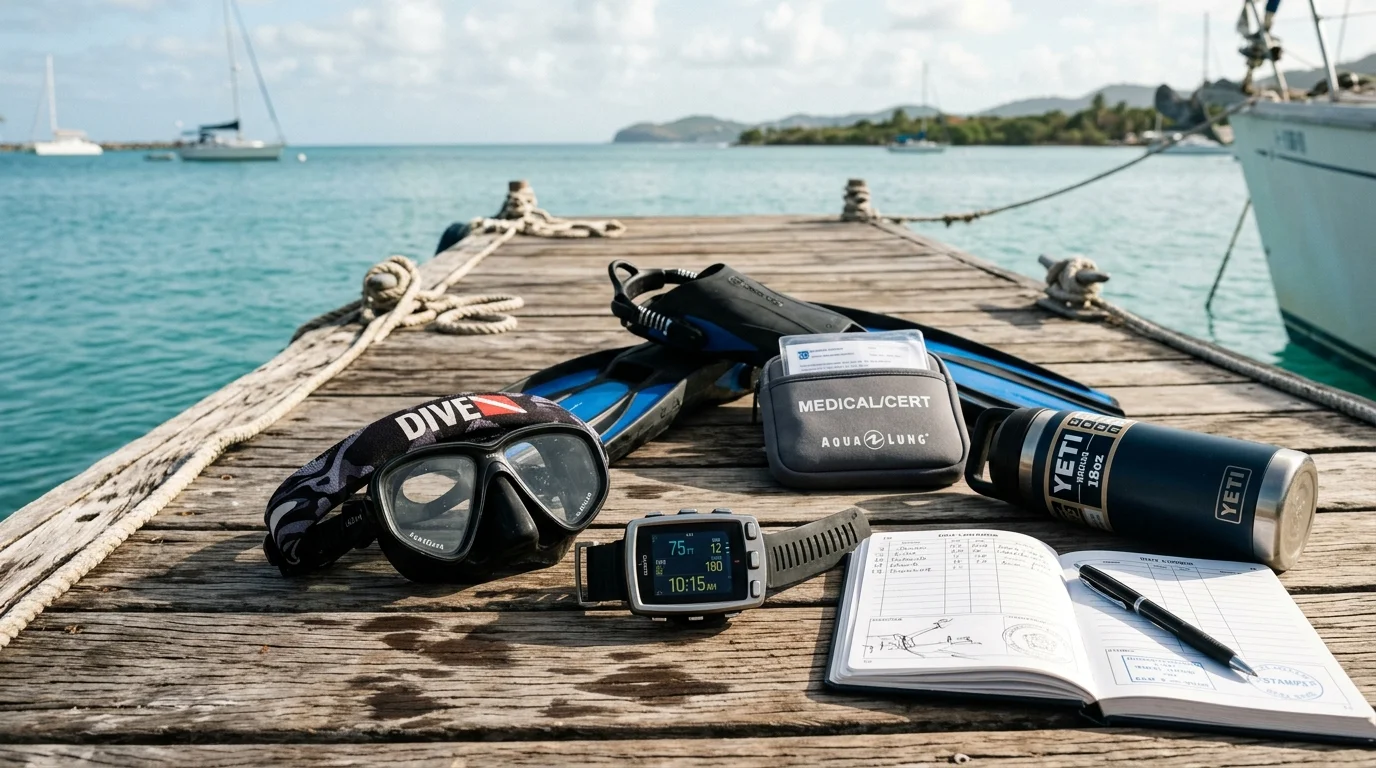
Essential Low-Stress Gear and Dive Day Protocols
Selecting the right scuba equipment significantly decreases your physical workload in the water. Minimize breathing resistance and cognitive overload to keep your cardiovascular system operating smoothly.
Organizations like Road Scholar demonstrate how structured educational travel expands horizons while maintaining safety standards. Selecting high-visibility, ergonomic equipment aligns with that philosophy of thoughtful adventure.
- Pneumatically balanced regulators: Regulators like the Apeks XL4+ or Scubapro MK11/C370 deliver air effortlessly at any tank pressure. Low work of breathing keeps your heart rate stable during surface swims.
- High-contrast dive computers: The Shearwater Peregrine features a large, bright full-color display. Large numeric readouts for depth and dive time eliminate squinting and underwater task anxiety.
- Full 3mm neoprene wetsuits: Even in 84°F Caribbean water, prolonged submersion leaches core body heat. A premium wetsuit prevents vascular chilling and keeps peripheral blood vessels dilated.
- High-efficiency open-heel fins: Fin models like the Mares Avanti Quattro Plus deliver strong propulsion with minimal ankle strain. Efficient blade flex prevents leg cramps and spikes in arterial blood pressure.
Mastering your dive-day routine protects your vascular health just as much as medical screening. Follow this precise chronological checklist on every diving day:
- Hydrate systematically before leaving your room: Drink 500 milliliters of water mixed with balanced oral rehydration salts 60 minutes prior to gearing up. Proper hydration prevents the hemoconcentration that promotes decompression stress.
- Eliminate caffeine and stimulants: Avoid morning coffee, tea, and energy beverages on dive mornings. Caffeine acts as a vasoconstrictor and elevates resting heart rate under depth pressure.
- Take blood pressure medication at your scheduled hour: Never skip a dose or alter timing to match dive boat departure schedules. Maintain stable drug serum concentrations in your bloodstream.
- Perform a weight-check safety stop at the surface: Establish exact neutral buoyancy so you never fight excess ballast weight. Carrying too much lead forces you to over-inflate your BCD and kick constantly.
- Execute slow, monitored ascents: Ascend at a rate no faster than 30 feet per minute. Always complete a full three-minute safety stop at 15 feet to allow smooth circulatory off-gassing.
Maintain open communication with your dive buddy and divemaster. Tell your guide that you prefer slow-paced exploration focused on photography, reef health, and wildlife observation.
Frequently Asked Questions
Can I get certified if I take two different blood pressure medications?
Yes, taking two anti-hypertensive medications does not automatically disqualify you from recreational diving. Your physician must verify that your combined medications maintain stable resting blood pressure below 140/90 mmHg without causing dizziness or postural hypotension.
What happens if my blood pressure spikes on the morning of a planned dive?
Never dive if your morning resting blood pressure exceeds 140/90 mmHg. High blood pressure combined with immersion increases cardiovascular stress; cancel the dive, hydrate, rest in a cool environment, and re-evaluate later.
Do I need an exercise stress test before my doctor signs the PADI medical form?
While diving guidelines do not universally mandate stress tests, hyperbaric physicians strongly recommend an exercise treadmill evaluation for divers over 60 with cardiovascular risk factors. Demonstrating a 10 MET capacity gives your physician objective confidence to sign your clearance.
Why are shore dives safer than boat dives for mature divers with hypertension?
Shore dives eliminate boat exhaust, rolling waves, motion sickness, and the strenuous effort of climbing vertical metal ladders while wearing 45 pounds of scuba gear. You enter and exit gradually at your own pace, keeping your heart rate low.
Disclaimer: This article is for informational and inspirational purposes. Life decisions are deeply personal, and we encourage readers to pursue their dreams while considering their unique circumstances, health, and financial situation.