
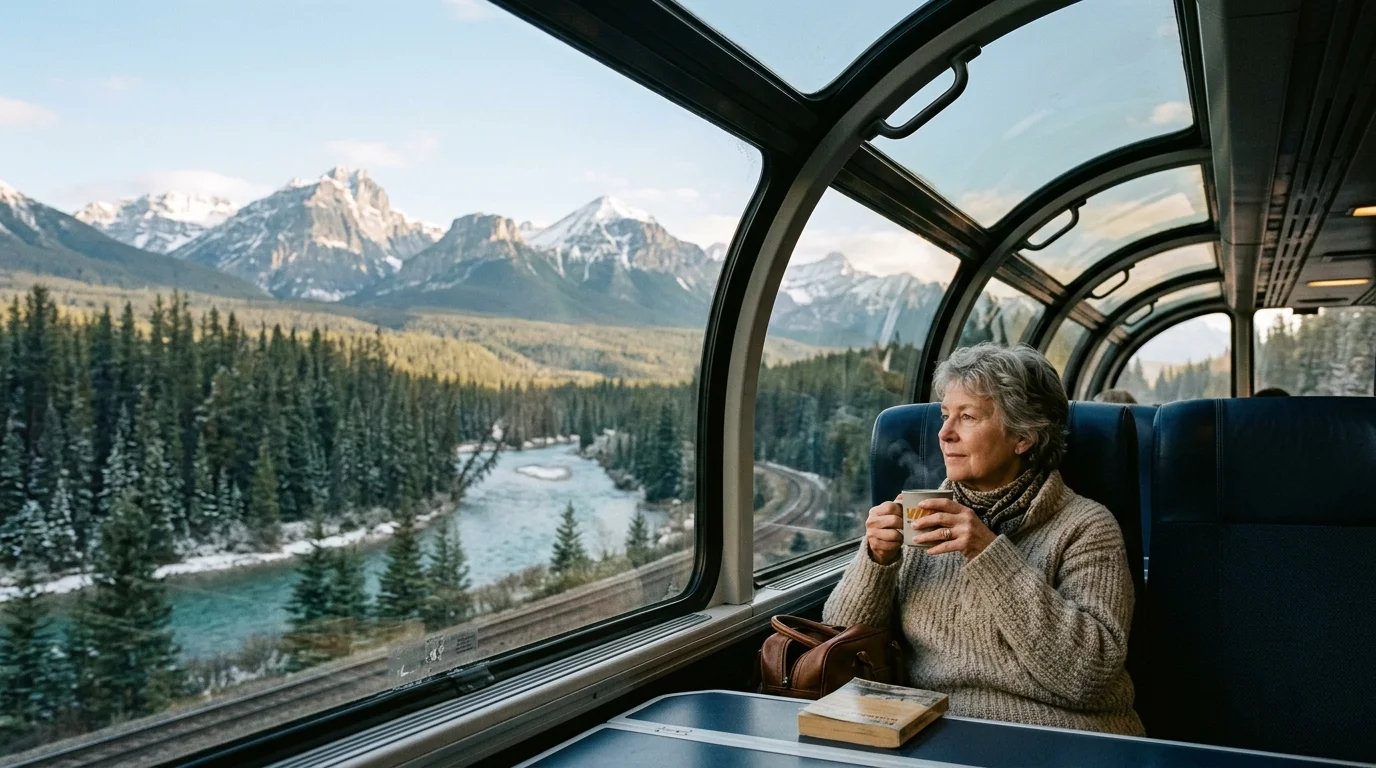
You do not need to spend $5,000 on a luxury cabin to cross the Canadian wilderness in timeless railway style. A classic Sleeper Plus berth aboard VIA Rail’s The Canadian delivers the identical three-course dining car meals and panoramic dome views for under $900 USD.
Whether riding the rails or walking the Portuguese Camino on a daily budget, retirement offers endless opportunities to see the world economically.
Many rail enthusiasts postpone this 4,466-kilometer transcontinental journey because private sleeper bedrooms carry steep peak-season surcharges. By booking an open berth during off-peak windows, you unlock North America’s grandest train adventure at an accessible price point.
This guide shows you how to navigate berth selections, off-peak pricing, and onboard logistics so you can board with total confidence. Your retirement adventures should challenge convention without draining your nest egg.
The 4-Night Transcontinental Route: Toronto to Vancouver Breakdown
VIA Rail operates The Canadian (Train 1 westbound) between Toronto’s Union Station and Vancouver’s Pacific Central Station. The train spans 4,466 kilometers (2,775 miles) across five provinces and four time zones.
If you enjoy navigating North American cities using passenger trains and subways, check out this transit-connected summer MLB stadium quest for seniors.
Similar to journeying across the northern plains on the solo senior Amtrak Empire Builder route, this transcontinental rail trip lets you watch dramatic wilderness unfold right outside your window without driving.
Your four-night journey requires roughly 97 hours of scheduled travel. Westbound departures leave Toronto twice weekly, usually on Wednesday and Sunday mornings at 09:55 AM.
Day one carries you through the rugged granite outcrops and dense pine forests of the Canadian Shield. You will spend hours gazing at endless freshwater lakes stretching across northern Ontario.
By day two, the rocky shield yields to the horizon-spanning expanses of Manitoba and Saskatchewan. The train stops for several hours in Winnipeg, offering you time to explore the historic Forks district.
Day three delivers the golden light of prairie wheat fields as you roll toward Edmonton, Alberta. Here, the landscape begins its dramatic climb toward the foothills of the Canadian Rockies.
Day four provides the undisputed scenic climax of the entire journey. You awake in Jasper National Park surrounded by snow-capped peaks, glacier-fed rivers, and towering spruce forests.
The train glides past Mount Robson, the highest peak in the Canadian Rockies, before descending through the rugged Fraser Canyon. You arrive in Vancouver the following morning ready for coastal exploration.
Freight train traffic on Canadian National tracks can cause periodic delays along this vast transcontinental corridor. VIA Rail schedules strategic recovery cushions at major crew division points to absorb unexpected siding stops.
- Toronto Union Station (Ontario): Depart from the Great Hall at 09:55 AM on Day 1.
- Hornepayne (Northern Ontario): Stretch your legs during a brief evening locomotive servicing stop.
- Winnipeg Union Station (Manitoba): Enjoy a mandatory three-to-four-hour midday maintenance stop on Day 2.
- Edmonton (Alberta): Arrive late in the evening on Day 3 at this major prairie railway hub.
- Jasper Station (Alberta): Take a two-hour morning mountain stroll on Day 4 in the heart of the national park.
- Vancouver Pacific Central Station (British Columbia): Arrive on Day 5 around 08:00 AM Pacific Time.
Always book your Vancouver hotel stay or return flight for the day after scheduled arrival. Building in that single buffer day removes all travel anxiety if freight dispatching slows down the train.
Sleeper Berth Anatomy: Upper vs. Lower Berths Explained
Sleeper berths represent the classic “open section” accommodations pioneered during the golden age of railway travel. These berths reside inside vintage 1950s stainless-steel Budd Manor and Chateau cars.
For travelers drawn to mobile travel who want to bring their own kitchen and bedroom along, exploring RV living in retirement provides another flexible way to journey across expansive landscapes.
While train travel offers timeless relaxation, retirees who prefer navigating their own schedule might compare this experience to planning the ultimate US road trip across America’s scenic highways.
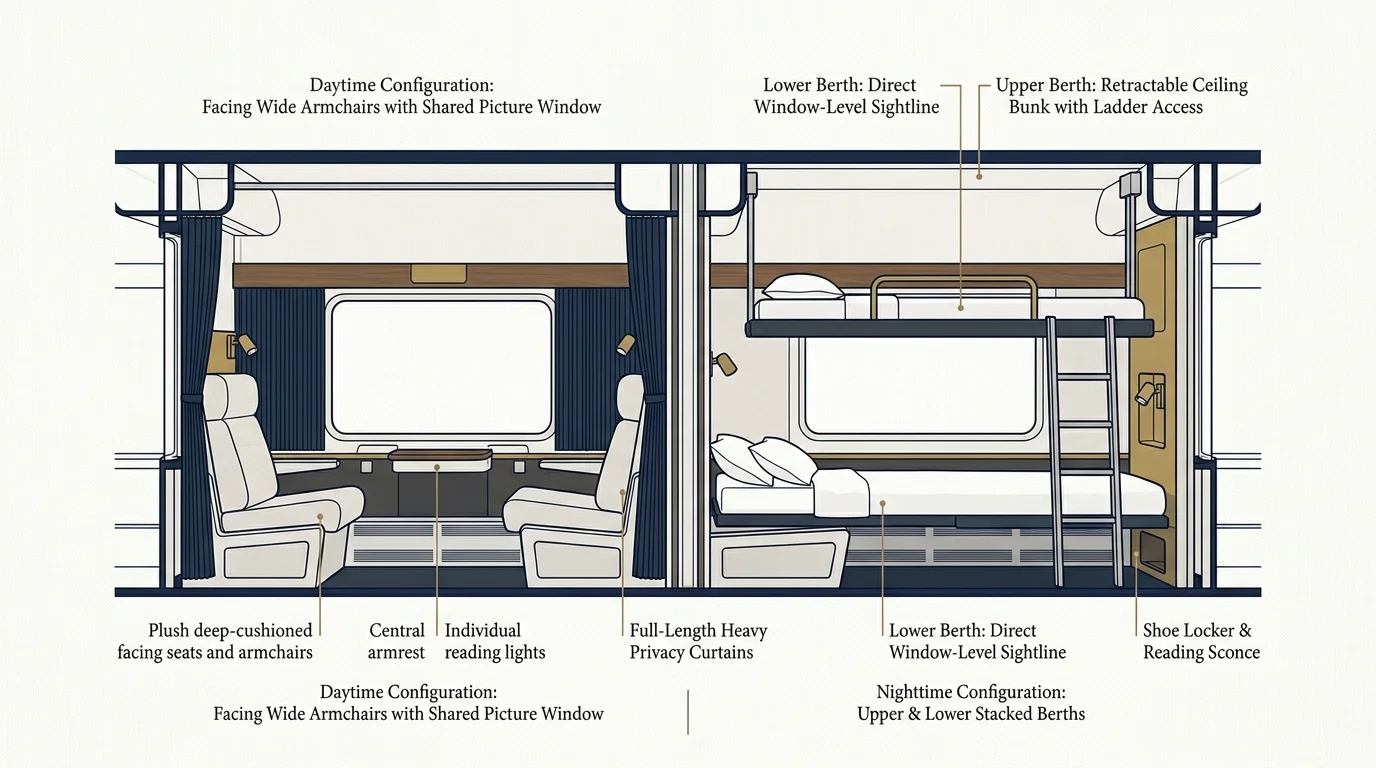
By day, your section features two wide, deeply cushioned armchairs facing one another across a generous picture window. You enjoy unobstructed views of passing landscapes from the comfort of plush upholstery.
While you dine in the evening, your dedicated car attendant transforms the facing seats into stacked sleeping bunks. Heavy, full-length privacy curtains enclose each bed, muffling aisle sounds and ensuring complete personal seclusion.
In any authentic VIA Rail The Canadian sleeper berth review, travelers consistently praise the generous daytime seating and attentive car porter service. The open layout creates an airy atmosphere that single private cabins often lack.
The Lower Berth sits flush with the floor, allowing effortless entry and exit throughout the night. It gives you direct access to the picture window, letting you watch moonlit rivers drift past your pillow.
The Upper Berth pulls down from the ceiling and requires climbing a sturdy four-step aluminum ladder. It lacks an exterior window at night and has no dedicated bedside power outlet, but it offers the lowest sleeper fare.
Both berths feature comfortable mattresses, crisp linens, warm blankets, and freshly laundered pillows. An attendant distributes clean bath towels and luxury soaps daily for your convenience.
You do not have a private en-suite toilet in an open berth section. Instead, each sleeper car provides clean communal restrooms and a hot, private shower stall just steps from your bunk.
- Superior daytime space: Two facing armchairs provide more legroom than compact single-roomette cabins.
- Massive picture window: Lower berths let you sleep right against a full-sized panoramic window.
- Unbeatable value: You get identical dining and dome car access at 40% less cost than private cabins.
- Effortless socializing: Open sections place you steps away from fellow train enthusiasts and natural conversation.
Many travelers find open berths significantly more spacious during daylight hours than cramped single-roomette cabins. The dual facing armchairs allow you to stretch your legs fully while tracking your route on a paper map.
Off-Peak Price Matrix: Comparing Berths to Cabins and Prestige Class
VIA Rail relies on dynamic demand pricing, meaning fares fluctuate based on seasonal demand and booking lead times. Peak season runs from May 1 through October 31, while off-peak rates apply from November 1 through April 30.
Pairing this rail journey with other budget-friendly winter escapes, such as Fairbanks aurora hunting on an affordable budget, creates a memorable multi-stop seasonal itinerary.
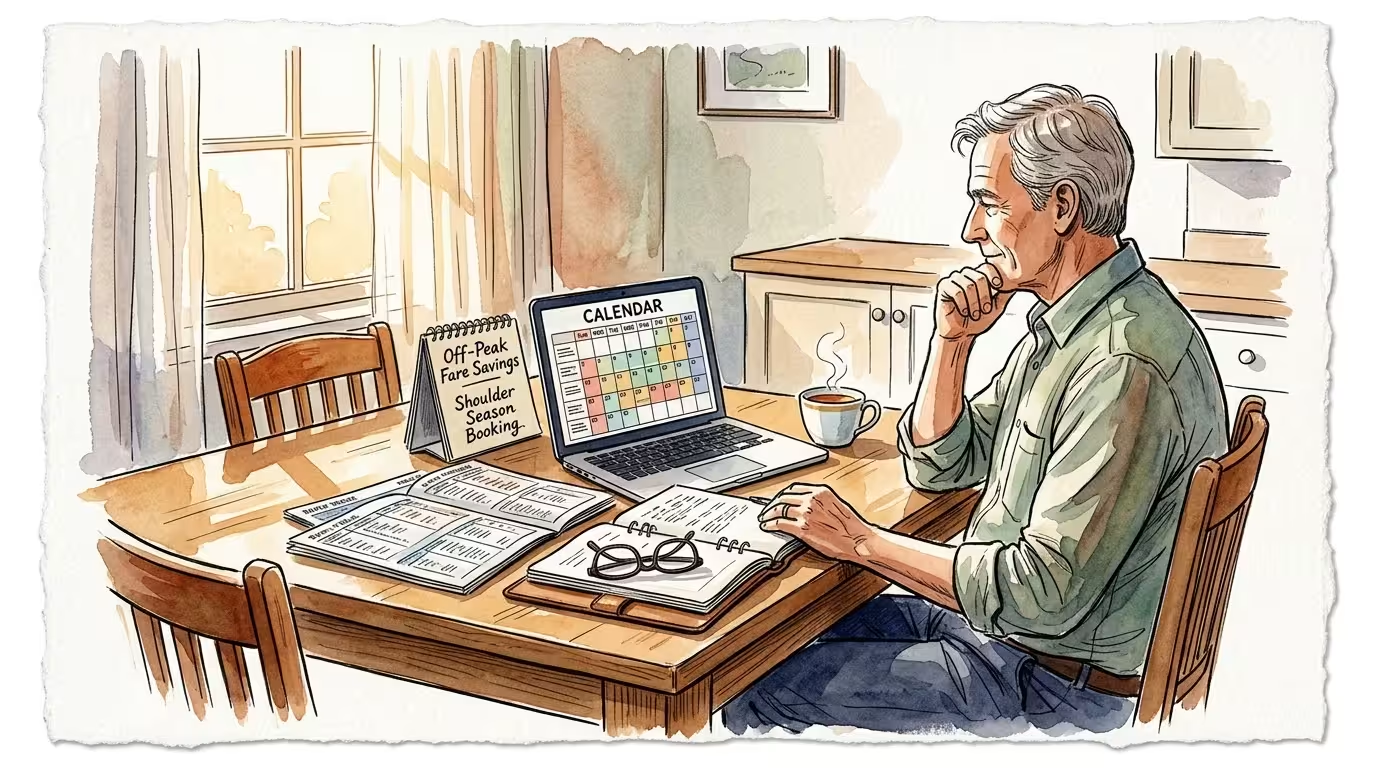
Targeting off-peak travel windows is one of the most effective retirement travel hacks for experiencing world-class sights while protecting your savings.
Understanding the true cross Canada passenger train cost requires looking beyond headline cabin prices to see the remarkable savings of off-peak berths. Traveling in winter or early spring cuts your ticket price in half while showcasing dramatic snow-covered peaks.
Shoulder periods in May and late October frequently offer moderate fare breaks compared to peak summer departures. However, the deepest discounts always emerge during the mid-winter months.
| Accommodation Type | Off-Peak Fare (CAD / USD approx) | Peak Fare (CAD / USD approx) | Night Window Access | Washroom Setup | Dining Inclusions |
|---|---|---|---|---|---|
| Upper Berth (Sleeper Plus) | $1,109 CAD (~$810 USD) | $1,750 CAD (~$1,275 USD) | No exterior window | Shared in car | All 3 daily meals included |
| Lower Berth (Sleeper Plus) | $1,300 CAD (~$950 USD) | $1,950 CAD (~$1,425 USD) | Full picture window | Shared in car | All 3 daily meals included |
| Cabin for One (Roomette) | $2,100 CAD (~$1,535 USD) | $3,150 CAD (~$2,300 USD) | Full picture window | Private in-cabin toilet | All 3 daily meals included |
| Cabin for Two (Per Person) | $1,650 CAD (~$1,205 USD) | $3,241 CAD (~$2,365 USD) | Full picture window | Private en-suite annex | All 3 daily meals included |
| Prestige Bedroom (Per Person) | $4,800 CAD (~$3,500 USD) | $5,900 CAD (~$4,300 USD) | Expansive picture window | Private en-suite shower | All meals & premium drinks |
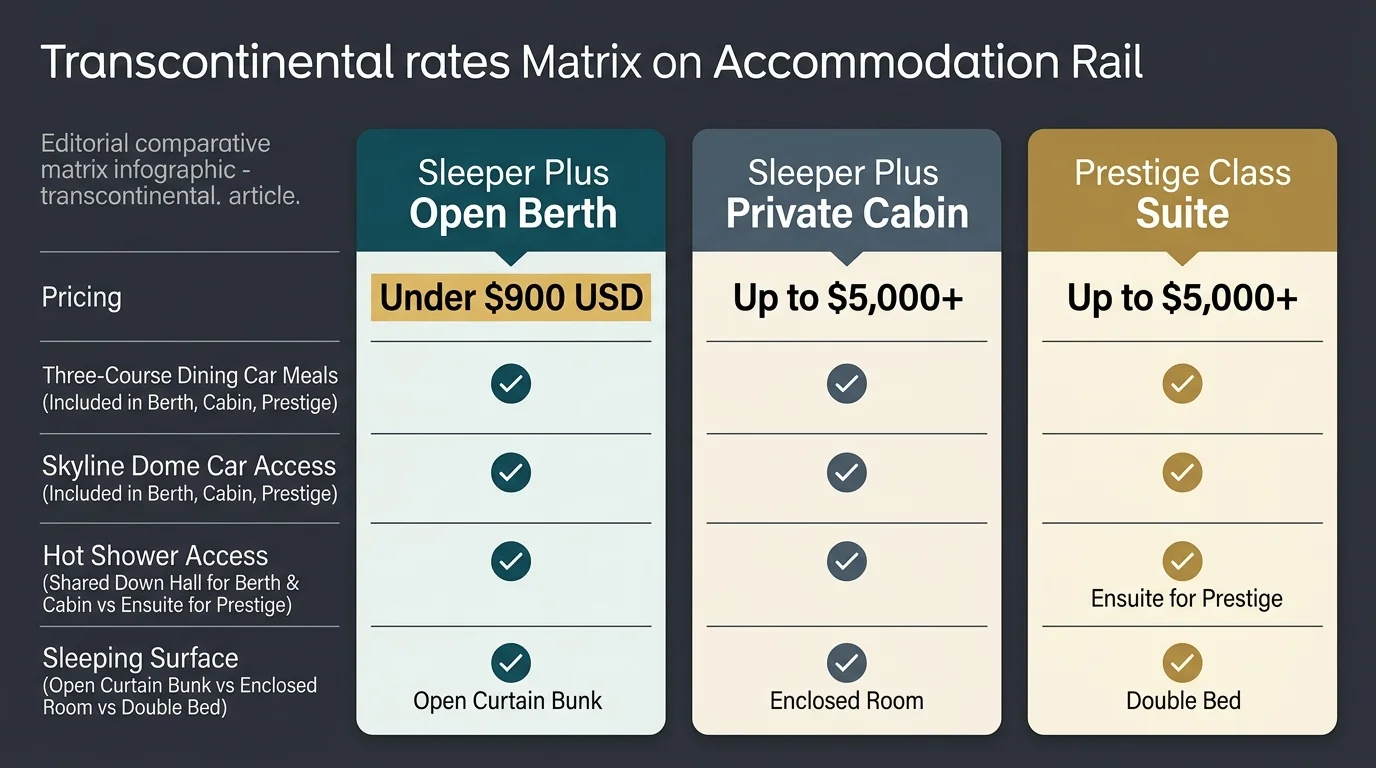
As the pricing matrix reveals, a Lower Berth in off-peak months costs less than half of a peak-season single cabin. You receive the exact same three-course hot meals and Skyline dome access as travelers paying top dollar.
Organizations like AARP emphasize the financial value of traveling during shoulder and off-peak seasons. Booking between November and April preserves your retirement capital while providing an intimate, serene cross-country journey.
The Truth About Senior Discounts and Hidden Fare Savings
Many travelers assume VIA Rail offers a universal senior discount across every travel class. That assumption leads to costly misunderstandings during the checkout process on the VIA Rail booking engine.
Those who appreciate gentle scenic sightseeing without high physical demands might also appreciate an accessible driving circuit through Utah’s Mighty 5.
Proactive research is the cornerstone of successful retirement travel planning, allowing you to bypass misleading marketing and secure genuine discounts.
When researching the Toronto to Vancouver train senior discounts, many passengers are surprised to find that Sleeper Plus cabins and berths do not qualify for the standard age-based reduction. VIA Rail strictly restricts its 15% senior discount to Economy and Business classes.
If you are 64 years old, you do not qualify for the 65+ age discount anyway. Fortunately, several legitimate booking strategies yield far steeper discounts on Sleeper Plus tickets without needing any senior status.
- Apply auto club discounts: AAA and Canadian Automobile Association (CAA) members receive a reliable 10% discount on Sleeper Plus fares when entering their valid membership number online.
- Book on Discount Tuesday: VIA Rail regularly releases promotional inventory on Tuesdays, discounting transcontinental berths by 10% to 25% for select travel dates.
- Target the deep winter calendar: Departures in January, February, and March feature the lowest base tier pricing across the entire operating year.
Educational travel organizations like Road Scholar package guided rail journeys across Canada, but self-booking through VIA Rail saves you thousands of dollars. Managing your own reservation gives you total control over departure dates and berth selection.
Check VIA Rail’s website every Tuesday morning for unadvertised fare cuts on upcoming departures. Combining a Tuesday promotional fare with an off-peak departure date produces the lowest possible transcontinental rate.
Worked Example: Total Out-of-Pocket Cost for a 64-Year-Old Solo Traveler
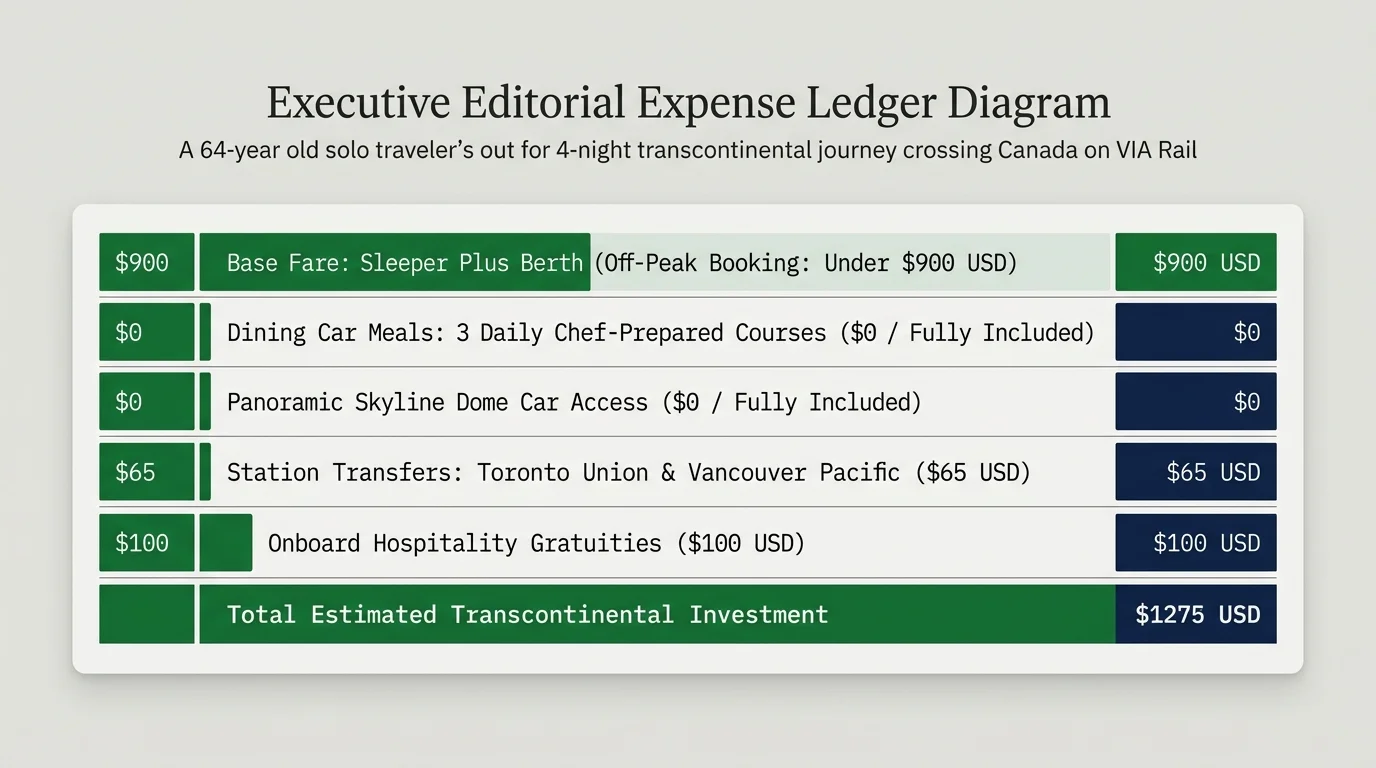
Let us walk through a real-world booking scenario for a 64-year-old solo traveler crossing Canada westbound. This worked example outlines exact expenses for a four-night journey in February 2026.
Just like calculating daily expenses when walking the Portuguese Camino on a budget, itemizing transportation and meal math in advance eliminates surprises on the rails.
You select Train 1 departing Toronto Union Station on a Sunday morning in late February. You choose a Lower Berth to enjoy the large picture window at night.
The baseline off-peak fare for your Lower Berth comes to $1,350 CAD. By applying your active AAA membership number at checkout, you trigger a 10% discount, deducting $135 CAD.
This reduces your ticket subtotal to $1,215 CAD. The Canadian federal Goods and Services Tax (5% GST) adds $60.75 CAD, bringing your total confirmed ticket cost to $1,275.75 CAD.
Converted at an exchange rate of 0.73 USD per Canadian dollar, your Sleeper Plus ticket costs roughly $931 USD. This single purchase covers all transportation, four nights of lodging, and 11 chef-prepared meals.
You should also budget for onboard incidentals. Alcoholic beverages average $8 CAD ($6 USD) per glass of wine or craft beer, and staff gratuities generally total $100 CAD ($73 USD) for exceptional service.
- Discounted Lower Berth Ticket (including 5% GST): $1,275.75 CAD ($931 USD)
- 11 Onboard Dining Car Meals: $0.00 (Fully included in Sleeper Plus fare)
- Beverage incidentals (four glasses of Canadian wine): $32.00 CAD ($23 USD)
- Cash gratuities for car attendant and dining staff: $100.00 CAD ($73 USD)
- Total all-inclusive cross-country travel cost: $1,407.75 CAD ($1,027 USD)
Spending just $1,027 USD for a four-night luxury transcontinental experience represents an astounding travel value. In comparison, a peak-season Prestige class bedroom would cost you over $5,500 USD for the identical tracks.
This significant cost difference proves that dream retirement journeys do not require depleting your portfolio. Savvy itinerary choices allow you to travel grandly while spending wisely.
Gourmet Dining and Skyline Dome Cars: The Sleeper Plus Inclusions
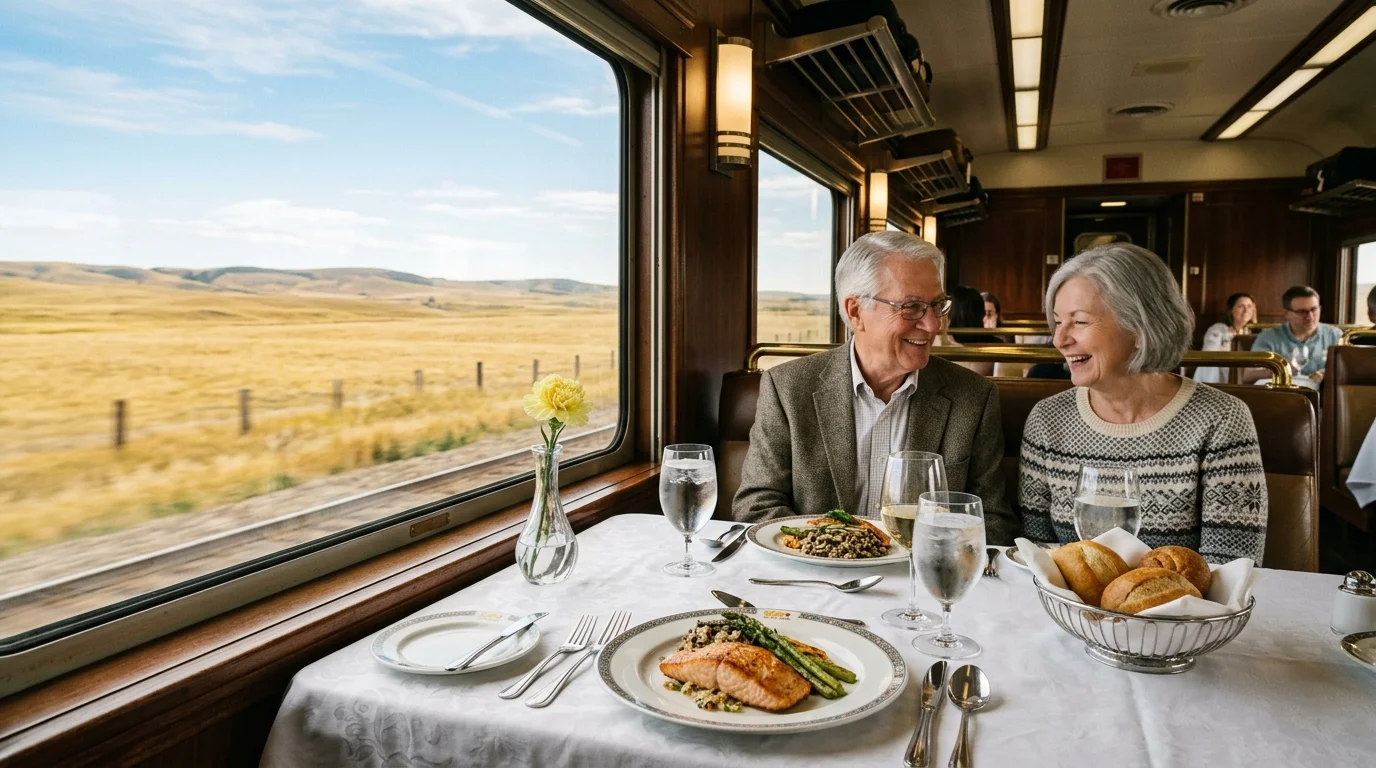
Your Sleeper Plus berth ticket grants you identical dining privileges to passengers staying in luxury private bedrooms. You enjoy freshly prepared three-course breakfasts, lunches, and dinners inside the vintage dining car.
For extended international travel between cross-country rail trips, learning how to leverage long-term house-sitting in Europe can eliminate lodging expenses entirely.
VIA Rail chefs cook every meal in a compact onboard galley. Menus feature regional Canadian specialties such as prime rib, Pacific salmon fillets, tender pork loin, and delicate vegetarian risottos.
Breakfast offers cooked-to-order omelets, fluffy pancakes, and fresh fruit along with unlimited hot coffee and tea. Lunch and dinner include artisanal appetizers, freshly baked rolls, and decadent desserts like warm berry crumble.
Community seating in the dining car seats solo travelers with fellow adventurers at tables of four. You will share laughter, travel stories, and fascinating perspectives with people from all corners of the globe.
Research highlighted by the Stanford Center on Longevity shows that social engagement and new learning experiences bolster cognitive vitality as we age. Dining with new companions while gliding across a continent embodies that invigorating lifestyle.
Between meals, you have open access to the Skyline Car’s second-level glass dome. Sitting high above the rails gives you unobstructed 360-degree views of Canadian wildlife, winding canyons, and towering mountain summits.
You can also spend quiet evenings reading in the bullet lounge of the iconic Park Car at the rear of the train. Attendants host complimentary wine and beer tastings alongside historical talks as you roll westward.
Practical Packing and Cabin Logistics: Luggage Limits and Power Access
Traveling in an open berth requires thoughtful luggage management before you step onto the platform at Union Station. Because berths do not offer walk-in closet space, you must check your primary rolling suitcases.
Your Sleeper Plus fare permits up to two complimentary checked bags weighing up to 23 kg (50 lbs) each, with maximum linear dimensions of 158 cm (62 inches). These bags travel in the dedicated baggage car.
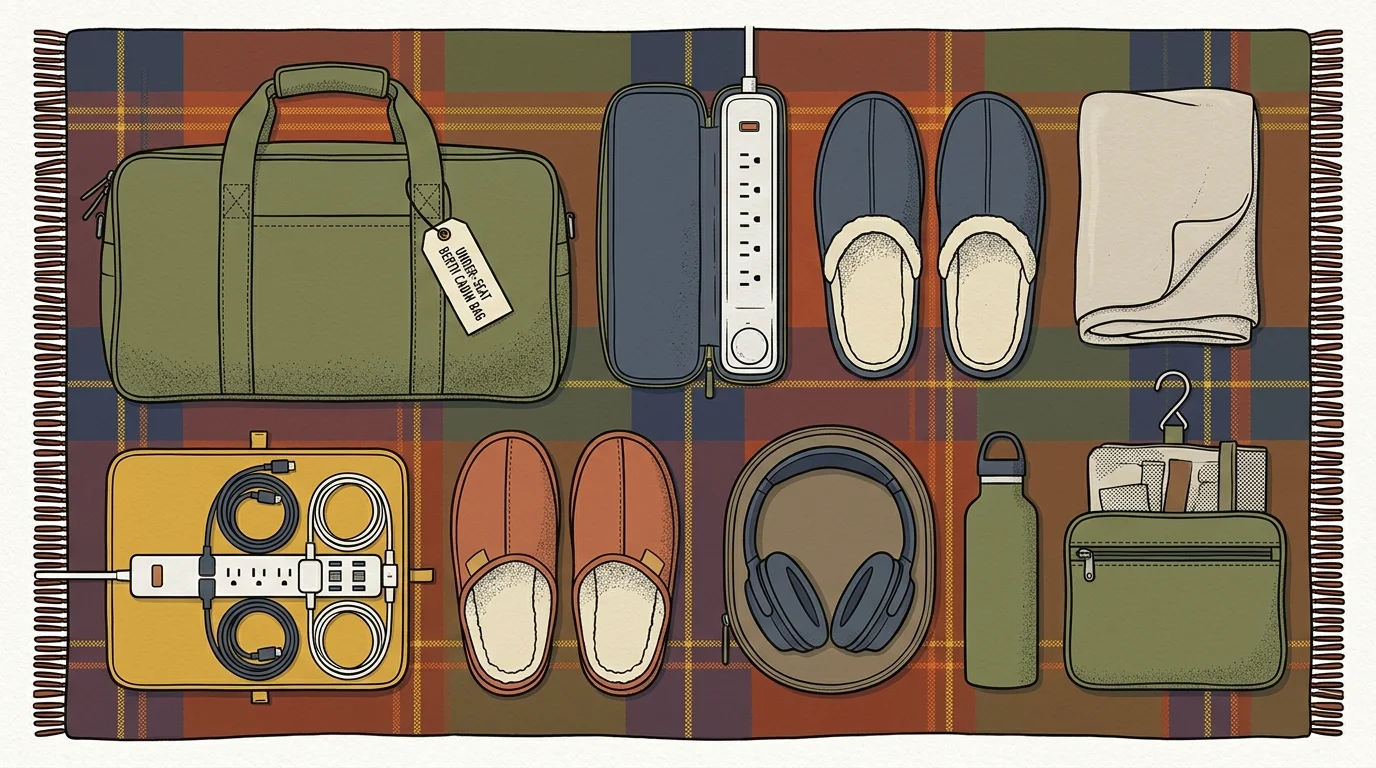
You may bring one small carry-on bag (maximum 11.5 kg / 25 lbs) and one personal item into the sleeper car. These items must fit beneath your berth’s facing seats, which provide approximately 11 inches of vertical clearance.
Electrical outlets require deliberate planning if you book an upper berth. Upper berths have no bedside electrical outlets, whereas lower berths feature an outlet near the small corner shelf.
Communal 110V outlets are accessible inside shared washrooms and at select tables in the Skyline activity lounge. Carrying an external battery pack ensures your phone and camera stay fully charged throughout the four-night journey.
- 10,000 to 20,000 mAh portable power bank: Keeps your phone and e-reader powered up directly inside your upper or lower bunk.
- Slip-on footwear or moccasins: Allows quick, comfortable trips to the restroom or Skyline Car without lacing hiking boots.
- Compact toiletry kit with hanging hook: Keeps your soap, toothbrush, and shampoo organized inside the communal shower stall.
- High-fidelity earplugs and sleep mask: Blocks out ambient aisle illumination and track clatter for deep, restful sleep.
- Breathable clothing layers: Lets you adapt effortlessly to fluctuating train temperatures between chilly dome cars and heated sleeper sections.
Major U.S. credit cards with zero foreign transaction fees handle incidental purchases onboard effortlessly. VIA Rail bills all onboard purchases in Canadian dollars, and their handheld terminals accept standard chip-and-PIN cards.
Remember to pack your valid United States passport book in your personal day bag. Border authorities inspect identification documents when you fly into Toronto and when you return home from Vancouver.
Frequently Asked Questions
Is climbing into the upper berth difficult for an older traveler?
The upper berth requires climbing a sturdy four-step aluminum ladder securely hooked to the frame. If you have mobility limitations or balance concerns, booking a ground-level Lower Berth provides much easier access.
Are the shared shower facilities clean and easy to use?
Yes, the onboard car attendant cleans and sanitizes the shared shower stall multiple times each day. The shower offers reliable hot water, generous water pressure, complimentary towels, and individual soaps.
How should you prepare for potential freight train delays?
Never schedule non-refundable flight departures or tours on the exact day The Canadian is scheduled to arrive. Booking a hotel in Vancouver for your arrival night eliminates all schedule stress if track delays occur.
Can you use United States currency to buy drinks and snacks onboard?
VIA Rail prices and bills all onboard food and drink transactions in Canadian dollars. The train’s point-of-sale terminals accept major U.S. credit cards that feature zero foreign transaction fees.
Disclaimer: This article is for informational and inspirational purposes. Life decisions are deeply personal, and we encourage readers to pursue their dreams while considering their unique circumstances, health, and financial situation.

1 Comment