
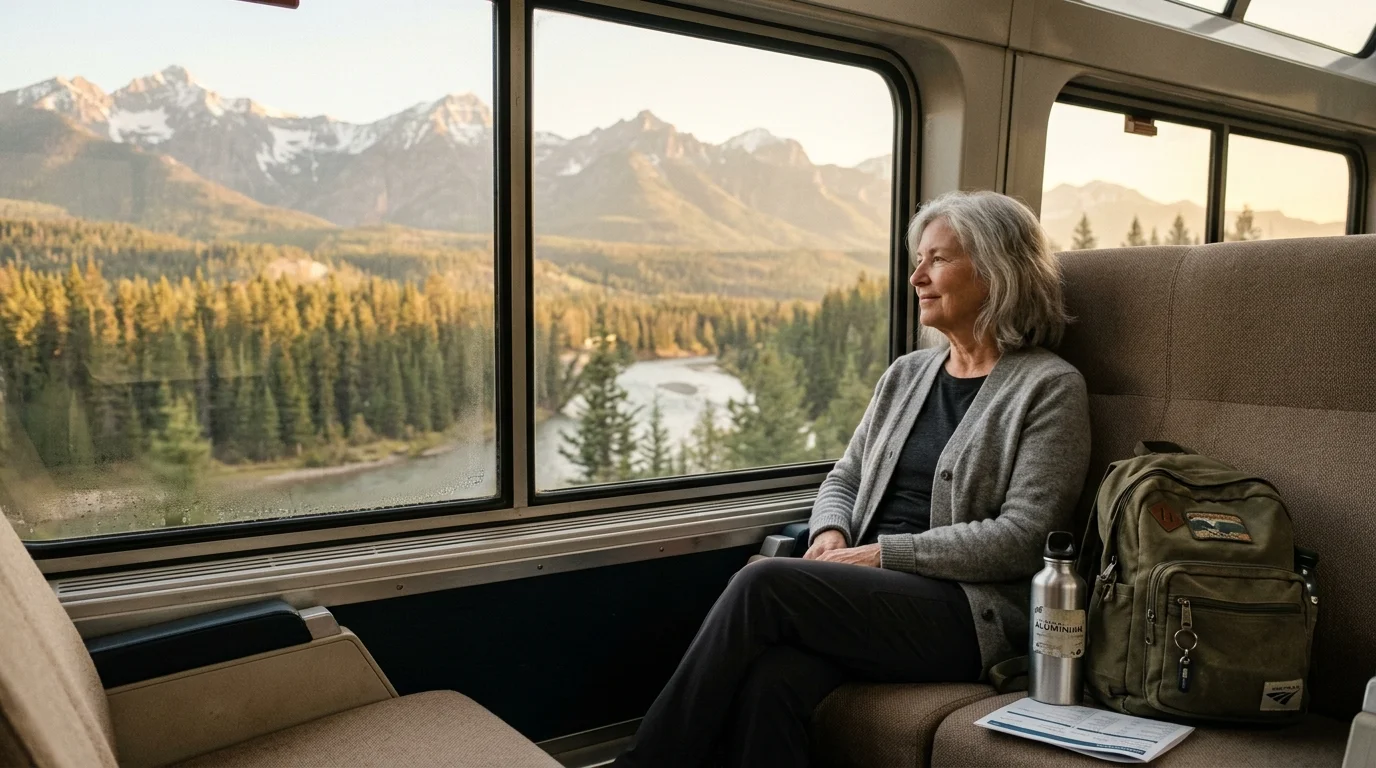
You can cross 2,205 miles of rolling prairie and dramatic northern peaks on a fixed budget without climbing a single train staircase. A solo 7-day adventure across the northern rails costs just $1,114 total while accommodating mild knee osteoarthritis.
Many online rail guides assume you must spend $3,000 on private sleeper roomettes to avoid physical strain. This guide proves that booking lower-level accessible coach seats and step-free gateway hotels lets you journey independently on a $2,400 monthly Social Security income.
By following an exact station schedule and utilizing complimentary Red Cap assistance, you will experience the legendary Empire Builder comfortably and affordably.
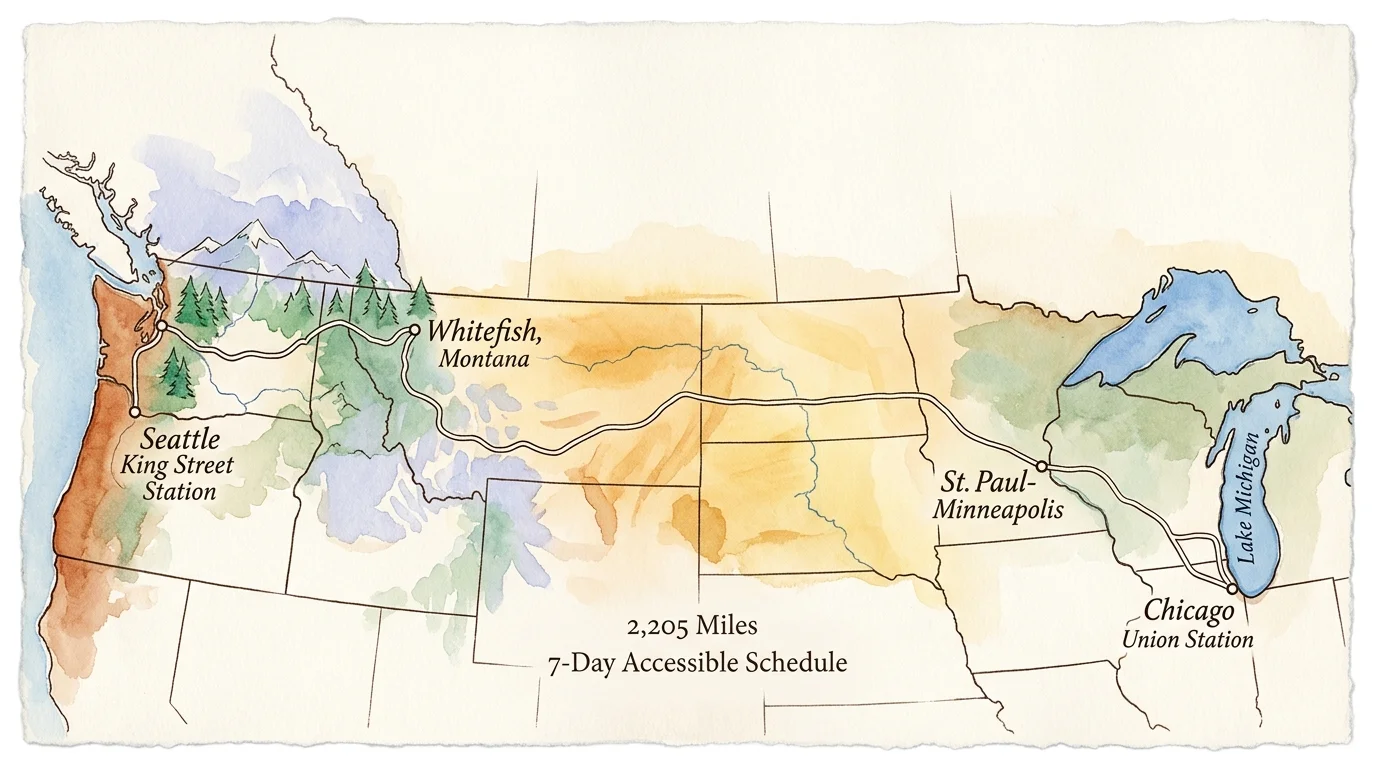
The 7-Day Route Blueprint: Chicago to Seattle
The Amtrak Empire Builder spans across seven states between Lake Michigan and Puget Sound. Running straight through takes 46 continuous hours, which can cause significant stiffness in arthritic knees.
This itinerary breaks the journey into manageable rail segments paired with multi-night hotel rests. You will travel by day and sleep in real beds during key scenic pauses.
Splitting the route preserves your joint health and keeps your travel stamina high. You will spend two nights on the train and four nights in accessible, ground-level hotels.
“It is never too late to be what you might have been.” — George Eliot
Senior amtrak travel offers an unmatched sense of freedom when scheduled with realistic pacing. You set your own rhythm without the exhaustion of highway driving or airport security lines.
Each stop on this itinerary was selected specifically for step-free platform transfers and level ground. You will avoid steep inclines, uneven cobblestones, and long terminal walks throughout your entire journey.
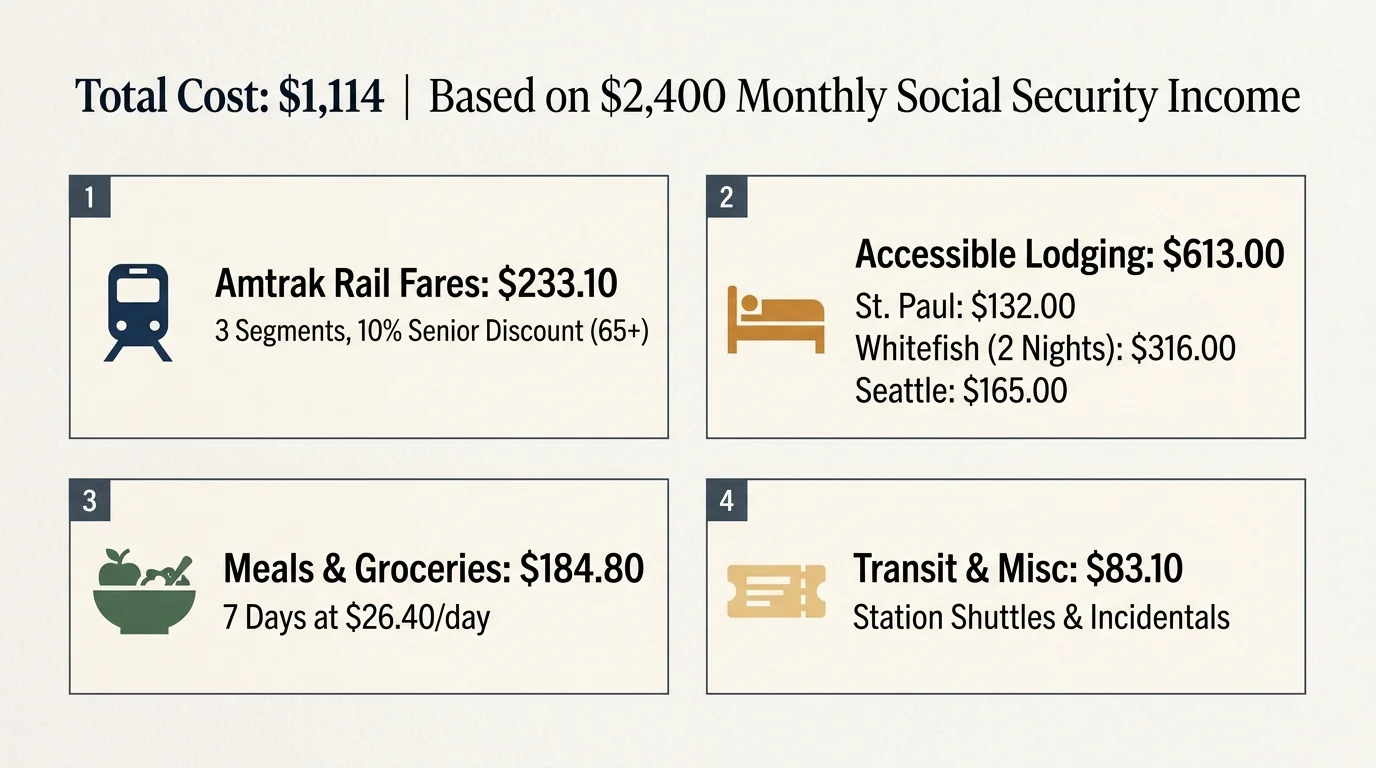
The Complete $1,114 Budget: Social Security Friendly
Managing travel on a fixed monthly income of $2,400 requires accounting for every dollar in advance. Unexpected taxi fares or porter fees can quickly derail a modest retirement budget.
This worked financial scenario uses exact 2026 rail rates, accessible lodging options, and realistic daily grocery estimates. Every expense aligns with a total spend cap under $1,150.
| Expense Category | Specific Item or Booking Service | Units or Duration | Exact Cost |
|---|---|---|---|
| Amtrak Rail Fares | Coach class point-to-point with 10% Senior Discount (Age 65+) | 3 rail segments | $233.10 |
| St. Paul Lodging | Drury Plaza Hotel Downtown St. Paul (ADA accessible queen) | 1 night | $132.00 |
| Whitefish Lodging | The Pine Lodge on Whitefish River (Ground-floor accessible) | 2 nights ($158/night) | $316.00 |
| Seattle Lodging | citizenM Seattle Pioneer Square (Accessible king, step-free) | 1 night | $165.00 |
| Meals & Groceries | Packed grocery provisions, depot cafes, and train dining | 7 days ($26.40/day average) | $185.00 |
| Local Transit & Tips | Metro transit, flat rideshares, and Red Cap porter tips | Station transfers & luggage | $83.00 |
Your total expenditure for this 7-day northern cross-country trip equals exactly $1,114.10. That leaves a comfortable cash reserve from your monthly retirement check for personal incidentals.
Booking standard Coach with the 10% senior discount delivers dramatic savings compared to private sleeper cabins. Consider how the accommodation tiers on Superliner equipment compare for price and mobility needs.
| Accommodation Tier | Stair Steps Required | Total Route Rail Fare | Restroom Proximity | Knee Strain Score (1-10) |
|---|---|---|---|---|
| Upper-Level Coach | 12 narrow spiral stairs | $233.10 | Downstairs only | 8 (High strain) |
| Lower-Level Accessible Coach | 0 stairs (flat boarding) | $233.10 | Direct hallway access | 2 (Minimal strain) |
| Superliner Roomette (Upper) | 12 narrow spiral stairs | $1,180.00 | Downstairs only | 7 (Moderate-high) |
| Superliner ADA Bedroom | 0 stairs (flat lower level) | $1,745.00 | In-room private facility | 1 (Zero strain) |
Lower-level coach seating gives you the step-free benefits of a luxury ADA bedroom at one-seventh of the cost. The money saved on rail upgrades directly finances comfortable, restorative nights in top-rated accessible hotels.
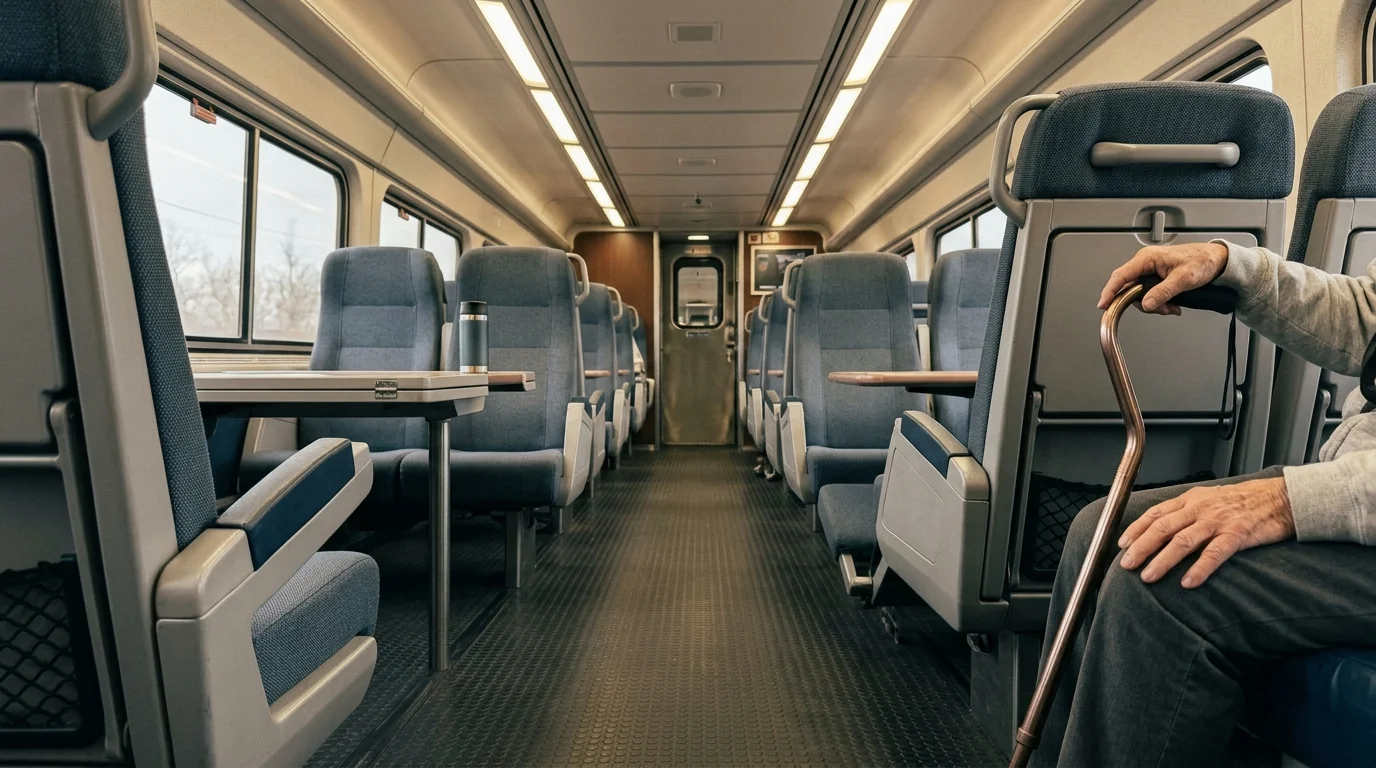
Navigating Superliner Trains with Knee Osteoarthritis
The Empire Builder uses bi-level Superliner rail cars that feature two passenger decks. Most coach travelers sit on the upper level, which requires climbing a tight, winding staircase.
When booking your ticket, specifically request Lower-Level Coach Seating or Accessible Seating. These reserved seats sit on the entrance level and involve zero interior steps.
The National Institute on Aging provides guidance on osteoarthritis management, emphasizing regular, low-impact position changes to prevent stiffness during travel. Lower-level seating allows you to stand and stretch in wide entry corridors without negotiating stairs while the train moves.
Restrooms on the lower level sit directly across from the accessible seating rows. You can reach the lavatory with just a few stable steps, even when the train experiences track vibration.
Never haul heavy luggage through the narrow aisles by yourself. Use Amtrak’s complimentary Red Cap baggage service at major terminals to protect your knees from excessive loads.
- Locate the uniformed Amtrak Red Cap desk near the station entrance immediately upon arrival.
- Hand over your wheeled luggage and show your boarding pass with lower-level seating confirmation.
- Ride to the track boarding gate aboard the motorized Red Cap passenger cart.
- Allow the attendant to lift your bag onto the train’s lower-level storage rack.
- Offer a standard tip of $3 to $5 per handled bag for this invaluable physical assistance.
Taking advantage of these built-in station services eliminates physical strain before your journey even begins. You board early, bypass crowded ramps, and settle into your wide reclining seat with ease.
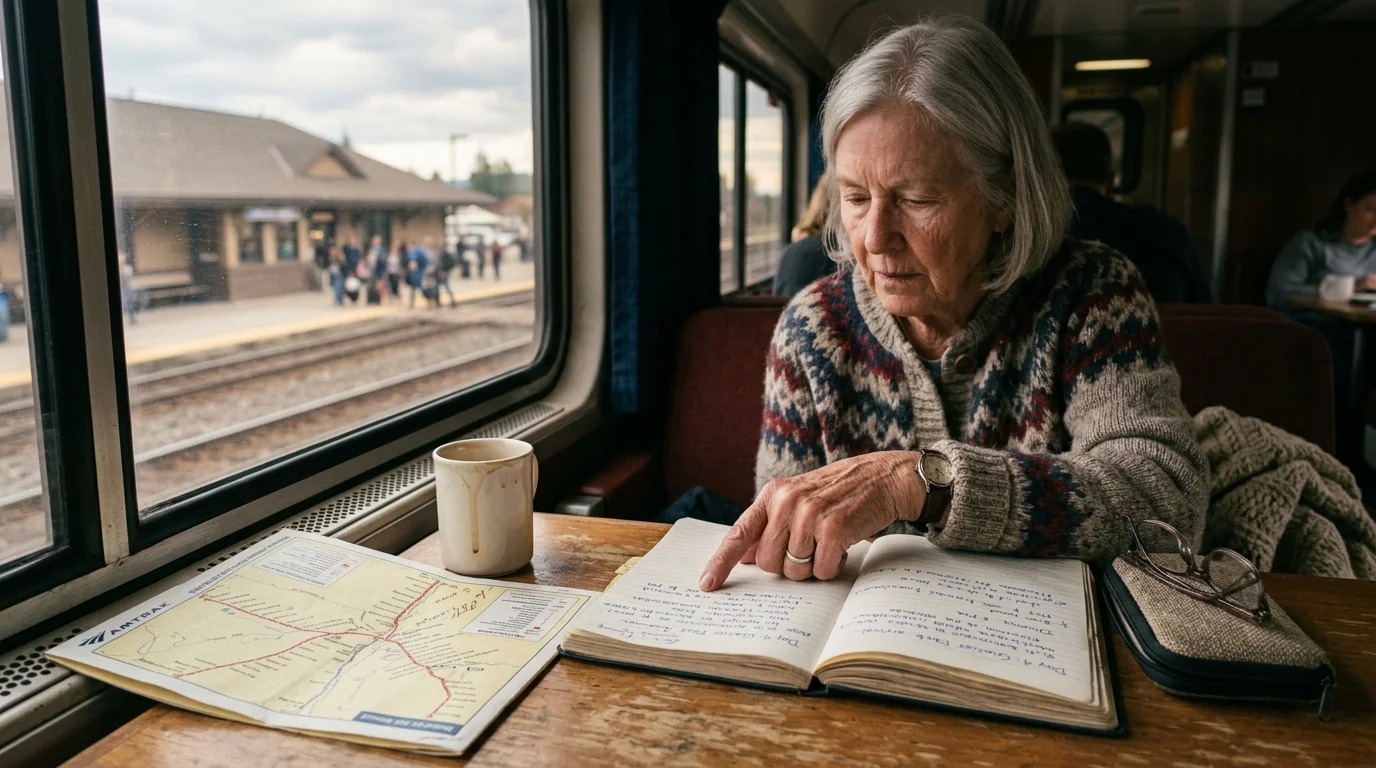
Step-by-Step Daily Schedule and Accessible Station Transfers
This 7-day schedule balances scenic rail miles with therapeutic downtime. It keeps your daily physical output predictable and gentle on your joints.
Day 1: Chicago Departure into the Wisconsin Heartland
Arrive at Chicago Union Station by 1:15 PM to meet your Red Cap attendant at the Great Hall information kiosk. You will board Train 7 at 2:25 PM ahead of standard boarding lines.
The Empire Builder pulls out of Chicago at 3:05 PM, cruising past suburban neighborhoods into the rolling dairy farmland of Wisconsin. Lower-level coach seats feature 50-inch legroom and deep 40-degree recline.
Train 7 arrives at St. Paul Union Depot in Minnesota at 10:43 PM. Take a flat 4-minute rideshare to the Drury Plaza Hotel Downtown St. Paul for a restorative night of sleep.
Day 2: Rest and History in the Twin Cities
Wake up without alarms and enjoy the hotel’s complimentary hot breakfast. Spend your morning relaxing in your room or soaking your joints in the accessible whirlpool.
In the afternoon, explore St. Paul Union Depot’s beautifully restored 1923 waiting room. The wide concourse has level terrazzo floors and abundant cushioned benches.
Grab an early dinner at the depot cafe before reboarding westbound Train 7 at 10:43 PM. Settle into your lower-level coach seat for an overnight transit across North Dakota.
Day 3: Crossing the Northern Plains into Big Sky Country
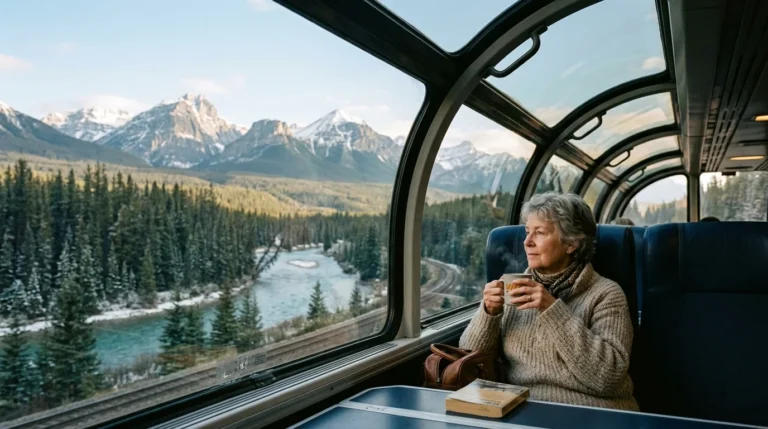
Wake up to endless prairie vistas rolling past your window as the train crosses North Dakota into Montana. The morning light over the prairie offers quiet, meditative scenery.
Take gentle strolls along the lower corridor every two hours to maintain healthy joint lubrication. The cafe car on the lower level provides hot tea, water, and light snacks without stairs.
Train 7 reaches the Whitefish, Montana depot at 9:02 PM. The Pine Lodge shuttle van meets you at the platform for a flat, 3-minute drive to the lodge.
Day 4: Mountain Air and Rest in Whitefish
Spend a peaceful morning on your ground-floor patio overlooking the Whitefish River. Whitefish sits at an easy elevation of 3,028 feet, preventing altitude-induced fatigue.
The Pine Lodge offers level paved pathways along the riverbank that require minimal exertion. Take short, 10-minute flat walks punctuated by resting on scenic park benches.
Dine at the nearby step-free restaurants along Central Avenue, which features modern curb ramps at every intersection. Return early to your room to rest your legs for tomorrow’s national park excursion.
Day 5: Gateway to Glacier National Park
Take an accessible morning tour shuttle from Whitefish into the lower valleys of Glacier National Park. The park’s entrance fees are completely covered if you carry an America the Beautiful Senior Pass.
Touring by shuttle bus allows you to view soaring mountain peaks and turquoise glacial lakes without hiking steep trails. You enjoy world-class wilderness through panoramic windows at ground level.
Return to Whitefish by 5:30 PM for a relaxed dinner near the depot. Board Train 7 at 9:02 PM for your final overnight rail leg through the Cascade Mountains.
Day 6: Puget Sound Arrival in Seattle
The train winds along the Puget Sound coastline as you approach Seattle during the morning hours. Keep your camera ready on the right side of the train for marine views.
Arrive at Seattle King Street Station at 10:25 AM. The historic depot features full elevator access and wide, step-free exits to street level.
Take a 3-minute flat cab ride or roll your luggage four level blocks to citizenM Seattle Pioneer Square. Unpack, relax your legs, and enjoy waterfront harbor views from the hotel lounge.
Day 7: Low-Impact Seattle and Trip Conclusion
Enjoy a relaxed morning exploring Pioneer Square’s flat brick promenades and tree-lined plazas. Level streetcar access connects you directly to the Seattle Waterfront without tackling the city’s famous hills.
Reflect on your transcontinental accomplishment over lunch overlooking Elliott Bay. You traversed over 2,200 miles across seven states independently, comfortably, and entirely within your monthly budget.
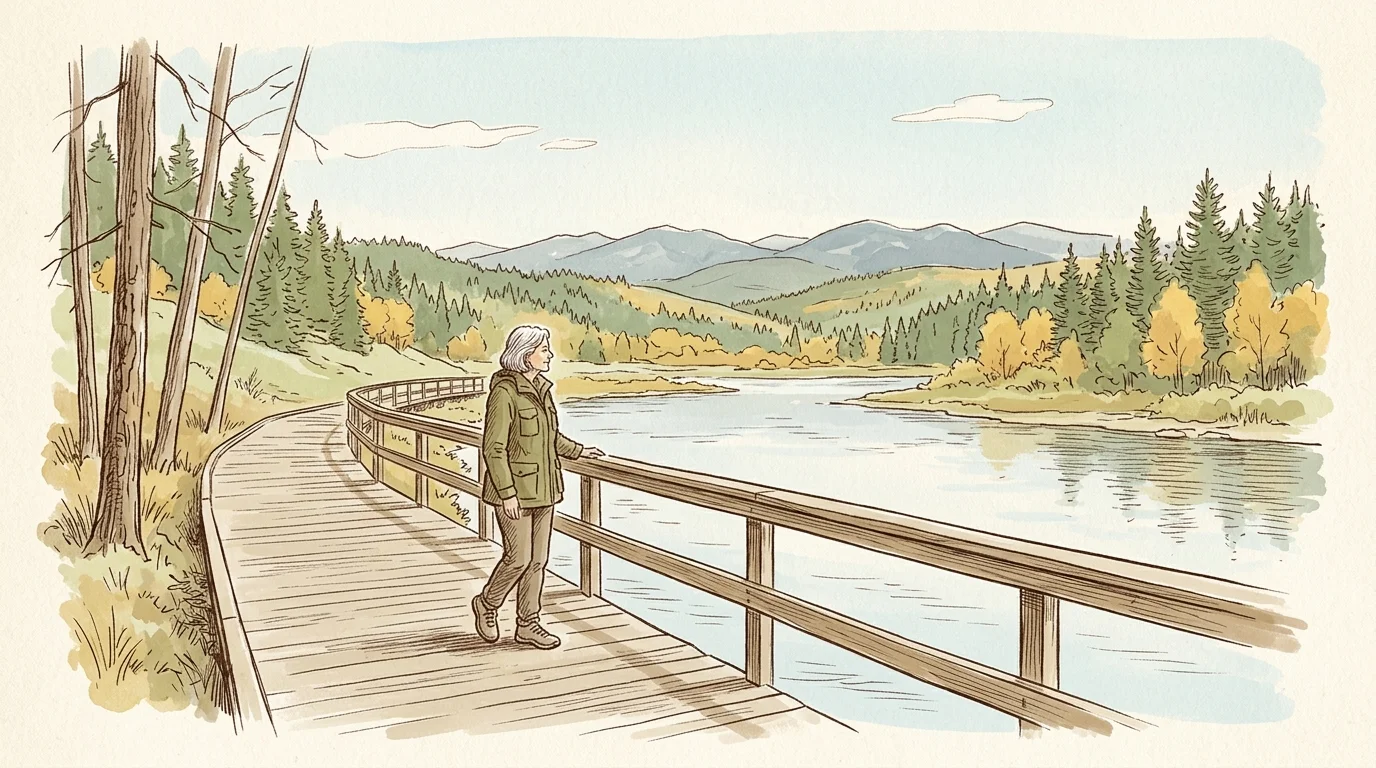
Accessible Stopovers: Low-Impact Exploration in St. Paul and Whitefish
Successful accessible train travel retirement adventures depend on choosing stopovers with flat topography. Steep grades and broken walkways aggravate knee cartilage quickly.
Both St. Paul Union Depot and downtown Whitefish offer barrier-free environments. You can enjoy authentic local culture without putting undue stress on your joints.
- St. Paul Union Depot Concourse: Offers 0.3 miles of smooth indoor walking with climate control, historical exhibits, and benches every 50 feet.
- Whitefish River Trail: Features a continuous paved pathway directly behind The Pine Lodge with zero stairs and gentle 1% grades.
- Whitefish Depot Park: Located steps from the rail platform, providing flat gravel paths and shaded seating beneath mature spruce trees.
- Pioneer Square Waterfront Trail: Seattle’s newly updated pedestrian promenade provides level boardwalks with tactile paving and curb ramps.
According to AARP travel resources, planning transit connections ahead of time significantly reduces travel anxiety for older adults. You can check municipal transit maps online before departure to confirm elevator operational status at each transit hub.
Focusing on these flat, paved micro-zones lets you accumulate daily movement safely. You experience the outdoors without the risk of joint flares or tripping hazards.
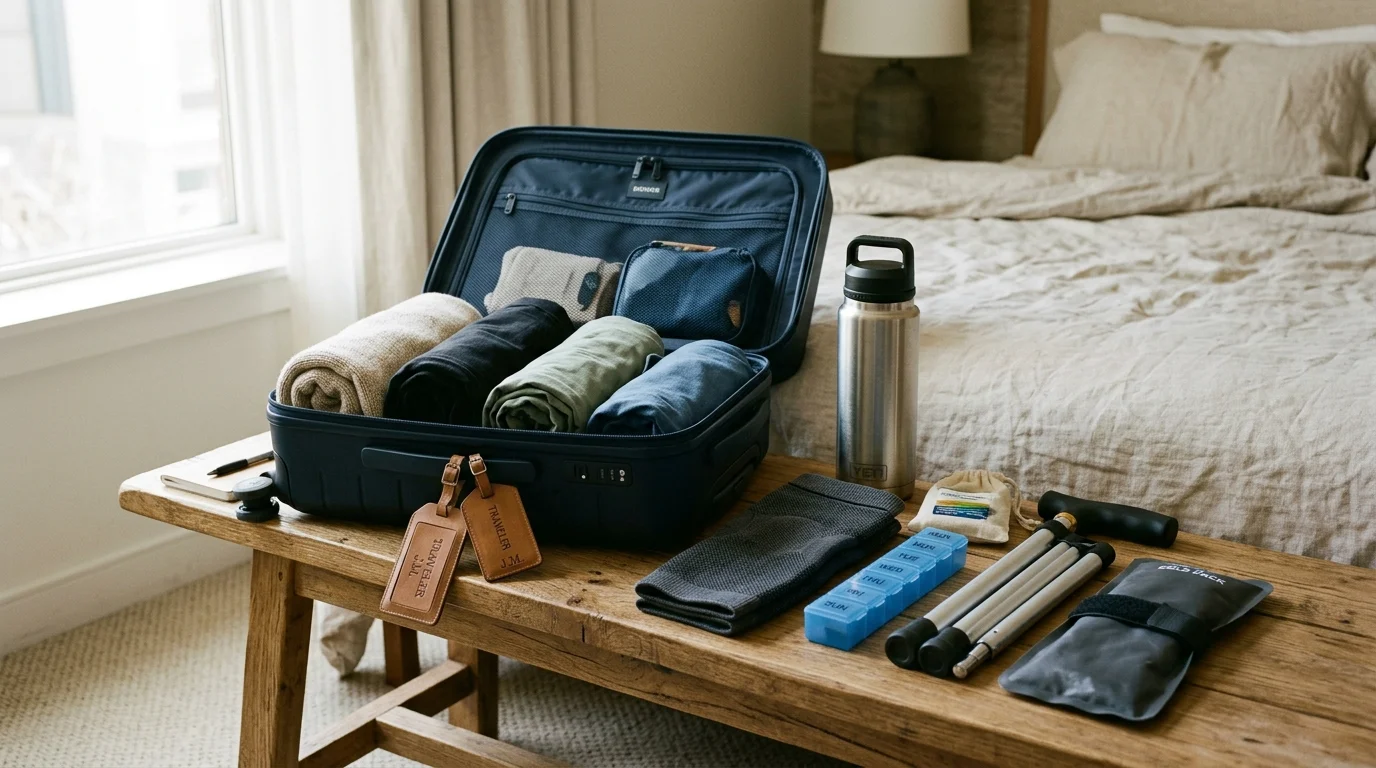
Packing and Pain-Management Strategies for Solo Train Travel
Managing mild knee osteoarthritis on a long train trip requires a proactive personal care routine. Waiting until your joint throbs before acting makes recovery much slower.
Pack a dedicated under-seat medical kit containing your essential comfort tools. Keep this kit with you at your coach seat rather than stored in overhead racks.
- Wear graduated compression socks (15–20 mmHg) to prevent fluid retention and calf stiffness during seated hours.
- Carry a compact 16-by-16-inch gel seat cushion to reduce pressure on your lower back and hip joints.
- Pack topical pain relief gel and over-the-counter anti-inflammatory medication in your personal day bag.
- Use a lightweight, four-wheel spinner suitcase under 22 pounds that glides beside you without dragging behind your shoulder.
- Bring a folding walking cane with a wide rubber quad-tip for extra stability when the train sways on curved tracks.
Execute simple mobility exercises right from your lower-level coach seat every 60 to 90 minutes. Point and flex your toes thirty times, followed by gentle seated knee lifts to keep synovial fluid circulating.
Drink plenty of bottled water throughout the day to keep your joint tissues properly hydrated. Dehydration accelerates joint stiffness and contributes to travel fatigue on climate-controlled trains.
An empire builder train trip gives you the luxury of time and space to care for your body. Honor your physical boundaries, rest when needed, and celebrate your bold solo adventure across America.
Frequently Asked Questions
Can I ride the Amtrak Empire Builder comfortably without booking an expensive sleeper car?
Yes. Lower-level coach seating offers generous legroom, wide reclining seats, and direct step-free access to restrooms. Combining coach segments with ground-floor hotel stays provides excellent rest at a fraction of sleeper costs.
How do I guarantee I will not have to climb stairs on the Superliner train?
Specify Lower-Level Seating or Accessible Seating when purchasing your Amtrak tickets online or over the phone. These seats sit exclusively on the ground deck of the bi-level Superliner cars and require zero stair use.
What should I do if the train arrives late at an intermediate station?
Download the Amtrak mobile app to monitor train status in real time. Because this itinerary includes multi-night hotel layovers rather than tight train-to-train transfers, minor delays will not disrupt your travel schedule.
Is Red Cap baggage assistance really free for seniors?
Yes, Amtrak provides uniformed Red Cap assistance free of charge at major stations like Chicago and Seattle. While the service is complimentary, tipping $3 to $5 per bag is customary and appreciated.
Disclaimer: This article is for informational and inspirational purposes. Life decisions are deeply personal, and we encourage readers to pursue their dreams while considering their unique circumstances, health, and financial situation.



1 Comment