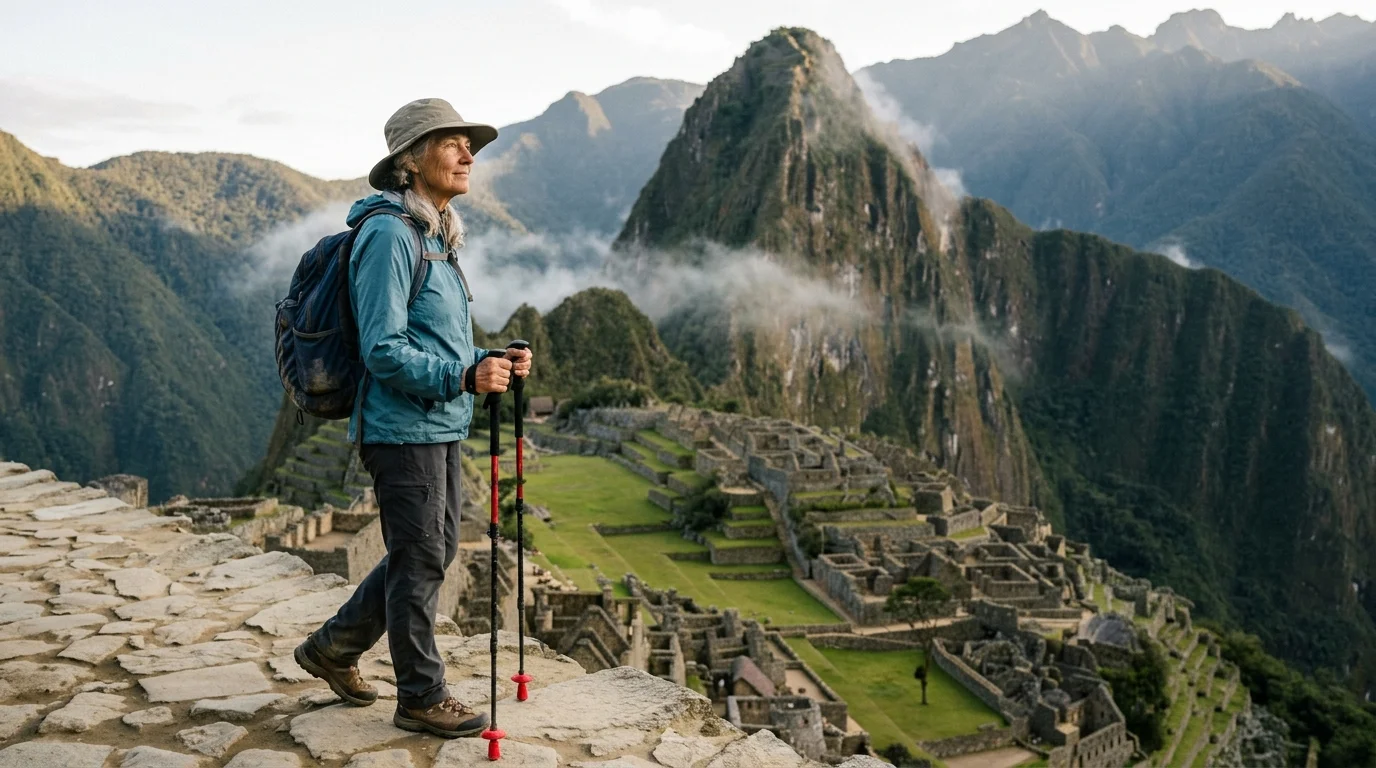
You can explore the lost citadel of the Incas at 70 without punishing your knees or climbing hundreds of steep stone stairs. Securing a Circuit 3 permit eliminates 85 percent of the site’s vertical climbs compared to standard tourist paths.
Applying smart budget travel hacks makes it possible to prioritize health-friendly comforts without overspending on international adventures.
By landing in Cusco and descending immediately to the Sacred Valley, you bypass severe altitude stress while preserving your joint mobility. This actionable guide details the exact low-stair routes, step-free transit connections, and daily budgets you need for an unforgettable solo journey.
Acclimatization First: The Sacred Valley Elevation Drop
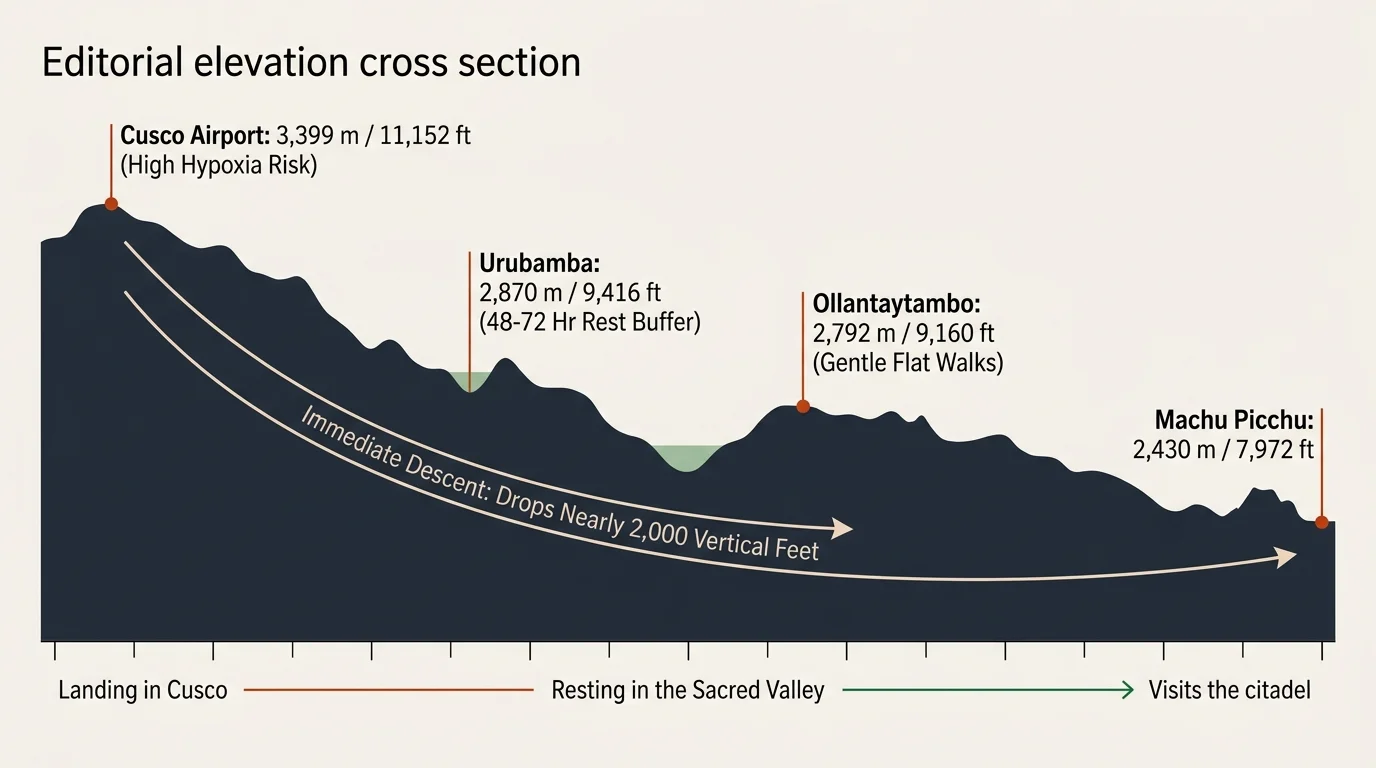
Machu Picchu sits at an elevation of 2,430 meters (7,972 feet) above sea level. This altitude is significantly lower than the arrival city of Cusco, which rests at 3,399 meters (11,152 feet).
Much like scheduling a medical clearance check before scuba diving after 60, discussing high-altitude physiological stress with your doctor ensures a safe arrival in the Andes.
Pacing your physical exertion early on is just as crucial here as it is when walking the Portuguese Camino under $75 a day or tackling other multi-day walking trips.
Arriving at high elevation triggers systemic hypoxia, which can exacerbate inflammatory joint stiffness in older adults. Stepping off your flight in Cusco and remaining there puts undue cardiovascular and joint stress on your body.
The smartest physiological strategy is an immediate descent into the Sacred Valley upon landing at Alejandro Velasco Astete International Airport (CUZ). Towns like Urubamba sit at 2,870 meters (9,416 feet), while Ollantaytambo rests at 2,792 meters (9,160 feet).
Pre-arrange a private car transfer directly from the airport terminal to Urubamba or Ollantaytambo. The scenic 90-minute drive costs between $40 and $60 USD and drops you nearly 2,000 vertical feet below Cusco.
Plan to spend 48 to 72 hours resting in the Sacred Valley before visiting the citadel. This low-altitude buffer period allows your red blood cells to adapt gradually while you enjoy gentle, flat walks along valley plazas.
Drink three liters of water daily to maintain spinal disc hydration and synovial fluid viscosity. Consistent hydration prevents travel-related joint stiffness and helps ward off acute mountain sickness.
The Low-Stair Route: Navigating Circuit 3-B (Royalty Designed)
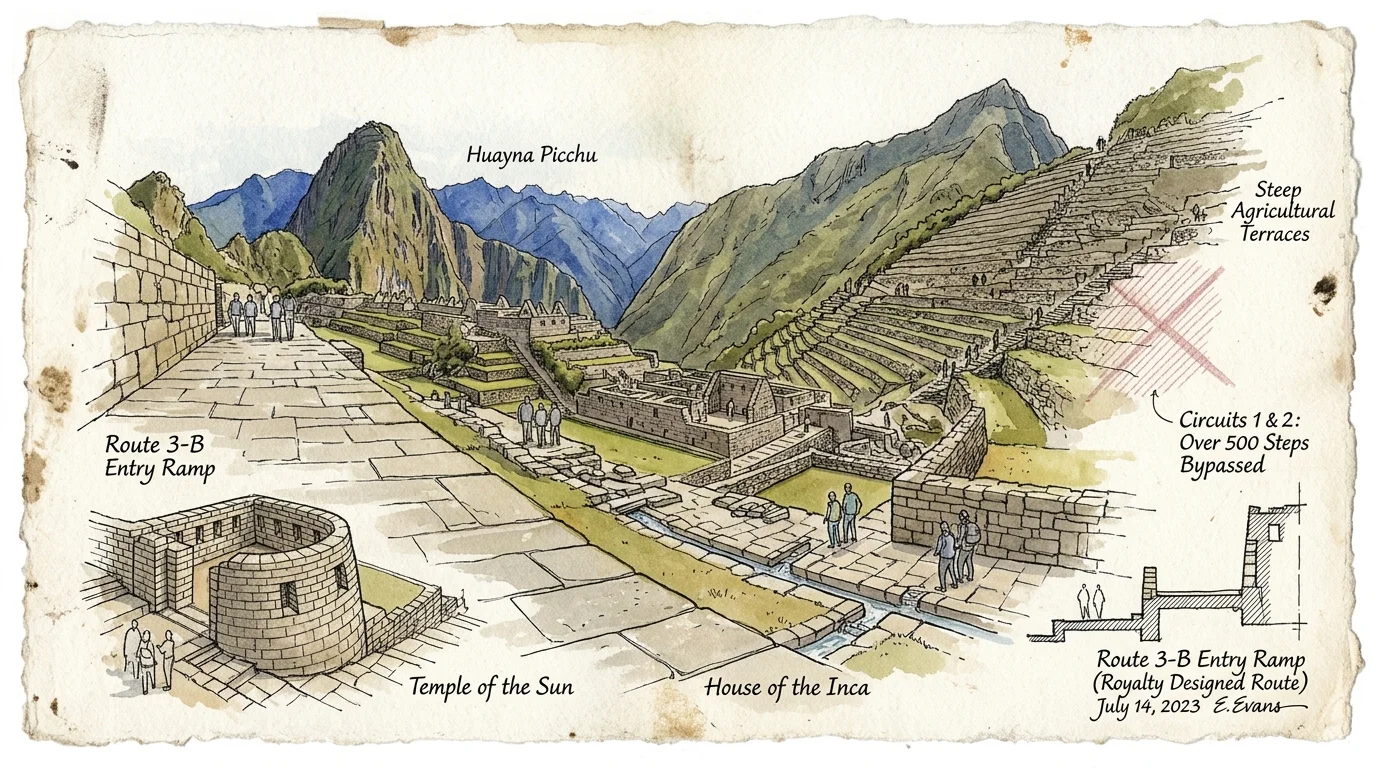
The Peruvian Ministry of Culture organizes citadel access into designated walking circuits. Traditional itineraries steer travelers through Circuits 1 and 2, which require climbing more than 500 irregular, hand-hewn stone steps to reach the upper agricultural terraces.
Just as older travelers can comfortably experience the Great Barrier Reef as non-swimmers using pontoons and submersibles, selecting Circuit 3-B keeps world wonders fully accessible.
Choosing low-impact, step-free paths allows travelers with joint limitations to experience monumental landscapes, much like exploring accessible driving circuits and flat overlooks in national parks.
To protect your joint health and mobility, bypass those upper routes entirely. You want Circuit 3 (the Royalty Circuit or Circuito de la Realeza), specifically Route 3-B (Royalty Designed Route).
Route 3-B enters the lower agricultural sector directly through a wide, gently sloped ramp. You bypass the grueling climb to the Guardian’s House while still enjoying iconic, panoramic perspectives of the ancient stone city.
This pathway takes you through the Temple of the Sun, the House of the Inca, and the water fountains. The route features wide stone flagstones with gradual grades rather than high vertical risers.
You encounter fewer than 80 total stone steps on Route 3-B, and most feature short, five-inch risers. This design makes it the gold standard if you want to visit Machu Picchu with limited mobility without sacrificing historical immersion.
| Citadel Circuit & Route | Total Step Count | Vertical Elevation Gain | Knee Joint Impact Level | Primary Highlights Included |
|---|---|---|---|---|
| Circuit 1: Route 1-A (Panoramic Upper Terrace) | 600+ stone stairs | 120 meters (394 feet) | High: Severe descent stress | Guardian’s House, classic postcard overlook |
| Circuit 2: Route 2-A (Classic Extended Route) | 450+ stone stairs | 90 meters (295 feet) | High: Continuous uneven risers | Intihuatana, Sacred Rock, Upper Terraces |
| Circuit 3: Route 3-B (Royalty Designed Route) | Fewer than 80 low steps | 22 meters (72 feet) | Low: Flat terraces, mild ramps | Temple of the Sun, House of the Inca, Water Mirrors |
Take your time navigating each stone corridor. The one-way traffic system prevents overcrowding, allowing you to establish a slow, steady cadence that protects your knees.
Booking Your Tickets: Official Portals and Senior Pricing Realities
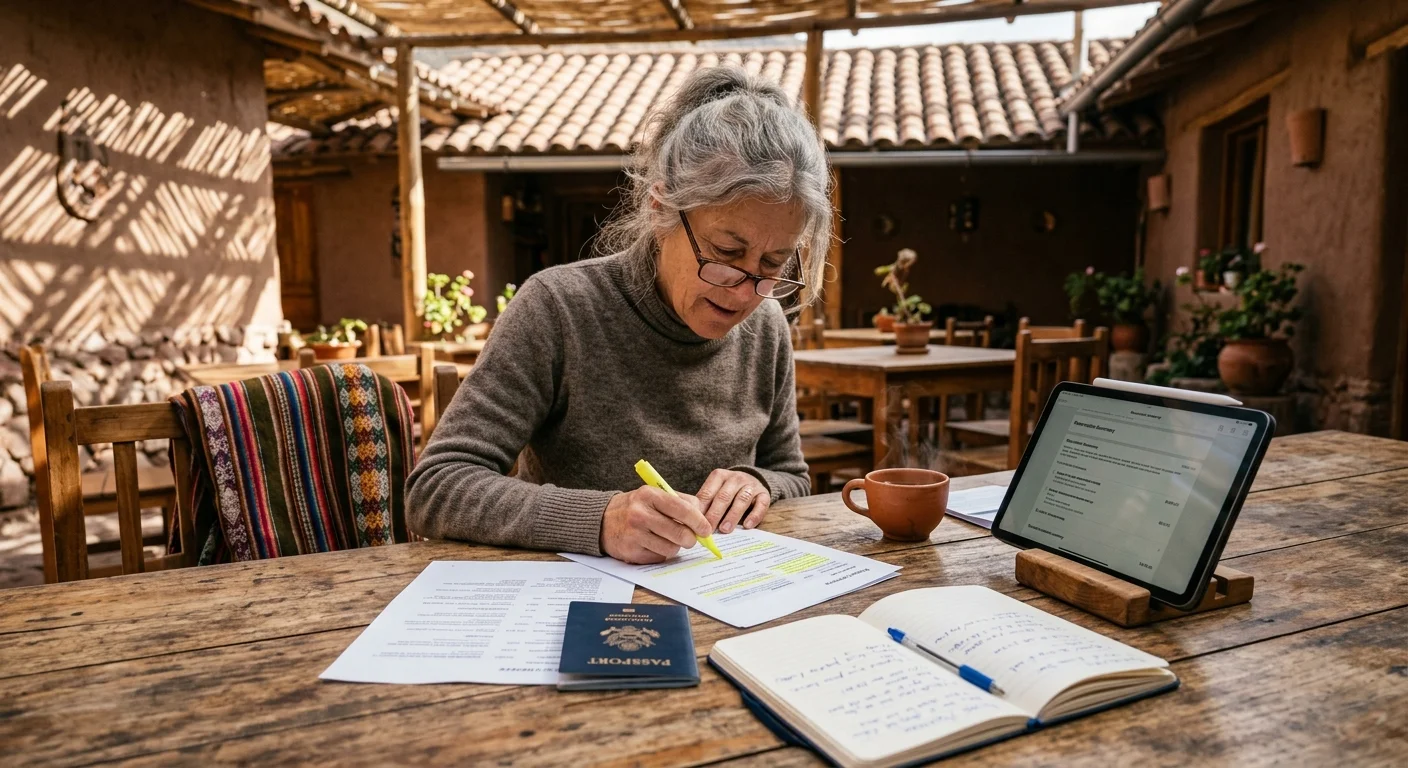
You must reserve your citadel permit months in advance through the official Peruvian government ticketing portal at tuboleto.cultura.pe. Never rely on third-party broker sites that add inflated surcharges or sell invalid time slots.
Brushing up on essential phrases by learning practical Spanish vocabulary helps you communicate clearly with private guides, drivers, and park officials.
Proactive retirement travel planning is essential when managing strict entry quotas, booking deadlines, and licensed guide requirements.
The base admission fee for an adult foreign visitor is 152 Peruvian Soles (PEN), approximately $40 to $42 USD. You will also pay an 11 PEN conservation fee to the National Service of Protected Natural Areas (SERNANP), bringing the total permit cost to 163 PEN.
Many travelers assume they qualify for an age-based concession at age 70. However, Peruvian regulations do not provide a foreign senior discount; standard adult rates apply to all non-Peruvian citizens over 18.
A 50 percent discount applies only to travelers with an officially certified, government-issued disability credential. If you hold an official state disability card, you can submit documentation during booking to access this statutory rate.
Citadel regulations mandate that every visitor enter with a licensed professional tour guide. Guide groups are legally capped at a maximum of 10 people per guide.
Rather than joining a mixed-pace walking group, hire a private guide at the main citadel gate. A private guide costs between $50 and $80 USD for two to three hours and allows you to dictate your walking pace, step cadence, and seated rest intervals.
Step-Free Transit: Scenic Rail and Consettur Shuttle Logistics
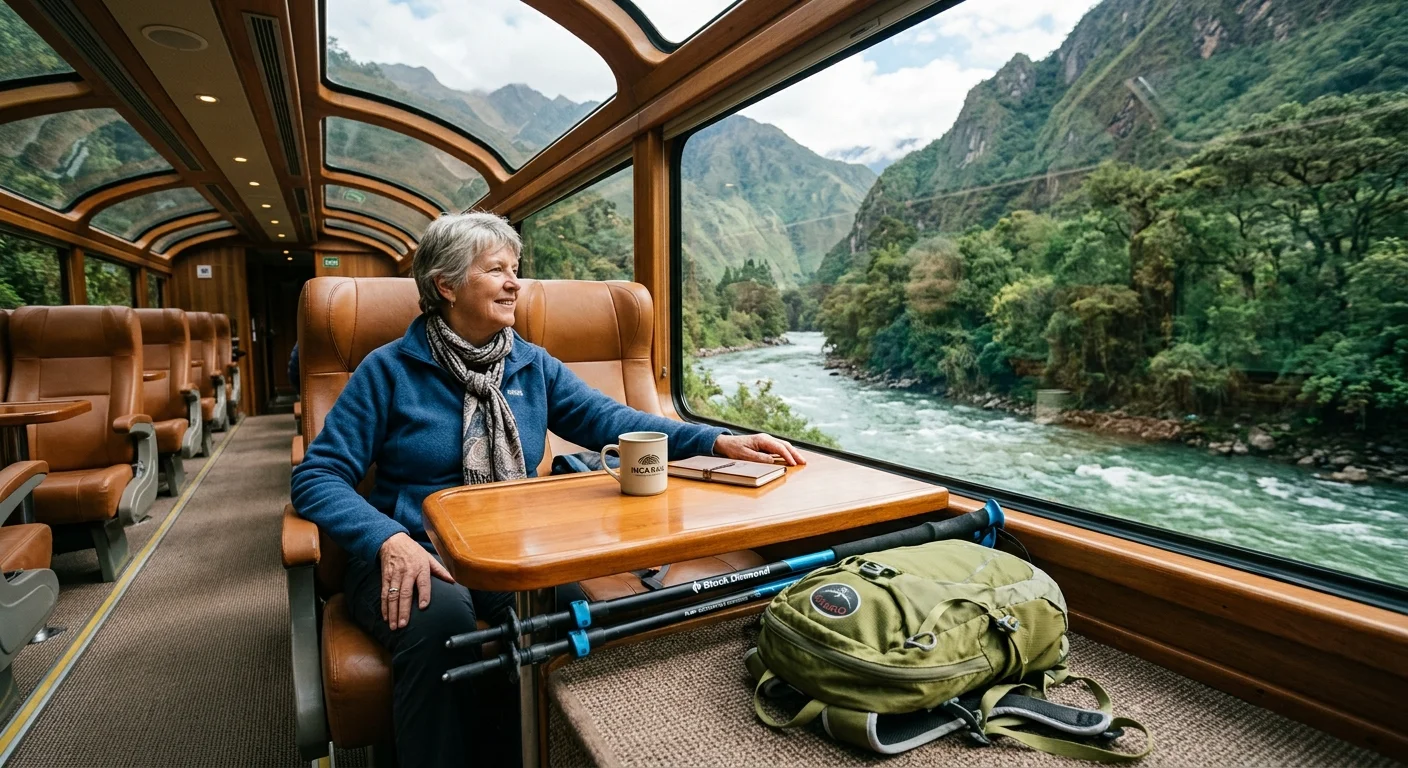
Reaching the base town of Aguas Calientes (Machu Picchu Pueblo) does not require a grueling multi-day trek. You can travel effortlessly along scenic tracks running alongside the roaring Urubamba River.
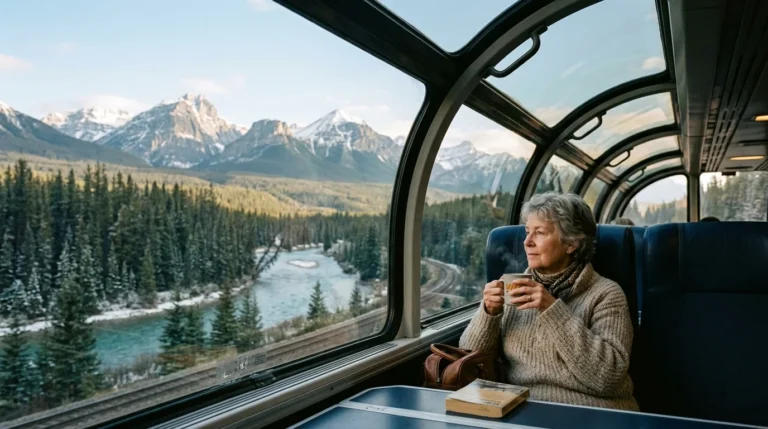
If you appreciate comfortable rail travel through rugged terrain, journeys like crossing Canada by VIA Rail offer a similar way to enjoy stunning mountain scenery without joint stress.
Just like embarking on the solo senior Amtrak Empire Builder route, traveling by scenic rail allows older travelers to absorb dramatic mountain views without walking fatigue.
Booking a senior travel Machu Picchu train is straightforward through either PeruRail or Inca Rail. Both rail operators run frequent departures from the ground-level terminal at Ollantaytambo.
PeruRail operates the Expedition and the glass-domed Vistadome, with one-way fares typically ranging between $70 and $120 USD. Inca Rail offers comparable comfort on its Voyager and 360° panoramic railcars.
Boarding platforms at Ollantaytambo and Aguas Calientes feature level boarding ramps and luggage porter services. Station attendants actively assist mature travelers with boarding steps and safely storing rolling luggage.
Upon arriving in Aguas Calientes, head to the Consettur bus terminal located 200 meters from the train station along a flat pedestrian promenade. The modern, air-conditioned shuttle buses transport visitors up the Hiram Bingham switchbacks directly to the citadel gates.
The Consettur bus fare is $24 USD round-trip ($12 USD one-way) for foreign adults. The 25-minute journey saves your joints over 1,200 vertical feet of punishing, stair-heavy climbing from the valley floor.
Joint Protection Gear: Trekking Poles, Footwear, and Trail Rules
Preparing your knees for the unique stone surfaces of the Andes ensures you complete your visit free from inflammation. The citadel features polished granite blocks that become slick when morning mist rolls across the terraces.
These proactive joint protection habits follow the same principles recommended for walking Sarria to Santiago after joint replacement, where supportive footwear and poles alleviate joint strain.
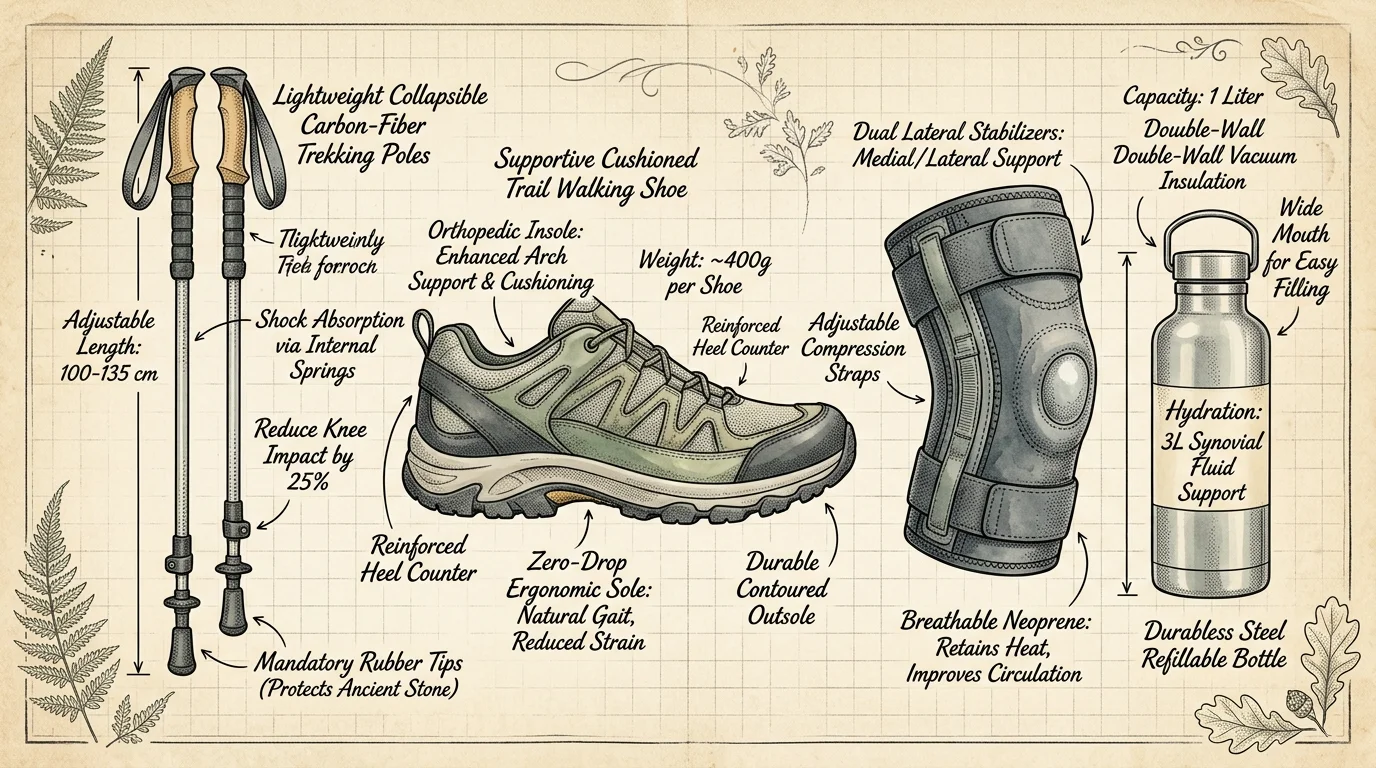
The Peruvian Ministry of Culture enforces strict rules regarding mobility equipment inside the sanctuary. Trekking poles and walking canes are permitted for older adults and travelers with limited mobility, but they must feature soft rubber tips.
Metal spikes or exposed carbide tips are strictly prohibited because they scratch and chip ancient Incan stonework. Citadel security guards will inspect your pole tips at the turnstiles and confiscate poles lacking protective rubber covers.
Select dual trekking poles equipped with ergonomic cork grips to absorb sweat and minimize wrist strain. Using poles shifts up to 20 percent of your body weight away from arthritic knee compartments during downhill steps.
Consider packing the following specialized gear items to maximize joint comfort:
- Dual aluminum or carbon-fiber trekking poles with securely fitted rubber tips
- Trail shoes with broad toe boxes and vibram outsoles, such as the Altra Lone Peak or Hoka Anacapa Low
- Medical-grade hinged knee sleeves or compression wraps to stabilize the patella on uneven grades
- Topical anti-inflammatory gel (such as 1% diclofenac sodium) applied before entering the site
- Compact, closed-cell foam sitting pad for taking comfortable rest breaks on stone benches
Wear cushioned merino wool socks to reduce friction and absorb micro-vibrations across the uneven stone paths. Small equipment adjustments make an accessible Peru vacation over 65 genuinely comfortable and pain-free.
Step-by-Step Budget and Itinerary: A Worked 4-Day Solo Scenario
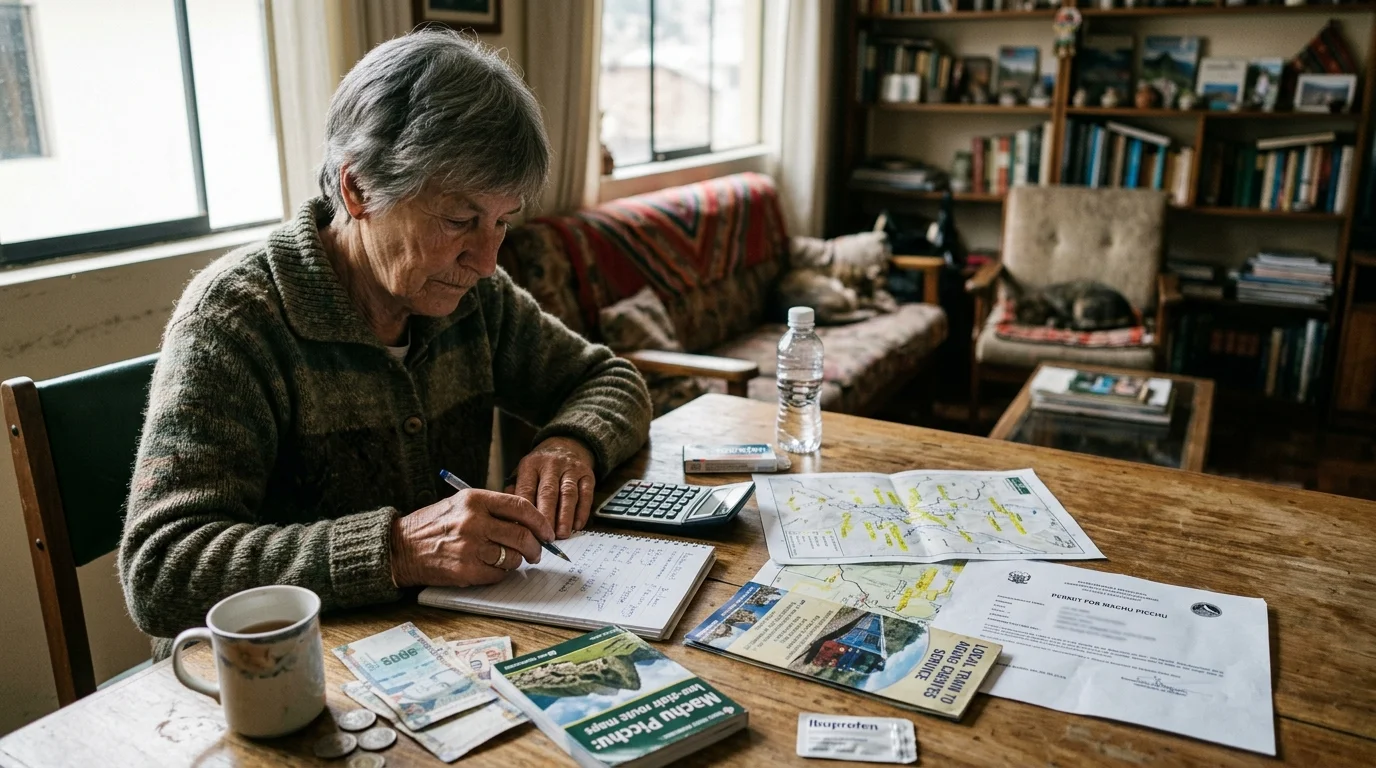
Executing an independent trip requires careful synchronization of trains, hotel check-ins, and ticketed entry slots. Here is a fully budgeted, four-day solo itinerary tailored for joint preservation and altitude safety.
When navigating foreign transit and remote towns alone, adopting safeguards from a proven solo aging safety protocol ensures you maintain dependable check-ins and emergency peace of mind.
This worked scenario follows a 70-year-old solo traveler managing mild knee osteoarthritis, departing and returning via Cusco’s airport.
- Day 1 (Arrival & Valley Descent): Land in Cusco at 10:15 AM. Meet your pre-booked private driver for a direct transfer to Urubamba (elevation 2,870 m). Check into your valley hotel by 12:30 PM, hydrate, and take a 20-minute flat walk around the town plaza.
- Day 2 (Valley Acclimatization): Spend a leisurely morning exploring the flat grounds of Ollantaytambo’s lower town. Enjoy an early dinner rich in complex carbohydrates, and rest your joints for the citadel day ahead.
- Day 3 (Citadel Visit via Route 3-B): Board the 08:30 AM PeruRail Vistadome from Ollantaytambo to Aguas Calientes, arriving at 10:05 AM. Drop your daypack at your hotel, board the 11:15 AM Consettur shuttle, and enter Machu Picchu at your 12:00 PM Route 3-B entry slot. Complete the circuit with a private guide by 02:30 PM, then return to Aguas Calientes for an overnight stay.
- Day 4 (Return Journey): Board the 09:15 AM train back to Ollantaytambo. Meet your private driver at 11:00 AM for the transfer back to Cusco Airport for your evening flight home.
Here is the exact cost breakdown for this four-day low-stair solo itinerary:
- Private car airport transfers (Cusco to Sacred Valley round-trip): $100 USD
- Round-trip PeruRail Vistadome scenic train (Ollantaytambo to Aguas Calientes): $170 USD
- Round-trip Consettur bus shuttle to citadel gate: $24 USD
- Machu Picchu Circuit 3-B permit + SERNANP conservation fee: $42 USD
- Licensed private guide for Circuit 3-B (2.5 hours): $70 USD
- Two nights comfortable Sacred Valley hotel lodging ($110 per night): $220 USD
- One night Aguas Calientes lodging ($95 per night): $95 USD
- Meals, hydration supplies, and incidentals ($45 per day): $180 USD
- Total Realistic Solo Travel Budget: $901 USD (excluding international airfare)
This budget proves that a safe, low-stair journey to the Andes does not require paying exorbitant luxury tour operator markups. You remain in complete control of your financial resources, your pacing, and your joint comfort.
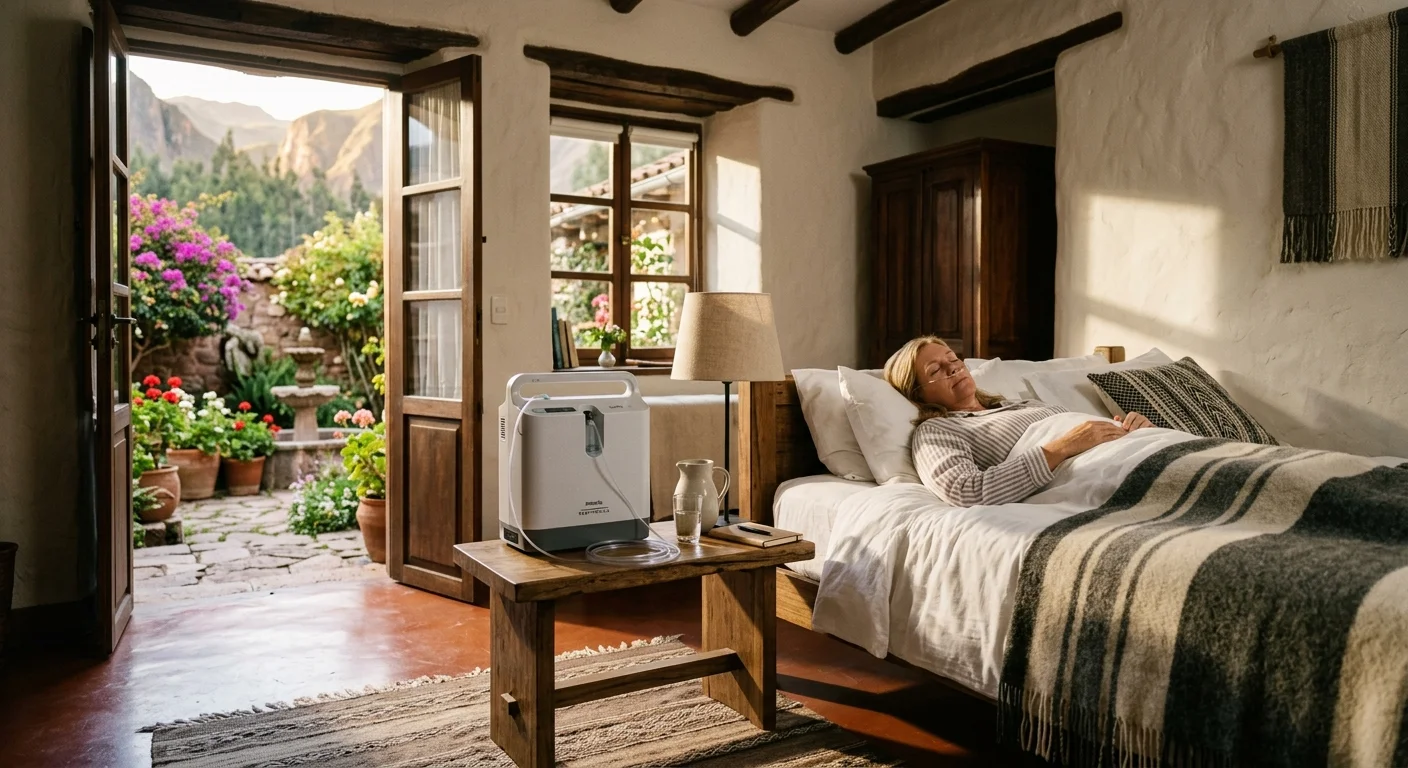
Oxygen-Enriched Lodging in the Sacred Valley and Aguas Calientes
Selecting accommodations that cater to mature adventurers dramatically improves physical recovery between travel days. Many premier hotels in the region offer supplemental oxygen systems that deliver enriched air directly into guest bedrooms.
In Urubamba, Tambo del Inka, a Luxury Collection Resort & Spa, features step-free elevator access and flat interior pathways. The property maintains an on-site medical center, private train platform access, and oxygen-enriched suites upon request.
For mid-range budgets, Casa Andina Premium Sacred Valley in Yanahuara provides single-story chalet layouts surrounded by flat gardens. Their front desk keeps portable medical oxygen cylinders on hand for guests needing evening respiratory support.
In Aguas Calientes, look into the Inkaterra Machu Picchu Pueblo Hotel, situated at a comfortable 2,040 meters (6,692 feet). The grounds feature gentle stone garden trails and attentive luggage porters who transfer your bags directly from the train platform.
Programs from organizations like Road Scholar demonstrate how structured pacing and low-stress lodging empower older adults to explore demanding world wonders safely. Choosing low-elevation lodging with accessible floor plans ensures your knees stay rested and resilient.
“It is never too late to be what you might have been.” — George Eliot
A diagnosis of osteoarthritis is an invitation to travel more intelligently, not an order to cancel your bucket list. With the right permits, equipment, and low-stair route, the stone sanctuaries of the Incas welcome you with open arms.
Frequently Asked Questions
Can I use a wheelchair inside Machu Picchu on Circuit 3-B?
No, standard wheelchairs cannot navigate Circuit 3-B due to occasional stone thresholds, drainage channels, and uneven flagstones. However, travelers with limited mobility can navigate this route comfortably on foot using dual rubber-tipped trekking poles and a slow walking pace.
Are trekking poles with bare metal spikes allowed if I walk carefully?
No, park rangers strictly prohibit exposed metal or carbide tips inside the sanctuary to protect the ancient granite masonry. You must ensure thick, durable rubber tips cover your poles before presenting your ticket at the entrance gates.
What should I do if joint stiffness flares up while inside the citadel?
Inform your private guide immediately and step aside to rest on one of the authorized stone benches along the lower terrace route. Circuit 3-B features several wide bypasses where you can sit, hydrate, and stretch without blocking other visitors.
Do international seniors receive discounted entry tickets to Machu Picchu?
No, the Peruvian government does not offer age-based ticket discounts to foreign tourists. Senior discounts apply exclusively to Peruvian nationals and citizens of Andean Community member nations, though travelers with certified disability cards can access reduced fares.
Disclaimer: This article is for informational and inspirational purposes. Life decisions are deeply personal, and we encourage readers to pursue their dreams while considering their unique circumstances, health, and financial situation.