You can conquer a visit all 30 mlb ballparks road trip in retirement without highway fatigue or physical exhaustion. Spreading this baseball journey across three structured summers preserves your energy and deepens your exploration of iconic host cities.
Much like retirees taking on ambitious cross-country adventures, pacing your mileage ensures you stay energized throughout every stretch of the highway.
Proactive retirement travel planning ensures that your multi-city journey remains joyful, comfortable, and physically sustainable.
Most guides prescribe a grueling 60-day cross-country marathon. In contrast, our 3-summer matrix caps driving legs at four hours between series, targets weekday afternoon senior discounts, and balances game days with restorative sightseeing.
With smart geographic routing, modern pitch-clock pacing, and intentional budgeting, visiting every Major League venue becomes a thrilling couples adventure.
The 3-Summer Regional Matrix: Pacing Your 30-Ballpark Goal
Retirement offers the gift of time. You do not need to rush through 30 ballparks in two frantic months just to check items off a list.
Taking kids or grandchildren along on regional legs is also a wonderful vehicle for building intergenerational connections over shared hot dogs and box scores.
Following baseball across the country is an incredible avenue for rekindling old passions and celebrating lifelong fandom.
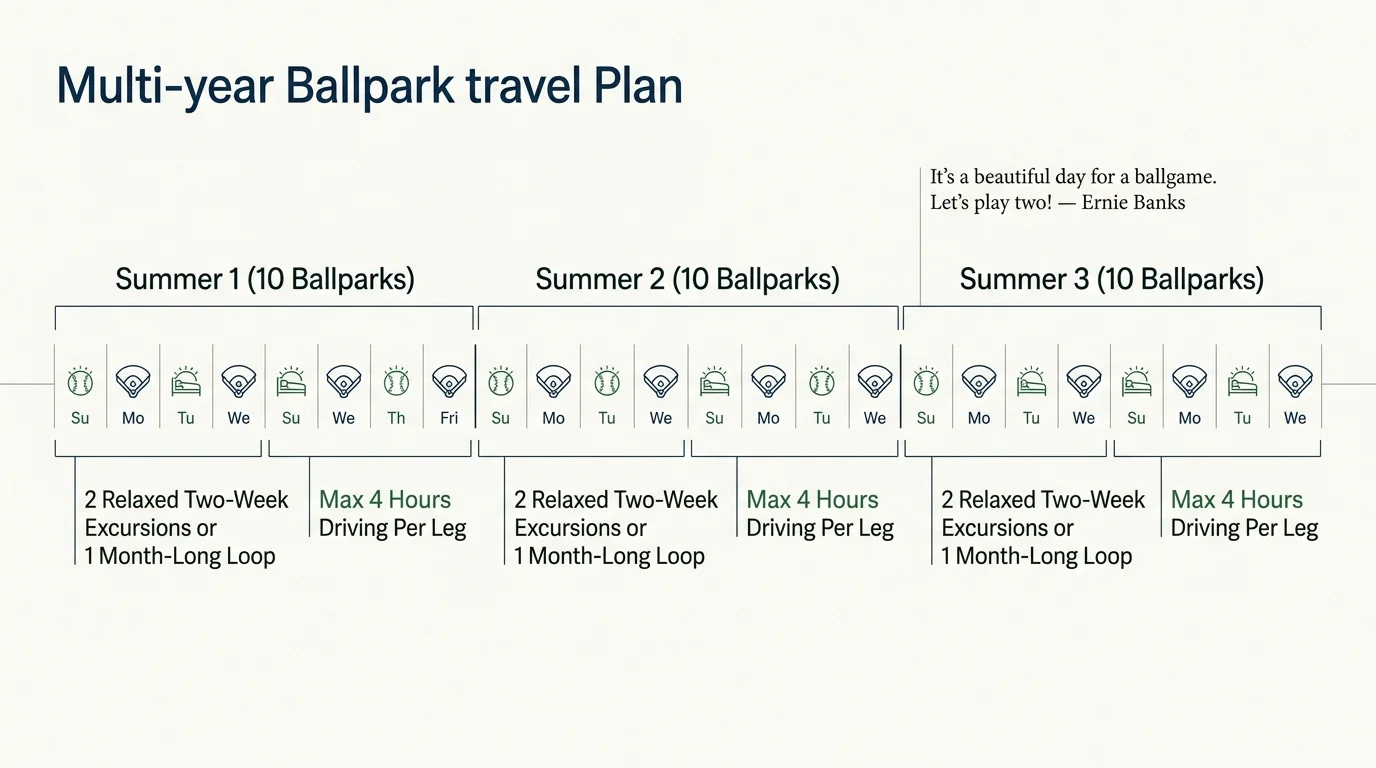
The Major League Baseball regular season spans approximately 180 calendar days from late March to late September. Dividing the 30 stadiums across three summers means attending exactly 10 games per year.
Active retirement research from the Stanford Center on Longevity demonstrates that purposeful, physically engaged travel significantly boosts cognitive vitality and emotional well-being. Designing a multi-year road trip provides sustained anticipation and structure.
You can schedule each summer as two relaxed two-week excursions or one comprehensive month-long loop. This pacing ensures you never spend more than four consecutive hours behind the wheel.
Our 5-loop matrix clusters franchises by geographic proximity, highway corridors, and seasonal climate patterns. You enjoy leisurely morning departures, unhurried stadium arrivals, and peaceful recovery days between series.
“It’s a beautiful day for a ballgame. Let’s play two!” — Ernie Banks
Banks captured the pure joy of the sport. Experiencing that joy across thirty unique ballparks requires thoughtful logistical pacing.

The 5 Geographic Driving Loops: Mileage and Routing Breakdown
Efficient routing reduces fuel consumption, minimizes driving fatigue, and prevents backtracking across congested metropolitan corridors. We have organized all 30 Major League clubs into five distinct regional driving loops.
Many travelers pair these multi-week itineraries with RV living to comfortably camp close to ballparks and bypass suburban hotel rates.
If you prefer avoiding congested highways and downtown parking lots, consult our guide to transit-connected route maps and budget schedules for each stadium stop.
Summer One covers the Northeast and Rust Belt franchises. Summer Two tackles the Midwest and Sunbelt venues. Summer Three finishes with the vast Mountain and Pacific Coast territory.
| Loop Designation | Included Ballparks | Total Driving Distance | Recommended Tour Window | Longest Driving Leg |
|---|---|---|---|---|
| Loop 1: Mid-Atlantic & Northeast | Nationals, Orioles, Phillies, Mets, Yankees, Red Sox | 460 miles | 12 to 14 days | 215 miles (NYC to Boston) |
| Loop 2: Rust Belt & Great Lakes | Pirates, Guardians, Tigers, Blue Jays, Reds | 1,040 miles | 14 to 16 days | 290 miles (Toronto to Cleveland) |
| Loop 3: Upper Midwest & Heartland | Cubs, White Sox, Brewers, Twins, Cardinals, Royals | 1,380 miles | 16 to 18 days | 375 miles (Milwaukee to Minneapolis) |
| Loop 4: Southeast & Texas Triangle | Braves, Rays, Marlins, Astros, Rangers | 1,980 miles | 18 to 21 days | 490 miles (Atlanta to Tampa) |
| Loop 5: Mountain & Pacific Coast | Rockies, D-backs, Padres, Dodgers, Angels, Giants, Athletics, Mariners | 2,850 miles | 24 to 28 days | 810 miles (Sacramento to Seattle) |
Notice key venue locations when building your calendar. Following their departure from Oakland, the Athletics host home games at Sutter Health Park in West Sacramento through 2027 before moving to Las Vegas.
In Florida, the Tampa Bay Rays returned to Tropicana Field in St. Petersburg following extensive structural roof repairs. Always verify temporary venue adjustments before booking regional accommodations.
Crossing international borders requires proper documentation. Visiting Rogers Centre in Toronto necessitates a valid U.S. passport book, passport card, or Enhanced Driver’s License for land border entry.
- Loop 1 execution: Utilize Interstate 95 during non-peak midday hours (10:00 AM to 1:00 PM) to transition smoothly between Washington, Baltimore, Philadelphia, New York, and Boston.
- Loop 2 execution: Cross into Ontario via the Peace Bridge in Buffalo to visit Toronto, then re-enter the U.S. toward Detroit via the Ambassador Bridge or Detroit-Windsor Tunnel.
- Loop 3 execution: Anchor your stay in downtown Chicago for four nights, allowing you to attend games at both Wrigley Field and Guaranteed Rate Field using the CTA Red Line.
- Loop 4 execution: Plan this southern swing during April or May to avoid extreme late-summer Gulf Coast heat and afternoon tropical storm patterns.
- Loop 5 execution: Break the scenic Pacific Northwest drive along Interstate 5 into two comfortable segments by scheduling an overnight rest stop in Eugene or Portland, Oregon.
Modern Ballpark Logistics: Clear Bags, Seat Cushions, and Cashless Gates
Entering modern ballparks requires strict adherence to universal security protocols. Security staff will turn away visitors carrying unauthorized bags or prohibited accessories.
Planning concession and lodging choices in advance helps you travel comfortably on a budget without sacrificing any gameday magic.
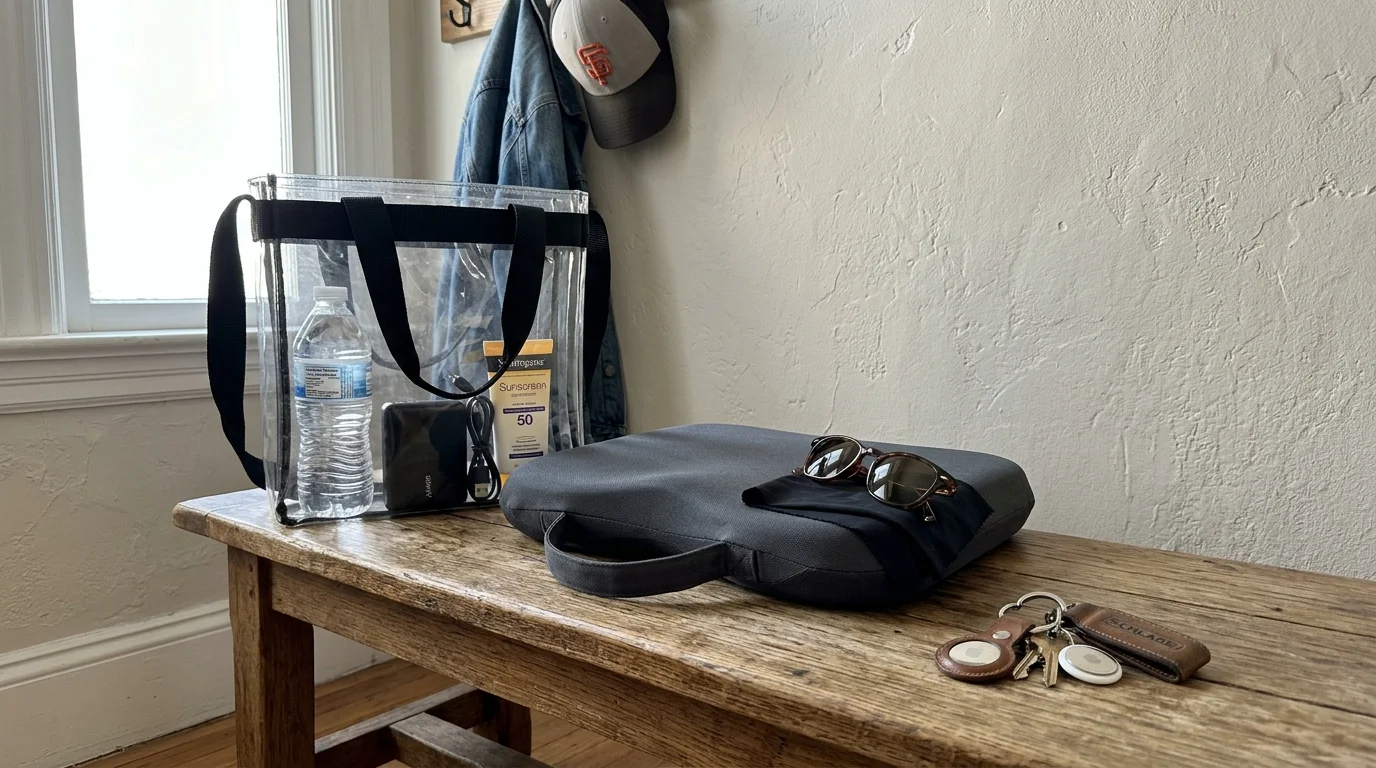
All 30 MLB venues enforce clear-bag policies to accelerate gate entry and enhance guest safety. Knowing exact measurement thresholds prevents stressful returns to your parked vehicle.
- Approved Clear Totes: Clear plastic, vinyl, or PVC bags measuring no larger than 12 inches by 12 inches by 6 inches.
- Small Clutches and Wallets: Non-clear small clutches or wristlets measuring roughly 5 inches by 9 inches (or 4.5 inches by 6.5 inches depending on the venue).
- Medical Equipment Exceptions: Medical bags, oxygen equipment, and necessary diabetic supplies receive manual inspections at designated ADA entry gates.
- Prohibited Carrying Items: Traditional backpacks, camera cases, large multi-pocket duffels, and tinted plastic totes remain banned league-wide.
- Approved Seat Cushions: Portable foam seat pads measuring maximum 16 inches by 16 inches without zippers, exterior pockets, or metal armrests.
Major League venues operate entirely cashless payment systems. Cash is not accepted at parking booths, concession stands, ticket windows, or team retail shops.
Venues provide complimentary “Reverse ATMs” throughout stadium concourses. These kiosks exchange physical cash for universal prepaid Mastercard or Visa debit cards in amounts up to $500 without transaction fees.
Pack comfortable clothing in layers for fluctuating coastal temperatures. San Francisco’s Oracle Park and Seattle’s T-Mobile Park turn brisk quickly once evening winds roll across the water.
Ticketing Strategy: Senior Matinees, Digital Wallets, and App Rules
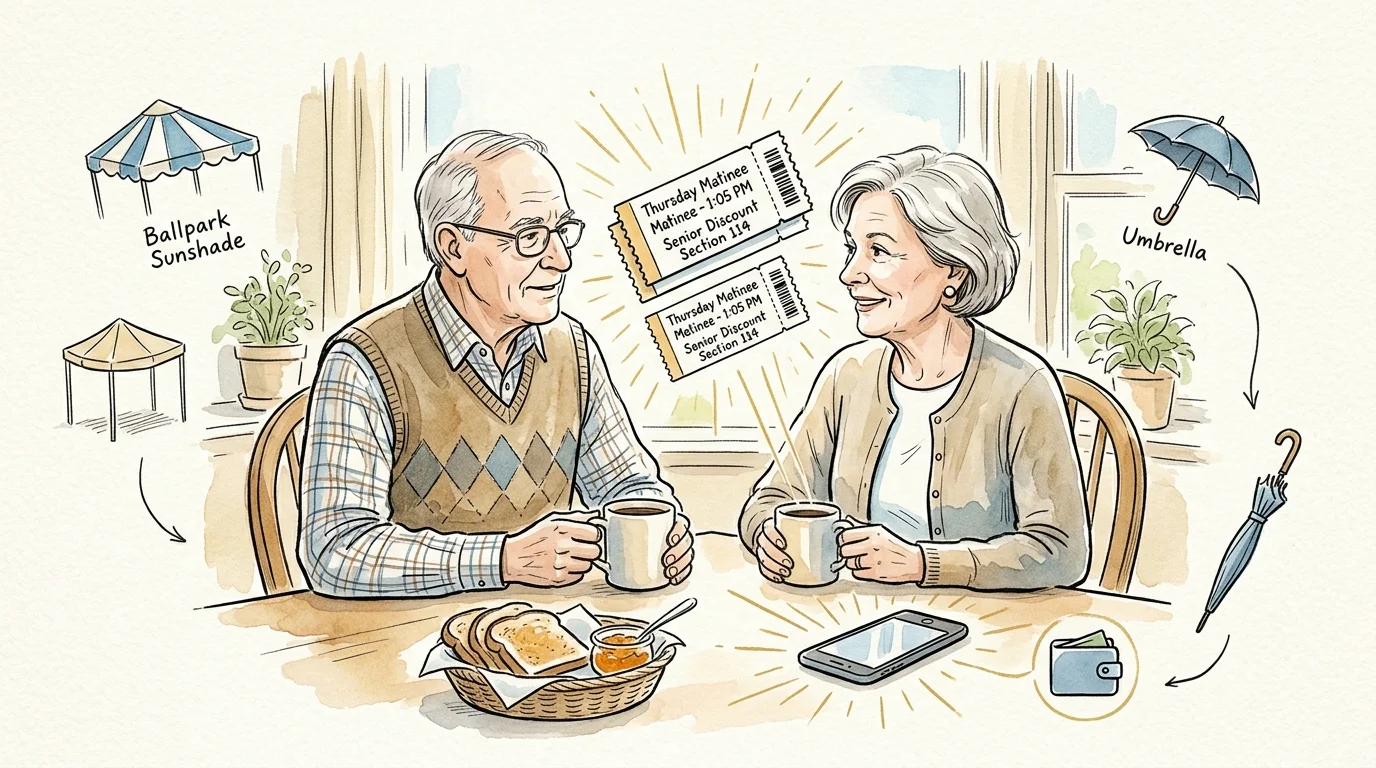
Physical paper tickets and printed PDF barcodes have been eliminated across Major League Baseball. Every stadium entry turnstile now requires the official MLB Ballpark App installed on your smartphone.
Crafting your own multi-year stadium trek allows you to design a retirement bucket list beyond the obvious choices that reflects what you love most.
Mastering modern digital ticketing makes attending a sporting event completely effortless from the front gate to the final out.
Download the application well before departure and log in using a single dedicated email address. Ensure both you and your spouse have digital tickets linked inside your smartphone wallet to prevent gate connectivity delays.
Pitch clock regulations introduced in 2023 reduced average nine-inning game lengths from 3 hours, 10 minutes down to between 2 hours, 36 minutes and 2 hours, 42 minutes. This swifter pace prevents exhaustion and gets you back to your hotel before dark.
Take advantage of weekday afternoon games, traditionally scheduled on Wednesdays and Thursdays at 12:35 PM or 1:05 PM. These matinees offer manageable parking, lower ticket demand, and relaxed concourse movement.
Strategic ticket savings help protect your overall AARP travel allocations. Several franchises offer designated Senior Days or partner discounts granting 10% to 20% off lower bowl tickets for weekday matchups.
- Target shaded seating: Select club level or upper terrace seats situated under overhangs along the third-base line to avoid intense afternoon sun.
- Verify gate opening times: Most ballparks open main gates 90 minutes before first pitch, allowing unhurried entry and batting practice viewing.
- Avoid speculative resale fees: Purchase verified tickets directly through team box offices via the Ballpark App rather than unregulated secondary brokers.
- Request accessibility shuttles: Ballparks with sprawling surface lots, such as Dodger Stadium and Kauffman Stadium, operate courtesy golf carts for seniors.

Worked Road Trip Budget: Loop 1 Breakdown and Grand Tour Estimates
Careful financial tracking keeps your mlb ballpark bucket list budget realistic and sustainable. Team Marketing Report’s Fan Cost Index establishes a league-wide baseline of roughly $65 to $75 per individual per game.
Applying proven retirement travel hacks like hotel loyalty points and off-peak dining discounts will stretch your spending power across every ballpark city.
This baseline combines a standard game ticket ($37 average), one meal and beverage combination, and prorated parking costs. High-demand markets like Boston, Los Angeles, and New York run higher, while Miami and Kansas City cost significantly less.
Here is a fully worked, real-dollar scenario for a retired couple completing Loop 1 (Mid-Atlantic & Northeast). This itinerary covers 6 games across 12 days and 460 highway miles.
| Expense Category | Specific Inputs and Calculation Method | Category Subtotal |
|---|---|---|
| Vehicle Fuel & Highway Tolls | 620 total miles (incl. local driving) @ 28 MPG ($3.50/gal) + I-95/turnpike tolls ($165.00) | $242.50 |
| Hotel Lodging (11 Nights) | 11 nights in suburban transit-adjacent hotels @ $185.00/night (including lodging taxes) | $2,035.00 |
| Stadium Game Tickets (2 Seats) | 12 total tickets across 6 venues (Avg: $48.00 per ticket in Northeast corridor) | $576.00 |
| Stadium Parking & Commuter Rail | 4 games using regional metro/rail ($20.00/game) + 2 onsite stadium parking passes ($35.00/game) | $150.00 |
| Ballpark Food & Refreshments | $35.00 per person baseline per game x 2 people x 6 ballparks | $420.00 |
| Off-Site Meals & Groceries | 12 days @ $75.00 combined daily meal budget (breakfasts included at hotels) | $900.00 |
| Souvenirs & Official Programs | 1 MLB Passport scorebook ($20.00) + 6 commemorative stadium pins ($12.00 each) | $92.00 |
| Total Loop 1 Investment | Complete 12-day Mid-Atlantic and Northeast driving tour for two | $4,415.50 |
Extrapolating this worked example across all five loops yields an estimated 3-summer grand total of $21,800 to $23,500 for a retired couple. That equals roughly $7,300 to $7,800 per summer season.
You can lower these figures substantially by booking hotel accommodations using accumulated loyalty points. Selecting suburban lodging near light rail lines also saves $30 to $50 per game in downtown parking fees.
Preserving Energy on the Road: Physical Comfort and Game Pace
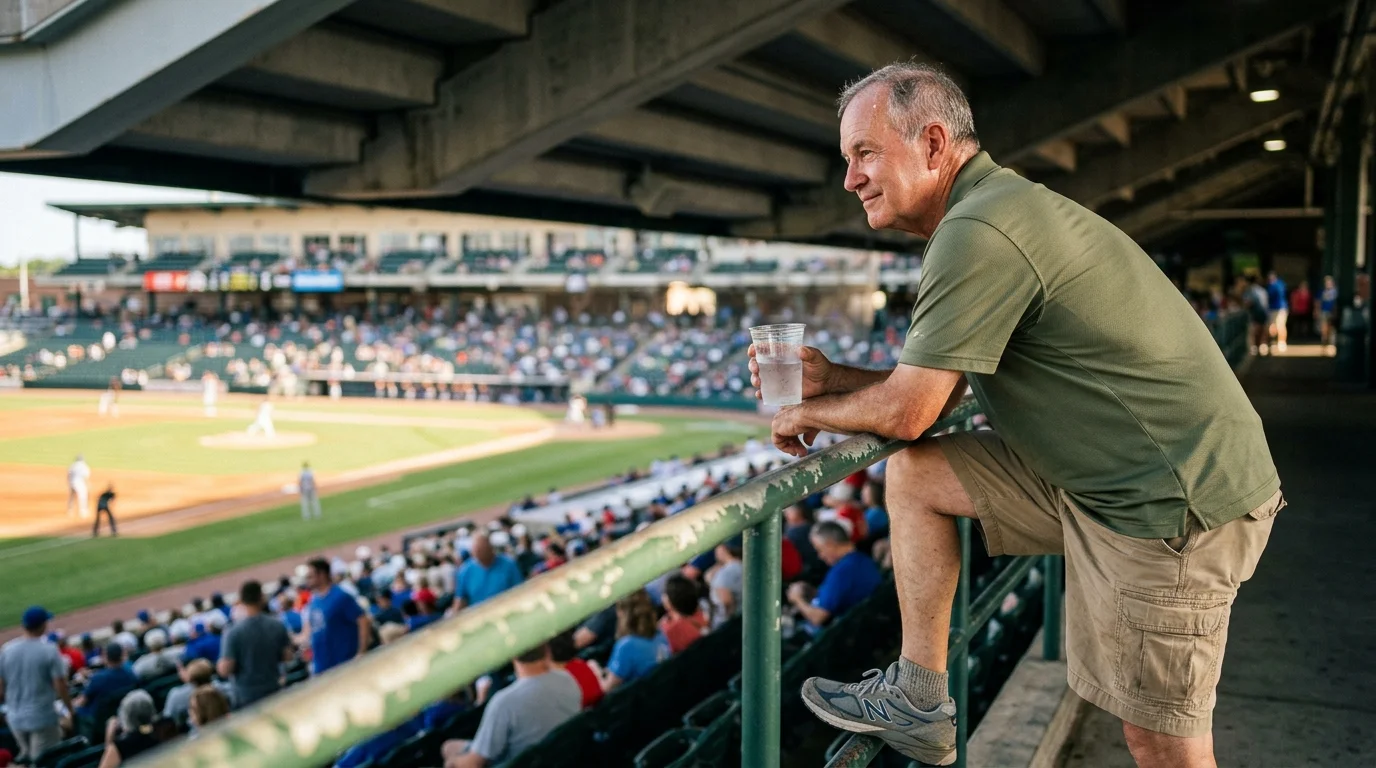
Executing a 30 stadium tour itinerary senior road trip requires protecting your joints and conserving stamina. Navigating concourses, ramps, and grandstand stairs easily adds 8,000 to 12,000 steps to your daily activity tracker.
Wear broken-in, supportive walking shoes featuring cushioned insoles. High-traction outsoles are critical when walking down concrete seating bowls coated in spilled beverages.
Most ballparks permit guests to bring one sealed, clear plastic bottle of plain drinking water (up to one liter) per person. Take advantage of this policy to stay hydrated without standing in long concession lines.
Alternate driving days with non-baseball rest days. When you finish an afternoon game in Philadelphia, spend the following day visiting historic Independence Hall rather than racing directly to New York.
Consider renting a midsize crossover or hybrid SUV with high seat clearance. Taller vehicles allow easy entry and exit, sparing your knees and lower back over thousands of highway miles.
Frequently Asked Questions
How far in advance should we purchase tickets for iconic ballparks like Fenway Park and Wrigley Field?
Purchase tickets for historic venues like Fenway Park and Wrigley Field at least eight to twelve weeks in advance. Weekend series and rivalry matchups sell out rapidly, driving up secondary market prices.
Can we bring outside food and snacks into Major League stadiums?
Most Major League ballparks permit fans to bring outside food inside clear plastic gallon-sized bags. Sandwiches, fruit slices, and wrapped snacks are allowed, provided they fit comfortably inside your approved clear tote.
What happens if bad weather delays or postpones a game on our driving itinerary?
If rain postpones a contest, team policies grant credit toward makeup games or future regular-season dates. Building one buffer day between stadium transitions allows you to attend morning doubleheader makeups without ruining subsequent stops.
How do we access our tickets if cellular data service is congested around stadium gates?
Download your digital game tickets into Apple Wallet or Google Wallet before arriving at the ballpark district. Wallet-stored barcodes do not require active cellular reception to scan at entrance turnstiles.
Disclaimer: This article is for informational and inspirational purposes. Life decisions are deeply personal, and we encourage readers to pursue their dreams while considering their unique circumstances, health, and financial situation.