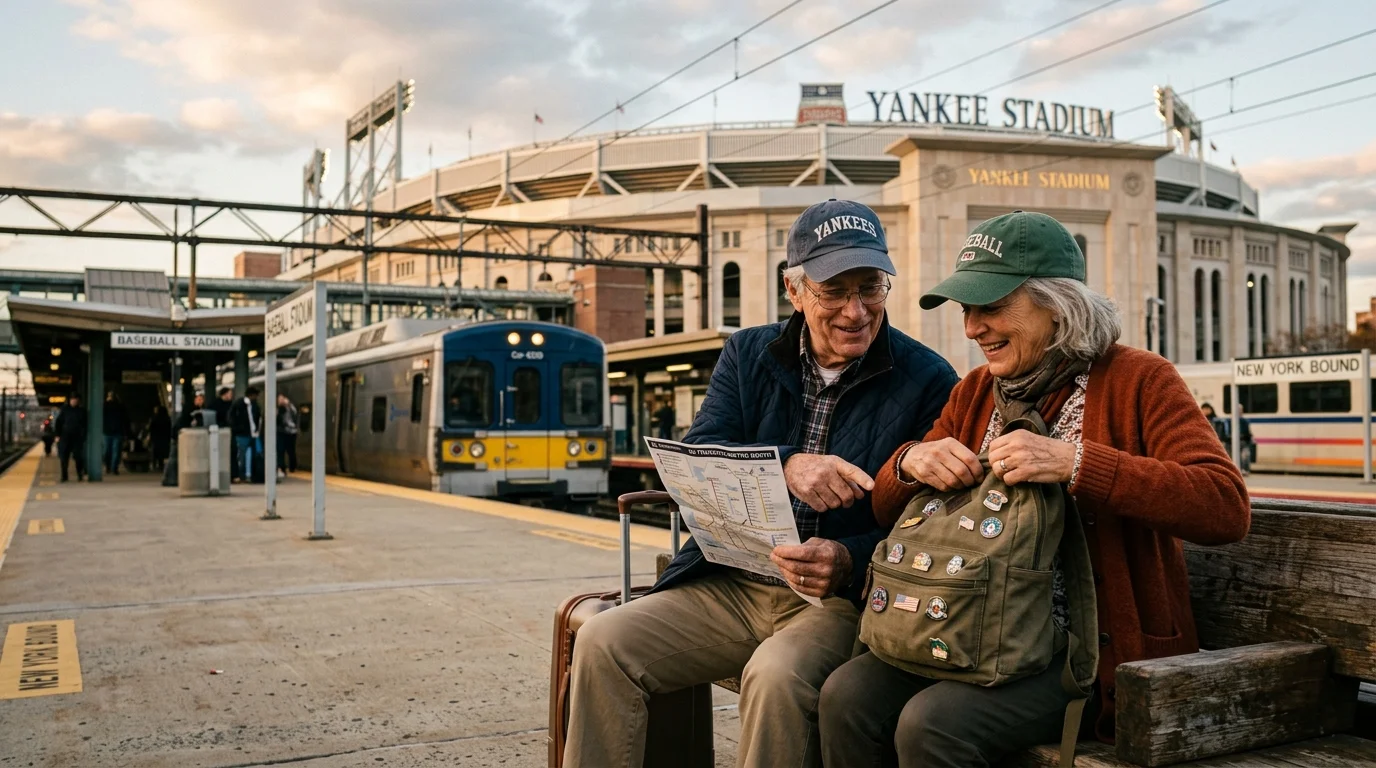
You can visit all 30 MLB ballparks after age 65 without navigating highway traffic, paying exorbitant rental car fees, or driving after dark. Completing this bucket list baseball tour by rail and urban transit offers a safer, cheaper, and richer retirement journey.
Our unique blueprint synchronizes afternoon day games with regional passenger rail corridors and local senior transit discount fares. You will experience ten stadiums each summer across three years while sleeping comfortably in well-connected transit hotels.
This structured approach eliminates midnight highway driving and secures predictable travel costs across your entire senior baseball road trip.
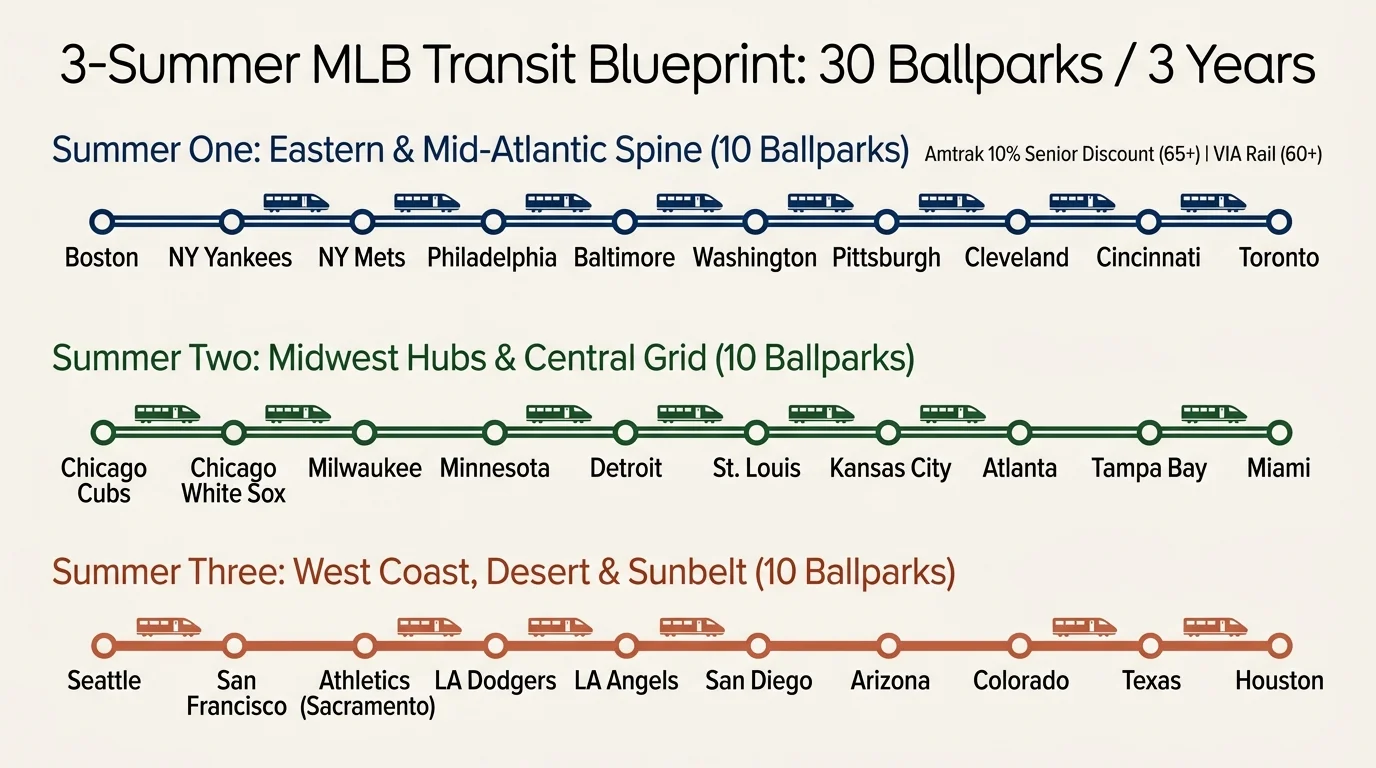
The 3-Summer Blueprint: Dividing 30 Ballparks by Transit Logic
Most fans attempt to visit all 30 MLB ballparks by driving thousands of miles across arbitrary divisional borders. That approach creates punishing highway slogs, expensive parking fees, and dangerous late-night road fatigue.
You can conquer this pursuit by organizing your tour along established passenger rail lines instead of team divisions. Grouping ten stadiums per season over three consecutive summers creates a comfortable, sustainable pace.
Each summer features a 16-to-21-day campaign divided into two compact loops. This pacing allows you to return home between legs to rest, recharge, and wash laundry.
Amtrak offers travelers aged 65 and older a 10% discount on most coach fares. For cross-border journeys into Canada to see the Toronto Blue Jays, the senior rail discount begins at age 60 on joint VIA Rail services.
The Stanford Center on Longevity emphasizes that sustained physical mobility and purposeful social pursuits contribute significantly to vitality in retirement. Walking pedestrian-friendly concourses and traveling by train keeps you active while removing the stress of gridlocked traffic.
Here is how the three-summer geographical distribution organizes all 30 franchises into logical, rail-accessible clusters:
- Summer One (Northeast & Mid-Atlantic Spine): Boston, New York Yankees, New York Mets, Philadelphia, Baltimore, Washington, Pittsburgh, Cleveland, Cincinnati, and Toronto.
- Summer Two (Midwest Hubs & Central Grid): Chicago Cubs, Chicago White Sox, Milwaukee, Minnesota, Detroit, St. Louis, Kansas City, Atlanta, Tampa Bay, and Miami.
- Summer Three (West Coast, Desert & Lone Star): Seattle, San Francisco, Athletics (Sacramento), Los Angeles Dodgers, Los Angeles Angels, San Diego, Arizona, Colorado, Texas, and Houston.
Summer One: The Eastern Rail Spine and Mid-Atlantic Corridors
Summer One leverages the most transit-dense corridor in North America: the Amtrak Northeast Regional line. This single rail line links six major franchises directly to urban rail systems without requiring a single rental car.
You start in Boston at Fenway Park, easily reached by taking the MBTA Green Line directly to Kenmore Station. Lansdowne Station on the MBTA Commuter Rail drops you steps from the outfield turnstiles.
From Boston South Station, Amtrak delivers you to New York Penn Station or Moynihan Train Hall in under four hours. You can access both New York ballparks entirely by subway.
Board the subway 4 train or D train to reach 161st Street–Yankee Stadium in the Bronx. To visit Citi Field in Queens, ride the 7 subway train or the Long Island Rail Road directly to Mets–Willets Point.
Continue south along the Northeast Regional spine into Pennsylvania and Maryland. Philadelphia’s Citizens Bank Park sits at the southern terminus of the SEPTA Broad Street subway line at NRG Station.
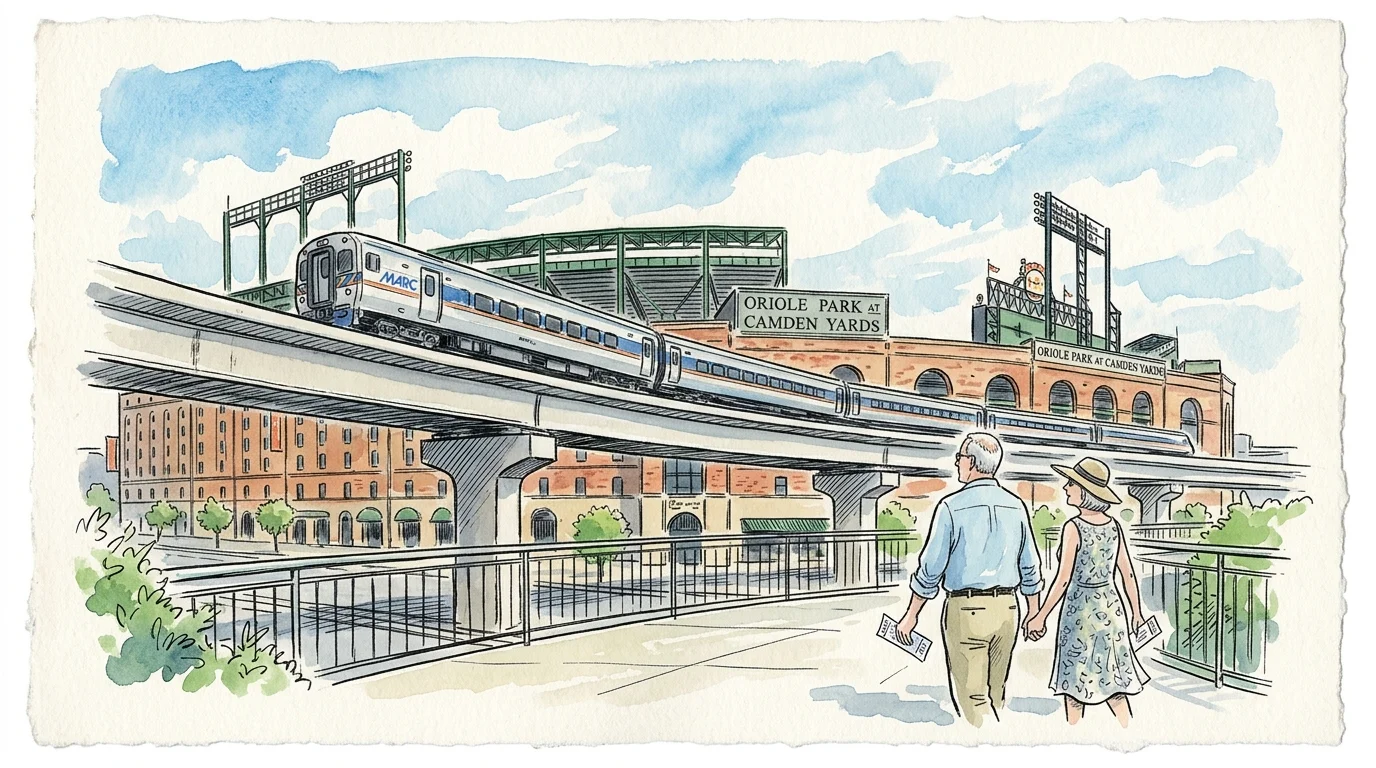
In Baltimore, Oriole Park at Camden Yards features an integrated transit station served directly by the Maryland MTA Light Rail. Washington’s Nationals Park sits one stop down the rail line, accessible via the WMATA Metro Green Line at Navy Yard–Ballpark Station.
Complete the remaining four stadiums of Summer One through two regional passenger train extensions:
- Ride the cross-border Amtrak Maple Leaf directly to Toronto Union Station to visit the Blue Jays at Rogers Centre.
- Take the scenic Amtrak Pennsylvanian from Philadelphia across the Allegheny Mountains directly into downtown Pittsburgh for PNC Park.
- Board the Amtrak Capitol Limited from Pittsburgh to reach Progressive Field in Cleveland.
- Take a regional motorcoach connector or the Amtrak Cardinal line down to Great American Ball Park in Cincinnati.
Summer Two: The Midwest Rail Hubs and Great Lakes Network
Summer Two establishes Chicago as your primary central operations base. Chicago allows you to cross off two historic ballparks while staying in a single hotel room near the Loop.
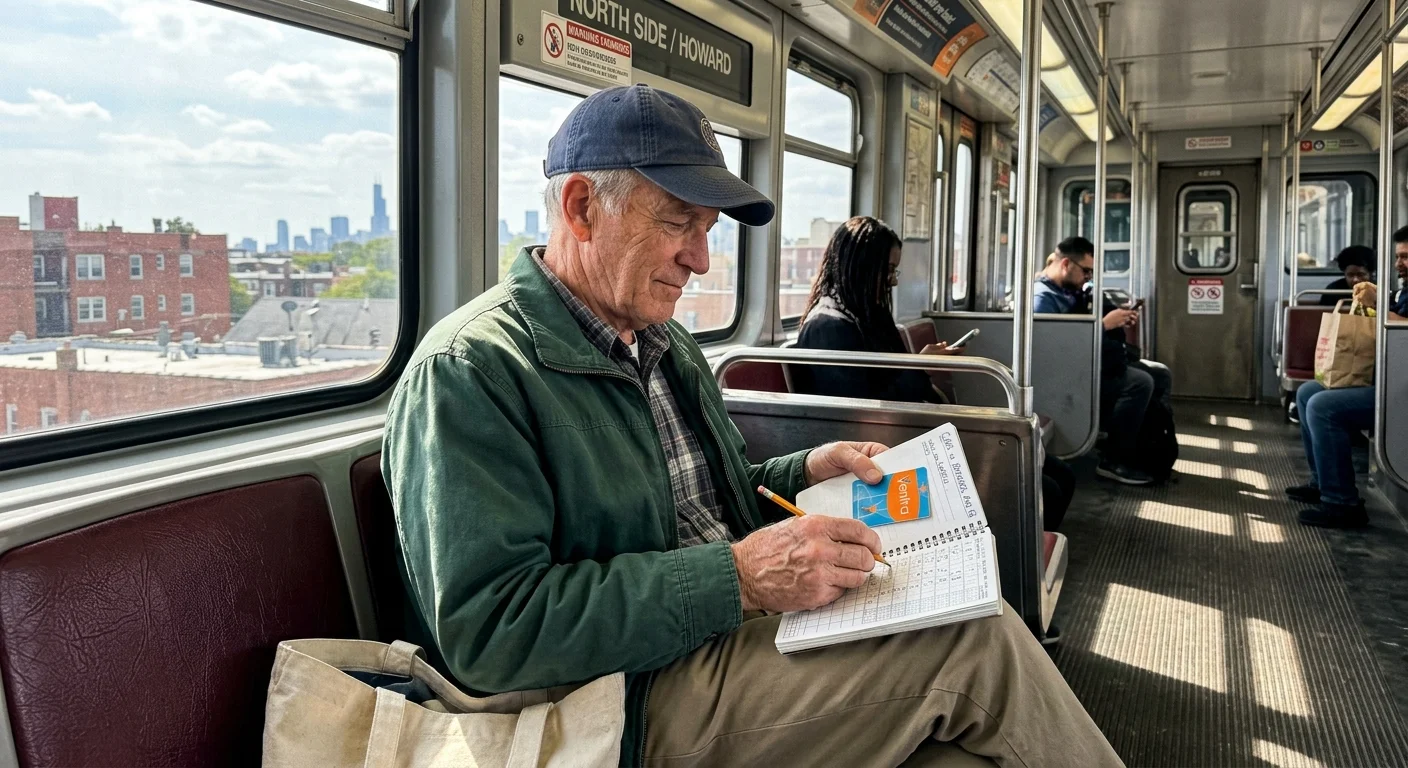
The Chicago Transit Authority (CTA) Red Line subway connects both local venues on a single north-south rail corridor. Take the Red Line north to Addison Station for Wrigley Field; take it south to Sox–35th Station for Guaranteed Rate Field.
From Chicago Union Station, the Amtrak Hiawatha provides a relaxing 90-minute run north to downtown Milwaukee. The Milwaukee County Transit System (MCTS) bus Route 18 or Connect 1 BRT transports you directly toward American Family Field.
Head west from Chicago aboard the Amtrak Empire Builder or Borealis line into downtown St. Paul. Transfer seamlessly to the METRO Green Line light rail to reach Target Field in Minneapolis.
Return southeast through Chicago aboard the Amtrak Lincoln Service corridor trains to St. Louis. Busch Stadium sits adjacent to the 8th & Pine MetroLink light rail station in the heart of downtown.
Cross Missouri on the Amtrak Missouri River Runner to Kansas City Union Station. Kauffman Stadium requires a quick ride-hail or the local RideKC transit link from downtown.
Head east to Comerica Park in Detroit via the Amtrak Wolverine line to the Detroit Amtrak station. From there, take the modern QLINE streetcar south along Woodward Avenue directly to the stadium gate.
Conclude your second summer with a Southern rail-and-air swing covering Georgia and Florida:
- Take the MARTA rail system to Midtown Station in Atlanta, connecting directly to the CobbLinc Route 100 bus for Truist Park.
- Visit the Tampa Bay Rays at George M. Steinbrenner Field in Tampa for the 2025 season via local transit, before their planned 2026 return to the repaired Tropicana Field.
- Ride the Brightline high-speed train down to downtown Miami, taking Metrorail and the Marlins shuttle directly to loanDepot Park.
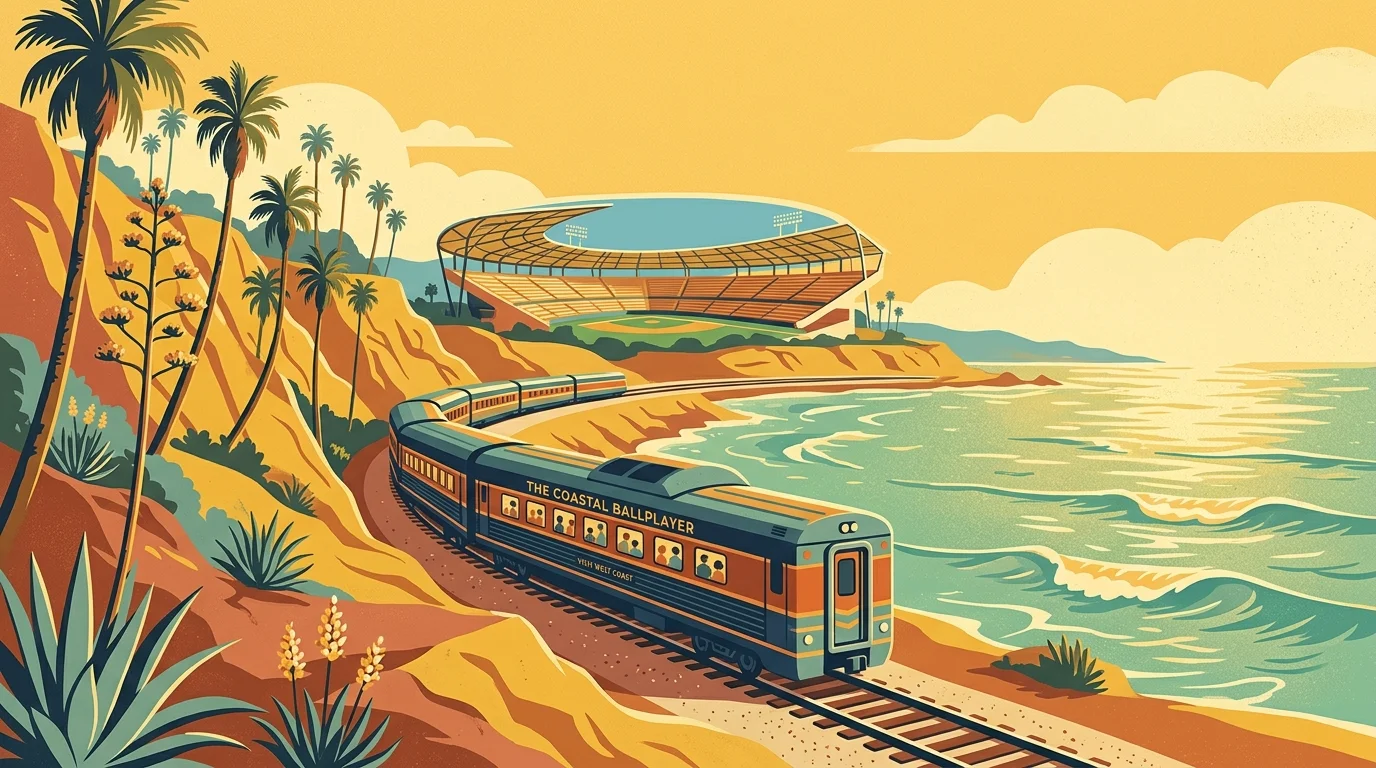
Summer Three: Pacific Coast Corridors, Desert Rails, and Sunbelt Hubs
Summer Three delivers unmatched coastal scenery along dedicated passenger lines on the Pacific rim. This route eliminates the harrowing experience of navigating multi-lane West Coast freeway systems.
Begin in the Pacific Northwest at Seattle’s T-Mobile Park. The Sound Transit 1 Line light rail and Sounder commuter trains deposit you at Stadium Station, just yards from the entry gates.
Travel south to Northern California. In San Francisco, Oracle Park stands directly along the Muni Metro T-Third and N-Judah streetcar tracks and steps from the Caltrain terminal.
Board the Amtrak Capitol Corridor train to reach the Athletics at Sutter Health Park in West Sacramento. This historic temporary venue hosts the franchise through 2027 and sits within easy walking distance of the Sacramento Valley Amtrak Station.
Southern California ballparks connect cleanly using the Amtrak Pacific Surfliner and local commuter rail. Angel Stadium features its own dedicated platform at the Anaheim Regional Transportation Intermodal Center (ARTIC).
For Dodger Stadium, take the Pacific Surfliner or Metrolink into historic Los Angeles Union Station. The complimentary Dodger Stadium Express clean-fuel bus picks up passengers right at the station’s Patsaouras Transit Plaza.
Ride the train south to San Diego, where Petco Park sits immediately adjacent to the 12th & Imperial Transit Center. You can step off any San Diego Trolley line directly onto the ballpark concourse walkway.
Complete your 30-park quest across the Southwest and Texas rail corridors:
- Take Valley Metro Rail directly to 3rd Street/Jefferson station for Chase Field in downtown Phoenix.
- Ride the RTD Light Rail or A-Line train to Denver Union Station, walking three blocks to Coors Field.
- Connect Houston’s METRORail light rail directly to Minute Maid Park via the Convention District Station.
- Use the Trinity Railway Express (TRE) commuter train between Dallas and Fort Worth to access the Arlington entertainment district for Globe Life Field.
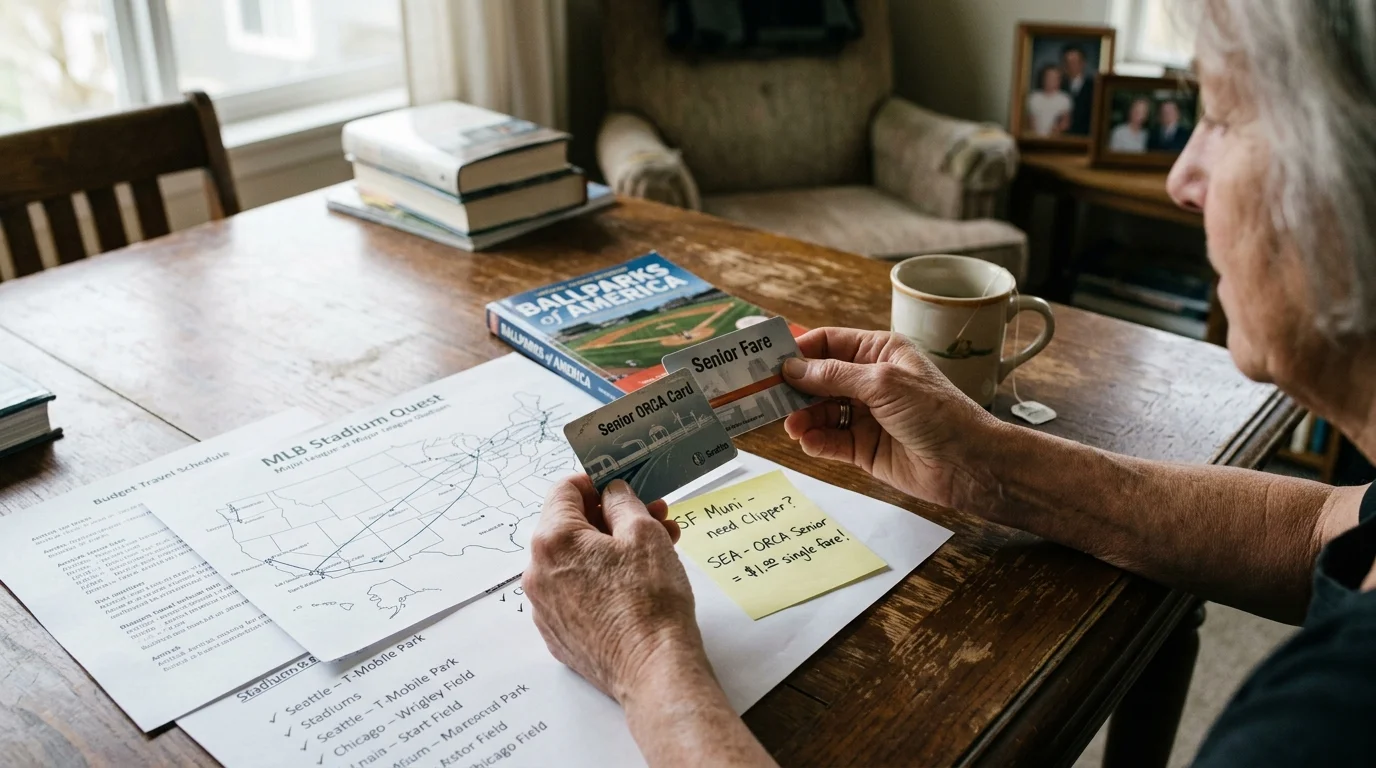
Senior Transit Cards: City-by-City Reduced Fares and Access
Every major metropolitan transit authority offers deeply subsidized fares for adults aged 65 and older. Securing these credentials in advance slices local ground transit expenses by 50% to 100%.
Many transit agencies allow online application submission several weeks prior to your arrival date. Others validate your reduced-fare status immediately at downtown station customer service windows upon presentation of government photo identification.
The comparison table below details the specific senior fares, credential requirements, and transit connections for major metropolitan ballparks:
| Ballpark & Team | Transit Line & Station | Standard Fare | Senior Fare (65+) | Credential / Validation Method |
|---|---|---|---|---|
| Fenway Park (Boston Red Sox) | MBTA Green Line (Kenmore) | $2.40 | $1.10 | Senior CharlieCard (Online application or at Downtown Crossing) |
| Yankee Stadium (New York Yankees) | Subway 4, B, D (161st St–Yankee Stadium) | $2.90 | $1.45 | Reduced-Fare MetroCard or OMNY Senior reduced fare account |
| Citizens Bank Park (Philadelphia Phillies) | SEPTA Broad Street Line (NRG Station) | $2.50 | $0.00 (Free) | PA Senior Transit Card or scanned driver’s license at turnstile |
| Wrigley Field (Chicago Cubs) | CTA Red Line (Addison Station) | $2.50 | $1.25 | RTA Reduced Fare Ventra Card (Apply online 4 weeks early) |
| Rogers Centre (Toronto Blue Jays) | TTC Subway Line 1 (Union Station) | $3.35 CAD | $2.30 CAD | Senior PRESTO Card (Set senior status at Shoppers Drug Mart counter) |
| Nationals Park (Washington Nationals) | WMATA Metro Green Line (Navy Yard–Ballpark) | $2.25–$6.00 | $1.10–$3.00 | Senior SmarTrip Card (Buy online or at Metro Sales Offices) |
| Petco Park (San Diego Padres) | San Diego Trolley (12th & Imperial) | $2.50 | $1.25 | Senior PRONTO Card (Purchase and verify age at transit store) |
Carrying your Medicare card or state driver’s license serves as immediate validation in several transit markets. Transit officers and automated fare machines in cities like Philadelphia recognize these credentials directly.
Take advantage of contactless smartphone fare systems like OMNY in New York and Ventra in Chicago. Linking your senior discount profile to your smartphone wallet lets you tap through station gates without handling paper tickets.
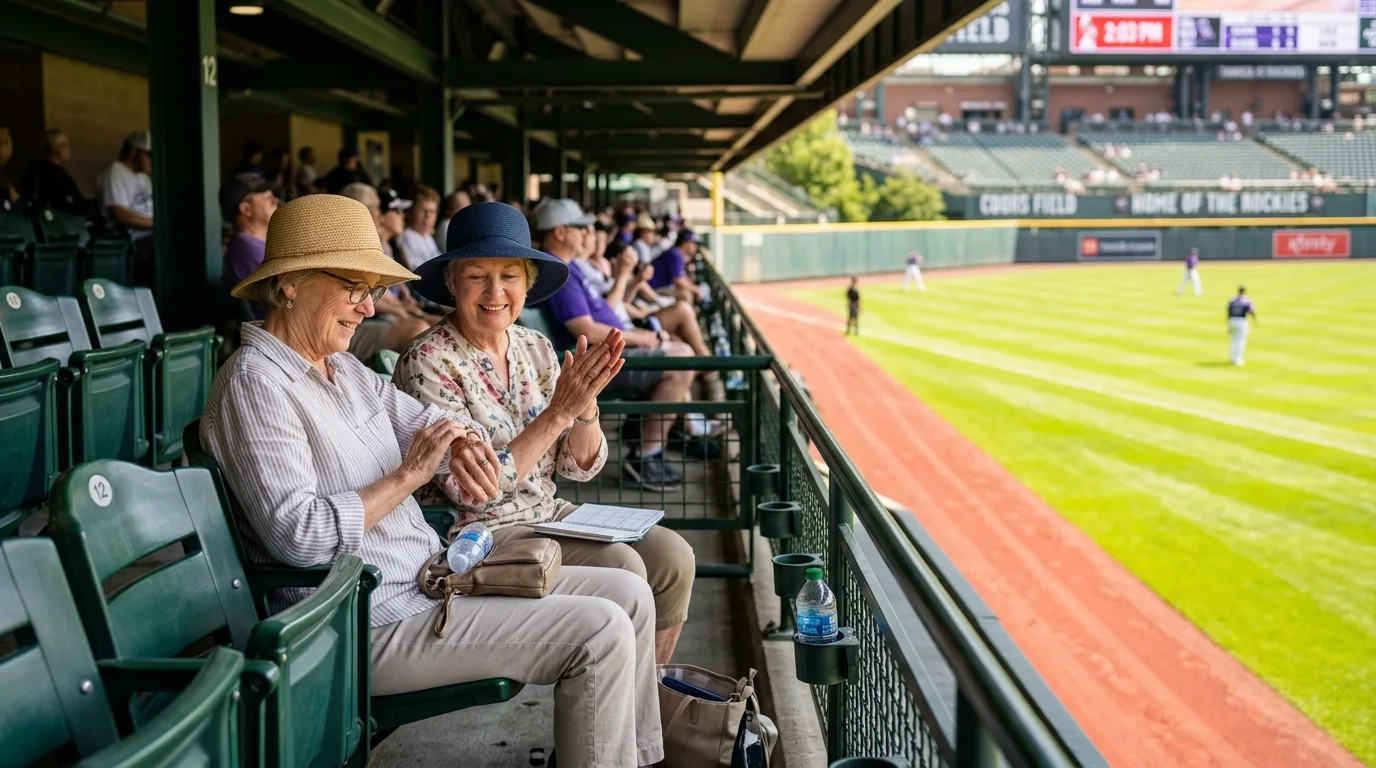
Matinee Scheduling: Eliminating Night Travel and Circadian Fatigue
Night baseball games often conclude after 10:00 PM, forcing seniors to navigate unfamiliar train platforms in the dark. Late finishes also disrupt regular sleep schedules and increase slip-and-fall hazards on crowded stairways.
You can safeguard your stamina by targeting daytime matinee games across your 3-summer itinerary. MLB schedules feature afternoon contests on most Wednesdays, Thursdays, and Sundays.
Midweek day games typically begin at 12:10 PM or 1:10 PM, known throughout baseball as getaway games. Because teams must travel to their next series that evening, both clubs prioritize brisk, uninterrupted play.
Thanks to the MLB pitch clock rules implemented across the league, modern game runtimes now average approximately 2 hours and 40 minutes. An afternoon game starting at 1:05 PM regularly concludes before 3:50 PM.
You can walk out of the stadium into bright afternoon sunshine alongside relaxed family crowds. This daylight exit gives you ample time to ride transit back to your hotel before evening rush hour peaks.
Day games also unlock significant financial savings on premium stadium seating. Midweek matinees attract fewer corporate ticket buyers, releasing shaded lower-bowl club seats at deep secondary-market discounts.
To maximize comfort during sunny afternoon games, follow these practical seating rules:
- Book seats on the third-base side of the stadium; third-base concourses receive shade first as the sun moves west.
- Select rows situated beneath the overhang of the upper deck to ensure complete overhead canopy shade.
- Avoid bleacher benches lacking back support, booking club-level or mezzanine stadium seats with molded lumbar chairs.
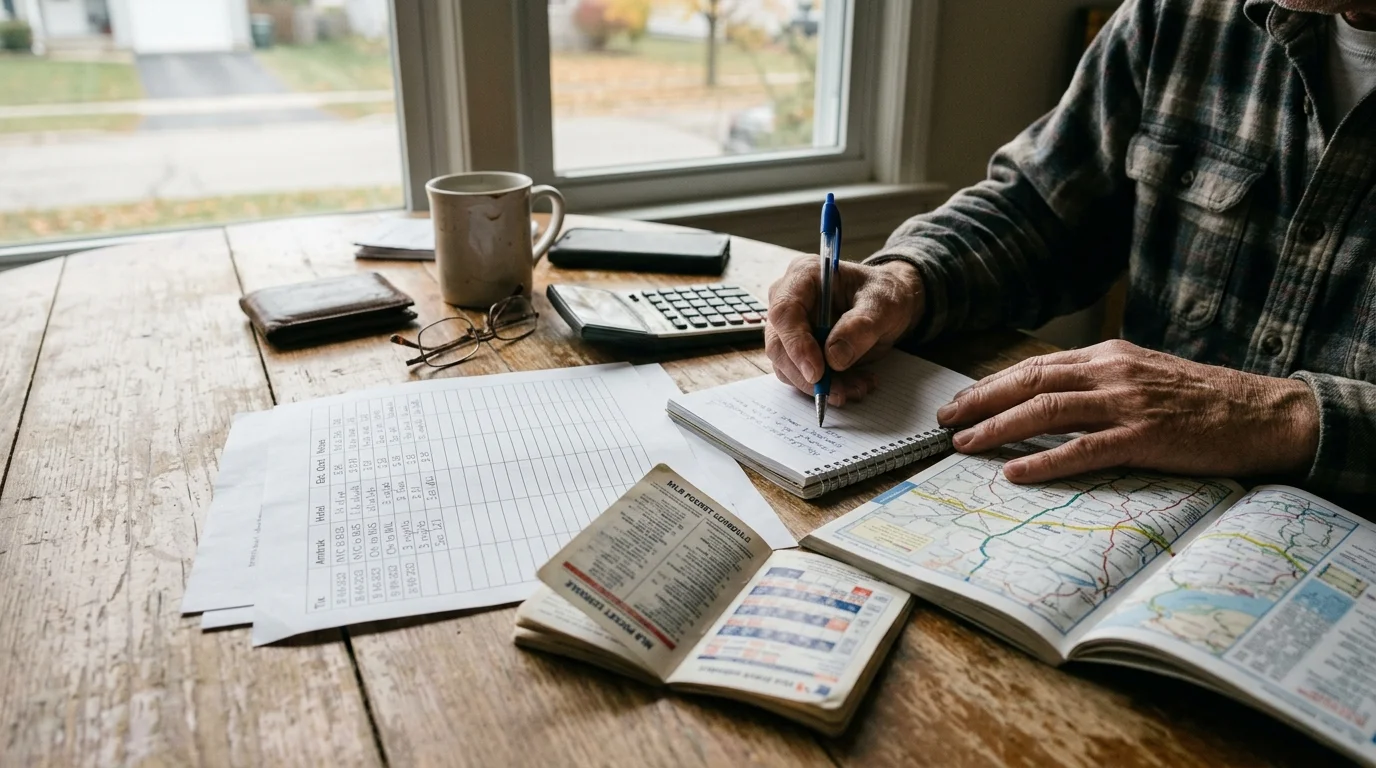
Worked Financial Model: Transit, Lodging, and Ticket Economics
A bucket list baseball tour does not require a luxury travel budget to deliver first-class memories. By bypassing rental car fleets, commercial airport baggage fees, and stadium parking charges, you keep overall expenses modest.
Consider this real-world worked financial model for a 16-day, 10-stadium campaign during Summer One across the Northeast and Mid-Atlantic corridor:
- Amtrak Regional Transportation: $499.00 (Amtrak USA Rail Pass covering 10 regional travel segments).
- Metropolitan Transit Subsidies: $48.50 (Total senior reduced-fare subway and light rail fares across all cities).
- 10 MLB Game Tickets: $365.00 (10 lower-bowl outfield or mezzanine seats purchased at the league average baseline of $36.50).
- Lodging (15 nights): $1,920.00 (15 nights at transit-adjacent business hotels averaging $128.00 per night using senior membership rates).
- Daily Meals and Stadium Dining: $825.00 (Allocated at $55.00 per day across 15 travel days).
- Keepsake Pass-Port Book: $75.95 (Official MLB BallPark Pass-Port book purchased for tracking journey validations).
- Total Calculated Summer Investment: $3,733.45.
Compare those figures against the traditional highway road trip model for the exact same 10-stadium route. A 16-day mid-size SUV rental costs roughly $1,440.00 before optional collision damage waivers.
Tolls along the Northeast Turnpike network exceed $185.00, while highway fuel for 1,600 driving miles adds another $215.00. Stadium parking averages $40.00 per vehicle per game, totaling $400.00 in parking fees alone.
Parking your vehicle overnight at downtown metropolitan hotels adds an average of $55.00 per night, totaling $825.00. Choosing the train and local subway lines saves you over $2,100.00 in transportation overhead while eliminating highway driving stress.
Planning lodging reservations months in advance through AARP travel discounts locks in guaranteed room rates near downtown rail stations. Staying within two blocks of an urban transit hub means your commute to the ballpark takes minutes.
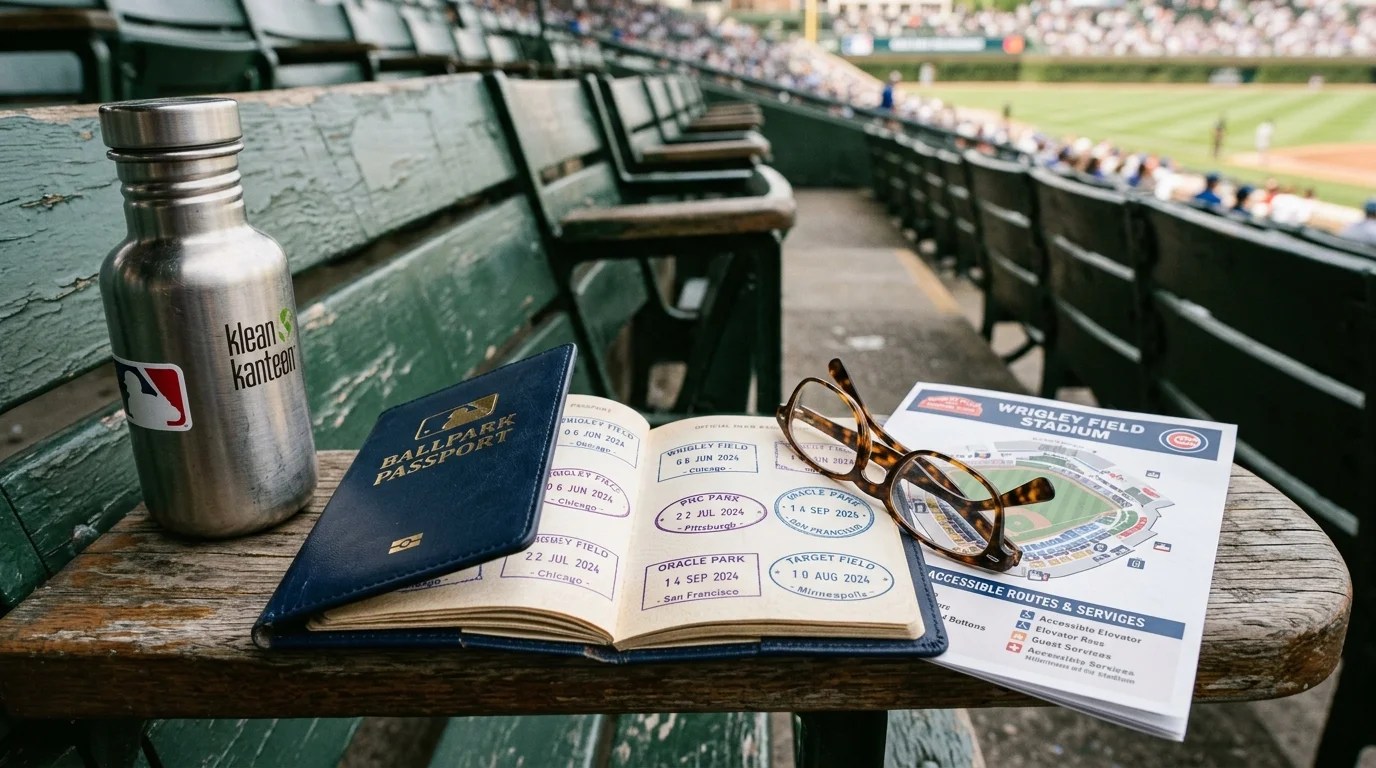
Ballpark Passport Stamps and Stadium Accessibility Navigation
Documenting your senior baseball road trip creates an enduring personal heirloom for your family. The official MLB-licensed BallPark Pass-Port book retails for $75.95 and contains dedicated pages for every venue.
Every major league stadium operates a designated Guest Services Center that provides official game-day validation stamps for free. As soon as you enter the gates, ask any usher for directions to the main Guest Relations desk.
Staff members stamp your book with a unique, dated ink seal verifying your attendance at that specific game. These desks also distribute complimentary “First Game” certificates and anniversary pins to commemorate your quest.
Modern ballparks provide extensive accessibility services under the Americans with Disabilities Act (ADA). You do not need a wheelchair reservation to take advantage of these mobility accommodations.
Every MLB facility provides complimentary golf-cart shuttles from transit drop-off plazas directly to the entry gates. Once inside, you can request an accessibility escort to assist you up ramps or onto elevators.
Take advantage of these practical stadium navigation strategies to conserve your energy during game day:
- Contact the stadium ADA accessibility coordinator 48 hours prior to game time to request gate wheelchair escort service.
- Locate family restrooms and air-conditioned first-aid stations on concourse maps before heading to your seats.
- Pack an empty, clear reusable plastic water bottle through security to refill at stadium chilled water fountains.
- Take concourse elevators rather than navigating steep concrete upper-deck staircases.
“It is never too late to be what you might have been.” — George Eliot
Pursuing an ambitious athletic pilgrimage across America proves that retirement is your prime season for discovery. Board the train, hear the crack of the bat, and collect memories across every stadium in the country.
Frequently Asked Questions
Can I visit all 30 MLB ballparks using only trains and local transit?
Yes. 28 of the 30 MLB stadiums connect directly to urban light rail, subways, or dedicated commuter buses from downtown rail terminals. The remaining two ballparks in Arlington, Texas, and Kansas City require short ride-hail connections from central Amtrak stations.
What is the most cost-effective way to buy Amtrak tickets for a ballpark tour?
The Amtrak USA Rail Pass costs $499 and provides 10 travel segments over a 30-day window. Travelers aged 65 and older can alternatively book individual coach tickets using the standard 10% senior discount if planning shorter regional clusters.
How early should I apply for city-specific senior transit cards?
You should apply for metropolitan transit cards like Boston’s Senior CharlieCard or Chicago’s Reduced Fare Ventra Card four to six weeks before traveling. Some agencies, such as New York’s MTA and Philadelphia’s SEPTA, allow same-day verification at customer service centers.
Where are the Athletics playing during the 3-summer quest?
The Athletics play at Sutter Health Park in West Sacramento through the 2027 season. The ballpark sits adjacent to the Sacramento Valley Amtrak Station, making it completely transit-accessible via the Capitol Corridor train line.
Disclaimer: This article is for informational and inspirational purposes. Life decisions are deeply personal, and we encourage readers to pursue their dreams while considering their unique circumstances, health, and financial situation.