
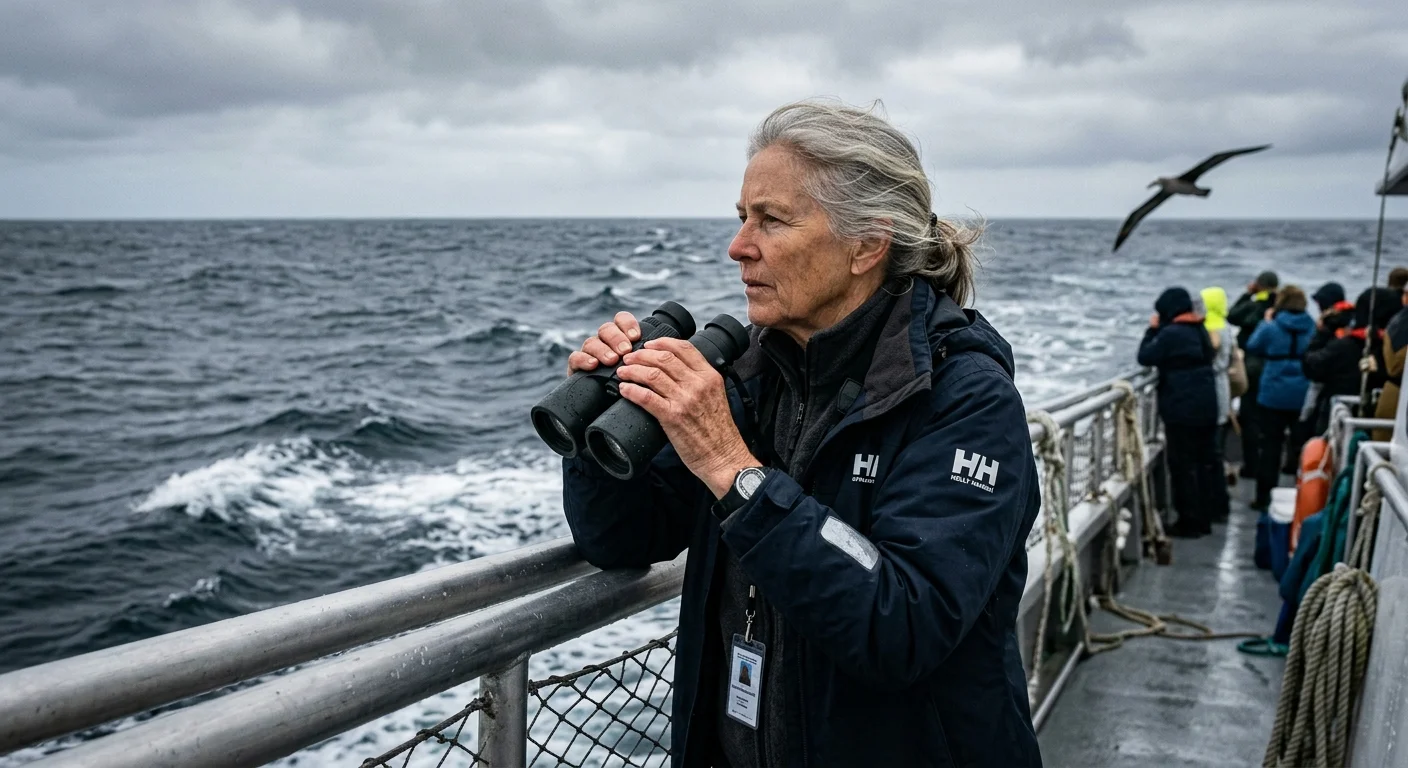
At age 68, heading into the open Pacific off Monterey Bay unlocks premier life birds like Black-footed Albatrosses and Pink-footed Shearwaters. Yet rough ocean swells and vestibular disorientation can rapidly derail your offshore ambitions.
Whether your goal is adding life birds to your tally or mastering outdoor photography along coastal waters, heading offshore requires thoughtful preparation.
Standard maritime advice tells birders to apply scopolamine patches and stake out the vessel bow. However, for adults over 65, that combination induces severe anticholinergic blurred vision and dangerously amplifies vessel movement.
Conquering your first pelagic run requires age-appropriate motion sickness protocols, strict midship deck physics, and modern image-stabilized optics. Here is how you can master the Monterey Submarine Canyon in complete safety and comfort.
The Monterey Canyon Frontier: What Awaits at 68
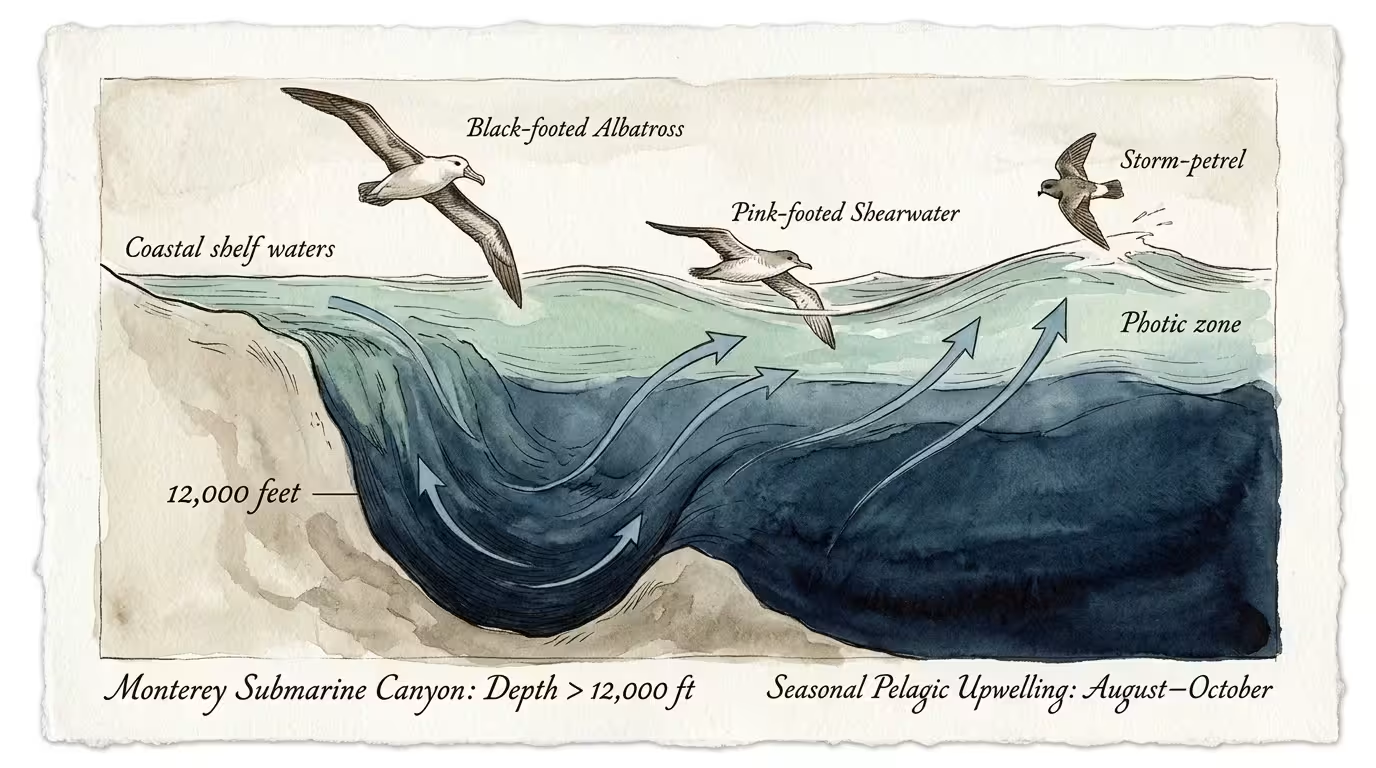
Monterey Bay holds one of the deepest underwater chasms on Earth. The Monterey Submarine Canyon drops past 12,000 feet, creating massive cold-water upwelling events that pull nutrients up from the abyss.
Many wildlife enthusiasts also combine their trips with field sketching in retirement to document pelagic flight dynamics and wing markings.
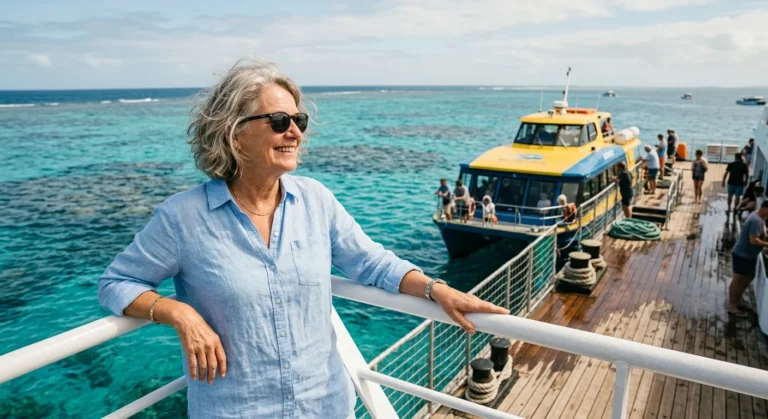
For travelers seeking vibrant ocean wildlife without navigating heavy swells, calmer alternatives like visiting the Great Barrier Reef on pontoons and submersibles provide extraordinary marine encounters with minimal physical strain.
Between August and October, this biological engine attracts millions of migrating seabirds. You can see species that never approach the shoreline during daylight hours.
Gliding shearwaters, darting petrels, and predatory jaegers skim the wave troughs with effortless speed. Spotting a majestic Black-footed Albatross banking against the horizon remains one of birding’s greatest thrills.
Retirement offers the time and freedom to pursue these offshore treasures. Organizations like Road Scholar demonstrate how experiential field learning keeps our minds razor-sharp and energized throughout our later years.
However, an open-ocean pelagic excursion demands far more physical preparation than a morning walk at your local wildlife refuge. A standard eight-hour charter takes you twenty miles offshore into rolling ocean conditions.
Success requires matching your passion with concrete ocean strategies. When you respect the marine environment and prepare your body properly, you ensure an unforgettable day on the water.
Medical Protocols: Navigating Motion Sickness After 65
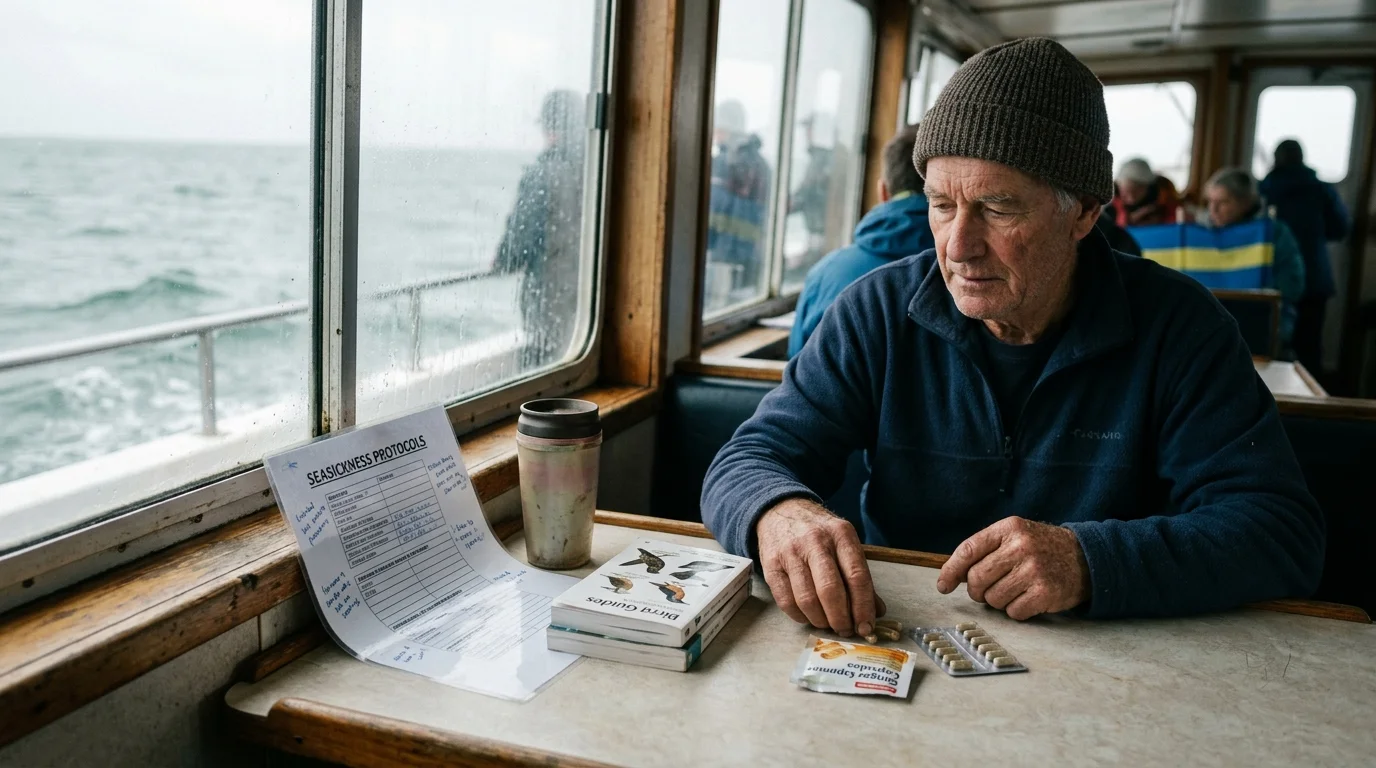
Younger birders often recommend transdermal scopolamine patches or over-the-counter dimenhydrinate without a second thought. For birders over 65, these suggestions present substantial physiological hazards that can ruin your entire voyage.
Prioritizing personal balance and risk mitigation offshore mirrors everyday strategies like implementing a comprehensive fall prevention and solo safety protocol.
Much like completing medical clearance for scuba diving in retirement, vetting pharmaceuticals and physical requirements before heading offshore ensures safety and peace of mind.
The American Geriatrics Society explicitly lists scopolamine and first-generation antihistamines like meclizine in its Beers Criteria of medications potentially inappropriate for older adults. These drugs carry high anticholinergic properties.
Anticholinergic medications frequently trigger pupil dilation and cycloplegia, which paralyzes your eye’s focusing muscles. You cannot identify a distant storm-petrel if your optics blur completely.
Furthermore, these pharmaceuticals cause cognitive drowsiness, urinary retention, and acute balance disruption. On a rolling boat deck, chemical imbalance drastically increases your risk of a catastrophic slip or fall.
Fortunately, evidence-based alternatives manage motion sickness without sedating your brain or compromising your vision. Consider these proven approaches:
- Encapsulated Ginger Rhizome: Clinical trials show that 1,000 mg to 2,000 mg of dried ginger root acts as an effective gastric antiemetic without any central nervous system depression.
- Neuromodulation Wristbands: Devices like the Reliefband deliver precise electrical pulses to the median nerve at the P6 acupressure point, blocking nausea signals along the vagus nerve.
- Strategic Caloric Intake: Eat a dry, carbohydrate-rich breakfast of oatmeal or whole-grain toast two hours before boarding, while strictly avoiding acidic coffee and greasy diner meats.
- Aggressive Hydration: Drink 16 ounces of electrolyte-balanced water before boarding, as mild dehydration accelerates vestibular disorientation and nausea.
If you choose to test a prescription patch, consult your physician first. Apply it at home days prior to gauge whether dry mouth, blurred vision, or lightheadedness occurs.
Never try a new medication for the first time while stepping aboard a charter boat. Your physical stability and visual clarity must remain completely uncompromised.
Vessel Physics: Choosing Your Deck Position
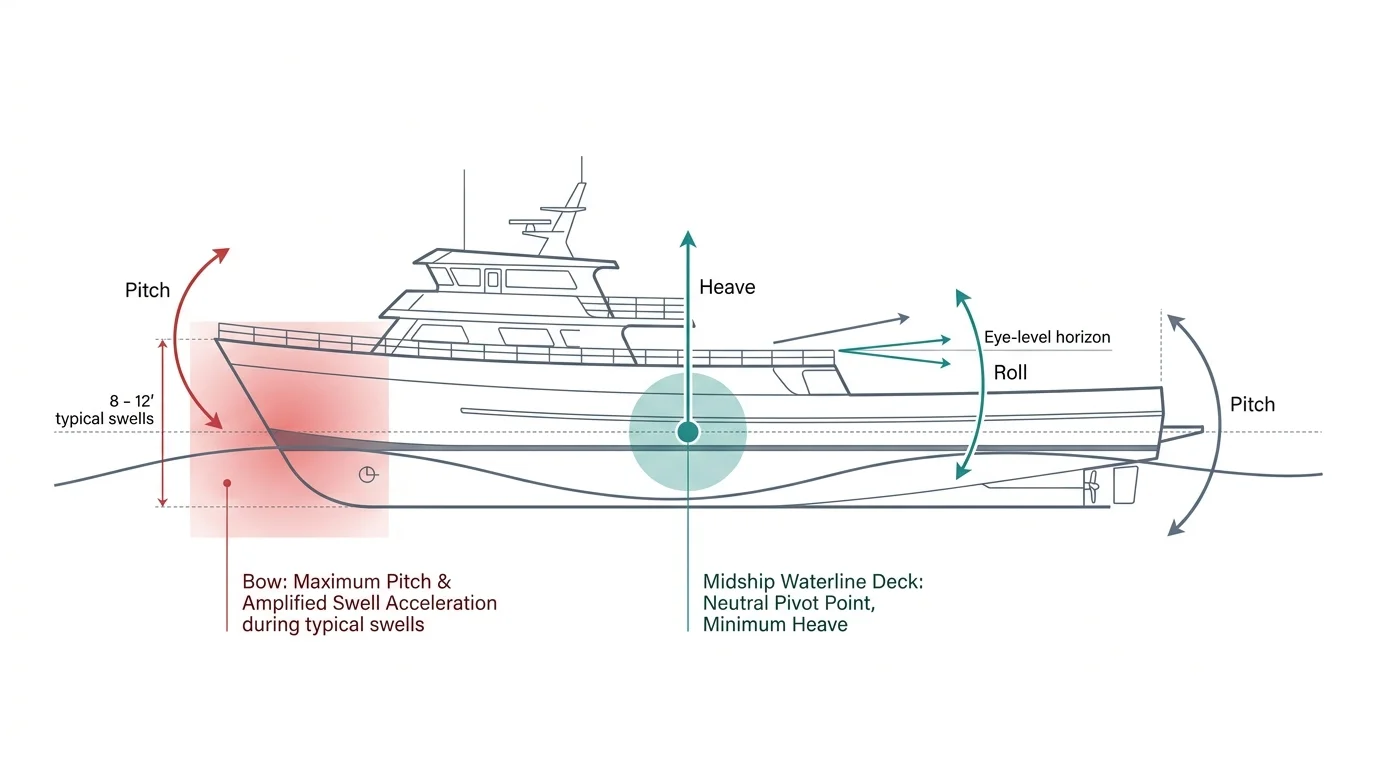
Where you stand on a 50-to-65-foot charter boat determines your physical comfort and safety. Ocean vessels experience three primary rotational movements: pitch, roll, and yaw, alongside vertical heave.
If open-ocean swells feel too demanding, exploring tranquil inland waterways like narrowboat cruising in the UK offers a gentle, wave-free alternative to living on the water.
Understanding marine motion dynamics is just as critical if you are returning to sailing in retirement, where coordinated footing keeps everyone secure on deck.
The bow of the vessel experiences the most extreme vertical heave and pitch. As the boat cuts through offshore swells, the bow rises and falls through violent vertical arcs.
Novice birders often head straight to the bow rail hoping for unobstructed views. At 68, standing on the pitching bow requires continuous isometric leg exertion that quickly induces severe fatigue and balance failure.
The upper flybridge presents an equally dangerous trap. Elevated seating magnifies the side-to-side pendulum roll of the vessel, confusing your inner ear and intensifying nausea.
The vessel’s center of gravity sits low down on the main deck, roughly one-third of the boat length forward of the stern. This midship location minimizes both vertical displacement and angular acceleration.
Follow these deck rules to protect your balance and preserve your energy:
- Plant your feet shoulder-width apart at the midship rail, keeping your knees slightly bent to absorb vessel motion naturally.
- Maintain constant three-point contact whenever moving, keeping one hand firmly anchored to a welded handrail at all times.
- Face outward toward the horizon, allowing your visual cortex to reconcile optical references with your inner ear’s vestibular cues.
- Avoid the enclosed cabin when nausea strikes, because enclosed spaces eliminate visual horizon cues and trap diesel fumes.
- Position yourself on the windward side of the boat to ensure fresh airflow and eliminate exhaust inhalation.
Resting your lower back against the cabin bulkhead while standing midship provides outstanding physical support. This stance removes strain from your hips and lower back during hours of active scanning.
Keep your hands free of loose gear by using secure harnesses. You must prioritize vessel stability over rapid optics handling every single time the boat pitches.
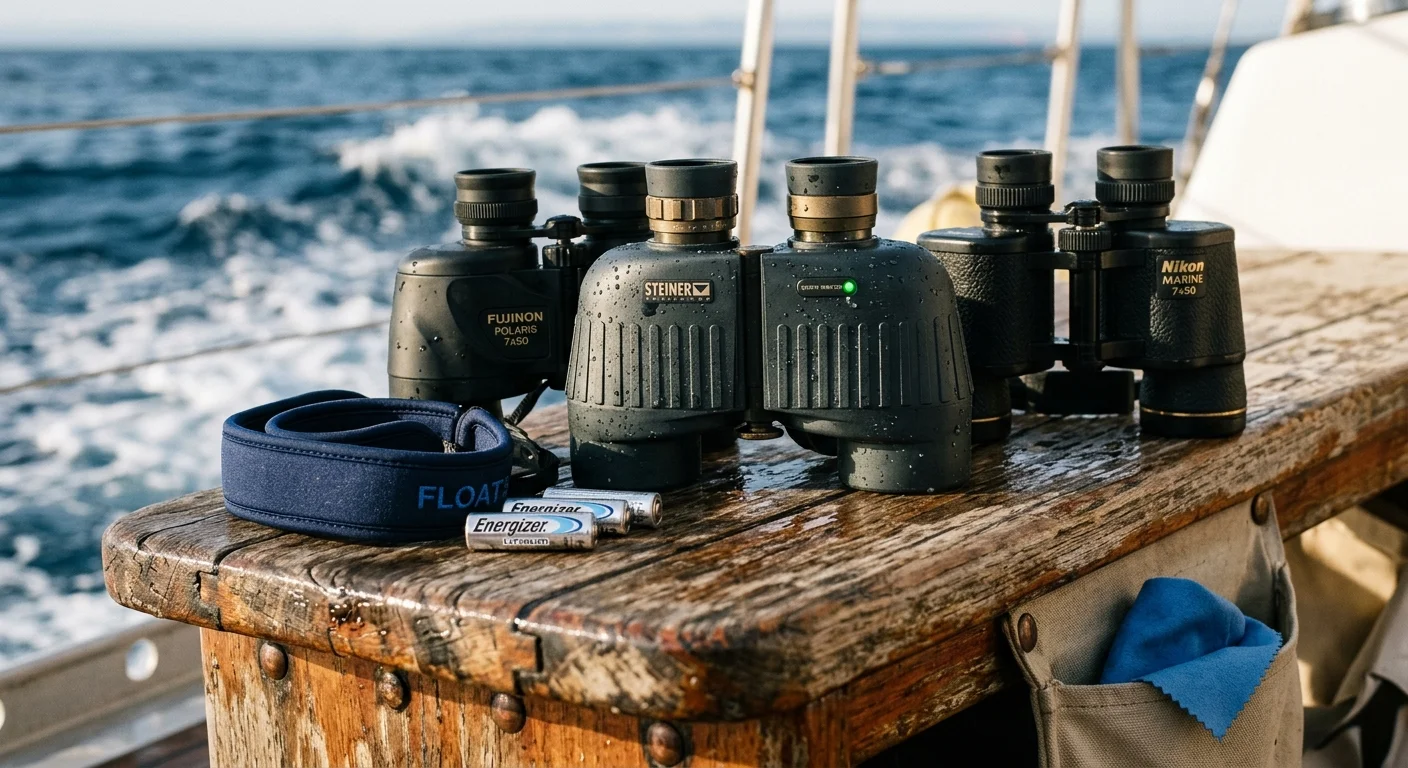
Image-Stabilized Binocular Comparison for Pelagic Birding
Pelagic birding tests optical gear to its absolute limits. Identifying distant seabirds requires picking out subtle plumage patterns while standing on an unstable, rolling platform.
These versatile stabilized units also excel during stargazing adventures, cutting handheld shake while tracking planetary alignments and constellations.
High-grade optical gear is equally valuable for other observational hobbies, such as preparing an equipment kit for a dark-sky expedition under pristine night skies.
Standard 8×42 or 10×42 roof-prism binoculars transmit every wave vibration directly into your field of view. Your brain struggles to resolve flying storm-petrels against churning water when the image jumps erratically.
Image-stabilized (IS) binoculars solve this challenge using internal gyro-sensors and corrective prisms. They cancel both boat vibration and muscular tremors, freezing the image in place.
Three primary models dominate modern marine birding, each offering distinct trade-offs between weight, optical glass quality, and weatherproofing. Selecting the right model depends on your physical strength and budget.
| Model Name | Magnification & Objective | Total Weight | Waterproof Rating | Stabilization System | Approximate Street Price |
|---|---|---|---|---|---|
| Canon 10×42 L IS WP | 10×42 | 39.2 oz (1,110 g) | Fully Waterproof (JIS 7) | Vari-Angle Liquid Prisms | $1,499 |
| Canon 12×36 IS III | 12×36 | 23.3 oz (660 g) | Water Resistant Only | Vari-Angle Liquid Prisms | $799 |
| Sig Sauer ZULU6 HDX | 12×42 | 25.4 oz (720 g) | IPX-7 Waterproof | OmniScan Optical Gimbal | $899 |
The Canon 10×42 L IS WP remains the undisputed optical benchmark for marine identification. It features premium fluorite glass elements that deliver brilliant contrast and pinpoint color rendition under foggy coastal skies.
However, holding 39.2 ounces up to your eyes for eight continuous hours produces significant shoulder and neck fatigue. Older birders often find this weight difficult to manage in heavy swells.
The Canon 12×36 IS III provides an ultra-lightweight alternative that prevents arm strain. Unfortunately, it lacks full waterproofing, requiring protective rain guards whenever ocean spray kicks up over the rails.
The Sig Sauer ZULU6 HDX strikes an outstanding balance for mature birders. At 25.4 ounces, it weighs over one-third less than the flagship Canon while delivering complete IPX-7 waterproofing and robust gimbal stabilization.
Whichever optic you choose, practice activating the stabilization buttons with gloved hands at home. Familiar muscle memory ensures you engage the stabilization instantly when a rare shearwater cuts across the wake.

Worked Example: A Full Monterey Bay Pelagic Plan
To see how these principles combine in practice, review this concrete itinerary designed for an avid 68-year-old birder targeting an early-September trip over the Monterey Submarine Canyon.
Applying structured retirement travel planning ensures that logistics, gear, and schedules align seamlessly before you ever leave the dock.
Careful budgeting, transit timing, and physical pacing are fundamental to successful retirement travel planning, especially when orchestrating demanding day tours.
Your journey begins weeks prior by booking a designated pelagic charter with an experienced local operator like Monterey Seabirds out of Fisherman’s Wharf. A standard eight-hour canyon tour costs $175 per ticket.
Budget an additional $24 for full-day harbor parking at the wharf, along with a $25 cash tip for the hard-working boat deckhands. This brings your total trip investment to $224.
Execute this precise operational schedule on the morning of your trip to maintain complete physical vitality:
- 05:15 AM: Wake up at your local hotel. Drink 12 ounces of water mixed with an electrolyte packet, and eat two slices of dry sourdough toast with peanut butter.
- 06:00 AM (T-minus 60 min): Ingest 1,000 mg of encapsulated ginger root with four ounces of water. Strap your neuromodulation wristband onto your non-dominant wrist over the P6 acupressure point.
- 06:30 AM: Arrive at Fisherman’s Wharf. Secure your parking permit, verify your boarding pass, and strap on your binoculars using a four-point chest harness.
- 06:45 AM: Board the vessel. Walk past the crowded bow and claim a standing station on the main deck midship, roughly six feet forward of the engine housing.
- 07:00 AM: Vessel departs the harbor. Switch your neuromodulation band to setting level two once the boat clears the protective breakwater.
- 08:30 AM: Boat reaches the 6,000-foot drop-off of the canyon. Consume a 500 mg booster of ginger root alongside half a sleeve of salted crackers.
- 11:30 AM: Midway point of the charter. Eat a light meal of sliced green apples and plain turkey on wheat bread while standing at the midship rail.
- 03:00 PM: Vessel returns to harbor. Power down your stabilized optics, log your bird sightings into your field journal, and tip the deck crew.
This systematic routine keeps your blood sugar stable, your inner ear settled, and your hands ready for action. You stay on deck birding effectively while unprepared passengers struggle with nausea downstairs.
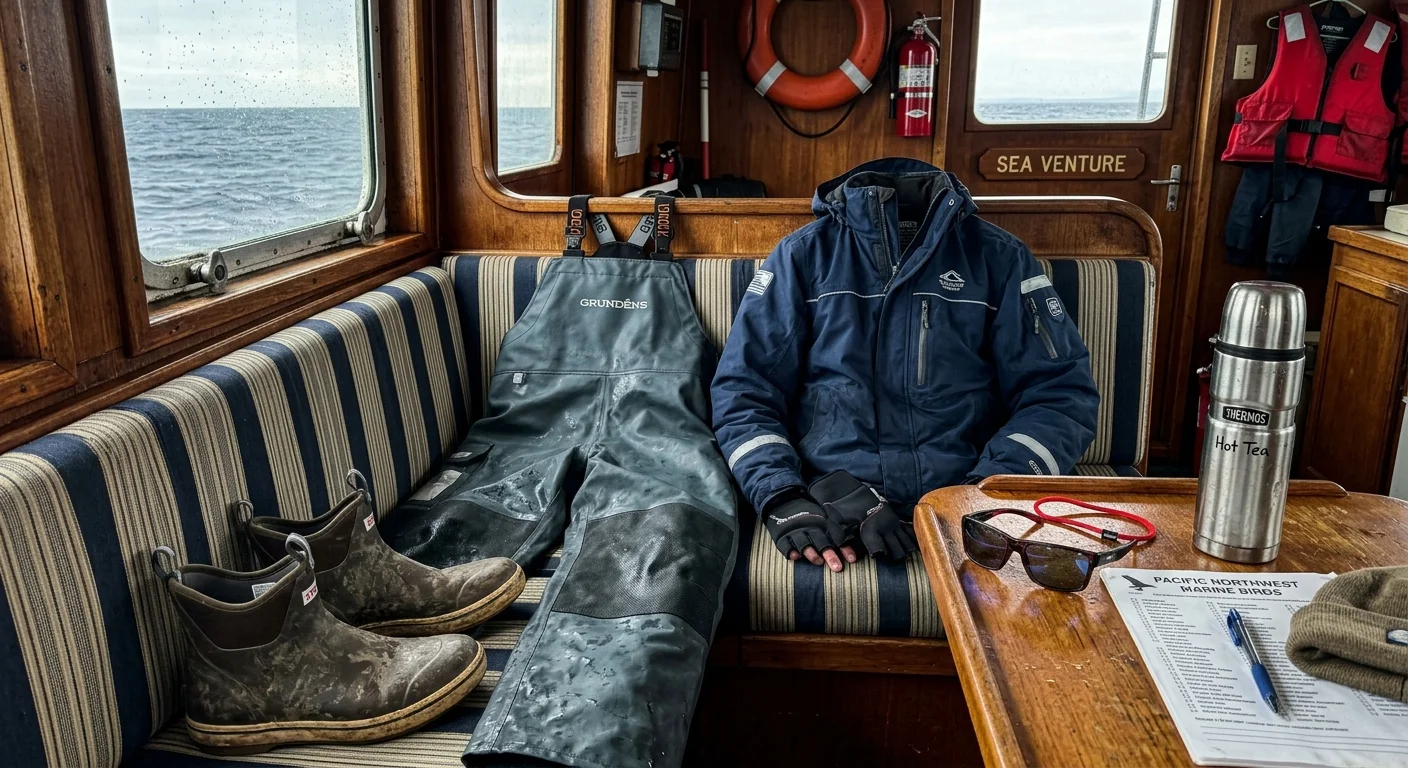
Essential Marine Apparel and Deck Safety Gear
Monterey Bay mornings are notoriously cold, damp, and windy. Offshore temperatures regularly hover near 52°F with 15-knot winds and heavy ocean spray, even during peak summer months.
Hypothermia dramatically accelerates physical exhaustion and balance loss. Dressing in technical, breathable layers protects your body core and maintains your mobility.
Start with a high-wicking merino wool base layer against your skin. Add an insulating fleece or synthetic down mid-layer to trap radiant body heat without adding heavy bulk.
Top your system with a fully windproof and waterproof breathable shell featuring an adjustable storm hood. Never wear water-absorbing cotton hoodies or heavy denim jeans on an offshore vessel.
Footwear represents your single most critical safety choice on a wet, pitching fiberglass deck. Traditional athletic sneakers lose traction instantly when saltwater mixes with fish oil on the surface.
Wear dedicated marine deck boots with chevron-siped rubber outsoles, such as Xtratuf six-inch ankle boots. Siped outsoles open under pressure to channel water away, providing unmatched grip on slippery decks.
Organize your daypack with these field essentials before boarding:
- Two extra sets of lithium batteries for your image-stabilized binoculars, stored in a waterproof zip-top pouch.
- A neoprene optics rain guard and microfiber lens cloths to clean salt spray off your objective glass.
- Polarized sunglasses with an integrated retaining strap to cut glare off the water and protect your eyes from UV radiation.
- Fingerless wind-block gloves that keep your palms warm while leaving your fingertips free to operate focus wheels.
Proper gear keeps your attention where it belongs: out on the horizon scanning for pelagic wildlife. You conserve your physical reserves for the birds rather than battling the elements.
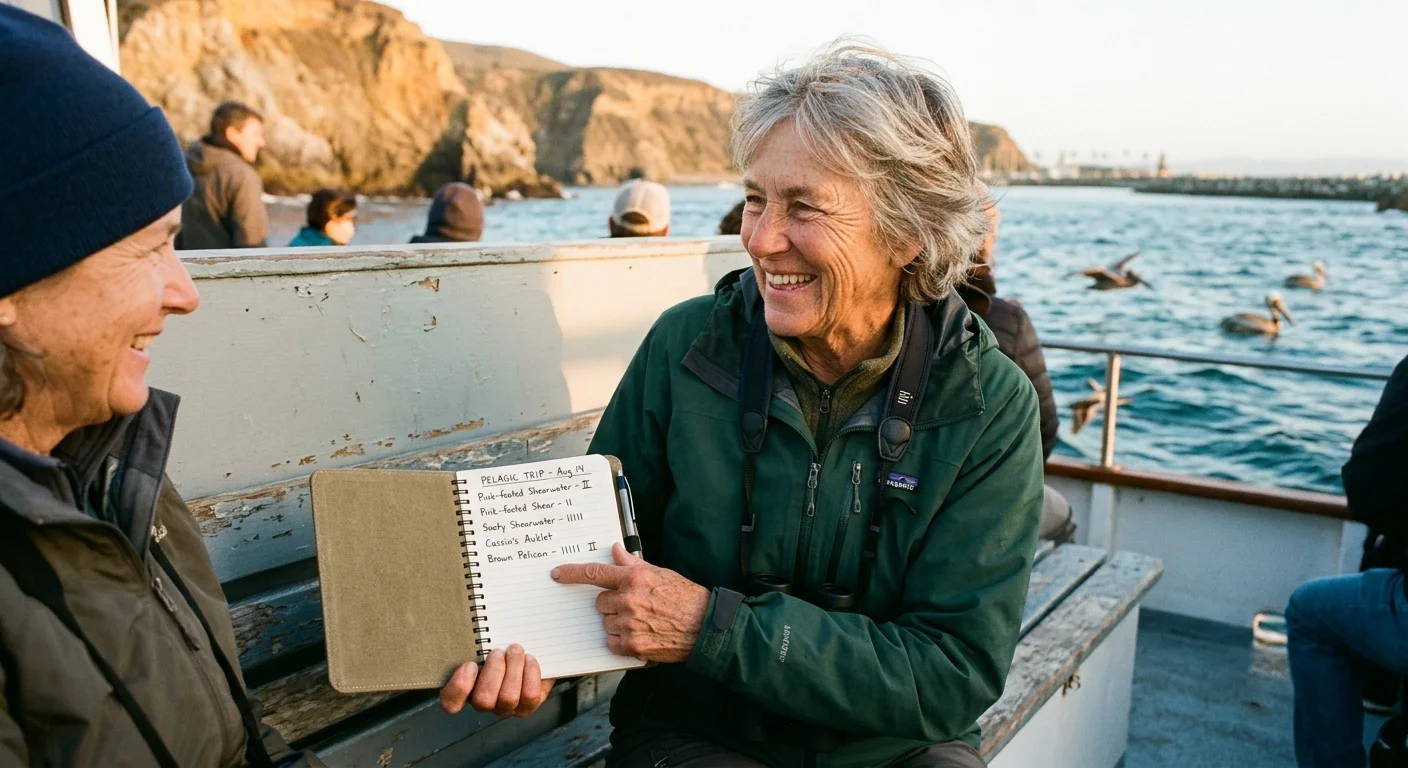
Pelagic Birding and Active Longevity in Retirement
Retirement should expand your personal horizon rather than narrow your daily routine. Venturing into the open ocean demands focus, resilience, and curiosity—qualities that fuel vibrant longevity.
The National Institute on Aging highlights how physical balance challenges and mentally stimulating outdoor pursuits promote healthy cognitive function in older adults. Pelagic birding combines both elements in a breathtaking setting.
Tracking swift-flying seabirds across breaking waves forces your visual processing and balance centers to adapt to dynamic environments. It is an exhilarating workout for your brain and body alike.
Age brings the wisdom to prepare thoroughly and respect natural boundaries. You do not need the reckless stamina of youth when you wield better physics, smarter optics, and disciplined protocols.
Every pelagic voyage adds indelible memories to your retirement years. The first time an albatross sweeps past your shoulder on seven-foot wings, you will recognize the unmatched power of offshore exploration.
Frequently Asked Questions
Is pelagic birding safe for adults over 65 who have balance concerns?
Pelagic birding is very safe when you prioritize midship deck positioning, wear non-slip marine deck boots, and maintain three-point hand contact. Choosing calm-weather charters and avoiding the pitching bow significantly minimizes fall risks.
Why are standard motion sickness medications discouraged for seniors on boats?
First-generation antihistamines and scopolamine patches carry strong anticholinergic properties identified on the AGS Beers Criteria. They often cause blurred vision, pupil dilation, confusion, and dizziness, which directly impair your birding ability and increase falls.
Are image-stabilized binoculars truly necessary for ocean birding?
While traditional binoculars work on calm lakes, ocean swells introduce constant vibration and roll that blur distant field marks. Image-stabilized binoculars eliminate hand and vessel shake, allowing you to identify pelagic species with exceptional clarity.
What should I eat before boarding an offshore pelagic charter?
Eat a simple meal of complex carbohydrates such as oatmeal, whole-wheat toast, or bananas two hours before departure. Avoid acidic beverages, citrus juices, coffee, dairy products, and greasy fried foods that can irritate your stomach lining.
Disclaimer: This article is for informational and inspirational purposes. Life decisions are deeply personal, and we encourage readers to pursue their dreams while considering their unique circumstances, health, and financial situation.




1 Comment