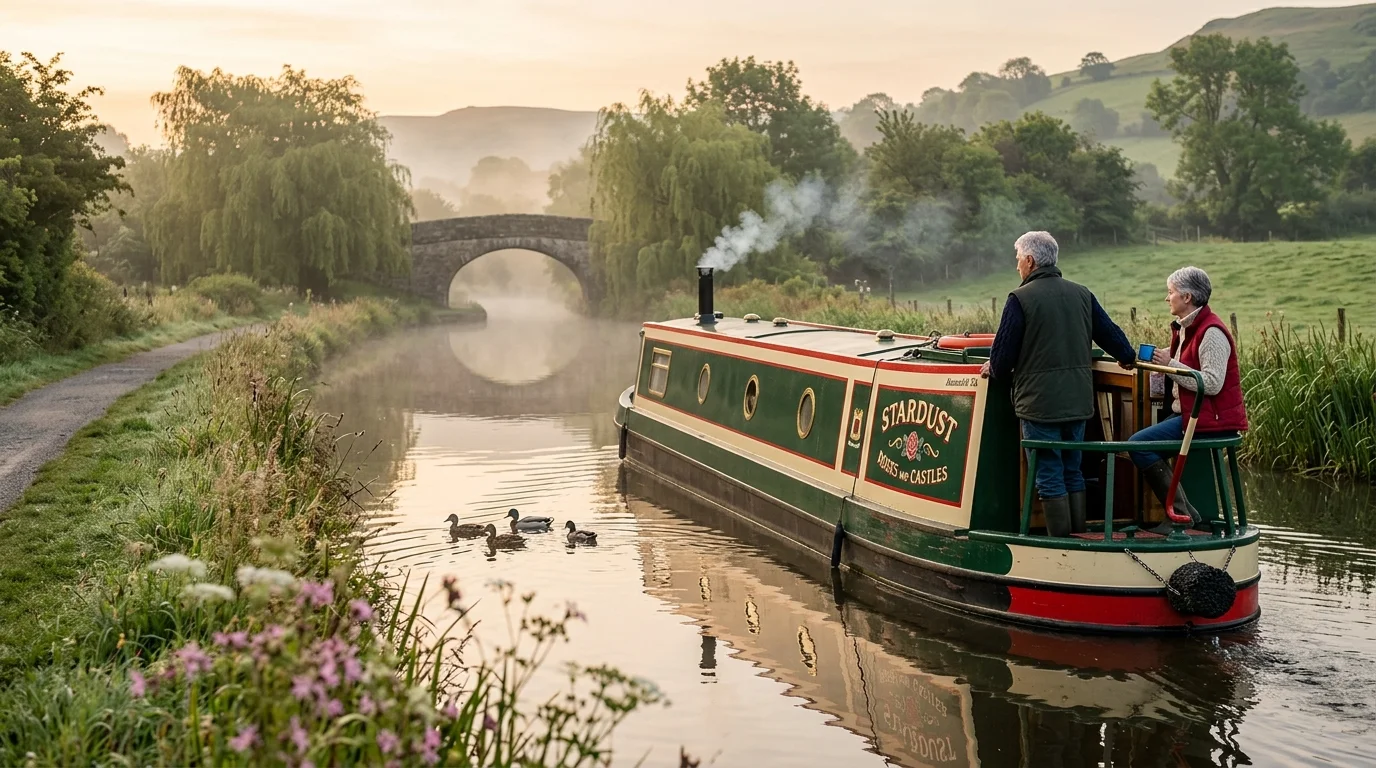
Selling your suburban home to cruise the UK waterways lets you trade property taxes for locks, aqueducts, and historic towpaths. You can live extraordinarily well aboard a 57-foot narrowboat without spending your retirement nest egg.
Living afloat is just one of many ways to travel the world on a budget while building an extraordinary post-career lifestyle.
Applying thoughtful retirement travel planning makes trading a conventional lifestyle for long-term international adventures both achievable and affordable.
Success requires mastering real operational realities rather than romantic travel myths. We prove that navigating Britain’s 2,000-mile network full-time as an American hinges on calculating precise diesel splits, strictly timing the 180-day visitor rule, and managing winter heat.
Here is your blueprint to navigate continuous cruising regulations, boat licensing fees, and cold-weather realities on British canals.
The Go-Anywhere 57-Foot Blueprint
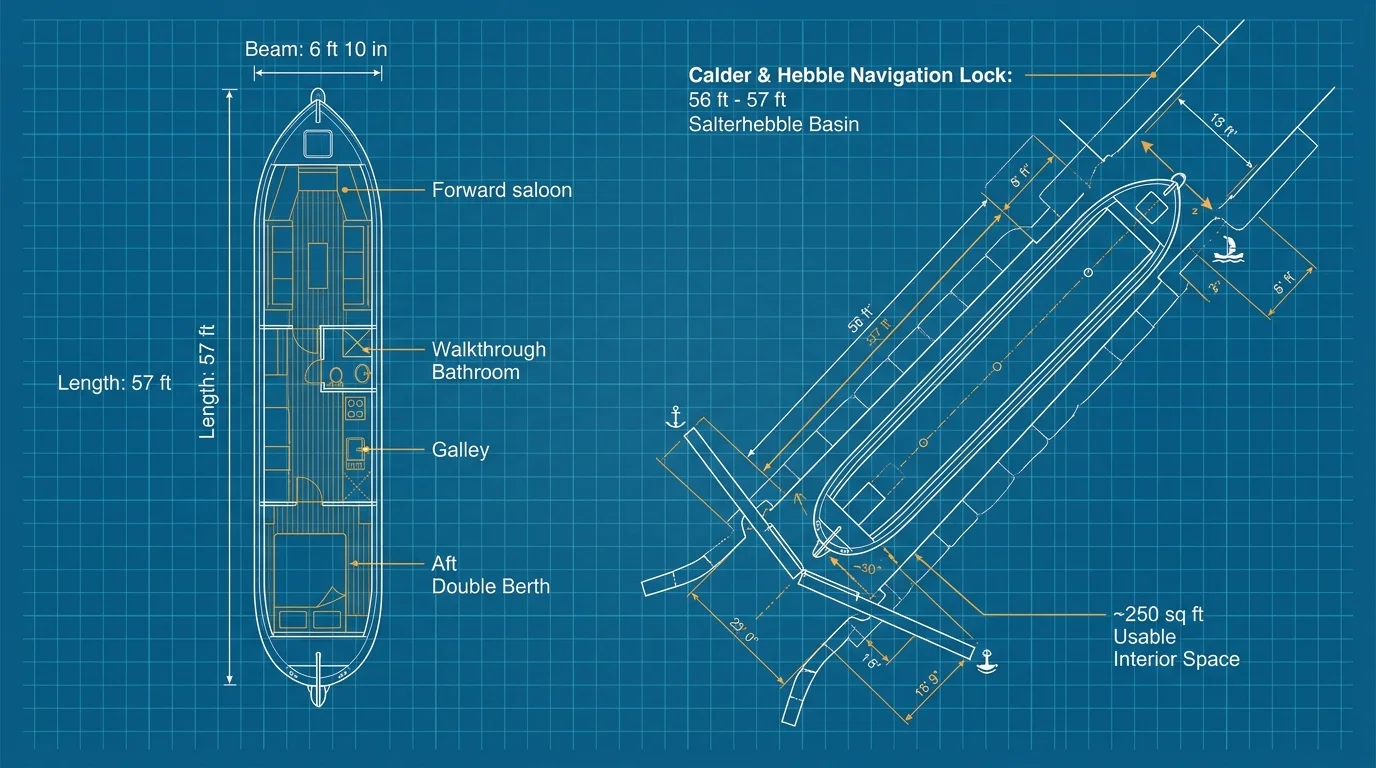
Choosing the correct vessel dimensions determines where you can travel across England and Wales. A steel narrowboat built to a maximum length of 57 feet and a standard beam of 6 feet 10 inches gives you complete network freedom.
If you are brushing up on maritime handling skills after years ashore, consider taking crew refresher steps to build confidence before navigating complex locks and narrow waterways.
Boaters drawn to life afloat often compare this British canal route to piloting a trawler along the ICW, where a slow pace and route flexibility define everyday cruising.
While southern waterways accommodate 60-foot or 70-foot boats, northern canals restrict passage with shorter lock chambers. The Calder and Hebble Navigation features locks measuring only 56 feet to 57 feet in length.
Lock chambers at Salterhebble Basin demand that longer boats moor permanently or turn back. By capping your vessel at 57 feet, you can fit diagonally across these stone locks with your rudder turned hard over.
This specific length opens up legendary routes such as the Rochdale Canal, the Huddersfield Broad Canal, and the Leeds and Liverpool Canal. You will never encounter a waterway junction you cannot navigate.
A 57-foot layout also provides approximately 250 square feet of usable interior living space. That offers adequate space for a dedicated double berth, a full galley, a walkthrough bathroom, and a forward saloon.
“Twenty years from now you will be more disappointed by the things that you didn’t do than by the ones you did do.” — Mark Twain
Downsizing from a four-bedroom house into a 57-foot boat requires discipline, but it eliminates unnecessary possessions. You exchange excess square footage for ever-changing waterfront views outside your cabin window.
Visa Logistics: Navigating the 180-Day Rule and ETA
American retirees must understand immigration law before purchasing a boat overseas. The United Kingdom does not offer a dedicated retirement visa for independent foreign nationals.
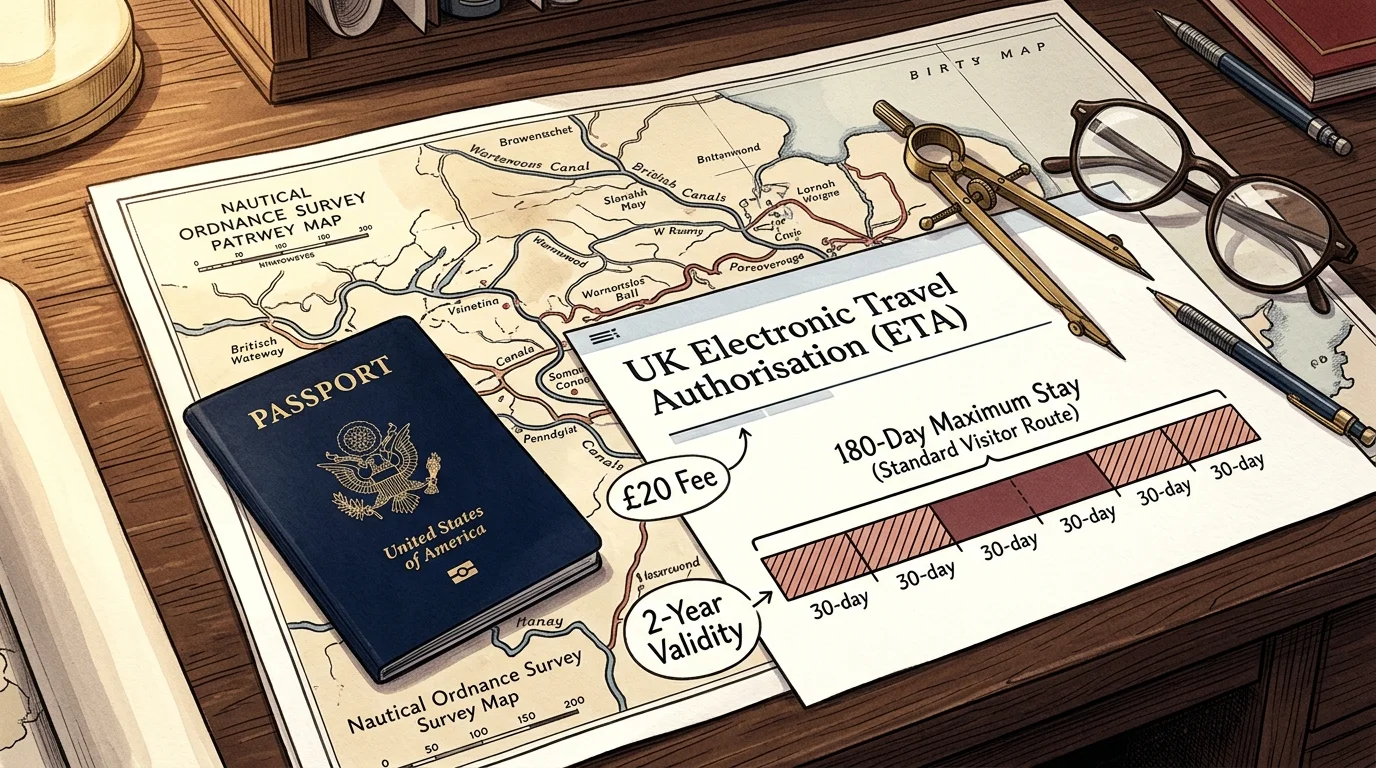
You can cruise legally by using the UK Standard Visitor route, which allows stays up to six months (180 days) per entry. You cannot work, establish habitual residency, or access public funds while in the country.
American passport holders must obtain a UK Electronic Travel Authorisation (ETA). This digital permit costs £20, links directly to your passport, remains valid for two years, and permits multiple entries.
Retirees who cruise the canals full-time split their calendar year into distinct seasons. They cruise British waterways from May through October, then leave the country before triggering strict residency thresholds.
Staying longer than 183 days inside the UK during a tax year can expose your worldwide retirement income to British taxation under statutory residence tests. Leaving for six months completely neutralizes that risk.
Organizations like Road Scholar demonstrate how mature adults thrive by integrating international seasonal travel into their lifelong learning plans. Cruising across Britain for half the year fits this lifestyle perfectly.
Many couples spend winter months exploring mainland Europe or returning to the United States to visit family. During this winter hiatus, you can safely store your narrowboat in a secure marina basin.
Continuous Cruising: The CRT 14-Day Movement Mandate
The Canal and River Trust (CRT) manages over 2,000 miles of inland waterways across England and Wales. Boaters without a permanent home marina mooring hold a Continuous Cruiser licence.
Towpath living also pairs wonderfully with daily trekking routines, much like walking the Portuguese Camino on foot between remote villages.
This nomadic rhythm shares much in common with full-time RV living, where consistent movement and off-grid self-reliance replace traditional homeownership.
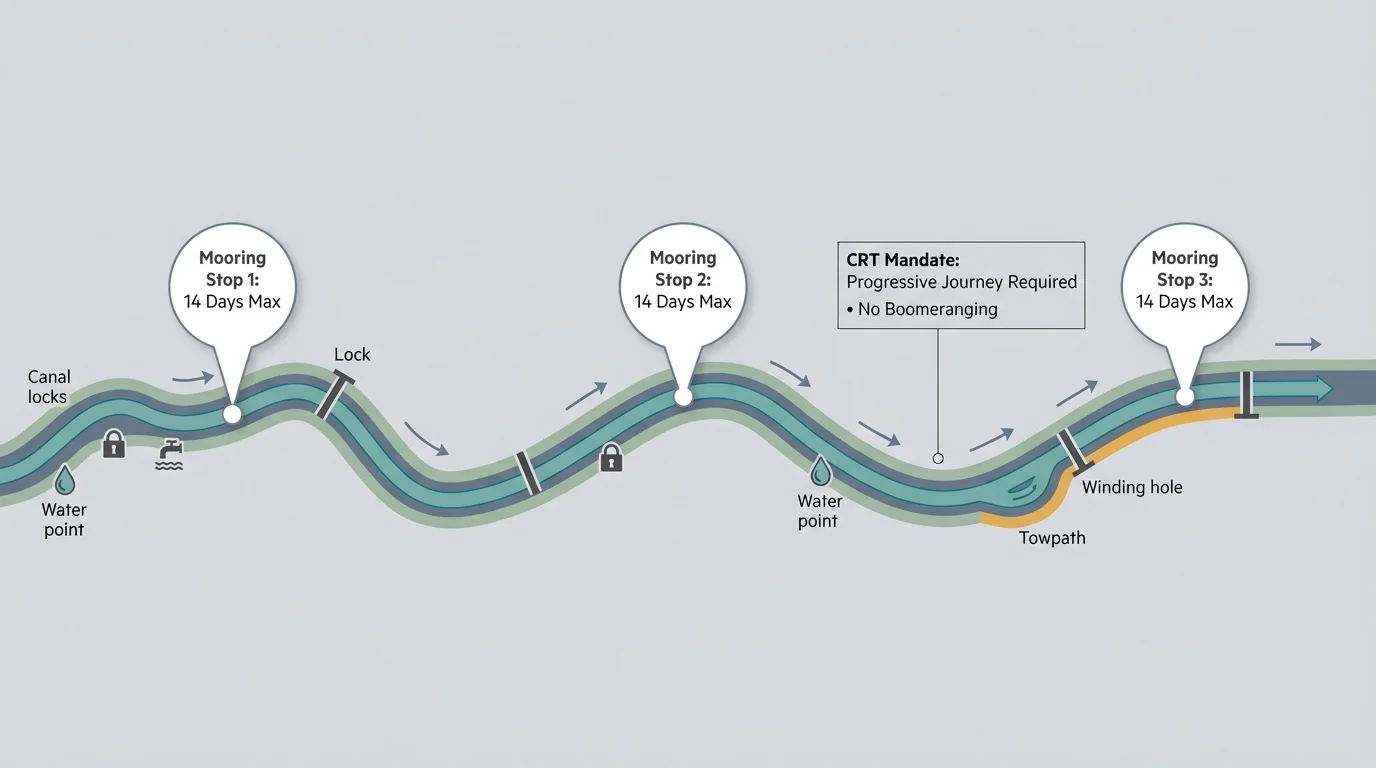
Continuous cruising is legally governed by Section 17(3)(c)(ii) of the British Waterways Act 1995. Under this law, you must moor in one location for no longer than 14 consecutive days.
Certain popular visitor spots have signposts restricting stays to 48 hours or 24 hours. Always check towpath signage upon tying your mooring ropes to avoid administrative warnings.
The CRT demands continuous navigation rather than shuttling back and forth across a short stretch of canal. Boaters who oscillate between neighboring villages will quickly face license enforcement warnings.
- Log every cruise movement on a dedicated GPS tracker or cruising logbook to keep verification records.
- Plan a genuine voyage that carries you through different parish boundaries every two weeks.
- Establish a cruising pattern that achieves a minimum cumulative range of at least 20 unique miles between your furthest points annually.
- Notify CRT customer service immediately if mechanical failures or winter canal stoppages halt your travel progress.
CRT data-checkers patrol towpaths every two weeks using handheld logging devices to record vessel index numbers. Maintaining transparent logs protects your cruising privileges and prevents licence revocation.
Continuous cruising keeps your retirement lifestyle dynamic. Instead of waking up to the same scenery, you moor beside centuries-old stone bridges, countryside pubs, and quiet woodland cuttings.
Real Operating Costs: CRT Licences, BSS, and Hull Maintenance
Budgeting for narrowboat life requires accounting for regulatory fees, periodic certifications, and steel maintenance. While continuous cruising avoids marina mooring rents, boat ownership carries recurring administrative charges.
For retirees who crave slow overland exploration without vessel maintenance burdens, crossing Canada by VIA Rail in a sleeper berth provides another immersive scenic journey.
The CRT charges annual licence fees based on vessel length. In April 2024, the Trust implemented a phased five-year surcharge specifically for boats without a home mooring.
- April 2024: Base licence fee plus a 5% continuous cruiser surcharge.
- April 2025: Base licence fee plus a 10% continuous cruiser surcharge.
- April 2026: Base licence fee plus a 15% continuous cruiser surcharge.
- April 2027: Base licence fee plus a 20% continuous cruiser surcharge.
- April 2028: Base licence fee plus a 25% continuous cruiser surcharge.
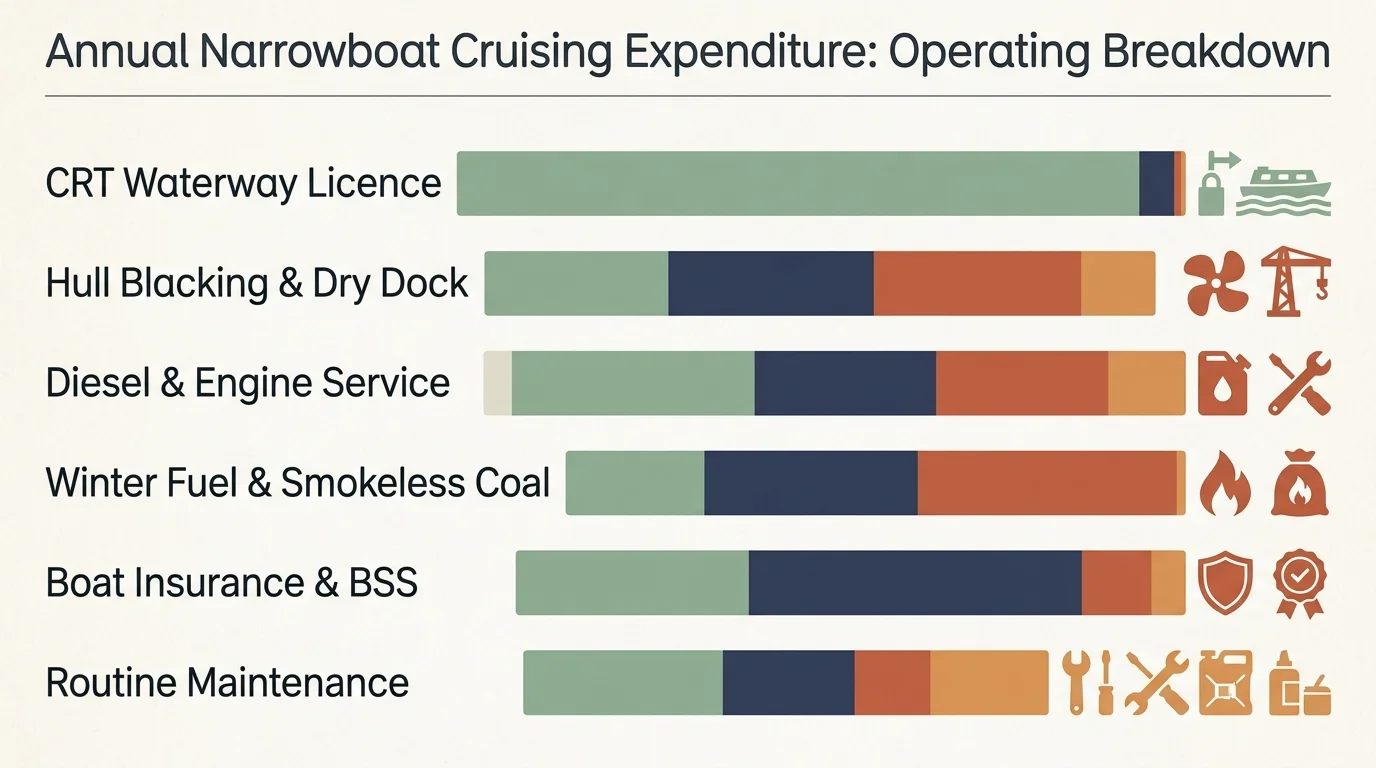
A 57-foot narrowboat without a home mooring requires an annual licence payment between £1,450 and £1,750, depending on prompt-payment discounts. Paying on time saves you roughly 10% on the base fee.
Every four years, you must pay for a Boat Safety Scheme (BSS) examination. Think of the BSS as an inland marine vehicle inspection that verifies fuel lines, gas lockers, ventilation, and electrical systems.
A standard BSS test costs between £150 and £250. You should set aside an additional £200 for minor remedial repairs, like replacing dated gas hoses or improving ventilation grilles.
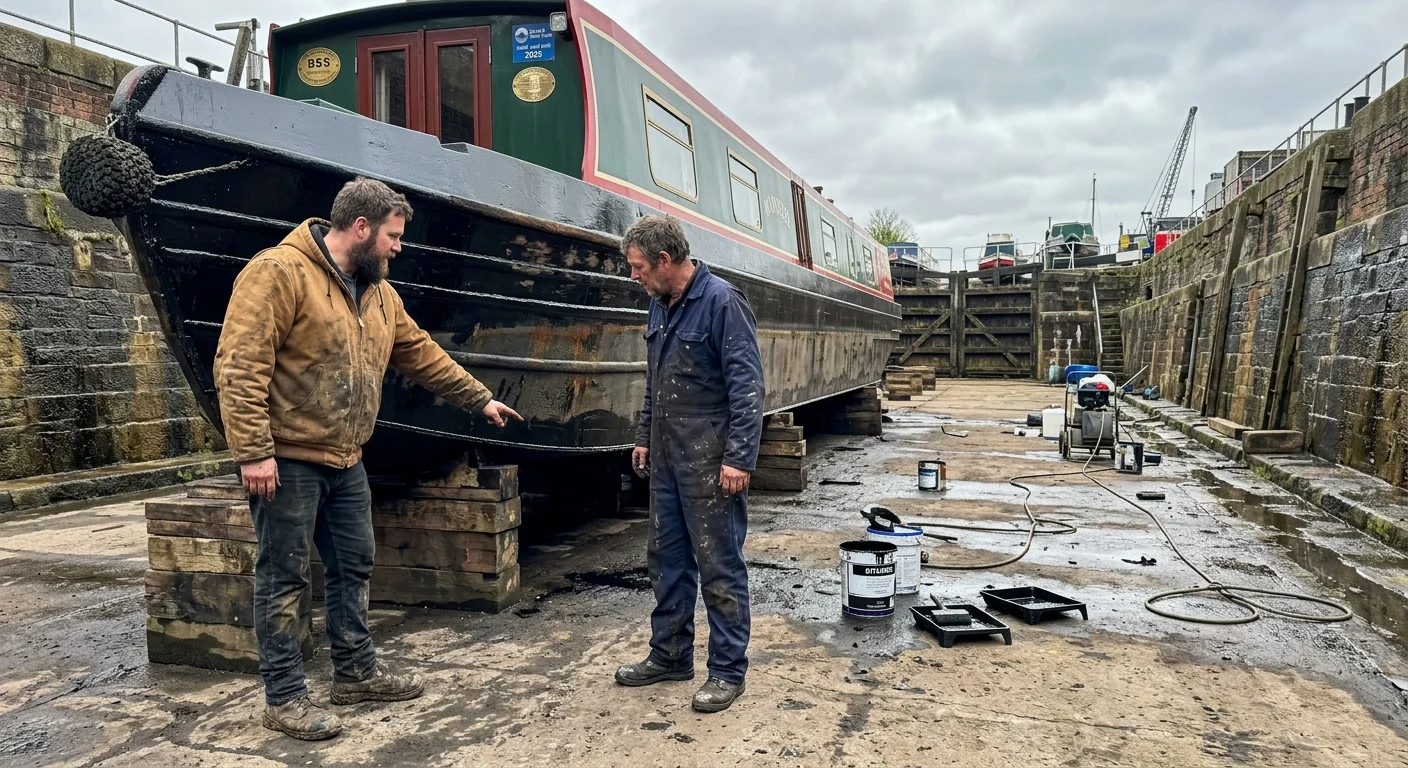
Every two to three years, you must haul the boat out of the water to coat the steel hull in protective blacking. This process prevents biological corrosion and water pitting on your 10mm steel baseplate.
A complete slipway haul-out, pressure wash, and application of two coats of bitumen blacking costs between £800 and £1,200. Applying two-pack epoxy costs roughly £1,800 but extends your drydock interval to six years.
You also need third-party liability insurance covering at least £2 million to secure your CRT licence. Comprehensive narrowboat insurance from providers like Craftinsure or Collidge and Partners costs between £200 and £500 annually.
Winter Heating Realities: Diesel Burn Rates and Smokeless Fuel
English winters demand robust heating systems to ward off dampness inside a steel vessel. Condensation represents your greatest enemy inside a narrowboat, requiring continuous ventilation and steady warmth.
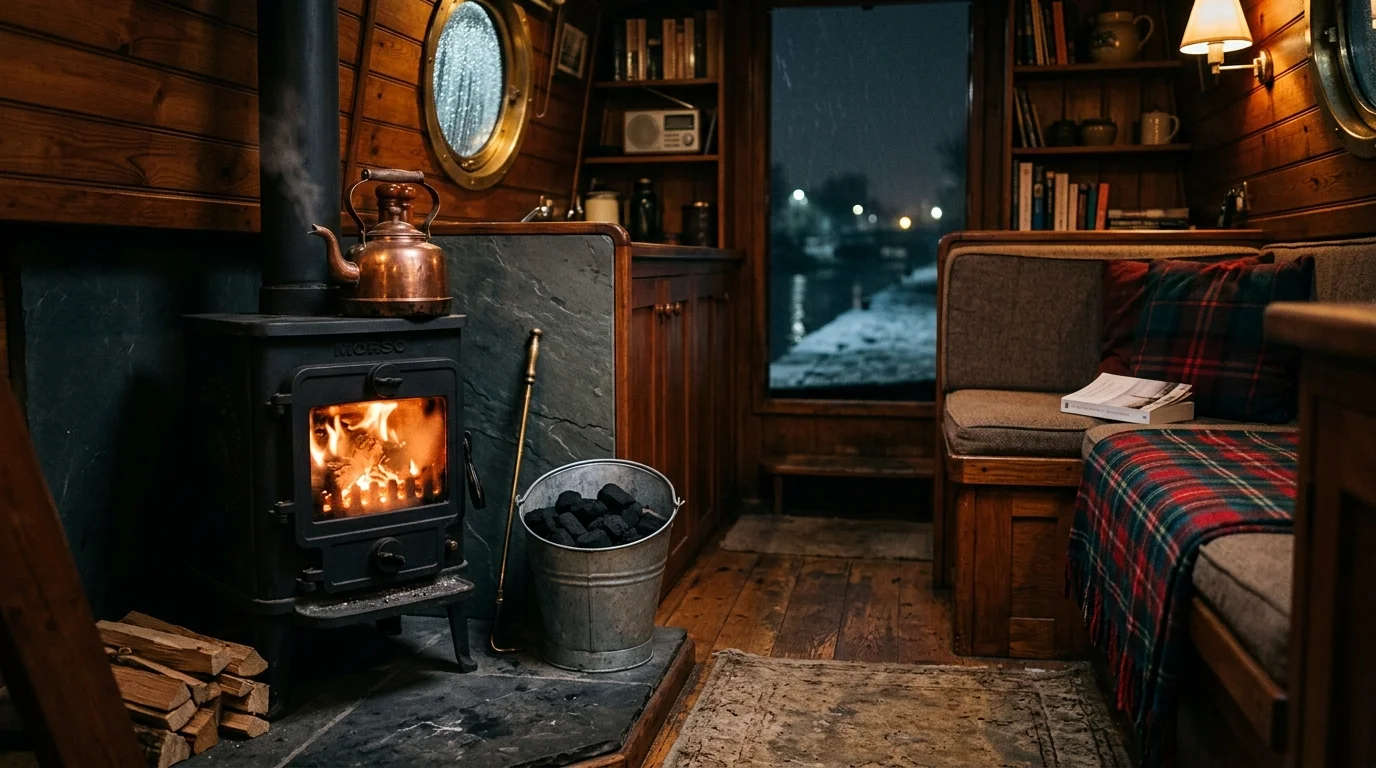
Most 57-foot narrowboats use a multi-fuel stove installed in the saloon as their primary heat source. You should burn manufactured smokeless coal ovals, such as Homefire or Excel, inside designated clean air zones.
A standard 20kg bag of smokeless coal costs between £14 and £20 from waterside fuel boats. In sub-freezing temperatures, an active stove consumes two to four bags weekly, running roughly £40 to £80 per week.
Multi-fuel stoves produce dry radiant heat that drives out interior moisture and keeps your bilge bone-dry. Empty the ash pan every morning to protect your lower cast-iron grate bars from warping.
Bottled propane gas supplies your galley stove and instantaneous water heater. A 13kg Calor gas cylinder costs between £45 and £55, lasting two to three months when used strictly for cooking.
Modern narrowboats also feature diesel-fired central heating systems linked to saloon radiators and the hot water calorifier tank. Systems like the Webasto Thermo Top Evo 5 or Eberspächer Hydronic run directly from your main fuel supply.
These diesel units burn approximately 0.25 to 0.50 liters of fuel per operating hour. When coupled with programmable digital timers, they warm the boat quickly before you stoke the stove.
| Heating System | Fuel Consumption Rate | Typical Heat Output | Average Cost per 24 Hours | Routine Maintenance Schedule |
|---|---|---|---|---|
| Webasto Thermo Top Evo 5 | 0.25 – 0.50 L/hr (Red Diesel) | 5.0 kW | £3.20 – £6.40 (Domestic Split) | Annual decoke and glow pin check |
| Morso Squirrel 1410 Stove | 0.40 – 0.60 kg/hr (Smokeless Ovals) | 4.5 kW | £4.20 – £6.30 | Weekly flue sweep and ash clearance |
| Refleks 2000K Drip-Fed Stove | 0.18 – 0.35 L/hr (Red Diesel) | 4.2 kW | £2.30 – £4.50 (Domestic Split) | Bi-monthly fuel regulator cleaning |
When purchasing marine red diesel at canal boatyards, boaters utilize the UK HMRC fuel duty declaration. Boaters declare the proportion of fuel purchased for propulsion versus domestic heating.
A standard declaration split is 60% propulsion and 40% domestic heating. Fuel designated for domestic heating avoids full propulsion duty, saving you roughly 35 pence to 45 pence per liter.
Advocacy groups featured on AARP highlight how actively managing retirement living expenses enables long-term lifestyle freedom. Tracking your diesel fuel declaration represents a prime example of this financial control.
Worked Scenario: Real Annual Budget for an American Couple
Consider this real-world financial breakdown for an American couple living aboard a 2014 57-foot cruiser stern narrowboat. This scenario tracks six months of continuous cruising followed by six months of secure winter marina mooring.
During the six-month cruising season from May through October, the couple travels 420 network miles and handles 260 locks. They run their 43-horsepower Beta Marine diesel engine for 140 cruising hours.
Their engine consumes 1.4 liters of diesel per hour, burning 196 liters of red diesel for propulsion. Over that same period, their Webasto unit uses 110 liters for morning hot water.
The total diesel purchase equals 306 liters. Under their declared fuel split, propulsion diesel costs £1.45 per liter while domestic diesel costs £1.05 per liter, totaling £386.30.
Cooking uses two 13kg Calor propane cylinders over the season, costing £98.00 total. The couple spends £60.00 on pump-out stations and toilet treatment chemicals at CRT water points.
Their CRT Continuous Cruiser licence for the 57-foot vessel costs £1,606.00, which includes the 2025 surcharge. Comprehensive marine insurance for the entire year costs £340.00.
From November through April, the couple places the boat in a marina basin near Nantwich on the Shropshire Union Canal. A six-month winter mooring contract with 16-amp shoreline electric hookup costs £1,950.00.
Annual amortized maintenance includes one quarter of a BSS inspection (£50.00) and one third of a hull blacking haul-out (£350.00). Routine engine servicing filters and oil changes cost £120.00.
The total annual operational cost equals £4,960.30 (approximately $6,300 USD at current exchange rates). Living on the British waterways costs a fraction of standard American suburban property maintenance alone.
Essential Systems: 12-Volt Power, Water, and Sanitation
Continuous cruising requires that you generate your own electricity and manage water consumption without marina hookups. Modern narrowboat systems make off-grid living comfortable when designed properly.
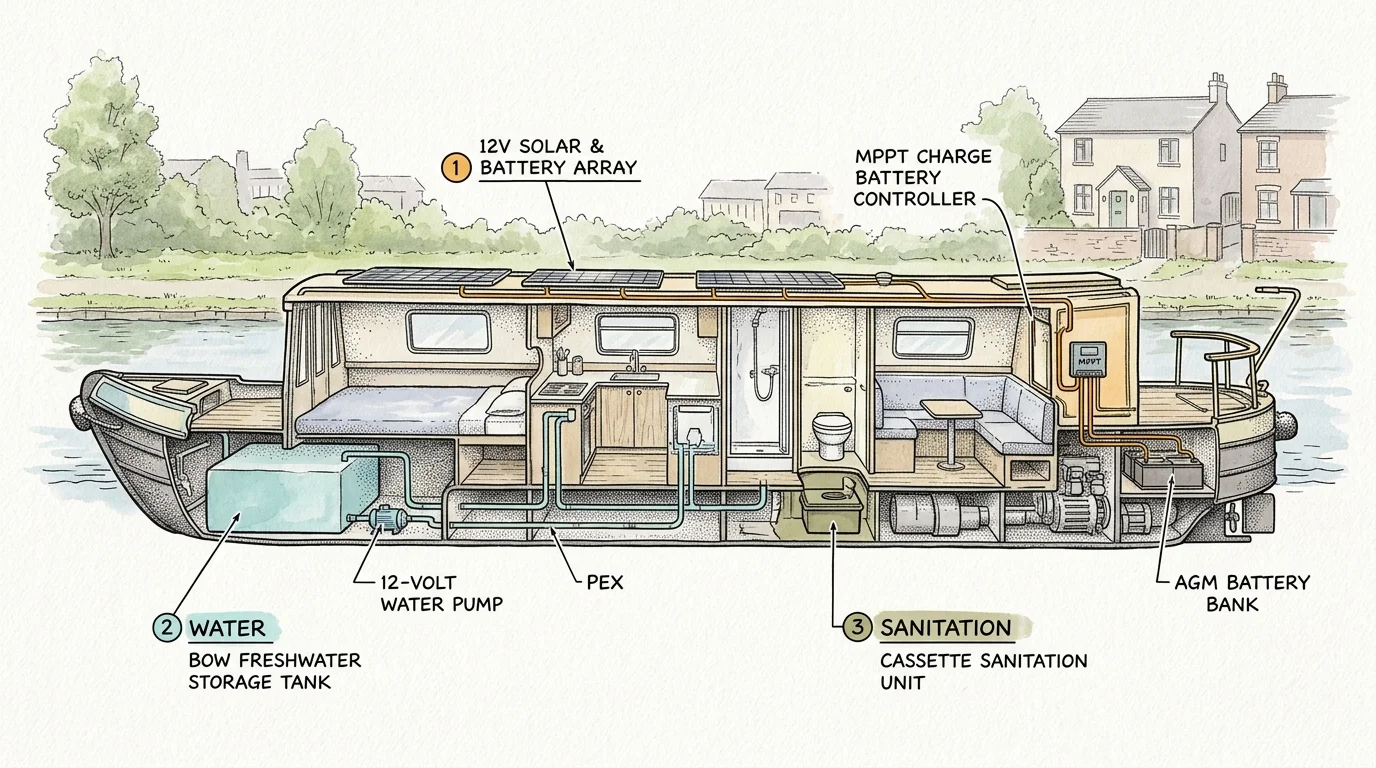
Your domestic electrical system runs on 12-volt direct current powered by a deep-cycle battery bank. A quality setup includes three 100Ah lithium iron phosphate (LiFePO4) leisure batteries.
Lithium batteries allow deep discharges down to 10% capacity without degrading cells, unlike traditional lead-acid batteries. Pair them with a 2,000-watt pure sine wave inverter to run household appliances.
- Mount at least 400 to 600 watts of rigid monocrystalline solar panels flat along your cabin roof.
- Use a Victron SmartSolar MPPT charge controller to harvest maximum power during overcast English days.
- Install a secondary marine engine alternator dedicated solely to charging your domestic battery bank.
- Fit high-output LED cabin lights throughout the boat to keep 12-volt electrical consumption below 25 amps daily.
Freshwater management is equally straightforward. A 57-foot narrowboat carries an integrated bow water tank holding between 400 and 600 liters of potable water.
Two adults using water conservatively for showers and dishwashing consume roughly 35 liters per day. This usage profile allows you to cruise for nearly two weeks between fill-ups at CRT towpath water taps.
For sanitation, you must choose between a pump-out holding tank system or a cassette toilet. A cassette toilet, such as a Thetford Porta Potti, offers maximum independence for continuous cruisers.
Holding tanks force you to find a boatyard pump-out station every three weeks, costing £15 to £25 per visit. In contrast, you can empty portable 20-liter toilet cassettes for free at any CRT sanitary station.
Mastering these simple systems builds genuine self-reliance. You gain complete control over your utility footprint while living comfortably along the historic British landscape.
Frequently Asked Questions
Can an American citizen live permanently on a UK narrowboat?
American citizens cannot reside permanently in the UK without a formal residency visa, which the UK does not offer for retirement. Cruisers utilize the Standard Visitor route to cruise for up to six months (180 days) per visit, often returning to the United States or traveling outside the UK during winter months to respect immigration and tax residency thresholds.
Why is 57 feet considered the ideal narrowboat length?
A 57-foot narrowboat can navigate the entire 2,000-mile connected inland waterway system in England and Wales. The shortest locks, such as Salterhebble Basin on the Calder and Hebble Navigation, measure roughly 56 to 57 feet long, making longer boats unable to complete northern trans-Pennine routes.
How does the Canal and River Trust enforce the continuous cruising rule?
The Canal and River Trust uses boat data-checkers who log craft positions bi-weekly. Continuous cruisers must move to a new place every 14 days and demonstrate bona fide navigation covering a cumulative range of at least 20 miles between their furthest cruising points across the licence year.
How much red diesel does a narrowboat heater use in winter?
Modern diesel central heating units, like the Webasto Thermo Top Evo 5, consume between 0.25 and 0.50 liters of red diesel per running hour. When run for eight hours daily during cold weather, typical diesel heating costs range from £2.50 to £4.50 per day under domestic fuel duty rates.
Disclaimer: This article is for informational and inspirational purposes. Life decisions are deeply personal, and we encourage readers to pursue their dreams while considering their unique circumstances, health, and financial situation.