
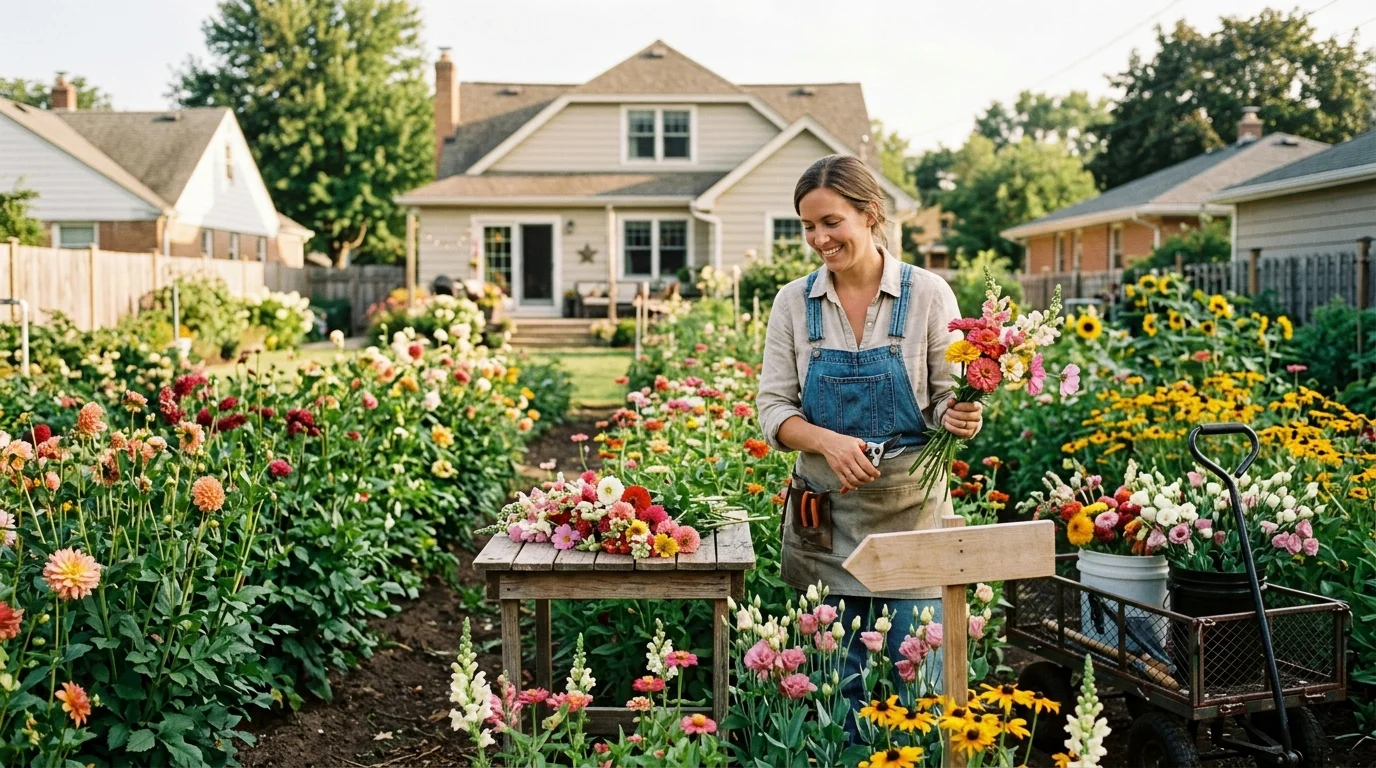
You can turn your suburban grass into a thriving commercial cutting garden that pays for itself and funds your retirement dreams. Converting a standard half-acre lawn into an organic cut-flower and seed-harvesting enterprise reliably generates over $13,000 in seasonal supplementary income.
Unlike conventional farming guides requiring rural acreage, intensive bed layouts and dual-revenue seed crops produce high profits within compact residential footprints. This blueprint outlines the precise layout, irrigation engineering, and subscription models needed to succeed without sacrificing your physical well-being.
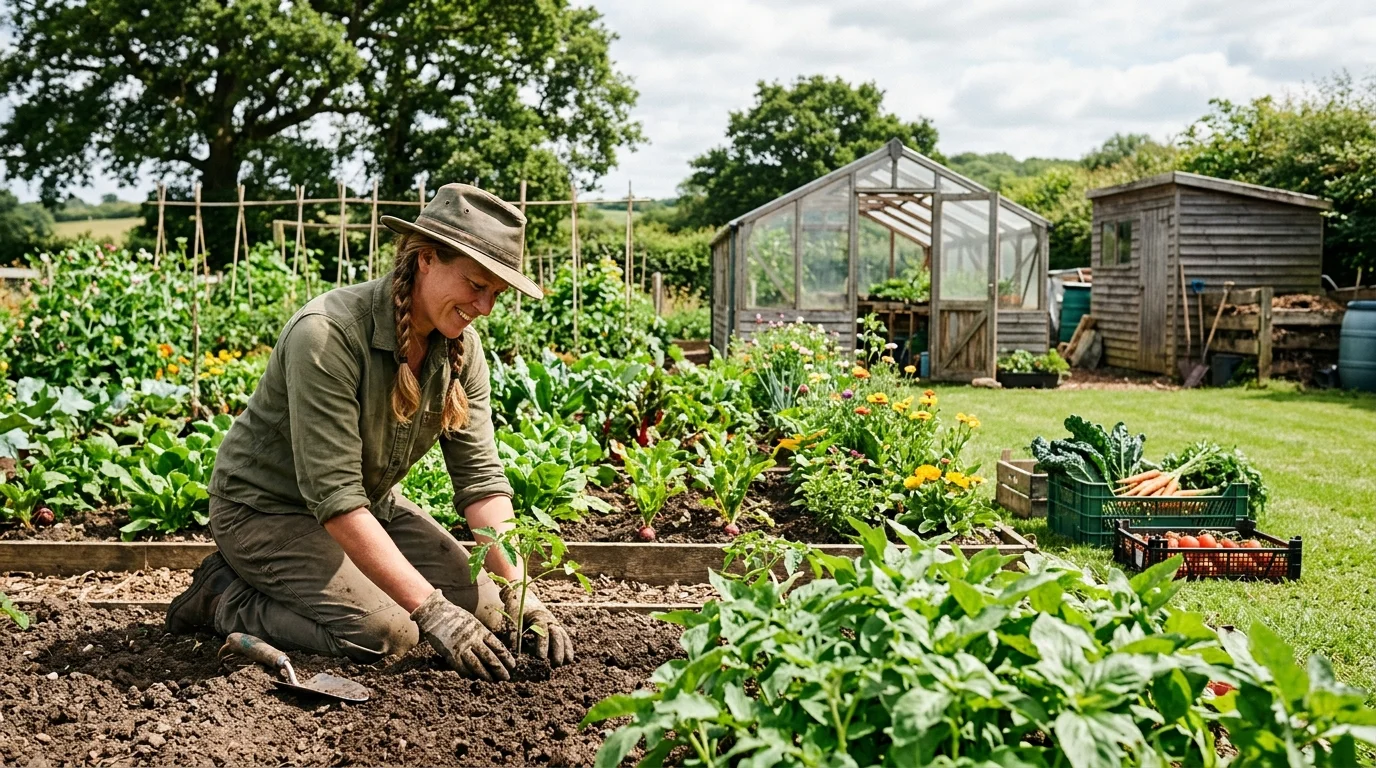
Transforming Turf: The Half-Acre Micro Farm Blueprint
A standard suburban half-acre lot contains 21,780 square feet of land. Once you subtract your house footprint, driveway, patio, and mandatory property setbacks, you retain roughly 8,000 to 10,000 square feet of open yard.
Beyond the financial upsides, many older adults discover the joy of gardening in retirement as a peaceful, rejuvenating daily routine.
Launching a high-yield backyard plot serves as an excellent retirement reboot for those eager to stay physically active while generating supplemental cash.
You do not need to cultivate every square foot of soil to make flower farming in retirement profitable. A professional layout uses standardized 30-inch-wide growing beds that measure 50 feet in length, separated by 14-inch walking paths.
Setting up 48 standardized beds creates 6,000 square feet of intensive growing area. This configuration allows you to reach across the growing zone easily without stepping onto the soil or compacting delicate root systems.
Converting turfgrass into nutrient-dense planting beds requires minimal manual digging if you use biological smothered-sheet methods. The following four-step sequence eliminates sod while preserving essential soil microbiology:
- Mow the existing backyard turfgrass at your mower’s lowest deck setting to scalp the lawn down to the crown.
- Cover the scalped grass with 6-mil UV-stabilized black silage tarps for five to six weeks during late spring to kill weed roots via occlusion.
- Aerate the smothered soil using a 5-tine broadfork, sinking the tines 10 inches deep without inverting subsoil layers.
- Deposit a 3-inch layer of certified weed-free organic compost directly across the beds to create immediate planting media.
According to the USDA Census of Agriculture, 38% of all American farm producers are aged 65 or older. Modern micro-farming relies on biological soil building rather than heavy tractor machinery, making it an ideal physical match for active retirees.
Standardizing your beds also simplifies crop planning calculations and trellising installations. Every row uses identical lengths of drip tape, insect netting, and support mesh, eliminating custom fabrication and guesswork.
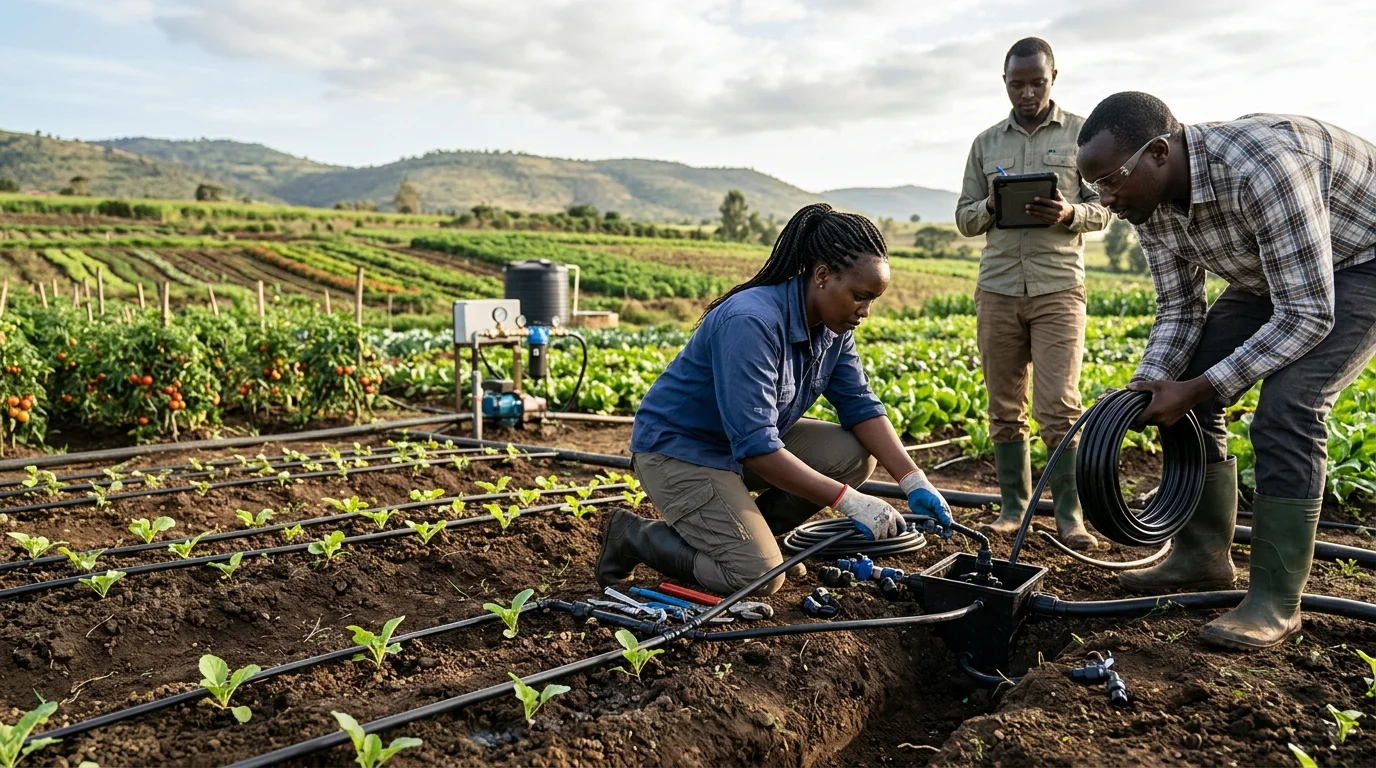
Engineering the Low-Pressure Drip Irrigation Network
Residential municipal water connections require dedicated pressure regulation and backflow prevention to operate agricultural irrigation safely. Hooking commercial drip tape directly to an unfiltered spigot will blow out fittings and waste water.
Your setup begins at the exterior residential hose bib with a brass vacuum breaker backflow preventer. Next, install a 150-mesh disc filter followed by a 25 PSI pressure regulator to protect delicate emitter seams.
Run a 3/4-inch UV-resistant polyethylene mainline tubing header along the edge of your growing field. Connect each individual 50-foot bed to this mainline using a barbed shutoff valve, allowing row-by-row water control.
Lay two parallel lines of 8-mil drip tape down each 30-inch bed, positioning the emitters 8 inches apart. This spacing creates an overlapping moisture band through the topsoil without spraying foliage or inviting fungal mildew.
Automate your schedule by attaching a dual-port battery-powered digital hose timer directly to your manifold. Run the irrigation system for 40 minutes every other morning at 5:30 AM before daytime winds and evaporation begin.
This automated schedule delivers approximately 0.5 gallons per hour per emitter, directing moisture straight to active root zones. Your municipal water usage remains predictable, and you avoid hauling heavy hoses across the yard.
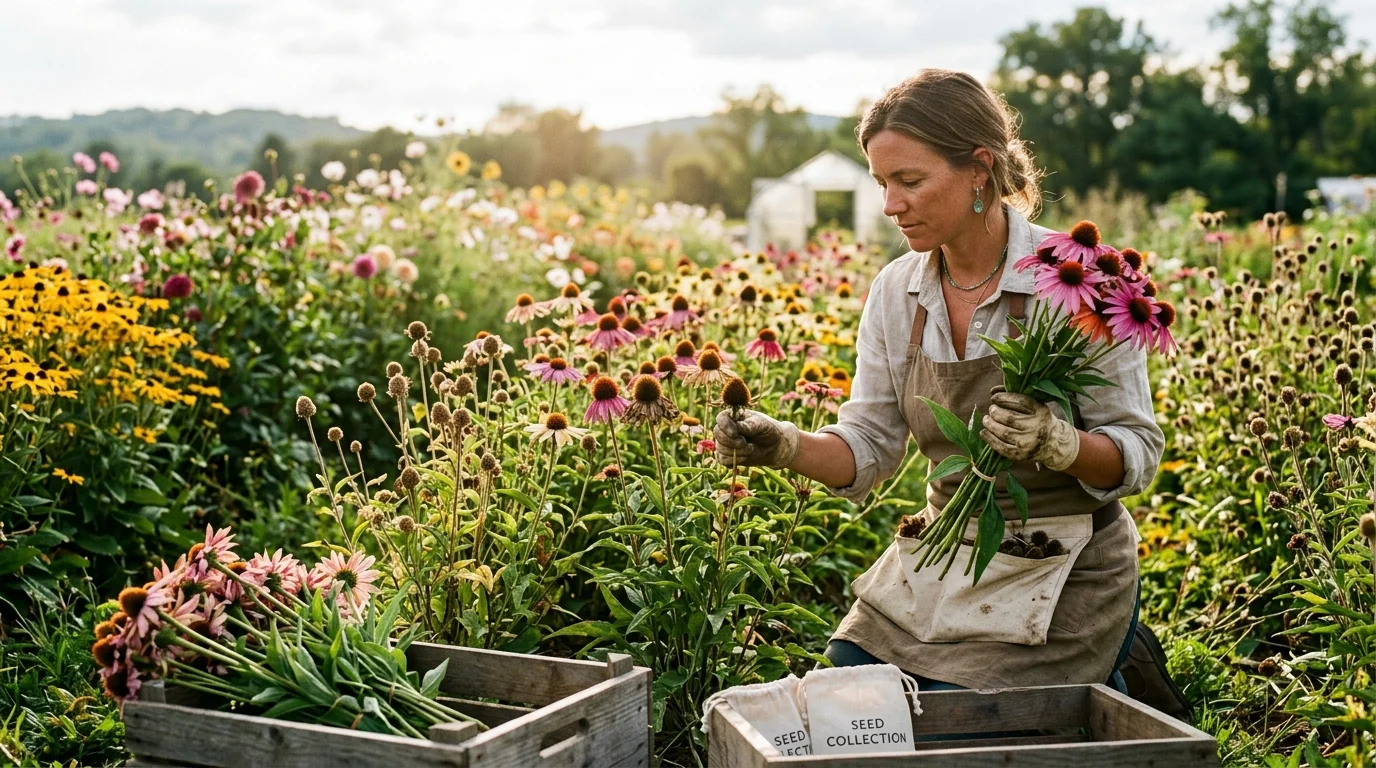
High-Value Cultivars: Balancing Cut Stems and Seed Yields
A suburban cut flower grower must maximize revenue per square foot rather than planting sprawling, low-margin field crops. Selecting dual-purpose annual varieties allows you to cut fresh stems all summer and harvest valuable specialty seed pods in early autumn.
Shifting toward botanical production offers a wonderful path for professionals reinventing themselves in retirement through hands-on creative work.
Cultivating these colorful rows provides both substantial income and the therapeutic benefits of retirement gardening as art right outside your backdoor.
Heirloom cultivars with unique coloration command high prices from boutique wedding designers. These same varieties produce stable open-pollinated seed crops that retail customers eagerly purchase for home gardens.
Focus your bed space on productive cut-and-come-again varieties that produce continuous branches when harvested deeply. The following selections provide optimal stem lengths and dependable seed pod development:
- Zinnia elegans (‘Queen Lime Orange’): Produces 20 to 25 harvestable stems per plant, yielding sturdy seed heads by late September.
- Antirrhinum majus (‘Madame Butterfly Bronze’): Offers ruffled double blooms for florists and dense, easily threshed seed pods.
- Helianthus annuus (‘ProCut Orange’): Single-stem pollenless sunflowers bred for pristine vase life, clearing bed space quickly for succession plantings.
- Scabiosa atropurpurea (‘Black Knight’): Deep burgundy petals provide premium florist stems, followed by sculptural geometric seed heads prized in dried arrangements.
- Celosia spicata (‘Flamingo Feather’): Feathery pink plumes dry without losing color, yielding thousands of tiny black seeds per mature head.
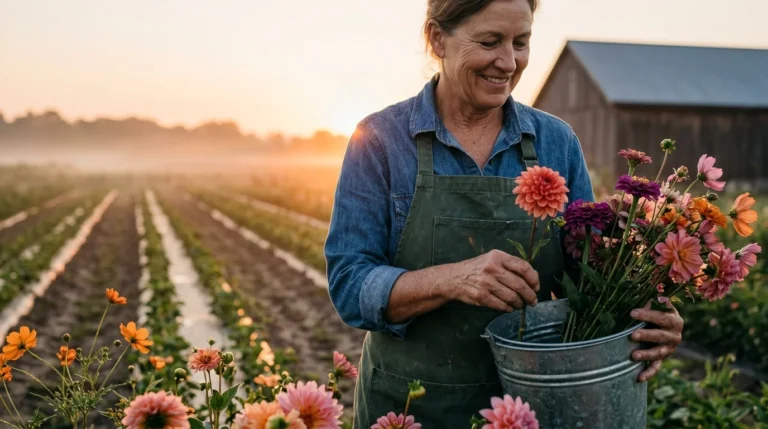
Harvest fresh floral stems early in the morning when plant stems are fully hydrated. Strip the bottom two-thirds of foliage immediately and submerge stems into clean buckets containing cool water and floral conditioner.
Allow 15% of your mid-season plantings to bypass stem harvest and mature into full seed heads on the vine. Cut seed heads once the surrounding calyx turns brown and papery, drying them indoors on mesh screens for 14 days.
| Cultivar Name | Stem Yield (per Sq. Ft.) | Wholesale Stem Price | Seed Yield (per Bed) | Gross Revenue Potential |
|---|---|---|---|---|
| Zinnia ‘Queen Lime Orange’ | 18 stems | $1.25 | 120 retail packets | $3,420 across 8 beds |
| Snapdragon ‘Madame Butterfly’ | 14 stems | $1.50 | 85 retail packets | $3,035 across 8 beds |
| Sunflower ‘ProCut Orange’ | 5 stems (dense spacing) | $1.75 | N/A (F1 Hybrid) | $2,100 across 6 beds |
| Scabiosa ‘Black Knight’ | 16 stems | $1.15 | 110 retail packets | $2,860 across 8 beds |
| Celosia ‘Flamingo Feather’ | 20 stems | $1.10 | 150 retail packets | $2,035 across 6 beds |
Retail seed packets packaged in attractive glassine envelopes sell for $5.00 to $6.50 each at weekend neighborhood markets. This secondary harvest extends your cash flow well into the winter months long after frost ends field cutting.
Building Local Florist Subscriptions and Bouquet CSAs
Securing direct wholesale accounts with local independent florists eliminates shipping costs and wholesale market broker fees. Florists prioritize local backyard micro farm income partners who provide delicate varieties that wilt in long-distance refrigerated transit.
Similar to crafting and selling handmade goods, packaging value-added items like botanical crafts can significantly boost your seasonal margins.
Growing striking heirloom blooms can even fuel other creative hobbies, such as backyard botanical watercolor painting, using fresh garden cuts as live models.
Draft an availability email every Sunday evening outlining the stem counts, colors, and varieties ready for harvest that week. Deliver wholesale orders directly to florist shop doors on Wednesday mornings between 8:00 AM and 10:00 AM.
Establish a minimum purchase order of $75 to justify the driving route and packaging time. Wholesale stem bunches contain 10 stems wrapped securely in unbleached kraft paper sleeves with rubber bands securing the base.
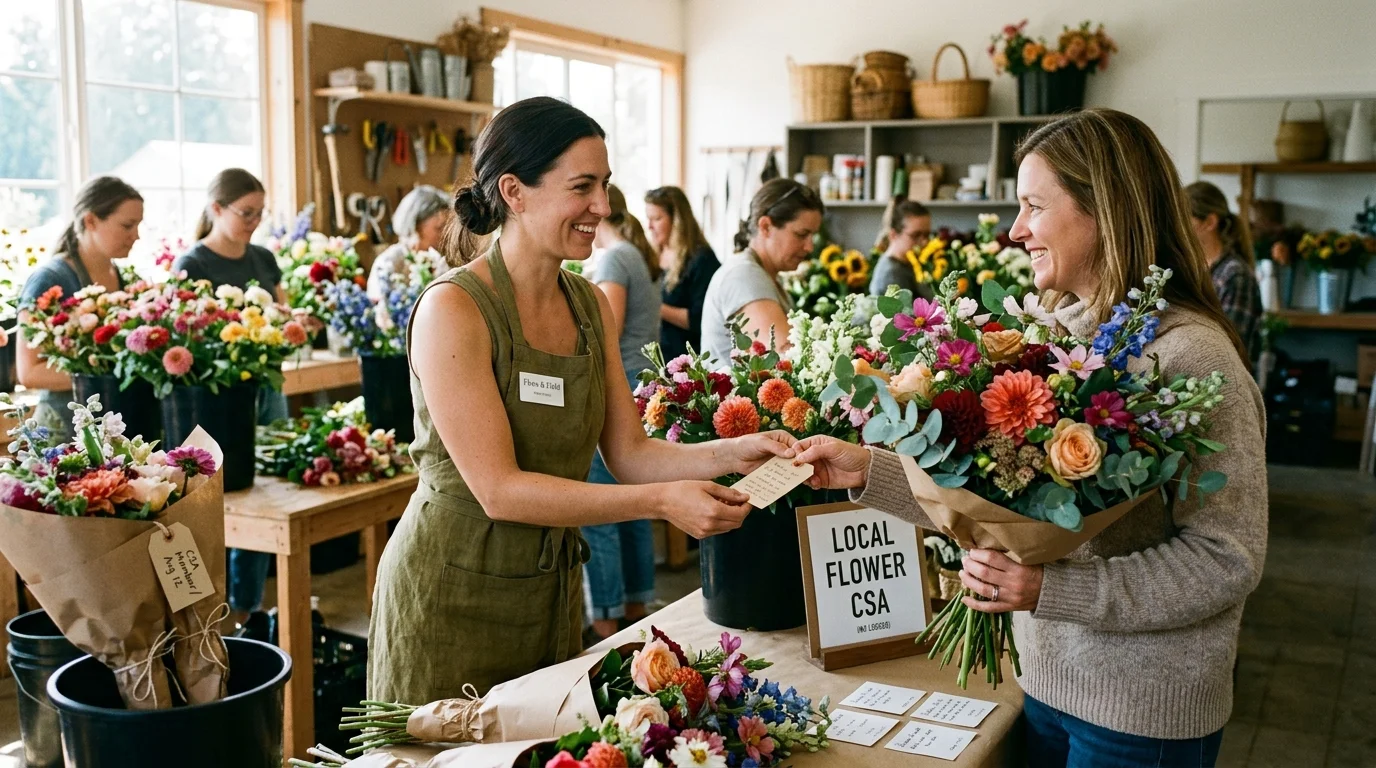
Complement your wholesale accounts by offering a direct-to-consumer Community Supported Agriculture (CSA) bouquet subscription. Limit your membership roster to 20 local neighborhood subscribers to keep harvesting manageable for two people.
Subscribers pay upfront in early spring, providing working capital for seeds, compost, and irrigation fittings. In exchange, members receive a lush, wrapped paper bouquet every week for 14 consecutive weeks.
Organizations like Encore.org demonstrate that blending community engagement with small-scale enterprise creates profound social and emotional rewards during retirement. Your flower drop-offs transform routine errands into deep neighborhood friendships.
Set a consistent porch pickup window between 4:00 PM and 7:00 PM every Thursday evening. Members retrieve their bouquets from clean galvanized buckets on your covered front porch, eliminating delivery driving entirely.
Worked Financial Scenario: Generating $13,450 in One Season
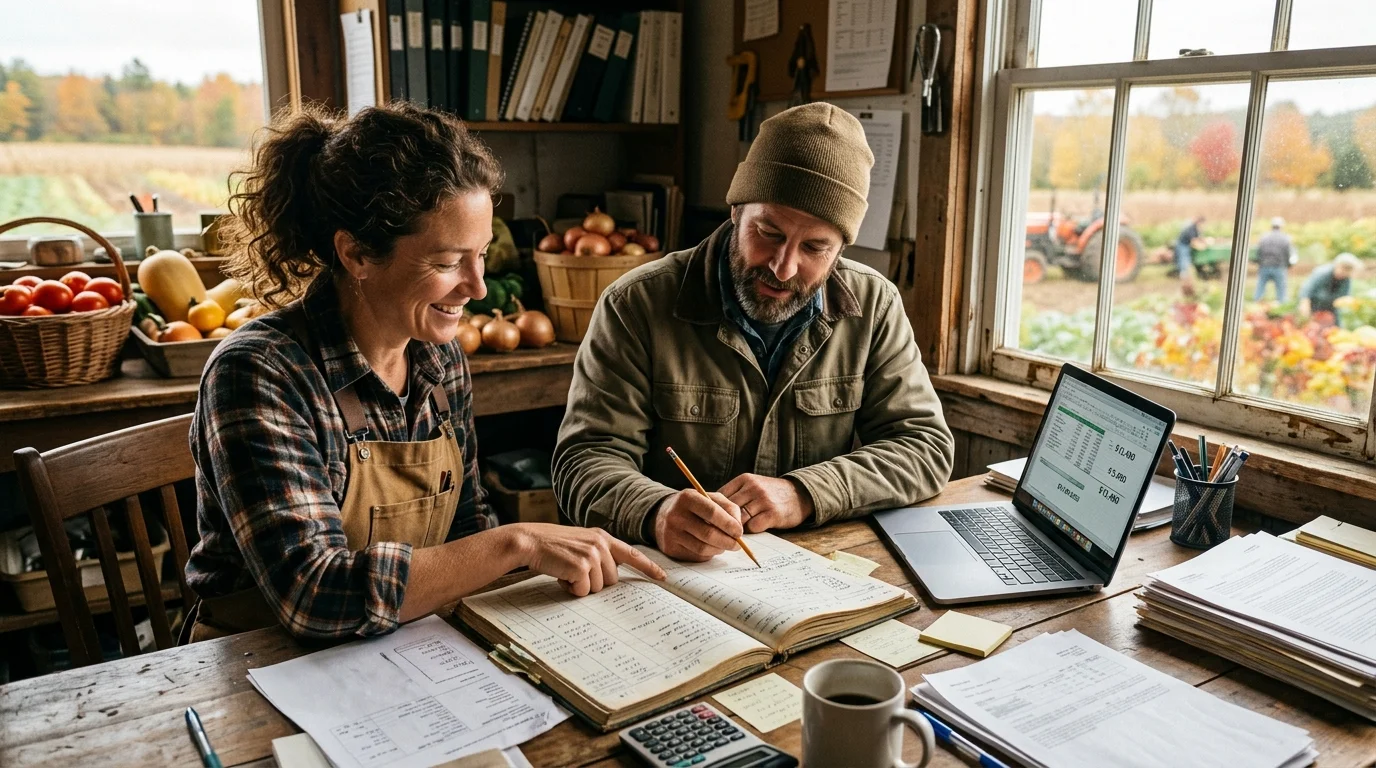
Achieving realistic backyard micro farm income requires understanding your production numbers, direct pricing formulas, and material overhead. Consider this actual operational model based on 48 cultivated beds measuring 30 inches by 50 feet.
Like transforming a home kitchen into a boutique business, scaling a micro-farm requires calculated reinvestment of early sales.
Much like retirees building a successful small business from scratch, achieving strong returns requires keeping overhead tight and diversifying revenue channels.
Industry benchmarks for intensive cut flower plots range between $25,000 and $60,000 in gross revenue per acre. On 6,000 square feet of beds (roughly 0.14 net cultivated acres), $13,450 represents a balanced yield of $2.24 per square foot.
The revenue model balances recurring retail subscription customers, reliable florist wholesale delivery, and high-margin packaged heirloom seeds:
- Bouquet CSA Shares: 20 members subscribed at $350 each for 14 weeks of premium summer arrangements ($7,000 total).
- Florist Wholesale Route: 3 local boutique florists buying an average of 6 bunches weekly across 18 weeks at $12.50 per bunch ($4,050 total).
- Direct-to-Consumer Seed Sales: 400 glassine seed packets sold via online neighborhood portals and farmstand pop-ups at $6.00 each ($2,400 total).
- Gross Seasonal Income: Combining all three channels totals $13,450 over a single May-through-October operational season.
Annual operating overhead remains low because you already own the land and use passive soil enrichment. The annual expenses required to sustain this production volume include:
- Specialty seeds, corms, and propagation plugs: $850
- Bulk organic compost delivery (12 cubic yards): $750
- Drip irrigation lines, emitters, and brass filter replacements: $380
- Packaging materials, kraft paper sleeves, buckets, and labels: $420
- Municipal water utility increase over baseline seasonal use: $500
- Total Operating Expenses: $2,900 for the entire production year.
Subtracting operating expenses from your gross income leaves $10,550 in net supplemental cash flow. This capital easily covers travel plans, family gifts, or garden infrastructure reinvestment.
Ergonomic Tools and Pacing for Second-Act Growers
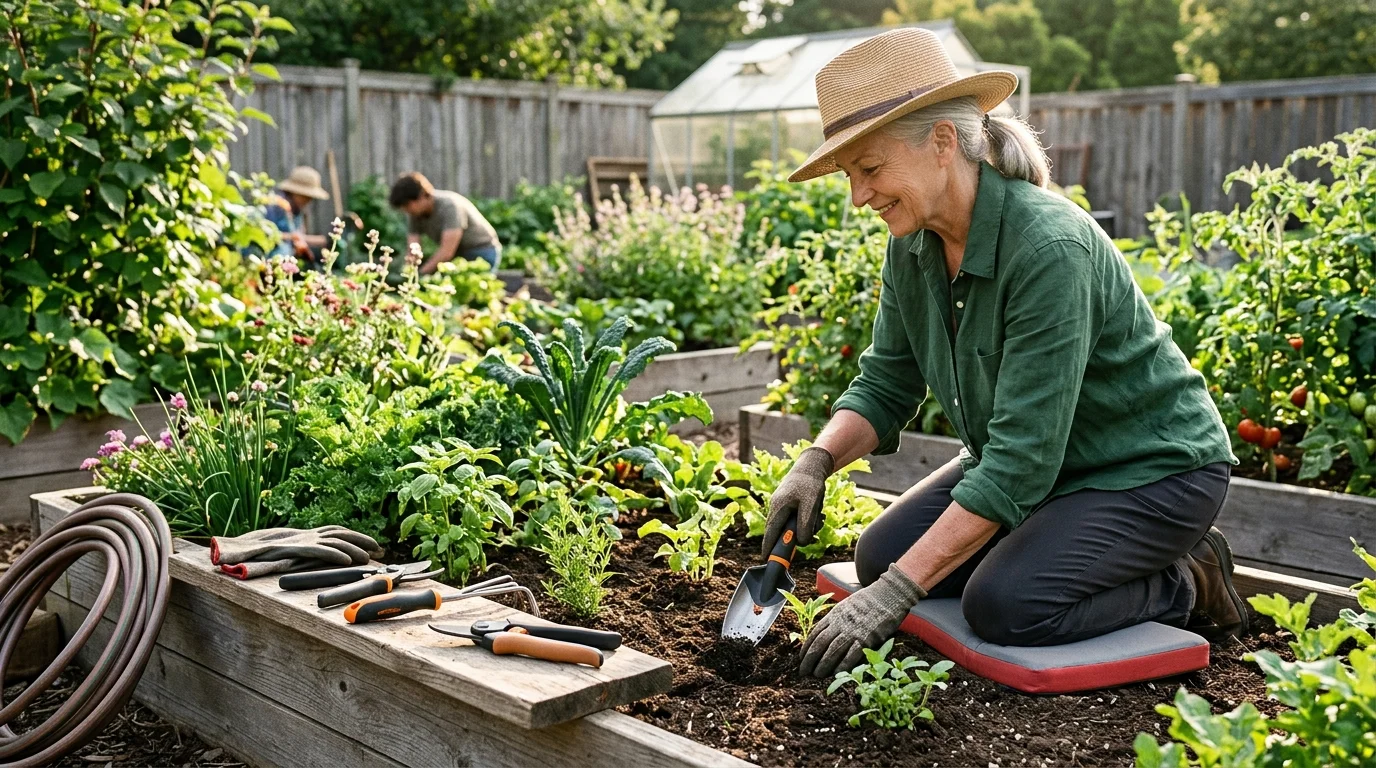
Protecting your joints, spine, and daily stamina is paramount when flower farming in retirement. Commercial cut flower production should enhance your physical health through functional movement rather than exhausting your body.
Designing an adaptive growing space is one of many inspiring retirement projects that keep both mind and body engaged.
“The glory of gardening: hands in the dirt, head in the sun, heart with nature.” — Alfred Austin
Ditch traditional heavy shovels and low-handled tools that force you into painful stooping positions. Modern market garden tools rely on ergonomic leverage, standing upright postures, and smooth ball bearings to reduce strain.
Equip your backyard operation with professional tools designed specifically to minimize physical wear and tear on your joints:
- Meadow Creature Broadfork: Features tall steel handles that allow you to aerate deep soil beds using backward bodyweight leverage instead of spine strain.
- Hoss Single Wheel Hoe: Equipped with an oscillating stirrup blade that shears surface weeds at root level with an upright walking motion.
- Vertex Garden Rocker Seat: A contoured, swiveling rolling stool that supports knees and hips while planting plugs or harvesting low statice stems.
- ARS HP-VS8R Rotating Handle Hand Pruners: High-carbon Japanese steel shears featuring a lower handle that turns with your fingers, preventing repetitive wrist tendonitis.
- Gorilla Carts Heavy-Duty Poly Dump Cart: Features balanced pneumatic tires and a pull handle that converts instantly into an ATV hitch pin.
Structure your farming routine around a predictable three-hour daily schedule split between morning and evening. Harvest delicate stems between 6:30 AM and 8:30 AM while ambient temperatures stay cool and humidity remains high.
Use hot midday hours for bookkeeping, bouquet assembly in an air-conditioned workshop, or resting indoors. Complete light bed weeding and irrigation checks during the gentle evening hours between 6:30 PM and 7:30 PM.
Suburban Regulations, HOA Compliance, and Farm Taxes
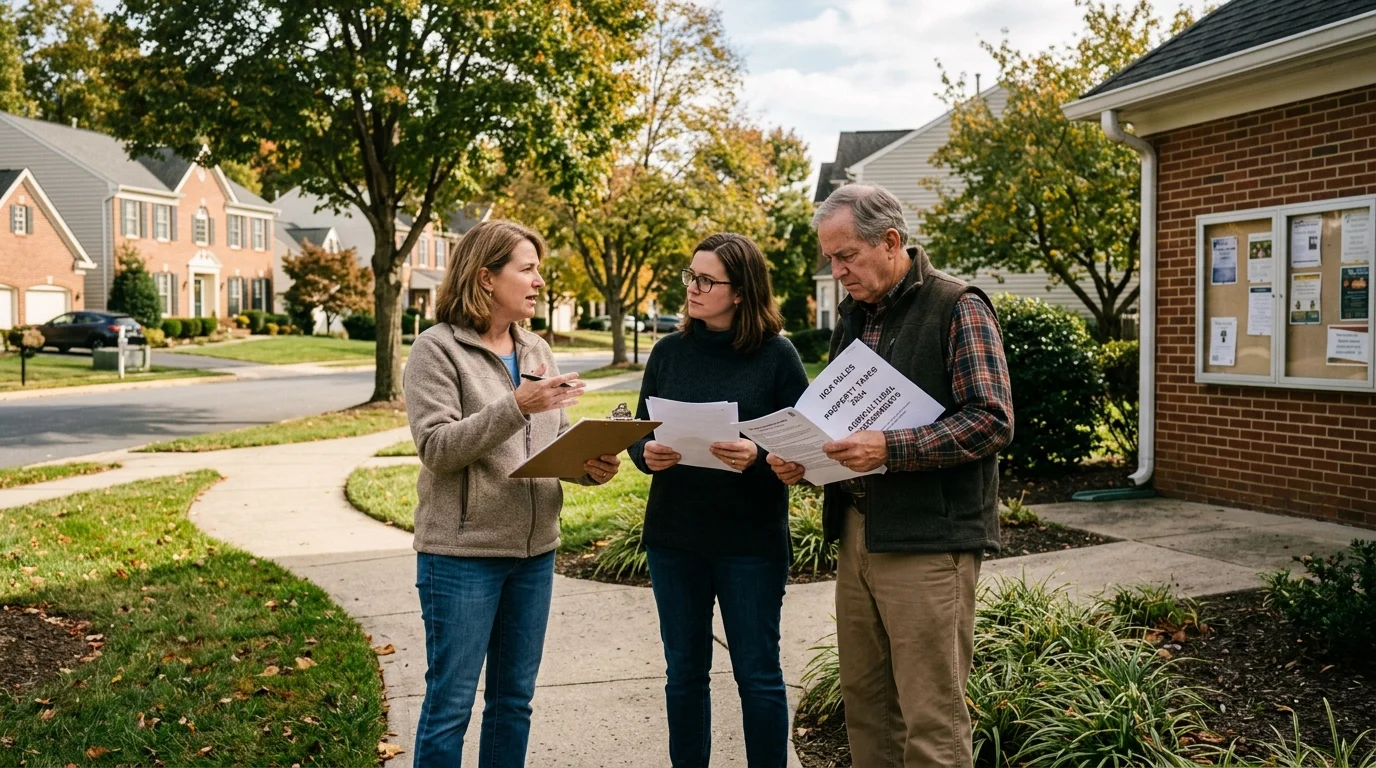
Operating a backyard agricultural enterprise requires navigating residential zoning ordinances, homeowner association bylaws, and state agricultural codes. Proactive planning ensures peaceful neighbor relationships and full regulatory compliance.
Once you master your backyard production, you can even branch into starting a consulting business in retirement to advise other aspiring growers.
Under official USDA guidelines, any operation that produces and sells at least $1,000 of agricultural goods annually qualifies as a farm. This classification makes you eligible for technical assistance through federal agricultural programs and extension services.
Backyard operations qualify for federal agricultural assistance, including USDA Farm Service Agency microloans up to $50,000 for seed stock and infrastructure purchases. These programs support small-scale producers launching second-career agricultural projects.
If you belong to a Homeowners Association (HOA), verify restrictions regarding commercial foot traffic and roadside advertising. Maintain privacy by positioning flower beds within your fenced backyard and keeping customer pickups confined to your front porch.
Most state departments of agriculture require a simple nursery dealer permit if you plan to sell harvested bulbs or dahlia tubers. These annual permits cost between $25 and $75 and ensure your plant material remains free of invasive nematodes.
When reporting backyard micro farm income on IRS Form 1040 Schedule F, maintain strict financial ledgers to avoid hobby loss reclassifications. Internal Revenue Code Section 183 requires operations to show net profits in at least three out of five consecutive tax years.
Consult with business advisors at SCORE Mentoring for free guidance on setting up an agricultural LLC, tracking farm deductions, and organizing depreciation schedules. Deducting irrigation supplies, seeds, and dedicated home office space offsets eligible income while building long-term business equity.
Frequently Asked Questions
How many hours per week does a half-acre cut flower farm require?
Expect to invest 15 to 20 hours per week during the peak growing season from May through September. Splitting tasks into a two-hour morning harvest and a one-hour evening walk keeps physical work enjoyable and prevents fatigue.
Can I run a backyard cut flower business if I belong to an HOA?
Yes, provided you keep commercial activities discrete and avoid hosting high-volume retail traffic at your residence. Using off-site florist deliveries and front-porch subscription pickups prevents parking congestion and keeps your operation compliant with neighborhood association rules.
What upfront capital is needed to convert a lawn into a flower plot?
Converting 6,000 square feet of beds requires approximately $2,000 to $3,200 in initial startup capital. This budget covers bulk compost delivery, black silage tarps, commercial drip irrigation components, high-grade hand tools, and certified annual seeds.
How do you maintain revenue during the winter months?
Harvesting heirloom seeds and drying statice or celosia blooms during late summer extends your earning window through the winter. Selling packaged heirloom seeds online, marketing dried holiday wreaths, and hosting early-spring CSA signups provide reliable off-season income.
Disclaimer: This article is for informational and inspirational purposes. Life decisions are deeply personal, and we encourage readers to pursue their dreams while considering their unique circumstances, health, and financial situation.
2 Comments