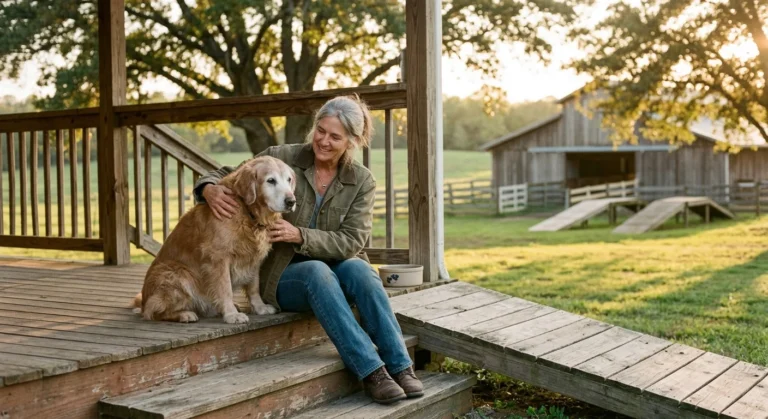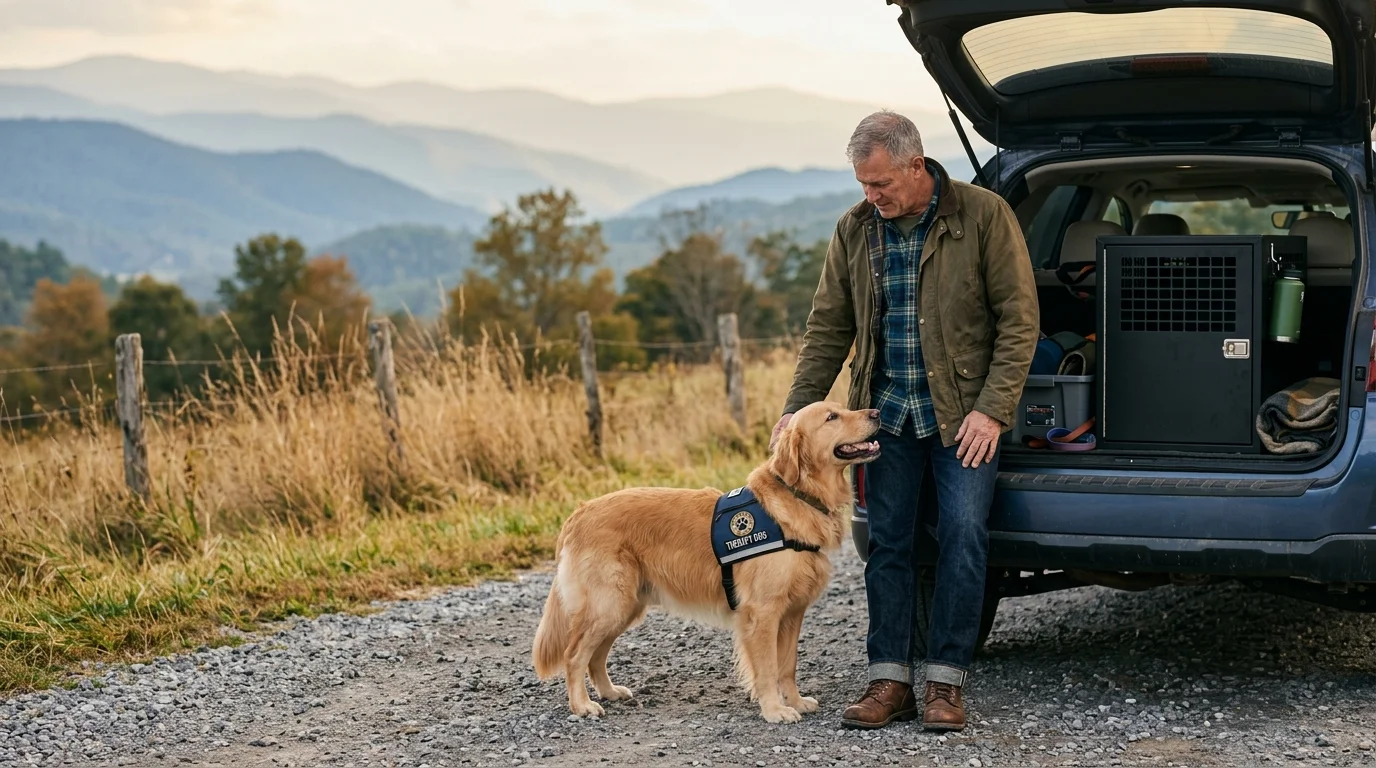
Trading the cockpit for remote backroads lets you channel seasoned flight discipline into life-affirming purpose. As a therapy dog handler in retirement, pairing your Golden Retriever with rural hospice patients provides vital comfort to underserved communities.
Hospice volunteering succeeds when you apply strict aviation-grade protocols to environmental readiness and emotional containment. This guide establishes the operational flight plan, testing checkpoints, and boundary frameworks necessary to sustain long-distance rural palliative missions.
Here is how you transform your converted SUV and retriever into an indispensable, certified rural hospice deployment team.
The Medicare Five Percent Mandate and Rural Palliative Needs
Federal regulations create an urgent, ongoing demand for dedicated volunteer teams in remote healthcare settings. You can step directly into this operational gap to make a measurable difference.
Deploying your vehicle and discipline to fill critical healthcare shortages exemplifies volunteering smarter by matching skills to areas with the greatest need.
Under 42 CFR § 418.78(e), the Centers for Medicare & Medicaid Services requires Medicare-certified hospices to maintain volunteer hours. Specifically, volunteers must provide at least 5% of all direct patient care hours delivered by paid staff.
Following temporary waivers during the COVID-19 Public Health Emergency, CMS fully reinstated enforcement of this mandate on January 1, 2024. Palliative agencies in rural regions face severe logistical hurdles in recruiting enough qualified community members to hit that legal threshold.
Your willingness to drive long distances solves an administrative and human crisis for these facilities. You bring relief to patients who rarely receive outside visitors due to geographic isolation.
Crucially, federal accounting rules under 42 CFR § 418.78 allow hospices to record volunteer travel time to remote patient homes. When tracked alongside comparable staff time, your round-trip driving hours count directly toward the hospice agency’s compliance metrics.
Organizations listed on VolunteerMatch frequently partner with rural healthcare networks to connect willing handlers with remote county facilities. Your deployment provides direct relief to care coordinators struggling to balance clinical rosters.
Approaching hospice work with the rigor of commercial aviation ensures reliable, safe operations. You will treat every rural visitation itinerary as an official cross-country flight profile.
Certification Pathways: Alliance of Therapy Dogs and Testing Standards
Hospice environments demand an unflappable canine temperament and exceptional handler situational awareness. Mastering the hospice therapy dog training steps guarantees that your Golden Retriever remains steady around hospital beds, oxygen concentrators, and unexpected medical alarms.
Whether you raised your retriever from puppyhood or discovered the benefits of companion animals in retirement, establishing mutual trust is the cornerstone of passing registry evaluations.
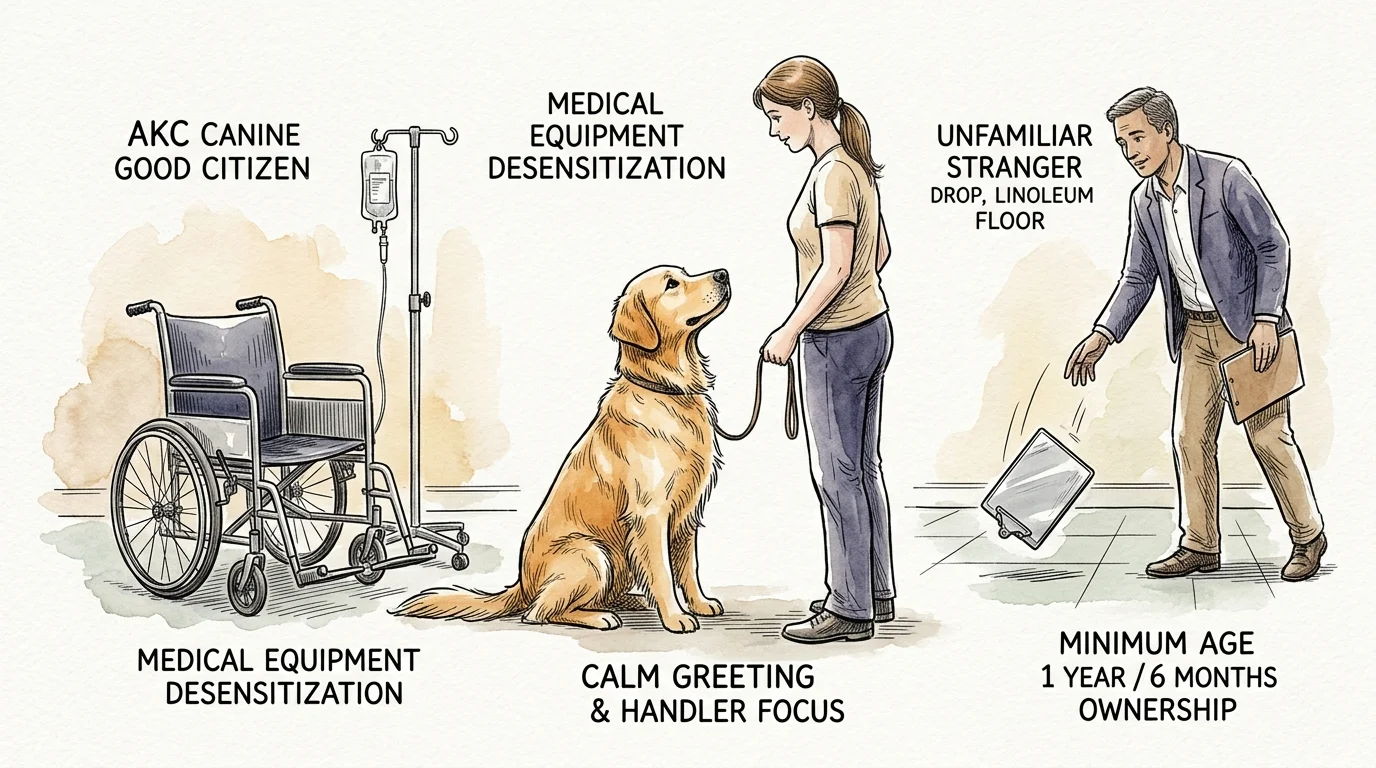
Therapy registries require your retriever to be at least 1 year old. You must also have owned the dog for a minimum of 6 continuous months before challenging any certification test.
Begin by completing the American Kennel Club Canine Good Citizen evaluation. Evaluator testing fees for this 10-step foundation test typically range from $10 to $30.
The Canine Good Citizen title proves your dog can handle loose-leash walking, sit politely for petting, and ignore neutral dogs. Palliative care centers often require this certificate before considering your application.
The Alliance of Therapy Dogs provides an accessible, robust certification pathway designed for medical settings. ATD requires a clear criminal background check processed through Sterling Volunteers for $20.
After your dog passes a handling evaluation with an ATD Evaluator, you complete three supervised visits in working medical facilities. These visits evaluate your ability to guide your retriever safely around frail adults and medical hardware.
Once you pass, ATD charges a $20 initiation fee and $35 annual membership dues. This yearly fee includes primary volunteer liability insurance coverage during sanctioned visits.
| Registry Organization | Initial Handler Investment | Recertification Cadence | Senior Handler Discount (Age 55+) | Raw Food Diet Permitted |
|---|---|---|---|---|
| Alliance of Therapy Dogs (ATD) | $75 ($20 background, $20 fee, $35 dues) | Annual dues ($35), observation as needed | None standard | Strictly Prohibited |
| Pet Partners | $190–$205 ($80 course, $15–$30 eval, $95 reg) | In-person re-evaluation every 2 years | Registration reduced to $50 | Strictly Prohibited (4-week cessation) |
| Therapy Dogs International (TDI) | $80 ($10 test fee, $70 registration) | Annual renewal ($50), retest upon lapse | None standard | Strictly Prohibited |
Pet Partners offers an alternative certification route favored by acute clinical facilities. They require an $80 online handler course, a $15 to $30 in-person evaluation fee, and a $95 two-year registration.
Handlers aged 55 and older receive a discounted Pet Partners registration rate of $50. However, teams must repeat the entire in-person evaluation every 2 years to maintain active credentials.
Choose the registry that best aligns with your regional hospice contracts. Both organizations deliver the primary insurance and verified testing standards that rural clinical administrators require.
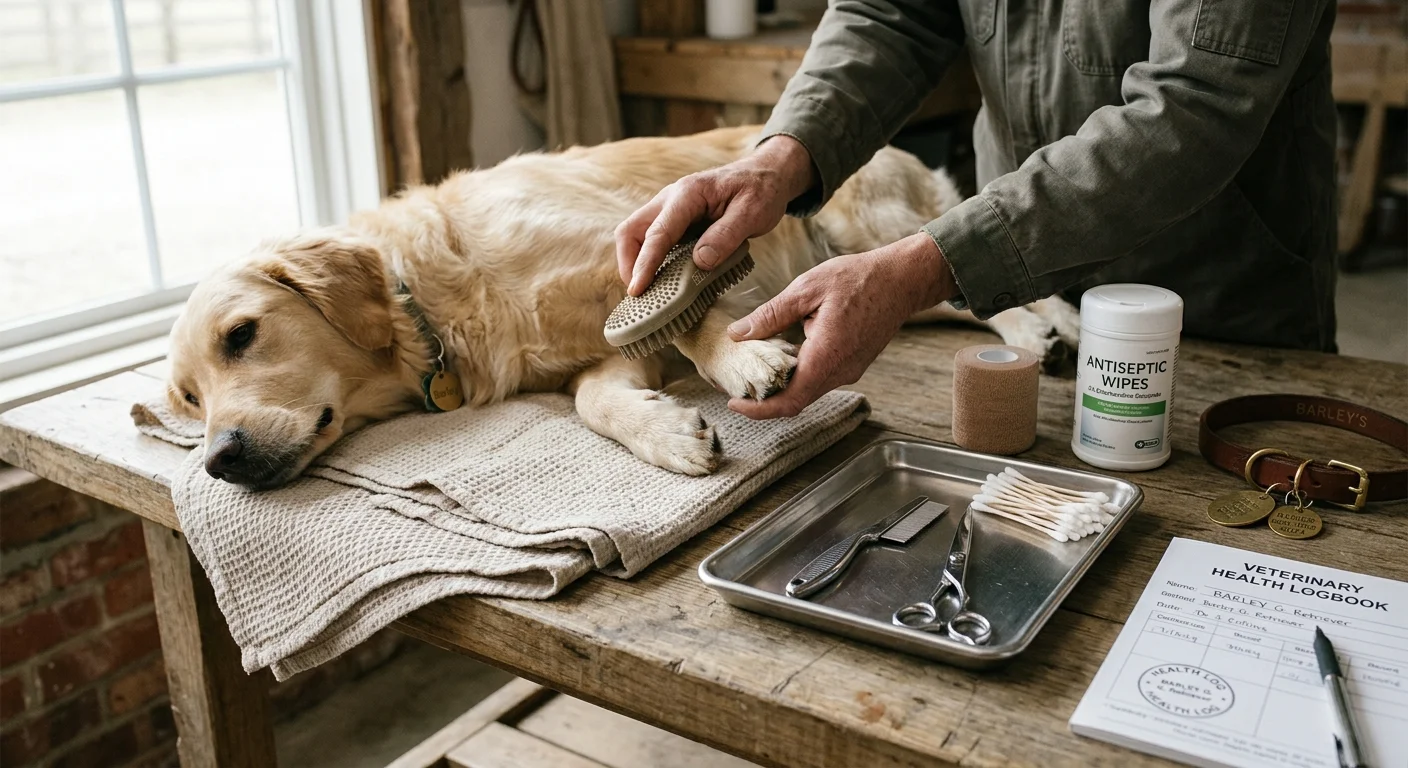
Veterinary Protocols and Sterile Clinical Infection Controls
Hospice patients frequently live with compromised immune systems, making strict bio-security non-negotiable. Standardizing clinical hygiene protocols protects your retriever and the vulnerable individuals you embrace.
Handlers who want to expand their animal advocacy even further might also consider starting a senior dog rescue to assist older canines in need of dedicated care.
Both Pet Partners and the Alliance of Therapy Dogs enforce strict dietary bans on raw protein. This restriction covers dehydrated raw meats, freeze-dried raw formulas, and raw recreational bones.
Raw animal diets carry severe contamination risks from Salmonella, Listeria, and Escherichia coli. Pet Partners mandates that an animal must discontinue all raw feeding at least 4 weeks before any evaluation or facility visit.
Your veterinarian must complete an extensive annual clinical screening form. This health clearance confirms your Golden Retriever has current rabies and core vaccinations, including distemper, adenovirus, and parvovirus.
You must document continuous flea, tick, and heartworm preventative regimens prescribed by your licensed veterinarian. Many hospice protocols also require a negative fecal flotation exam conducted annually or biannually.
Establish a clinical grooming routine before every rural travel day:
- Bathe your Golden Retriever within 24 hours of your first hospice stop using an unscented, chlorhexidine-free antimicrobial shampoo.
- Blow dry the coat thoroughly using a high-velocity forced-air dryer to eliminate loose undercoat and trapped dander.
- Comb the feathers and tail using an undercoat rake followed by a steel greyhound comb to remove burrs and field debris.
- Grind all nails smooth using a rotary tool to eliminate sharp edges that could tear fragile, paper-thin skin.
- Sanitize paw pads immediately before entering the hospice facility using hospital-approved veterinary antiseptic wipes.
Pack a sealed clean container inside your vehicle to store freshly laundered therapy vests and leashes. Never allow your dog to roll in grass or unpaved rest areas after completing the sanitation cycle.
Inspect your dog from nose to tail in good lighting before opening facility doors. Maintaining high hygiene standards preserves access privileges and protects fragile patients.
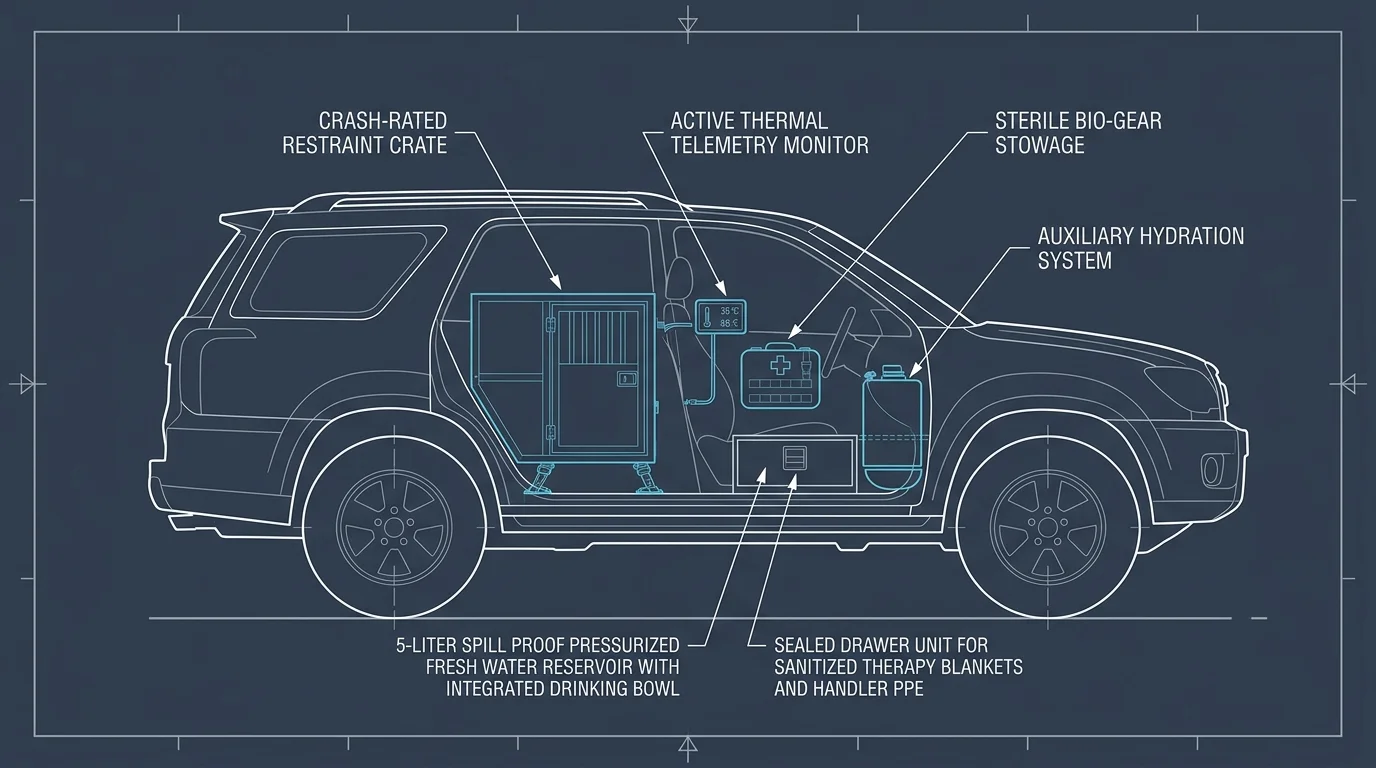
SUV Conversion Blueprint: Equipment and Long-Distance Logistics
Rural operations demand travel across hundreds of highway miles and unpaved country lanes. Converting a mid-size or full-size sport utility vehicle provides a climate-controlled command center for remote missions.
Outfitting an SUV with specialized kennels and climate controls is one of many rewarding hands-on projects for retirement that combine technical skills with practical purpose.
A converted Toyota 4Runner or Subaru Outback offers exceptional ground clearance and reliable cargo capacity. You must configure the interior to secure your dog while protecting sensitive veterinary gear.
Install a crash-tested transport kennel, such as a Ruff Land Intermediate Kennel ($380). Secure the crate to the factory chassis cargo tie-downs using heavy-duty ratchet straps rated for at least 500 pounds.
Inside the crate, place a 3-inch high-density orthopedic memory foam pad. Long drives strain an active retriever’s joints, and supportive resting foam preserves canine comfort and mobility.
Equip the vehicle cabin with essential remote deployment gear:
- A Waggle Pet Monitor 4G ($199) mounted to the kennel to transmit real-time cabin temperature, humidity, and power-loss alerts to your phone.
- A Solvit PetSafe telescoping aluminum ramp ($130) extended from the rear hatch to prevent high-impact jumping on aging joints.
- A Dometic CFX3 35 portable 12-volt compressor refrigerator ($850) connected to a dual-battery system for cold water and sterile wipes.
- Two 2.5-gallon food-grade water containers filled exclusively with municipal tap water from home to prevent travel-related stomach upset.
- A commercial canine first-aid trauma kit stocked with styptic powder, sterile saline flushes, vet wrap, and digital thermometers.
Running high-mileage rural routes requires continuous environmental management. Never rely on open windows or cracked sunroofs to manage ambient interior temperatures.
The Waggle cellular alert system ensures you know if temperatures climb past 74°F during brief logistical stops. A pilot never leaves aircraft systems unmonitored; maintain that exact situational awareness for your ground vehicle.
Pack backup equipment including extra leashes, secondary buckle collars, and duplicate registry ID badges. Redundancy prevents equipment failure from canceling a scheduled palliative visit.
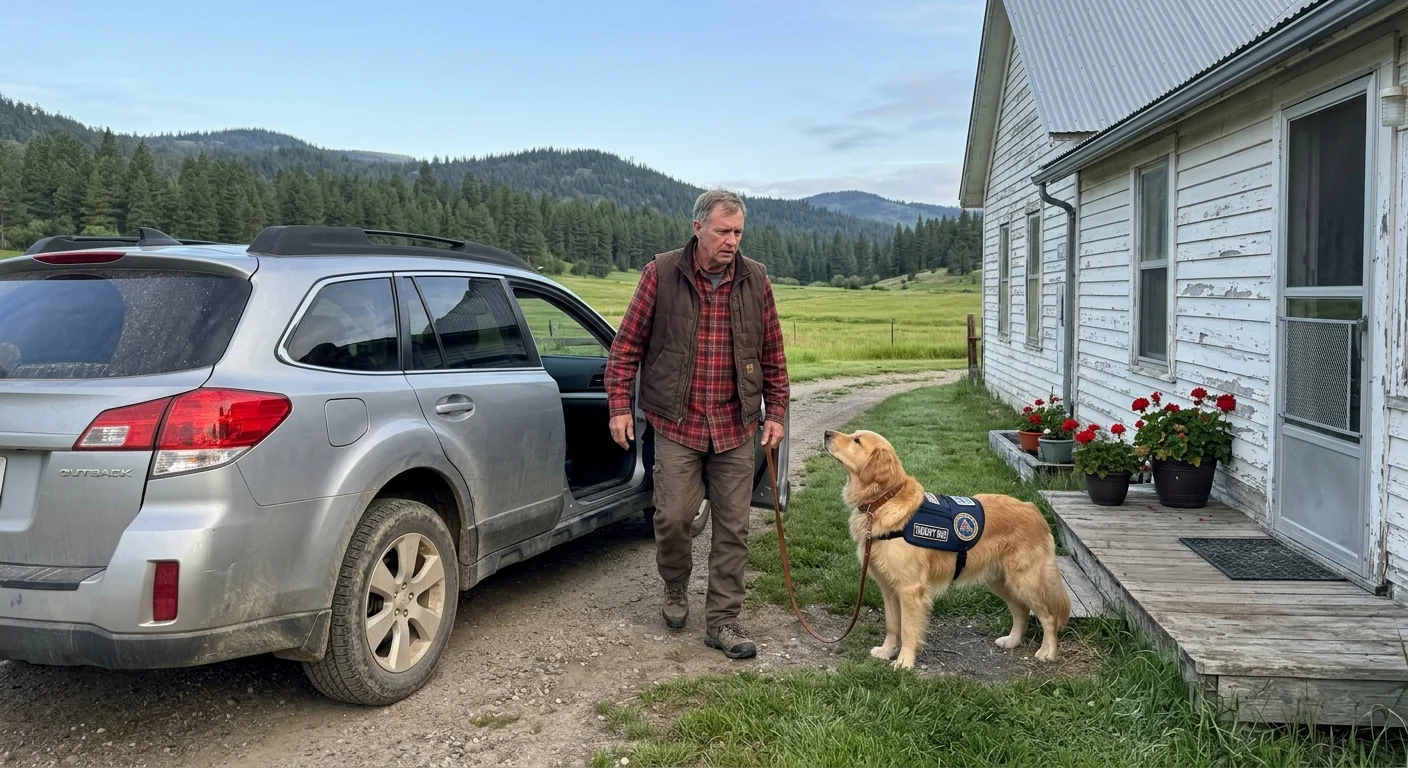
A Worked Mission Example: A 140-Mile Palliative Deployment
Examining a concrete operational deployment clarifies the scheduling, financial accounting, and time investment required for rural visits. This worked scenario documents an authentic day visiting an assisted living center and a private homestead.
Much like thorough retirement travel planning, managing remote palliative visits requires strict attention to mileage, fuel consumption, and rest intervals.
Our team departs on a Wednesday morning at 07:30 to complete a 140-mile round trip through rural Crawford County. The vehicle is a 2021 Toyota 4Runner carrying an 80-pound male Golden Retriever.
At 17.5 miles per gallon across rolling terrain, the 140-mile route consumes 8.0 gallons of regular unleaded fuel. At $3.45 per gallon, direct transportation costs total $27.60 for the day.
The morning outbound leg spans 70 miles and takes 95 minutes across county highways. Upon arrival at 09:05, the handler allows a 15-minute bio-break and conducts a full paw sanitization protocol.
The first visitation takes place inside Countryside Manor, an 18-bed skilled nursing wing. The team conducts two 25-minute bedside visits, followed by 10 minutes of staff interaction, totaling 60 minutes of direct facility presence.
At 10:20, the team boards the 4Runner and drives 12 miles over 20 minutes to reach an isolated single-family homestead. The hospice agency coordinated this 30-minute private home visit for a bedbound veteran.
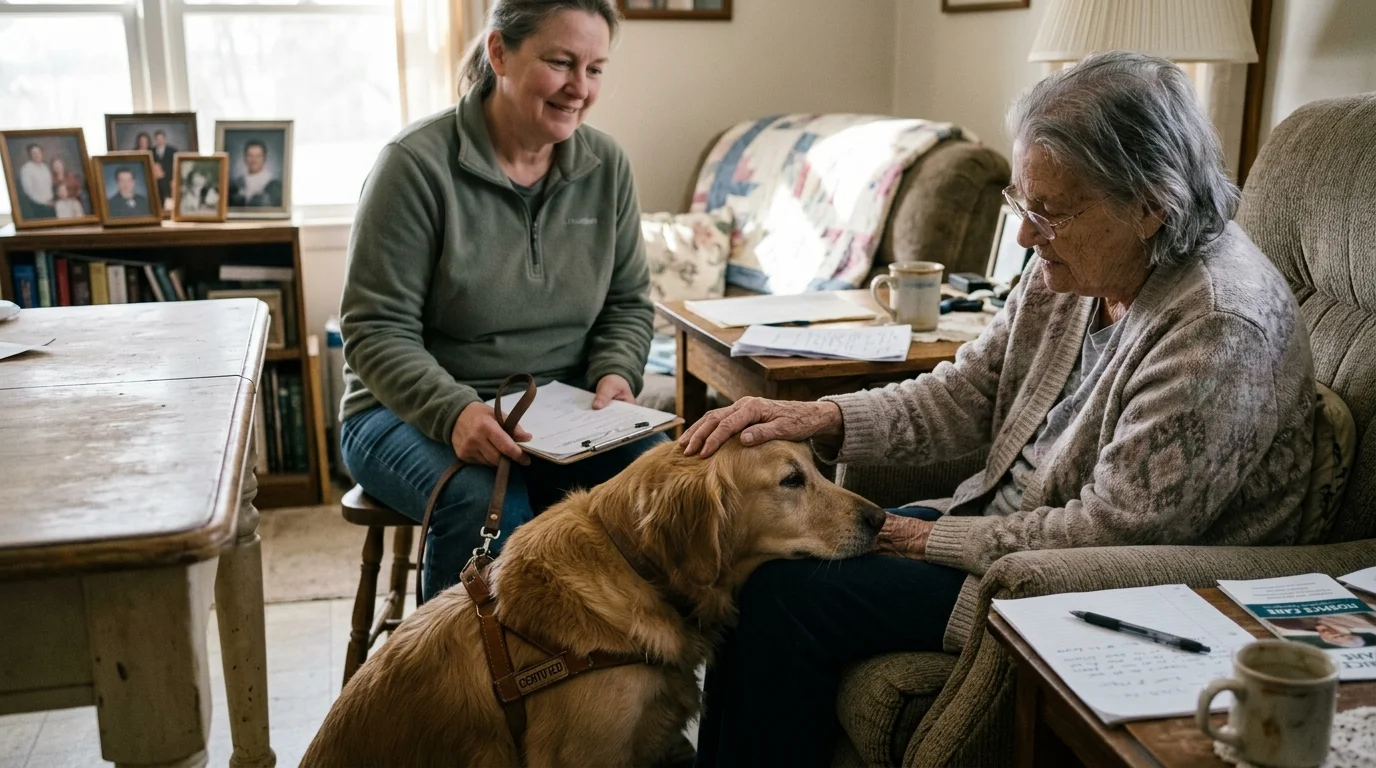
Direct bedside contact lasts exactly 30 minutes. The retriever rests his chin on the bed linen while the patient strokes his ears, eliciting calm respiration.
The team wraps the bedside encounter at 11:10 and initiates the return flight home. The 82-mile return drive takes 105 minutes, returning handler and dog to home base by 12:55.
Logistical and operational time accounting under 42 CFR § 418.78 yields measurable hospice contributions:
- Outbound and intra-county travel time: 115 minutes
- Return driving time: 105 minutes
- Direct patient and facility contact: 90 minutes
- Pre-entry grooming and paw decontamination: 20 minutes
- Total logged volunteer contribution: 330 minutes (5.5 operational hours)
The hospice agency logs all 5.5 hours toward its CMS 5% volunteer mandate. You delivered focused palliative companionship to two underserved families while managing fuel, canine stamina, and highway navigation.

Emotional Boundaries: Compartmentalization and Debriefing Strategies
Providing hospice comfort demands sharp emotional boundaries. Therapy dog work in end-of-life settings exposes you to raw grief, requiring active psychological maintenance.
Scientific perspectives published by the National Institute on Aging emphasize that social engagement and structured volunteer service support cognitive vitality and emotional resilience in later life. Purposeful action protects mental well-being when balanced with deliberate rest.
Research curated by the Stanford Center on Longevity also shows that purposeful contribution enriches personal health during long retirement chapters. Meaningful service sustains physical energy and deepens social fulfillment.
Volunteering with a therapy dog as a senior requires monitoring both your inner state and your retriever’s emotional reserve. Golden Retrievers pick up on human tension and environmental sorrow.
Limit your deployments to a strict ceiling of two patient encounters per travel day. Exceeding two bedside visits introduces handler fatigue and degrades your dog’s social engagement.
Watch for early canine stress markers during intensive palliative appointments:
- Frequent lip licking or yawning when positioned near hospital equipment.
- Whale eyes, showing the white sclera while turning the head away from the patient.
- Panting that begins suddenly without physical exercise or high ambient temperatures.
- Slow backing away or leaning heavily behind your legs rather than offering soft eye contact.
End the interaction immediately if your retriever exhibits two or more stress markers. Step outside to reset in neutral territory without pushing past the dog’s comfort limit.
“The best way to find yourself is to lose yourself in the service of others.” — Mahatma Gandhi
Establish a sterile emotional cockpit on your return drive home. Commercial pilots run strict operational debriefs after challenging flights; apply that same structure to your volunteer missions.
Spend the first 15 minutes of your return drive speaking your observations into a portable voice recorder. Dictate the emotional weight, the patient’s condition, and your dog’s responses to externalize the experience.
Once you switch off the voice recorder, transition your mental focus entirely to navigation and personal renewal. Stop at an open county park for a 20-minute decompressing game of fetch before pulling into your driveway.
Allow your Golden Retriever to run off-leash in an enclosed field or splash in clean water. Physical play releases stored stress hormones and restores your dog’s joyful focus.
Operating as a therapy dog handler in retirement lets you turn past career discipline into deep community comfort. By maintaining professional standards, testing protocols, and clear emotional boundaries, you build a powerful, lasting legacy across rural communities.
Frequently Asked Questions
What is the minimum age a Golden Retriever can be certified for hospice visits?
Major certification registries require dogs to be at least 1 year old before challenging evaluation tests. Handlers must also own and live with the dog for at least 6 consecutive months before formal screening.
Can I feed my therapy dog a raw food diet if I visit rural hospice patients?
No. Both Pet Partners and the Alliance of Therapy Dogs strictly bar raw meat diets due to pathogen transmission risks. Palliative agencies prohibit raw-fed dogs because vulnerable, immunocompromised patients cannot tolerate exposure to Salmonella or Listeria.
How does rural hospice travel count toward federal volunteer requirements?
Under 42 CFR § 418.78, volunteer driving time directly to and from rural patient homes counts toward CMS metrics. Hospices log these travel hours alongside paid staff metrics to fulfill their mandatory 5% volunteer care hour requirement.
What vehicle modifications are recommended for long-distance therapy dog work?
Install a crash-tested kennel bolted to factory tie-downs, an orthopedic sleeping mat, and an aluminum accessibility ramp. Add a cellular temperature monitor to ensure the cabin stays safe during essential stops.
Disclaimer: This article is for informational and inspirational purposes. Life decisions are deeply personal, and we encourage readers to pursue their dreams while considering their unique circumstances, health, and financial situation.