
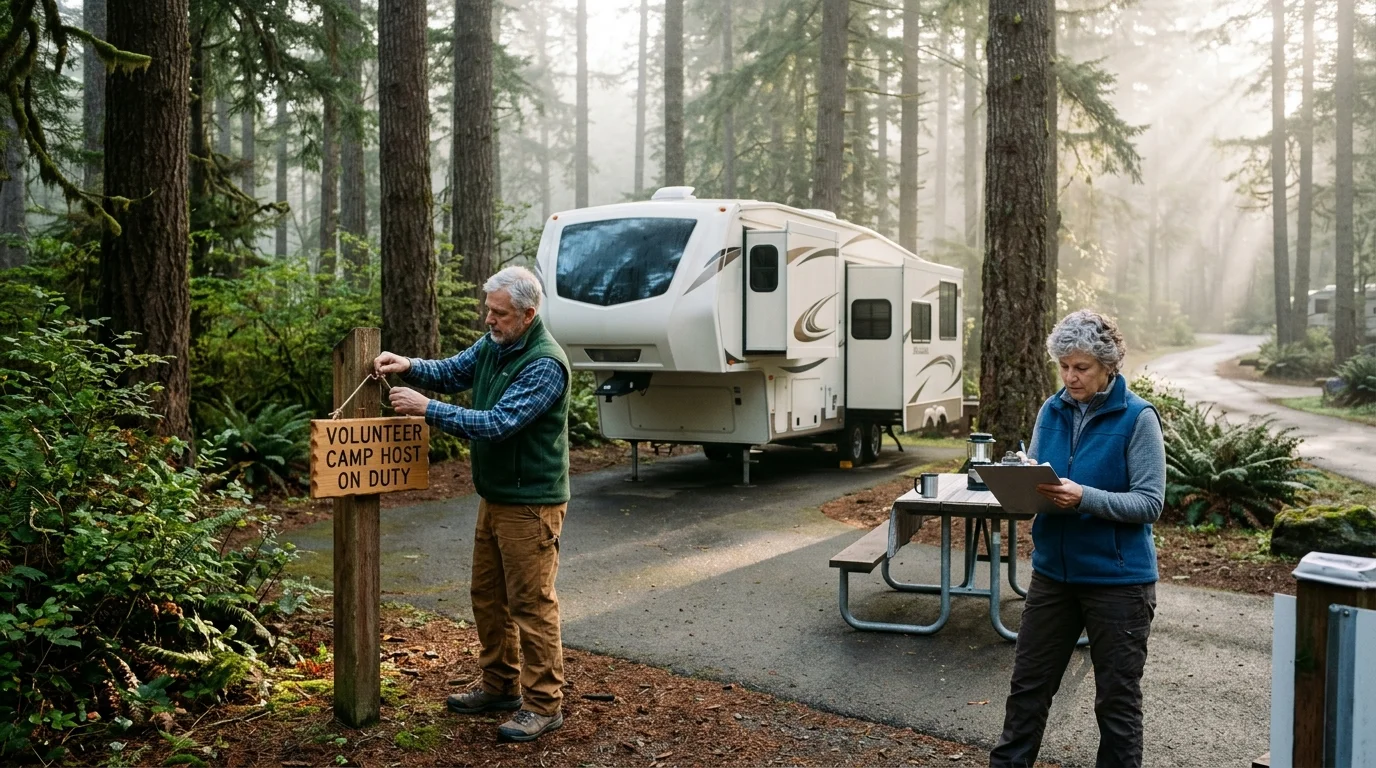
Trading a corporate desk for an RV campsite replaces boardroom spreadsheets with facility logistics. As a retired operations manager, you can turn a volunteer campground host experience into a zero-cost lifestyle across public lands.
Most online guides romanticize hosting as endless campfires, yet the reality is a precise operational trade-off. By exchanging twenty weekly labor hours for full utility hookups, you secure an effective tax-free lodging return exceeding twenty-five dollars per hour.
Mastering physical maintenance routines and state park interview rubrics unlocks prime coastal placements while eliminating thousands in annual RV living overhead.
The Financial Equation: Hookup Value vs. Labor Hours
Full-hookup campsites represent substantial real estate value in high-demand recreational corridors. Commercial campgrounds in coastal or mountain destinations routinely charge premium rates for water, sewer, and 50-amp power connections.
Living out of an RV also aligns perfectly with embracing minimalism in retirement, as paring down possessions dramatically cuts ongoing lifestyle expenses.
Strategic retirement travel planning allows budget-conscious adventurers to spend months exploring scenic regions without accumulating steep campsite fees.
When public agencies provide a campsite, they do not issue a paycheck. Instead, they provide non-cash lodging in exchange for specified volunteer coverage.
Consider a ninety-day summer assignment running from June 1 through August 29 at Fort Stevens State Park on the northern Oregon coast. A comparable private commercial RV resort nearby charges $1,100 per month for a full-hookup site.
Over three months, your lodging benefit equals $3,300 in base rent. Adding estimated metered electrical usage of $180 and utility fees of $60 brings total fair market value to $3,540.
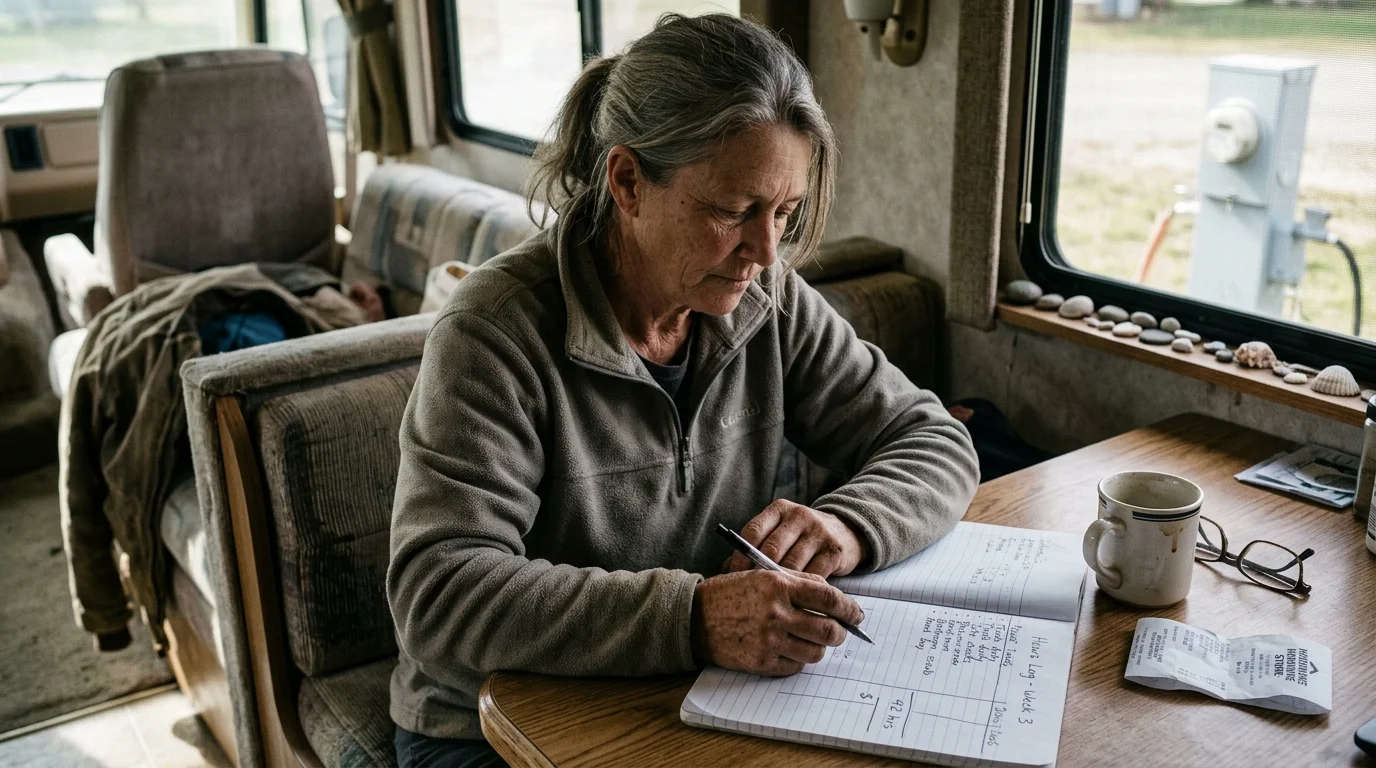
Your volunteer agreement requires twenty hours of service per week over thirteen weeks, amounting to 260 total operational hours. Dividing the $3,540 market value by 260 hours yields a net lodging return of $13.62 per hour.
The financial benefit expands significantly when evaluated through federal tax law. Under Internal Revenue Code Section 119, lodging furnished on business premises for employer convenience is excluded from gross income.
Because the agency requires your physical presence on-site for park safety, the perk remains entirely non-taxable. In contrast, earning that same benefit as cash requires accounting for income tax brackets.
A retiree in the 22% federal bracket and an 8.75% Oregon state income tax bracket pays a marginal tax rate of 30.75%. To clear $3,540 after taxes, you would need to earn $5,112 in gross employment income.
Dividing that gross amount of $5,112 by your 260 required volunteer hours produces an effective pre-tax compensation equivalent of $19.66 per hour. In peak private resort areas where rents reach $1,400 monthly, that return surpasses $25.00 per hour.
This calculated return makes hosting an efficient financial strategy for fixed-income travel. You eliminate your largest travel expense while protecting your tax-advantaged retirement accounts.
The Physical Job Description: Fire Rings, Bathrooms, and Rounds
Operational reality at state campgrounds diverges sharply from recreational camping. Managing sixty to one hundred occupied campsites requires manual labor, precise sanitation standards, and sustained daily stamina.
The hands-on technical upkeep shares common ground with operating a trawler on a monthly budget, where proactive maintenance prevents costly breakdowns.
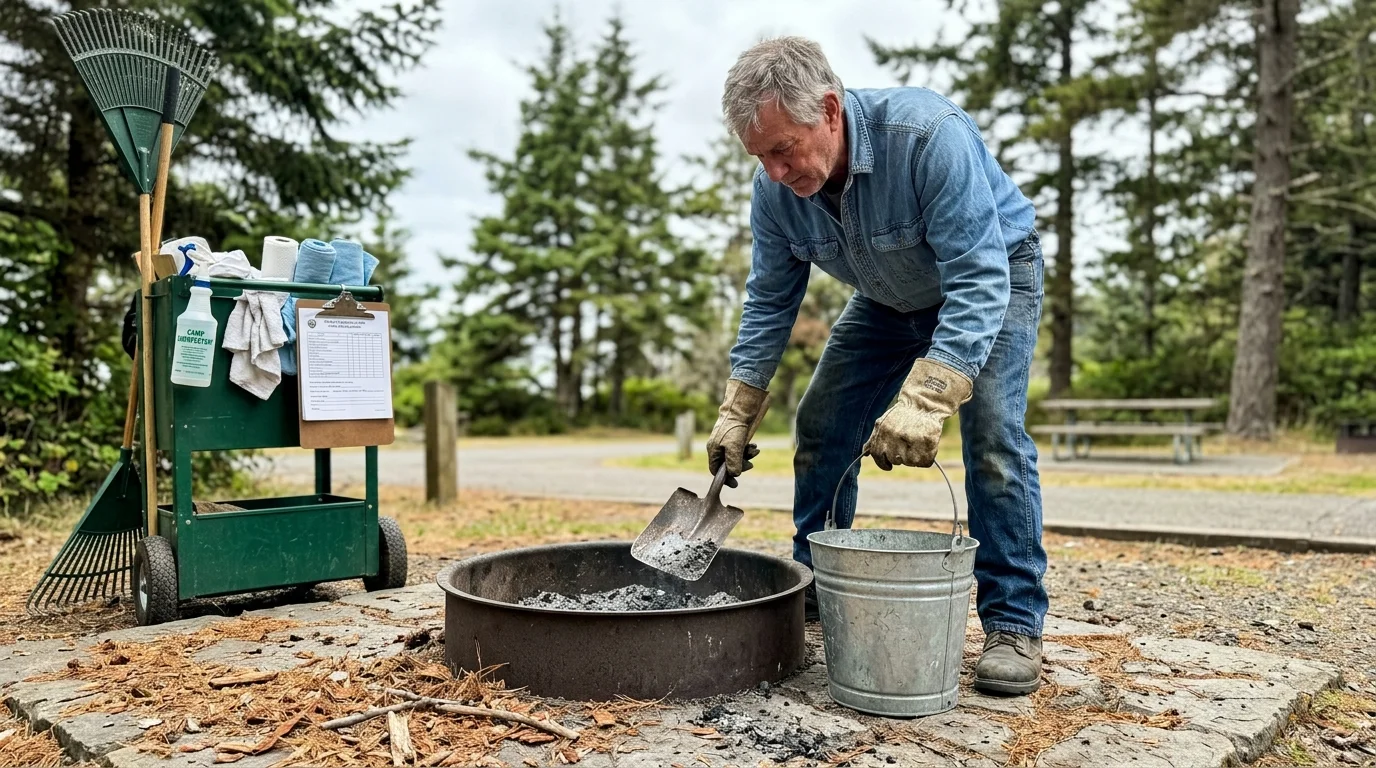
Cleaning campfire rings stands out as the most demanding daily duty. You must shovel out unburned firewood, wet charcoal, and hazardous foreign debris left behind by departing campers.
Using a Fiskars 46-inch steel square point shovel alongside a five-gallon metal ash bucket prevents back strain. Ash pits must cool completely before transport, requiring thorough dousing with water.
Restroom maintenance represents another essential requirement during busy park rotations. Full-time park utility rangers handle heavy chemical pressure washing, but hosts execute mandatory touch-up sweeps twice daily.
A standard touch-up sweep requires restocking commercial jumbo toilet paper dispensers, wiping down counters, and removing surface cobwebs. Hosts use EPA-registered hospital-grade disinfectant sprays and microfiber mops to maintain public sanitation benchmarks.
Litter management requires constant vigilance along campsite perimeters and trailheads. Using an Unger 36-inch Nifty Nabber trash tool allows you to clear debris without repetitive bending.
Visitor interactions also consume significant physical and emotional energy. You will answer repetitive questions regarding local firewood regulations, trail access, and wildlife encounters while making perimeter rounds.
Public agencies provide dedicated high-visibility golf carts or utility terrain vehicles for service tasks. Operating these vehicles requires adherence to state fleet safety rules, seatbelt compliance, and defensive driving awareness.
Maintaining clear boundaries preserves your physical well-being throughout the season. When your off-duty sign is posted, you must step back and allow assigned shift hosts to manage incoming inquiries.
Operational Time Audits: A Week in Oregon State Parks
A successful state park camp host retirement depends on rigorous daily time allocation. Approaching tasks with structured operational discipline prevents minor chores from expanding into all-day burdens.
Much like tapping into the gig economy for seniors, campground hosting offers total autonomy over when and where you decide to trade your hours.
Sequencing seasonal hosting contracts across different states is one of the most cost-effective ways to orchestrate the ultimate US road trip in retirement.
Volunteer hosts in Oregon typically commit to twenty hours of formal duties per week per individual. Couples often split shifts to ensure seven-day coverage across peak weekend turnover windows.
The following numbered sequence outlines the daily morning maintenance workflow implemented across forty-campsite loops during peak summer operations:
- Conduct a 7:30 AM motorized cart patrol to audit site departures, identifying vacant pads that require cleaning.
- Clear ashes, broken glass, and leftover debris from every vacated campsite fire ring using dedicated metal safety pails.
- Perform the morning restroom touch-up sweep, restocking paper supplies, sanitizing stainless steel sinks, and sweeping concrete entryways.
- Update site occupancy posts at campground registration kiosks to direct newly arriving visitors toward their reserved pads.
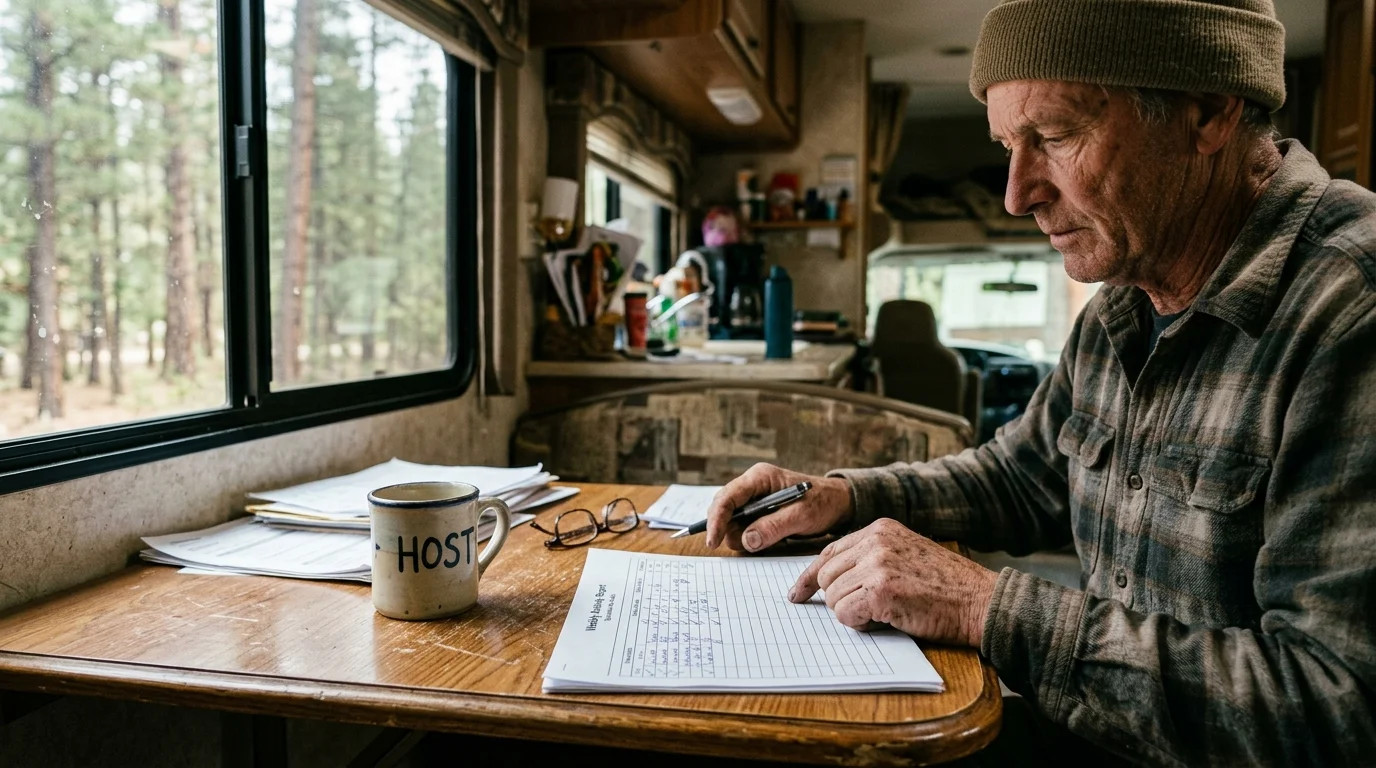
- Log completed tasks and structural facility maintenance requests on the park maintenance whiteboard by 10:30 AM.
Midday periods offer substantial personal downtime between scheduled check-out and check-in times. Departing visitors leave by 1:00 PM, while incoming travelers begin arriving at 4:00 PM.
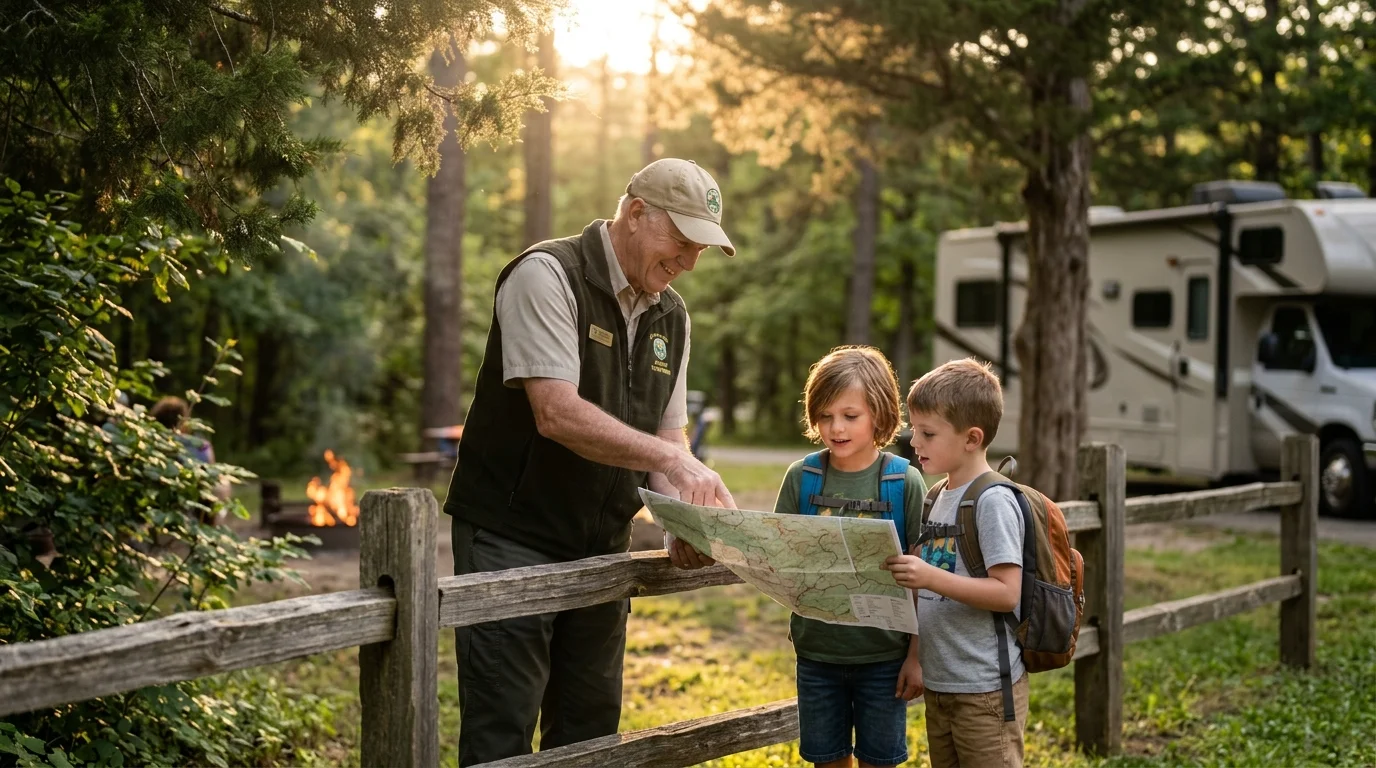
Afternoon shifts center on visitor orientation and registration compliance. Hosts verify reservation printouts, distribute regional park trail maps, and explain quiet-hour rules to arriving families.
Evening rounds run from 7:00 PM until 9:00 PM, focusing on firewood sales and gate security. Selling state-approved kiln-dried firewood provides steady park revenue while discouraging the transport of invasive pests.
When night settles, your presence alone acts as an effective deterrent against noise infractions. You do not enforce park regulations directly; instead, you notify regional park rangers or law enforcement if disputes arise.
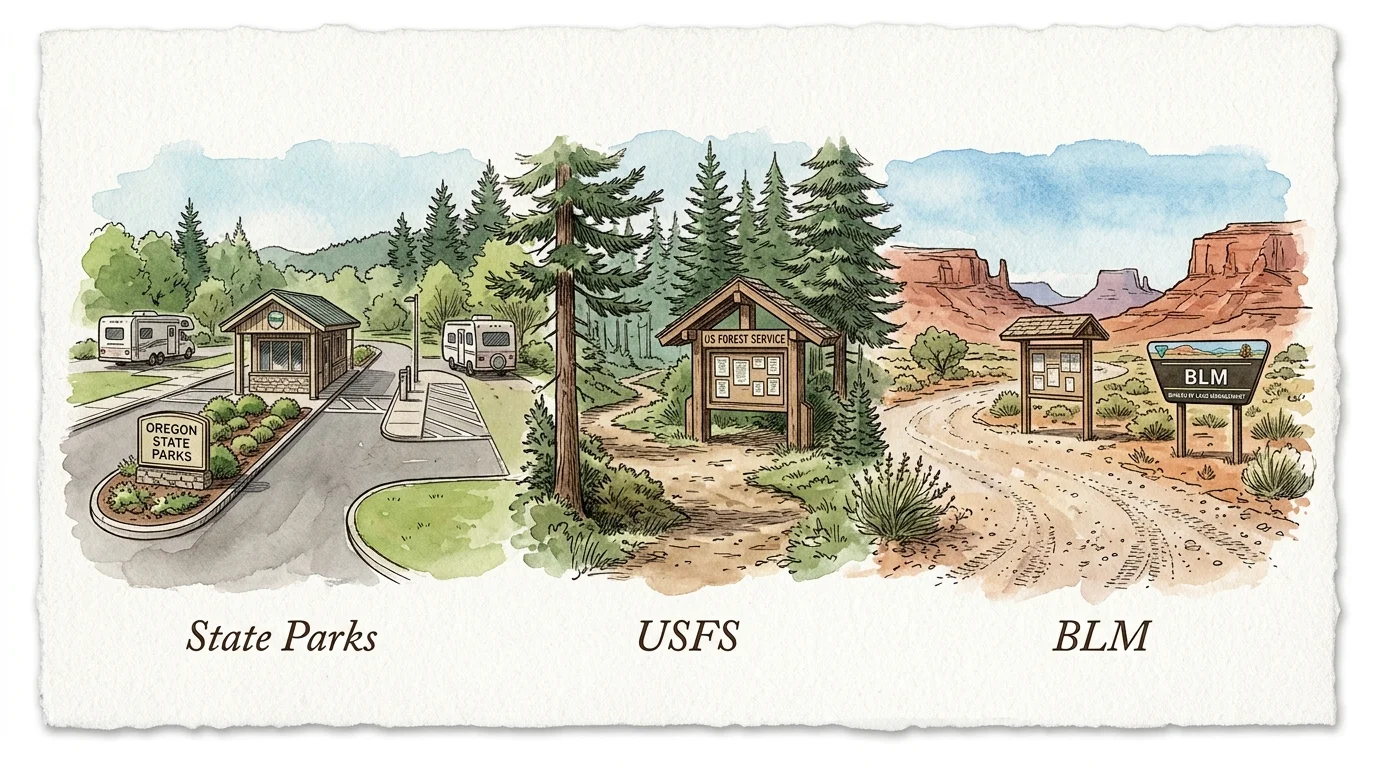
Agency Requirements Across State and Federal Systems
Different land management agencies establish varying requirements for volunteer host placements. Knowing these specific regulatory guidelines helps you select positions aligned with your schedule and physical comfort.
For hosts who combine volunteering with part-time consulting, choosing campgrounds with dependable connectivity makes balancing duties with remote work opportunities for retirees completely feasible.
Federal agencies post openings through centralized recruitment portals, whereas state agencies manage independent volunteer systems. Evaluating weekly duty commitments and maximum residency periods allows you to map your seasonal transitions effectively.
The table below provides a detailed operational comparison of key host systems across federal and state public land departments:
| Agency / Program | Required Weekly Hours | Maximum Stay Limit | Typical Hookup Specifications | Application Clearinghouse |
|---|---|---|---|---|
| Oregon Parks and Recreation (OPRD) | 20 hours per host | 90 days per park | Full hookups (50-amp, water, sewer) | Oregon State Parks Volunteer Portal |
| California State Parks (DPR) | 20 to 25 hours per host | 120 days per park | Full hookups (30/50-amp, water, sewer) | California Parks Cal-Careers Portal |
| U.S. Forest Service (USFS) | 24 to 32 hours per site | 180 days (seasonal) | Partial to full hookups (varies widely) | Volunteer.gov Federal Portal |
| National Park Service (NPS) | 24 to 32 hours per site | 120 to 180 days | Full hookups or designated administrative pads | Volunteer.gov Federal Portal |
| Tennessee State Parks | 20 hours per host | 90 days per park | Full hookups (30-amp, water, sewer) | Tennessee State Parks Volunteer Office |
Agency maximum stay rules prevent volunteers from establishing permanent legal residency on public land. These policies guarantee equitable access for other retiring hosts wanting to experience premium geographical locations.
Federal positions located within U.S. Forest Service wilderness settings frequently provide fewer infrastructure amenities. Some remote postings offer only solar battery charging pads and weekly utility tank pumping service.
In contrast, established coastal and lakefront state parks provide complete modern utility infrastructure. These high-resource posts offer free rv parking host assignments with dependable power, municipal water, and dedicated high-speed Wi-Fi.
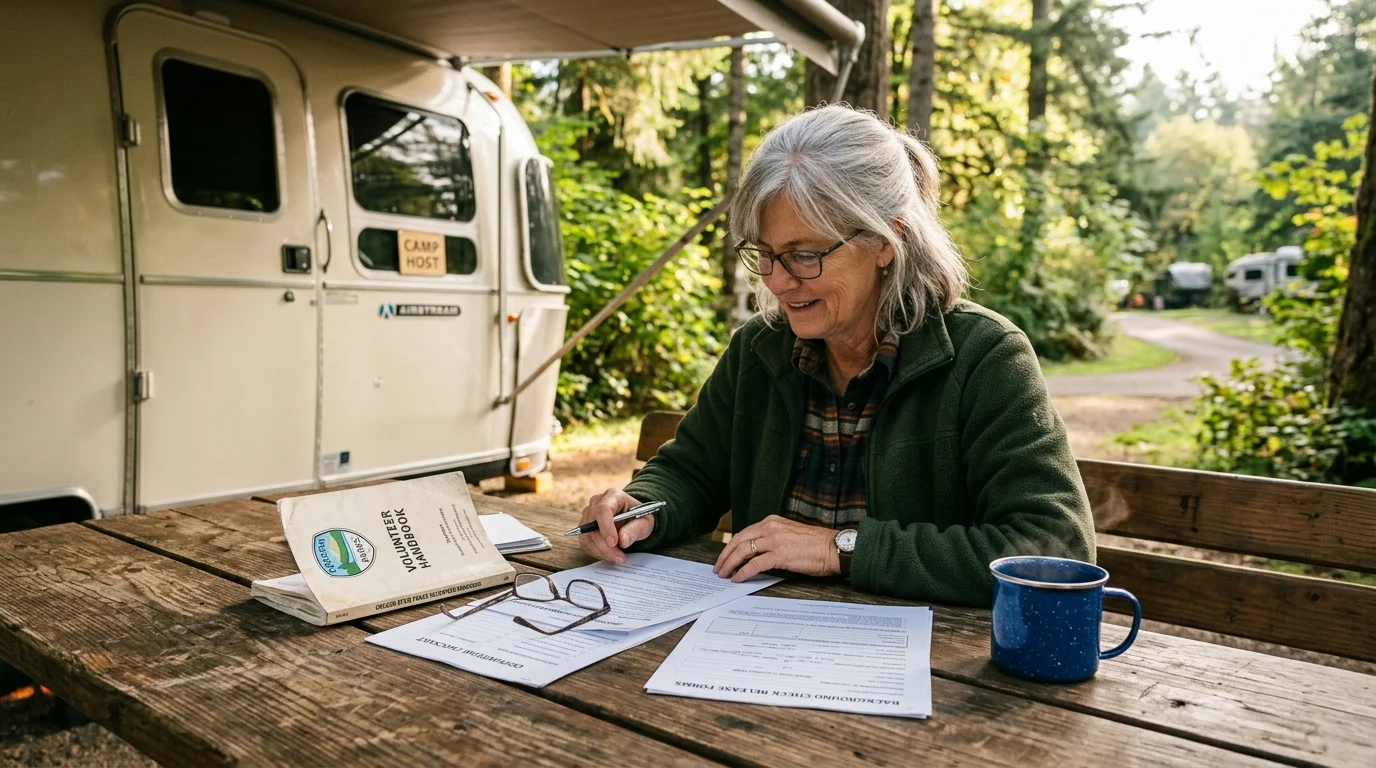
Navigating the Selection Interview and Background Vetting
Securing prime volunteer campground host assignments requires a formal application process. Public agencies handle hundreds of seasonal applications for popular mountain and coastal parks.
Treating the application like a professional retirement reboot ensures you present transferable management and communication skills effectively to hiring rangers.
Just as with finding fulfilling part-time work in retirement, succeeding in host interviews comes down to demonstrating your dependability and positive interpersonal skills.
Park managers prioritize reliability, operational capability, and emotional maturity. Your past career experience in project tracking, team management, or customer communication provides a distinct competitive advantage.
Every public agency requires formal vetting before confirming your seasonal assignment. Prospective hosts must pass a comprehensive criminal history background check to protect visitor safety.
Operating state-owned maintenance vehicles requires a Department of Motor Vehicles driving record check. You must present a valid driver license with a clean recent driving history free of major moving violations.
Park ranger staff conduct structured phone or video interviews to evaluate your qualifications. You should expect precise behavioral questions regarding your ability to manage operational stress and challenging visitor interactions.
Preparation is essential for scoring well during the administrative interview. The following five topics dominate ranger interview evaluations across state park systems:
- Techniques for de-escalating conflicts regarding campground quiet-hour violations or off-leash pets.
- Demonstrated experience operating power equipment, utility carts, and commercial sanitation tools.
- Your RV dimensions, electrical service requirements, and mechanical self-containment capabilities.
- Comfort working independently during inclement coastal rain, high wind, or summer heat waves.
- Commitment to completing the full thirty-to-ninety-day placement without abandoning the post early.
When interviewers ask about conflict resolution, emphasize verbal de-escalation and protocol compliance. Explain that you record observational facts calmly and escalate security violations directly to sworn law enforcement officers.
Treat this volunteer interview with the same professionalism you brought to executive boardroom presentations. Demonstrating clear communication and respect for agency guidelines guarantees your application rises to the top of the selection pile.
Preparing Your Rig and Equipment for Extended Hosting
Agencies require volunteer hosts to provide their own self-contained recreational vehicle. Tents, soft-sided pop-up campers, and incomplete camper conversions rarely meet state park host housing standards.
Self-contained means your RV features built-in internal plumbing, permanent holding tanks, and functional cooking facilities. Your rig serves as your private sanctuary, office base, and resting quarters for months at a time.
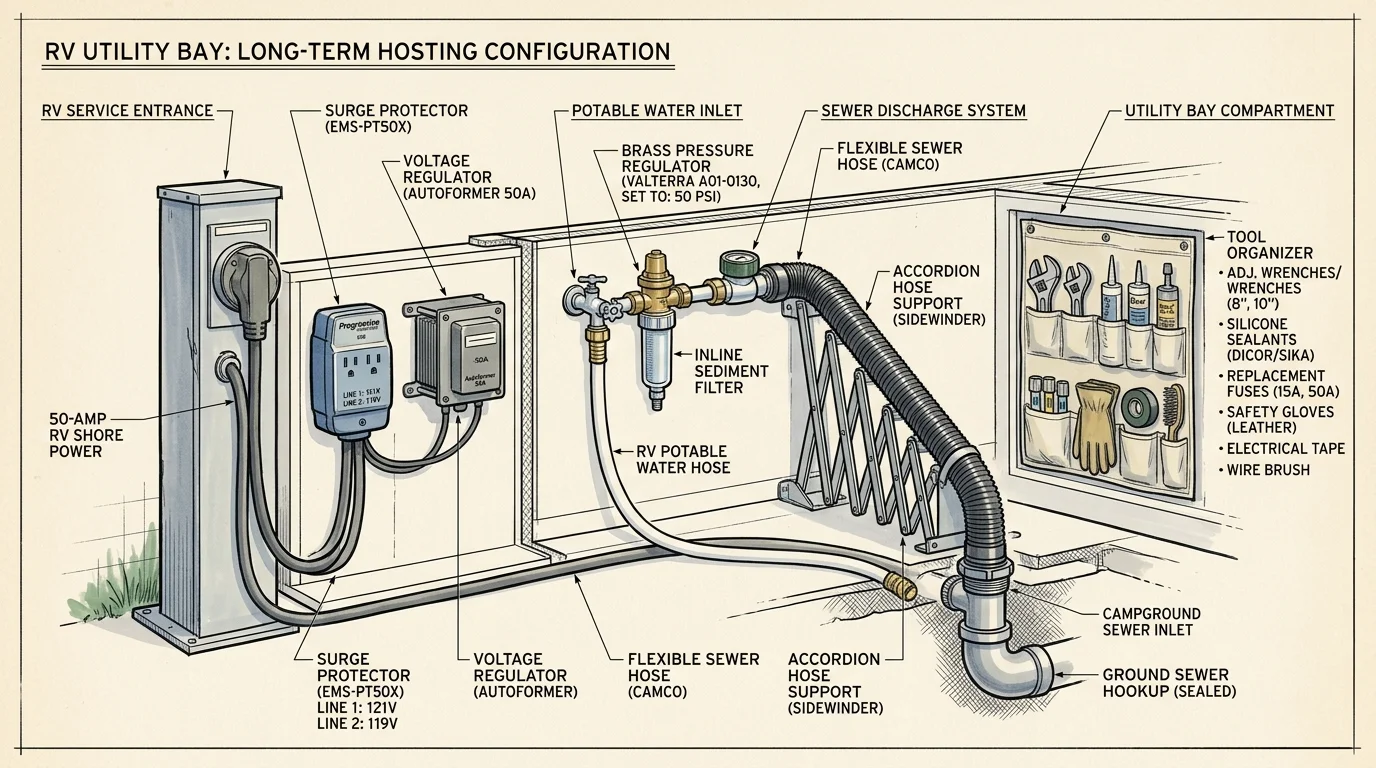
Coastal and forest environments subject your equipment to intense environmental exposure. Installing dependable electrical and plumbing protection safeguards your vehicle from infrastructure inconsistencies.
The following equipment checklist identifies field-tested items necessary for sustaining uninterrupted volunteer hosting assignments:
- Progressive Industries EMS-PT50X electrical surge management system to protect delicate RV electronics from voltage fluctuations.
- Camco RhinoFLEX 20-foot sewer hose kit with transparent elbow fittings for secure utility hookup connections.
- Heavy-duty brass water pressure regulator set to fifty pounds per square inch to prevent line blowouts.
- Zero-G 50-foot drinking-water-safe flexible hose paired with an external 0.5-micron sediment water filter.
- Two-way portable radios for instant communication between host partners during campground loops.
- Durable exterior walk-off mats and a covered outdoor storage locker for tools and clean uniforms.
Clean electrical power remains vital when plugged into park utility pedestals. Public campground pedestals face continuous wear, making high-end surge management units mandatory insurance against utility spikes.
Maintaining a clean, well-organized host campsite sets an immediate standard for the entire campground. Campers notice your tidy utility connections, clear living pad, and organized gear, reinforcing park care guidelines.
Finding Purpose and Community in Public Service
Retirement represents an opportunity for reinvention rather than disengagement from meaningful work. Transitioning from corporate oversight to environmental stewardship provides genuine structural purpose.
Organizations like Encore.org demonstrate how seasoned professionals successfully channel decades of operational problem-solving into public service. Campground hosting offers a practical avenue to apply managerial coordination toward community resources.
Staying intellectually stimulated through service enhances everyday vitality. Research from the Stanford Center on Longevity highlights how purposeful physical activity and social connection directly support healthy, vibrant cognitive aging.
Hosting brings you into contact with diverse individuals united by a shared appreciation for natural spaces. You guide young families building memories, assist international travelers, and collaborate with passionate natural resource specialists.
For individuals seeking broad civic involvement beyond municipal park limits, VolunteerMatch offers additional avenues to apply organizational talents within community networks. Blending diverse volunteer commitments deepens your geographic connections wherever your rig travels.
Managing public lands builds profound satisfaction that exceeds ordinary tourist sightseeing. You leave every state park cleaner, safer, and more welcoming than you found it.
Viewing campground hosting as an active operational partnership unlocks an energizing retirement lifestyle. With thoughtful financial evaluation, physical preparation, and clear boundaries, your RV becomes a ticket to adventurous civic service.
Frequently Asked Questions
Do campground hosts receive an hourly wage or cash stipend?
Public state and federal host positions are unpaid volunteer roles that exchange lodging for service. Concessionaires in commercial campgrounds may offer hourly wages, which represent taxable income reported on Form W-2.
Can couples divide the weekly required hours between two people?
Most agencies permit couples to combine or split their weekly hour requirements. In parks requiring twenty weekly hours, each partner typically contributes ten to twelve hours toward group maintenance shifts.
How far in advance should you submit host applications?
Apply six to nine months ahead of your targeted service season for prime summer destinations. Peak coastal and mountain state park openings often finalize host assignments by mid-winter.
What happens if a camper refuses to follow quiet hours?
Hosts inform campers of posted regulations calmly without engaging in confrontational arguments. If visitors refuse compliance, hosts report the incident to on-duty park rangers or local county sheriff deputies.
Disclaimer: This article is for informational and inspirational purposes. Life decisions are deeply personal, and we encourage readers to pursue their dreams while considering their unique circumstances, health, and financial situation.




1 Comment