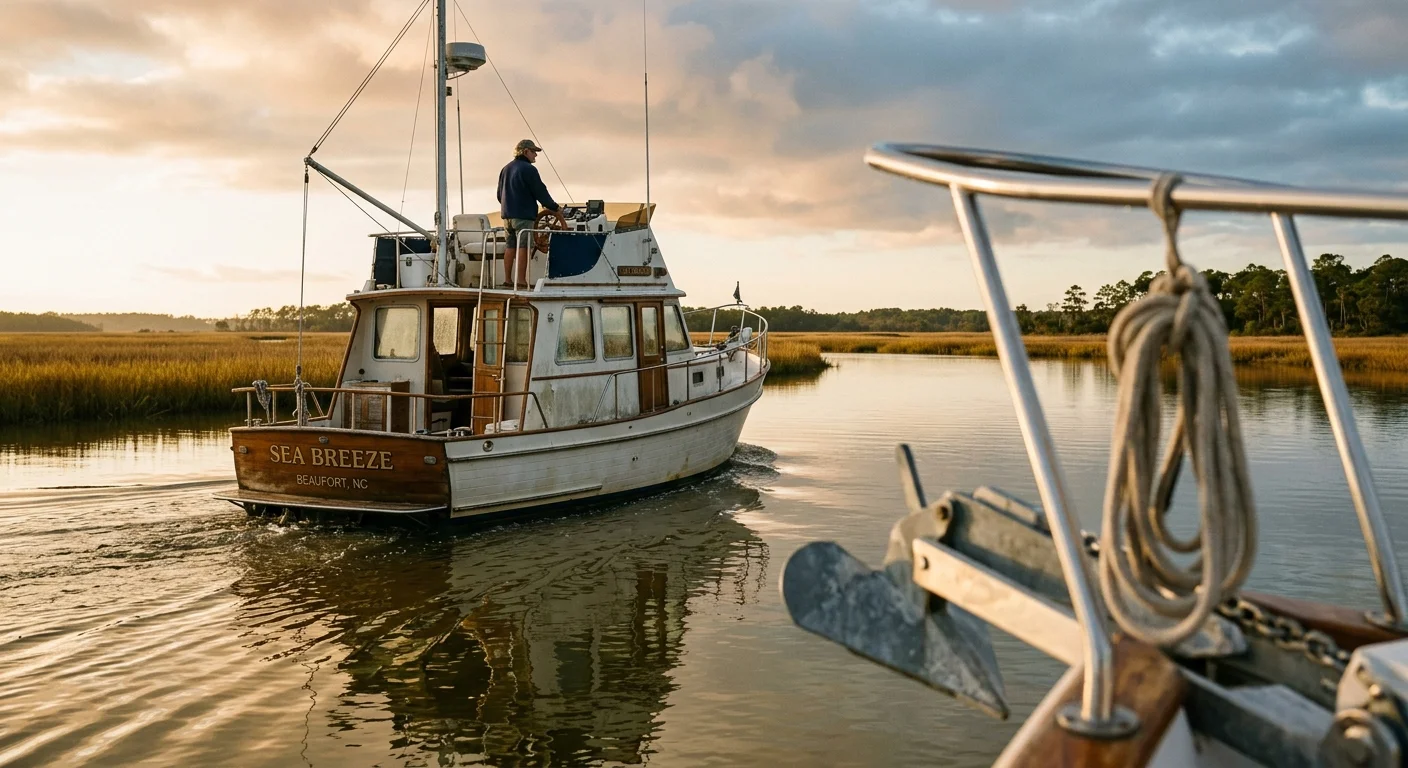
You can cast off solo along the Atlantic Intracoastal Waterway without exhausting your retirement savings. Operating a dependable 34-foot trawler on a strict $2,200 monthly operating budget provides complete financial freedom on the water.
Applying resourceful retirement travel hacks allows adventurous seniors to embark on long voyages without overspending.
Unlike generic cruising guides that assume nightly marina stays, this blueprint proves a 75 percent anchoring strategy keeps coastal voyaging affordable. You gain an extraordinary lifestyle while managing remote bookkeeping tasks directly from your salon.
At 68, trading a traditional desk for coastal anchorages delivers purposeful adventure on your own terms. Your vibrant second act begins right here at the helm.
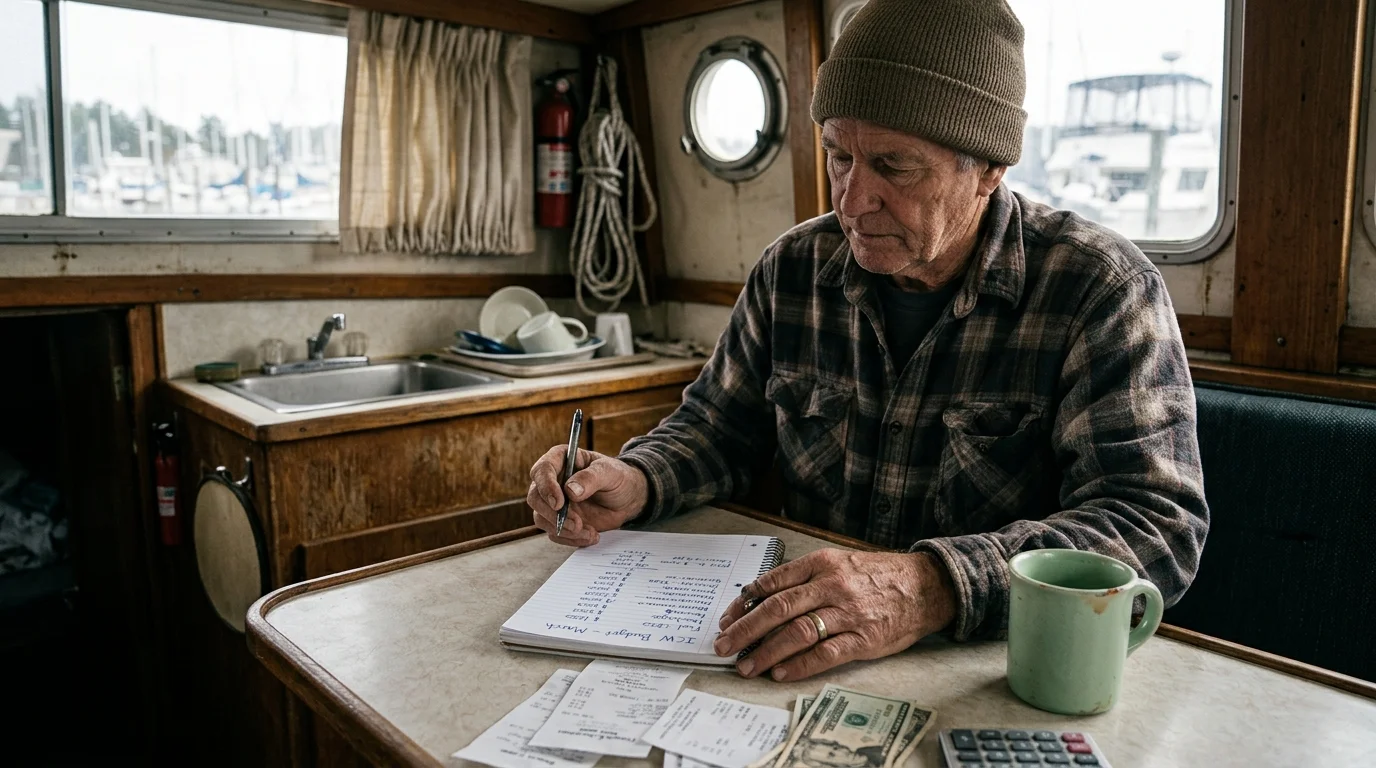
The $2,200 Monthly Operating Budget Breakdown
Sustaining a life afloat does not require an immense nest egg. A disciplined spending plan lets you cruise comfortably on a predictable living on a boat retirement budget.
Transitioning to life aboard a boat becomes much easier when embracing minimalism in retirement to shed clutter and focus on experiences.
Similar to retirees who lower expenses through full-time RV living, cruising aboard a trawler replaces high residential housing costs with manageable, predictable travel expenses.
Your expenses split into predictable vessel maintenance, fuel, communications, groceries, and variable overnight dockage. Eliminating transient marina slips represents your single largest opportunity for monthly savings.
Consider a realistic 30-day cruising run covering 350 nautical miles along the Atlantic Intracoastal Waterway. The table below compares three distinct cruising styles for a 34-foot trawler.
| Expense Category | Marina-Centric (100% Slips) | Balanced Plan (75% Anchor / 25% Mooring) | Full Ground Tackle (100% Anchor) |
|---|---|---|---|
| Dockage & Mooring Fees | $2,550 | $410 | $0 |
| Propulsion Diesel (350 NM) | $415 | $415 | $415 |
| Routine Maintenance Reserve | $400 | $400 | $400 |
| Hull Insurance & Towing | $165 | $165 | $165 |
| Data & Remote Communications | $160 | $160 | $160 |
| Galley Provisions & Household | $650 | $650 | $550 |
| Total Monthly Outlay | $4,340 | $2,200 | $1,690 |
The balanced approach hits the $2,200 monthly target with precision. You drop anchor in quiet creeks three weeks each month and utilize organized mooring fields for shore access.
This distribution delivers dependable security while keeping fixed costs firmly under control. You maintain complete financial independence without sacrificing comfort or safety.
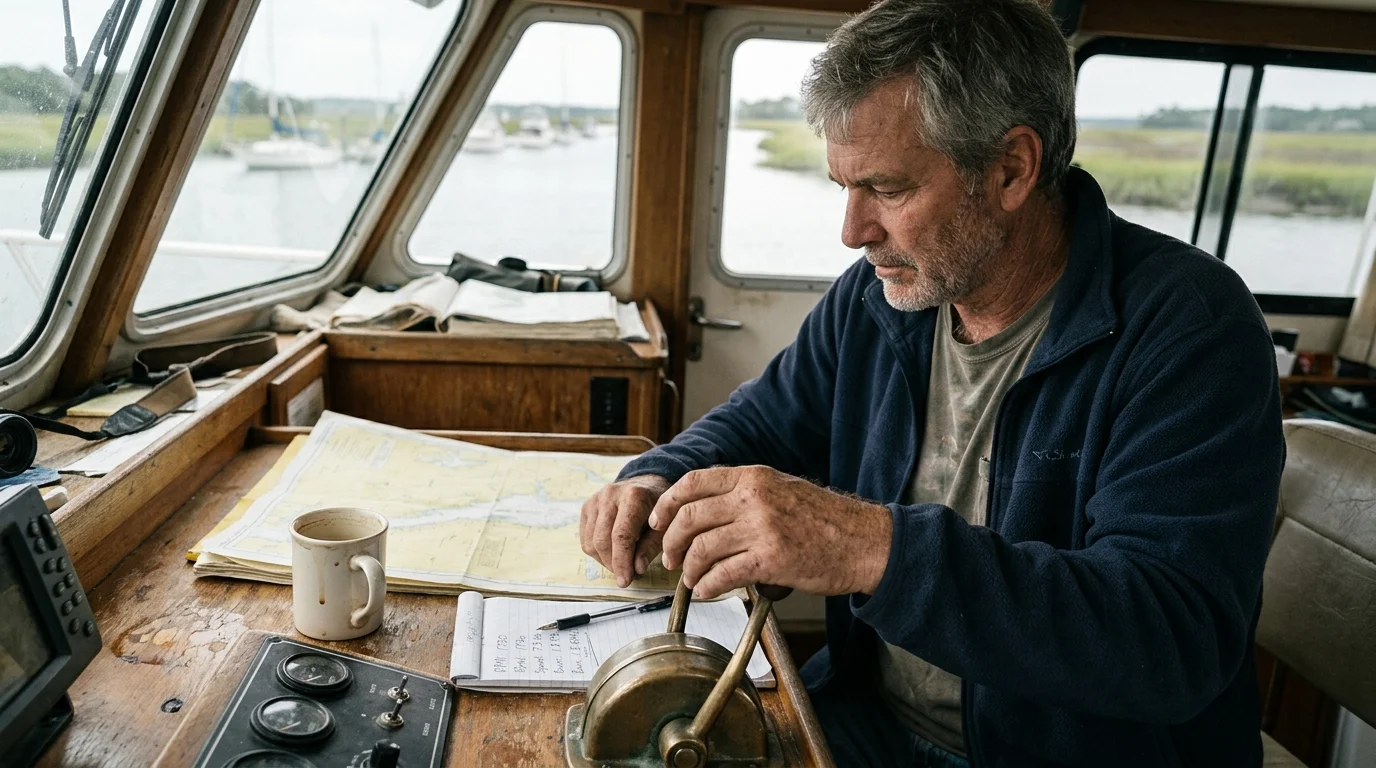
Fuel Economics and Engine Performance on the ICW
Fuel consumption dictates daily cruising decisions aboard a displacement trawler. A classic 34-foot trawler powered by a single 120-horsepower diesel engine delivers remarkable operating efficiency.
Thorough retirement travel planning helps you balance cruising speeds, fuel stops, and weather windows along the waterway.
Operating a Ford Lehman 120 or Perkins 6.354 diesel at 1,650 RPM yields a steady cruising speed of 7.0 knots. At this speed, the engine consumes exactly 1.8 gallons per hour.
That fuel rate achieves roughly 3.9 nautical miles per gallon in calm water. Pushing your throttle to 8.5 knots nearly doubles consumption without meaningful progress.
Cruising 350 nautical miles each month requires approximately 50 engine operating hours. At 1.8 gallons per hour, your engine burns 90 gallons of marine diesel.
Marine diesel along the Atlantic Intracoastal Waterway averages $4.60 per gallon at commercial fuel docks. That brings your monthly fuel expenditure to precisely $414.
- Throttle back by 200 RPM below maximum cruise speed to gain up to 25 percent greater fuel range.
- Purchase fuel at commercial fishing hubs rather than luxury resorts to save up to fifty cents per gallon.
- Record fuel burn, engine RPM, and GPS speed daily in a paper log to detect developing mechanical drag.
- Treat every tank with biocide and cetane boosters to prevent microbial growth in warm coastal waters.
Slowing your pace protects your machinery and preserves cash. Hull speed turns your passage into an unhurried exploration rather than a stressful sprint.
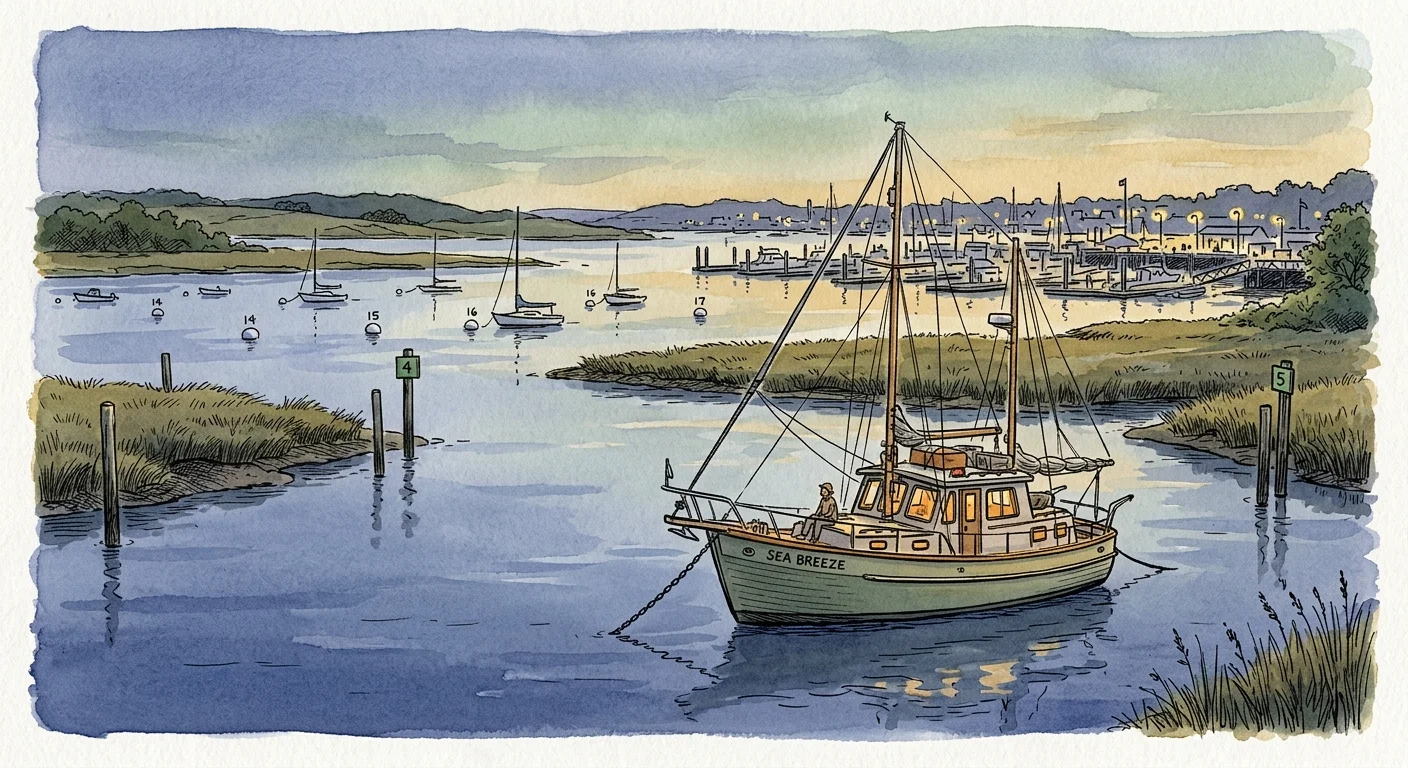
Strategic Dockage: Anchoring Out Versus Managed Mooring Fields
Transient slips along the waterway charge between $2.00 and $4.00 per foot each night. A 34-foot boat incurs dockage fees of $68 to $136 nightly, plus utility charges.
Relying on protected anchorages proves that you can travel the world on a budget while still enjoying stunning waterfront views every evening.
Much like the nomadic lifestyle of continuous cruising on UK canals, maintaining a low overhead along the ICW hinges on choosing free anchorages over costly slips.
Staying tied to a dock every night quickly exhausts your monthly cruising capital. Dropping your anchor 22 to 24 nights each month preserves your wallet entirely.
Managed municipal mooring fields offer an affordable alternative when you need shore access. These municipal harbors provide robust ground tackle, dinghy landings, fresh water, and hot showers.
At Vero Beach Municipal Marina at Mile Marker 952, moorings cost $23.36 daily or $420.56 per month. St. Augustine Municipal Marina offers moorings in Salt Run for $20.00 daily.
Free anchorages sit outside the federal navigation channel along the entire waterway. Historic coastal towns like Oriental and Beaufort, North Carolina, maintain complimentary dinghy docks near grocery markets.
- Deploy a modern 44-pound scoop anchor matched to 150 feet of high-tensile 5/16-inch galvanized chain.
- Rig a 30-foot three-strand nylon snubber bridle with a chain hook to absorb wind shock loads.
- Set your anchor with reverse engine power at 1,500 RPM to confirm deep seabed penetration.
- Monitor your swing circle using dual GPS anchor alarms on your chartplotter and tablet.
Take time to research local municipal regulations before setting your hook in urban basins. Florida Statute 327.4108 establishes Anchoring Limitation Areas that restrict stays to 45 consecutive days.
Complying with local statutes keeps your voyage stress-free. Free anchorages grant you tranquil sunsets and dark skies that resort marinas simply cannot duplicate.
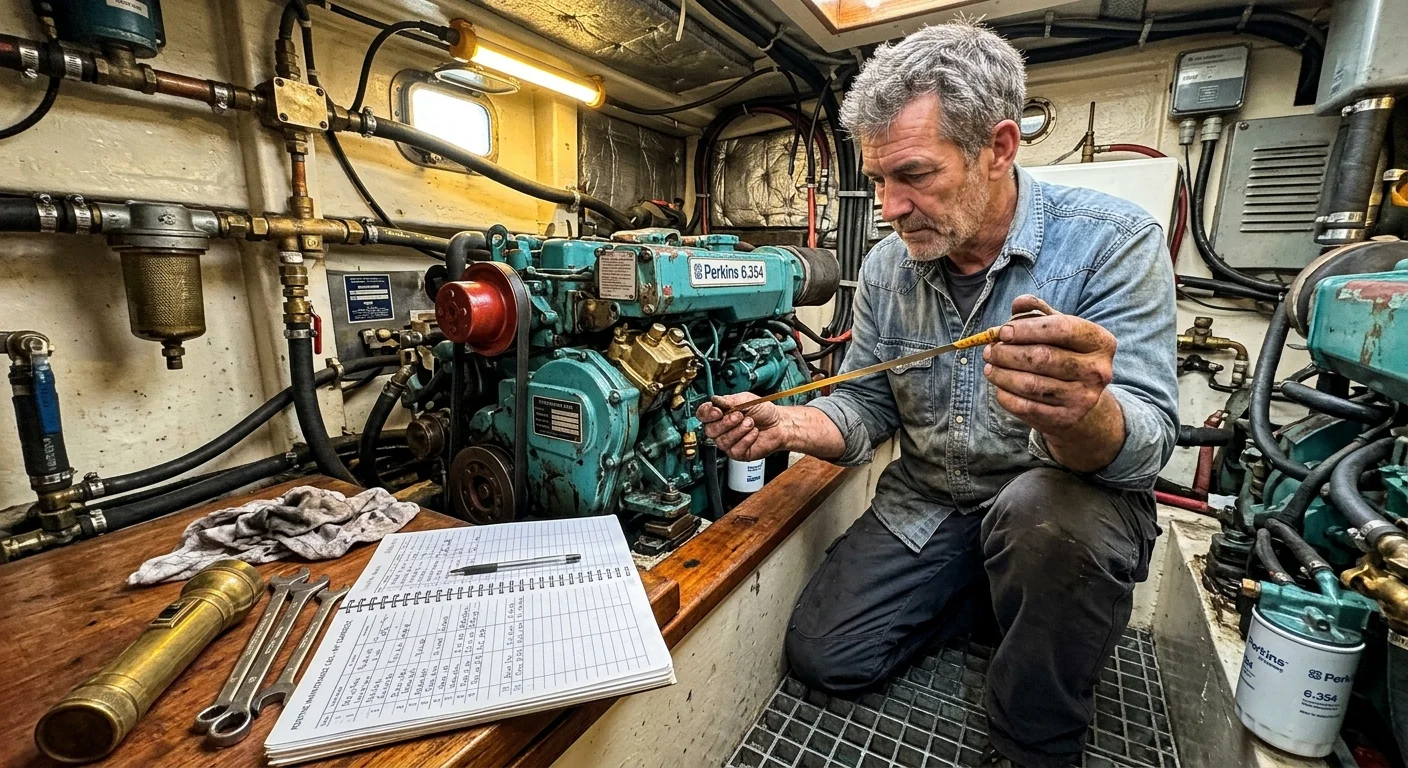
Engine Room Discipline: DIY Maintenance Logs for the Solo Skipper
Solo voyaging requires self-reliance and complete familiarity with your vessel systems. You must inspect your machinery daily before casting off lines or raising your anchor.
Just like mastering DIY home repair skills, learning to service your boat’s mechanical systems saves thousands of dollars while boosting self-reliance.
A solo great loop trawler relies on consistent preventative care rather than reactive emergency repairs. Proactive care prevents minor issues from escalating into dangerous offshore breakdowns.
Change your diesel engine lubricating oil and filter every 100 to 150 operating hours. Purchasing 15W-40 heavy-duty engine oil in five-gallon pails keeps fluid costs under $55 per service.
Dual Racor 500FG fuel filter assemblies allow you to isolate and swap filter elements underway. Running a 30-micron primary filter and a 2-micron secondary filter safeguards your mechanical injection pump.
Inspect your raw water cooling pump impeller every 200 hours of operation. Keep two pre-lubricated spare impellers, extra gaskets, and a dedicated puller tool in your onboard inventory.
- Pull the engine dipstick to verify oil level and confirm the absence of water contamination.
- Inspect the coolant expansion reservoir and check all cooling hoses for dry rot or weeping.
- Examine the primary fuel filter bowl for particulate matter or signs of free water.
- Inspect the raw water strainer basket, remove trapped eelgrass, and verify the seacock opens freely.
- Check the stuffing box packing gland for adequate water drip while the propeller shaft rotates.
- Test automatic electric bilge pumps manually using the float switch before departing each morning.
Log every maintenance action with the date, engine hours, and part numbers in a dedicated ledger. A meticulous mechanical log protects your vessel value and provides immediate operational troubleshooting clarity.
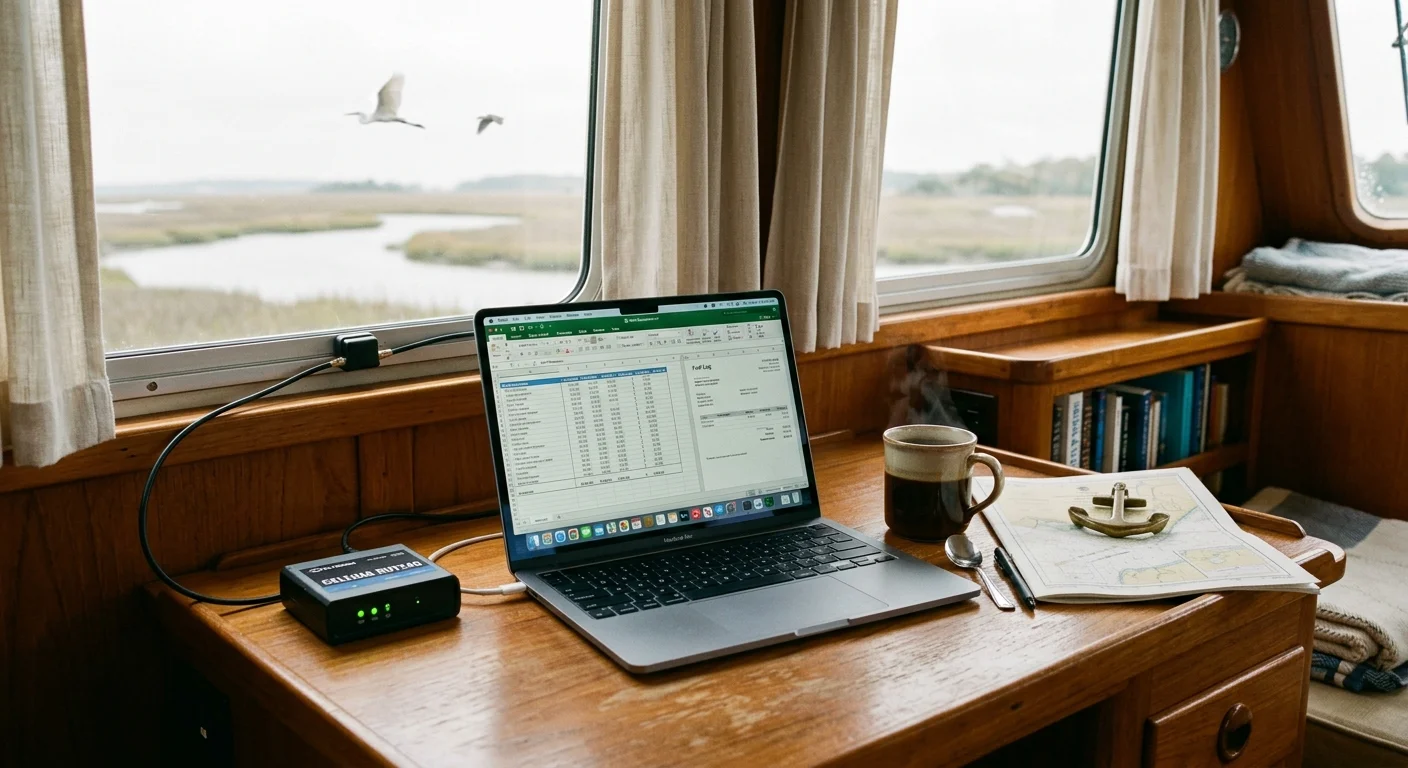
Connectivity Setup: Cellular Boosters and Remote Bookkeeping Workflows
Balancing remote accounting with coastal navigation delivers immense personal satisfaction. Managing client ledgers from your salon table keeps your technical skills active and covers cruising expenses.
Managing clients afloat follows the same principles of starting a small business to generate steady income in your second act.
Remote bookkeeping demands reliable internet access across tidal creeks and remote sounds. Building a dual-carrier cellular router setup ensures uninterrupted connections for video meetings and client reconciliations.
Mount a directional or omnidirectional cellular antenna on your radar arch or spreader. Connect high-grade coaxial cable to an onboard Peplink cellular router loaded with dual SIM cards.
Pairing this cellular booster with a Starlink Roam system provides seamless broadband coverage along unsettled coastlines. Converting your satellite terminal to direct 12-volt DC power prevents unnecessary inverter battery consumption.
Four 100-watt monocrystalline solar panels linked to an MPPT charge controller supply dependable energy. This system charges a 400-amp-hour lithium house battery bank, keeping your remote office completely self-sustaining.
Organizations like SCORE Mentoring offer proven frameworks for retirees launching flexible consulting practices. You dictate your client roster and work during quiet mornings at anchor.
- Workstation laptop drawing under 45 watts through direct USB-C power delivery connections.
- Secondary lightweight 15.6-inch portable monitor powered directly by your laptop USB port.
- Noise-canceling communications headset to block background wind and generator noise during client calls.
- Encrypted mobile cloud storage application for immediate paper document scanning and archiving.
Structuring your business hours around tidal departures preserves both focus and peace. You process reconciliations during slack water and navigate during peak daylight hours.
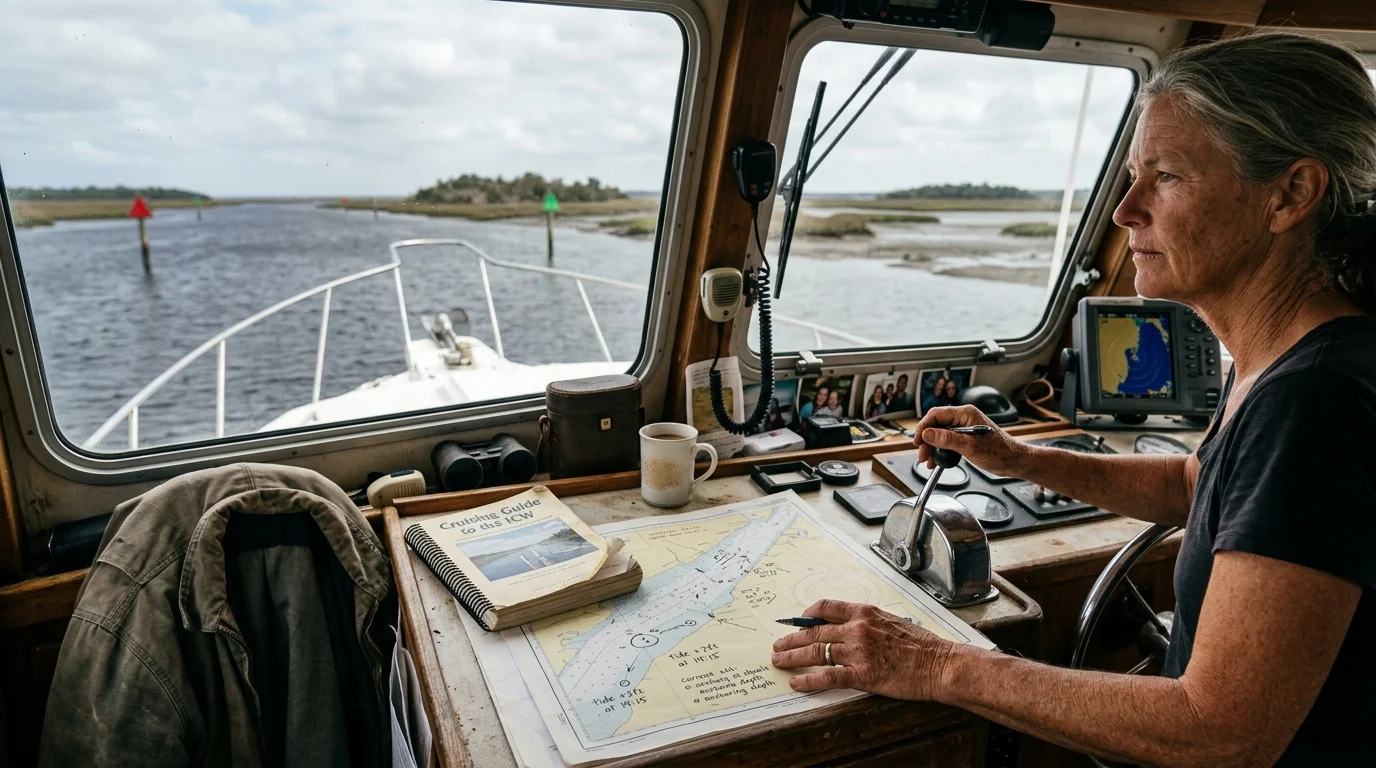
Navigating ICW Realities: Tides, Shoals, and Anchoring Laws
The Atlantic Intracoastal Waterway spans 1,090 statute miles from Mile Marker 0 at Norfolk to Florida. Navigating this protected coastal route requires careful planning around tidal shifts and bridge schedules.
Incorporating sound retirement travel planning ensures your coastal passages align smoothly with tidal currents, bridge openings, and seasonal weather windows.
All navigation locks and bridges along the federal waterway operate without toll charges. Fixed highway bridges maintain an authorized clearance of 65 feet at Mean High Water.
A 34-foot trawler features a modest air draft of 15 to 18 feet with its mast lowered. This compact height allows you to glide under fixed bridges without waiting for tender openings.
Shoaling creates the greatest navigational challenge for single-handed skippers along the southern reaches. Shifting sands often reduce charted 12-foot channels to 5 feet at low water in Georgia sounds.
Time your passage through shallow cuts like Hell Gate and Jekyll Creek near mid-rising tide. Cruising with a rising tide guarantees that any accidental grounding resolves quickly as water levels rise.
Maintain an unlimited commercial towing membership through BoatUS or Sea Tow for roughly $195 annually. Single-handed ungrounding assistance pays for decades of membership dues in a single afternoon.
- Virginia Cut route: Choose this passage over the Dismal Swamp for deeper water and faster travel times.
- Albemarle Sound transit: Cross this shallow sound early in the morning when wind speeds drop below 10 knots.
- Cape Fear River: Avoid entering this river inlet during opposing winds and strong ebb tidal currents.
- Georgia coastal cuts: Monitor sounder depth continuously and favor the outside bends in winding river channels.
- Florida Clean Vessel Act: Utilize complimentary or $5 municipal pump-out boats in all designated No-Discharge Zones.
Respecting federal navigation markers keeps your trawler firmly in the deep channel. Attentive seamanship prevents unnecessary stress and preserves your hull integrity.
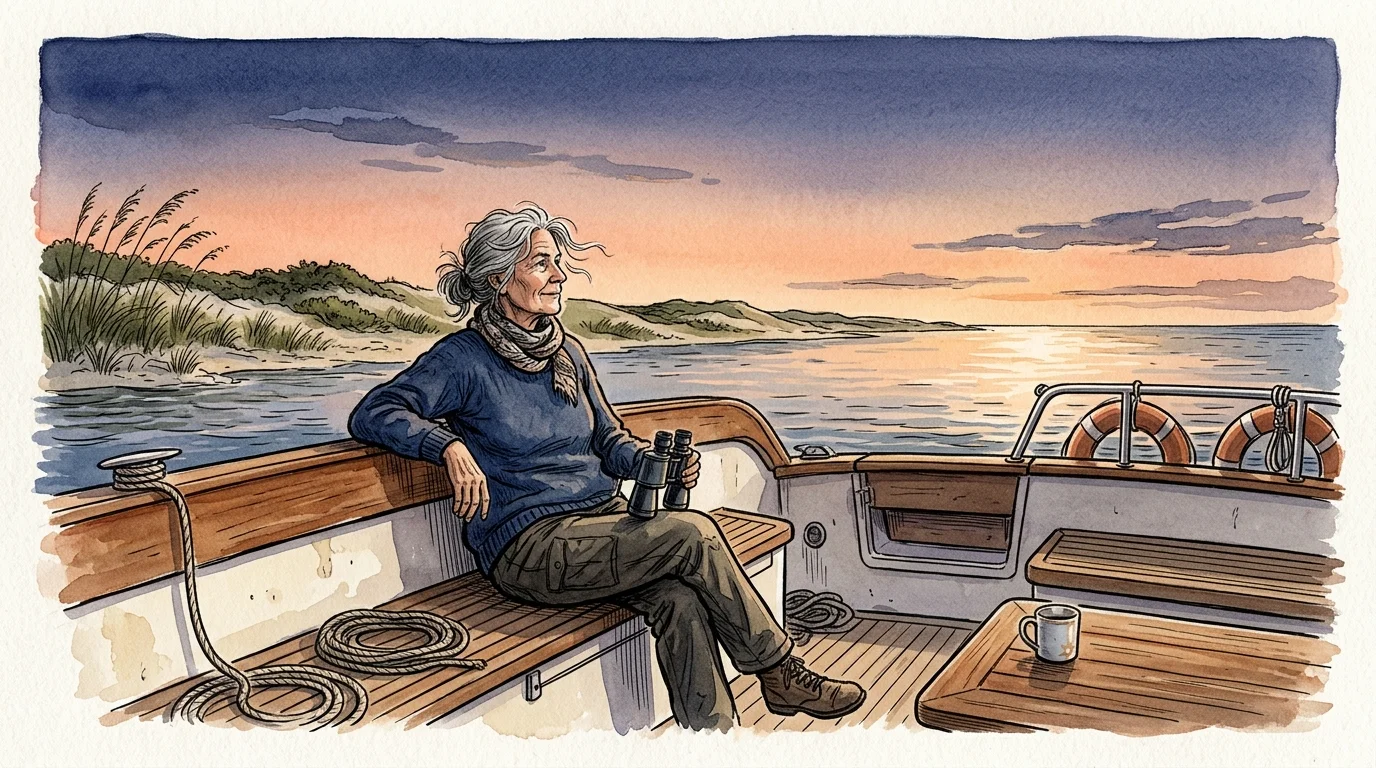
The Solo Cruising Mindset: Building Purpose and Independence at 68
Stepping onto the deck of your own trawler redefines what retirement living can achieve. Mastering engine systems, line handling, and coastal navigation fosters deep personal vitality.
Taking on complex technical routines keeps your cognitive faculties sharp and responsive. Research published by the Stanford Center on Longevity shows that engaging in purposeful challenges actively enhances mental resilience.
“The biggest adventure you can take is to live the life of your dreams.” — Oprah Winfrey
Single-handed voyaging never forces you into total solitude unless you seek it out. Boating the ICW in retirement connects you with a generous, tight-knit network of fellow adventurers.
Cruisers assist one another with docking lines, swap technical spares, and share navigation tips at mooring fields. You enjoy rich camaraderie on the water while maintaining absolute autonomy over your daily itinerary.
Steering your own vessel along remote coastal marshlands instills profound pride and satisfaction. You actively command your retirement narrative through courage, discipline, and curious exploration.
Frequently Asked Questions
How do you handle docking and lock lines when cruising solo?
Rig a center spring line leading back to an amidships cleat before approaching any dock. Step off the boat calmly with that single spring line to arrest the trawler motion instantly.
What marine insurance requirements apply to a solo skipper over 65?
Insurers write policies for older solo mariners who submit clean navigation logs and current medical clearances. Some underwriters require daytime-only operating clauses or specific coastal navigation boundary endorsements.
Is a 34-foot trawler manageable for one person in rough weather?
A heavy 34-foot full-displacement trawler tracks steadily in choppy coastal sounds when properly trimmed. Wide walkaround side decks and secure handrails make bow access safe when managing ground tackle.
How do you manage fresh water and holding tanks while anchoring out?
A 34-foot trawler typically carries 80 to 100 gallons of fresh water, lasting a solo voyager three weeks. Municipal mooring fields and free town docks provide convenient pump-outs and potable water refills.
Disclaimer: This article is for informational and inspirational purposes. Life decisions are deeply personal, and we encourage readers to pursue their dreams while considering their unique circumstances, health, and financial situation.