

A retired couple ages 66 and 64 touring Utah’s Mighty 5 by sedan often switches motels nightly to cover more miles. According to National Institute on Aging driving safety guidance, worsening glare sensitivity and afternoon fatigue make dusk driving harder after 60.
Replacing daily motel moves with a two-drive, two-rest basecamp rhythm and a strict 3 p.m. arrival cutoff protects driving stamina across the ~600-mile circuit. Pulling health coverage, pass, vehicle, and closure records before booking keeps this late-September or October itinerary comfortable.
Documents, Accounts, and Live Status Feeds to Check Before Booking
Gather your insurance statements, federal pass credentials, vehicle service logs, and park alerts before putting deposits on Utah gateway rooms. Checking these items on your own accounts and agency sites prevents surprise road closures and out-of-network medical bills.
- Medicare plan and Medigap cards: Verify out-of-area rules under Medicare coverage rules, checking whether an HMO restricts routine care or disenrolls travelers away past six straight months.
- Supplemental policy caps and network terms: Confirm standardized Plan G, Plan N, Plan K ($8,000 out-of-pocket cap in 2026), Plan L ($4,000 cap in 2026), Medicare SELECT hospital limits, or state rules in Massachusetts, Minnesota, and Wisconsin.
- Prescription bottles and CPAP power labels: Review pharmacy labels for drowsiness warnings, note doctor phone numbers, and check CPAP battery needs for electric campsites.
- Federal park pass records: Verify eligibility for the $80 lifetime or $20 annual National Park Service Senior Pass at age 62 or older, or the free permanent disability Access Pass.
- Utah entry, shuttle, and permit portals: Look up Recreation.gov for Angels Landing permits, Zion’s mid-March through November shuttle schedule, and spring 2027 updates after Arches dropped timed entry in 2026.
- Highway status and repair feeds: Check live state maps before committing to coastal or eastern alternatives, including Caltrans QuickMap at quickmap.dot.ca.gov and the Blue Ridge Parkway road status page.
- Vehicle service records and fuel averages: Pull recent brake, tire, and battery inspection receipts, and check weekly regional fuel figures on the EIA Gasoline and Diesel Fuel Update.
Keep digital pass confirmations, insurance cards, and written physician contacts together in the glove compartment rather than packed in luggage. Having every record within reach speeds up ranger gate checks and urgent clinic visits.
Turning Your Checks Into a Two-Drive, Two-Rest Basecamp Schedule
Checking live road portals explains why a late-September through October Utah circuit beats storm-affected corridors. Highway repairs left 458 of 469 miles open on the Blue Ridge Parkway as of November 2026, while coastal California faces active bridge controls.
Travelers wanting a sports-focused route can apply this same 200-mile daily driving limit to a baseball stadium road trip that links regional ballparks across manageable highway legs.

Use your gathered prescription labels to set departure times around any morning drowsiness side effects. If one spouse takes a sedating dose early, let the other driver handle the first highway leg.
Cap every driving day at three hours or 200 miles, and check into your gateway motel by 3 p.m. Stopping mid-afternoon avoids low-angle sun glare across open desert highways and leaves daylight margin for construction detours.
Schedule a 10-minute stretch walk every 90 miles to ease hip and knee stiffness in the sedan. Keep strenuous canyon walks off driving days so fatigue never carries into the next morning.
Execute the ~600-mile, 7–10 day Mighty 5 circuit in two-drive, two-rest blocks rather than one continuous line. Drive under 200 miles on Days 1 and 2 into a hub town, then stay two or three consecutive nights.
Spend Days 3 and 4 riding the Zion shuttle or touring flat paved pullouts without packing a single suitcase. Our guide to visiting Utah’s Mighty 5 parks maps accessible overlooks across all five parks.
Stay at least 100 yards from bears and wolves and 25 yards from bison or elk at roadside pullouts. If grandkids join your Southwest loop, adapt our Grand Circle family road trip plan.
Six-Month Booking Timeline for Hubs, Permits, and Vehicle Prep
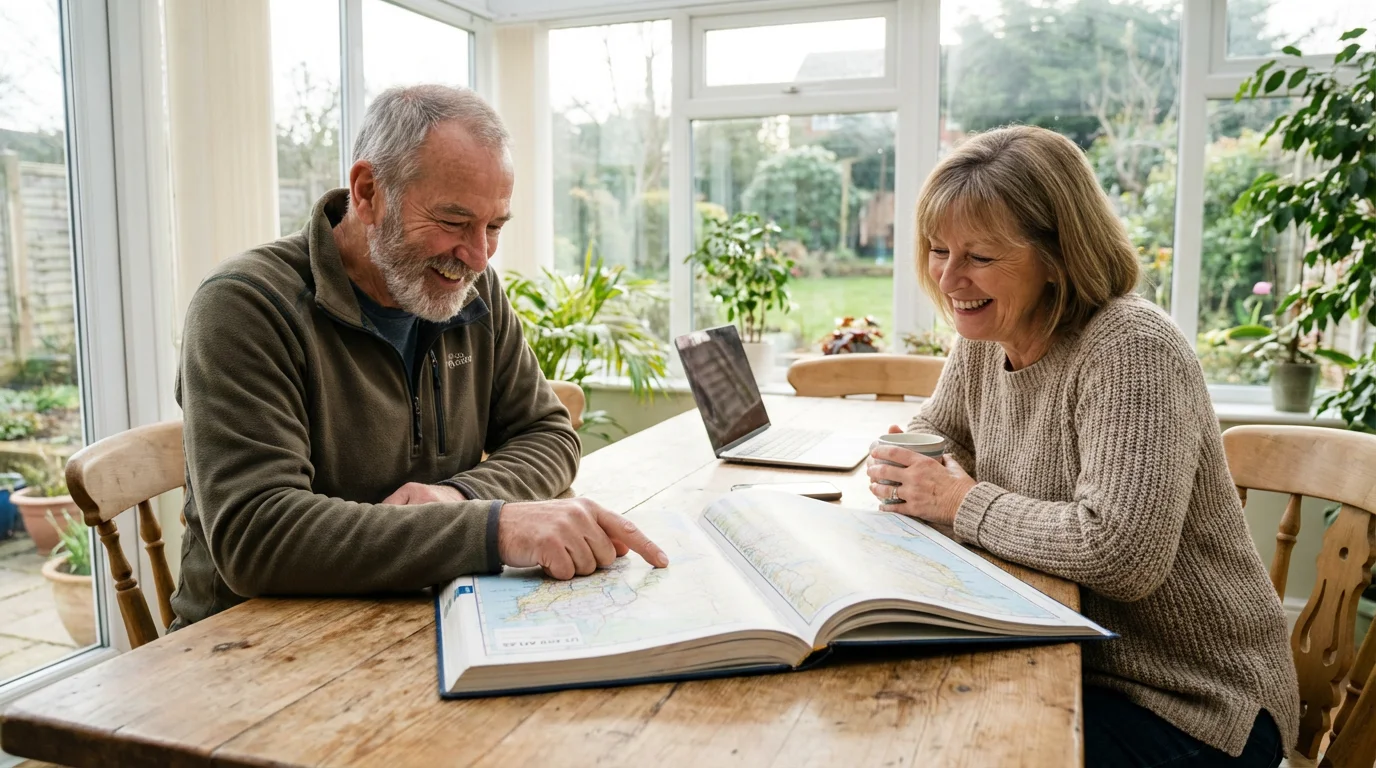
Once your live status checks confirm the autumn window, follow a six-month countdown to lock refundable hubs and permits. Ordering passes early also prevents mail surcharges and sold-out shuttle windows.
- 180 Days Out: Order Your Senior Pass. Buy a digital $80 lifetime or $20 annual pass on Recreation.gov with no processing fee, since USGS Online Store mail orders add $12.50. You can also trade up to four expired $20 annual passes in person toward the lifetime pass.
- 90 to 120 Days Out: Book Multi-Night Hubs and Permits. Reserve refundable two-night or three-night gateway stays, secure Zion Angels Landing permits on Recreation.gov if hiking, and check spring 2027 announcements for Arches entry rules.
- 30 Days Out: Service Sedan Hardware and Trip Insurance. Have a mechanic inspect brakes, tires, and batteries before desert grades. If booking nonrefundable lodges, verify that trip-protection policies insure every prepaid dollar within 14 to 21 days to waive pre-existing condition exclusions.
- 7 Days Out: Download Offline Maps and Fuel Benchmarks. Save canyon maps for areas without cell service, load your digital pass alongside photo ID, and verify weekly PADD retail fuel prices on the EIA Gasoline and Diesel Fuel Update.
- Weeks 1 and 2 on the Road: Hold the 3 p.m. Cutoff. Drive under 200 miles on travel days, unpack for two-night rest blocks, and recheck park alerts each morning before leaving town.
Comparing Pass, Lodging, and Meal Costs Against Federal Benchmarks
Effective October 1, 2026, GSA FY 2027 standard continental U.S. benchmarks set lodging at $113 per night and meals and incidentals at $68 per person daily. Pairing those baselines with your Senior Pass keeps road trip spending predictable.
Inside Utah’s ~600-mile Mighty 5 loop alone, 7–10 days at GSA lodging rates run $790–$1,130 with roughly $84 in fuel. Extending that circuit into a 14-day, 2,000-mile round trip from home shows how pass and meal choices shift total costs.
This comparison shows how a retired couple ages 66 and 64 in a 25-mpg sedan can lower costs across a 14-day, 2,000-mile trip:
| Budget Category | Lower-Cost Basecamp Option | Standard Retail or Hotel Option |
|---|---|---|
| Park Entry Pass (Age 62+) | Digital $80 lifetime Senior Pass on Recreation.gov ($0 processing fee; covers both spouses in one vehicle) | USGS Online Store mail order (adds $12.50 fee) or $20 annual pass |
| Lodging (13 Nights) | 10 hotel nights at $113 GSA rate ($1,130) plus 3 federal campsites discounted 50% from $30 to $15 ($45) = $1,175 | Hotel-only stays or higher gateway rates covered by a 15 percent ($373) reserve |
| Meals (14 Days, 2 Adults) | Grocery breakfasts, picnic lunches, and restaurant dinners ($950) | Full restaurant dining at GSA’s $68 daily M&IE rate ($1,904) |
Remember that Recreation.gov reservation charges still apply on discounted federal campsites, where your Senior Pass cuts amenity fees by 50 percent. Local lodging taxes and permit fees also sit outside GSA’s base rate.
- Fuel (2,000 miles at 25 mpg): Burning 80 gallons at an illustrative $3.50 per gallon totals $280 before weekly EIA regional price adjustments.
- Lodging (13 nights): Splitting 10 hotel nights ($1,130) and three 50-percent discounted federal campsites ($45) comes to $1,175.
- Food (14 days, two adults): Pairing picnic lunches and grocery breakfasts with restaurant dinners trims dining to $950.
- Park pass: One digital lifetime Senior Pass adds $80, or $0 if already in your wallet.
Core spending totals $2,485 before local lodging taxes and permit fees. Setting aside a 15 percent reserve of $373 absorbs unexpected vehicle repairs or higher peak-demand room rates.
Managing Out-of-State Medicare, Medications, and Bryce Canyon Altitude
Confirm out-of-state rules with your insurer or a State Health Insurance Assistance Program (SHIP) counselor before departure. Original Medicare covers participating providers nationwide, while Medicare Advantage HMOs limit out-of-area visits to emergencies, urgent care, and temporary dialysis.
Some PPO plans and visitor programs cover out-of-network care at higher cost, though leaving your region past six straight months triggers disenrollment. Review those extended-travel limits alongside our RV retirement living guide.
Standardized Medigap plans cover Medicare cost-sharing in all 50 states unless you hold a Medicare SELECT hospital-network policy. Keep prescription bottles inside your climate-controlled cabin away from desert trunk heat, and pack extra doses.
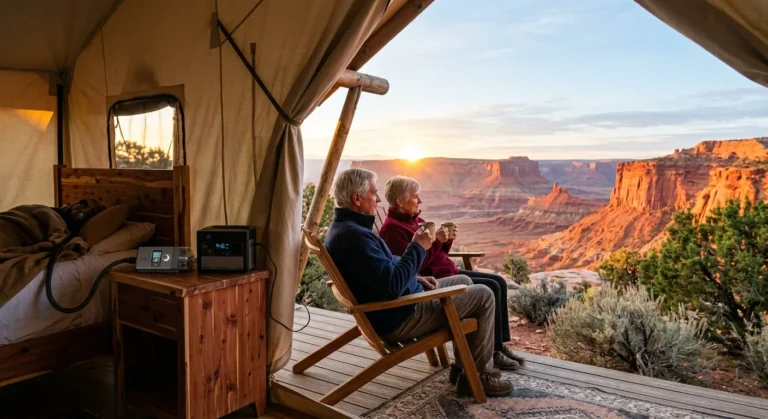
If either spouse uses a CPAP machine at campgrounds near Moab, size portable batteries and electric hookups ahead of time. Use our glamping CPAP power guide to match equipment draw to campsite outlets.
At Bryce Canyon elevations between 8,000 and 9,100 feet, schedule a quiet arrival afternoon in your basecamp cycle before attempting rim walks. Ask your doctor whether heart, lung, or mobility conditions require slower pacing at high altitude.




5 Comments
Comments are closed.