

You can spend two full months immersed in Southern Europe without spending a single euro on hotel rooms or vacation rentals. Pairing two consecutive 30-day verified house sits allows you to live like a local in Spain, Portugal, or Italy while keeping your housing expenses at zero.
Most long-term travel guides overlook how the European Union’s automated biometric border checks penalize loose planning. By capping your continuous stay at exactly 60 days, you protect a critical 30-day legal safety buffer under Schengen visa limits.
This comprehensive blueprint shows retired couples how to secure premium assignments, manage home utilities abroad, and navigate Southern European travel seamlessly.

Mastering the Schengen 90-Day Clock and New Biometric Borders
The Schengen Area comprises 29 European nations operating under a unified border system. Non-European Union citizens holding U.S. passports may stay for a maximum of 90 days within any rolling 180-day window.
Every single day you spend inside any member country counts toward that cumulative 90-day ceiling. If you stay 91 days, authorities classify you as an illegal overstayer, which risks immediate fines and multi-year entry bans.
Planning a 60-day house-sitting itinerary gives you a built-in 30-day safety margin. This buffer protects you against flight cancellations, unexpected rail disruptions, or medical emergencies that might delay your departure.
Border enforcement across Europe has shifted away from manual inspections and subjective stamp reviews. The European Entry/Exit System (EES), fully operational across all external border checkpoints as of April 10, 2026, registers your biometric data electronically.
Automated airport kiosks capture your digital facial scans and fingerprints upon arrival. Physical ink stamps are obsolete; the automated database calculates your exact remaining Schengen days in real time.
Beginning in 2027, travelers must also secure travel clearance through the European Travel Information and Authorisation System (ETIAS). The standard pre-travel filing fee is €20, and the authorization remains valid for three years.
Retirees enjoy a distinct financial advantage under this regulation. Applicants over age 70 are legally exempt from the €20 ETIAS fee, although you must still submit the digital authorization form before boarding.
Research published by the Stanford Center on Longevity emphasizes that extended geographical exploration and purposeful daily activities strengthen cognitive resilience during retirement transitions. Structured international travel keeps your mind sharp while delivering unforgettable adventures.

Choosing the Right House-Sitting Platform: Costs and Tiers Compared
Securing reliable house sits requires membership in an established vetting network. Rather than relying on informal social media arrangements, formal platforms protect sitters and property owners through verified identities and background screenings.
Platforms charge different annual fees and apply varied pricing structures for confirmed stays. Selecting the right service depends on your target destination and desired insurance protections.
| Platform & Membership Level | Annual Fee | Per-Sit Booking Fee | Primary European Geographic Strengths | Included Protection & Features |
|---|---|---|---|---|
| TrustedHousesitters (Basic) | $129 USD | $12 USD per confirmed sit | United Kingdom, France, Spain, Germany | Standard platform messaging, identity verification |
| TrustedHousesitters (Standard) | $169 USD | $12 USD per confirmed sit | United Kingdom, France, Spain, Italy | 24/7 veterinary advice line, dedicated member support |
| TrustedHousesitters (Premium) | $259 USD | $0 USD per confirmed sit | Global coverage, high density in Western Europe | Sit cancellation protection, two free airport lounge passes |
| Nomador (Discovery Annual) | €89 (~$99 USD) | $0 USD per confirmed sit | France, Spain, Portugal, Italy | Identity verification, internal community messaging |
| MindMyHouse | $29 USD | $0 USD per confirmed sit | Rural France, Central Europe, United Kingdom | Basic search filters, direct homeowner messaging |
| HouseCarers | $50 USD | $0 USD per confirmed sit | Mediterranean coast, United Kingdom, Australia | Automated email alerts, verified references |
For a continuous 60-day itinerary, TrustedHousesitters Premium offers the best value. The zero-dollar booking fee structure and included cancellation compensation eliminate financial surprises if a homeowner alters travel plans unexpectedly.
If you intend to base your two-month stay entirely in southern France or northern Spain, Nomador serves as an outstanding regional complement. French homeowners list hundreds of rural villas and coastal homes on Nomador that never appear on English-language sites.
Crafting an Irresistible Profile: Why Homeowners Choose Retirees
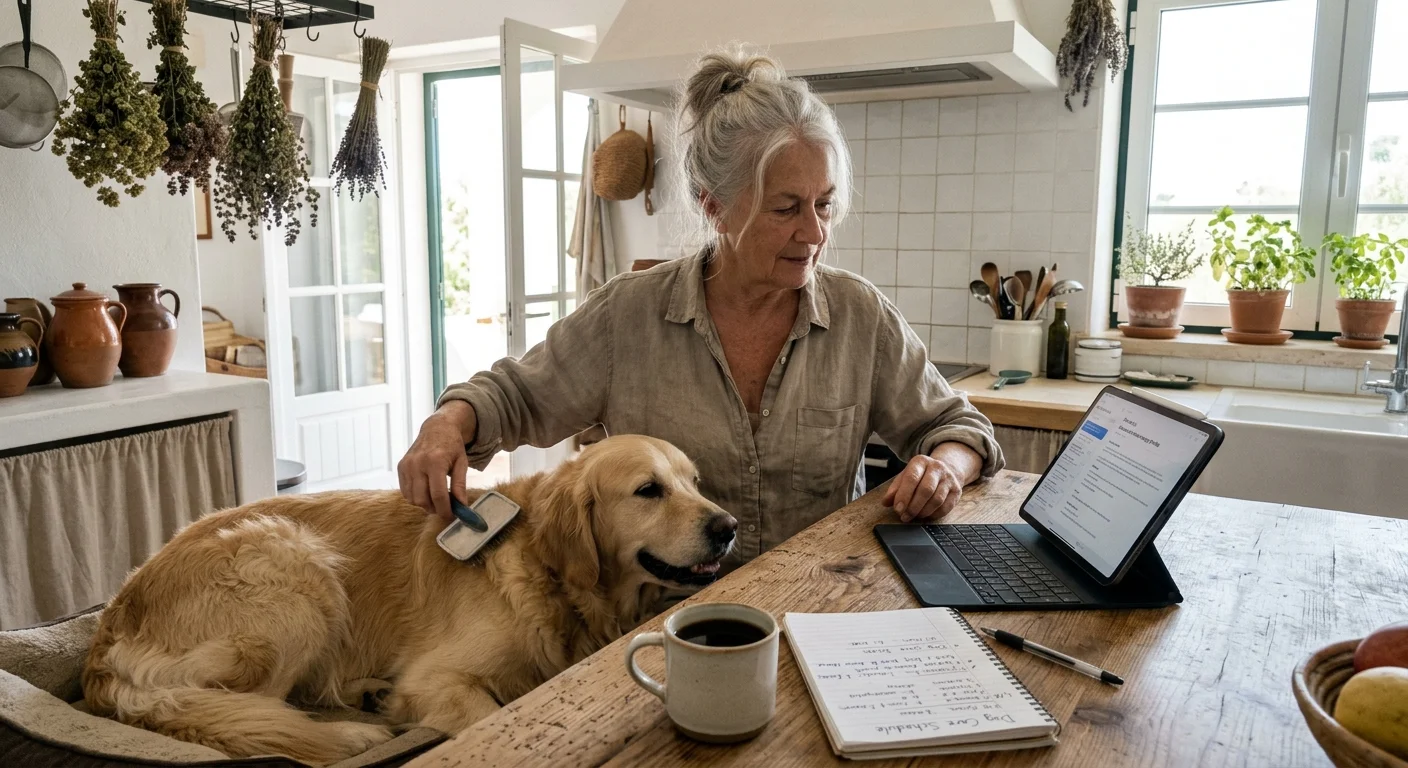
European homeowners consistently prefer retired couples over younger digital nomads or vacationing backpackers. Homeowners recognize that mature adults treat their properties with respect, understand home maintenance, and prioritize pet care over nightlife.
Your profile should highlight your life experience as a core asset. Position your retirement as an asset that allows you to provide attentive, reliable companion care.
“The real voyage of discovery consists not in seeking new landscapes, but in having new eyes.” — Marcel Proust
Follow these essential steps to optimize your profile before submitting your first application:
- Complete identity verification through your platform by uploading valid government passports and completing criminal background checks.
- Collect three to five detailed character references from landlords, neighbors, or professional colleagues vouching for your reliability and integrity.
- Upload ten to twelve high-resolution photos displaying you and your partner interacting naturally with dogs, cats, or farm animals.
- State your homeownership history explicitly to demonstrate familiarity with managing plumbing valves, irrigation timers, and household security systems.
- Mention practical life capabilities, such as confidence driving manual-transmission vehicles on narrow rural European roads.
Describe your daily retirement lifestyle clearly in your biography. Homeowners love hearing that you enjoy morning walks, leisurely cooking, and quiet evenings reading on the terrace.
Avoid mentioning that you plan to spend twelve hours a day away on tour buses. Reassure the owner that their home and pets will serve as the centerpiece of your daily routine.
Stacking Two 30-Day Assignments in Southern Europe
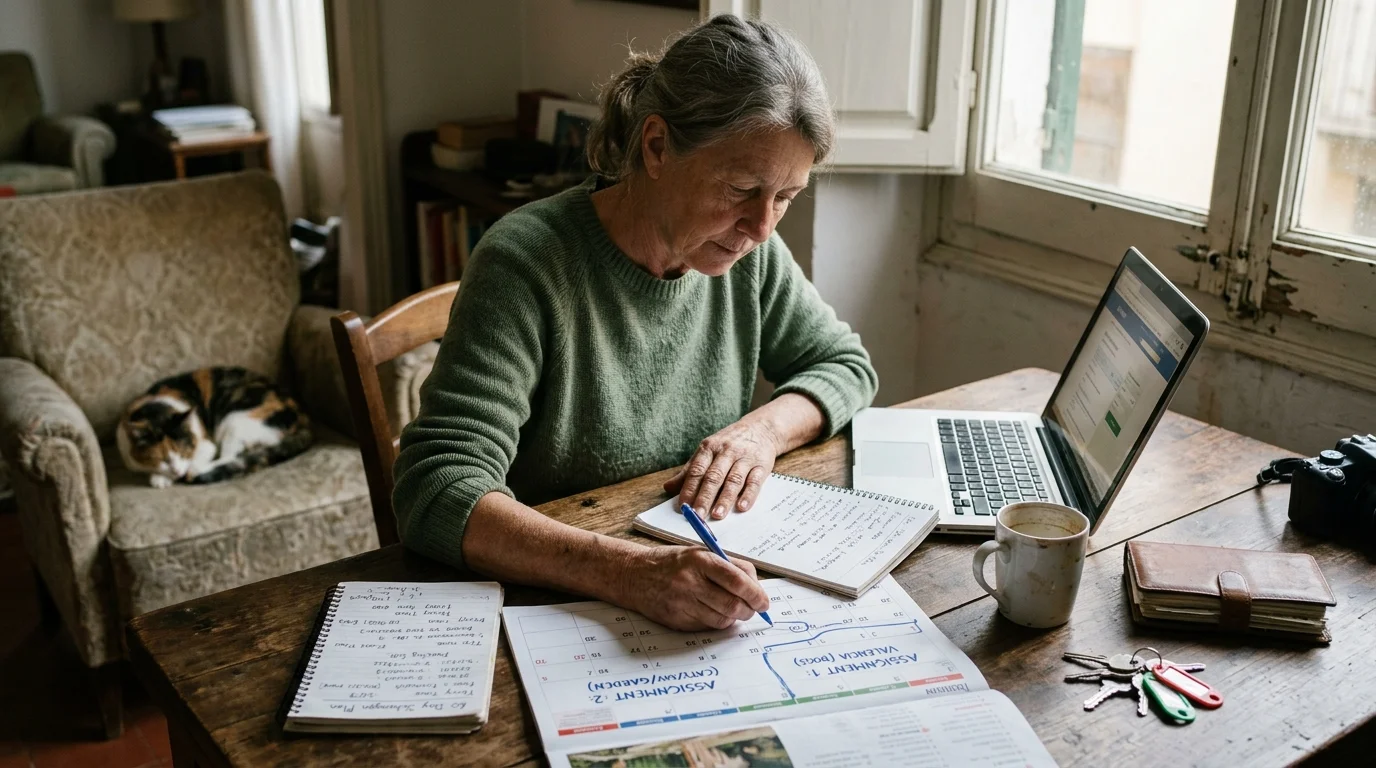
Securing a single 60-day house sit in one location can prove difficult, as few European homeowners take two-month vacations. You can easily achieve your 60-day goal by linking two consecutive 30-day assignments in neighboring regions.
According to lifelong learning research shared by Road Scholar, spending a full month in an educational or cultural destination provides profound immersion benefits compared to rapid-fire city hopping. Slowing your pace deepens your appreciation of local traditions.
Execute this sequence to schedule your two-month journey without leaving gaps in your housing accommodations:
- Select a compact geographical corridor with efficient high-speed rail connections, such as southern Portugal and Andalusia, Spain.
- Secure your primary 30-day anchor sit four to six months before your scheduled transatlantic departure date.
- Activate real-time platform alerts for secondary sits starting within 48 hours of your anchor sit’s conclusion within a 250-mile radius.
- Schedule a one-night hotel stay in an intermediate transit hub between the two assignments to allow for laundry, transit, and rest.
- Conduct video interviews on Zoom or WhatsApp with both homeowners to verify key handover dates and pet care requirements.
Keep your travel days simple and stress-free. Southern Europe features exceptional public transportation networks, including Spain’s Renfe rail network and Portugal’s Comboios de Portugal, making regional transit seamless.
A 60-Day Southern Europe Financial Blueprint: Real Numbers
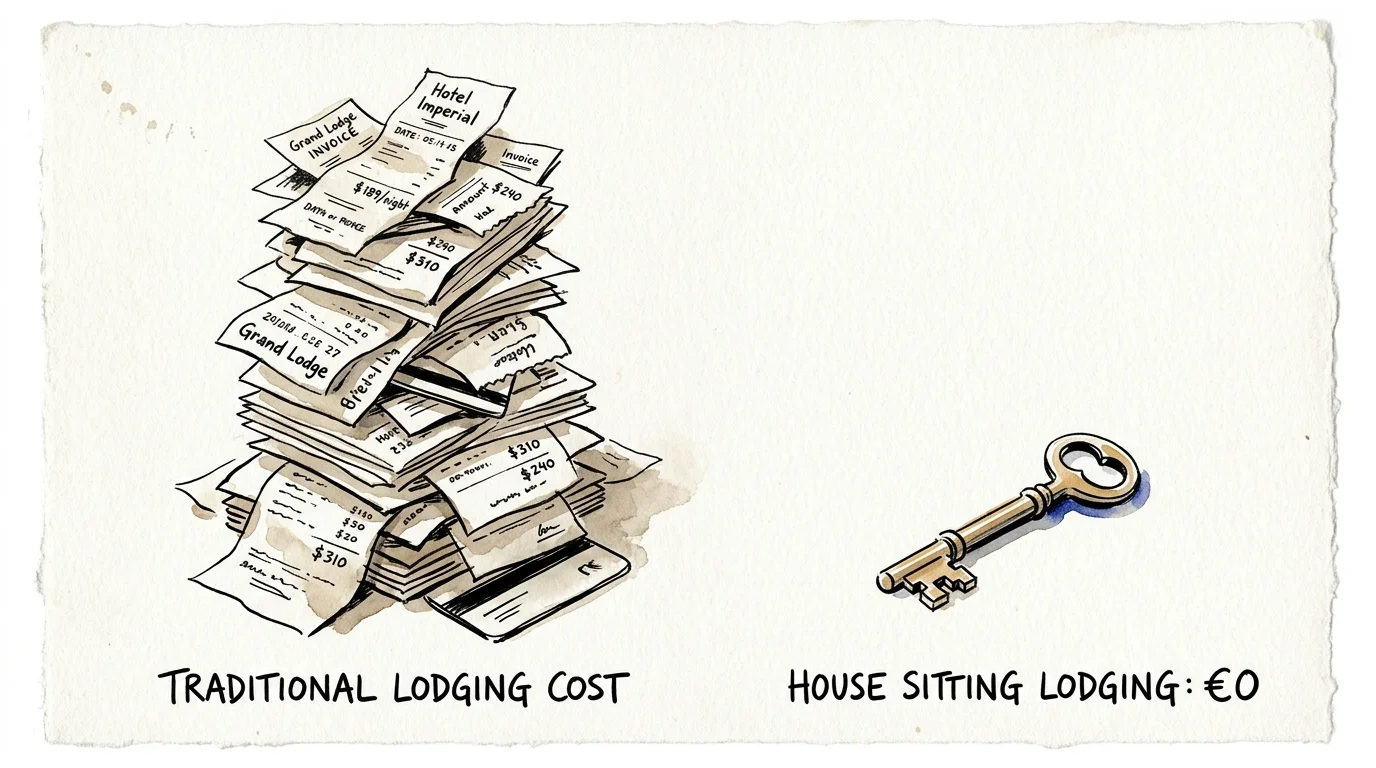
Standard vacation rentals across Spain, Portugal, and Italy carry steep price tags during favorable travel months. A furnished mid-tier apartment in regions like the Costa del Sol or the Algarve ranges from $1,500 to $3,200 per month.
Consider the worked financial example of Mark and Susan, a retired couple aged 62 and 64 from Ohio. They arranged two back-to-back 30-day house sits: thirty days caring for a Labrador outside Malaga, Spain, followed by thirty days watching two cats in Faro, Portugal.
| Expense Category | Conventional Rental Scenario (60 Days) | House-Sitting Itinerary Scenario (60 Days) | Net Savings for Retiree Couple |
|---|---|---|---|
| Primary Accommodations | $4,200 USD (2 months @ $2,100/mo) | $0 USD (Homeowner exchange) | $4,200 USD saved |
| Platform Membership Fee | $0 USD (None required) | $259 USD (TrustedHousesitters Premium) | -$259 USD investment |
| Platform Per-Sit Fees | $0 USD (None required) | $0 USD ($0 per-sit on Premium tier) | $0 USD |
| Transition Hotel (1 Night in Seville) | $0 USD (Single continuous stay) | $125 USD (Mid-tier hotel near station) | -$125 USD spent |
| Regional Rail & Bus Transit for Two | $0 USD (Stationary stay) | $136 USD (Malaga to Seville, Seville to Faro) | -$136 USD spent |
| Total Housing & Relocation Cost | $4,200 USD | $520 USD | $3,680 USD net savings |
By using the house-sitting model, Mark and Susan eliminated $3,680 in lodging overhead. They spent only $520 on platform access, an overnight transit stay in historic Seville, and cross-border train tickets.
Their ongoing grocery and dining expenses matched what they normally spent at home. They shopped at local municipal markets, purchased regional produce, and enjoyed an elevated lifestyle on a baseline retirement budget.
Managing Southern European Utilities, Heating, and Pet Routines
European residential systems operate differently from modern North American homes. Older villas and apartments across the Mediterranean coast frequently employ decentralized heating and localized utility networks.
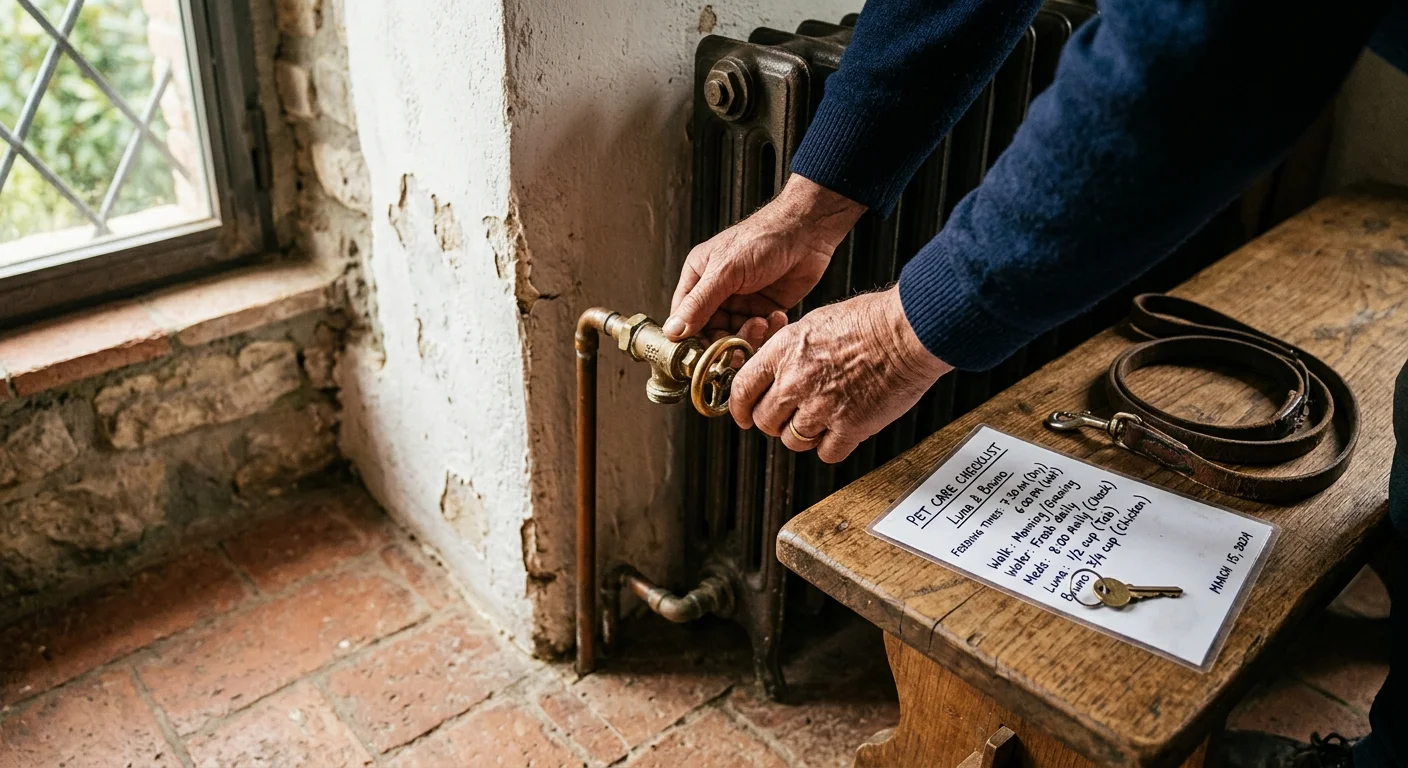
Familiarizing yourself with these systems ensures a comfortable stay and keeps the homeowner’s property running efficiently. Always ask the host for written operational guidelines before they depart.
- Locate the home’s water shutoff valve and electrical breaker box during the initial orientation walk-through.
- Check the replacement schedule and operation of butane gas canisters (known as bombonas in Spain) used for domestic hot water and stovetops.
- Clarify wood pellet stove loading requirements and glass cleaning procedures for cooler shoulder-season evenings.
- Review automated garden irrigation controls to maintain native olive trees, citrus plants, and floral beds during dry periods.
- Document local veterinary contacts, microchip registrations, pet passport locations, and nearby emergency clinic hours.
Establish the pets’ daily schedules from day one. Keeping feeding times, medication administrations, and walking routes consistent helps animals stay calm while their owners are away.
Send brief WhatsApp photos and updates to the homeowners every three or four days. Consistent communication provides peace of mind to the owners and solidifies your five-star review.
Navigating European Border Control: Critical Legal Terminology
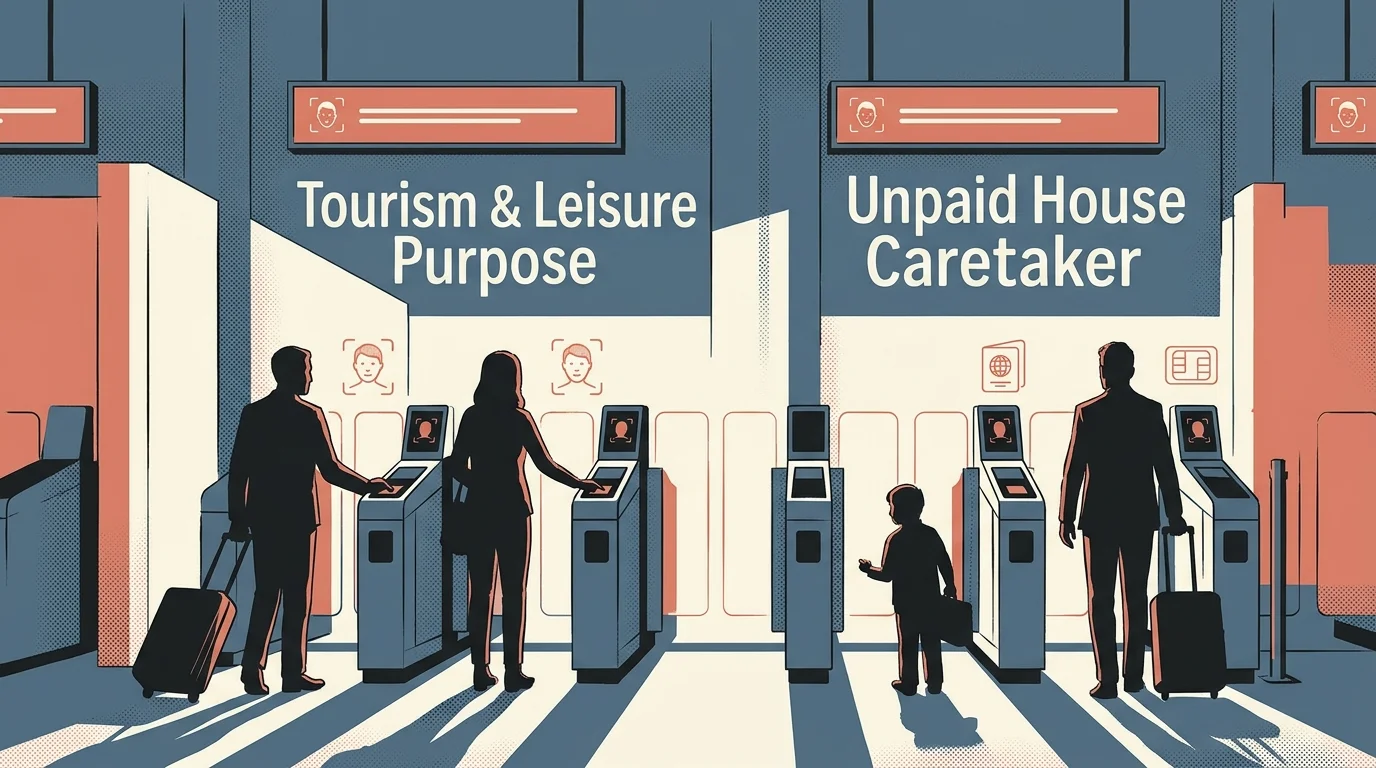
Entering the Schengen Area requires clear, precise communication with immigration authorities. House sitting is legally classified as an unpaid, mutual-aid cultural and hospitality exchange.
However, casual terminology can create confusion at immigration checkpoints. Border officers are trained to flag unauthorized employment and illegal overseas work.
Never state to a border officer that you are traveling to “work,” “volunteer,” or “house-sit” in Europe. Using those specific words can cause officers to classify your travel as unauthorized labor, resulting in secondary questioning or denied entry.
Always state the primary purpose of your trip as tourism and vacation. You are visiting Europe as retired leisure travelers exploring cultural sights, historical architecture, and regional gastronomy.
Prepare a neat travel folder containing paper documentation to verify your tourist status if requested by border personnel:
- Proof of onward travel departing the Schengen Area within your 60-day window, such as a confirmed return transatlantic flight receipt.
- Comprehensive travel medical insurance documentation displaying active medical evacuation and inpatient hospital coverage.
- Recent bank or retirement investment statements demonstrating ample independent funds to finance your stay.
- A printout of your transit hotel reservation confirming initial accommodations upon arrival.
Present your documents calmly, answer questions politely, and maintain an organized presentation. Clear documentation confirms your status as a self-sufficient tourist enjoying a well-earned European retirement.
Frequently Asked Questions
Is house sitting considered legal employment under Schengen tourist regulations?
House sitting through reputable platforms is an unpaid cultural exchange based on mutual aid rather than an employment relationship. Because no monetary compensation changes hands, it complies with standard tourist entry, provided you declare your visit as tourism.
What happens if a European homeowner cancels our stay at the last minute?
Premium platform memberships, such as TrustedHousesitters Premium, include cancellation insurance that reimburses up to $150 per night for alternative accommodations. Maintaining your 30-day visa safety buffer also ensures you can adjust travel plans without overstaying your legal limits.
Do house sitters pay for water, electricity, or heating utilities during their stay?
In standard assignments lasting 30 to 60 days, homeowners cover all primary residential utilities, including electricity, water, and internet access. For long-term winter sits lasting several months, some owners negotiate shared heating fuel costs, but this must be agreed upon in advance.
How does the automated Entry/Exit System affect our travel days?
The automated Entry/Exit System electronically calculates your presence in the Schengen Area from the moment your biometrics are scanned at entry. Both your arrival date and departure date count as full calendar days toward your total allowance, making precise flight scheduling critical.
Disclaimer: This article is for informational and inspirational purposes. Life decisions are deeply personal, and we encourage readers to pursue their dreams while considering their unique circumstances, health, and financial situation.





1 Comment