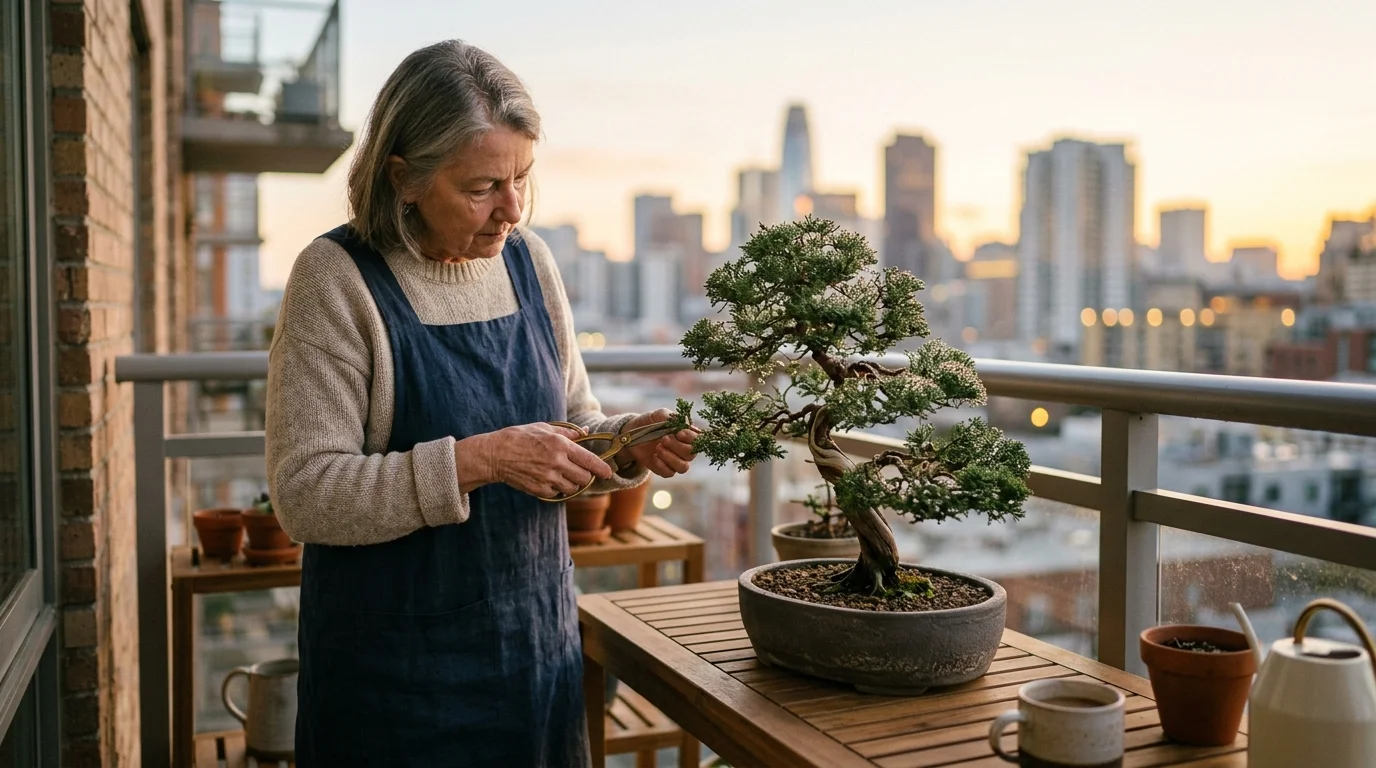
Downsizing to a patio condo gives you the ideal setting to master competition-grade outdoor trees without tending a large yard. You can cultivate vigorous, miniature specimen bonsai within twenty square feet of balcony space.
Most gardening guides claim balconies lack the full-day sun required for refined trees. In contrast, this guide demonstrates how four hours of direct morning sun combined with high-porosity aggregate soil produces healthier root systems than all-day baking heat.
With precise species selection and shallow-pot root mechanics, your balcony becomes a vibrant living art studio.
The East-Facing Advantage: Engineering Morning Light and Microclimates
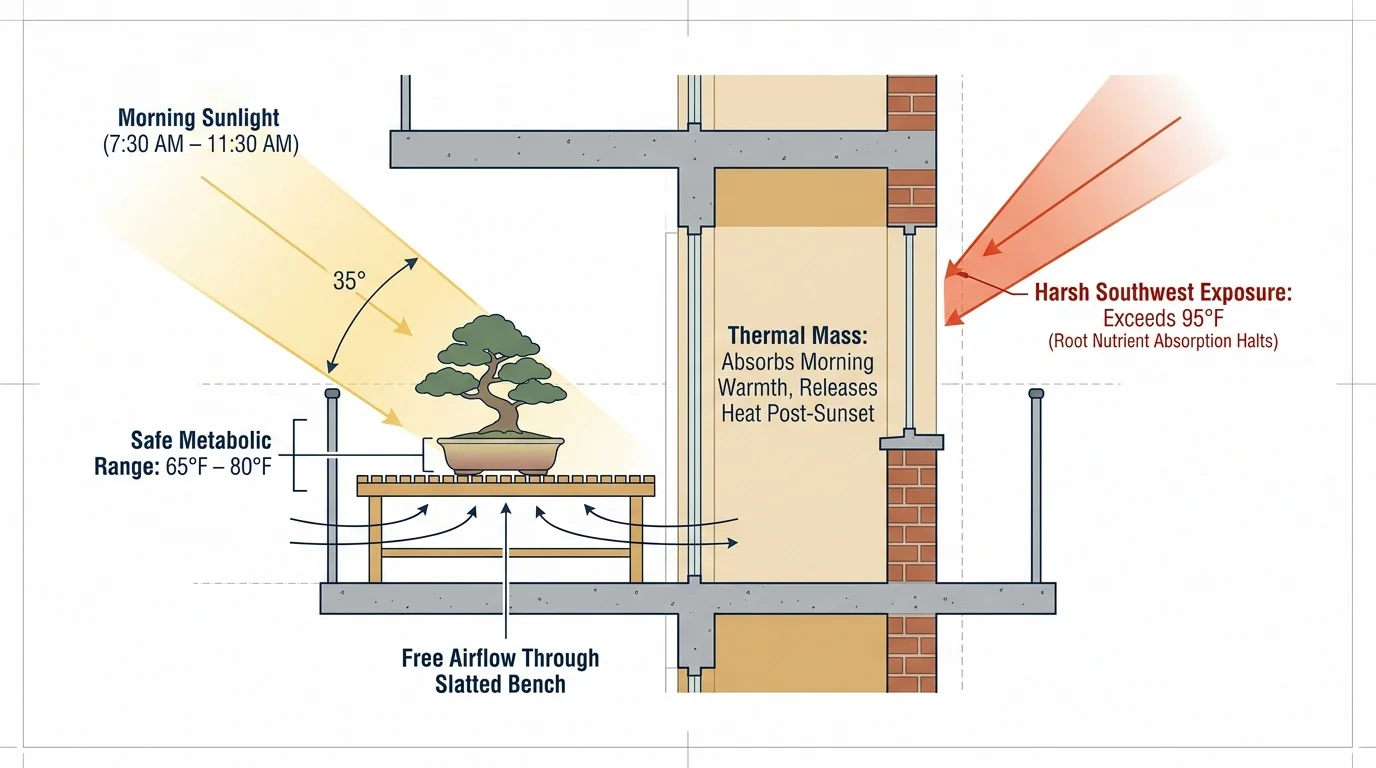
East-facing balconies offer an underappreciated horticultural advantage for growing bonsai on a balcony. They capture direct morning sunlight while protecting delicate container root systems from harsh afternoon heat.
Mastering seasonal growth schedules is just one of many inspiring projects for all skill levels that make active retirement deeply rewarding.
Embracing the joy of gardening on a compact scale lets retirees stay deeply connected to natural growth cycles without managing a sprawling yard.
Between 7:30 AM and 11:30 AM, sun angles deliver gentle photosynthetic light. This early exposure stimulates active leaf transpiration without elevating soil temperatures to damaging levels.
In standard garden beds, surrounding earth insulates root structures against high ambient air temperatures. Ceramic bonsai pots hold small substrate volumes that overheat quickly under southwest exposures.
When container substrate exceeds 95 degrees Fahrenheit, tender root tips stop absorbing water and nutrients. Morning-sun balconies keep root balls within the safe 65 to 80-degree metabolic range.
Condo buildings also generate beneficial microclimates along their structural walls. Concrete and brick facades act as thermal masses that absorb morning warmth and release it gradually after sunset.
Research published by the Stanford Center on Longevity highlights how engaging in focused daily creative pursuits fosters vitality and lifelong cognitive health. Bonsai cultivation combines artful design with precise plant biology.
“The best time to plant a tree was twenty years ago. The second best time is now.” — Chinese Proverb
You can optimize your small outdoor area by placing trees where morning rays strike benches unimpeded by solid railings. Elevated slatted stands ensure airflow circulates around the pots continuously.
Top Balcony Bonsai Species for Partial Morning Sun
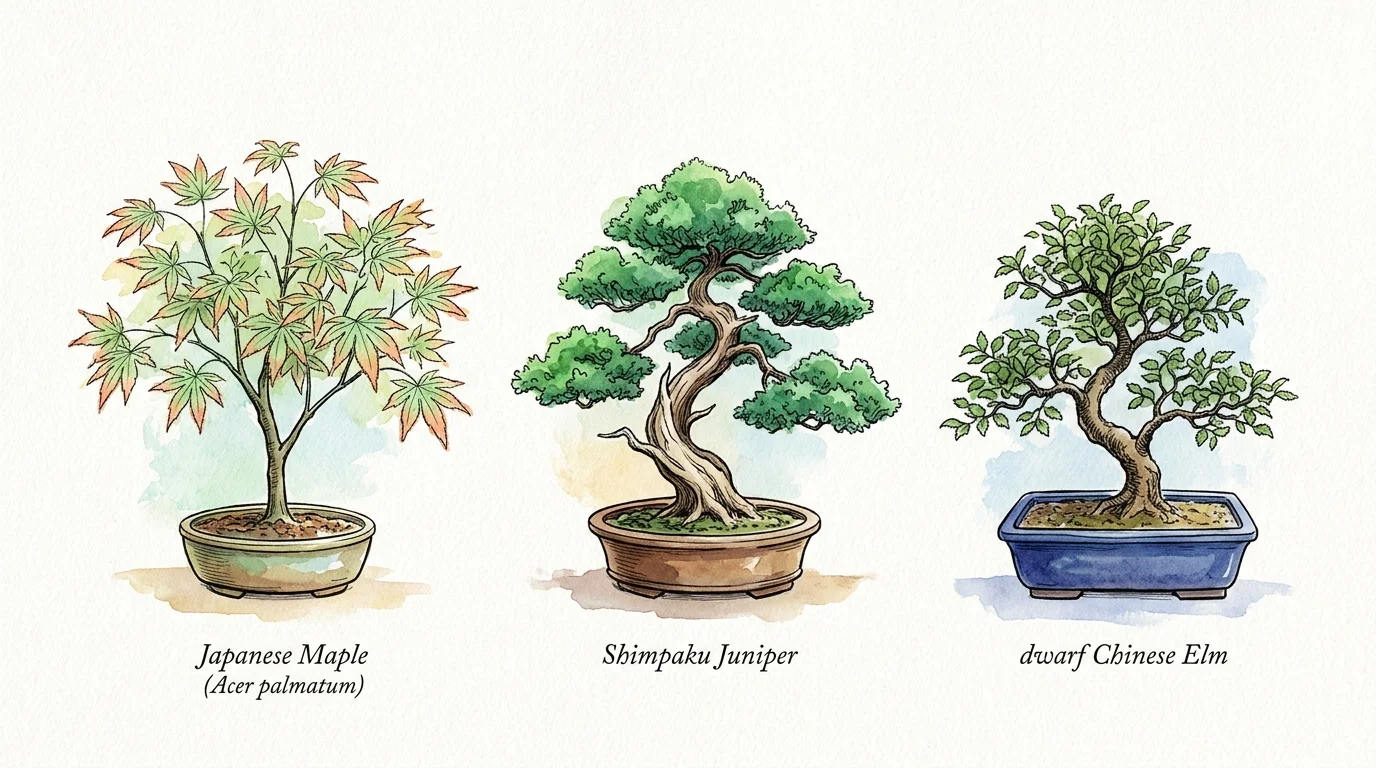
Selecting the right cultivar determines your long-term success when working with limited balcony space. Some sun-loving trees become leggy in partial shade, while specific compact species thrive on morning rays.
Cultivating miniature trees provides a restorative routine similar to gardening for the soul, nurturing patience and mindfulness in everyday life.
Pairing miniature tree care with botanical watercolor sketches offers an enriching way to record seasonal foliage changes directly from your outdoor space.
Deciduous varieties with thin leaf cuticles prefer morning light because afternoon sun scorches their delicate margins. Evergreens with dense needle structures also flourish when given cool, unhindered eastern exposures.
For an outdoor bonsai small space beginner, starting with responsive species speeds up learning curves. These reliable trees tolerate tight pot confines and react well to directional wiring:
- Chinese Elm (Ulmus parvifolia): Exceptionally durable, produces tiny serrated foliage, and develops mature fissured bark within compact container dimensions.
- Dwarf Shimpaku Juniper (Juniperus chinensis ‘Kishu’): Features tight foliage pads, requires moderate water, and handles brisk balcony breezes without shedding needles.
- Japanese Maple (Acer palmatum ‘Kiyohime’): Naturally compact cultivar with small fan-shaped leaves that maintain brilliant color without sun scorch.
- Satsuki Azalea (Rhododendron indicum ‘Chinzan’): Acid-loving dwarf evergreen shrub that produces vibrant pink spring blossoms in half-day morning light.
Chinese Elms forgive occasional watering errors and branch back easily on older wood. They tolerate rapid repotting schedules and display vibrant yellow autumn foliage.
Shimpaku Junipers provide classic evergreen silhouettes with twisting deadwood features called jin and shari. Their compact scale foliage maintains dense pads under four to five hours of morning sunlight.
Japanese Maples introduce seasonal theater to your outdoor sitting area. Their delicate spring buds, lush summer canopies, and crimson autumn leaves bring nature directly to your condo patio.
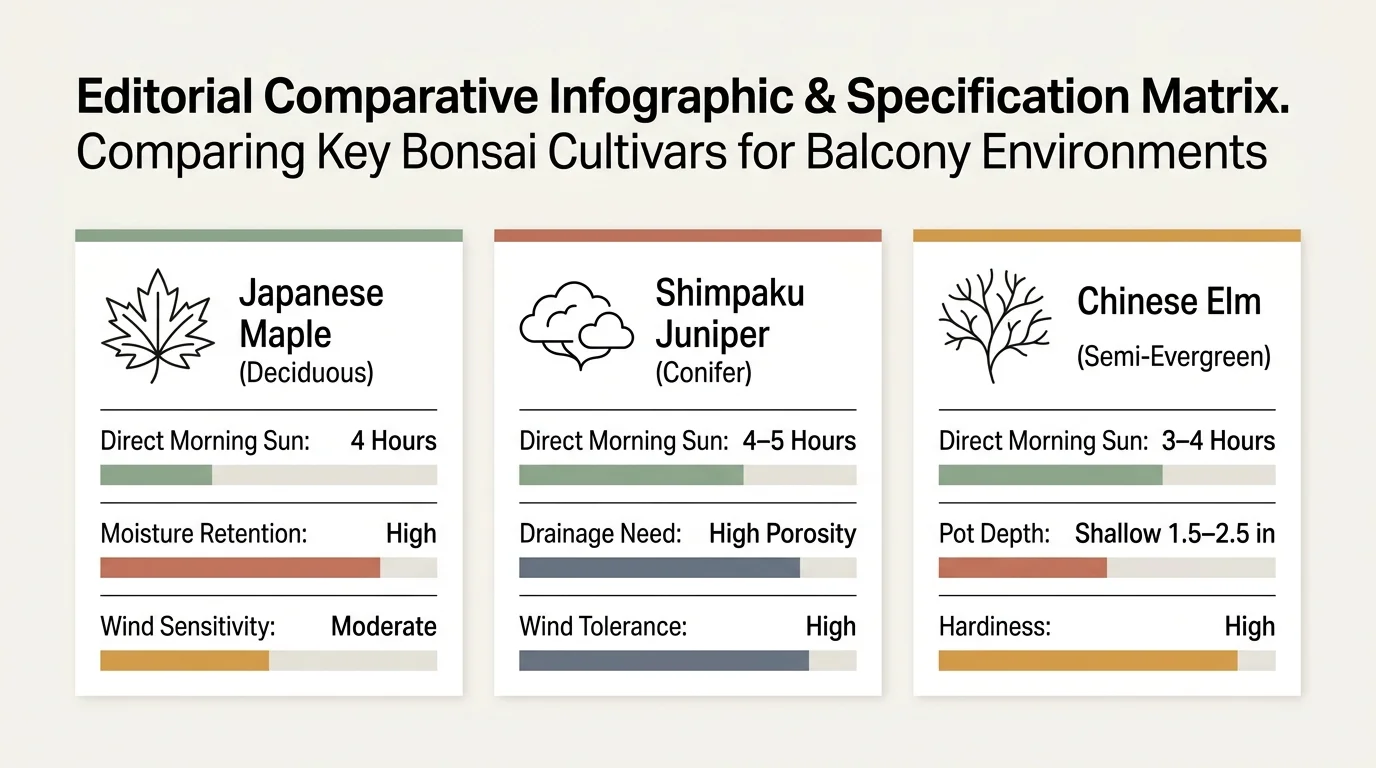
Balcony Species Specifications and Performance Metrics
Container gardening on balconies requires balancing water uptake against direct sun exposure. The table below outlines measurable horticultural parameters for four proven balcony cultivars.
Many retirees enhance this daily ritual through retirement sketching, recording foliage angles and trunk tapers in a dedicated journal.
| Species & Cultivar | Direct Morning Sun Needed | Summer Substrate Evaporation Rate | Root Pruning Frequency | Hardiness Zones |
|---|---|---|---|---|
| Chinese Elm (Ulmus parvifolia) | 4 to 5 Hours | Moderate (Daily check) | Every 2 Years | Zones 5 to 9 |
| Shimpaku Juniper (Juniperus chinensis ‘Kishu’) | 5 to 6 Hours | Low to Moderate (1 to 2 days) | Every 3 to 4 Years | Zones 4 to 9 |
| Dwarf Japanese Maple (Acer palmatum ‘Kiyohime’) | 3.5 to 5 Hours | High (1 to 2 times daily) | Every 2 to 3 Years | Zones 5 to 8 |
| Satsuki Azalea (Rhododendron indicum ‘Chinzan’) | 3 to 4.5 Hours | High (Maintain uniform moisture) | Every 2 Years | Zones 7 to 9 |
Compare these metrics against your specific outdoor exposure before purchasing trees. Matching species tolerances to your morning sun window guarantees steady internode growth and lush foliage development.
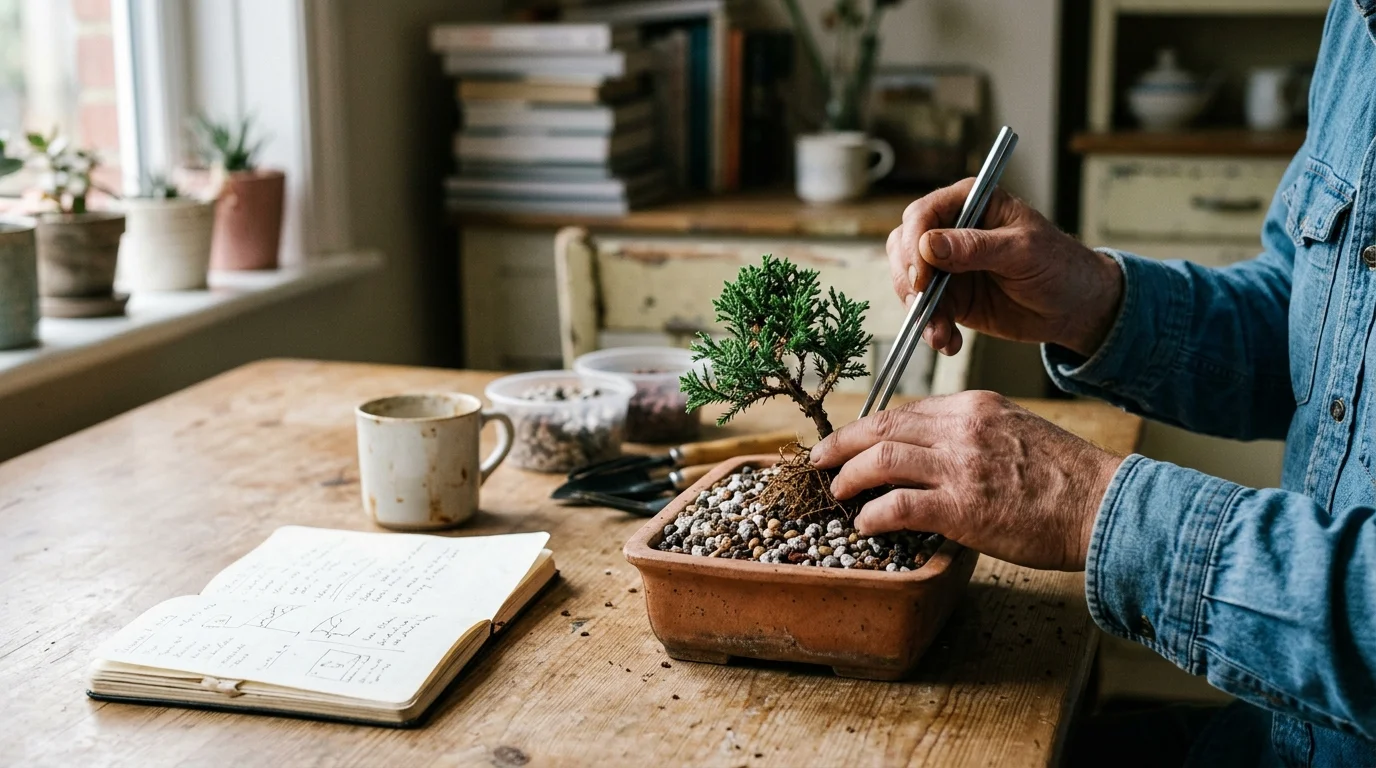
Root Care Mechanics in Shallow Pots: The Particle Aggregate Formula
Shallow pots alter container hydrology by creating a perched water table near the surface. Standard potting soil stays waterlogged at the container floor, which drowns fine feeder roots.
Healthy root systems require air exchange just as much as water. Particle aggregates create macro-pores that hold moisture on aggregate surfaces while allowing excess water to flush away immediately.
To keep miniature trees thriving in shallow containers, avoid organic compost and peat moss entirely. Instead, use a balanced mineral aggregate mix sifted to uniform grain dimensions:
- Hard Japanese Akadama (1/8-inch to 1/4-inch particle size): Baked volcanic clay that holds dissolved nutrients and breaks down slowly over several seasons.
- Washed Volcanic Pumice (1/8-inch particle size): Lightweight white volcanic rock that provides interior water retention while preserving structural air pockets.
- Crushed Black Lava Rock / Scoria (1/8-inch particle size): Dense, rough-edged volcanic aggregate that anchors heavy root flares and promotes root bifurcation.
Blend these components in a 1:1:1 volumetric ratio for junipers, elms, and maples. For moisture-loving azaleas, substitute Japanese kanuma pumice in place of standard akadama.
Sifting out dust particles below 1/16 inch prevents pore clogging at drainage holes. Uniform particle sizes maintain rapid oxygen exchange throughout the entire pot depth.
Root hairs branch outward whenever they collide with jagged lava and pumice particles. This mechanical splitting creates a fibrous root system that supports dense foliage ramification.
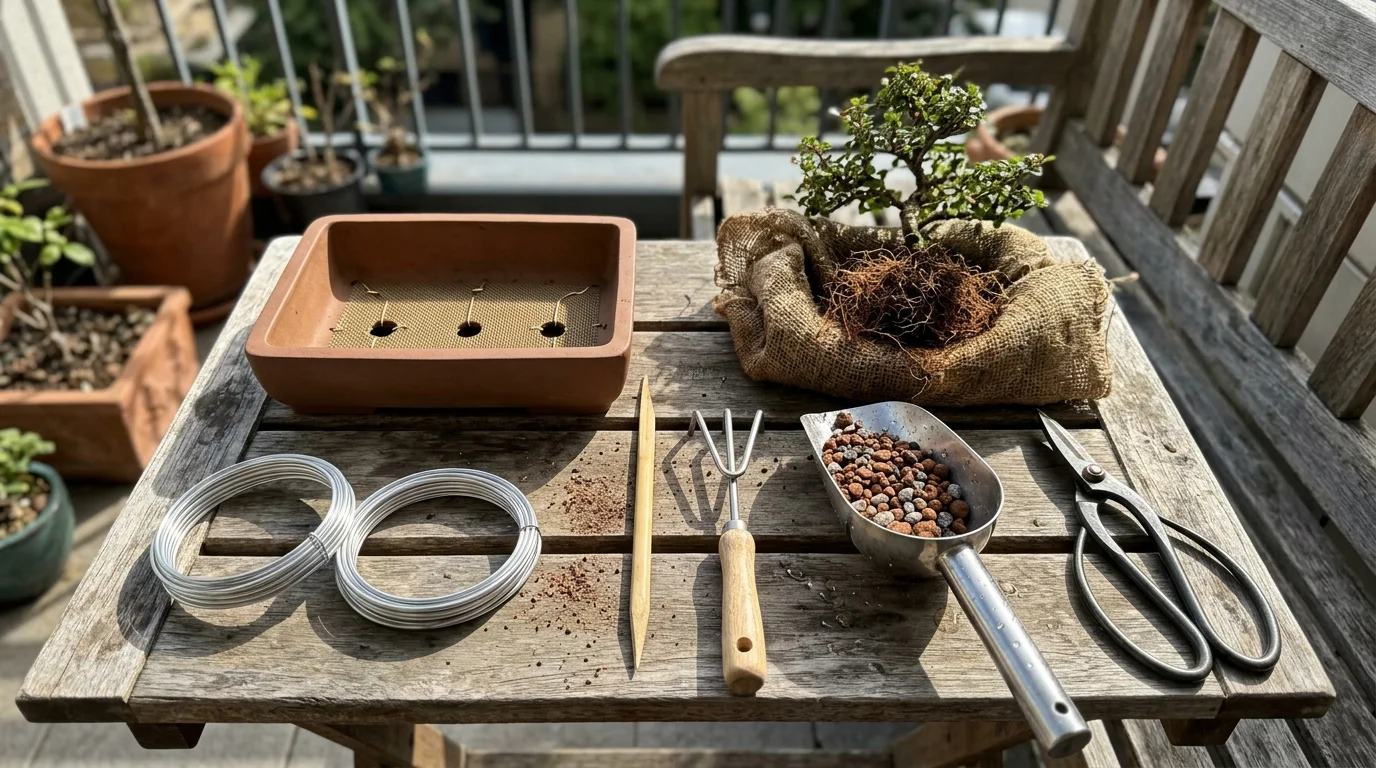
Worked Scenario: A Complete Spring Repotting and Setup Budget
This worked example outlines the tools, supplies, and costs for repotting a single specimen tree. We will repot a 12-year-old Kishu Shimpaku Juniper into a high-grade Japanese ceramic container.
Setting up a compact potting workstation pairs naturally with downsizing from power tools to Japanese hand woodworking for designing custom wooden display stands.
Much like the discipline of apartment Japanese hand-tool joinery, bonsai staging rewards mindful tactile precision and careful spatial planning.
Schedule the procedure for mid-April, just as terminal buds begin swelling. Working methodically protects root viability throughout the entire repotting process.
The following setup outlines exact quantities, specifications, and retail costs for this project:
- 12-year-old Shimpaku Juniper pre-bonsai stock: $185.00
- Unglazed Tokoname shallow oval pot (10.5 inches long, 7.5 inches wide, 2.25 inches deep): $68.00
- 14-liter bag of pre-sifted Boon aggregate mix (Akadama, pumice, lava): $38.00
- 500g spool of 1.5 mm annealed aluminum tie-down wire: $18.00
- Forged stainless steel root hook and rake tool: $22.00
- Rigid plastic drainage mesh sheets (pack of 5): $6.00
- Total Initial Investment: $337.00
Begin by securing drainage screens across bottom drainage holes using wire butterfly clips. Thread two 16-inch lengths of aluminum wire through pot holes to anchor the tree securely.
Carefully extract the juniper from its nursery container. Use your root hook to comb out compacted perimeter soil, working outward from the trunk base in radial strokes.
Prune the root mass down by exactly thirty percent, reducing root ball weight from 410 grams to 287 grams. Remove downward-growing taproots while preserving fine, cream-colored feeder tips.
Pour a thin half-inch foundation layer of aggregate mix across the bottom of the pot. Position the tree slightly off-center to create visual harmony and balance.
Cross the anchor wires over the main root flare and twist them snug using pliers. Firm wiring prevents wind gusts from shifting fragile new root tips during establishment.
Pour remaining aggregate into voids, using a smooth bamboo chopstick to settle particles around roots. Submerge the finished pot in water for eight minutes until bubbles stop rising.
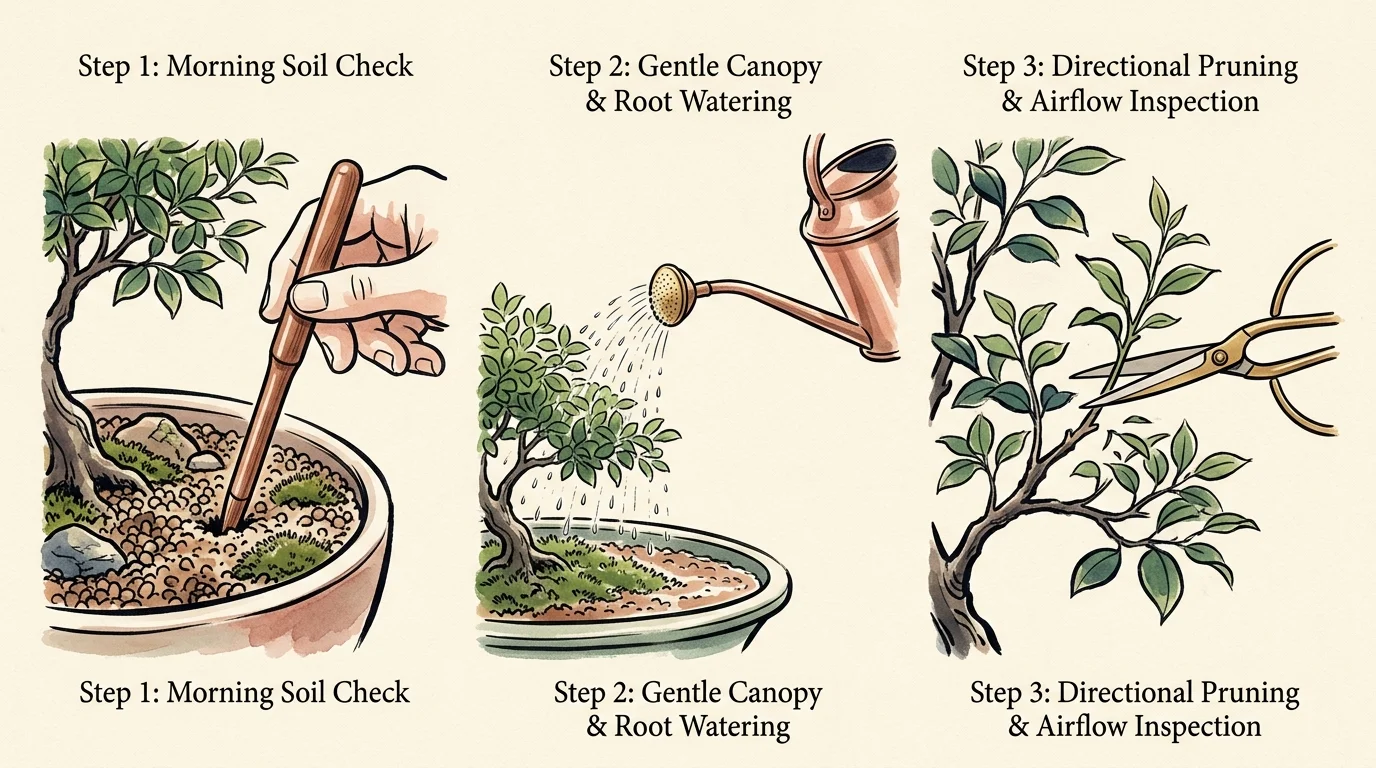
Step-by-Step Maintenance Routine for Outdoor Balcony Bonsai
Developing an organized daily care schedule ensures high-level patio bonsai care senior enthusiasts can maintain with minimal physical strain. Consistency keeps miniature trees balanced through varying seasonal conditions.
Routine outdoor horticultural tasks encourage positive physical activity and mental focus. As the National Institute on Aging notes, regular active hobbies help older adults sustain motor function and personal well-being.
Follow this five-step sequence each morning to maintain peak health across your balcony collection:
- Inspect the Top Substrate Layer: Examine aggregate color at 8:00 AM; light tan akadama indicates dry conditions, while dark reddish-brown signals adequate moisture.
- Deliver Gentle Morning Hydration: Apply water using a fine-pattern watering wand running at approximately 0.5 gallons per minute until water streams freely from base drainage holes.
- Rotate Containers on a 14-Day Cycle: Turn each pot 180 degrees every two weeks to prevent asymmetric branch elongation toward eastern light.
- Clear Fallen Debris and Yellowing Foliage: Use bonsai tweezers to pluck spent leaves from the soil surface to deter fungal spores and spider mites.
- Replenish Organic Fertilizer Pellets: Place solid organic fertilizer cakes (5-5-5 NPK ratio) into plastic mesh baskets every thirty days from May through October.
Watering requires deliberate observation rather than rigid calendar rules. Check your trees twice daily during dry heat waves, but irrigate only when surface aggregate dries out.
Solid organic pellets release nutrients slowly every time you water the tree. This steady feeding schedule builds strong branches without triggering coarse leaf growth.
Keep a small digital journal to track bud burst, wiring adjustments, and pruning dates. Reviewing seasonal notes will help refine your watering and maintenance techniques year after year.
Balcony Windbreaks, Hydration, and Microclimate Winterization
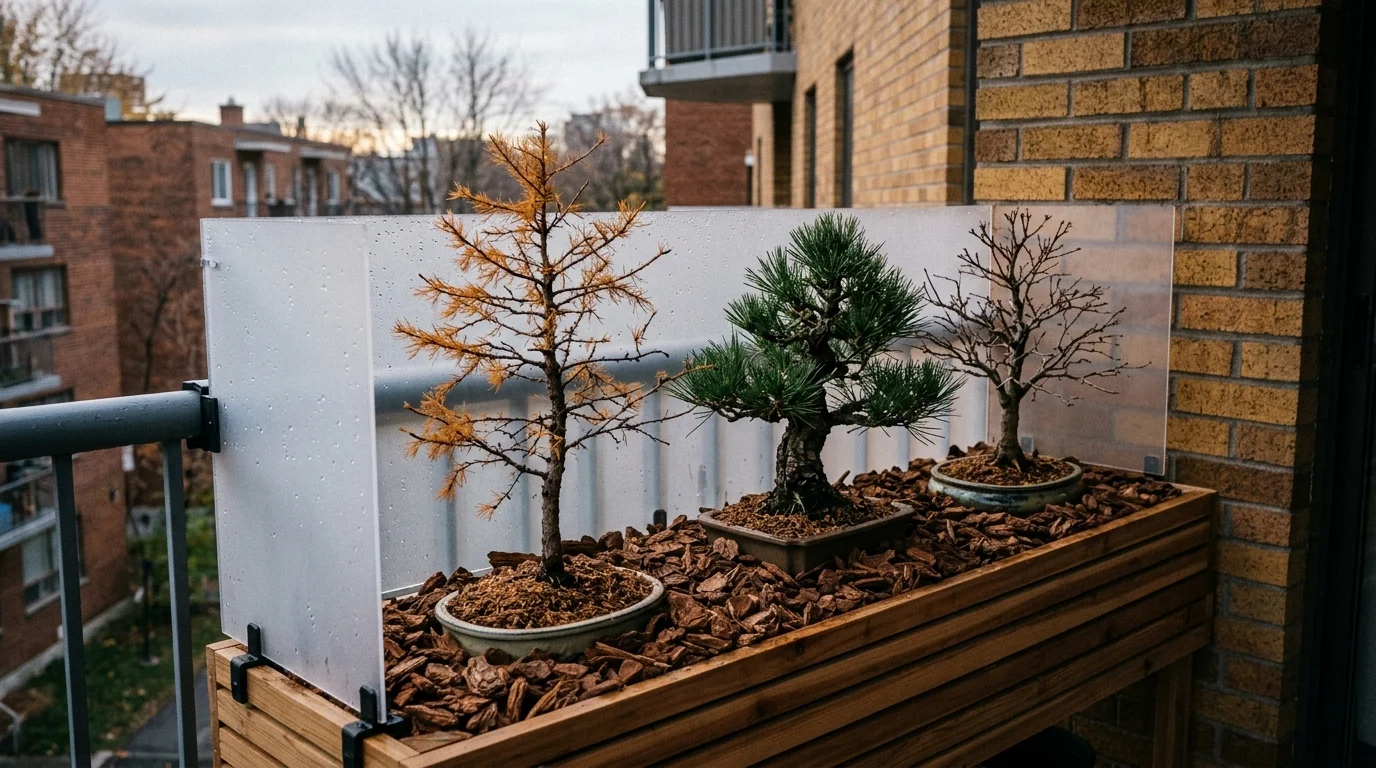
Balcony elevations create distinct microclimatic challenges that ground-level gardens rarely face. Wind speeds on fourth to twelfth-story balconies run twenty to forty percent higher than at ground level.
Constant winds pull moisture out of delicate foliage faster than shallow root systems can replace it. Install semi-translucent acrylic panels or bamboo reed fencing along outer railings to deflect shear winds.
Winter brings additional challenges because small pots lack ground insulation. When ambient winter air drops below 20 degrees Fahrenheit, container substrate freezes solid within hours.
Frozen root systems cannot absorb water, causing evergreen foliage to dehydrate under sunny winter skies. Protecting shallow root balls prevents devastating branch dieback during winter freezes.
Prepare your balcony trees for winter dormancy using this protective storage method:
- Move dormant pots off outer balcony ledges and place them directly onto concrete flooring next to heated interior condo walls.
- Nest containers inside heavy-walled styrofoam coolers or double-walled wooden storage crates.
- Fill voids around pots with shredded hardwood mulch or pine bark nuggets right up to the root flare.
- Water substrate thoroughly once every ten to fourteen days during dry, above-freezing afternoons.
Condo walls radiate low-level heat that keeps your insulated storage crate five to eight degrees warmer than ambient outdoor air. This buffer protects delicate fine roots through cold winter snaps.
As spring temperatures rebound in late March, unpack your trees and return them to raised stands. Your collection will greet the new season with vigorous buds and healthy root systems.
Frequently Asked Questions
Can outdoor bonsai trees survive indoors inside my condo?
Temperate trees like maples, junipers, and elms require outdoor seasonal temperature cycles to enter winter dormancy. Keeping temperate bonsai indoors year-round leads to exhaustion, root failure, and eventual tree death within two years.
How often should I water shallow bonsai pots on an open balcony?
Check your trees daily. In hot summer weather, shallow pots may need water once or twice each day, while cool spring and autumn weather reduces watering needs to every two to three days.
Is four hours of morning sun sufficient for juniper bonsai?
Yes, four to five hours of direct, unobstructed morning sunlight provides sufficient energy for compact cultivars like Kishu Shimpaku Juniper. Morning light preserves tight foliage pads without exposing shallow pots to intense afternoon heat.
What pot depth should I choose for windy balcony conditions?
Choose pots between 2.0 and 3.0 inches deep for windy balconies. This provides enough aggregate weight and depth to anchor roots and resist rapid drying without creating waterlogged conditions.
Disclaimer: This article is for informational and inspirational purposes. Life decisions are deeply personal, and we encourage readers to pursue their dreams while considering their unique circumstances, health, and financial situation.