
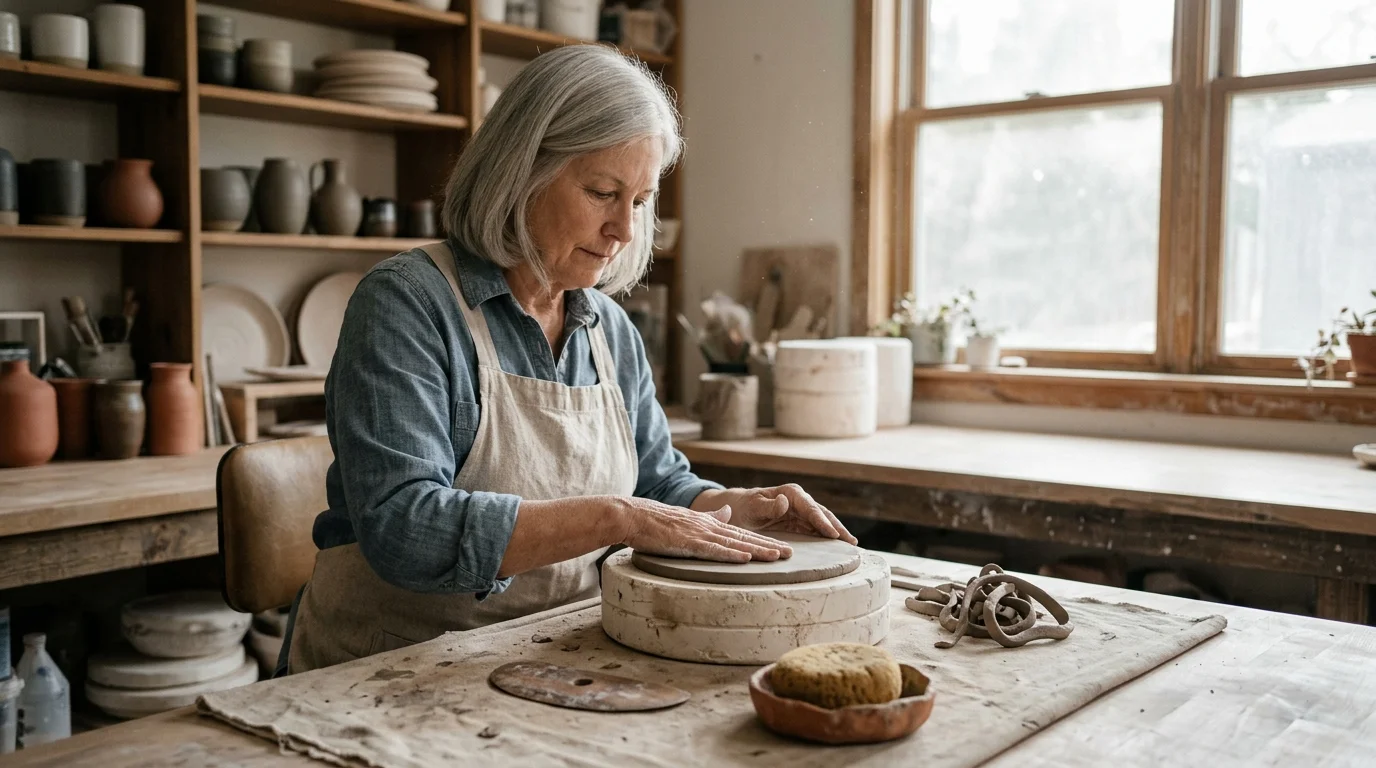
You can create exquisite, professional-grade ceramic vessels without subjecting your wrists to the punishing torque of an electric wheel. Hand building ceramics for seniors offers an empowering artistic path that eliminates median nerve compression while expanding your sculptural possibilities.
While throwing clay demands continuous rotational pressure, mechanical slab rollers and rigid slump molds redirect forces into large muscle groups. This strategic pivot lets a 68-year-old ceramicist bypass joint pain entirely without sacrificing precision, form, or creative independence.
By replacing rotational centering with mechanical advantage, you protect delicate wrist anatomy while producing heirloom-quality tableware at a fraction of traditional studio startup expenses.
The Biomechanics of Clay: Why Wheel Throwing Aggravates Nerve Compression
Carpal tunnel syndrome occurs when the median nerve becomes compressed within the rigid carpal tunnel of the wrist. This narrow passageway houses nine flexor tendons alongside the nerve, leaving minimal room for inflammation or swelling.
Just as musicians with sensitive hands select low-tension guitar setups to avoid flare-ups, ceramicists must adjust their tooling to keep median nerve compression at bay.
Data from the Centers for Disease Control and Prevention indicates that carpal tunnel syndrome affects up to 5% of adults; clinical severity, median nerve latency, and thenar muscle weakness increase significantly in adults over age 65.
Furthermore, approximately 49% of non-institutionalized older American adults manage doctor-diagnosed arthritis. Repetitive pinching under heavy mechanical resistance accelerates joint degradation and provokes intense tingling or numbness across the thumb, index, and middle fingers.
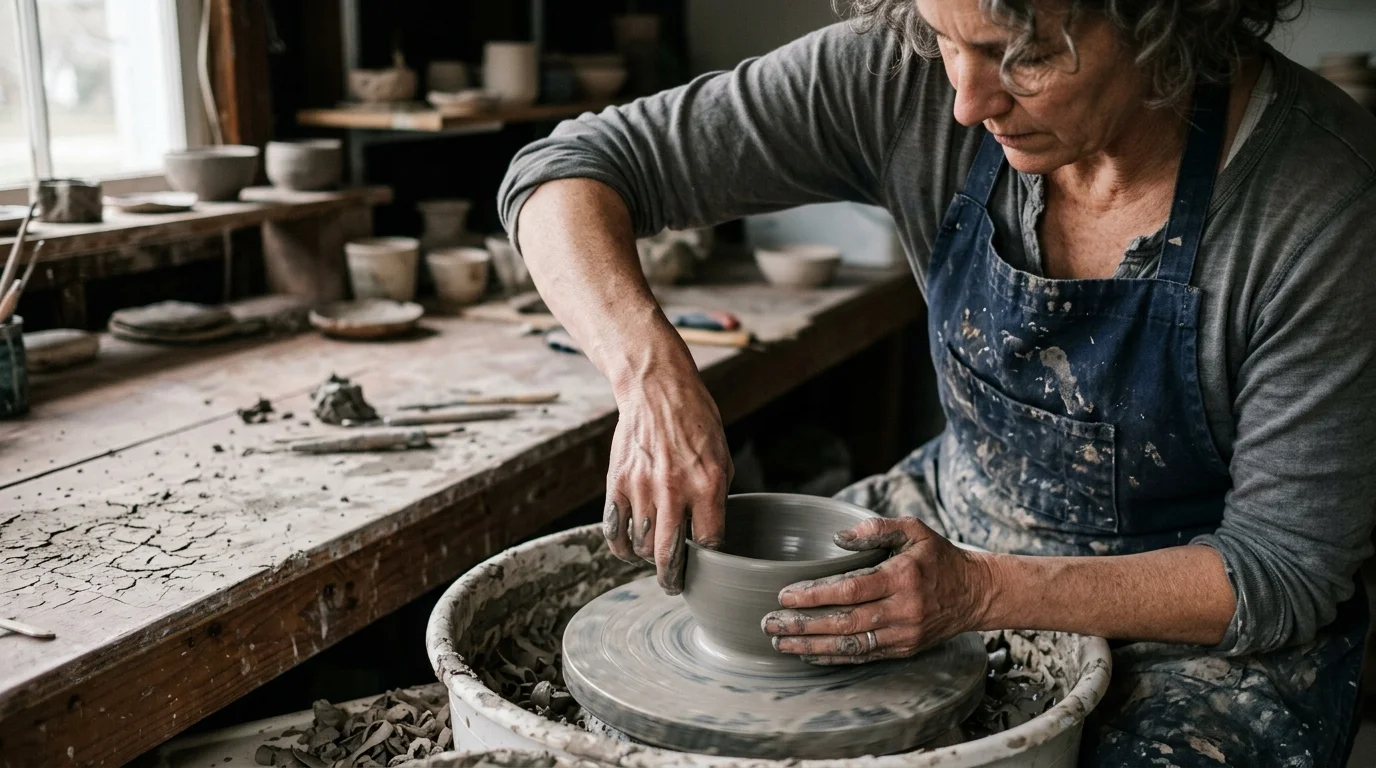
Centering three to five pounds of wet clay on a wheel spinning at 120 RPM requires continuous isometric force. You must push inward and downward with 25 to 40 pounds of sustained lateral pressure using your wrists in an extended posture.
This dynamic rotational torque forces your transverse carpal ligament to grind directly against flexor tendons. The resulting friction spikes intraneural pressure, triggering rapid onset numbness, wrist tremors, and persistent nocturnal hand pain.
Guidance from the National Institute on Aging joint health resources emphasizes that modifying mechanical load patterns preserves functional independence far better than abandoning creative physical activity entirely.
Hand building eliminates rotational shear stress completely. By trading spinning clay for static sheets of clay, you protect vulnerable joint structures and work within safe anatomical comfort zones.
Slab Construction: Studio-Grade Pottery Without Dynamic Torque
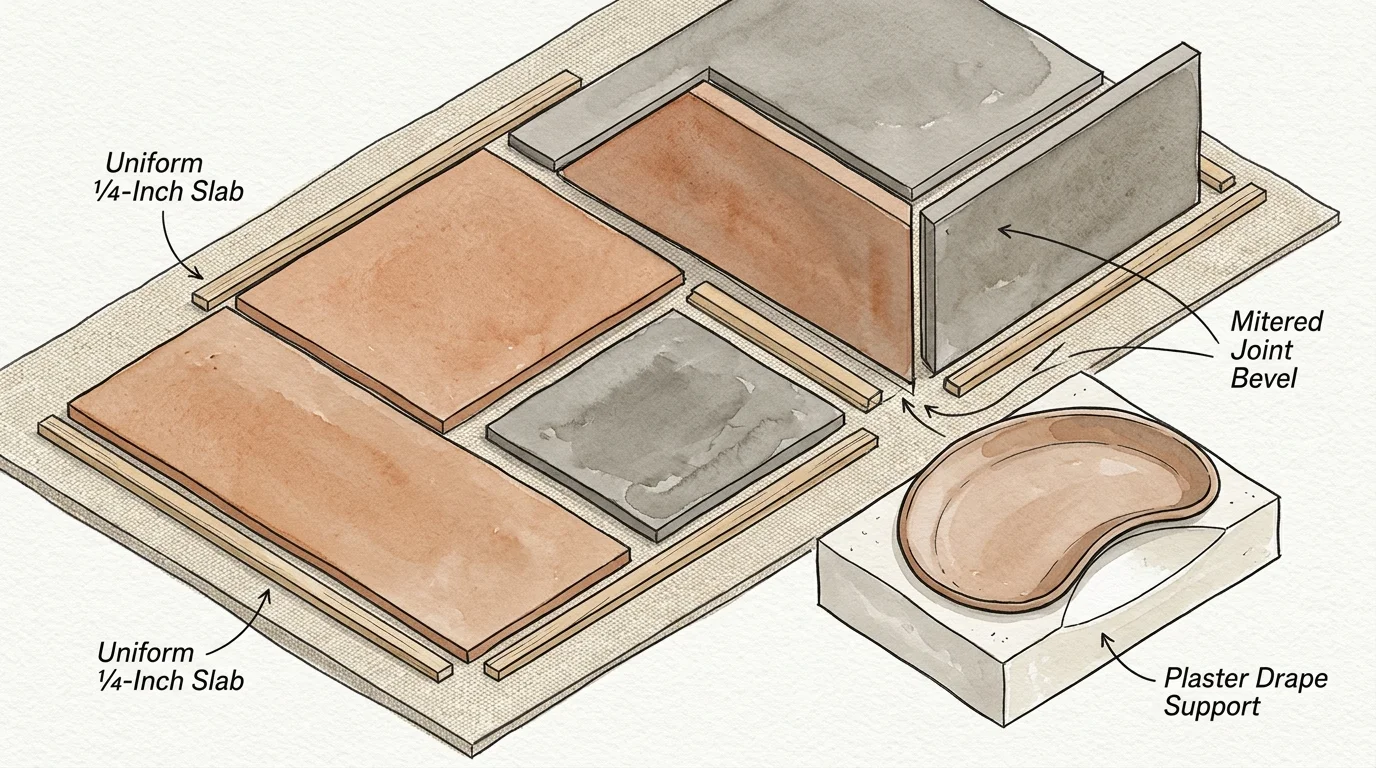
Slab building transforms ceramic art from an aggressive physical battle against rotational inertia into an architectural discipline of precision cutting, folding, and joining. You shape clay across stable, flat planes rather than wrestling moving mass.
Embracing adaptable crafts allows you to unleash your inner artist in retirement while working comfortably within your physical boundaries.
Many older adults find profound renewal in three-dimensional arts, much like Mary’s inspiring transition into sculpting after decades in a corporate career.
This approach relies on mechanical advantage and structural geometry. Instead of forcing wet mud upward against gravity using static finger pinches, you roll clay to an exact caliper thickness and allow gravity to drape it over rigid forms.
“It is never too late to be what you might have been.” — George Eliot
Slab techniques produce pristine dinnerware sets, angular teapots, expansive serving platters, and towering cylindrical vases. Master potters across the globe use slab construction specifically for its crisp lines and decorative surface possibilities.
Because you cut leather-hard slabs with thin blades and assemble seams using gentle compression, you completely bypass the sustained palmar pressure that inflames carpal tunnel tissues.
Working with leather-hard clay shifts the tactile experience from wet friction to controlled carving. Your shoulders, elbows, and core drive the cutting motions, freeing your hands to execute fine decorative details with light, relaxed grips.
Mechanical Equipment: Tabletop Slab Rollers Versus Electric Wheels
Equipping an accessible studio requires evaluating the physical strain and capital cost of primary ceramic machinery. Electric wheels not only demand intense physical stabilizing force, but they also require dedicated water containment and high-torque electric motors.
Much like adopting tabletop weaving to relieve shoulder strain, choosing leverage-assisted equipment allows makers to continue complex craftwork without physical burnout.
Modern studio-grade pottery wheels—such as the Shimpo VL-Whisper or the Brent Model C—cost between $1,150 and $2,350. They lock your body into a seated, hunched posture that places severe compressive loads on your lumbar spine and wrists.
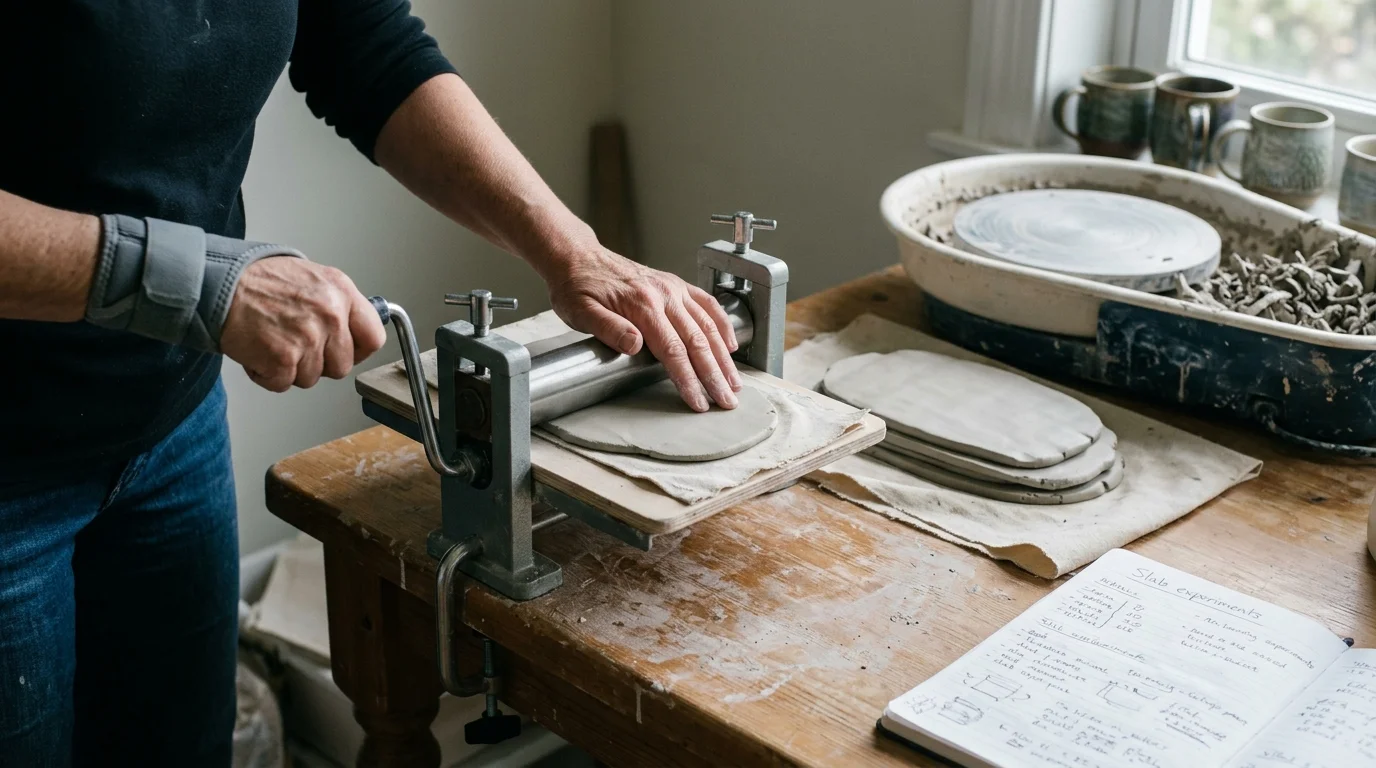
In contrast, manual tabletop slab rollers employ precision gear reduction systems. A single low-effort turn of a hand wheel or crank arm generates hundreds of pounds of downward mechanical compression evenly across cold clay.
Tabletop units retail between $640 and $1,100, saving substantial equipment budget while entirely eliminating wrist strain. A model like the Nidec Shimpo SRM-1624 Mini Slab Roller delivers 16-inch wide slabs with minimal turning resistance.
| Equipment Model | Retail Price | Mechanical Force Applied by Potter | Carpal Tunnel Strain Rating |
|---|---|---|---|
| Shimpo VL-Whisper Electric Wheel | $1,450 – $1,750 | 25–40 lbs continuous isometric wrist centering | High: Severe rotational shear and wrist extension |
| Brent Model C Electric Wheel | $1,800 – $2,100 | 30–45 lbs sustained palmar and thenar force | High: Sustained static pinch and heavy vibration |
| Nidec Shimpo SRM-1624 Mini Roller | $640 – $750 | 4–6 lbs arm cranking leverage (shoulder engagement) | Low: Zero static wrist compression |
| Bailey Mini-Might II 16-Inch Roller | $900 – $1,100 | 5–7 lbs dual-roller gear crank drive | Low: Linear motion utilizing upper back muscles |
Tabletop slab rollers compress clay through synchronized dual steel cylinders. This mechanical action aligns clay platelets tightly in bidirectional patterns, yielding stronger ceramic ware than hand-kneaded or thrown pottery.
The roller carries the full workload. You simply feed a clay block between canvas sheets, set the thickness dials to your chosen depth, and rotate the external crank using broad arm circles.
Adaptive Hand Tools and Ergonomic Studio Grips
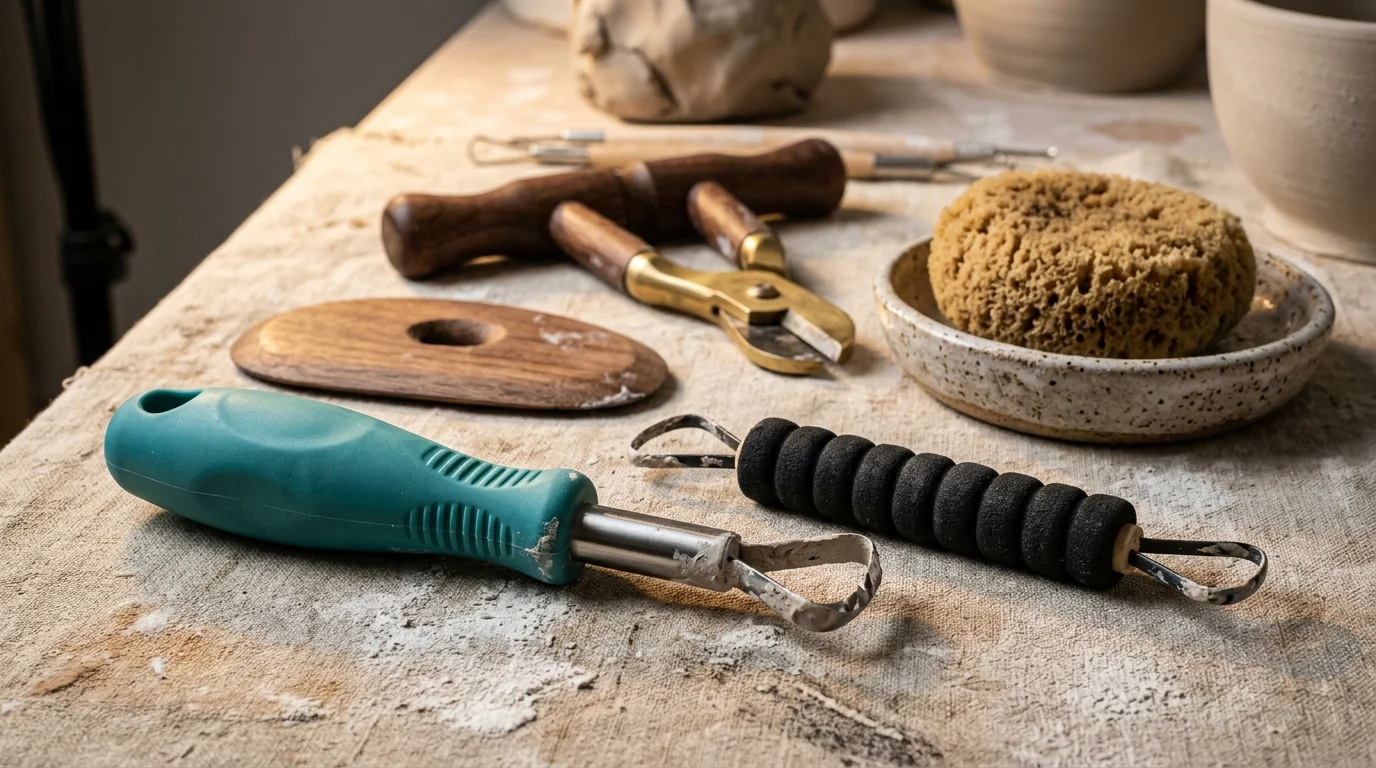
Standard pottery tool sets feature thin, pencil-style wooden handles that force your fingers into tight pinch grips. Prolonged static pinching spikes pressure inside your carpal tunnel, rapidly triggering pain and muscle spasms.
Similar ergonomic principles apply when setting up printmaking with cut-proof palm guards, proving that hand-friendly carving tools can protect your wrists across multiple studio crafts.
Just as musicians make ergonomic adjustments when playing stringed instruments with arthritis, clay artists can adapt grips and handle profiles to stay creatively active.
Replacing these thin wooden tools with specialized, wide-diameter ergonomic pottery tools arthritis modifications relieves strain instantly. Ergonomic tools distribute grasping pressure across the broader surface of your entire palm.
- Foam-Padded DiamondCore Carving Tools: These carving tools feature thick, dense foam grips ($38–$42 each) that dampen vibration and allow relaxed finger positioning during delicate sgraffito and trimming work.
- Mudtools Flexible Polymer Ribs: Available in color-coded flexibilities ($9–$14 each), these ribs fit the natural cupped curve of your palm without requiring your thumb to pinch downward.
- Closed-Cell Foam Grip Tubing: Slide affordable 3/8-inch inner diameter closed-cell foam insulation tubing over existing needle tools and wire loops to triple handle diameter for under $5.
- Rigid GR Pottery Forms: These medium-density fiberboard drape molds ($12–$35 per form) shape consistent plates, bowls, and platters through gentle sponge compression rather than manual muscle sculpting.
- Toggle-Handle Cut-Off Wires: Replace thin wire strands with heavy braided nylon cords anchored by wide wooden dowel handles ($10–$14) to slice clay blocks cleanly using shoulder pull.
These adaptive tools keep your wrist in a neutral, straight position—similar to a relaxed handshake. When your wrist remains straight, your carpal tunnel stays fully open, ensuring steady blood circulation and unobstructed median nerve signaling.
Explore creative courses at your regional Osher Lifelong Learning Institute network, where instructors regularly accommodate adaptive studio tools and non-wheel ceramic methods.
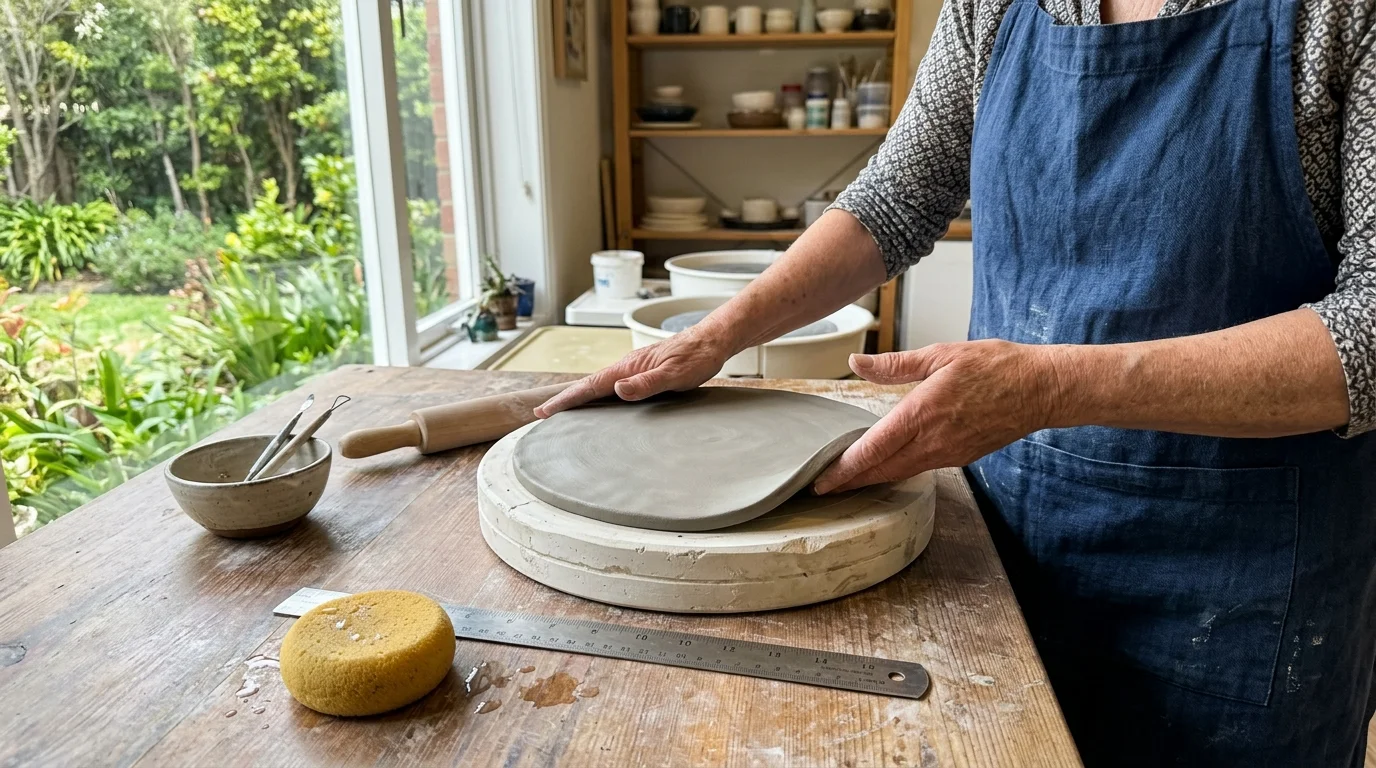
Step-by-Step Scenario: Forming a 10.5-Inch Rimmed Plate Pain-Free
Consider this concrete scenario featuring Evelyn, a 68-year-old potter managing moderate carpal tunnel symptoms. Evelyn aims to build a four-piece set of matching 10.5-inch rimmed dinner plates without triggering wrist tingling.
Evelyn selects Standard Ceramic #112 brown stoneware with fine grog ($24 per 25-lb bag). The grog provides structural stability, preventing warping during flat drying and firing cycles.
- Cut the Clay Slab: Evelyn uses a wide-handled wire cutter to slice a 3-pound clay block from the bag, bypassing wedging entirely.
- Roll to Mechanical Caliper: She sets her Nidec Shimpo SRM-1624 roller to 3/8-inch (9.5 mm) thickness, feeds the clay between heavy canvas, and turns the crank arm for 45 seconds using smooth shoulder motions.
- Compress the Clay Platelets: Evelyn smooths both sides of the flat slab using a flexible Yellow Mudtools medium rib held against the flat of her palm, spending 90 seconds smoothing the surface.
- Position the Drape Mold: She positions a 10-inch round GR Pottery Form ($22.00) atop an elevated wooden spacer block on her turntable, draping the soft slab centered over the form.
- Shape the Rim Profile: Using a damp high-density foam sponge, Evelyn presses downward around the outer rim of the form for two minutes, using body weight to create the plate profile without pinching.
- Bevel the Outer Perimeter: She rotates the turntable smoothly while holding a dull fettling knife fitted with a foam sleeve steady at a 45-degree angle, trimming excess clay in 30 seconds.
The entire forming process takes less than six minutes per plate. Evelyn exerts zero rotational isometric force, and her wrists remain in a stable, neutral alignment throughout every movement.
She leaves the formed plate resting upside down on its mold for 90 minutes. Once the clay reaches soft leather-hard consistency, she lifts the mold away effortlessly, leaving a geometrically precise dinner plate.
Studio Ergonomics: Workstation Heights and Low-Strain Clay Preparation
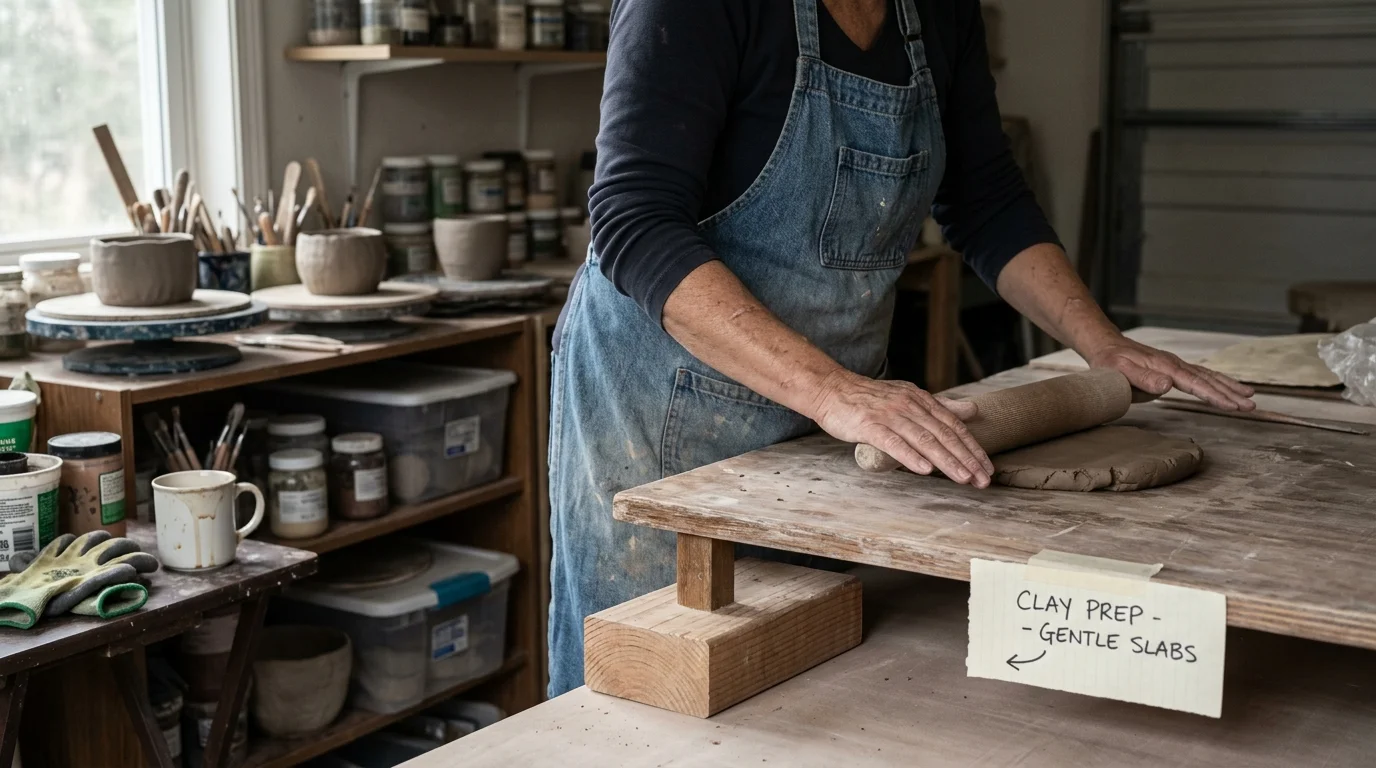
Traditional ceramic studios force artists to lean over low wedging benches and sink into deep wheel stools. To protect your nerve pathways, redesign your workspace around ergonomic standing heights and leverage-assisted techniques.
Setting up your studio bench at proper elbow height mirrors the best practices used in ergonomic Japanese hand woodworking to protect joints and maintain posture.
Set your primary slab assembly table to standing elbow height—typically 38 to 42 inches from the floor for a maker measuring 5 feet 6 inches tall. This elevation lets you keep your forearms parallel to the work surface.
Working at standing elbow height prevents wrist extension. You lean forward using your abdominal core and hips to smooth clay seams rather than driving pressure through isolated wrist flexors.
Traditional spiral and ram’s head wedging severely aggravates carpal tunnel syndrome because it forces repetitive heel-of-the-palm compression against dense clay. Replace manual wedging completely with the “wire wedging” technique.
- Mount a heavy cutting wire vertically between your tabletop and an upper wall hook.
- Slice your clay block cleanly into halves across the taut wire using a single downward pull.
- Pick up the sliced segments and slam them firmly back together against the table surface.
- Repeat this cut-and-slam cycle twenty times over three minutes to eliminate air bubbles and homogenize moisture without pressing clay with your wrists.
Place a 3/4-inch closed-cell polyurethane anti-fatigue mat beneath your standing work area. Cushioning underfoot reduces lower back tension, eases leg fatigue, and encourages micro-movements that maintain overall physical stamina.
Preserving Longevity: Daily Nerve Glides and Studio Movement Habits
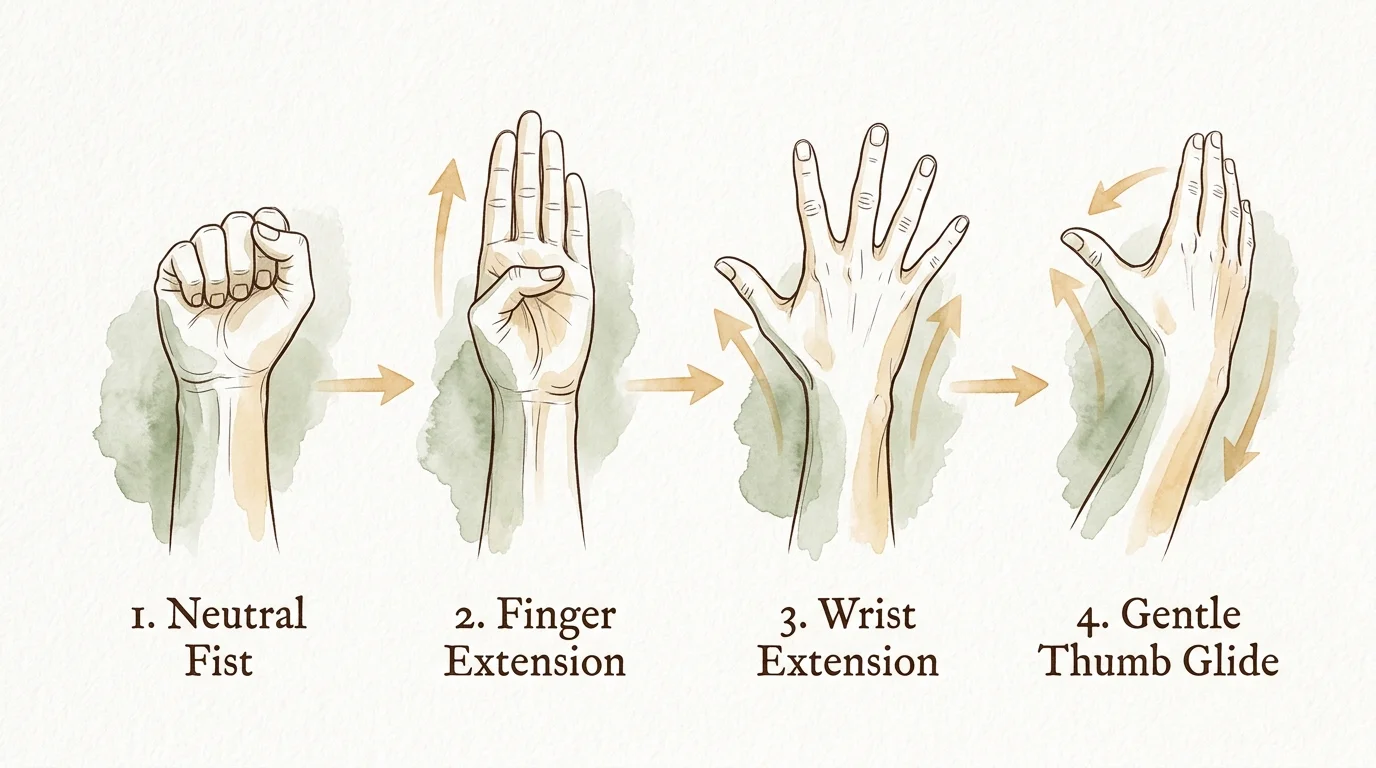
Longevity in the ceramic studio relies on proactive physical preparation. Performing targeted median nerve gliding exercises before handling clay helps the nerve slide freely through the carpal tunnel without binding.
Pairing ceramic slab pendants with handcrafted jewelry making techniques is another wonderful way to explore mixed-media artistry with light, low-torque hand motions.
Warm hand tissues before beginning studio work. Immerse your hands in warm water or wear light compression gloves for ten minutes prior to cutting slabs to boost local capillary circulation.
- Neutral Fist to Fan Extension: Form a gentle fist with your wrist straight, then open your fingers wide and extend your thumb outward to stretch the palmar fascia gently.
- Wrist Extension Release: Hold your arm outward with fingers pointing toward the ceiling; gently draw your fingers backward with the opposite hand for five seconds, then release.
- Thumb Abduction Glides: Cup your hand upward and slowly spread your thumb away from your palm at a 90-degree angle, releasing tension in the thenar muscles.
- The 25/5 Studio Rule: Set a kitchen timer for 25 minutes of hands-on clay construction, followed by a mandatory 5-minute break to hydrate and roll your shoulders.
Nerve glides maintain mobility in connective tissues surrounding your tendons. Performing these light movements regularly prevents micro-scarring that restricts median nerve transit across the wrist.
Listen closely to subtle bodily cues. If you notice faint finger tingling, transition immediately from cutting or assembling clay to glazing or designing project templates on paper.
Frequently Asked Questions
Can you make round, functional pottery without using a potter’s wheel?
Yes. By draping rolled clay slabs over round MDF forms or wrapping them around structural cylinders, you produce perfectly symmetrical bowls, cups, and circular platters with crisp, professional geometry.
Are manual tabletop slab rollers difficult to turn with hand weakness?
No. Tabletop rollers use internal gear reductions that maximize mechanical leverage. Rotating the crank requires only four to six pounds of force, which you drive using broad shoulder and arm muscles rather than wrist torque.
What clay body works best for hand building with carpal tunnel?
Choose smooth to medium-textured stoneware clays containing fine grog or molochite, such as Standard Ceramic #112. These bodies hold flat structural shapes reliably while remaining soft enough to compress without strenuous physical exertion.
How thick should I roll slabs for plates and trays?
Roll functional dinnerware slabs to a uniform thickness of 3/8 inch (9.5 mm). This thickness provides ample structural rigidity to prevent kiln sagging while remaining light enough to manipulate easily.
Disclaimer: This article is for informational and inspirational purposes. Life decisions are deeply personal, and we encourage readers to pursue their dreams while considering their unique circumstances, health, and financial situation.



1 Comment