
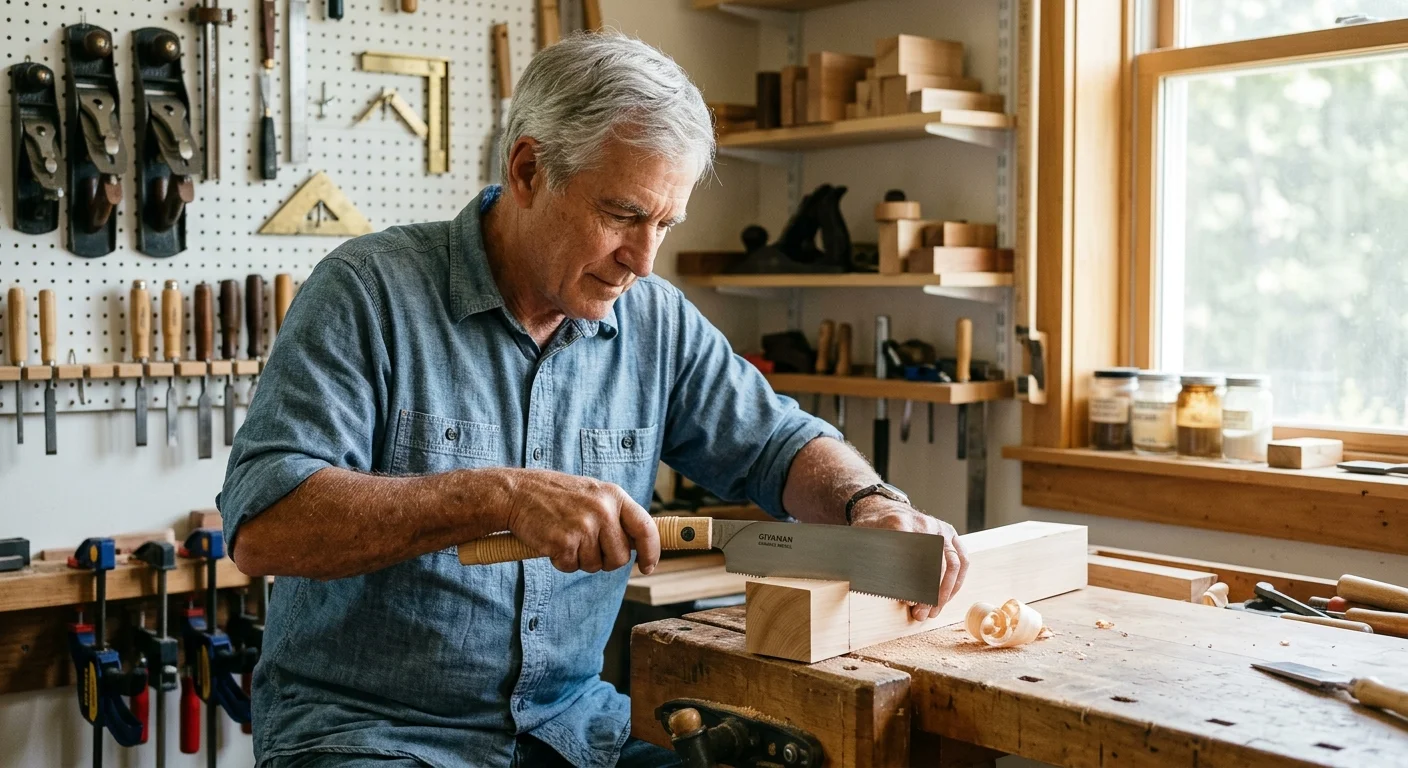
Stepping away from spinning carbide does not mean ending your craft when balance and reaction times change at age 70. Japanese hand woodworking eliminates violent kickback risks while giving you complete tactile control.
Standard retirement advice urges seniors to scale down to passive hobbies, yet converting to thin-kerf pull saws and tailored standing benches reduces lower back fatigue by engaging your core instead of your lumbar spine.
You trade screaming 100-decibel motors for whisper-quiet precision, proving that your best woodworking years can happen without power cords.
Why Transitioning from Power Machinery Protects Your Retirement Craft
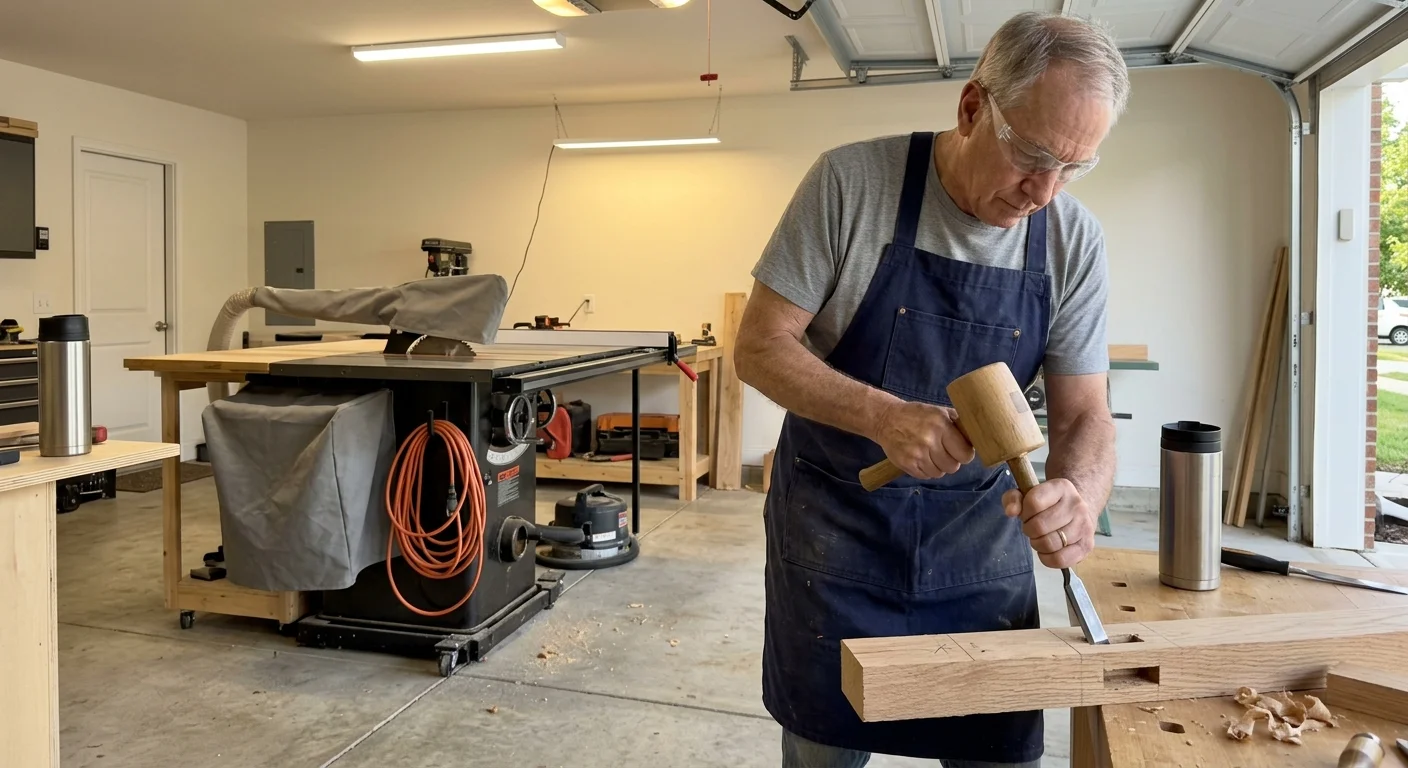
Decades of operating table saws, jointers, and shapers teach deep respect for sharp cutting edges. However, normal neurological aging gradually alters peripheral reaction time and balance coordination.
Transitioning toward tactile, low-impact bench work is a prime example of crafting a fulfilling retirement through engaging projects tailored to your lifestyle.
Data from the U.S. Consumer Product Safety Commission shows table saws cause 30,000 to 40,000 emergency room visits annually. These incidents result in approximately 4,000 amputations each year across American workshops.
A momentary balance check near a 4,000-RPM blade carries catastrophic consequences that no experienced woodworker should risk in retirement. Hand tools return complete agency to your fingertips.
When you cut timber using muscle power, the blade stops moving the split second your hand stops guiding it. Unexpected catches or grain deviations produce harmless stalls instead of explosive projectile kickbacks.
Aging safely does not require abandoning creative ambition or settling for prefabricated crafts. The National Institute on Aging emphasizes that regular, purposeful physical activities help maintain motor coordination and independent living skills.
Japanese woodworking practices provide deliberate physical exercise without subjecting aging joints to repetitive impact shock. Every cut demands mindful concentration, spatial reasoning, and steady breath control.
The Biomechanics of Japanese Pull Saws: Tension Versus Compression
Western saws cut on the push stroke, which places the metal blade under severe compressive loads during use. To prevent thin steel from buckling under forward pressure, Western blades must remain relatively thick.
Much like adapting pottery techniques with ergonomic hand tools for sensitive joints, rethinking how you apply force allows you to maintain fine craftsmanship without physical pain.
Pushing a thick saw through dense hardwood requires forceful downward pressure and forward lean. This posture places immense mechanical stress directly on your lumbar spine, shoulder joints, and wrists.
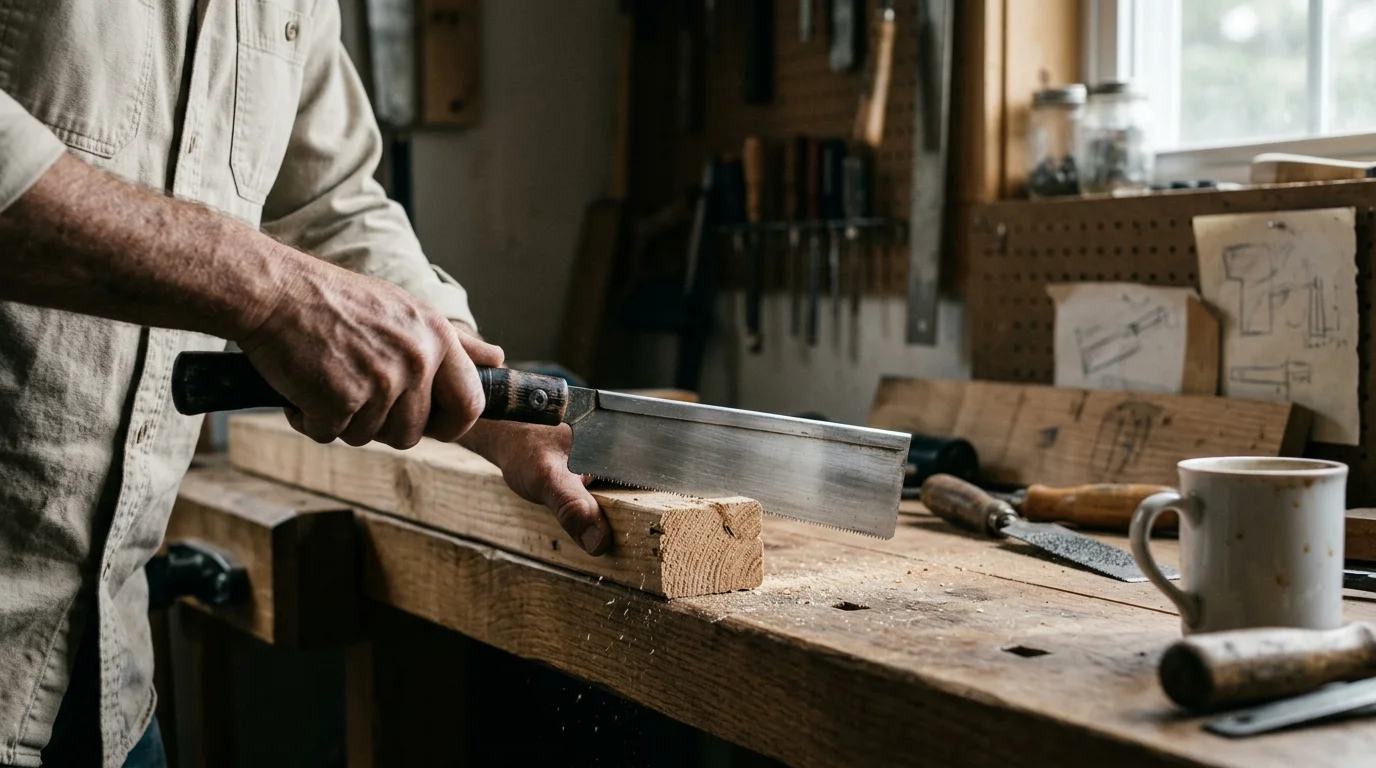
Japanese pull saws, or nokogiri, operate on the opposite mechanical principle by cutting strictly on the draw stroke. Pulling draws the blade straight under natural tension, making blade collapse impossible.
Because tension stabilizes the blade automatically, Japanese makers forge blades that are 50% to 75% thinner than Western equivalents. Saws like the Gyokucho Razorsaw feature kerf widths as narrow as 0.5 millimeters.
A narrower kerf removes substantially less wood fiber with every pass. You expend a fraction of the mechanical energy needed to cut an identical dovetail joint.
The pull stroke naturally activates your latissimus dorsi, rhomboids, and deep core muscles. It avoids the compressive slouch and shoulder impingement common to Western sawing.
For a woodworker with spinal arthritis, this ergonomic shift preserves stamina. You cut wood standing balanced and erect, drawing the long handle toward your belly without straining your lower back.
Essential Japanese Hand Tools: The Starter Kit for Senior Craftsmen
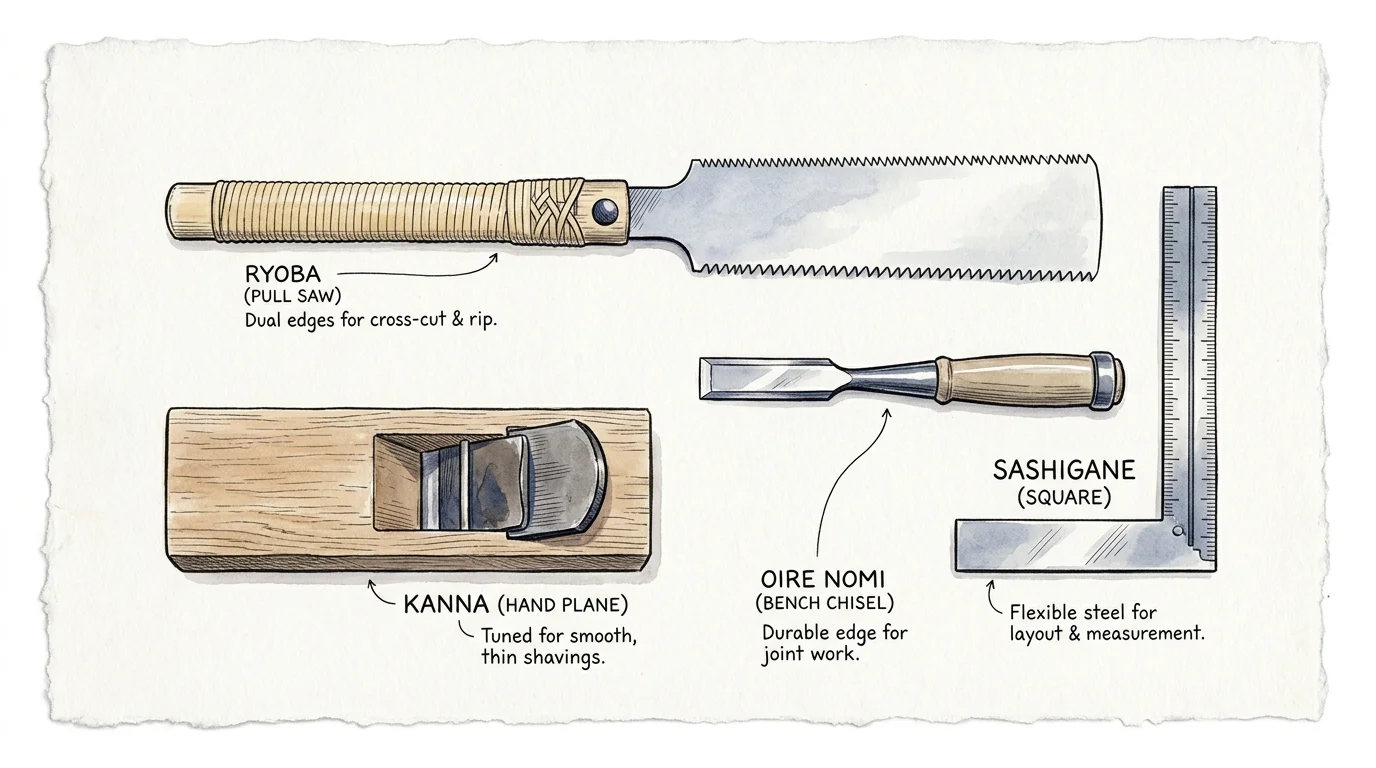
Downsizing your workshop does not require purchasing dozens of specialty carving irons or antique accessories. A focused collection of Japanese tools replaces your table saw, miter station, and power jointer.
- Gyokucho Razorsaw Ryoba 240mm (No. 610): A double-sided saw featuring rip teeth on one edge and crosscut teeth on the other.
- Suizan Dozuki 150mm: A rigid, steel-backed saw designed for hairline dovetails, tenon cheeks, and fine trim cuts.
- Kakuri 42mm Kanna: A compact smoothing plane housed in Japanese white oak that levels rough surfaces on the pull stroke.
- Oire Nomi Bench Chisels (9mm, 15mm, 24mm): Forged high-carbon steel chisels balanced for hand paring and light mallet joinery.
- Shapton Ha No Kuromaku Ceramic Stones (1000 and 5000 Grit): Splash-and-go water stones that sharpen bevels within minutes without messy oil baths.
Adopting hand tool woodworking for seniors begins with tools that eliminate joint vibration while maximizing cut efficiency. High-carbon Japanese steel holds razor edges significantly longer than standard carbon tool alloys.
The table below outlines how standard Japanese hand woodworking gear compares directly to power machinery in physical demand, sound levels, and initial cost.
| Tool Model and Type | Operating Action | Sound Level (dBA) | Primary Muscle Group | Typical Cost |
|---|---|---|---|---|
| Gyokucho Ryoba 240mm (#610) | Manual tension draw stroke | 68 dBA | Latissimus dorsi and core | $38 |
| Suizan Dozuki 150mm (#0103) | Fine-kerf manual pull | 65 dBA | Forearms and upper back | $32 |
| Kakuri 42mm Kanna (#41420) | Manual draw smoothing | 62 dBA | Core and biceps | $46 |
| DeWalt DWE7491RS Table Saw | Motorized circular rotation | 102 dBA | Lumbar stabilizers (static load) | $649 |
Investing in japanese pull saws retirement setups eliminates the continuous maintenance of electric motors, drive belts, and magnetic switches. Replacement blades cost roughly $16 to $25 and swap out with a single screw.
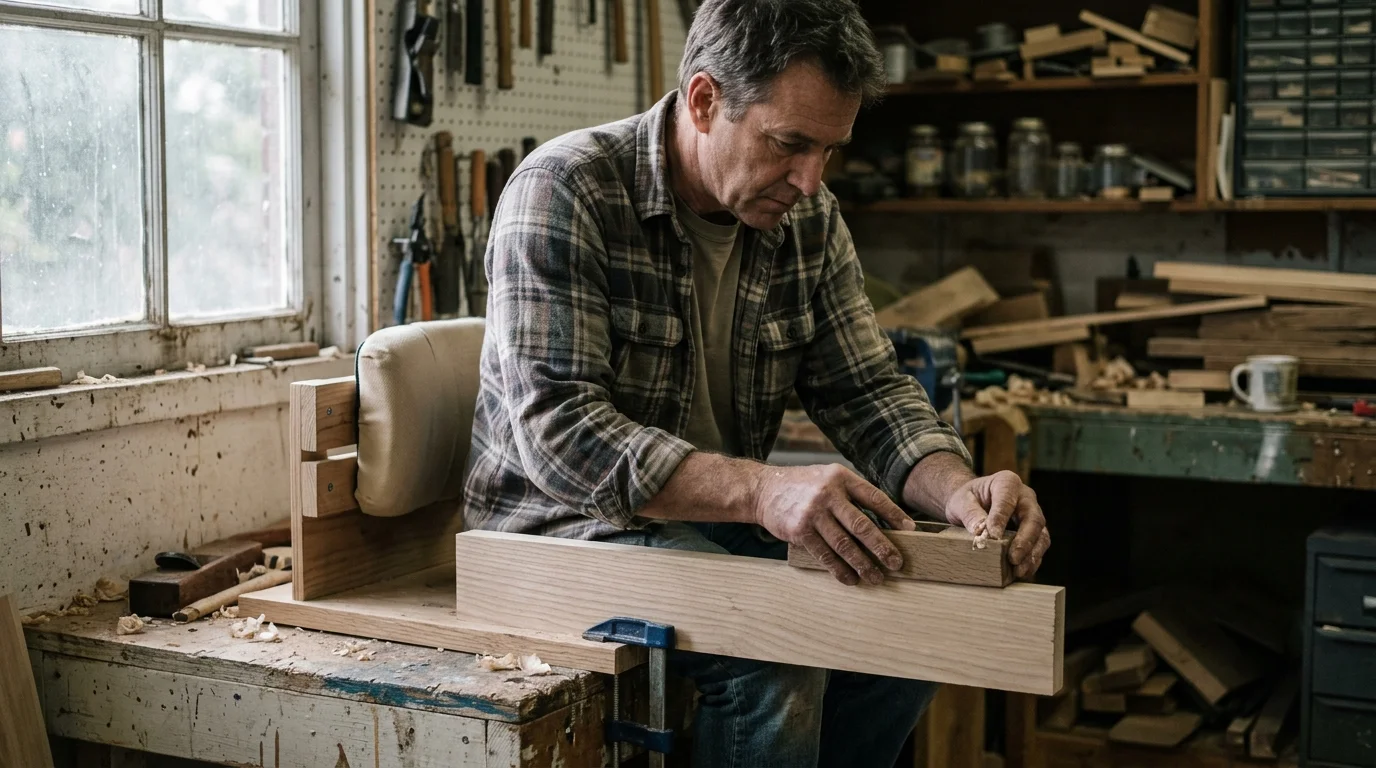
Re-Engineering the Traditional Atedai: Bench Ergonomics for Lumbar Support
Traditional Japanese carpenters work on low floor beams called atedai, resting just 4 to 12 inches off the ground. Workers kneel in seiza or sit cross-legged, using their feet to steady long boards.
For a 70-year-old craftsman managing knee stiffness or spinal disc compression, working on the floor invites joint inflammation. Adapting Japanese tools requires modifying your workbench height rather than abandoning the techniques.
Modern ergonomic standards recommend two distinct workbench heights depending on the physical task at hand:
- Planing and Stock Removal Height (32 to 36 Inches): Align this surface with your standing knuckle or hip joint so your body weight drives downward planing pressure.
- Joinery and Precision Sawing Height (38 to 42 Inches): Align this secondary surface with your bent elbow to bring intricate cuts close to eye level.
Working at elbow height prevents the deep forward bending that triggers lower back fatigue during joinery layout. You view cutlines clearly without rounding your cervical spine.
Secure workholding remains essential for one-handed and two-handed pulling techniques. Traditional Western end-vises apply crushing screw pressure, but hand tool woodworking functions best with low-profile wooden stops.
Install an adjustable wooden planing stop (shikaba) across the front of your bench top. Because Japanese planes cut on the pull stroke, timber pushes directly against the stop as you draw the tool backward.
Pair this stop with a holdfast dog hole system. A single tap from a wooden mallet locks your board firmly without requiring hand-cranked iron vise wheels.
Stanford Center on Longevity, creating dedicated physical environments for lifelong learning promotes long-term cognitive resilience and psychological satisfaction.
A 6-foot by 6-foot footprint easily accommodates a sturdy dual-height bench, a wall-hung tool rack, and wood storage. You run an active, creative workshop without dominating your home’s square footage.
Worked Example: Outfitting a Dedicated Hand Tool Nook on a Budget
Consider Arthur, a 70-year-old retired civil engineer who recently sold his 3-horsepower cabinet table saw and 8-inch cast-iron jointer. He reclaimed an 8-foot by 10-foot bay in his basement for silent hand woodworking.
Applying foundational DIY skills for retirement allows you to construct custom, ergonomic shop furniture at a fraction of commercial retail prices.
Arthur built an ergonomic standing bench using eight 8-foot construction-grade 2×4 SPF boards and one sheet of 3/4-inch birch plywood. The project required 4.5 hours of assembly time and cost $118 in raw materials.
He dimensioned the bench to 39 inches high, perfectly matching his standing elbow height. He installed two rows of 3/4-inch dog holes spaced 4 inches apart along the center line.
Arthur purchased a targeted Japanese tool ensemble to handle joinery for small tables, display cases, and jewelry boxes:
- Gyokucho Razorsaw Ryoba 240mm (#610): $38.50
- Suizan Dozuki 150mm Fine Cutting Saw: $32.00
- Kakuri 42mm White Oak Kanna Plane: $46.00
- Narex Richter Cryo-Treated Chisel Trio (1/4″, 1/2″, 3/4″): $78.00
- Shapton Ha No Kuromaku 1000 and 5000 Ceramic Stones: $84.00
- Two 3/4-inch forged steel holdfasts: $36.00
Arthur spent a total of $432.50 to fully equip his new workspace. Selling his cabinet saw and jointer on local consignment yielded $1,650, leaving him with an immediate cash surplus of $1,217.50.
To test the setup, Arthur cut four mortise-and-tenon joints in kiln-dried cherry for a bedside table frame. Cutting one tenon cheek with the Suizan Dozuki required 42 seconds and 14 smooth pull strokes.
Clearing the tenon shoulder with an Oire Nomi chisel required 1.5 minutes of controlled paring. The four completed joints took 28 minutes of continuous work without dust mask, safety glasses, or ear protection.
His wearable heart rate monitor recorded an average of 88 beats per minute throughout the session. Arthur completed the project feeling energized rather than exhausted by vibration and tension.
Step-by-Step Transition Plan: Safely Decommissioning Power Tools
Transitioning away from heavy machinery requires an intentional, step-by-step strategy. Rushing the process can leave your workshop cluttered or stall your creative momentum.
- Conduct a Machinery Hazard Audit: Identify stationary tools that cause the highest physical strain, starting with table saws, radial arm saws, and floor shapers.
- Consign or Sell Heavy Equipment: List large machinery through regional woodworking guilds, community makerspaces, or local classifieds to fund hand tool acquisitions.
- Establish Accurate Bench Heights: Measure your standing knuckle and elbow heights using a tape measure while wearing your workshop shoes.
- Fabricate a Dedicated Joinery Bench: Build or adapt a rigid workstation that anchors firmly against the wall to eliminate sway during planing strokes.
- Master Three Basic Japanese Saws: Practice square crosscuts and rips in soft pine using a Ryoba before moving to fine hardwood dovetails with a Dozuki.
- Implement Water Stone Maintenance: Establish a five-minute sharpening station using splash-and-go ceramic stones to keep your Kanna and chisels shaving sharp.
Mastering hand tool mechanics takes time, but every small achievement delivers immense satisfaction. Cutting true joinery with silent steel connects you directly to centuries of woodworking heritage.
Frequently Asked Questions
Why are Japanese pull saws safer than Western push saws for older woodworkers?
Japanese saws cut on the pull stroke under tension, which prevents the blade from binding or buckling. This action eliminates sudden kickback and channels cutting force through your core and latissimus dorsi rather than compressing your lower back.
How high should a senior woodworking bench be for hand tools?
Plan on building or modifying your workbench to two heights: 32 to 36 inches (knuckle or hip height) for heavy planing, and 38 to 42 inches (elbow height) for fine joinery and Japanese sawing to prevent lumbar strain.
Do I need to sharpen Japanese pull saw blades myself?
Most modern Japanese pull saws use impulse-hardened teeth that stay sharp up to three times longer than Western blades. When they eventually dull, you simply buy a replacement blade for $16 to $25 rather than filing individual teeth.
Can hand tool woodworking accommodate arthritis or reduced grip strength?
Yes. Japanese saw handles feature long paulownia wood wraps wrapped in rattan, allowing a two-handed grip with zero white-knuckle squeezing. Tension cutting requires light guiding pressure rather than heavy downward clamping force.
Disclaimer: This article is for informational and inspirational purposes. Life decisions are deeply personal, and we encourage readers to pursue their dreams while considering their unique circumstances, health, and financial situation.



3 Comments