
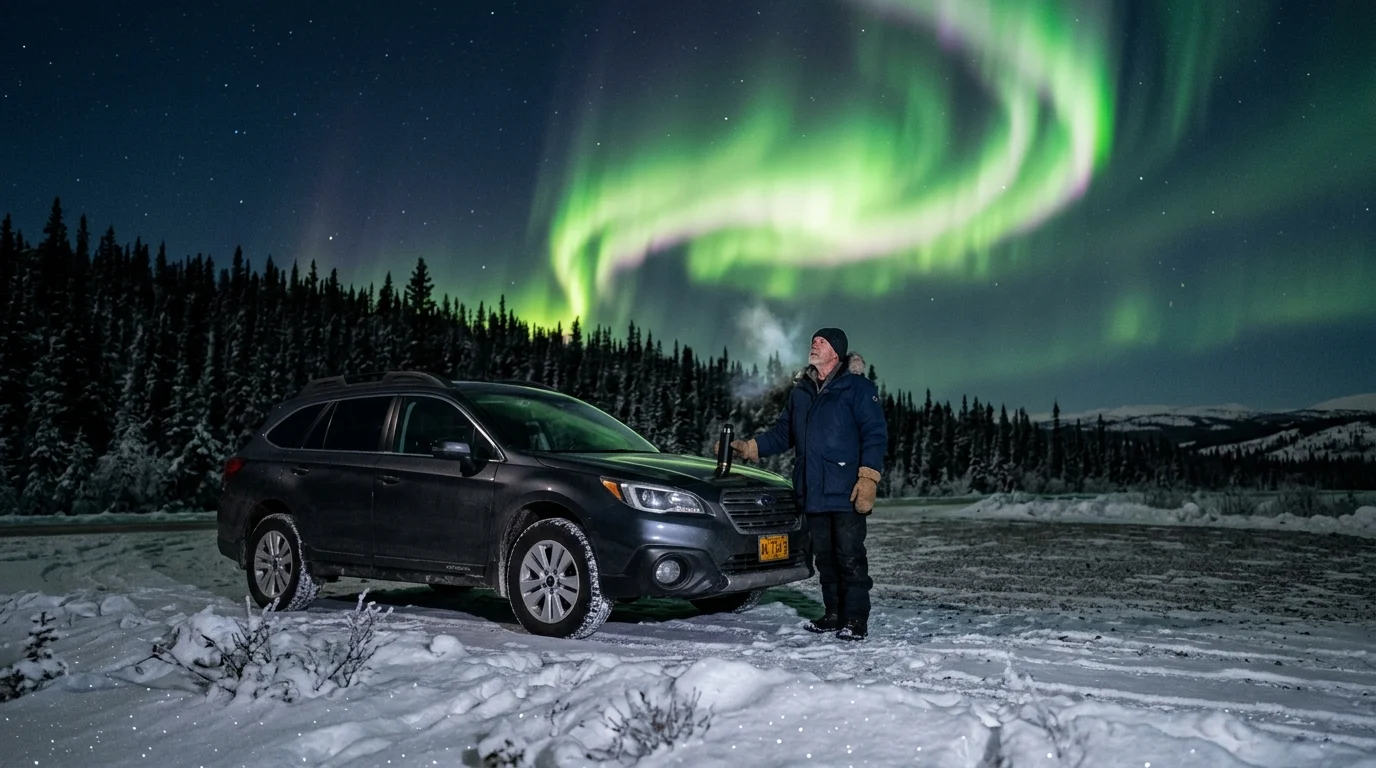
You can witness Alaska’s northern lights without spending $5,000 on escorted commercial tour vans. By renting an all-wheel-drive vehicle and booking a private cabin under the auroral oval, you can run an independent four-night expedition for under $1,800.
Most commercial excursions herd travelers into crowded buses on rigid schedules. This protocol gives you schedule autonomy, using free geomagnetic forecasting tools and targeted highway staging to maximize your viewing odds.
At 64, your retirement travel should balance comfort, adventure, and financial prudence. You can navigate interior Alaska with confidence when you master winter driving, thermal layering, and auroral timing.
The 64.8° Advantage: Timing and Science of Interior Alaska
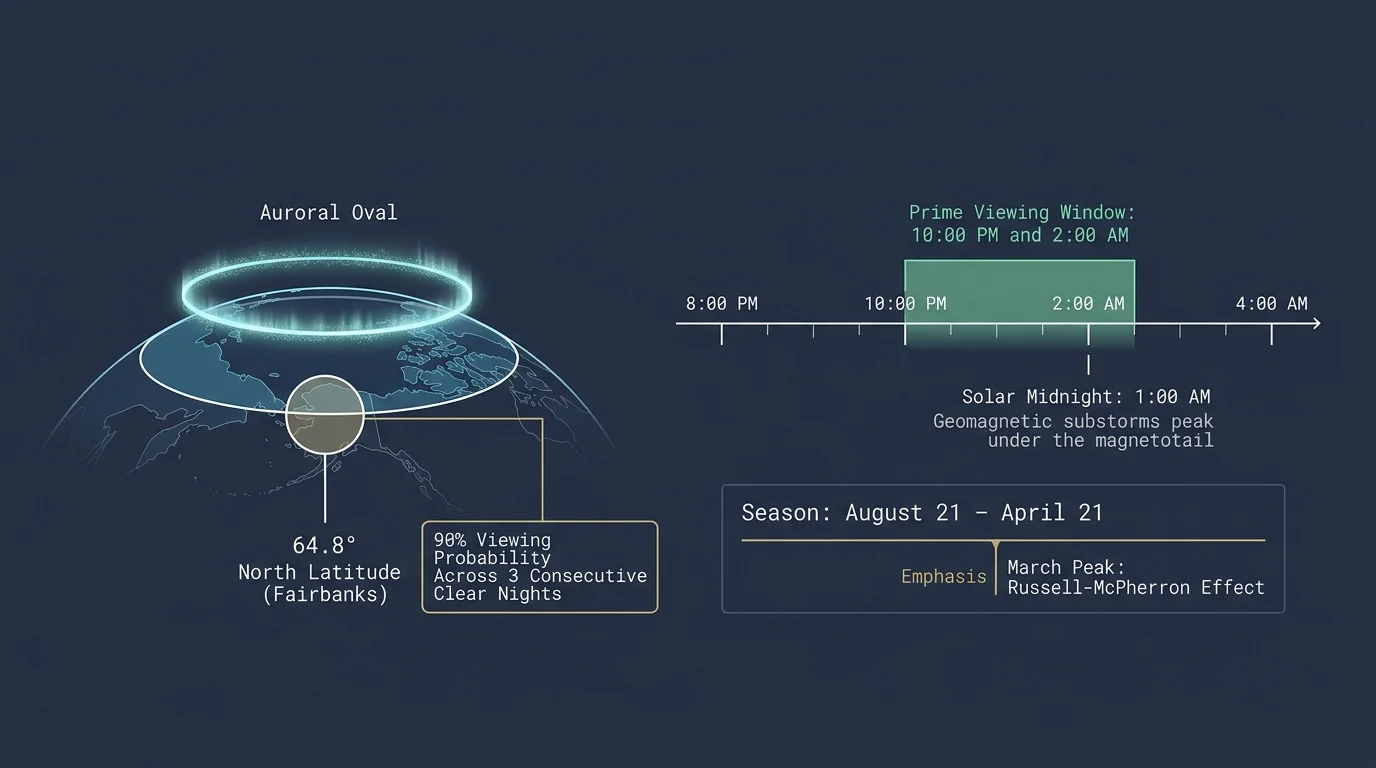
Fairbanks sits directly beneath the auroral oval at 64.8° North latitude. This geographic position provides a 90 percent viewing probability across three consecutive clear nights.
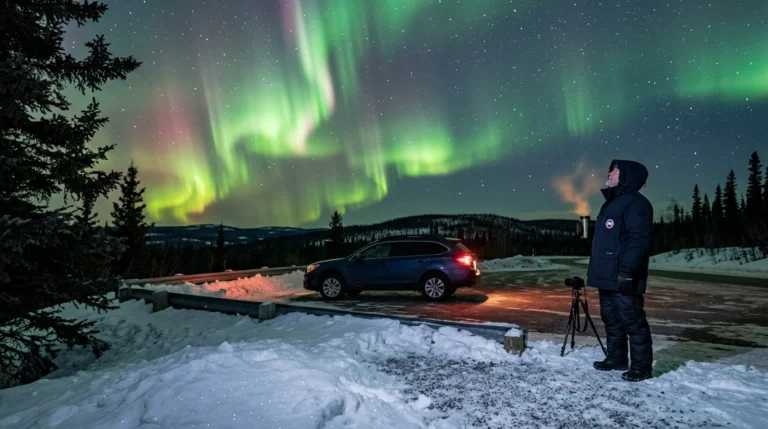
Solar Cycle 25 reached its peak during 2024 and 2025, but elevated geomagnetic activity continues throughout 2026. This prolonged maximum generates frequent coronal mass ejections that ignite dynamic curtains of emerald light across interior Alaska.
The interior Alaska aurora season spans eight full months, beginning August 21 and concluding April 21. Early autumn and late winter offer distinct advantages for self-drive travelers.
March stands out as the premier window for budget-conscious seniors. It offers milder subzero temperatures, extended daylight for afternoon scenic driving, and historically high geomagnetic disturbances driven by the equinoctial Russell-McPherron effect.
Commercial tours routinely rush visitors outside at 8:00 PM and pack up before midnight. This rigid schedule causes tourists to miss peak displays that consistently occur between 10:00 PM and 2:00 AM.
Solar midnight in Fairbanks occurs around 1:00 AM due to Alaska’s standard time zone alignment. Auroral substorms peak when your local viewing position rotates directly opposite the sun under the dense magnetotail.
Managing your own schedule lets you stay warm indoors during quiet spells. You venture out into the cold only when real-time satellite telemetry indicates an imminent geomagnetic burst.
The $1,800 Budget Architecture: A Fully Worked 4-Night Model
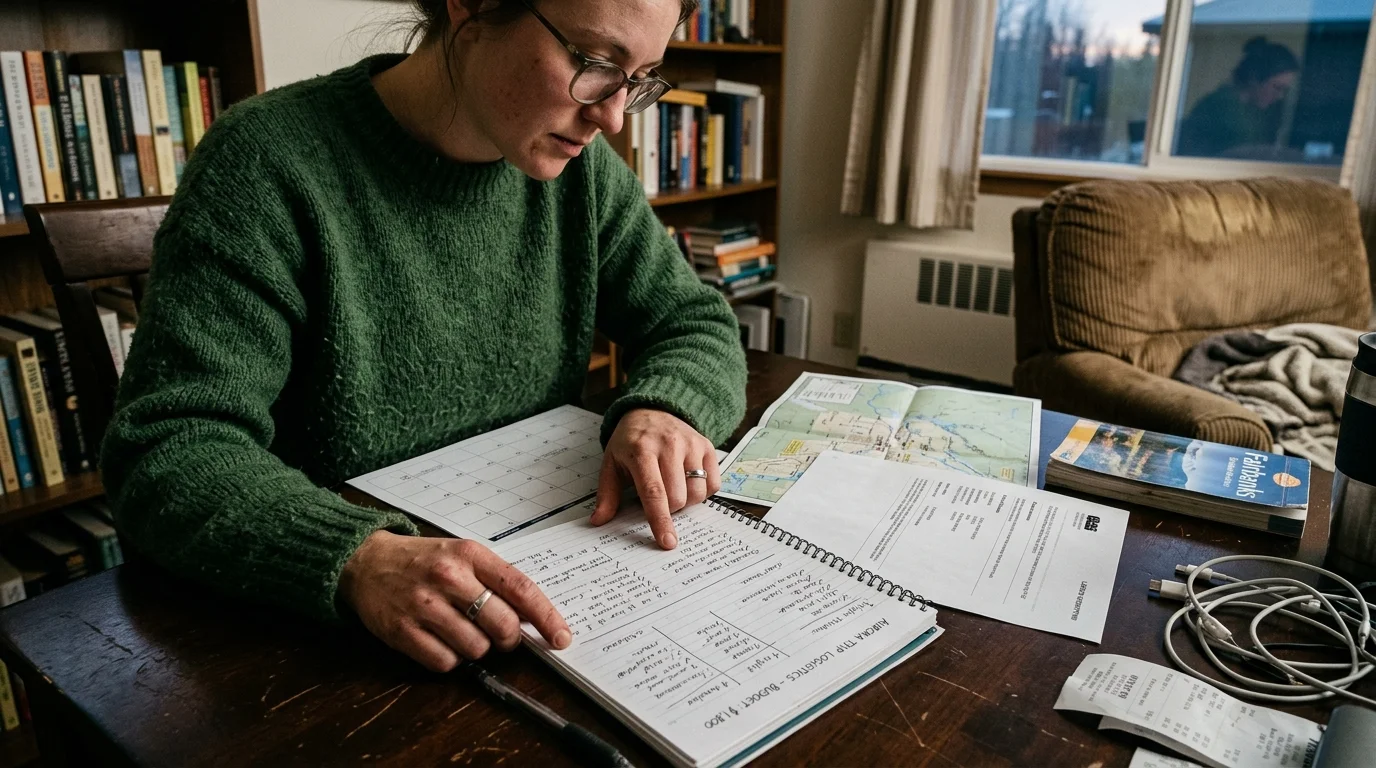
Commercial Arctic tour operators routinely charge solo travelers $4,500 to $6,000 for guided van packages. You can assemble an independent four-night itinerary that delivers superior freedom for exactly $1,800.00.
Here is the exact financial breakdown for an independent 64-year-old traveler departing from major hub airports like Seattle or Minneapolis into Fairbanks International Airport (FAI):
- Roundtrip Airfare: $430.00 (discount economy fare booked 60 days out on Alaska Airlines or Delta).
- AWD Intermediate SUV Rental: $290.98 (4 days at $58/day base rate, plus mandatory state and airport fees).
- Vehicle Fuel: $84.70 (22 gallons of regular unleaded fuel at $3.85 per gallon).
- Dark-Sky Cabin Lodging: $496.80 (4 nights at $115/night base rate plus 8 percent local bed tax).
- Commercial Thermal Outerwear Rental: $145.00 (4-day heavy Arctic bundle including -40°F parka, bibs, and boots).
- Self-Catering Groceries: $165.00 (hearty meal staples, thermos soups, and snacks from Fairbanks Fred Meyer).
- Day Admissions and Activities: $34.00 ($18 senior hot spring lake pass plus $16 museum admission).
- Contingency Reserve: $153.52 (covers cold-rated extension cord, traction cleats, hand warmers, and unexpected fees).
These line items sum precisely to $1,800.00. Preparing your own meals in a cabin kitchenette eliminates costly sit-down dining while keeping you rested and alert for late-night skywatching.
Subzero weather increases vehicle fuel consumption by 20 to 30 percent due to air density and extended idling. The $84.70 fuel allocation comfortably covers 450 miles of regional driving across four chase nights.
Many active older adults evaluate group programs from Road Scholar when planning educational northern adventures. An independent self-drive protocol delivers total schedule autonomy at roughly one-third the price of traditional group touring.
Winter Driving Logistics: Rental Taxes and Engine Block Heaters
Navigating winter vehicle rentals in interior Alaska demands a sharp eye for local taxes and contractual highway restrictions. Alaska Statutes § 43.52.020 imposes a mandatory 10 percent state tax on passenger rentals under 91 days.
Fairbanks International Airport levies an additional 11.11 percent concession fee alongside a Customer Facility Charge of $2.50 per day. You can frequently offset these municipal surcharges by applying membership discounts through AARP at rental counters.
Major rental firms at FAI—including Avis, Budget, Enterprise, and Hertz—strictly prohibit passenger cars on unpaved northern highways like the Dalton Highway. Driving gravel routes voids collision waivers and leaves you liable for four-figure towing bills.
Fortunately, you do not need rugged haul roads to encounter pure northern skies. Paved routes like Chena Hot Springs Road, the Steese Highway, and the Elliott Highway provide safe transit directly under the auroral oval.
Interior Alaska temperatures frequently drop below minus 20°F. At these temperatures, conventional motor oil thickens into viscous sludge, and lead-acid batteries lose over half their cranking power.
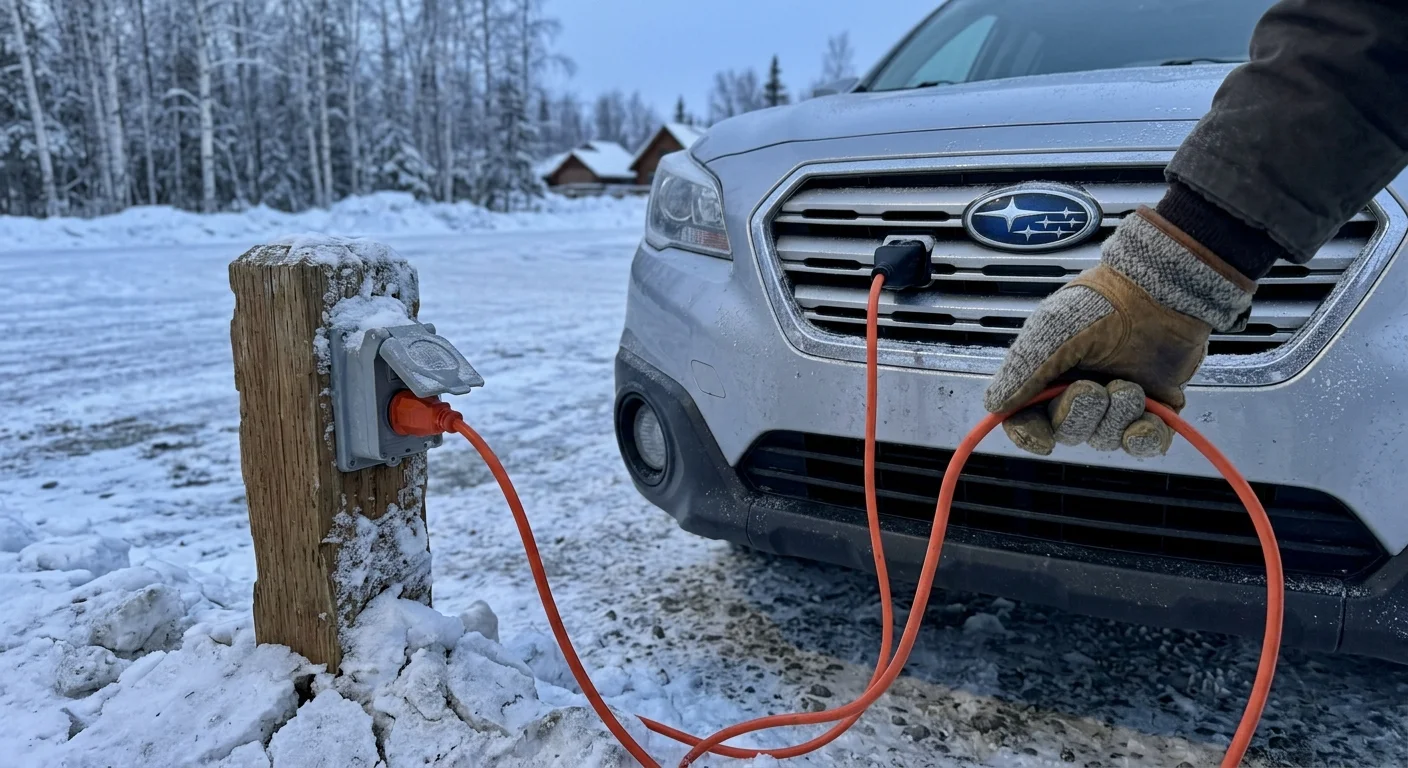
Connecting your vehicle engine block heater prevents catastrophic cold-start failures. Execute this precise block heater protocol whenever ambient temperatures drop below 20°F:
- Locate the three-prong electrical plug routed through the front grill or radiator intake of your rental SUV.
- Inspect the cord for cracked insulation or ice buildup before connecting your cold-rated, 16-gauge extension cord.
- Plug the male end into the dedicated outdoor electrical post located at your cabin parking stall.
- Check that the post indicator light illuminates, confirming constant electric current to the block heater heating element.
- Keep the vehicle plugged in continuously overnight, or plug it in for at least three hours prior to cold engine ignition.
Never drive away while the extension cord remains connected to the parking stanchion. Coil your cord and stow it inside the vehicle cargo area immediately after unplugging.
Pack a winter emergency kit inside your rental vehicle cabin rather than the locked trunk. Ensure you carry these vital supplies on every nocturnal journey:
- A compact aluminum avalanche shovel for clearing drift snow around tires.
- A 10-pound bag of coarse clay cat litter or traction sand for icy turnaround points.
- Chemical hand, foot, and body warmers rated for at least 10 hours of heat output.
- A high-lumen headlamp with a dedicated red light mode to protect night vision.
- An insulated vacuum flask filled with hot tea, broth, or boiling water.
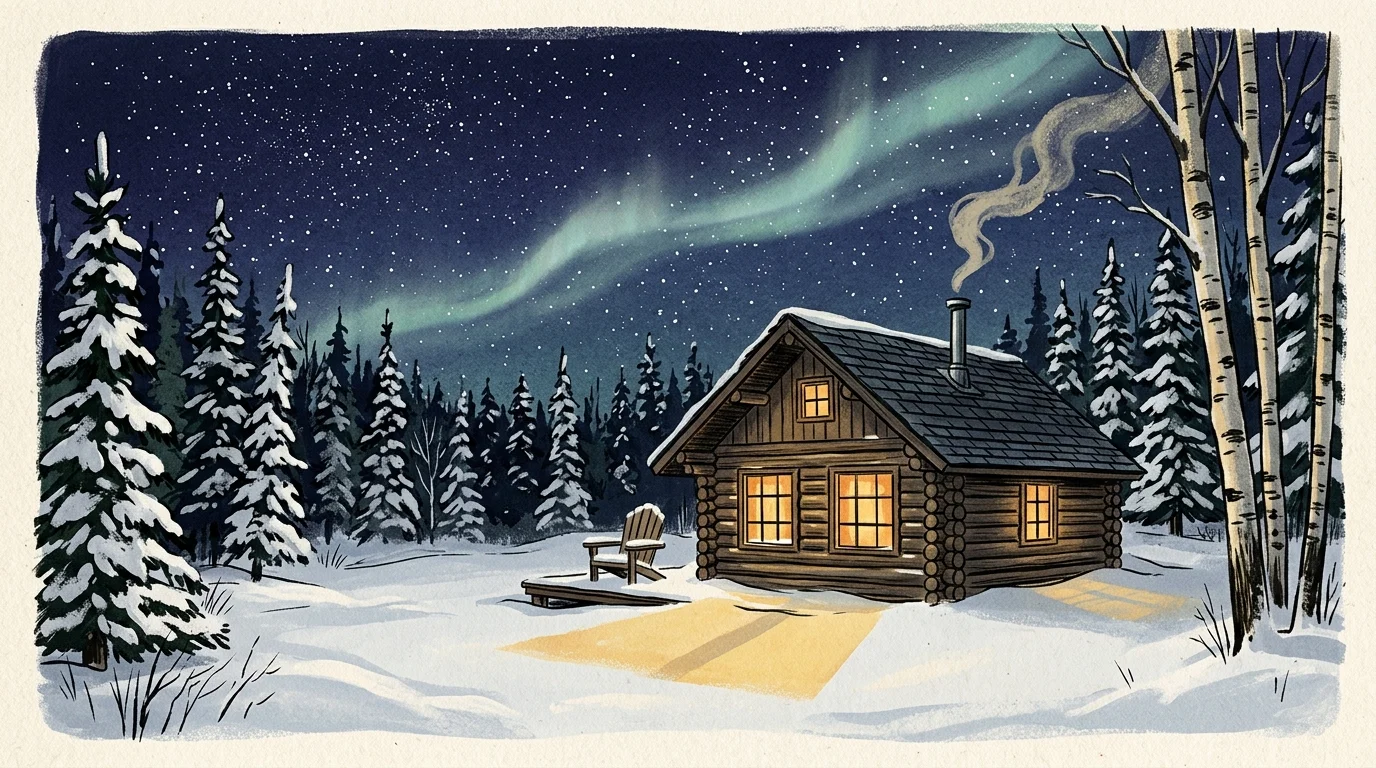
Off-Strip Cabin Selection: Dark Skies Without Luxury Markups
The city of Fairbanks emits an ambient light dome that obscures delicate purple and ruby auroral fringes. To experience high-contrast skies on a modest budget, bypass downtown hotels and secure an off-strip cabin.
Interior Alaska features a broad inventory of “dry cabins” renting between $80 and $100 per night. These rustic structures include electric baseboard heat, refrigerators, and Wi-Fi, but rely on outdoor outhouses instead of interior plumbing.
If stepping into an outhouse at minus 15°F sounds unappealing, book an efficiency cabin with private indoor plumbing. At $115 to $145 nightly, these units deliver hot showers, kitchenettes, and warm indoor viewing windows.
Examine this breakdown of premier dark-sky staging areas surrounding the Fairbanks basin before reserving your winter accommodations:
| Staging Area | Distance from FAI | Bortle Sky Class | Average Nightly Cost | Primary Access Road |
|---|---|---|---|---|
| Chena Hot Springs Road (Mile 20–30) | 28 miles northeast | Class 2 (Dark Sky) | $110 – $140 | Paved state two-lane highway |
| Goldstream Valley | 14 miles north | Class 3 (Rural Sky) | $95 – $125 | Paved valley thoroughfare |
| Chena Ridge Foothills | 8 miles southwest | Class 4 (Rural/Suburban) | $120 – $155 | Paved steep hill route (requires AWD) |
| Fox / Steese Highway Basin | 16 miles northeast | Class 3 (Rural Sky) | $105 – $135 | Paved state highway |
Two Rivers along Chena Hot Springs Road provides the gold standard for independent aurora chasers. Its northeast orientation shields you from city light while keeping you on a flat, well-maintained state highway.
Always confirm with your host that your cabin rental includes an exterior electrical outlet for your car block heater. Confirming parking accessibility prevents dead batteries on subzero mornings.
Arctic Cold Protection: Rental Bundles Versus Expensive Retail
Outfitters frequently urge first-time Alaska visitors to purchase $1,400 technical down parkas. Buying specialized polar gear for a four-night vacation wastes precious retirement capital that could fund your next grand adventure.
Local Fairbanks gear rental outfits solve this financial dilemma by offering commercial-grade Arctic clothing packages. For approximately $35 per day, you receive professional outerwear engineered to withstand interior Alaska blizzards.
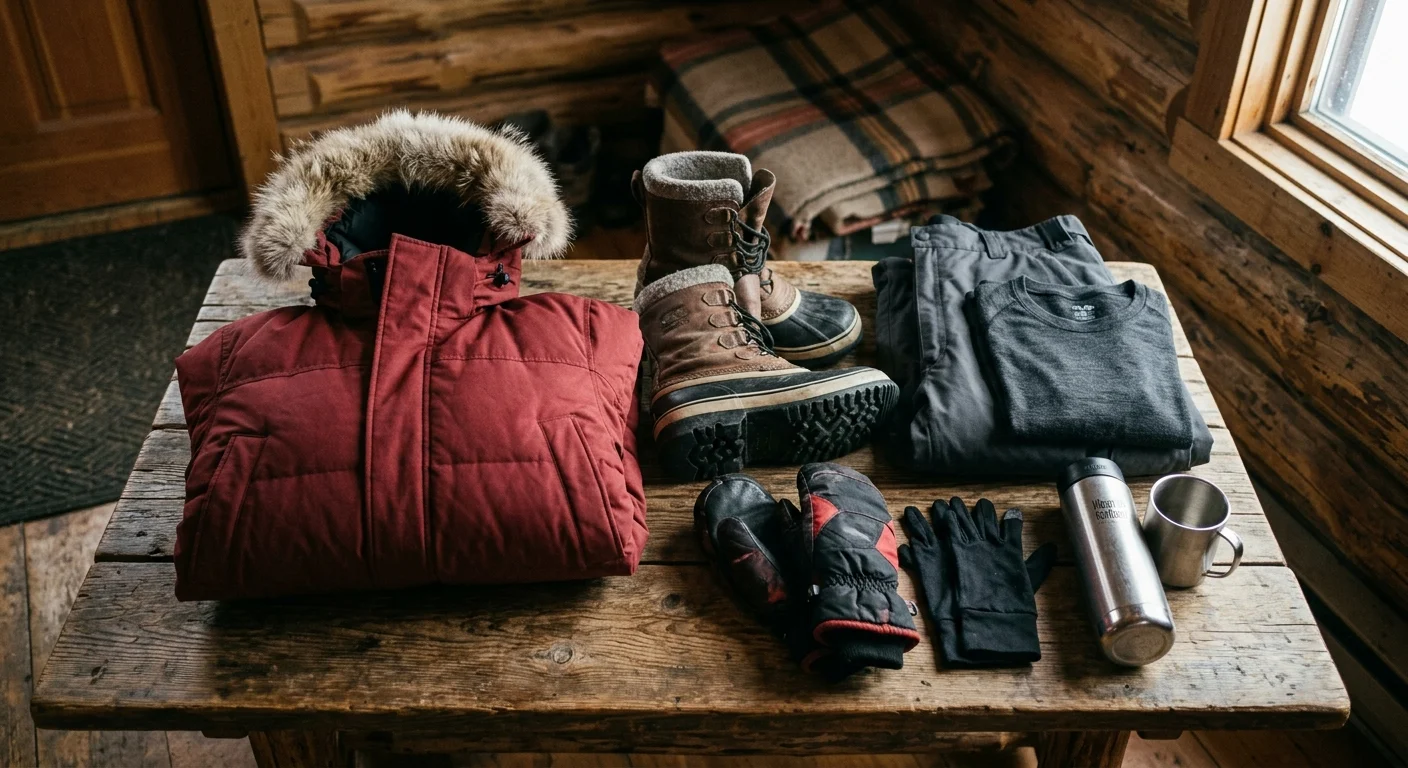
Commercial rental bundles eliminate luggage bulk on your inbound flight. Make certain your rented cold-weather gear kit contains these essential field items:
- A heavyweight goose-down or synthetic expedition parka with an extended snorkel hood rated to -35°F.
- Insulated snow bib overalls with full two-way side zippers for effortless layering over pants.
- Commercial polar boots, such as Baffin Icebear or Impact models, equipped with 8-layer thermal inner booties.
- Oversized windproof shell mittens paired with removable high-loft fleece mitt liners.
Layering beneath your rental shell determines your personal thermal comfort. Build your personal foundation using moisture-wicking synthetic fibers or 250-gram merino wool tops and bottoms.
Never wear cotton denim jeans, cotton t-shirts, or standard athletic tube socks into subzero conditions. Cotton absorbs body humidity, collapses its insulating loft, and induces dangerous chills within minutes of stepping outside.
Ensure your boots fit loosely with a single thick wool sock. Tight footwear compresses blood vessels in your feet, accelerating numbness and frostbite in freezing temperatures.
Wear thin, touch-capacitive glove liners inside your heavy mittens. When you need to operate a camera shutter or check phone telemetry, slip off the outer mitten while maintaining bare skin protection.
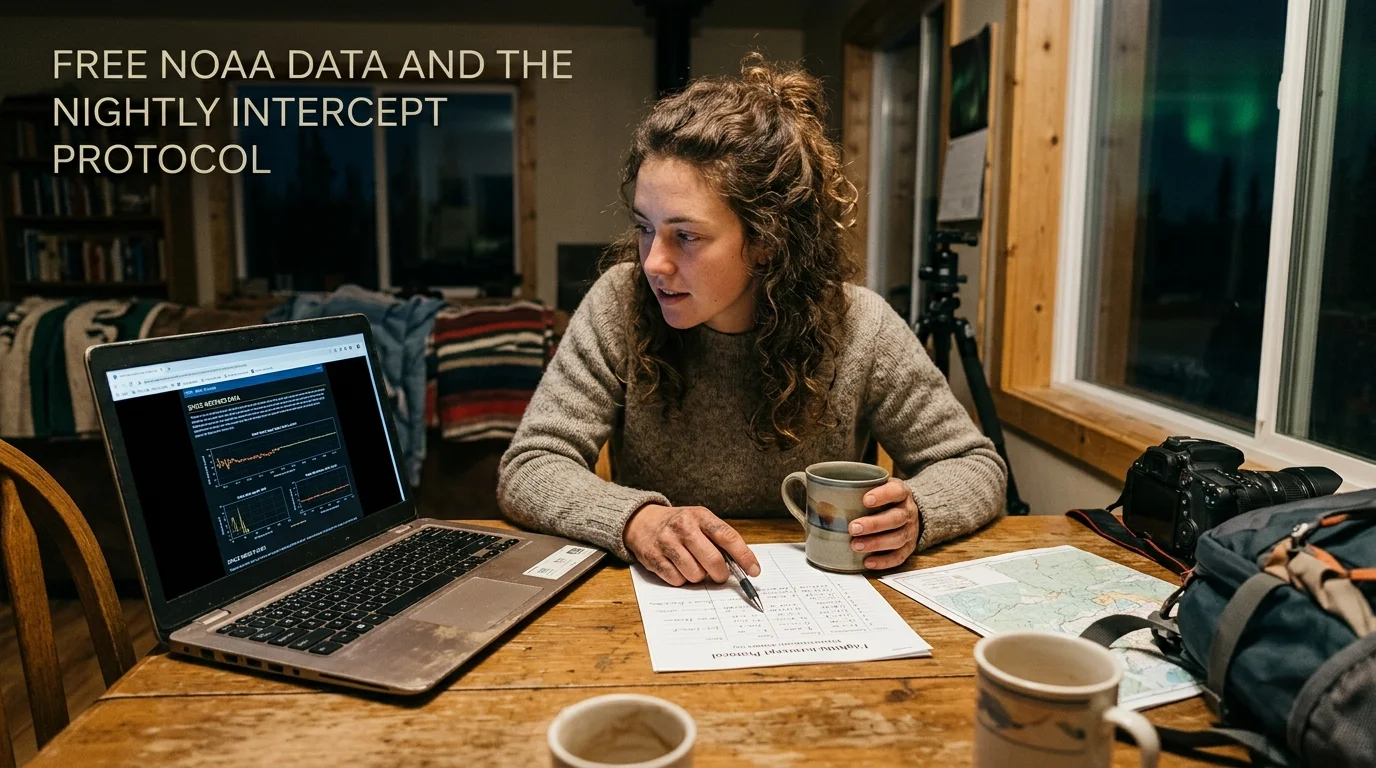
Free NOAA Data and the Nightly Intercept Protocol
Relying on luck leaves travelers cold, exhausted, and disappointed. You can turn aurora hunting into a predictable science by using free real-time data from the NOAA Space Weather Prediction Center.
Amateur skywatchers often fixate entirely on the planetary Kp index, assuming they need a major geomagnetic storm to see lights. Because Fairbanks sits directly under the auroral oval, overhead green bands regularly dance at Kp 1 or 2.
The most critical metric to monitor is the interplanetary magnetic field (IMF) Bz component. Measured in nanoteslas (nT), the Bz value reflects the north-south tilt of solar wind magnetic fields.
When the Bz component tilts southward and registers negative numbers below minus 3 nT, solar wind links directly with Earth’s magnetosphere. This magnetic coupling funnels charged particles straight down into interior Alaska skies.
Check the solar wind speed measured by deep space satellites like DSCOVR. Speeds exceeding 400 kilometers per second, combined with a sustained negative Bz, guarantee active auroral movement across the zenith.
Structure your evening hours around this systematic observational timeline to maximize energy and sighting probability:
- Review the UAF Geophysical Institute aurora forecast at 5:00 PM for the baseline activity level and geographic extent.
- Inspect National Weather Service satellite infrared cloud loops at 7:00 PM to identify clear sky corridors across the Tanana Valley.
- Dine and rest at your cabin until 9:30 PM, conserving physical energy for late-night skywatching.
- Check real-time NOAA ACE/DSCOVR data at 10:15 PM for sudden negative shifts in the Bz magnetic component.
- Step onto your cabin deck or drive to your chosen highway turnout when Bz dips below -3 nT.
Monitor the Poker Flat Research Range all-sky camera operated by the University of Alaska Fairbanks. This free live camera feed shows real-time conditions thirty miles north of Fairbanks before you leave your cabin.
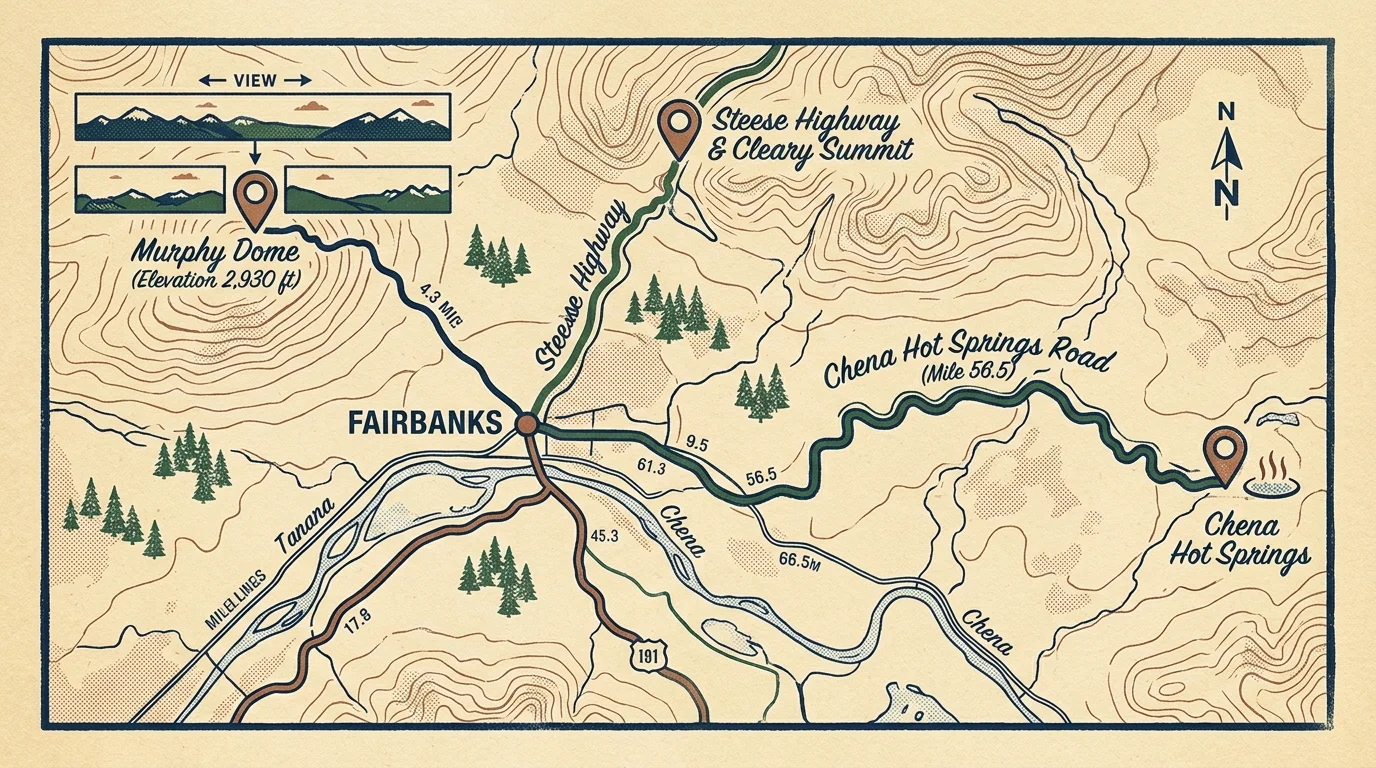
The 4-Night Self-Drive Route: From Murphy Dome to Chena Hot Springs
“The biggest adventure you can take is to live the life of your dreams.” — Oprah Winfrey
This four-night operational route combines comfortable daytime exploration with optimized nocturnal skywatching. It balances easy highway navigation with access to the highest-elevation vantage points in the Fairbanks North Star Borough.
Night 1: Cleary Summit and Chatanika Basin. Collect your rental SUV at FAI, purchase provisions at Fred Meyer, and proceed northeast along the paved Steese Highway. Stage at Cleary Summit (Milepost 17), an expansive turnout offering sweeping views above valley fog.
Night 2: Museum Culture and Murphy Dome Elevation. Spend the afternoon resting before touring the University of Alaska Museum of the North using your $16 senior ticket. After dinner, drive northwest along Murphy Dome Road to reach its 2,930-foot rounded alpine summit.
Murphy Dome rises far above ground-level temperature inversions, frequently offering crystal-clear horizons while downtown Fairbanks lies trapped under ice fog. Park facing north to monitor the horizon from inside your heated vehicle.
Night 3: Chena Hot Springs Soak and Highway Mileposts. Drive east on Chena Hot Springs Road to enjoy the therapeutic outdoor mineral lake ($18 senior rate). As darkness falls, retrace your route and stage at pullouts near Mileposts 26 to 31.
These highway pullouts feature dense black spruce forest foregrounds that contrast against luminous green auroral reflections on nearby sloughs. You can watch safely from your driver seat until curtains erupt across the zenith.
Night 4: Chena Lake Recreation Area and Departure Prep. Conclude your expedition at Chena Lake Recreation Area in North Pole. Park on the broad, plowed lake causeway, providing unobstructed 360-degree visibility across the frozen waters.
A wide lake horizon allows you to track auroral arcs from east to west without mountain obstructions. After your midnight observation window, pack your bags and return your vehicle for early morning airport check-in.
Frequently Asked Questions
Do I need a four-wheel-drive truck, or is all-wheel drive sufficient?
A standard all-wheel-drive crossover or SUV provides plenty of traction on paved highways around Fairbanks. Ensure your rental features winter tires with adequate tread depth, and maintain conservative driving speeds on packed snow.
How do I keep smartphone and camera batteries alive in subzero cold?
Store smartphones inside an interior zippered coat pocket against your chest, operating them through touch-compatible glove liners. For digital cameras, carry two spare camera batteries in a warm interior pocket, swapping them as cold drains power.
Is self-drive aurora hunting safe for solo retirees over 60?
Yes, as long as you remain on major paved corridors like Chena Hot Springs Road and carry winter emergency gear. Reliable cell coverage extends along primary valleys, and regional highway maintenance keeps paved routes well-cleared.
What camera settings should I use to photograph the aurora borealis?
Mount your camera on a sturdy tripod and switch your lens to manual focus locked at infinity. Set your aperture to f/2.8 or wider, ISO to 1600 or 3200, and exposure time between 4 and 8 seconds.
How does the moon phase affect aurora viewing in Fairbanks?
A quarter or half moon illuminates the snow-covered Alaska landscape, adding depth to photos without washing out vivid auroral ribbons. Only faint displays suffer under moonlight, while active substorms easily overpower a full moon.
Disclaimer: This article is for informational and inspirational purposes. Life decisions are deeply personal, and we encourage readers to pursue their dreams while considering their unique circumstances, health, and financial situation.

1 Comment