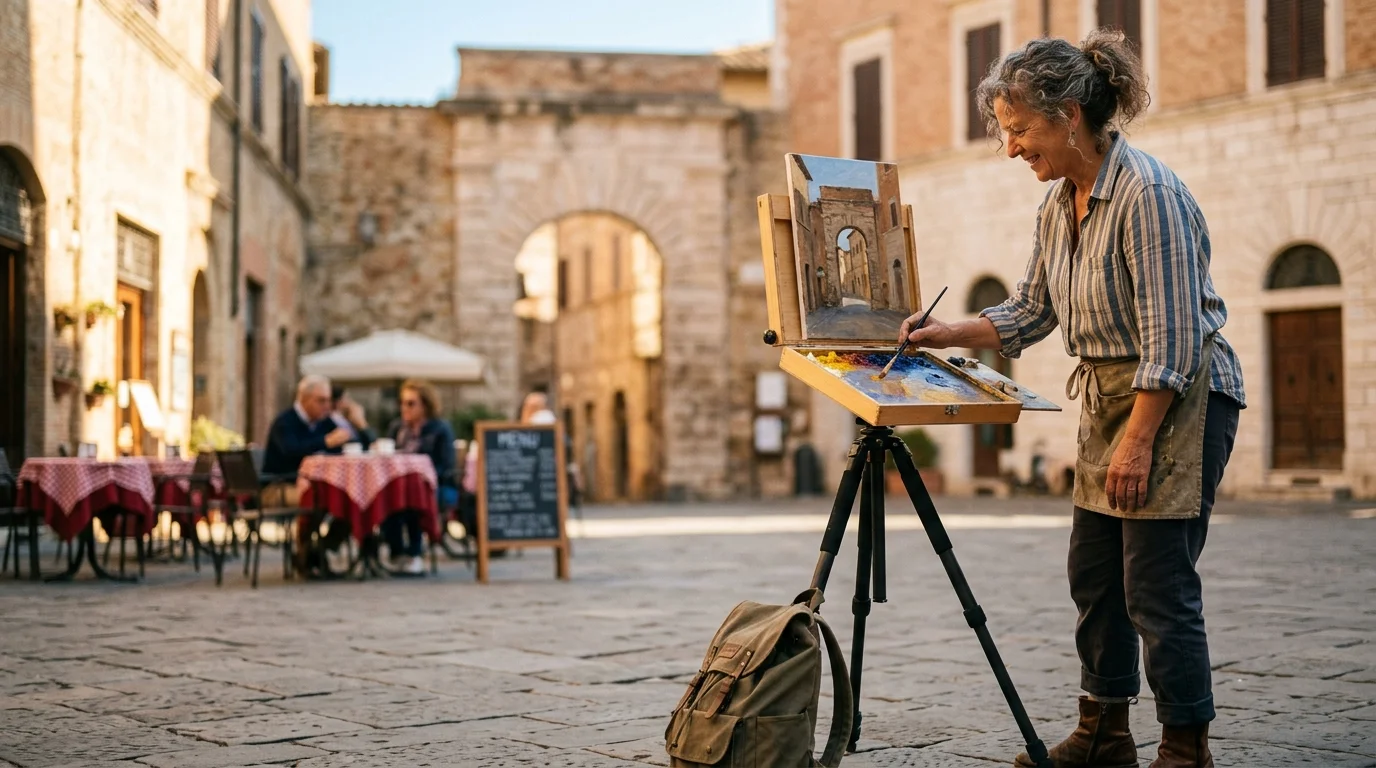
You can capture vibrant urban scenes in rich oils without hauling heavy field equipment or breathing toxic mineral spirits. This engineered 8-pound plein air setup fits inside a daypack and lets you paint freely in public plazas, cafes, and parks.
If you are eager to rediscover your creative passions in retirement, taking your easel directly into the field offers an exhilarating path forward.
Unlike conventional setups requiring volatile thinners and cumbersome French easels, this system utilizes non-hazardous walnut oil chemistry and compact, flight-ready gear.
By adopting this ultralight workflow, you gain complete creative mobility and transport your studio anywhere your curiosity leads.
Engineering the 8-Pound Ultralight Plein Air Rig
Traditional outdoor oil kits often weigh between 20 and 30 pounds. Hauling that weight across cobblestones or public transit quickly causes joint fatigue and saps your creative energy.
Prioritizing compact, body-friendly tools mirrors the benefits of ergonomic hand woodworking, ensuring creative work remains gentle on your joints.
A lightweight plein air setup preserves your physical stamina and mobility. By capping your total gear weight at 8 pounds, you remain agile throughout long sketching sessions.
Every ounce matters when navigating crowded streets, historic staircases, or subway turnstiles. Eliminating redundant equipment ensures you can deploy your gear anywhere in under five minutes.
Heavy equipment confines painters to spots right next to parked vehicles. In contrast, an eight-pound system lets you wander narrow alleyways and scenic bridges effortlessly.
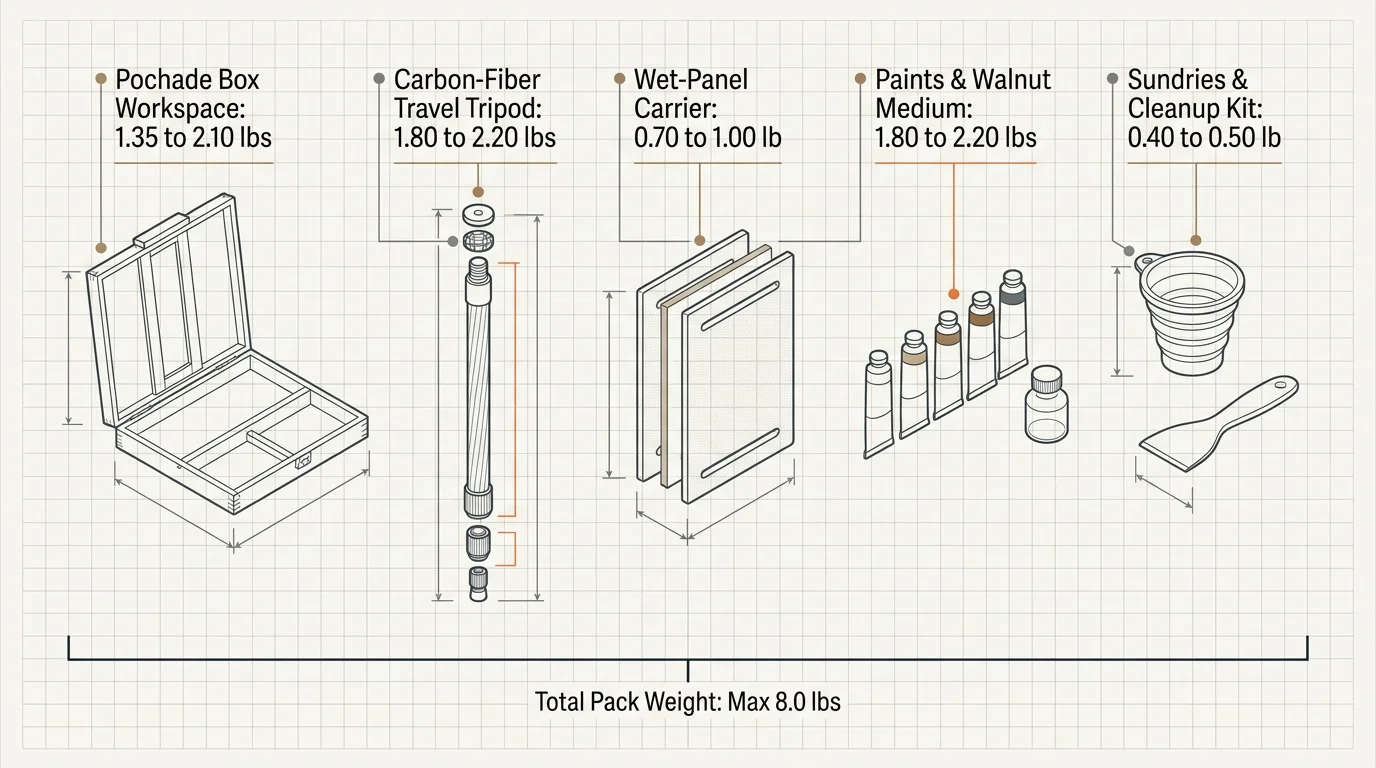
- Pochade box workspace: 1.35 to 2.10 pounds.
- Carbon-fiber travel tripod: 1.80 to 2.20 pounds.
- Wet-panel carrier with two linen boards: 0.70 to 1.00 pound.
- Paints, walnut medium, and travel brushes: 1.80 to 2.20 pounds.
- Compact sundries and cleanup kit: 0.40 to 0.50 pound.
This calculated footprint guarantees that urban sketching for seniors remains an energizing passion rather than a physical chore. You can paint historic architecture for hours without shoulder, neck, or lower-back strain.
Modern materials make this dramatic weight reduction possible without sacrificing stability. Ultralight hardwoods and carbon weave provide the same strength as cumbersome studio furniture.
Distributing this weight evenly inside an ergonomic 20-liter daypack protects your posture. You can comfortably walk through historic city centers all day with your hands completely free.
Pochade Box Selection and Tripod Architecture
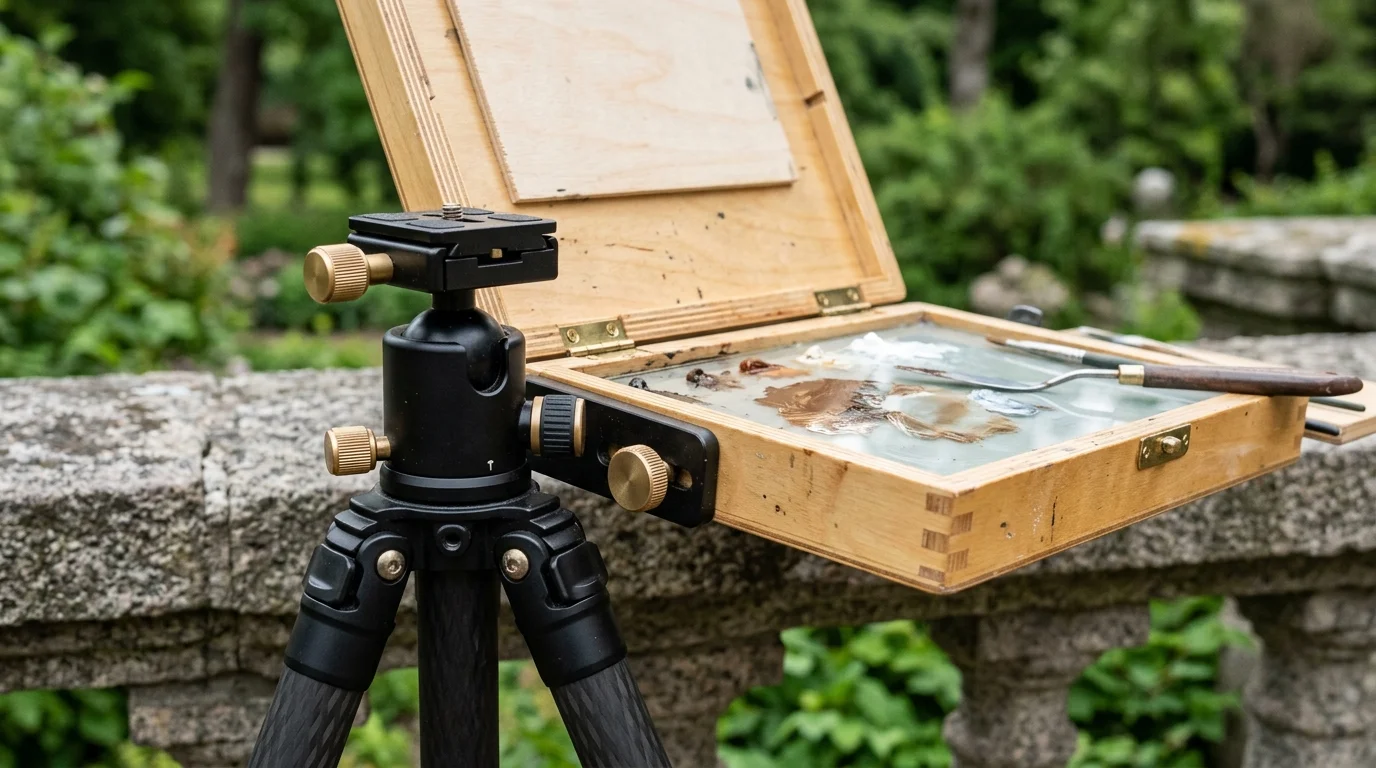
Your pochade box forms the structural core of your mobile outdoor studio. It serves simultaneously as your easel, palette, and protective carrier for unfinished panels.
Much like choosing gear for retirement travel photography, your support hardware must balance featherlight packability with reliable outdoor stability.
Baltic birch boxes deliver outstanding strength-to-weight ratios for urban artists. The New Wave u.go Anywhere Small weighs only 1.35 pounds while providing a functional 6-by-8-inch mixing surface.
If you prefer a larger mixing area, the New Wave u.go Anywhere Medium weighs 2.10 pounds with an 8.4-by-11.25-inch footprint. Both models feature friction hinges and embedded rare-earth magnets that secure accessories.
Machined aluminum options offer maximum durability against rainy conditions. The STRADA Micro Plus weighs approximately 2.50 pounds and resists repeated impacts on hard pavement.
Pair your box with a sturdy carbon-fiber travel tripod. Carbon fiber dampens vibrations on breezy street corners and trims critical pounds from your daypack.
Look for a four-section or five-section leg design, such as the Sirui Traveler 5CX or Benro Slim Carbon. These tripods weigh under 2.2 pounds but reliably support equipment up to 10 pounds.
Ensure your tripod head uses an Arca-Swiss compatible quick-release mechanism. This industry standard enables you to lock down your pochade box in seconds without threading awkward bolts.
Look for a tripod with a center column ballast hook. Hanging your daypack from this hook anchors your easel securely against sudden gusts of wind.
| Box Model | Primary Material | Palette Dimensions | Unit Weight | Price Benchmark |
|---|---|---|---|---|
| New Wave u.go Anywhere Small | Baltic Birch | 6.0″ × 8.0″ | 1.35 lbs | $145 |
| New Wave u.go Anywhere Medium | Baltic Birch | 8.4″ × 11.25″ | 2.10 lbs | $175 |
| STRADA Micro Plus | Anodized Aluminum | 7.0″ × 7.0″ | 2.50 lbs | $295 |
| Sienna Plein Air Petite | Poplar and Birch | 6.5″ × 8.0″ | 2.40 lbs | $135 |
Selecting the right box hinges on balancing palette surface against pack dimensions. A six-by-eight-inch platform fits smoothly inside ordinary shoulder bags and commuter packs.
This compact size allows you to work discreetly in crowded outdoor cafes without crowding adjacent tables. You can capture morning street life while sipping coffee in complete comfort.
The Solvent-Free Chemistry: Eliminating Toxic Thinners
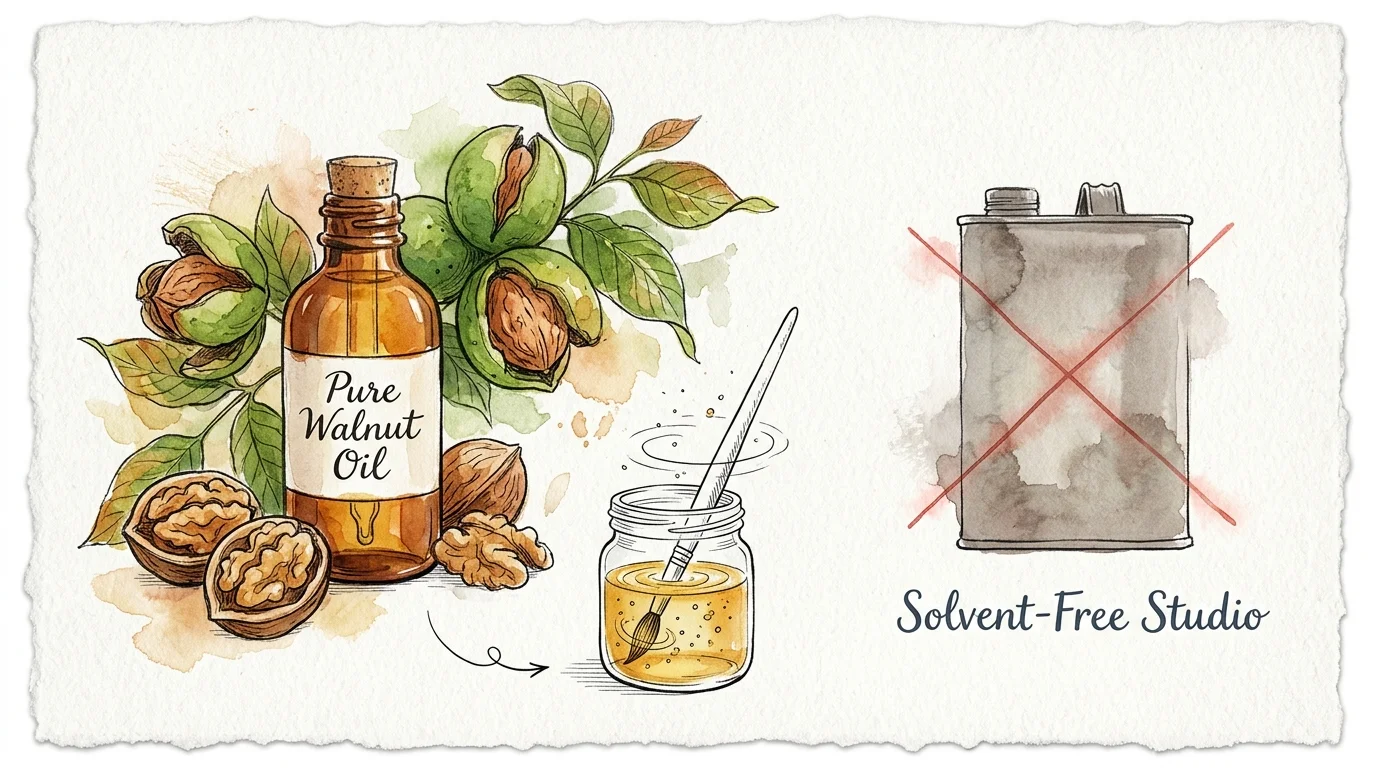
Traditional oil painting relies on turpentine or odorless mineral spirits to thin paint and wash brushes. Volatile organic compounds irritate eyes and lungs, making them inappropriate for public city sketching.
Much like practicing tabletop linocut printmaking with safe inks, switching to natural oils lets you create beautiful art without harsh chemical odors.
Much like setting up a non-toxic home block printing space, transitioning away from harsh studio chemicals protects both your respiratory health and public spaces.
Cafes, commuter trains, and hotels strictly ban volatile solvents to protect indoor air quality. Embracing solvent free oil painting travel techniques eliminates toxic fumes and lets you paint anywhere without complaints.
Refined walnut oil serves as the premier non-toxic vehicle for urban artists. It increases paint flow, produces a lustrous finish, and creates a flexible paint film that resists embrittlement.
Walnut oil cleans brushes safely while you work. Swirling dirty bristles in a small container of walnut oil releases pigment particles without generating noxious vapors.
For rapid drying on city excursions, pack Gamblin Solvent-Free Gel. Formulated from safflower oil and alkyd resin, this medium speeds curing so sketches dry to the touch within 36 hours.
Unlike spike lavender or citrus thinners, pure walnut and safflower oils release zero breathable volatile compounds. You can paint inside a crowded train station without disturbing anyone nearby.
- Refined Walnut Oil: Dilutes colors naturally and conditions natural bristle hairs.
- Safflower Alkyd Gel: Accelerates drying times without collapsing the paint structure.
- Walnut Alkyd Medium: Enhances fluidity and imparts a uniform satin sheen.
- Master’s Brush Cleaner: Restores brushes thoroughly with tap water at day’s end.
Finish your cleanup with vegetable-based bar soap and lukewarm water at your hotel sink. Gentle conditioning soap maintains bristle shape and keeps your brushes performing like new for years.
This botanical cleaning routine eliminates the fire hazards associated with solvent-soaked rags. You can store your painting materials in residential lodgings with complete peace of mind.
Navigating TSA and Transit Security with Artists Oils
Air transit with oil paints causes unnecessary worry for painters heading abroad. You can clear airport security smoothly once you know how aviation regulations classify oil pigments.
This compact setup also packs seamlessly into a camper van if you are embracing RV living in retirement and documenting landscapes on the road.
Understanding international carrier regulations ensures your art kit never interferes with your budget travel adventures around the globe.
Under Federal Aviation Administration PackSafe guidelines, artist oil paints are officially classified as nonflammable. Natural drying oils feature flash points far above the agency’s 140°F hazardous material limit.
Top-tier artist-grade oil paints exhibit flash points exceeding 500°F. Linseed and walnut oil carriers present no combustible danger during domestic or international passenger flights.
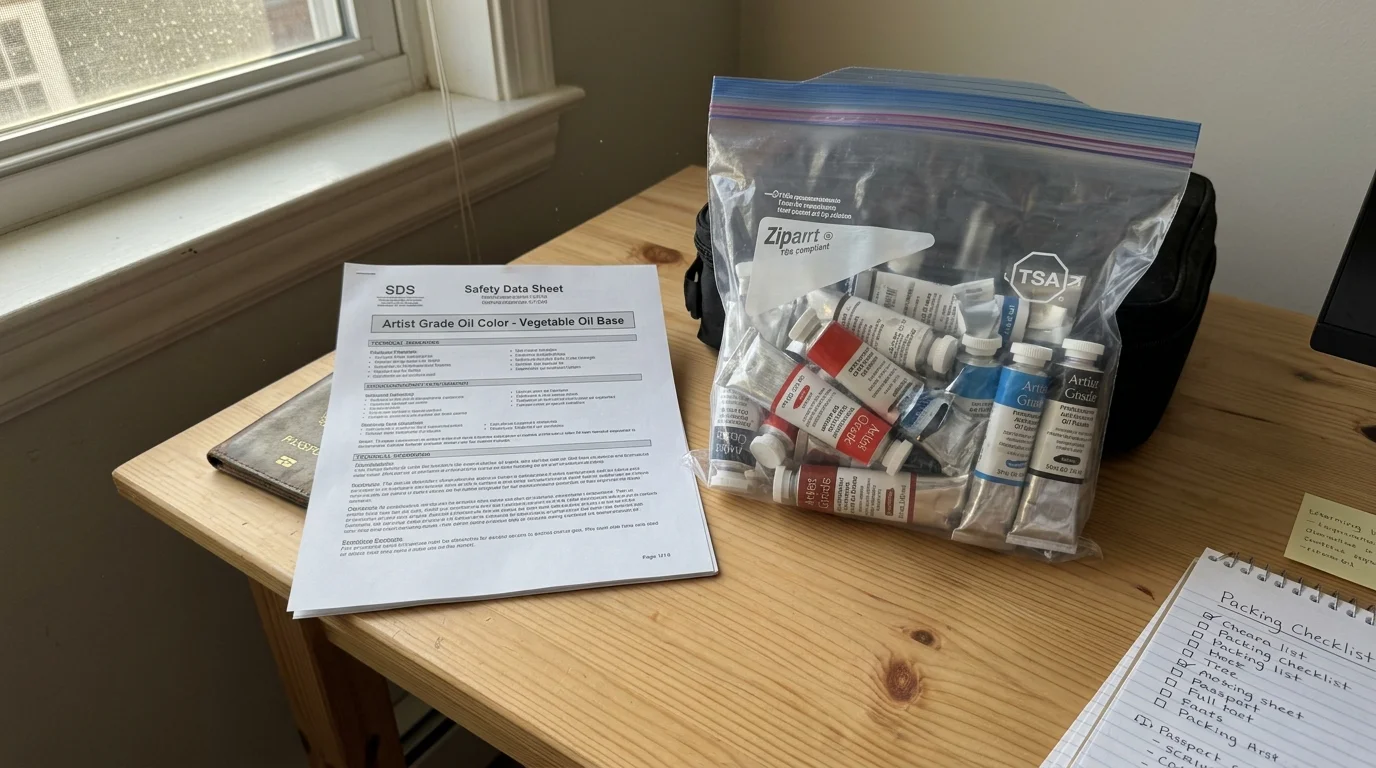
For carry-on baggage, your paint tubes must conform strictly to the TSA 3-1-1 liquids rule. Pack individual 37-milliliter tubes inside a single clear, quart-sized resealable bag.
Solvents remain banned from all commercial aircraft. Never pack turpentine, odorless mineral spirits, or varnish in either your carry-on or checked luggage.
Metal palette knives trigger security alarms because inspectors classify them as bladed instruments. If traveling carry-on only, substitute flexible silicone color shapers or rounded plastic knives.
- Download and print manufacturer Safety Data Sheets showing flash points over 500°F.
- Organize 37-mL tubes neatly within your one-quart clear bag for rapid x-ray inspection.
- Substitute plastic tools for metal palette knives when traveling without checked bags.
- Buy supplementary plant oils at your destination or carry a leakproof two-ounce bottle.
If a screening agent questions your paints, describe them as vegetable-oil pigments. Handing the officer your printed safety sheet resolves technical inquiries in seconds.
International carriers adhering to ICAO regulations enforce identical flash point limits for nonflammable artists oils. You can confidently navigate transit hubs across Europe, Asia, and the Americas.
The Split-Primary Travel Palette and Brush Setup
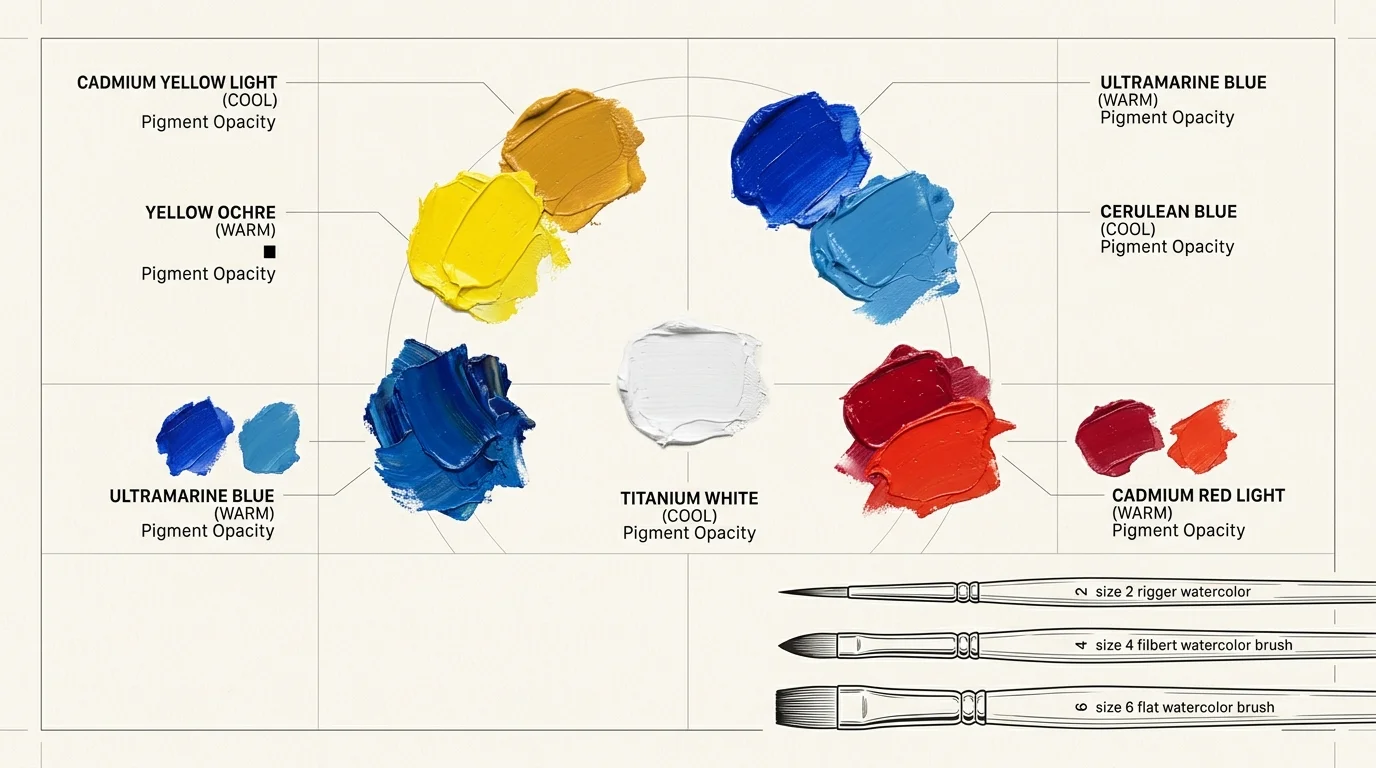
Carrying dozens of paint tubes adds dead weight to your backpack. A six-color split-primary palette plus white produces a complete spectrum of clean, expressive mixtures.
Whether mixing paints on a palette or exploring three-dimensional sculpture, working with tangible tactile mediums enriches retirement life.
Split-primary arrangements incorporate one warm and one cool variant of each primary hue. This design prevents muddy mixtures and accurately captures subtle urban atmospheric conditions.
Stick to 37-milliliter tubes to reduce bulk while carrying enough pigment for extensive travel. These compact tubes provide ample paint for several weeks of daily sketching.
- Warm Yellow: Cadmium Yellow Medium or Hansa Yellow Deep for sunlit masonry.
- Cool Yellow: Lemon Yellow or Hansa Yellow Light for clean foliage and highlights.
- Warm Red: Cadmium Red Light or Pyrrole Red for warm brick and terra cotta roofs.
- Cool Red: Quinacridone Magenta or Permanent Alizarin Crimson for deep architectural shadows.
- Warm Blue: French Ultramarine for vibrant skies and deep purple shadow transitions.
- Cool Blue: Phthalo Blue or Cerulean Blue Chromium for weathered glass and water reflections.
- Tinting White: Titanium-Zinc White for clean value adjustments without chalkiness.
Limit your brush selection to three short-handle synthetic brushes. A size 2 round, a size 4 flat, and a size 6 filbert handle any architectural subject.
Short handles pack flat inside your pochade box storage compartment without bending. Resilient synthetic fibers withstand rough painting panels and clean effortlessly with walnut oil.
Protect wet oil panels with a RayMar Featherweight carrier. These fluted-polypropylene boxes weigh under 9 ounces and shield two wet panels from accidental contact.
Pre-cut 6-by-8-inch linen panels slip directly into the carrier slots without adding bulk. Their rigid construction prevents panel flexing while painting on a windy street corner.
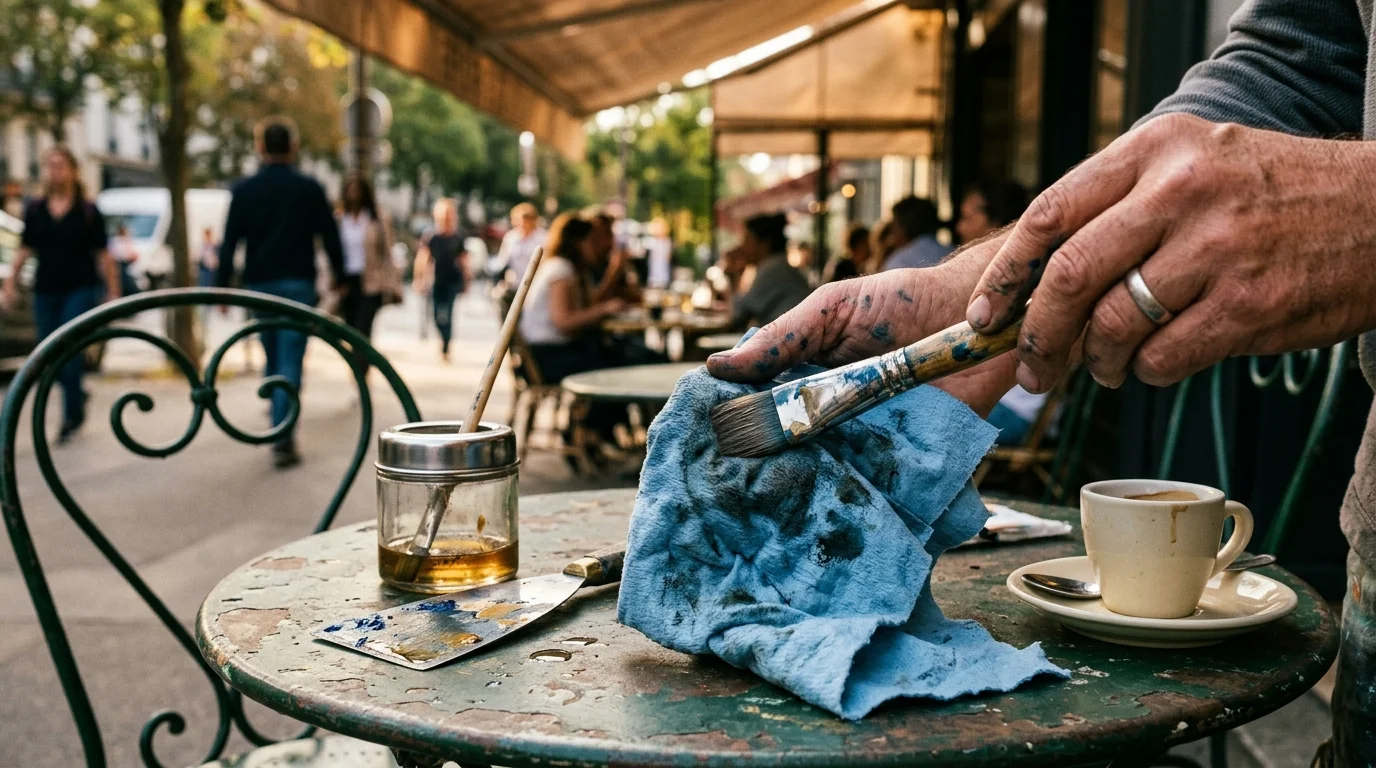
Urban Field Workflow: Painting and Solvent-Free Clean-Up
Painting on active city streets demands spatial awareness, quick decisions, and public courtesy. An efficient setup routine lets you capture shifting sunlight before shadows disappear.
Scout your subject carefully to prevent blocking pedestrian traffic or storefronts. Set up your tripod close to architecture or park benches where you remain safely out of the way.
- Extend your carbon-fiber tripod legs and lock the center column at a comfortable standing height.
- Snap your pochade box onto the Arca-Swiss plate and adjust the lid angle to block sun glare.
- Secure your 6-by-8-inch linen panel into the panel clips and lay out your travel brushes.
- Extrude modest, nickel-sized mounds of pigment around your glass palette perimeter.
- Add five drops of walnut oil to a silicone dipper cup for brush lubrication.
- Block in dominant architectural shapes using thin washes of pigment thinned with walnut oil.
- Apply rich impasto highlights using Gamblin Solvent-Free Gel to ensure fast surface drying.
- Squeeze pigment from brush hairs with blue shop towels rather than washing in fluid.
- Slide your finished board into the panel carrier and scrape the palette glass clean.
- Place soiled shop towels into a sealed silicone trash pouch to keep your daypack clean.
Operating without solvents respects urban environments. You generate no hazardous waste and leave your public painting location completely undisturbed.
This streamlined workflow lets you pack your entire studio into your daypack in under three minutes. You remain ready to catch the next train or stroll to lunch without delay.
Developing this quick field routine builds remarkable confidence in outdoor environments. You can seize fleeting opportunities to paint without dreading a tedious breakdown process.
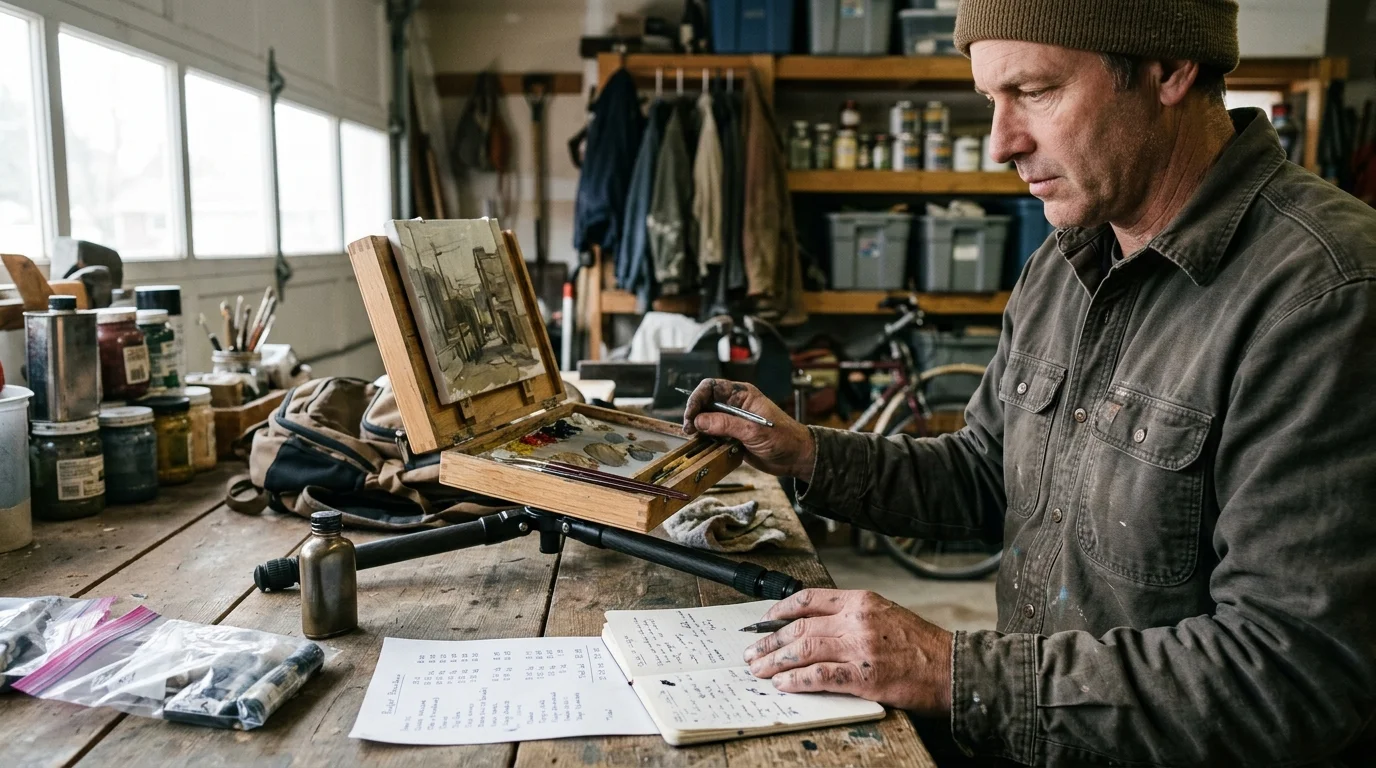
Worked Scenario: Total Kit Weight and Budget Breakdown
Assembling an ultralight setup requires balancing precision weight savings against your gear budget. Let us review a realistic, field-tested configuration with actual weights and retail costs.
This worked scenario relies on standard equipment celebrated for durability and minimal bulk. Every item has been weighed to guarantee the total packed weight stays far beneath eight pounds.
- New Wave u.go Anywhere Small Pochade Box (6″ × 8″): 21.6 oz (1.35 lbs) — $145.
- Sirui Traveler 5CX Carbon-Fiber Tripod with Ball Head: 32.0 oz (2.00 lbs) — $110.
- RayMar Featherweight Carrier with two 6″ × 8″ panels: 12.8 oz (0.80 lbs) — $28.
- Seven 37-mL oil paint tubes (split-primary plus white): 11.2 oz (0.70 lbs) — $58.
- Mediums (Gamblin Solvent-Free Gel and 2 oz walnut oil): 4.8 oz (0.30 lbs) — $16.
- Brushes and tools (3 synthetic brushes and plastic scraper): 2.4 oz (0.15 lbs) — $34.
- Sundries (blue shop towels, trash pouch, and panel clips): 4.0 oz (0.25 lbs) — $6.
Adding these items produces a total weight of 88.8 ounces, or exactly 5.55 pounds. That leaves nearly two and a half pounds of capacity for drinking water and personal essentials.
The total investment for this high-grade rig amounts to $397. This one-time purchase equips you with a resilient system that will support decades of urban exploration.
Investing in reliable components eliminates the frustration of wobbly hardware and leaky medium bottles. Quality construction ensures your rig withstands daily outdoor use across varied weather conditions.
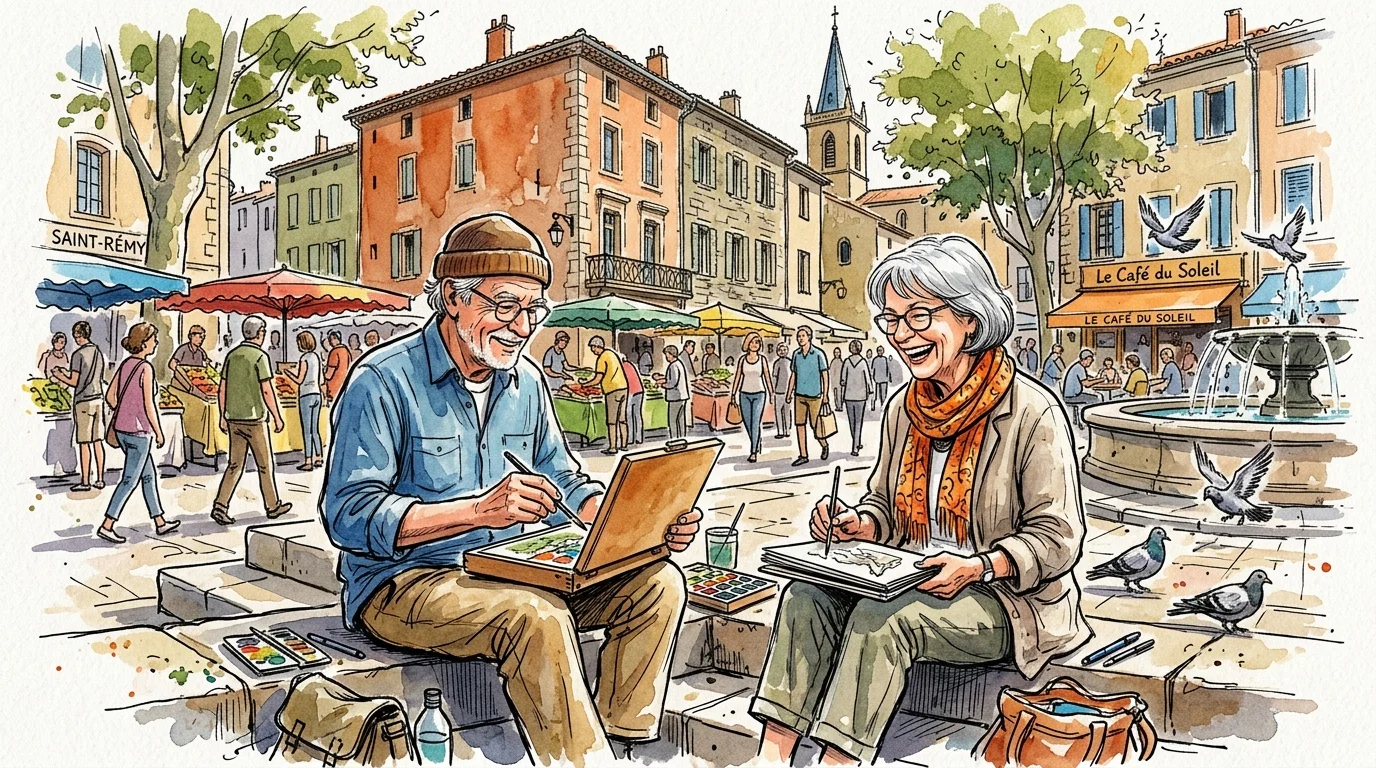
Creative Vitality: Why Urban Sketching Transforms Retirement
Retirement creates the time to master fulfilling artistic pursuits without commercial deadlines. Working outdoors in oils sharpens your powers of observation and promotes mental flexibility.
Scientific studies reveal that participatory arts provide measurable health benefits as we age. Creative disciplines stimulate neural pathways and build psychological resilience.
A landmark study directed by Dr. Gene Cohen in partnership with the National Endowment for the Arts confirmed that participatory arts improve health outcomes. Older participants experienced fewer doctor visits, decreased medication use, and lower rates of loneliness.
The National Institute on Aging highlights how staying intellectually challenged and socially active supports brain health. Outdoor sketching unites mental concentration with gentle physical movement across vibrant urban settings.
Sketching in public squares invites warm conversations with local residents and travelers. You form authentic human connections and experience cities as an engaged creator rather than a detached tourist.
Educational travel organizations such as Road Scholar coordinate immersive learning programs where retirees paint historic architecture alongside kindred spirits. Merging travel with plein air painting expands your horizons and enriches everyday life.
“It is never too late to be what you might have been.” — George Eliot
Each completed sketch captures the light, temperature, and memory of a distinct afternoon. Your field studies become lasting monuments to your boundless curiosity and courage.
Embracing this portable medium turns any city into an open invitation for adventure. You cultivate a renewed sense of wonder with every new street corner you paint.
Frequently Asked Questions
How do you clean oil paint brushes without odorless mineral spirits?
Dip brushes in refined walnut oil to loosen pigment, then wipe bristles clean with a shop towel. Wash brushes thoroughly at night using lukewarm water and moisturizing artist bar soap.
Can I pack artist oil paints in my carry-on bag on flights?
Yes, artist oil paints are permitted in carry-on bags under FAA rules because their flash points exceed 140°F. Ensure tubes measure 3.4 ounces or less and fit within a one-quart clear bag.
Why use walnut oil instead of linseed oil for urban sketching?
Walnut oil cleans brushes effectively in the field without releasing unpleasant odors in public venues. It also resists yellowing over time, keeping your architectural sketches vivid and bright.
What painting surfaces work best for ultralight plein air travel?
Linen mounted on ultralight aluminum composite or MDF boards provides exceptional rigidity without unnecessary weight. These panels fit securely inside wet-panel carriers and resist bowing in humid weather.
Disclaimer: This article is for informational and inspirational purposes. Life decisions are deeply personal, and we encourage readers to pursue their dreams while considering their unique circumstances, health, and financial situation.