Moving into a Florida master-planned community promises vibrant days, yet endless rounds of pickleball and patio mixers often leave your mind starved for substance. True belonging requires intellectual depth rather than crowded golf cart parades.
Organizing an informal salon lets you embrace the joy of lifelong learning alongside neighbors who share an appetite for thoughtful inquiry.
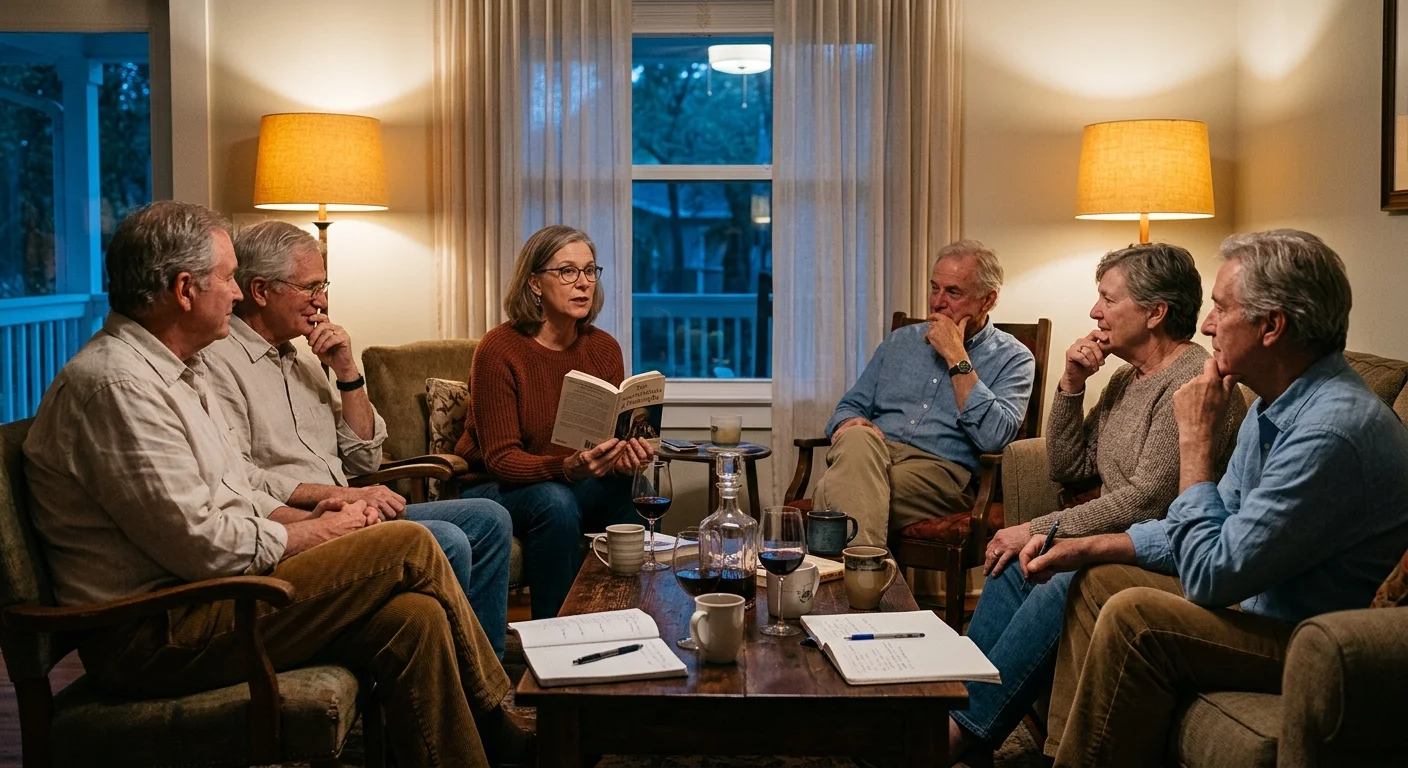
You can replace superficial small talk by curating a private, six-person intellectual salon inside your living room. Limiting your group to six bypasses noisy HOA bureaucracy while unlocking genuine sociometric intimacy.
This guide shows you how to screen thoughtful peers, establish firm conversational ground rules, and spark biweekly discussions that truly invigorate your retirement.
The Active-Adult Paradox: Social Saturation and Intellectual Loneliness
America is navigating the Peak 65 surge, with roughly 4.1 million Americans turning 65 each year. That means more than 11,200 adults retire every single day, and thousands head straight for sun-drenched planned neighborhoods.
While age-restricted neighborhoods offer abundant resort amenities, many residents discover they deeply miss the broader perspectives that come from intergenerational connections across diverse age groups.
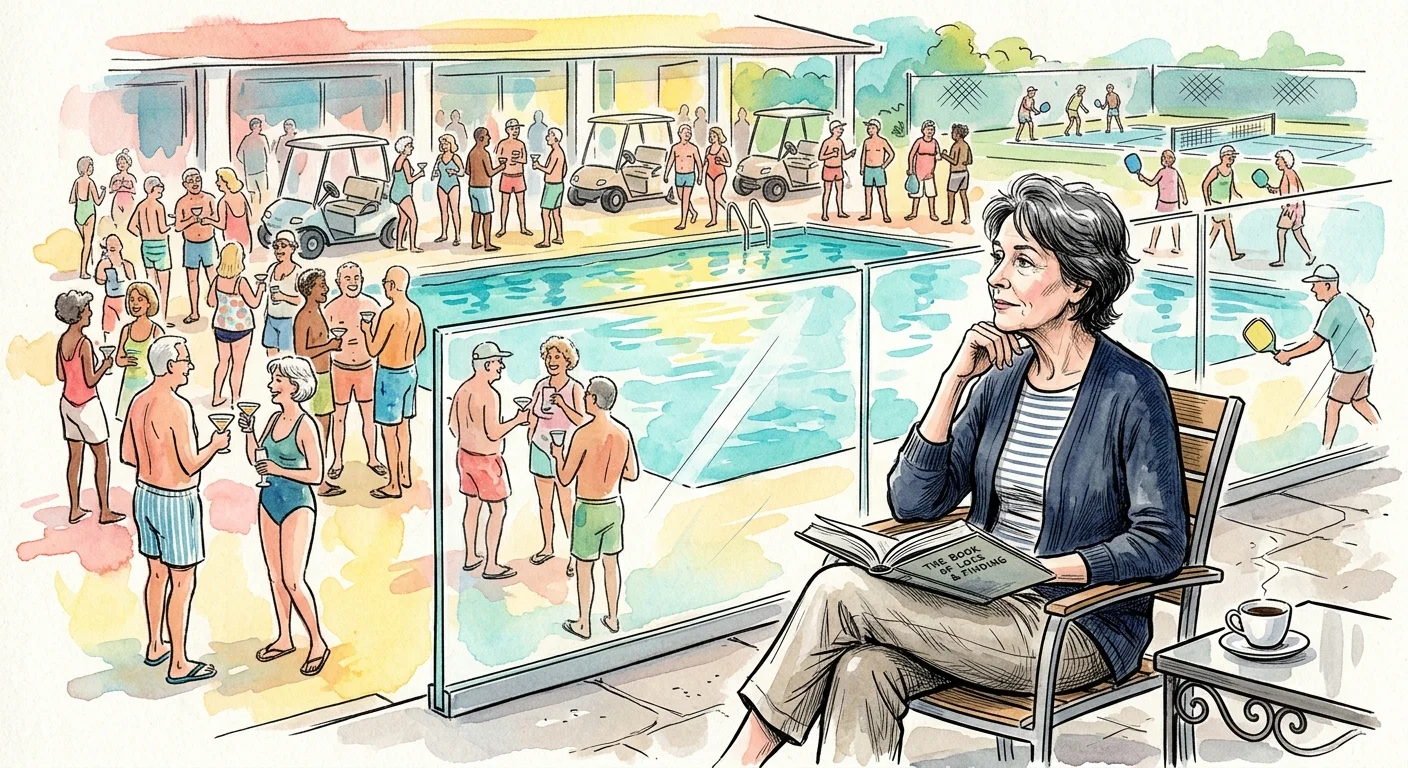
Developers design these enclaves for recreation, offering resort-style pools, championship fairways, and bustling community clubhouses. Yet an active calendar does not automatically protect your mental well-being.
A 2024 University of Michigan National Poll on Healthy Aging published in JAMA revealed that 33% of older adults experience loneliness. Another 29% reported feeling regularly isolated despite living near hundreds of neighbors.
You might spend three hours at a poolside happy hour chatting about golf handicaps and landscaping rules. You still drive home feeling unseen, craving conversations about ethics, literature, history, and scientific discovery.
Endless small talk causes social fatigue without feeding your curiosity. Overcoming loneliness in retirement communities requires trading casual acquaintances for intentional, intellectually stimulating bonds.
The Math of Intimacy: Why Exactly Six Minds Create Magic
Evolutionary anthropologist Robin Dunbar discovered that human social networks arrange themselves in precise layers. While humans can maintain roughly 150 casual relationships, a person’s inner “support clique” maxes out at four to five people.
Diving into rigorous debates also provides a structured outlet for rekindling intellectual passions that may have been sidelined during demanding career years.
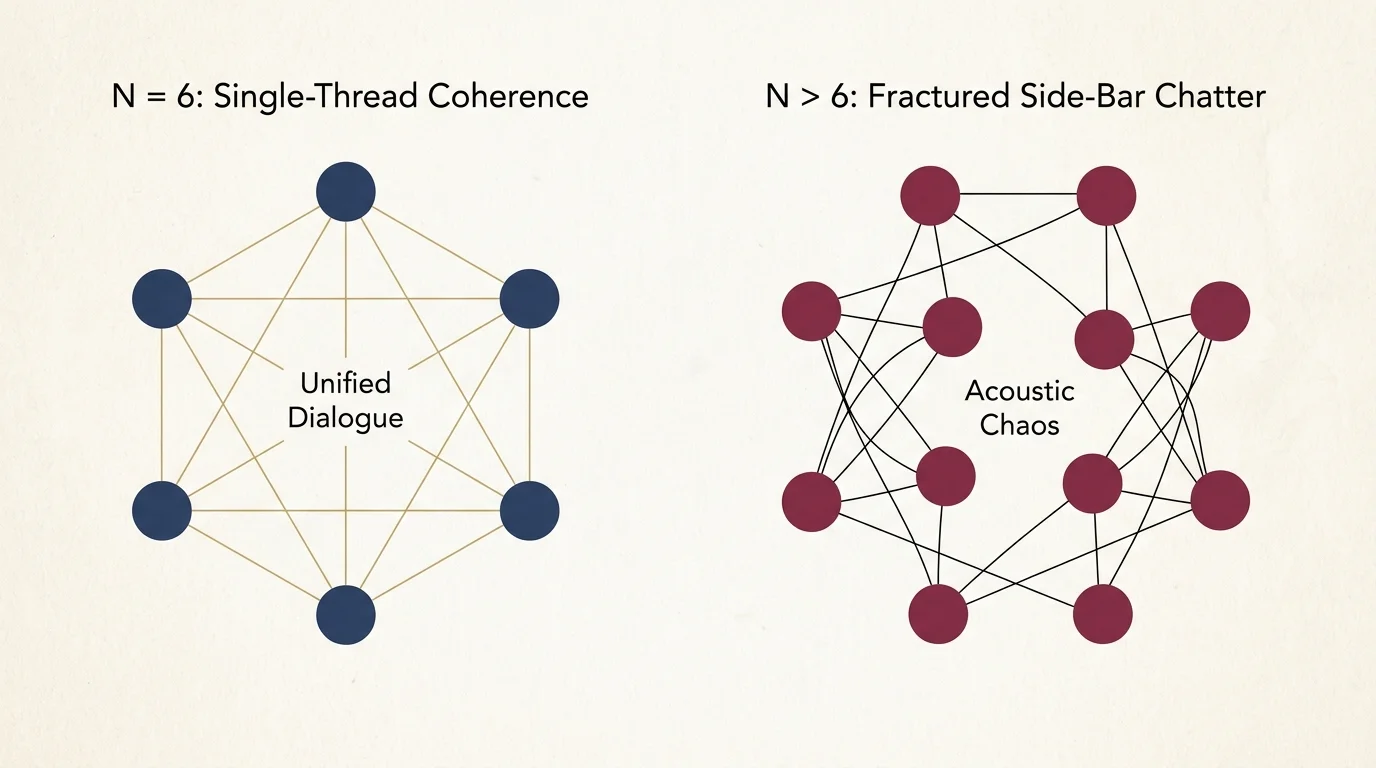
Conversational physics also dictate strict limits on group dynamics. Observational studies demonstrate that once a dining table exceeds six people, single-thread dialogue collapses into competing, parallel side conversations.
Six participants create the perfect geometric and cognitive balance. Everyone maintains direct eye contact, nobody gets drowned out, and the group preserves a unified train of thought throughout the evening.
“Never doubt that a small group of thoughtful, committed citizens can change the world; indeed, it is the only thing that ever has.” — Margaret Mead
Deep social connection produces measurable neurological dividends as you age. The U.S. Surgeon General warned in 2023 that prolonged social disconnection elevates dementia risk by 50% and stroke risk by 32%.
Research published by the National Institute on Aging confirms that meaningful social engagement and cognitive challenge actively support brain health. Six-person salons provide that exact blend of cognitive exertion and emotional safety.
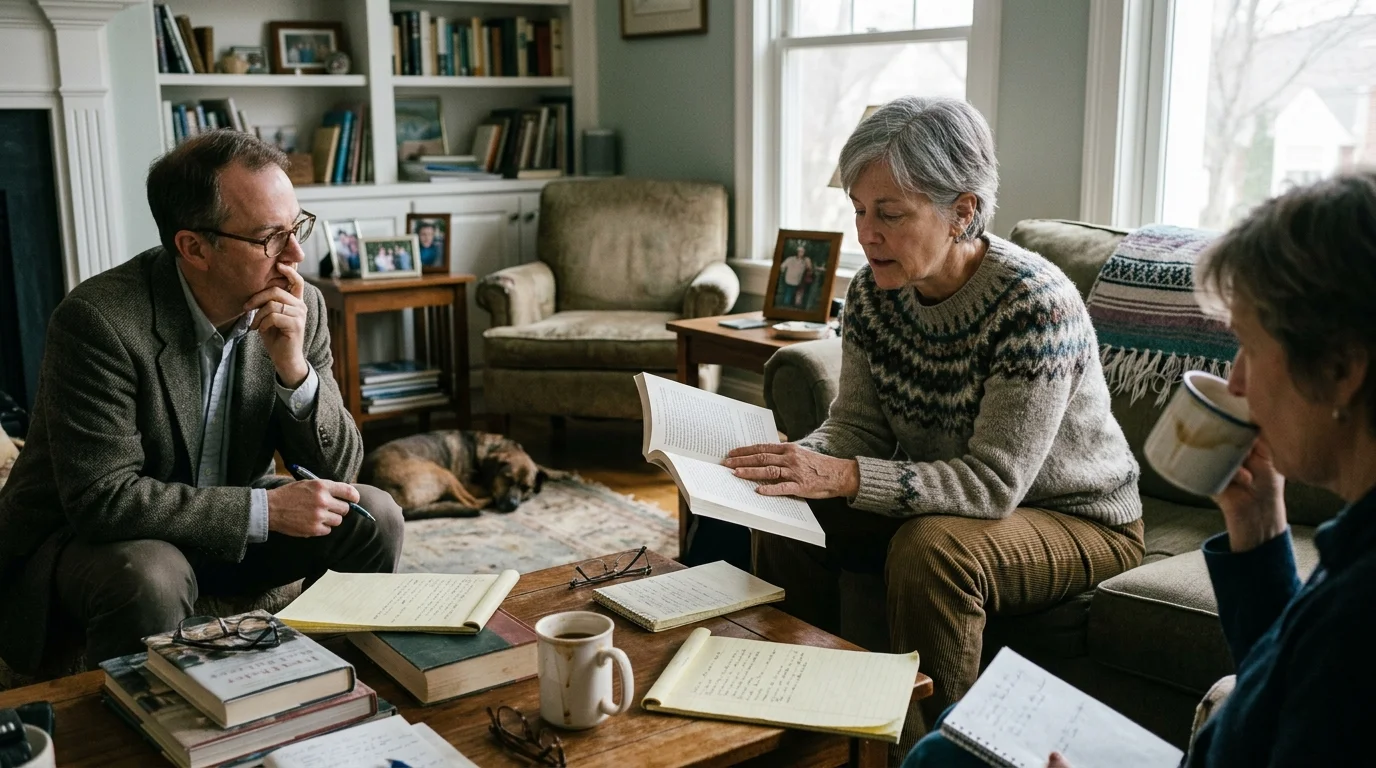
Navigating HOA Governance: The Private Parlor vs. The Chartered Club
Under the Housing for Older Persons Act of 1995 (HOPA), age-restricted communities must ensure at least 80% of occupied units include someone 55 or older. This legal shield fosters tight-knit demographic enclaves with complex governing boards.
For residents who prioritized downsizing for freedom when relocating, hosting small gatherings makes purposeful use of a streamlined home without needing vast entertaining spaces.
Most master-planned communities require groups to jump through bureaucratic hoops to book shared amenities. Official chartered clubs typically need 10 to 25 resident signatures, formal officer elections, and written bylaws.
Crucially, chartered club rules almost universally mandate an open-door policy. Anyone holding a resident gate pass can attend, which instantly ruins the curated intimacy required for serious intellectual discourse.
A private, in-home salon bypasses community association red tape entirely. You do not need committee approvals, charter filings, or clubhouse reservation deposits to host five peers in your dining room.
Gathering behind your own front door protects your right to curate membership. You establish an environment where participants take conversational risks without worrying about community gossip.

Curating the Roster: Sociometric Selection in a 55+ Community
Curating your salon requires deliberate observation rather than putting an open flyer on the community bulletin board. Making deep friends in 55 plus community environments means scouting for curiosity instead of social status.
These small circles often appeal to retired professionals who are actively reinventing themselves in retirement by trading corporate status for authentic self-expression.
Listen closely during everyday neighborhood interactions. Notice who checks out challenging non-fiction titles at the library or asks probing questions at the community garden meeting.
Look for three distinct conversational archetypes to build a dynamic, self-sustaining circle:
- The Analytical Skeptic: Questions assumptions, values verifiable data, and challenges groupthink without becoming abrasive.
- The Synthesis Builder: Connects disparate fields, linking historical precedents to modern scientific breakthroughs and literature.
- The Empathetic Storyteller: Grounds abstract philosophical inquiries in real-world human experience and emotional truth.
Avoid inviting reflexive contrarians or partisan crusaders who turn every discussion into a cable news debate. You need peers who prioritize mutual enlightenment over winning an argument.
Extend an invitation framed around a finite trial rather than a permanent commitment. Invite prospective members to a single four-session series focused on a specific theme.
This approach gives both you and your guests an easy, face-saving exit if the conversational chemistry falls flat. If sparks fly, the group will naturally request a permanent calendar.
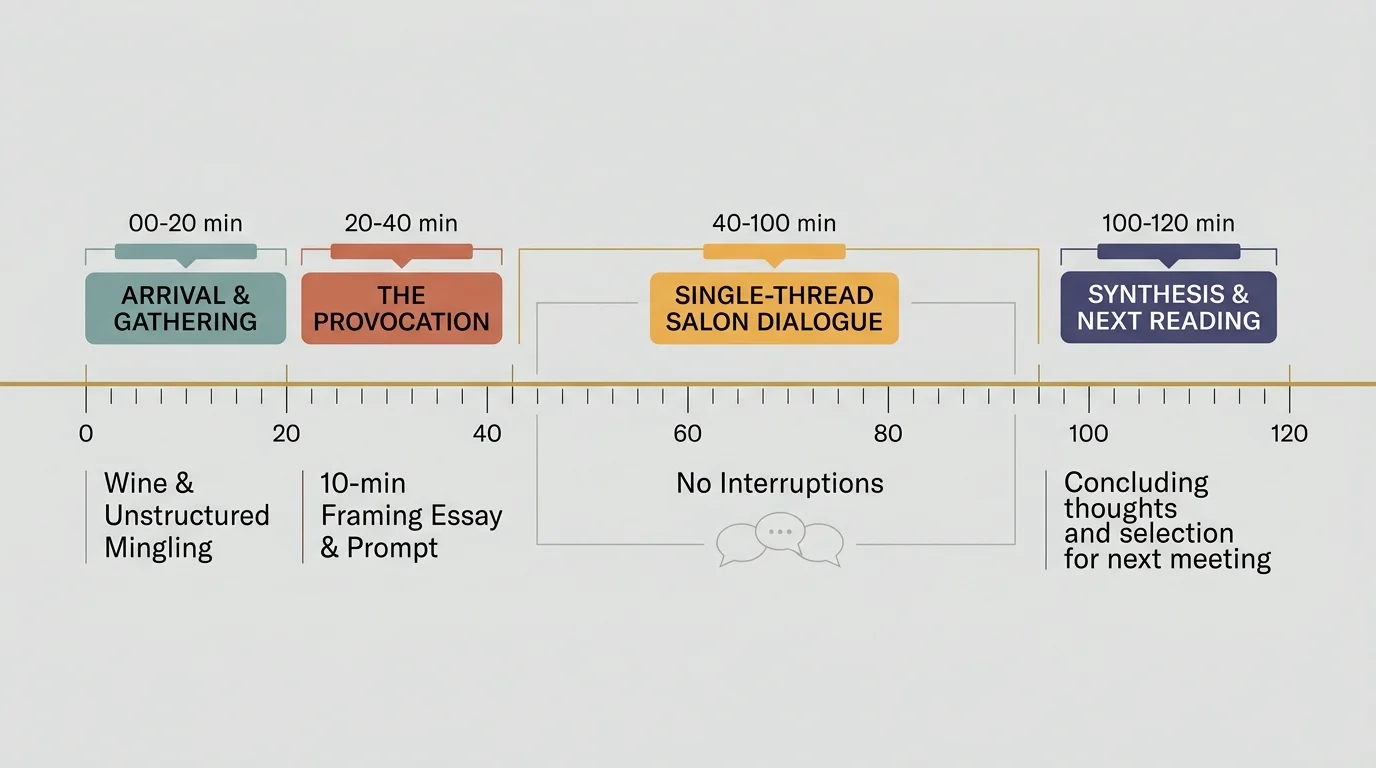
Structuring the Evening: The 120-Minute Protocol
Starting a salon group senior gatherings usually suffer from either lack of direction or excessive formality. The 120-minute protocol provides enough structure to stay on track while keeping the atmosphere relaxed and warm.
Just as adopting a structured daily routine helps retirees replace workplace momentum, having a clear timetable keeps intellectual salons energizing rather than exhausting.
Every gathering follows an adaptable five-step timeline:
- Phase 1: Welcome and Unwinding (15 Minutes): Pour beverages, serve light finger food, and settle into the dining space.
- Phase 2: The Catalyst Reading (10 Minutes): The host reads aloud a 500-word excerpt or displays a single central question.
- Phase 3: Unbroken Initial Round (25 Minutes): Each participant takes up to four uninterrupted minutes to deliver their initial reflection.
- Phase 4: Open Socratic Exchange (55 Minutes): The floor opens for cross-examination, shared analysis, and collaborative debate.
- Phase 5: Synthesis and Next Topic (15 Minutes): Each member shares one final insight, and the host confirms the next host and reading.
Adopt the Chatham House Rule for every session. Members may freely discuss the ideas outside the room, but they must never attribute specific comments to any speaker.
Consider this concrete scenario from a resident in Venice, Florida. Host Greg converted his 12-foot by 14-foot dining space into a salon parlor for five neighbors.
Greg set up a 42-inch by 72-inch rectangular dining table, placing six chairs 28 inches apart to maximize personal space and visibility. He dimmed the overhead lighting to 2,700K warm white and queued soft ambient instrumental music at 40 decibels.
His grocery receipt totaled exactly $60.75 from the local supermarket:
- Two bottles of 2022 Willamette Valley Pinot Noir ($43.98)
- Ten ounces of aged Manchego cheese ($8.99)
- One box of artisanal seeded crackers ($4.49)
- One pound of crisp red seedless grapes ($3.29)
He sent an 8-page PDF excerpt on Stoic ethics six days before the gathering. His guests arrived at 7:00 PM, dove straight into the prompt, and departed promptly at 9:00 PM energized and mentally refreshed.

Salon Formats and Topic Blueprints for Lifelong Learners
Great salons thrive on sharp, boundary-pushing source material. You can pull inspiring reading syllabi from institutions like Osher Lifelong Learning to structure your monthly calendars.
Unlike a traditional retirement book club that reviews entire novels, an intellectual salon zooms in on provocative essays and single conceptual chapters.
The table below compares four proven discussion formats designed specifically for private six-person salons:
| Format Model | Prep Reading Length | Discussion Duration | Cognitive Focus Score (1-10) | Splinter Risk Rating |
|---|---|---|---|---|
| Socratic Ethical Inquiry | 5 to 8 Pages | 90 Minutes | 8.5 | Low (Under 5%) |
| Historical Foresight Lab | 10 to 15 Pages | 100 Minutes | 9.0 | Moderate (10%) |
| Speculative Science Review | 1 Podcast (45 Min) | 90 Minutes | 7.5 | Low (Under 5%) |
| Comparative Memoir Circle | 15 to 20 Pages | 80 Minutes | 7.0 | Low (Under 5%) |
Rotate these formats across the seasons to maintain high energy and mental agility. Pair complex scientific readings with informal appetizers, and pair lighter literary topics with deeper analytical questions.
Use concrete opening prompts that demand personal perspective rather than factual recall. Consider these field-tested options:
- “If modern neuroscience eliminates free will as an objective reality, how must our legal justice system adapt?”
- “Does rapid artificial intelligence expansion enhance human self-realization, or does it erode our capacity for original thought?”
- “Which historical empire’s decline offers the most accurate blueprint for navigating contemporary Western challenges?”
- “Can an individual live an authentically ethical life within an interconnected global economic system?”
These inquiries prompt thoughtful reflection and lively debate. They keep your group engaged in meaningful discovery rather than neighborhood gossip.
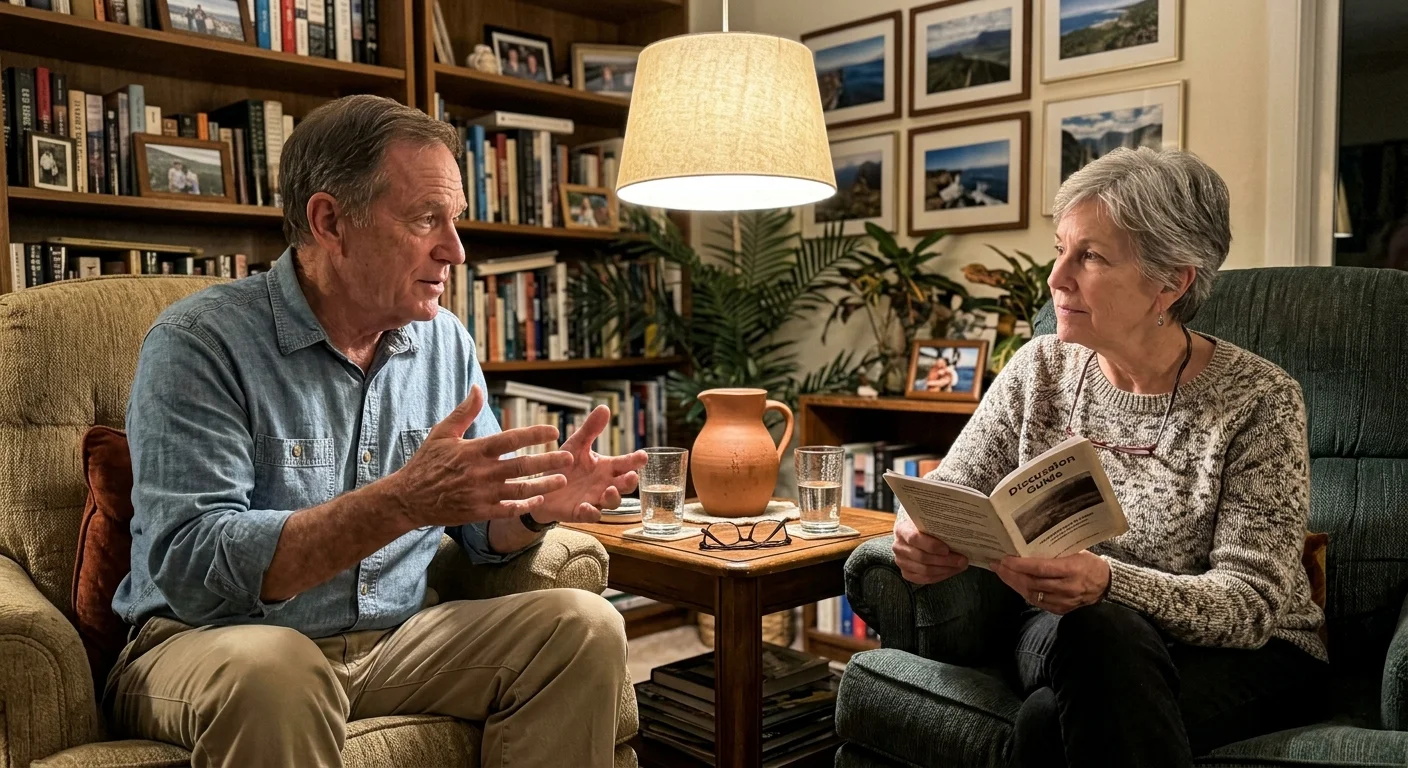
Overcoming Group Friction: Rules of Engagement for Difficult Dialogues
Passionate minds inevitably experience conversational friction. Left unmanaged, partisan reflexes or domineering personalities can quickly dismantle months of sociometric trust.
Establish clear conversational boundaries during your inaugural session. Ban party-line political talking points; require members to frame opinions through foundational moral or philosophical principles instead.
Introduce physical communication tools to manage dominant speakers without creating awkward social moments. A simple three-minute hourglass keeps monologues in check while keeping the energy playful.
Use the “Passing Token” system during contentious phases. A participant must hold a designated river stone to speak, ensuring other attendees listen rather than formulate rebuttals.
When a member goes off on a tangent or brings up neighborhood politics, intervene directly with an active verbal redirect. Say, “That speaks to practical logistics, but let us bring our focus back to the core ethical dilemma.”
If a member repeatedly disregards group boundaries, handle the separation with grace. Conclude the four-week sprint, take a scheduled two-week break, and reconvene your next session with an adjusted guest list.
Frequently Asked Questions
How do I reject or exclude pushy neighbors who demand an invite?
Frame your salon as a specialized, short-term study cohort tied to a specific text rather than a social club. Explain that the format relies on a strict six-person limit to preserve conversational continuity, and offer to share the reading list so they can launch a sister group.
What should I do if a salon member monopolizes every discussion?
Use a three-minute sand timer for opening responses, or establish a rule where every attendee must speak once before anyone speaks twice. If the behavior continues, have a private conversation between meetings to ask for their help in drawing out quieter members.
Do I need permission from my Florida HOA board to run this group?
No, private gatherings held inside your personal home do not require HOA board approvals, club charters, or committee filings. The federal Housing for Older Persons Act and standard community association rules regulate common facilities and age quotas, not private living room gatherings.
How often should a six-person salon meet to sustain momentum?
Meeting every two weeks strikes the perfect balance between intellectual momentum and busy retirement travel schedules. Monthly meetings often break conversational continuity, while weekly gatherings can cause reading fatigue.
Disclaimer: This article is for informational and inspirational purposes. Life decisions are deeply personal, and we encourage readers to pursue their dreams while considering their unique circumstances, health, and financial situation.