
You can eliminate the strained silence of weekly check-in calls by replacing rigid scheduling with spontaneous, asynchronous video dispatches. This simple shift transforms transactional family obligation into vibrant daily connection across thousands of miles.
Whether your long-term goal is planning an unforgettable grandparent-teen European adventure or simply sharing daily laughs, consistent micro-connections build the foundation.
Discovering modern ways of strengthening family bonds in retirement allows you to stay emotionally integrated into your loved ones’ lives despite physical separation.
Most long-distance advice urges grandparents to schedule longer Sunday phone calls. Real emotional intimacy flourishes when you eliminate calendar friction through brief video messages paired with shared, two-person collaborative projects.
As a 70-year-old living time zones away from your adult children and grandchildren, you deserve relationships rooted in curiosity rather than dutiful guilt. Here is your roadmap to effortless modern closeness.
Why the Scheduled Sunday Phone Call Fails Long-Distance Families
The traditional Sunday afternoon phone call often feels like an exhausting administrative status report. You ask predictable questions about work or school, and your adult children offer hurried answers while folding laundry.
While building social connections in retirement often focuses on local friendships, nurturing long-distance family ties requires just as much creativity and intention.
This predictable script breeds emotional detachment over time. When conversation reduces to surface-level logistics, both generations leave the exchange feeling unfulfilled and vaguely guilty.
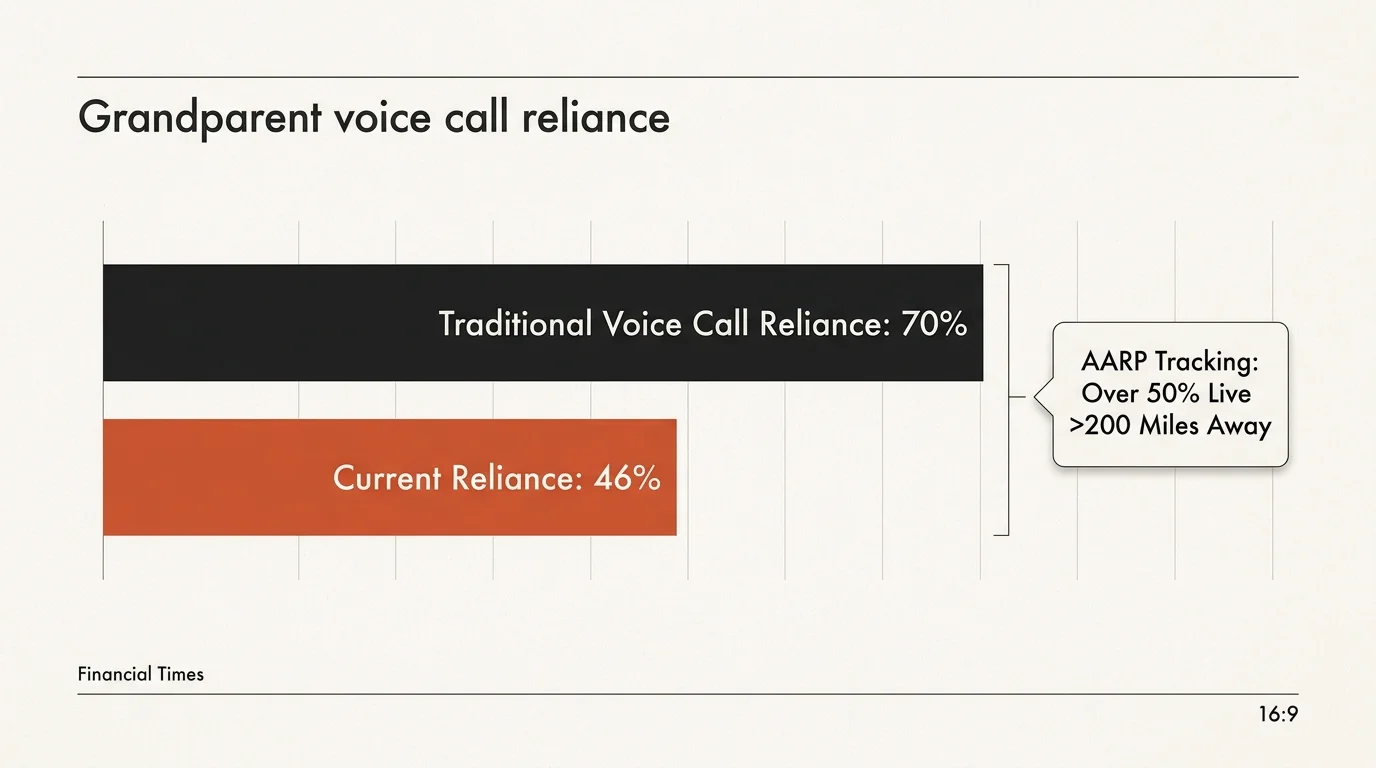
Research published by AARP indicates that more than 50 percent of American grandparents have at least one grandchild living over 200 miles away. Roughly one-third live more than 50 miles from their closest grandchild.
Furthermore, AARP tracking data shows grandparent reliance on traditional voice calls plummeted from 70 percent to 46 percent. Families are abandoning voice calls because rigid synchronous communication clashes with modern household schedules.
When you schedule a mandatory weekend phone call, you inadvertently introduce social pressure into the relationship. Your busy adult children worry about entertaining you, while you worry about interrupting their weekend routines.
Grandchildren struggle even more with voice-only communication because developing minds rely heavily on visual cues and physical activity. Asking an energetic child to hold a phone receiver inevitably produces awkward monosyllabic responses.
The root problem is not a lack of love or generational interest. The problem lies entirely in the synchronous format itself, which forces connection into rigid, artificial appointments.
By dismantling the mandatory Sunday phone call, you liberate your family from performative obligation. You replace scheduled friction with genuine, unhurried curiosity.
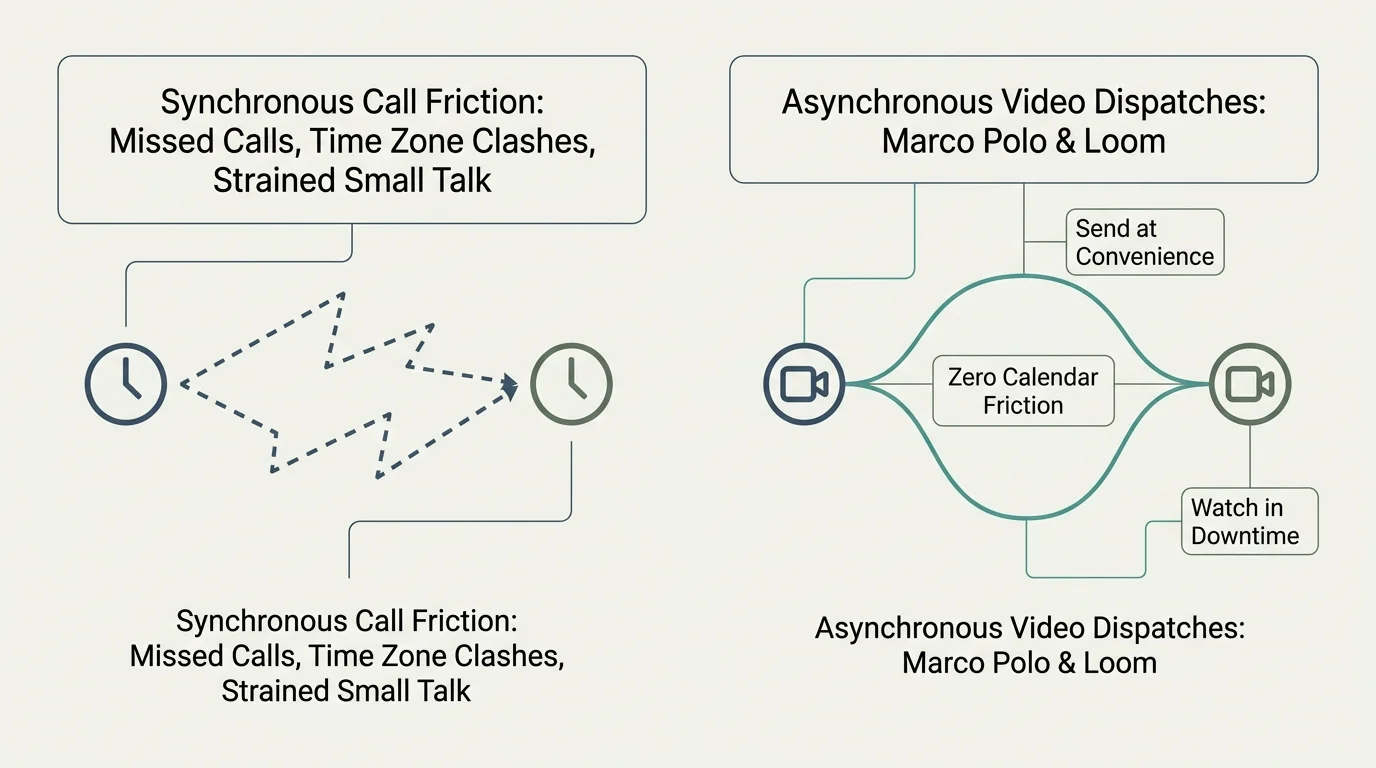
The Mechanics of Asynchronous Video: Choosing Marco Polo and Loom
Asynchronous communication allows you to record and send messages at your convenience, while recipients watch and reply when they have downtime. This structure completely eliminates missed calls and scheduling gymnastics.
As you adopt these new communication tools, keeping your account access organized inside a digital estate vault ensures your family can always retrieve stored videos and archives.
Mastering these platforms is part of expanding your broader retirement tech skills to stay connected in an increasingly digital world.
Adopting asynchronous video for seniors marco polo delivers an immediate upgrade over traditional phone tag. Marco Polo operates like a modern video walkie-talkie, keeping your conversations organized in private family threads.
The base version of Marco Polo provides unlimited video messaging and group chats without third-party display advertisements. Both Apple iOS and Google Android platforms support the application with identical functionality.
For advanced features, Marco Polo Plus costs $79.99 per year or $9.99 monthly. It unlocks high-definition video recording, automated text transcripts, and accelerated playback speeds up to 3x.
If you want to connect your entire family network, the Marco Polo Plus Family Plan costs $159.99 annually. This plan covers up to six individual accounts across different households.
Marco Polo also offers an Unlimited Cloud Storage Add-On for $47.99 per year or $7.99 monthly. This add-on preserves your family video archives indefinitely beyond the standard retention window.
Loom offers another compelling asynchronous option, especially if you enjoy sharing desktop content. Loom allows you to record your computer screen alongside a small video bubble of your face.
With Loom, you can walk your adult children through scanned vintage photographs, ancestry family trees, or travel maps. The free Loom Starter tier allows video recordings up to five minutes in length.
To make asynchronous messaging work, you must keep individual videos brief and specific. Limit your dispatches to 60 to 90 seconds, focusing on a single sensory observation or story.
- Show a 45-second clip of your garden’s first heirloom tomato or backyard bird feeder.
- Share a 60-second dispatch reviewing an unusual book you found at the local library.
- Record a 90-second bedtime story excerpt that your grandchild can replay before falling asleep.
- Send a 30-second video demonstrating your technique for kneading homemade sourdough bread.
- Capture a 45-second walk through a historic neighborhood park during your morning stroll.
These micro-dispatches require zero scheduling coordination from your busy adult children. They watch while riding transit or sipping morning coffee, feeling instantly woven into your everyday life.
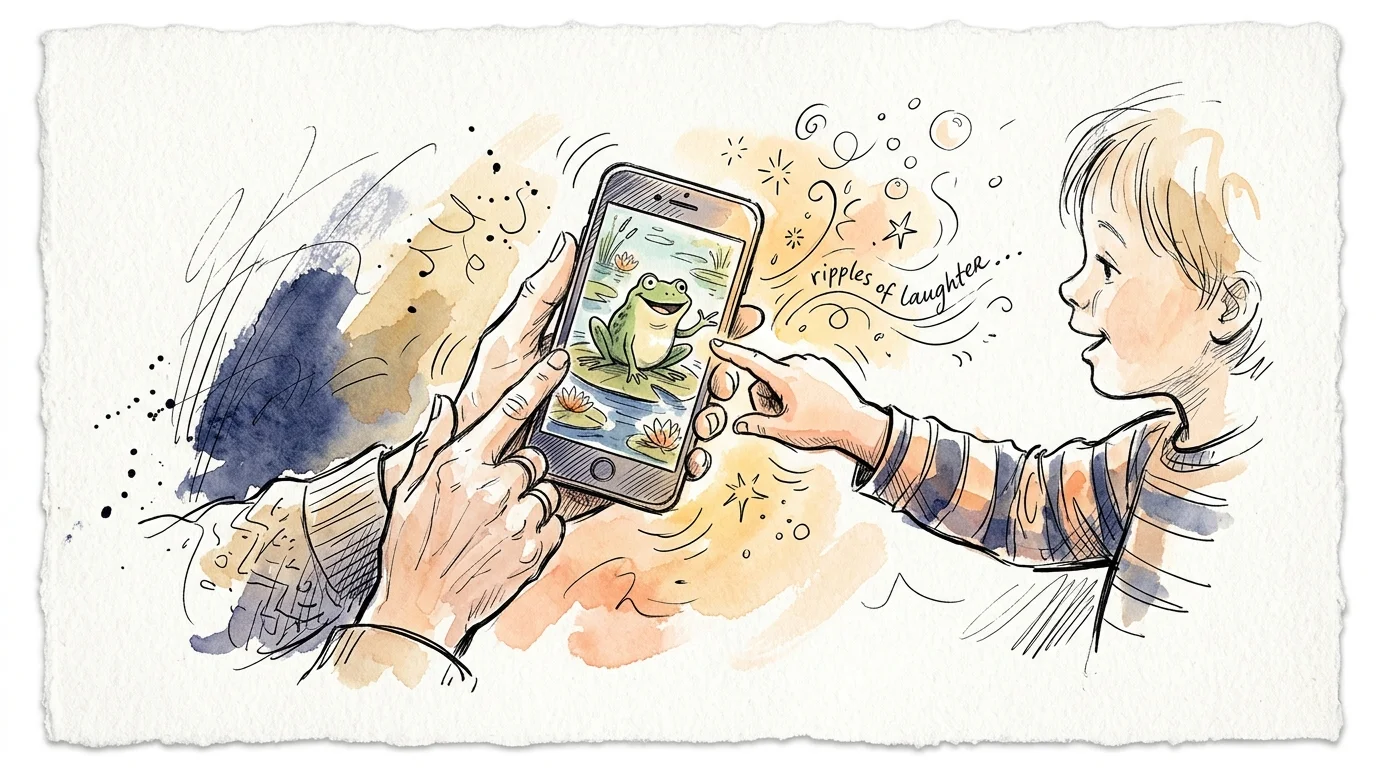
Screen Time Rules and Intergenerational Tech: The Science of Digital Bonding
Many grandparents worry that sending digital videos contributes to unhealthy screen time for young children. Pediatric health guidelines offer reassuring clarity on this exact concern.
These digital touchpoints can also pave the way for practical financial mentoring, such as seeding a grandchild’s first Roth IRA to build long-term generational wealth.
These casual check-ins also lay the foundation for in-person visits and exciting grandparent adventures down the road.
In its updated media guidance framework, the American Academy of Pediatrics explicitly exempts interactive video chatting from standard screen-time limits for children under 24 months. Medical authorities recognize that relational digital interaction fosters healthy social development.
Unlike passive video streaming or video games, asynchronous video messaging requires facial recognition, emotional responsiveness, and reciprocal language patterns. Your face and voice become familiar, comforting anchors rather than abstract digital noise.
Intergenerational connection also provides measurable neurological advantages for older adults. Scholars at the Stanford Center on Longevity emphasize that meaningful cross-generation relationships strengthen cognitive resilience and emotional well-being.
When you send a targeted two-minute video, you model intentional digital communication. You demonstrate to younger generations that modern technology can cultivate authentic emotional closeness rather than mindless distraction.
Children learn that screens serve as bridges between real people who care about them. This builds digital literacy rooted in human warmth rather than solitary entertainment.
Your adult children will appreciate this distinction immediately. You support their parenting boundaries while establishing an authentic presence in your grandchildren’s daily lives.

Cost and Platform Comparison: Tools for Long-Distance Connection
Choosing the right digital platform depends on your budget, your preferred hardware, and how your family communicates. Evaluating concrete attributes prevents subscription waste and technical headaches.
If you live alone, pairing these everyday connection apps with a reliable solo aging safety protocol offers both independence for you and reassurance for your family.
The following comparison outlines the primary software platforms used for asynchronous intergenerational communication. Review the technical limits and costs before inviting your family to join.
| Platform & Tier | Annual Price | Hardware Supported | Recording Limits | Primary Communication Mechanism |
|---|---|---|---|---|
| Marco Polo Base (Free) | $0.00 | iOS, Android | Unlimited duration | Casual mobile video walkie-talkie messaging |
| Marco Polo Plus Individual | $79.99/year | iOS, Android | Unlimited duration | HD video with 1.5x–3x playback and transcripts |
| Marco Polo Plus Family Plan | $159.99/year | iOS, Android | Unlimited duration | Shared subscription for up to six accounts |
| Loom Starter | $0.00 | Chrome, macOS, Windows, iOS | 5 minutes per video (25 videos total) | Desktop screen recording with face-cam bubble |
| Storyworth Color Tier | $99.00/year | Web browser, Email, iOS | Weekly text & audio prompt | Compiled memoir project printing a 300-page book |
If your grandchildren are toddlers or elementary students, Marco Polo provides the most intuitive interface. Young children quickly master tapping the recording button without adult supervision.
If you prefer communicating from a desktop computer, Loom offers superior screen-sharing clarity. You can show digitized family letters or discuss current news articles with crystal-clear audio.
Selecting one primary tool keeps your communication streamlined and predictable. Avoid juggling multiple apps, which creates digital fatigue for both you and your family.

Replacing Small Talk with Two-Person Monthly Book Debates
A thriving long distance parent relationship requires treating your adult children as intellectual equals rather than perpetual dependents. Small talk about weather and schedules stalls genuine personal intimacy.
Exploring stimulating literature and novel viewpoints is also an inspiring way of rekindling old passions and intellectual interests throughout your retirement.
Engaging in these literary discussions is a wonderful way to practice sharing your wisdom through storytelling while exploring shared narratives together.
Replacing transactional calls with a two-person monthly book debate provides rich conversational substance. You and your adult child read the same book, then exchange sharp asynchronous video reactions.
This structure shifts the emotional focus away from personal interrogation. Instead of defending their lifestyle choices or busy calendars, your child engages with you on ideas, philosophy, and storytelling.
Choose books that provoke strong opinions rather than passive agreement. Narrative non-fiction, compelling biographies, and psychological thrillers generate the liveliest debates.
- Select a challenging title that neither of you has read before.
- Agree to read four chapters every two weeks at your own individual pace.
- Send a two-minute video dispatch arguing against a central premise of the author.
- Pose one direct philosophical question for your adult child to answer in their reply.
- Conclude each book with an optional thirty-minute live video celebration over dessert.
Debating ideas reveals how your adult child thinks, analyzes, and views the modern world. You gain access to their adult mind, discovering dimensions of their character that weekly check-in calls never uncover.
This practice also models lifelong intellectual curiosity for your grandchildren. They observe their parent and grandparent engaging in joyful, rigorous intellectual exploration across distance.
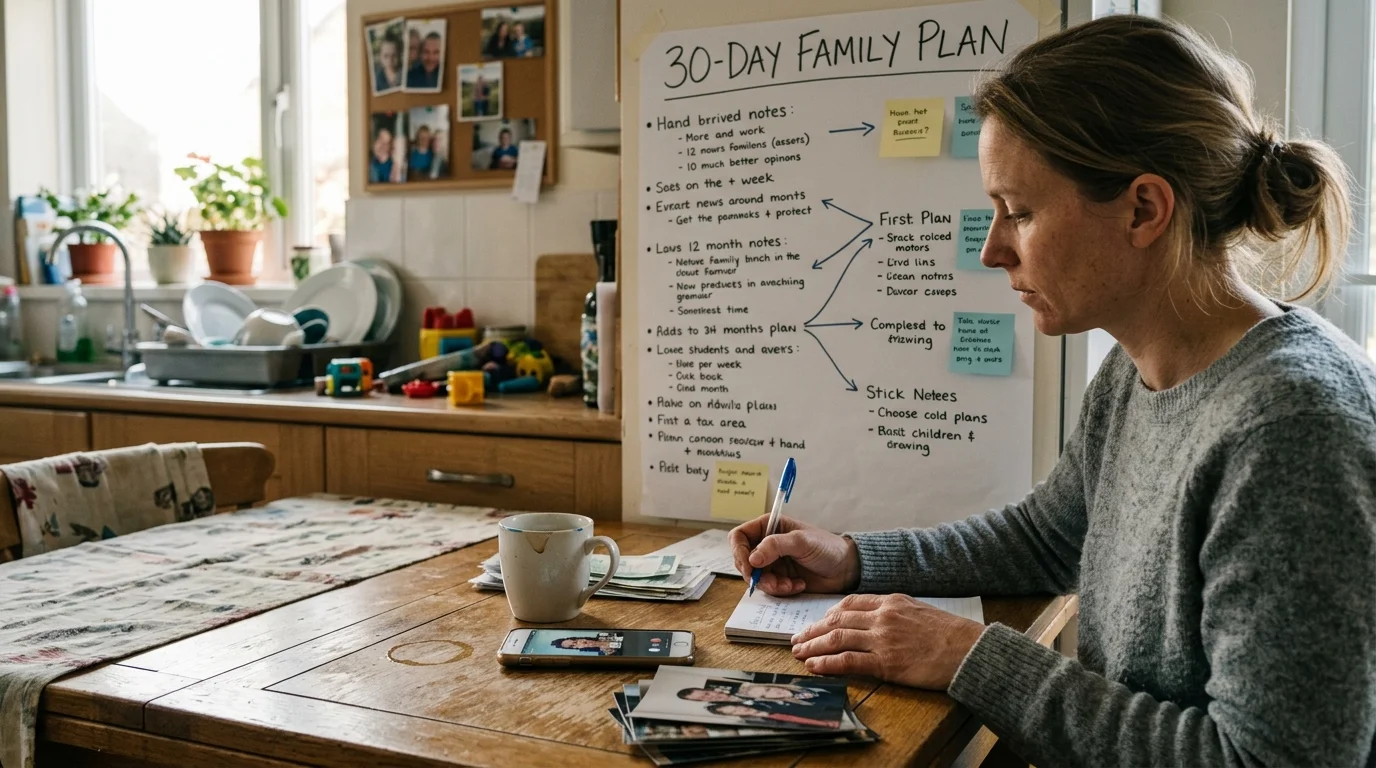
Step-by-Step Implementation: A 30-Day Family Transition Plan
Successfully staying close with adult children across country requires a deliberate, step-by-step transition. Springing a radical new system on your family overnight can cause confusion or pushback.
Consider this real-world scenario. Arthur, a 70-year-old retired civil engineer in Chicago, struggled with distant Sunday calls to his daughter Maya and seven-year-old grandson Lucas in Seattle.
Arthur spent 45 agonizing minutes every Sunday navigating spotty speakerphone audio, background kitchen noise, and restless silences. He decided to reset their dynamic using a 30-day asynchronous transition.
- Week 1 (The Expectation Reset): Arthur purchased a Marco Polo Plus Family Plan for $159.99 annually. He sent Maya a warm text message releasing her from the mandatory 4:00 PM Sunday phone call, explaining he wanted to try low-pressure video messages instead.
- Week 2 (The Gentle Demonstration): Arthur sent two 60-second video clips showing his woodworking workshop and his morning walk along Lake Michigan. He explicitly told Maya not to feel pressured to reply immediately, removing conversational anxiety.
- Week 3 (The Grandchild Hook): Lucas watched Arthur’s videos and sent back a 30-second clip showing his new Lego creation. Arthur replied with a 45-second video congratulating Lucas on his engineering symmetry, establishing direct rapport.
- Week 4 (The Intellectual Launch): Arthur mailed Maya a copy of a biography they had both mentioned wanting to read. He proposed a monthly asynchronous video debate covering three chapters every two weeks.
By day thirty, Arthur had reduced his synchronous phone obligations from 180 stressful minutes per month to zero. In their place, he built a dynamic rhythm of 12 brief weekly video exchanges.
Arthur and Maya now exchange three 90-second dispatches each week, totaling roughly 18 minutes of joyful, focused monthly communication. Their connection feels immediate, spontaneous, and entirely free of scheduling resentment.
Beyond the Screen: Structured Collaborative Legacy Projects
While asynchronous video maintains your daily presence, structured collaborative projects anchor your long-term family heritage. Shared goals give you and your adult children a meaningful reason to collaborate.
Storyworth represents one of the most effective tools for compiling family wisdom. Annual subscriptions cost $59 to $69 for the Basic tier, which includes one 480-page black-and-white hardcover book.
The Storyworth Color tier costs $99 to $109 annually, supporting full-color printing up to 300 pages alongside voice recording transcription. Duplicate keepsake copies cost between $39 and $99 depending on page count.
The platform emails you one provocative prompt each week, such as describing your first job or a childhood adventure. Your written responses compile automatically into a permanent printed keepsake volume at year’s end.
You can also create customized long-distance projects that do not require third-party platforms. Collaborative heritage work transforms abstract family history into tangible heirlooms.
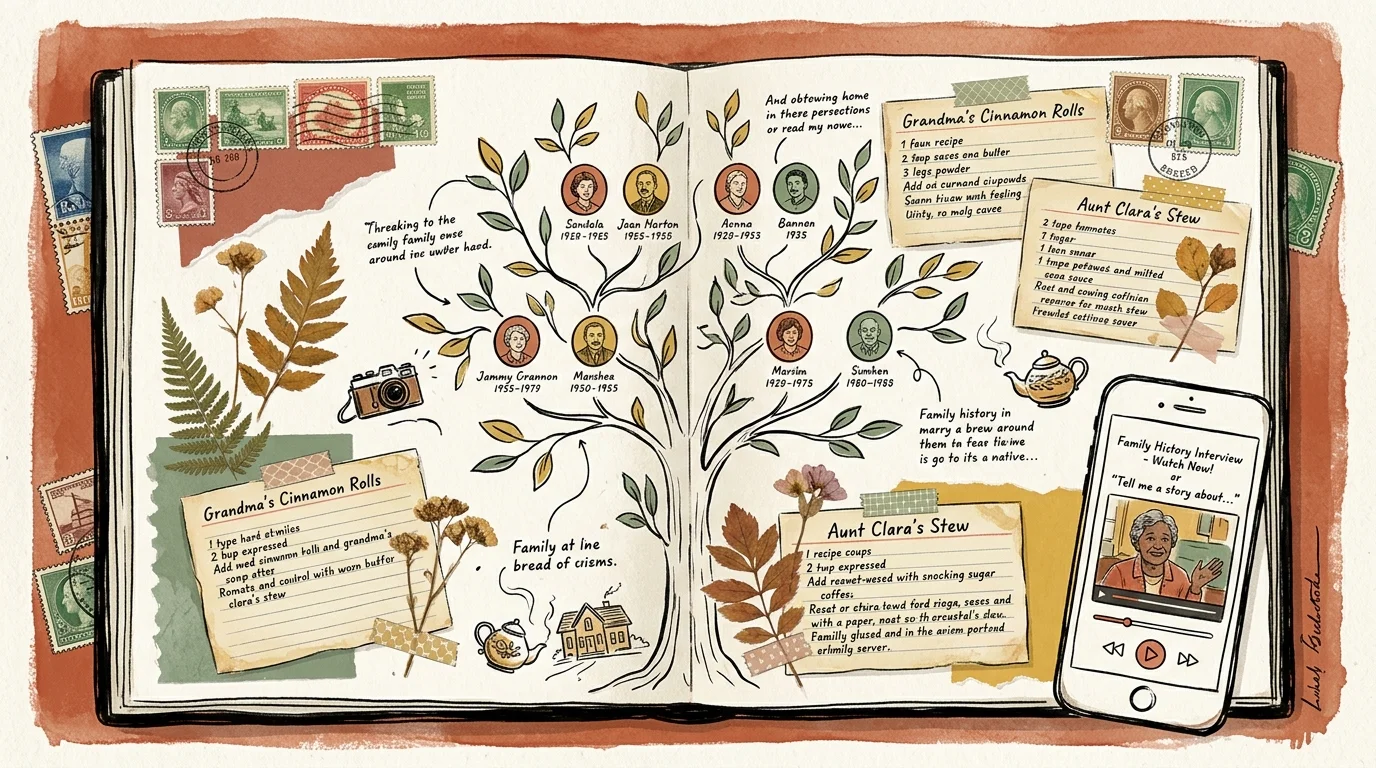
- Curate a digital archive of vintage family photographs using shared cloud storage folders.
- Cook the same heritage recipe simultaneously across distance, sharing video progress clips at each step.
- Assemble a collaborative audio playlist spanning three generations of meaningful family songs.
- Maintain a shared online document reviewing family travel memories and detailing future destination dreams.
These shared endeavors provide natural talking points for your video dispatches. They ensure your conversations center on creativity, memory, and shared purpose rather than polite status reports.
Retirement offers you the time and perspective to curate these treasures. By inviting your family into the process, you leave an enduring emotional footprint across generations.
Frequently Asked Questions
What should I do if my adult children take several days to reply to my video messages?
Accept their delayed response without taking it personally. Asynchronous communication succeeds precisely because it frees your children from immediate conversational demands during demanding workweeks.
Is Marco Polo secure and private for sharing videos of young grandchildren?
Yes, Marco Polo operates as a closed, private network where your videos remain accessible only to approved contacts. The platform does not host public feeds or third-party advertising algorithms.
How do I stop our traditional Sunday calls without making my children feel guilty?
Frame the transition as a gift to their busy schedules. Explain that you want to eliminate calendar stress by experimenting with spontaneous video walkie-talkie dispatches throughout the week.
Do I need expensive camera equipment to create asynchronous family videos?
No, your existing smartphone, tablet, or laptop webcam provides more than enough visual quality. Good natural window lighting and clear vocal projection matter far more than expensive camera gear.
Disclaimer: This article is for informational and inspirational purposes. Life decisions are deeply personal, and we encourage readers to pursue their dreams while considering their unique circumstances, health, and financial situation.