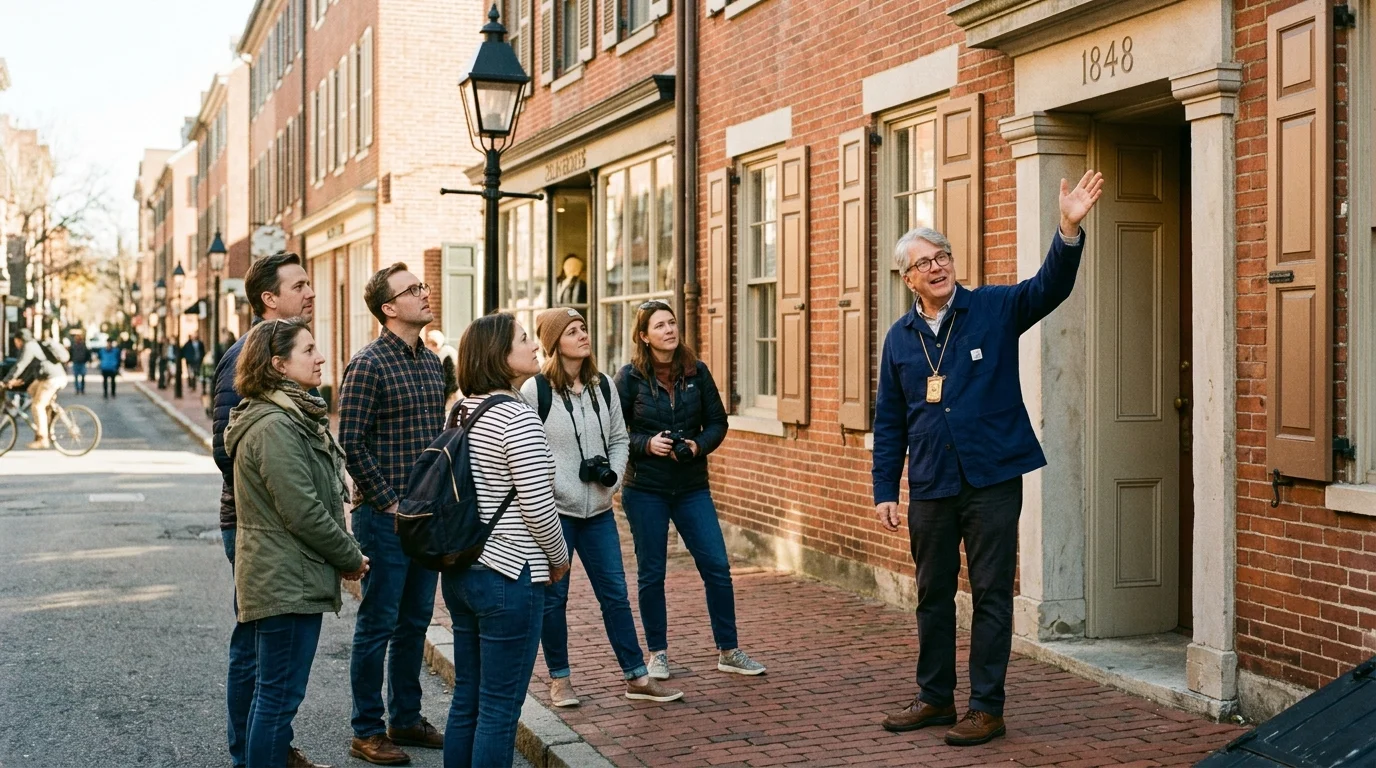
Your decades in the classroom taught you how to command attention, bring history alive, and stay on your feet for hours. Now, your historic downtown streets can become your new lecture hall.
Most tourism advice insists that launching a business requires commercial vehicles or storefront space. In reality, you can establish a fully legal, highly profitable downtown walking tour for under $600 in startup overhead.
By pairing municipal pedestrian compliance with lean digital ticketing, your independent tour operator retirement venture can launch in weeks. Here is your operational blueprint.
Transforming Classroom Skills into Guided Walks
Teaching is an endurance sport that prepares you remarkably well for the tour industry. You already possess voice modulation, crowd management instincts, and the narrative flair needed to hold an audience captive.
Applying thoughtful retirement travel planning principles can help you anticipate the needs, pace, and interests of visiting travelers.
Unlike classroom lectures, walking tours let you deliver content against a backdrop of living architecture and historic brick facades. Your guests arrive hungry for authentic local context that typical travel guides gloss over.
Programs like Road Scholar demonstrate how eagerly mature adults seek immersive historical education. Your downtown community holds hundreds of overlooked stories waiting for a skilled narrator.
“It is never too late to be what you might have been.” — George Eliot
Retirement gives you the freedom to monetize your passion for local heritage entirely on your own schedule. You can host two tours a week or six, adjusting your calendar around your life.
To start a walking tour business successfully, you must organize your historical knowledge into structured storytelling arcs. Every stop along your path should build emotional resonance and historic tension.
Great tour guides blend three distinct presentation elements into every stop:
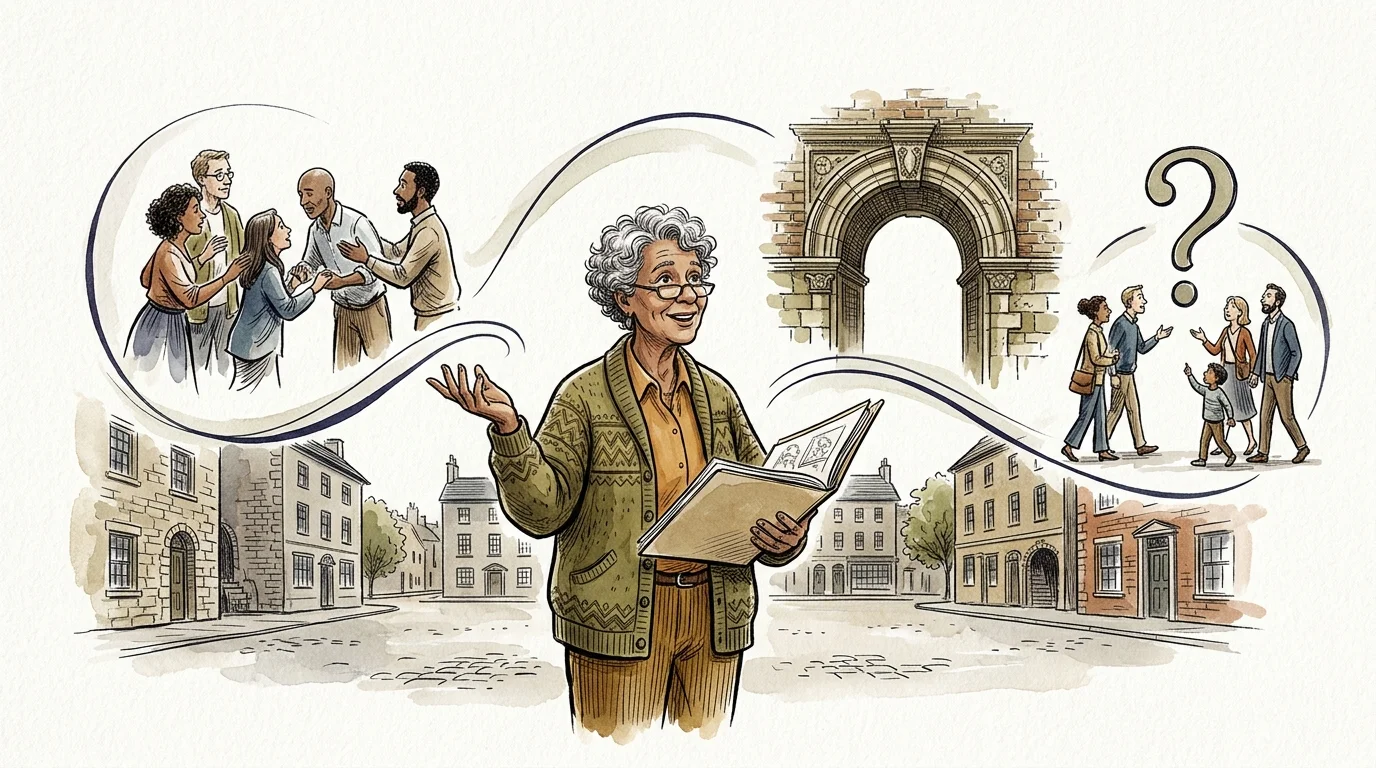
- A focused narrative beat lasting four to six minutes that reveals human drama.
- Visual anchoring where guests examine specific architectural details, masonry marks, or street layouts.
- A transition question that keeps visitors thinking as they walk toward the next destination.
This pedagogical structure turns a casual stroll into an unforgettable masterclass. Best of all, your physical stamina keeps you energetic, outdoors, and deeply connected to your community.
Navigating Municipal Permits and Free Speech Rulings
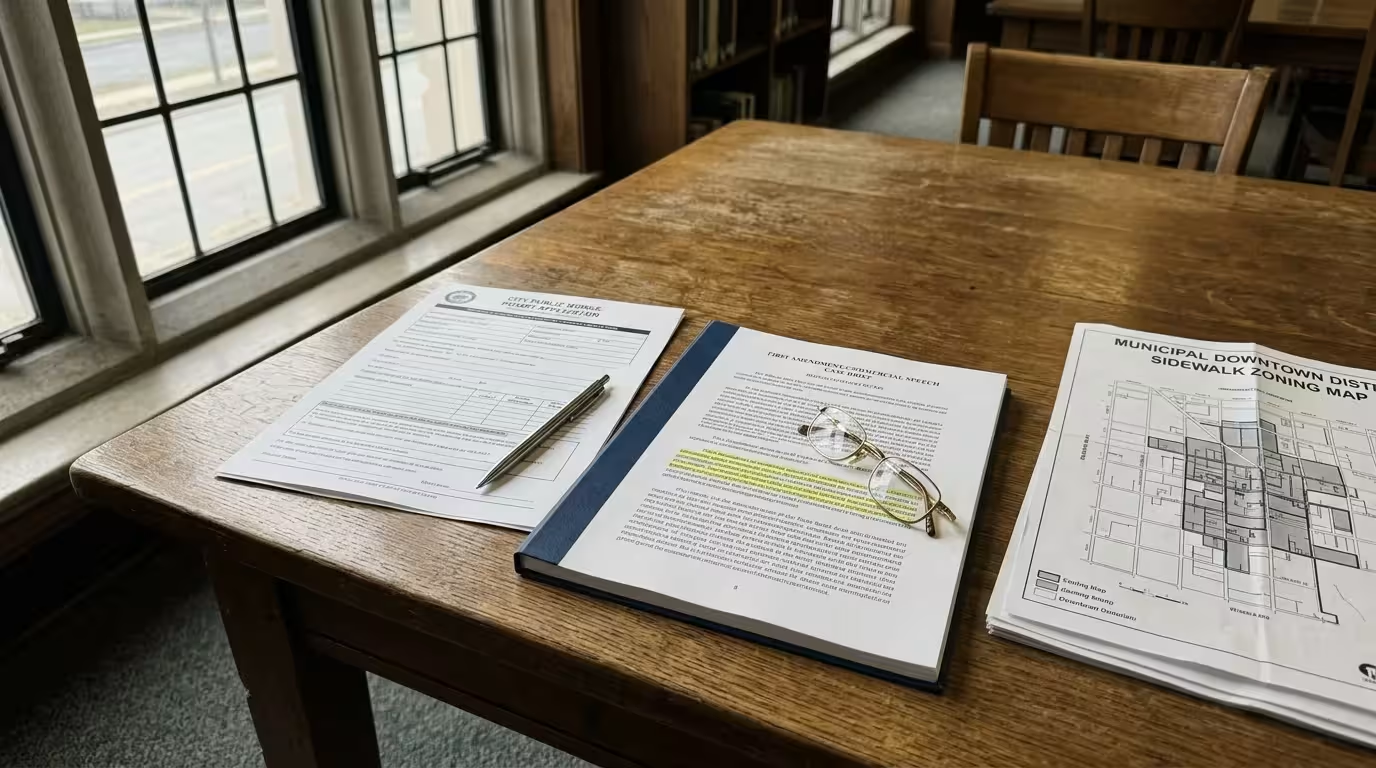
Before welcoming paying guests, you must understand the legal landscape governing commercial sidewalk use. Regulations vary dramatically depending on whether your city views tour guiding as licensed commerce or protected speech.
Much like navigating credential guidelines for substitute teaching after 60, understanding civic requirements upfront keeps your enterprise running without friction.
Learning how to navigate municipal codes and local regulations is a vital part of upskilling for your second act as an independent business owner.
Over the past decade, major federal court rulings reshaped how cities regulate historical walking guides. Courts repeatedly determined that mandatory history examinations infringe upon First Amendment rights.
In Washington, D.C., the federal appellate court struck down compulsory guide testing in Edwards v. District of Columbia (2014). Savannah, Georgia saw its licensing exams eliminated following Freenor v. Mayor and Aldermen of Savannah (2019).
Similarly, the Fourth Circuit Court of Appeals affirmed the unconstitutionality of municipal tour exams in Billups v. City of Charleston (2020). These rulings mean many cities cannot force you to pass local history tests to speak publicly.
However, municipalities retain the power to regulate commercial sidewalk congestion, group sizes, and public right-of-way access. Other cities still enforce explicit licensing structures that survived legal scrutiny.
Consider the regulatory differences between these major municipal environments:
- New York City: The Department of Consumer and Worker Protection (DCWP) requires a Sightseeing Guide License. You must pass a 150-question examination (97 correct answers required), pay a $50 exam fee, and submit a $50 two-year licensing fee.
- New Orleans: The Ground Transportation Bureau requires guides to pass a 50-question local regulations and history exam with a 70% score. Applicants must clear an FBI background check costing roughly $50 to $60 and pay a $50 permit fee.
- Unregulated or Post-Litigation Cities: Most mid-sized downtowns simply require a standard general business tax receipt costing between $50 and $125 annually.
To establish your operation legally, visit your city clerk or municipal business development office. Ask specifically for commercial sidewalk usage guidelines and park assembly rules.
Verify whether your historic district caps pedestrian groups at 15 or 20 participants. Complying with public easement rules keeps your operation respected by downtown merchants and law enforcement alike.

Securing General Liability Insurance on a Budget
Operating a walking tour removes the crushing liabilities of tour buses, vans, and commercial real estate. However, uneven brick sidewalks, granite curbs, and stray tree roots create real slip-and-fall hazards.
Making the leap from corporate to creative pursuits gives you the chance to craft unique cultural experiences while still protecting your hard-earned assets.
Much like community organizers who navigated liability and operational safeguards, walking guides need affordable coverage that shields personal savings.
Never conduct a commercial tour without Commercial General Liability (CGL) coverage in place. A single misstep by a guest on historic paving stones can produce costly medical claims.
Standard municipal permits require independent operators to carry policies with $1 million per occurrence and $2 million aggregate limits. These policies protect you against third-party bodily injury and property damage.
If you purchase standalone CGL insurance directly from broad commercial carriers, annual premiums typically run between $500 and $1,100. Fortunately, smart independent guides use targeted professional associations to slash this expense.
Regional tour guide guilds and local historical societies frequently offer access to group master liability policies. Through these specialized non-vehicular walking policies, sole proprietors often secure identical $1M/$2M coverage for $88 to $350 annually.
Follow these steps to obtain your insurance policy quickly:
- Form a simple Limited Liability Company (LLC) through your Secretary of State to ring-fence personal assets.
- Join the National Tour Association, a regional tour guide guild, or your local historical society.
- Apply for their affiliated walking-guide liability program, selecting non-transportation pedestrian coverage.
- Request an insurance certificate naming your municipality as an “Additional Insured” if required for public permits.
Carrying active liability insurance signals true professionalism to your city council, downtown merchants, and prospective clients. It allows you to lead walking tours with absolute peace of mind.

Comparing Tour Booking Platforms and OTAs
You do not need a physical ticket booth or storefront counter to sell tour spaces. Modern reservation software automates ticket distribution, waiver signatures, and payment processing directly through your smartphone.
Managing your tour listings and guest inquiries leverages skills common in many remote work opportunities for retirees, letting you handle logistics right from your home office.
Many of your prospective clients will be independent wanderers looking to travel the world on a budget who appreciate seamless online bookings.
Using modern ticketing tools allows you to participate in the flexible gig economy for seniors while avoiding the headaches of cash handling and manual scheduling.
Independent tour operators divide their booking strategy between direct booking reservation systems and Online Travel Agencies (OTAs). Direct platforms power your private website, while OTAs expose your tour to worldwide travelers.
Direct reservation systems like FareHarbor provide robust scheduling engines with zero upfront software subscriptions. FareHarbor monetizes by applying a 6% convenience fee directly to your customer at checkout, alongside credit card processing fees.
Conversely, Online Travel Agencies like Viator and GetYourGuide feature enormous marketing reach but take substantial cuts of your gross revenue. Viator charges a 20% baseline commission, rising to 25% to 35% if you utilize their visibility boosters.
The following comparison table breaks down the leading ticketing and distribution options for independent walking guides:
| Platform | Upfront Subscription Cost | Commission / Service Fee | Primary Strengths |
|---|---|---|---|
| FareHarbor | $0 / month | ~6% fee (paid by guest) + 1.9% & $0.30 processing | No upfront software cost; comprehensive automated text reminders and digital liability waivers. |
| Bókun (Tripadvisor) | $49 / month | 1.5% direct booking fee; 0% commission on Viator bookings | Direct API integration with Viator; lowest transaction costs for higher-volume operators. |
| Viator | $29 per tour listing | 20% to 35% commission per ticket sold | Massive global distribution network; dominant search placement for tourists planning downtown trips. |
| GetYourGuide | $0 upfront | 25% to 30% commission per ticket sold | Exceptional mobile user experience; high penetration among European and international travelers. |
The optimal setup involves building a simple direct website using FareHarbor while allocating 30% of your seat inventory to Viator. This balance delivers broad discoverability without giving away all your tour margins.
Digital reservation systems also capture signed digital liability waivers automatically during checkout. This step protects your business legally before a guest ever sets foot on your downtown sidewalk.
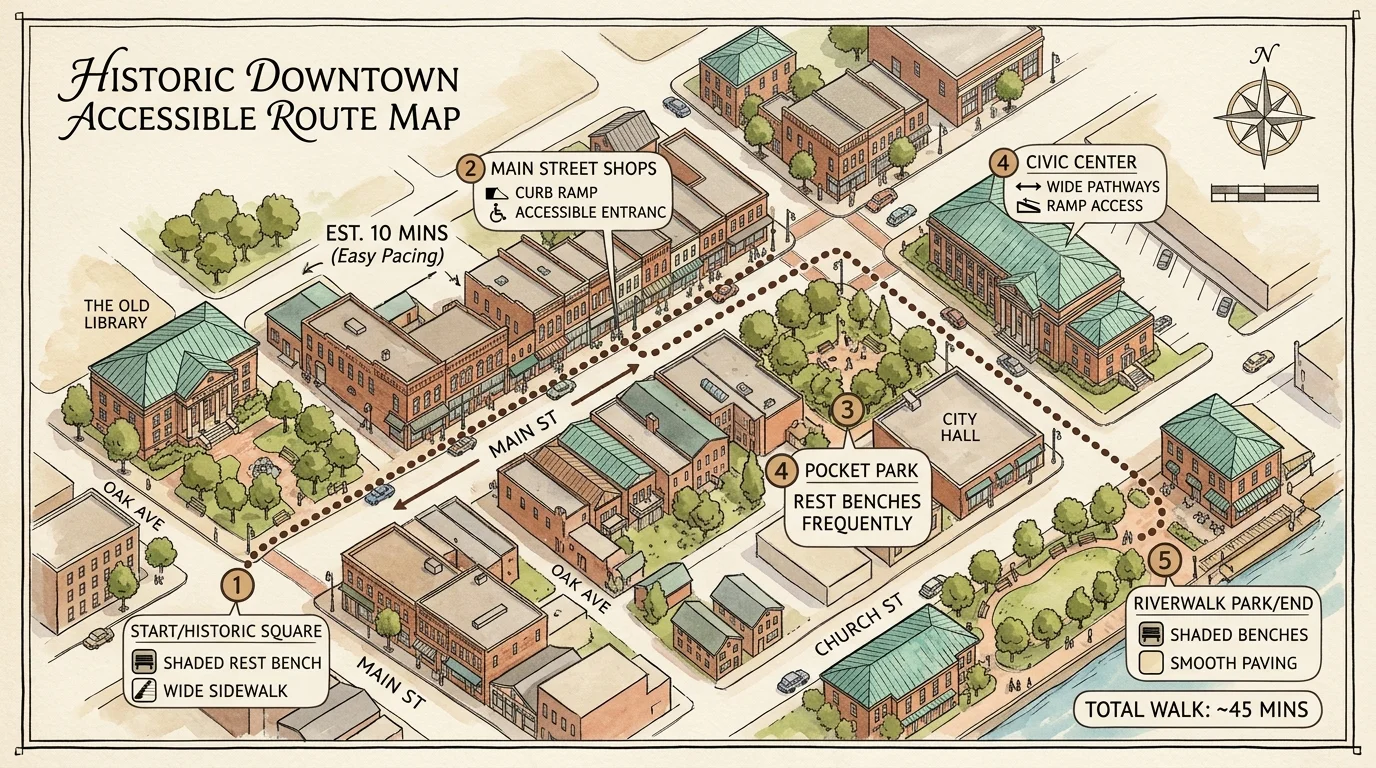
Engineering an Accessible Downtown Walking Route
Designing a walking tour requires careful balance between historical storytelling and urban logistics. An exceptional itinerary limits physical exhaustion while maximizing comfort and sightlines.
Your carefully designed route can become an unforgettable destination stop for couples enjoying an iconic American road trip across the country.
Keep your total walking route between 1.0 and 1.3 miles over a strict 90-minute window. This pacing accommodates multi-generational travelers and prevents fatigue from dulling their enthusiasm.
Select five to six primary gathering points along your route rather than stopping every fifty feet. Frequent stops fragment your historical narrative and create pedestrian bottlenecks that frustrate shop owners.
Follow these essential principles when mapping your walking path:
- Acoustic Isolation: Avoid stopping beside noisy construction zones, loud HVAC exhaust units, or busy highway intersections.
- Sun and Shade Planning: Scout your stops during morning and afternoon hours to ensure guests stand in shaded clearings on warm days.
- Sidewalk Clearance: Position your back against storefronts so your circle of guests faces you without obstructing pedestrian traffic.
- Universal Accessibility: Ensure every stop offers curb ramps and level ground to welcome guests using mobility aids or strollers.
- Emergency Restroom Access: Position at least one reliable public facility, hotel lobby, or friendly cafe midway through the walk.
Walk your prospective route three times with a stopwatch before launching your first public departure. Note the exact time required to walk comfortably between stops at a leisurely pace.
Invest in an ultra-compact personal voice amplifier such as a WinBridge S208 with a wireless headset microphone. A voice amplifier saves your vocal cords and ensures every participant hears you clearly over street traffic.
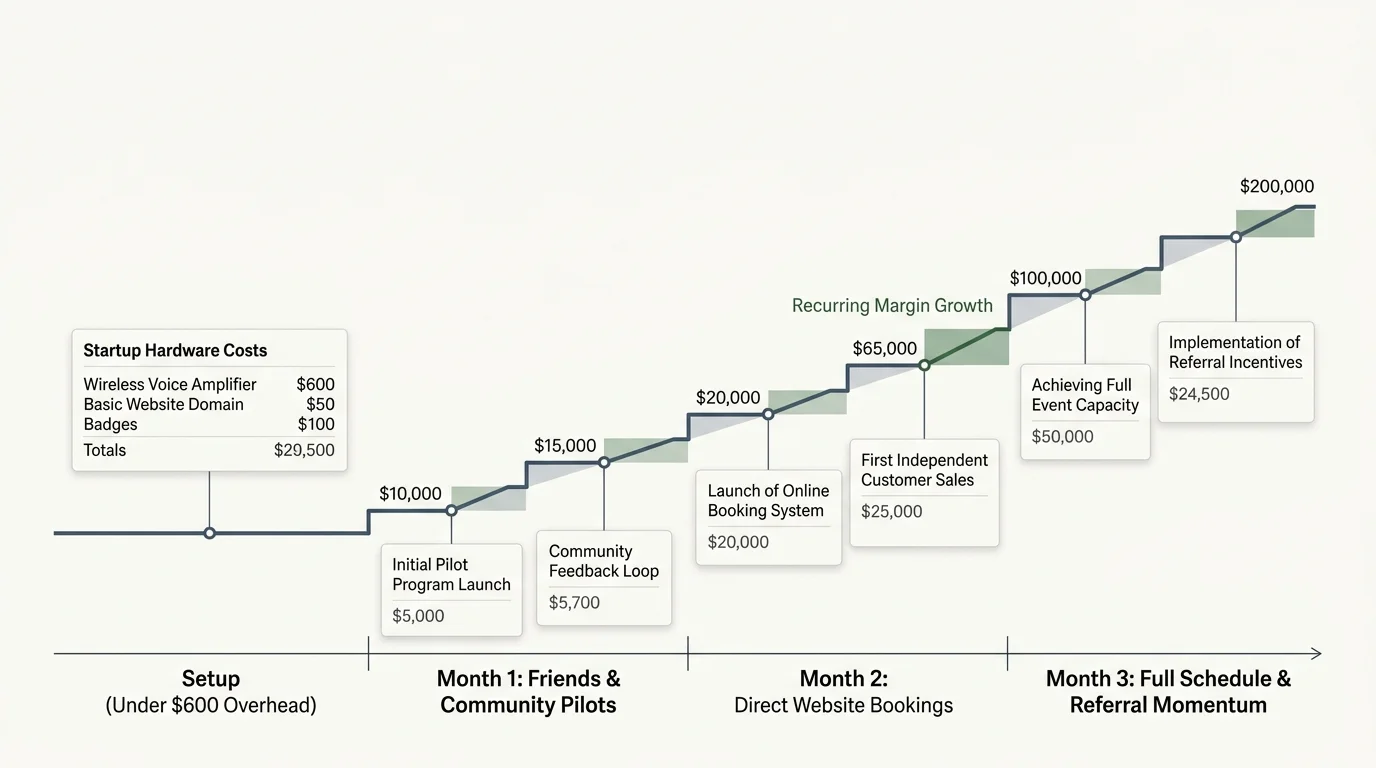
Worked Financial Model: Your First 90 Days of Bookings
Starting an independent tour operator retirement business requires minimal capital while offering rapid cash flow. To demonstrate viability, let us examine a worked financial model for a historic downtown walking tour.
Meet Eleanor, a retired high school history educator who launches “Old Quarter Heritage Walks.” She schedules three 90-minute departures weekly on Thursday, Friday, and Saturday mornings, capping each group at 12 participants.
Eleanor prices her tickets at $28 per adult guest. Over her first 90 days (12 weeks of operation, totaling 36 tour departures), her booking numbers expand as follows:
- Month 1 (Weeks 1–4): 12 departures at 40% capacity = 58 guests. Gross revenue: $1,624.
- Month 2 (Weeks 5–8): 12 departures at 65% capacity = 94 guests. Gross revenue: $2,632.
- Month 3 (Weeks 9–12): 12 departures at 80% capacity = 115 guests. Gross revenue: $3,220.
- Total 90-Day Gross Revenue: 267 tickets sold = $7,476.
Now, let us calculate Eleanor’s complete operating costs across those initial 90 days:
- Tour Association Liability Insurance: $350 (Full annual policy paid upfront).
- Municipal Sidewalk Business Permit: $100 (Full annual city registration).
- Hardware (Wireless Voice Amplifier): $65 (One-time equipment expense).
- Digital Presence: $42 ($14 per month for custom website hosting and domain).
- FareHarbor Direct Processing: $222.14 (Credit card merchant processing at 1.9% + $0.30 per ticket across 267 transactions).
- Viator Commissions and Listing: $477 ($29 listing fee + 20% commission on 80 tickets sold through OTA distribution).
Eleanor’s total startup and operational expenses across the first 90 days amount to exactly $1,256.14. Her direct capital outlay before launching was merely $557.
Subtracting her total operating expenses ($1,256.14) from her gross revenues ($7,476.00) yields a net profit of $6,219.86. She earned this return working under five hours per week on the sidewalk.
This worked example highlights the remarkable margin structure of pedestrian-based tourism. Once your minimal fixed compliance costs are covered, ticket revenues flow straight to your bottom line.

Building Community Partnerships and Referrals
Digital booking engines provide visibility, but grassroots community relationships drive consistent offline bookings. Local business owners love walking tour operators who bring foot traffic past their doors.
Introduce yourself to the general managers and front desk concierges at boutique hotels near your route. Offer them complimentary tickets so they can personally evaluate your storytelling before recommending it to guests.
Develop printed rack cards featuring an attractive historical photograph, your tour highlights, and a prominent QR code linked to your FareHarbor page. Place these cards at hotel desks, visitors centers, and neighborhood coffee shops.
Partner with local merchants along your route to deliver mutual value. You can conclude your walk directly in front of an independent bakery or local craft brewery that offers your guests a 10% discount.
You can refine your initial budget through free business counseling from SCORE Mentoring, which connects you with veteran business advisors. Their volunteer mentors help you negotiate commercial guidelines and local marketing opportunities.
Consider offering specialized seasonal tours to maintain interest among local residents. Ghost walks in October, holiday architecture walks in December, and springtime garden walks keep your schedule vibrant throughout the year.
By blending municipal compliance, streamlined insurance, and digital ticketing, you unlock an invigorating encore venture. You stay physically active, share your love of history, and build a profitable business on your own terms.
Frequently Asked Questions
Do I need a commercial driver’s license or special vehicle insurance?
No. Independent walking tours operate exclusively on foot along public pedestrian rights-of-way. Because you transport no passengers in motorized vehicles, you avoid costly commercial auto liability and transit fleet regulations.
Can cities prohibit me from sharing historical stories on public sidewalks?
Under federal First Amendment rulings, municipalities cannot ban historical narration or force guides to pass mandatory history knowledge exams. However, cities can enforce reasonable time, place, and manner restrictions regarding sidewalk congestion and group sizes.
How do I collect ticket payments without a physical ticket booth?
You can use cloud booking software like FareHarbor or Bókun embedded onto a simple website. Guests purchase digital tickets via credit card or Apple Pay on their mobile devices, receiving automated confirmation emails with your meeting location.
What happens if a guest trips and gets injured during my tour?
Your Commercial General Liability (CGL) insurance policy steps in to cover medical expenses, legal representation, and settlement costs. Always maintain an active policy with at least $1 million per occurrence in coverage limits.
Disclaimer: This article is for informational and inspirational purposes. Life decisions are deeply personal, and we encourage readers to pursue their dreams while considering their unique circumstances, health, and financial situation.