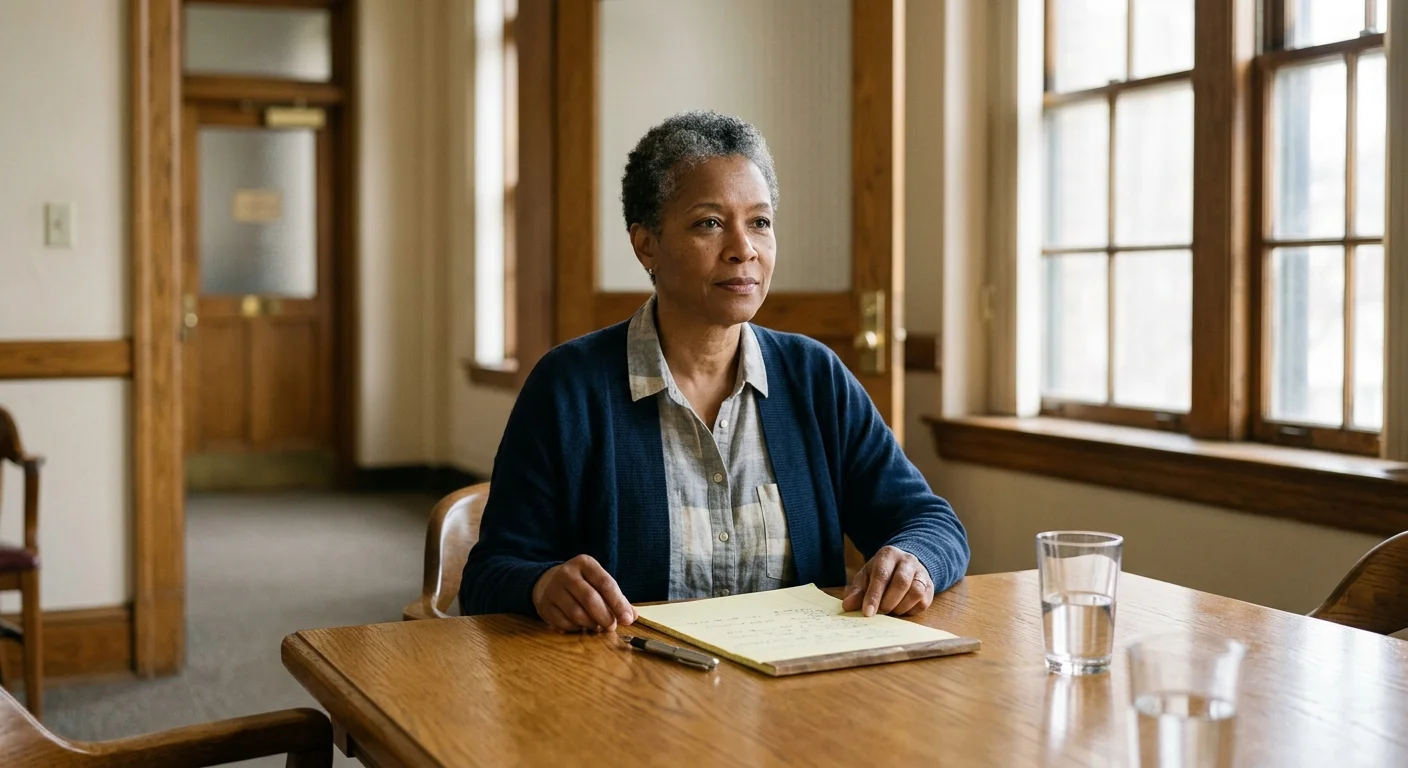
Your decades of diffusing workplace tension as a human resources manager qualify you for high-impact judicial dispute resolution. You do not need a law degree to secure part time mediation jobs that pay per-session stipends in municipal courts.
Serving as a civilian neutral offers profound purpose and fulfillment in a second career by converting contentious disputes into constructive community agreements.
While generic guides claim alternative dispute resolution senior roles require unpaid volunteerism or bar admission, municipal rosters offer direct compensation. Completing an approved 40-hour curriculum qualifies you for court rosters paying $75 to $120 per session resolving landlord-tenant conflicts.
This roadmap details the exact training curriculum, mentorship logs, and docket onboarding procedures required to turn corporate exit packages into a paid judicial calendar.
Translating HR Expertise to Municipal Court Mediation
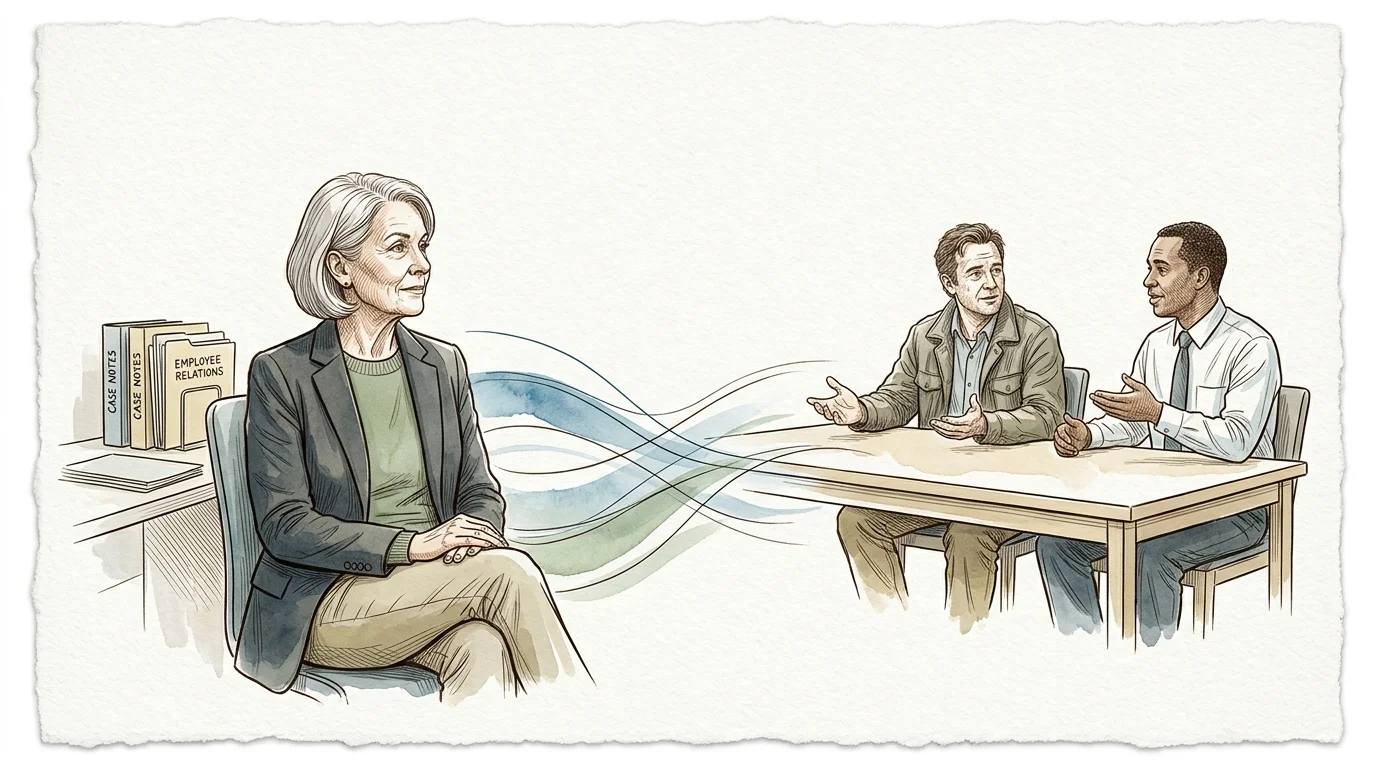
Corporate human resources careers demand emotional discipline, deep active listening, and neutrality under pressure. Those exact competencies match the core demands of municipal small claims and housing courts.
Stepping into judicial dispute resolution allows experienced professionals to turn maturity into an advantage, effectively overcoming ageism in the workplace by commanding respect as an impartial neutral.
Much like starting a consulting business in retirement, mediating small claims disputes allows seasoned professionals to monetize decades of organizational problem-solving without corporate overhead.
Judges face crowded dockets filled with unrepresented litigants arguing over security deposits, lease terms, and property boundaries. Court administration relies on civilian neutrals to divert these summary proceedings away from contested trials.
When you seek to become a court mediator retirement provides an ideal window to deploy your investigative interviewing background. Litigants do not want formal legal lectures; they need a structured forum to air grievances and negotiate practical terms.
Your corporate experience evaluating severance agreements translates directly into facilitating enforceable stipulations for municipal court dockets. Transitioning to civil dispute work allows you to utilize your executive communication skills without corporate operational stress.
Organizations like Encore.org highlight how encore careers channel professional leadership into high-need public programs. Managing municipal dockets fulfills your sense of civic contribution while providing dependable per-diem income.
The 40-Hour Basic Mediation Training Blueprint
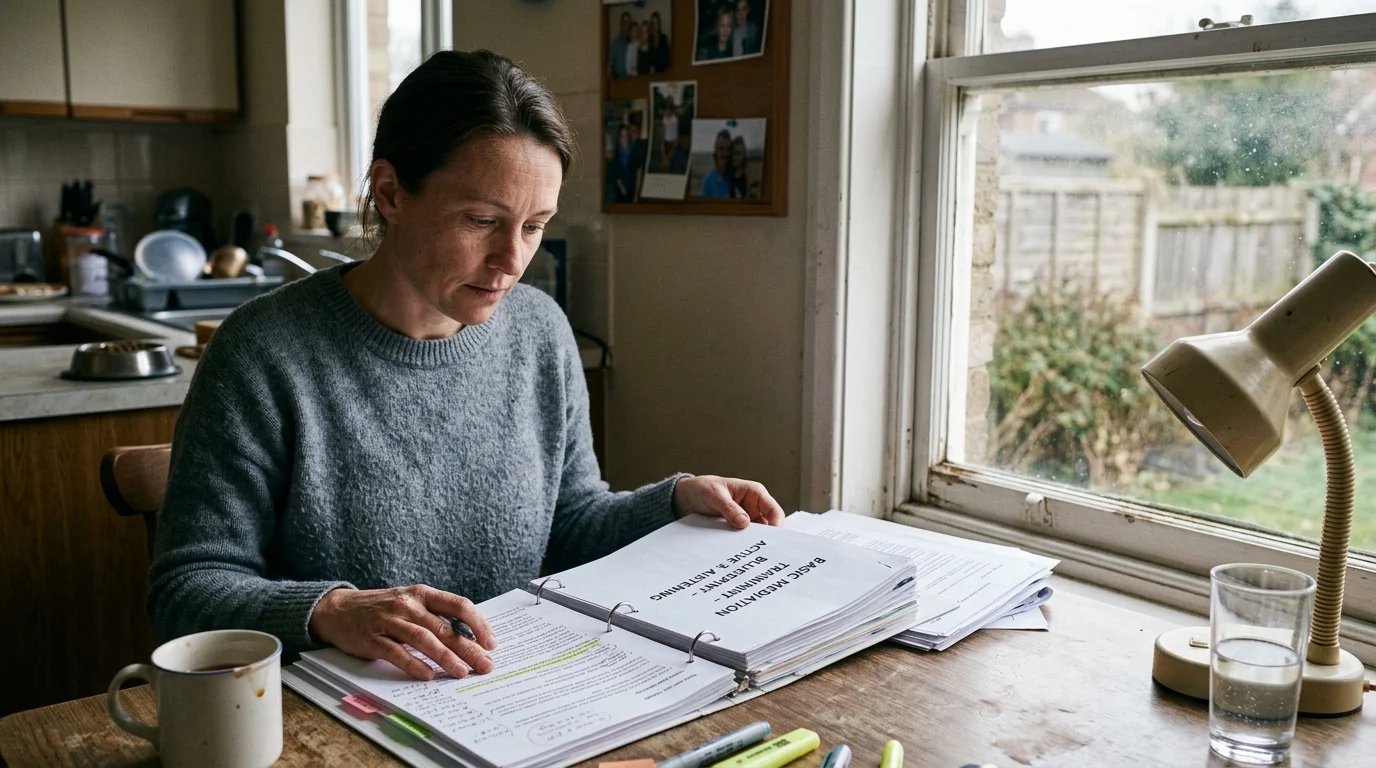
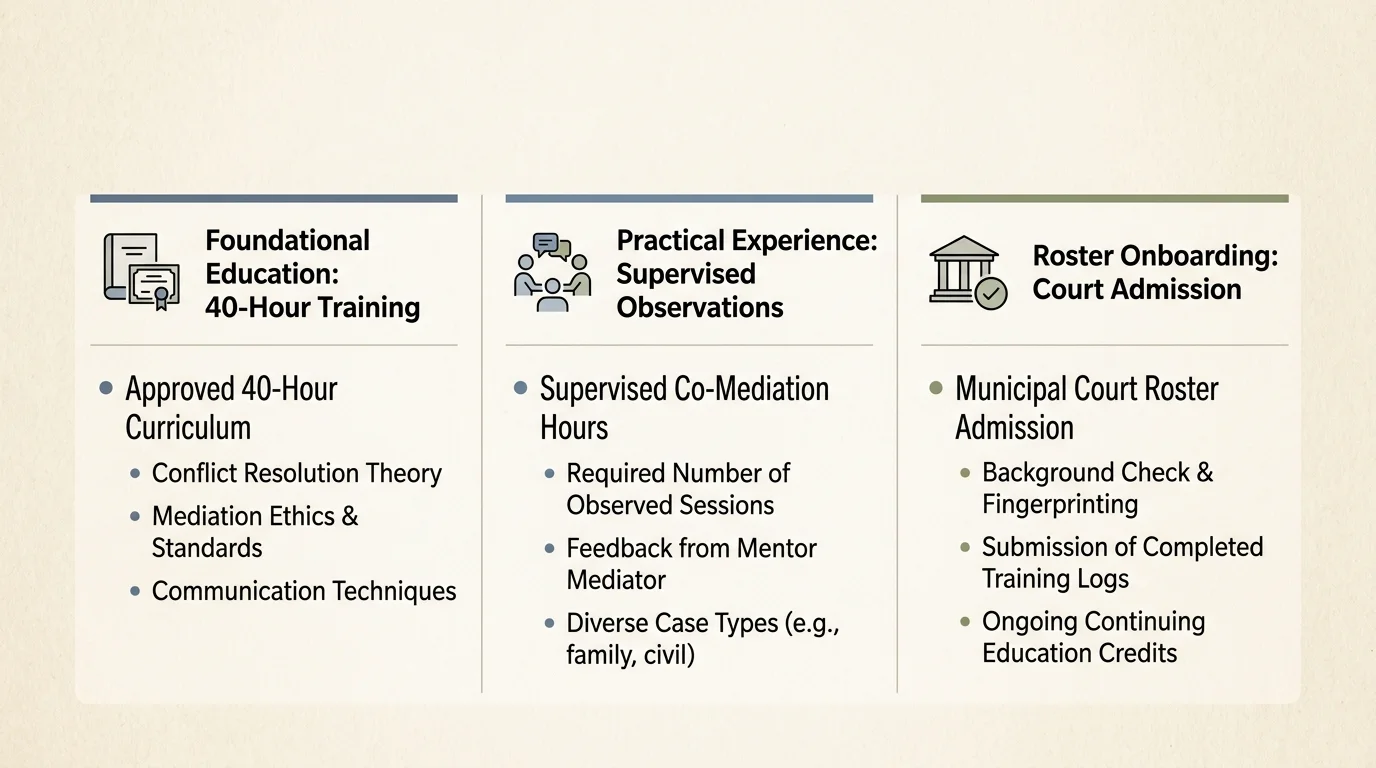
State court systems require prospective panel mediators to complete an approved 40-hour Basic Mediation Training (BMT) course. These courses cover dispute resolution theory, ethical boundaries, and guided mock roleplays.
Fulfilling subsidized caseloads with community centers illustrates how volunteering as a career stepping stone builds the professional reputation needed to secure paid roster appointments.
Focusing on structured conflict resolution coursework is an efficient approach to upskilling for your second act without committing to a multi-year academic program.
Standard tuition for comprehensive 40-hour programs ranges between $800 and $1,700 depending on the provider. For example, the A.A. White Dispute Resolution Center offers foundational courses for $1,295, while the New York Peace Institute charges $1,695.
Court administrators mandate that approved 40-hour courses follow strict curriculum breakdowns to guarantee neutral competency:
- Conflict Theory and Process Structure (8 Hours): Evaluates interest-based negotiation against rights-based adjudication.
- Facilitative Communication and Reframing (10 Hours): Teaches neutral reframing, active listening, and depersonalizing hostile accusations.
- Private Caucusing Protocol (6 Hours): Details separate meeting mechanics to uncover hidden financial bottom lines.
- Mediator Ethics and Confidentiality (6 Hours): Defines statutory reporting limits, conflict disclosures, and neutrality maintenance.
- Simulation and Live Roleplay Evaluation (10 Hours): Requires participants to facilitate complete mock cases under trainer observation.
Nonprofit Community Dispute Resolution Centers (CDRCs) frequently subsidize this tuition. In exchange, they require a commitment to mediate 10 to 20 community disputes over a 12-month period.
Enrolling in an approved program ensures that your training certificate carries formal reciprocity with regional trial court administrator rosters.
Navigating State Court Roster Qualifications
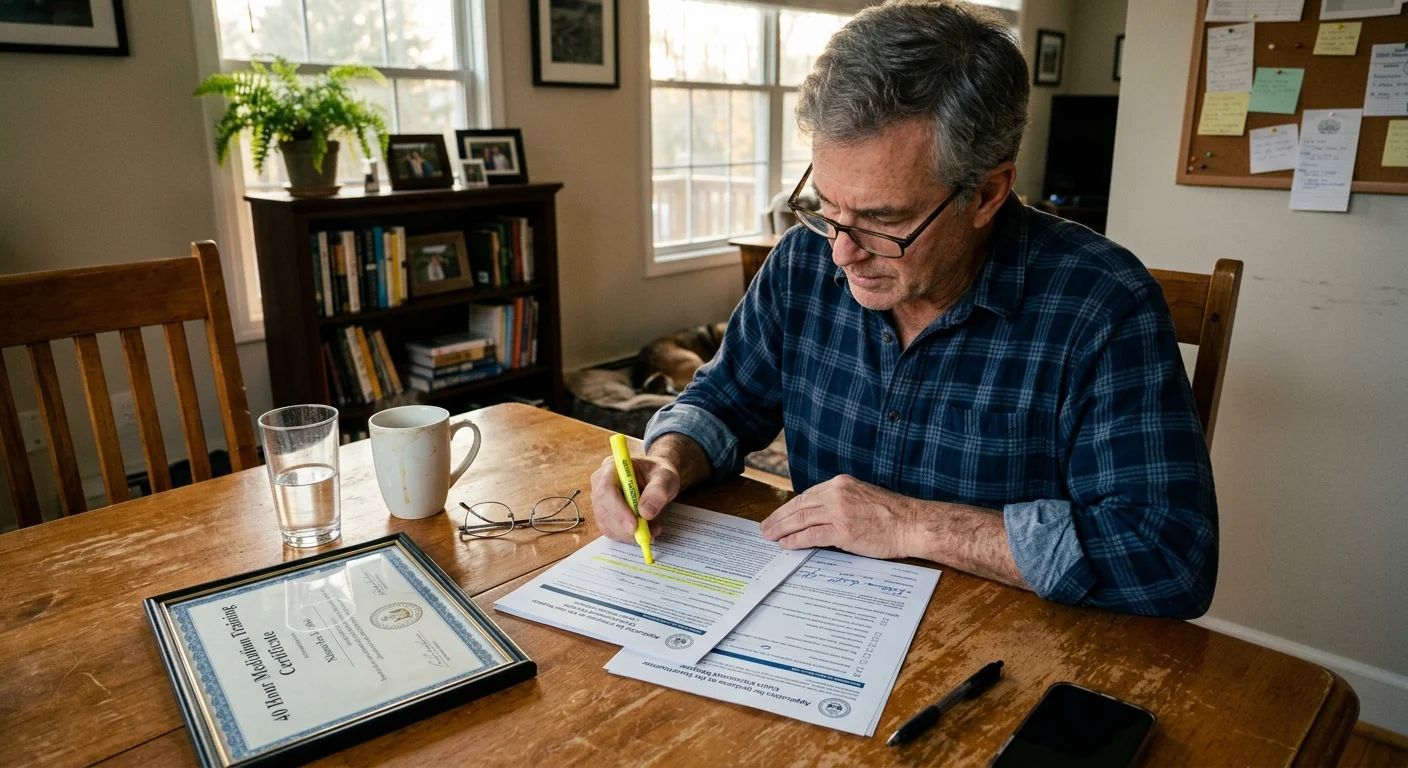
Completing your 40-hour coursework qualifies you to submit formal credential applications to county and municipal administrative judges. Every state establishes distinct administrative rules governing mediator qualification and compensation tiers.
Much like exploring substitute teaching after 60, municipal court rosters provide regulated public per-diem income that integrates smoothly into a retiree’s weekly calendar.
Similar to building a flexible mobile loan signing route, joining a municipal court roster provides reliable morning income without the burden of private business marketing.
According to May 2025 data from the U.S. Bureau of Labor Statistics, mediators earn a median annual wage of $75,530. Mediators working specifically in local government court environments earn a median annual figure of $92,790.
In New York, court rosters operate under the Rules of the Chief Administrative Judge (Part 146). Mediators must complete 40 hours of approved training—divided into 24 core hours and 16 specialized hours—followed by supervised court apprenticeships.
Florida utilizes a structured 100-point credentialing system managed by the Florida Dispute Resolution Center (DRC). Applicants earn points through approved course hours, degree attainment, and verified case observations.
Municipal dockets handling landlord-tenant disputes regularly assign contract neutrals to resolve issues before the trial call. These courts provide flat-fee stipends ranging from $75 to $120 for each completed summary proceeding.
Securing roster inclusion allows you to bypass private client acquisition entirely. The clerk of court schedules your sessions directly against the morning small claims calendar.

Worked Financial Model: Session Stipends and Training ROI
A structured financial model clarifies the timeline for recovering your upfront educational investment through municipal court dockets. The following worked scenario reflects real municipal stipend rates for a retired corporate professional.
Securing set court docket hours provides a dignified avenue within the gig economy for seniors, generating predictable stipends without relying on volatile smartphone platforms.
Beyond the financial return, maintaining a dedicated courtroom schedule illustrates how the benefits of part-time work in retirement provide cognitive engagement and routine without burnout.
Suppose you complete a state-approved 40-hour course tuition costing $1,295, along with a $150 court application fee. Your total initial capital expenditure to achieve roster eligibility equals $1,445.
You join your local municipal housing court roster, committing to mediate on Tuesday and Thursday mornings. The court schedules two landlord-tenant settlement conferences per morning, paying a flat stipend of $95 per session.
- Weekly Volume: 2 mornings × 2 sessions = 4 mediated cases per week.
- Weekly Revenue: 4 sessions × $95 per session stipend = $380 gross earnings.
- Time Commitment: 4 sessions at 90 minutes each equals 6 total bench hours weekly.
- Monthly Revenue: $380 per week × 4 weeks = $1,520 per month.
- Break-Even Calculation: $1,445 investment ÷ $380 weekly return = 3.8 weeks to recover all costs.
Working 40 active weeks across your retirement calendar generates $15,200 in gross annual income. This schedule requires only 240 operating hours inside the courthouse across the entire year.
You earn $63.33 per active hour while avoiding overhead costs like commercial rent, administrative staffing, or advertising.
State Credentialing Framework Comparison
Court roster standards differ based on state statutory frameworks. Selecting the right training provider requires matching your coursework to your target court jurisdiction.
Just as following a seasonal tax preparer roadmap requires navigating statutory rules, selecting an approved mediation course demands careful alignment with state trial court requirements.
The table below compares baseline training requirements, mentorship hours, and typical session stipends across four major state programs.
| Jurisdiction / Court Level | Approved Course Hours | Mentorship or Observation Rules | Municipal Session Stipend | Mandatory Continuing Education |
|---|---|---|---|---|
| Florida (County Civil Court) | 30 hours certified curriculum | 60 points (documented co-mediations) | $75 to $100 per docket session | 16 hours CME every 2 years |
| New York (Part 146 Housing / Civil) | 40 hours (24 core + 16 specialized) | 5 complete cases under observation | $85 to $120 per referred case | Varies by judicial district |
| Texas (Municipal Dispute Centers) | 40 hours (Civil Practice & Remedies) | 3 observed cases with mentor | $75 to $110 per calendar block | 12 hours annually for roster rank |
| California (Superior Court Small Claims) | 40 hours (DRPA standard) | 2 supervised cases prior to appointment | $80 to $115 per summary conference | Local court rules apply |
State credentialing offices review training certificates closely to verify curriculum compliance. Never enroll in a course until verifying its approval code with your regional trial court administrator.
Mentorship and Apprenticeship Hours Strategy
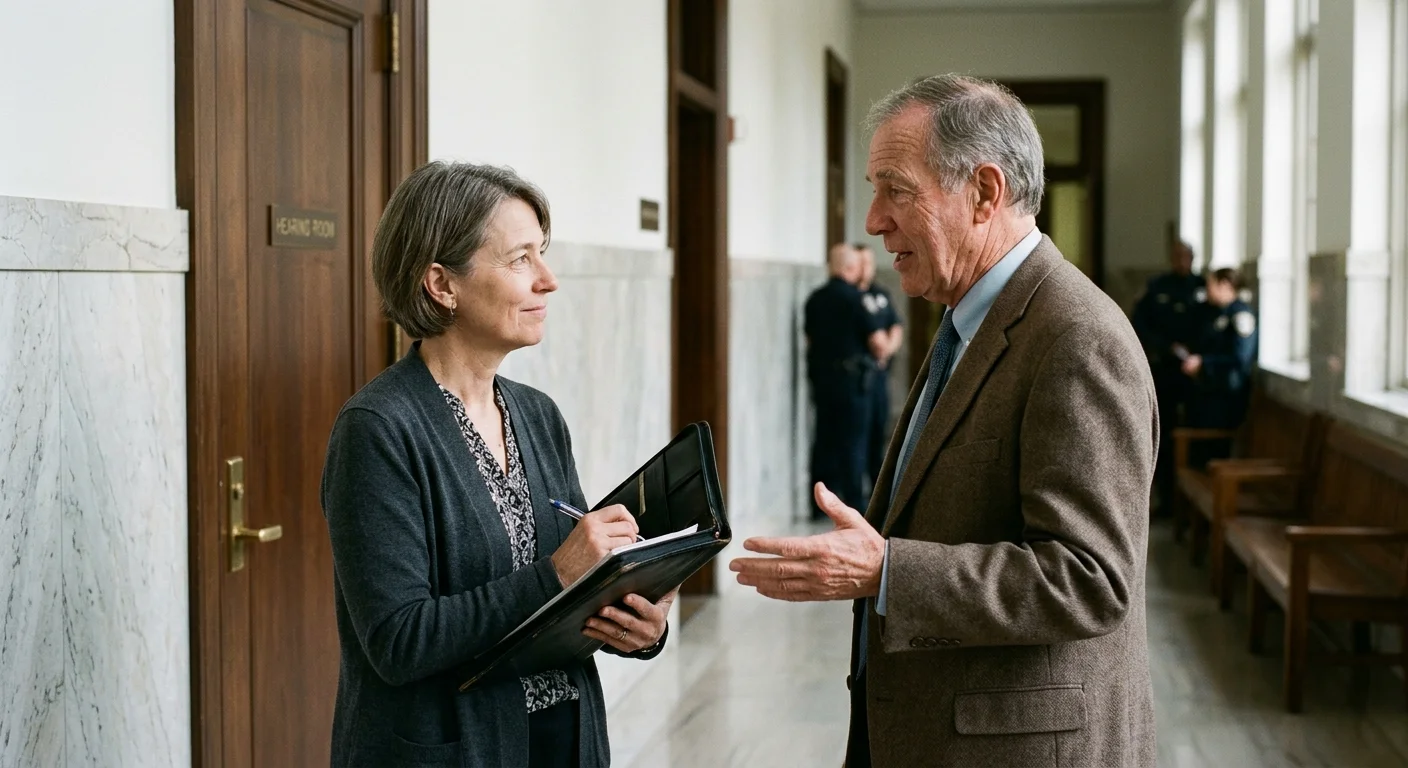
Completing classroom instruction does not automatically finalize your appointment to active court mediation panels. Courts require documented live observation and co-mediation hours before granting independent authority.
Navigating this apprenticeship phase highlights the power of mentorship in retirement, allowing you to absorb subtle negotiation tactics from seasoned courtroom neutrals.
Experiencing the power of mentorship firsthand allows apprentice neutrals to master delicate settlement dynamics while completing required judicial observation hours.
Most state frameworks require between three and five supervised cases before approving solo roster appointments. You can complete these observation hours rapidly by partnering with county-affiliated community dispute resolution centers.
Community programs listed through portals like VolunteerMatch routinely coordinate apprentice pairings with veteran mediators. Working alongside an experienced neutral gives you practical exposure to emotional municipal dockets.
To convert your observational apprenticeships into approved court roster points, execute this systematic protocol:
- Document Case Logs: Record docket numbers, case dispute categories, session lengths, and supervising mediator signatures.
- Master Agreement Drafting: Draft settlement stipulations using your court’s specific memorandum of understanding (MOU) templates.
- Debrief Neutrality Dilemmas: Conduct a 15-minute post-session review with your mentor evaluating caucus timing and ethical choices.
- Secure Supervising Endorsement: Request a formal recommendation letter confirming your process management and emotional regulation skills.
Maintaining a clean, contemporaneous logbook ensures the presiding administrative judge approves your roster appointment without administrative delay.

Launching Your Municipal Court Roster Practice
Transitioning into court roster work provides predictable schedules that support a balanced lifestyle. As an alternative dispute resolution senior practitioner, you choose which calendar calls fit your desired weekly workload.
Submit your completed application packet directly to the alternative dispute resolution coordinator at your county municipal court. Include your 40-hour certificate, mentorship verification log, professional resume, and references.
Once appointed, court administrators notify you of calendar assignments two to four weeks in advance. Litigants check in with the docket clerk, who routes appropriate files straight to your assigned conference room.
You can also use this municipal credential to attract private mediation cases. Independent dispute practitioners often command $150 to $350 per hour resolving neighborhood boundary disputes and commercial lease dissolutions.
Mediating municipal court disputes allows you to apply your career dispute resolution experience toward practical civic service. You preserve judicial resources, assist neighbors in resolving difficult conflicts, and generate dependable retirement revenue.
Frequently Asked Questions
Do I need a law degree to serve as a court-appointed mediator?
No, municipal and county courts do not require a Juris Doctor degree for community and small claims rosters. Completing a state-approved 40-hour mediation training course and required co-mediation hours qualifies civilian professionals for court panels.
How much do municipal court mediator stipends pay?
Municipal and housing court panels typically pay contracted mediators a flat stipend between $75 and $120 per session. Sessions generally run 60 to 90 minutes during morning or afternoon docket calls.
Can I transfer my 40-hour mediation certificate to another state?
Many states grant reciprocity for 40-hour training programs that meet Association for Conflict Resolution standards. However, you must satisfy your new jurisdiction’s local mentorship hours and continuing mediator education requirements.
What ongoing education is required to remain on court rosters?
Most court systems mandate continuing mediator education to maintain active roster status. For example, Florida Supreme Court-certified mediators must complete 16 hours of continuing education, including legal ethics and diversity credits, every two years.
Disclaimer: This article is for informational and inspirational purposes. Life decisions are deeply personal, and we encourage readers to pursue their dreams while considering their unique circumstances, health, and financial situation.