

A retired industrial arts teacher with empty weekdays can turn an unused municipal basement into a neighborhood tool lending library and repair café. Decades of shop supervision provide the mechanical discipline needed to run shared machinery safely.
Tool lending libraries rarely fail from tool shortages, but rather from accepting fragile consumer-grade donations and leaving liability and intake rules unmanaged. Strict refusal standards, multi-tier mechanical inspections, and the right legal structure protect your personal assets before doors open.
| Structure Option | Upfront Filing Fee | Processing Timeline | Annual Financial Threshold | Underwriting and Lease Fit |
|---|---|---|---|---|
| Fiscal Sponsorship | $0 to state (5% to 10% fee) | 1 to 2 weeks | Determined by sponsor | Low (uses sponsor CGL) |
| IRS Form 1023-EZ | $275 user fee | 2 to 4 weeks | Under $50,000 receipts / $250,000 assets | Moderate (needs own CGL) |
| IRS Form 1023 Standard | $600 user fee | 3 to 6 months | Over $50,000 receipts / $250,000 assets | High (detailed disclosures) |
Choosing Fiscal Sponsorship or Independent 501(c)(3) Status
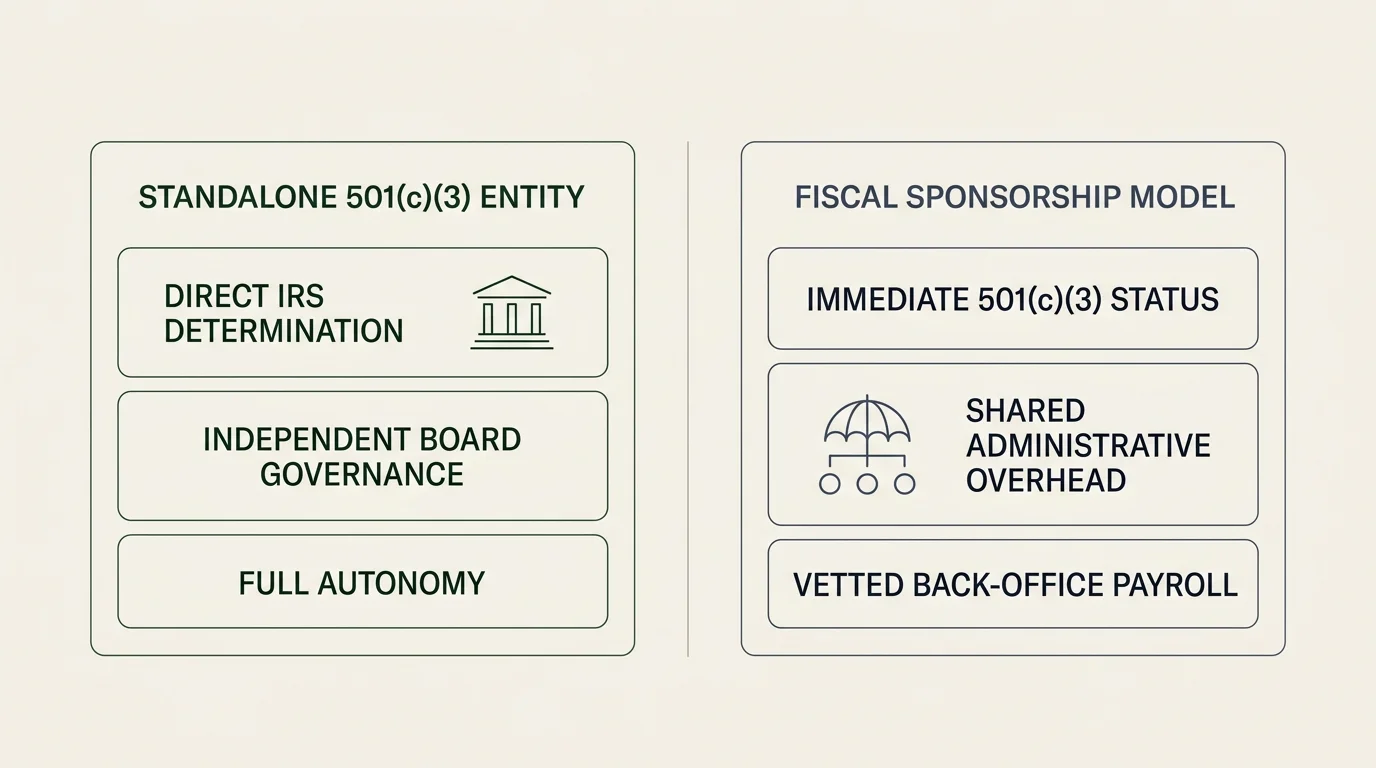
Your choice from the comparison table sets your administrative workload and municipal lease readiness. Operating under an existing 501(c)(3) fiscal sponsor provides the fastest path to opening your shop.
Fiscal sponsors generally retain 5% to 10% of gross revenues to manage accounting and legal compliance. This route lets you prove local borrowing demand under the sponsor’s insurance umbrella before filing federal paperwork.
If you want full autonomy to accept tax-deductible equipment gifts, completing 501(c)(3) paperwork establishes an independent entity. Organizations projecting annual gross receipts under $50,000 and total assets under $250,000 qualify for the $275 IRS Form 1023-EZ application.
The IRS typically issues a Form 1023-EZ determination letter within two to four weeks. Startups projecting higher early revenues must file standard Form 1023 with a $600 fee and wait three to six months.
Counselors at SCORE Mentoring help retired founders compare these three options without spending startup cash. Volunteer advisors assist with drafting initial bylaws and conflict-of-interest policies before you approach city staff.
Pitching Recreation Directors for Basement Leases and Waivers
City recreation departments hold underused storage basements, but directors reject vague community pitches. Securing a low-cost lease draws on civic negotiation skills similar to mediating municipal housing disputes and managing city permit rules.
Present a structured board outline when pitching a recreation director for a zero-dollar or $100 monthly lease on a 650-square-foot basement. Address fire hazards, liability transfer, inspection duties, and neighborhood payoff in four concrete points:
- Zero fuel hazards: Commit in writing to banning gas-powered tools so volatile fuels never enter municipal buildings.
- Institutional insurance proof: Present quotes for Commercial General Liability limits of $1,000,000 per occurrence and $2,000,000 aggregate, costing $600 to $1,500 annually through Philadelphia Insurance Companies or Scottsdale.
- Self-run safety logs: Show your three-tier intake checklist and 90-day maintenance lockout schedule so city recreation staff assume zero inspection duties.
- Neighborhood payoff: Pair lending hours with a monthly repair café staffed by retired tradespeople, giving residents appliance help while cutting landfill waste.
Like retirees who handled liability and grants for community clinics, you must protect the organization beyond volunteer statutes. The Volunteer Protection Act of 1997 shields uncompensated volunteers from personal negligence claims, but leaves the nonprofit itself exposed.
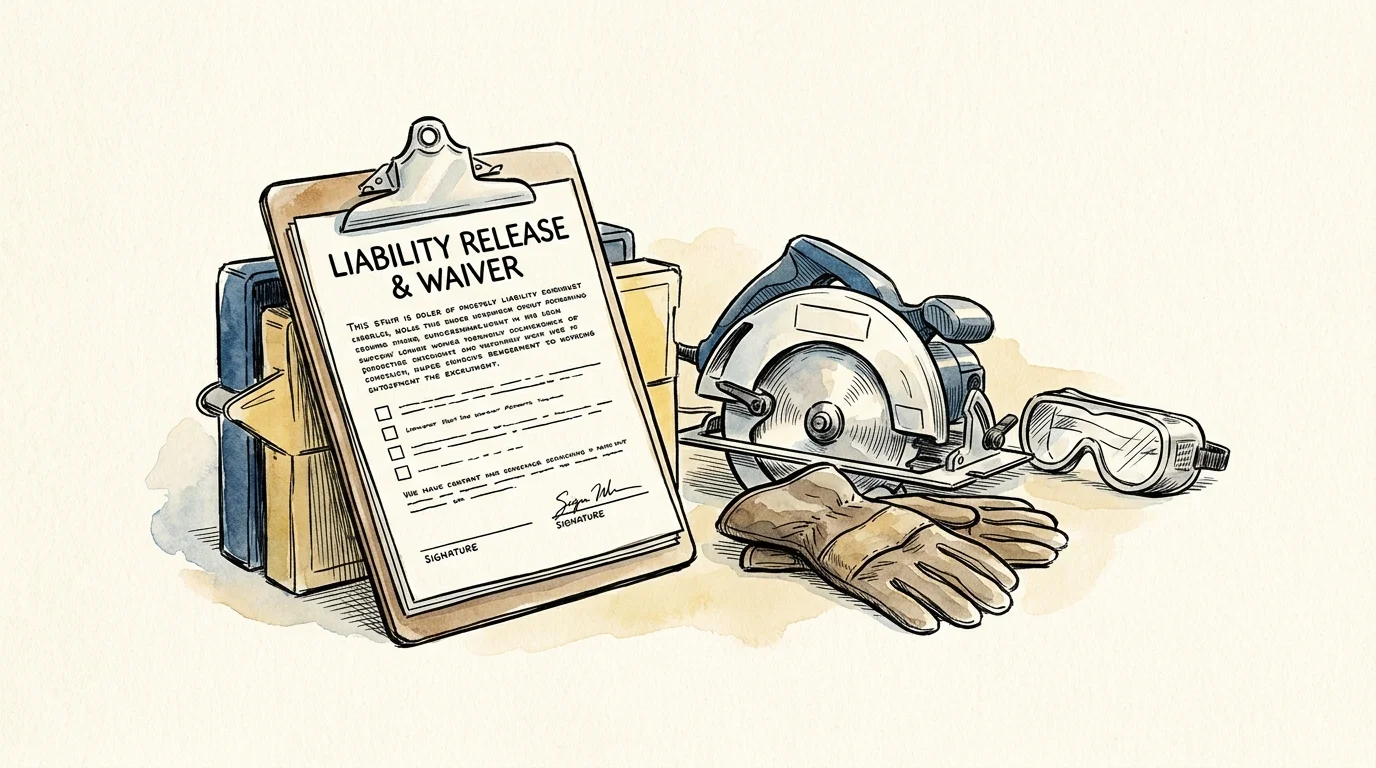
Require every borrower to sign an attorney-reviewed release before checking out motorized tools. Include explicit assumption-of-risk language, hold-harmless clauses defending your nonprofit and the city, and a guard-inspection check.
Refusing Fragile Donations for Contractor-Grade Inventory
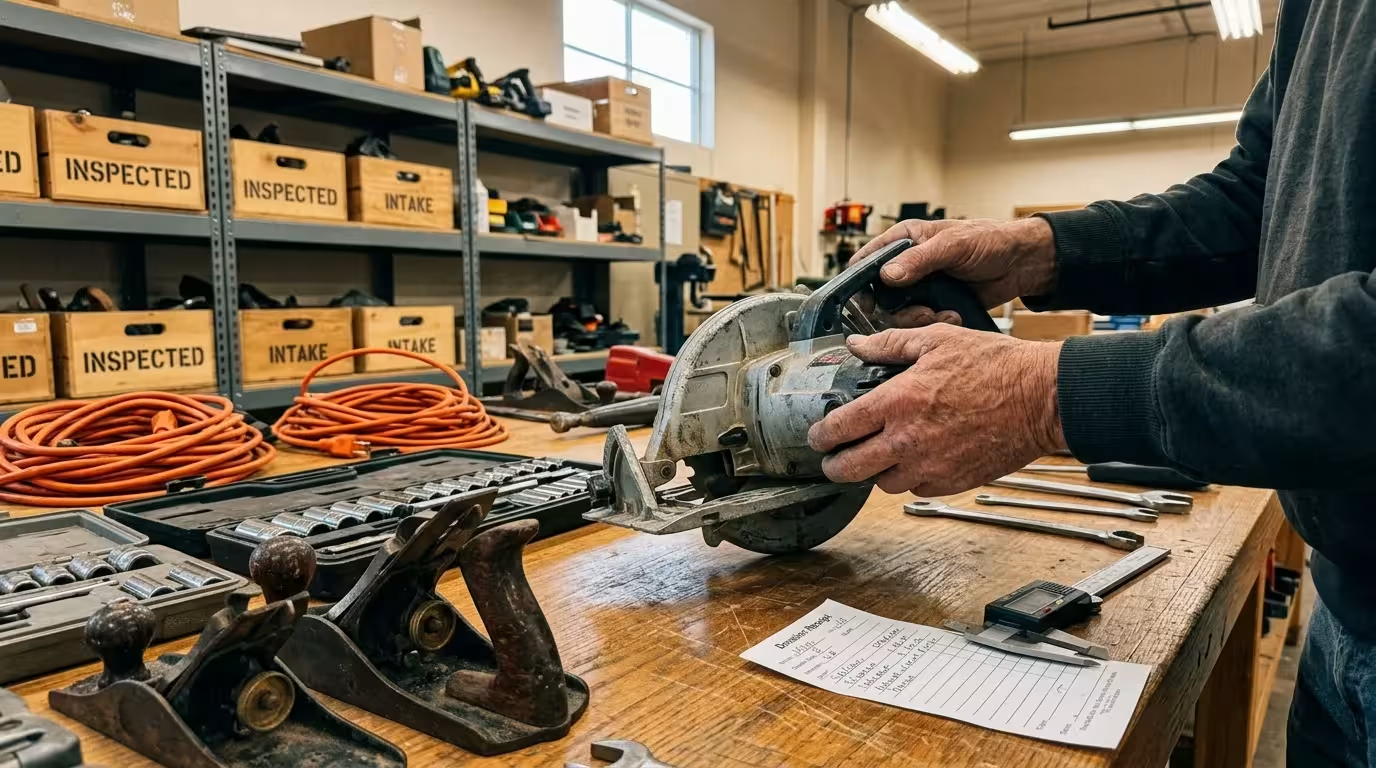
Shop teachers know worn consumer equipment injures borrowers and stalls projects. Accepting every neighbor’s basement castoff fills shelves with stamped-metal brackets and nylon gears that break quickly.
Prioritize contractor-grade machinery with cast-iron tables, sealed ball bearings, and replaceable carbon brushes, matching the equipment standards used when restoring historic wooden skiffs. Makita, DeWalt, and Milwaukee handle heavy turnover and simplify mechanical repairs.
Build your catalog around tools urban homeowners rarely buy for one-off home maintenance emergencies. Stock high-demand categories first:
- Corded rotary hammer drills, reciprocating saws, and oscillating multi-tools.
- Plumbing gear including 50-foot motorized drain augers, PEX crimpers, and cast-iron pipe wrenches.
- Lawn tools such as manual core aerators, post-hole diggers, and commercial-grade string trimmers.
- Automotive gear including calibrated torque wrenches, hydraulic floor jacks, and spring compressors.
Enforce strict refusal standards before donated tools cross your threshold. Reject tools missing factory blade guards, table saws lacking riving knives, and cords with exposed copper.
Standardize cordless equipment around one 18V or 20V battery platform to simplify charging. Founders wanting fuel-powered engine work can try garage-based small engine repair outside municipal basements.
Running the Three-Tier Safety Intake Protocol
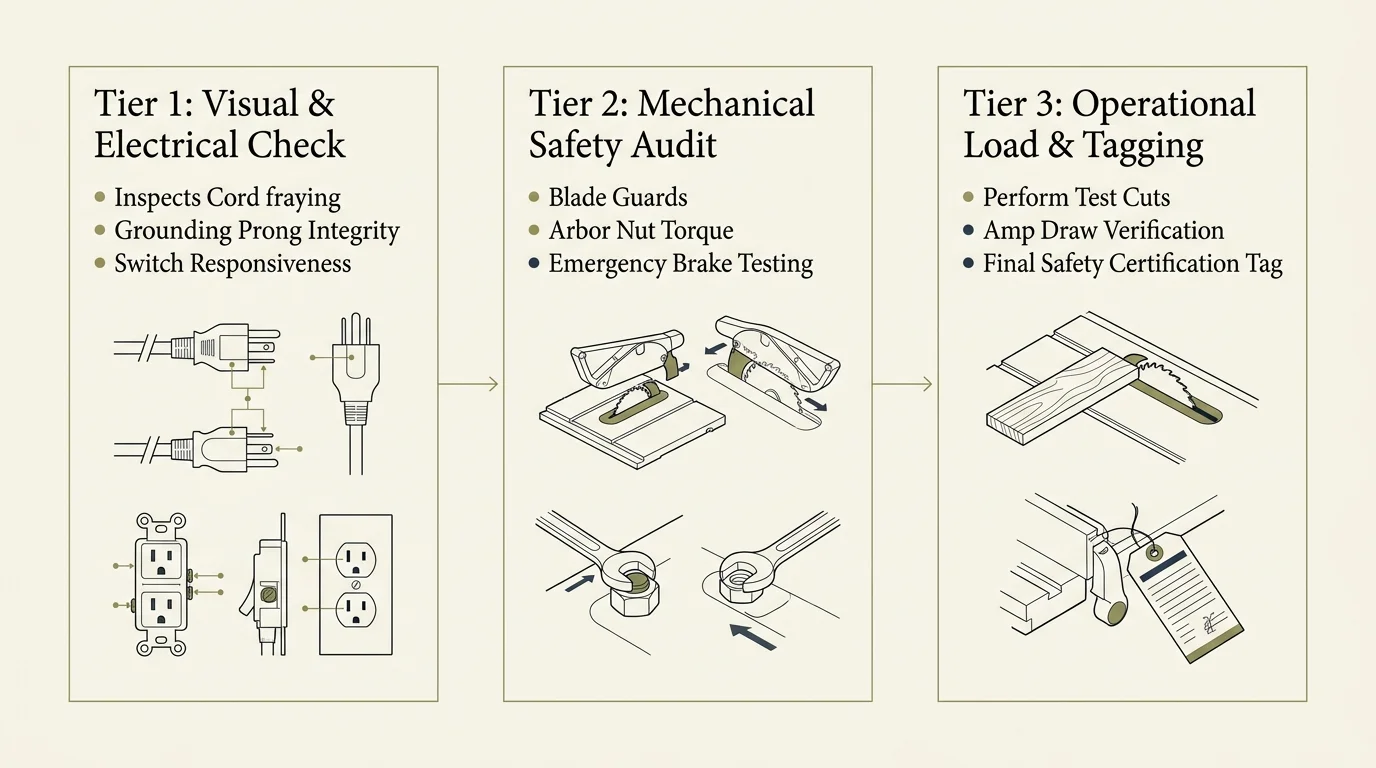
Every tool must pass a documented three-tier inspection before entering circulation. Keeping strict bench discipline matches the tool care required when restoring antique books at home.
Tier 1 checks electrical safety across cords, plug boots, and housings. Test three-prong tools with a digital multimeter for grounding continuity, and verify double-insulated casings show zero leakage.
Tier 2 audits mechanical alignment, arbor runout, and spring-loaded guards using a dial indicator. Tier 3 runs motors under dynamic load for sixty seconds to spot brush sparking, overheating, or gear noise.
- Clean motor vents, grease ports, and tool bodies with compressed air and citrus-based degreaser.
- Verify electrical grounding and insulation resistance using a calibrated multimeter or PAT tester.
- Confirm factory trigger lockouts, paddle switches, and riving knives snap cleanly into position.
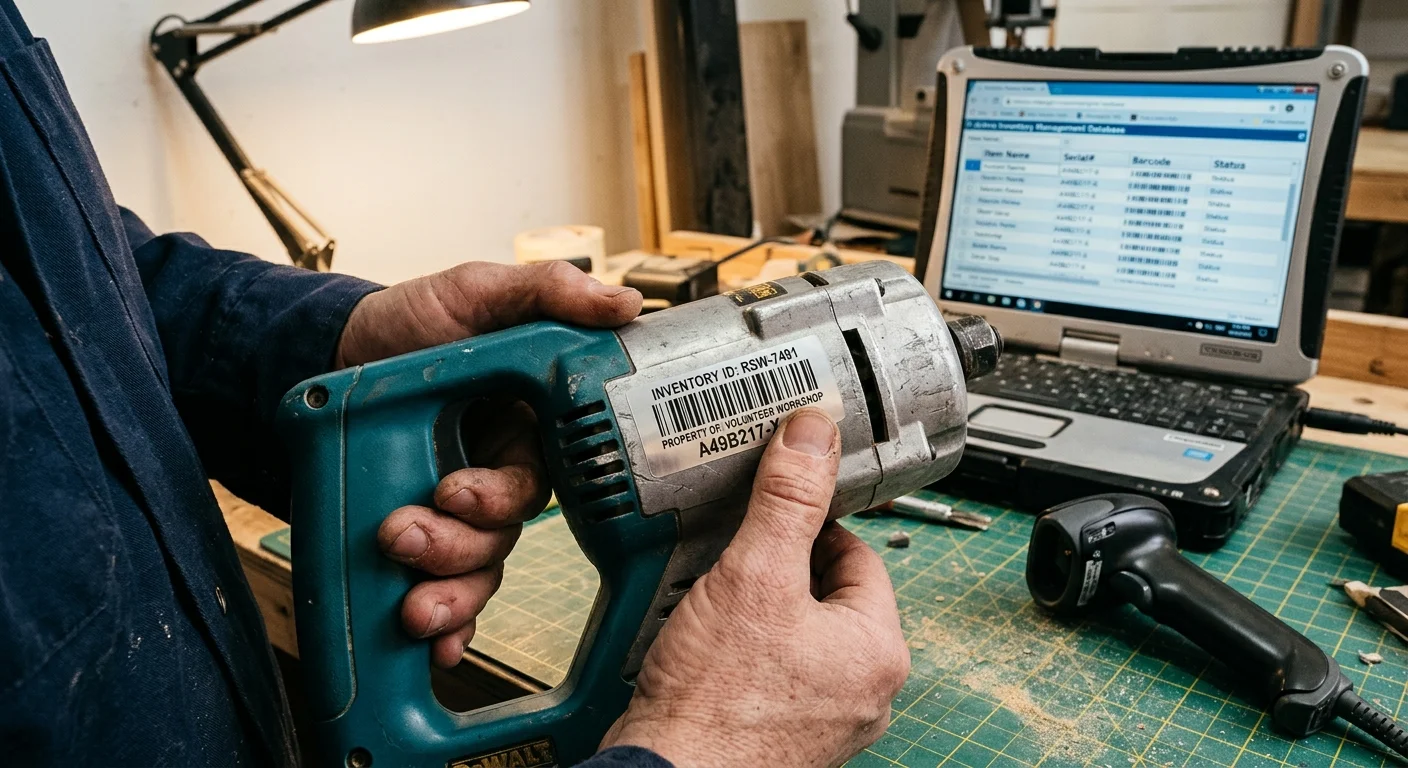
- Attach an industrial barcode tag and record the serial number in your lending registry.
- Schedule automated 90-day maintenance tickets for cord checks and blade sharpening.
Retirees who prefer quiet manual craft without power-tool inspection routines can consider downsizing to Japanese hand woodworking instead.
Tracking Assets with Lending Software and Polyester Tags
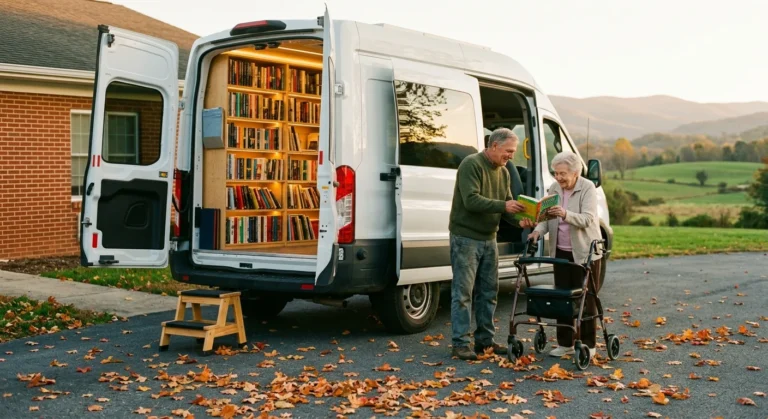
Paper sign-out sheets break down once your catalog passes one hundred items. Cloud platforms like myTurn and Lend Engine mirror the tracking used by mobile library vans.
These platforms embed digital waivers into member registration before checkouts occur. They also lock tools out every ninety days until a volunteer logs cord and blade inspections.
Paper stickers peel off after two loans in dusty workshops. Apply 2.0-mil matte polyester barcode labels with acrylic adhesive on recessed casings away from vents, then scan loans wirelessly.
Balancing the First-Year Basement Workshop Budget
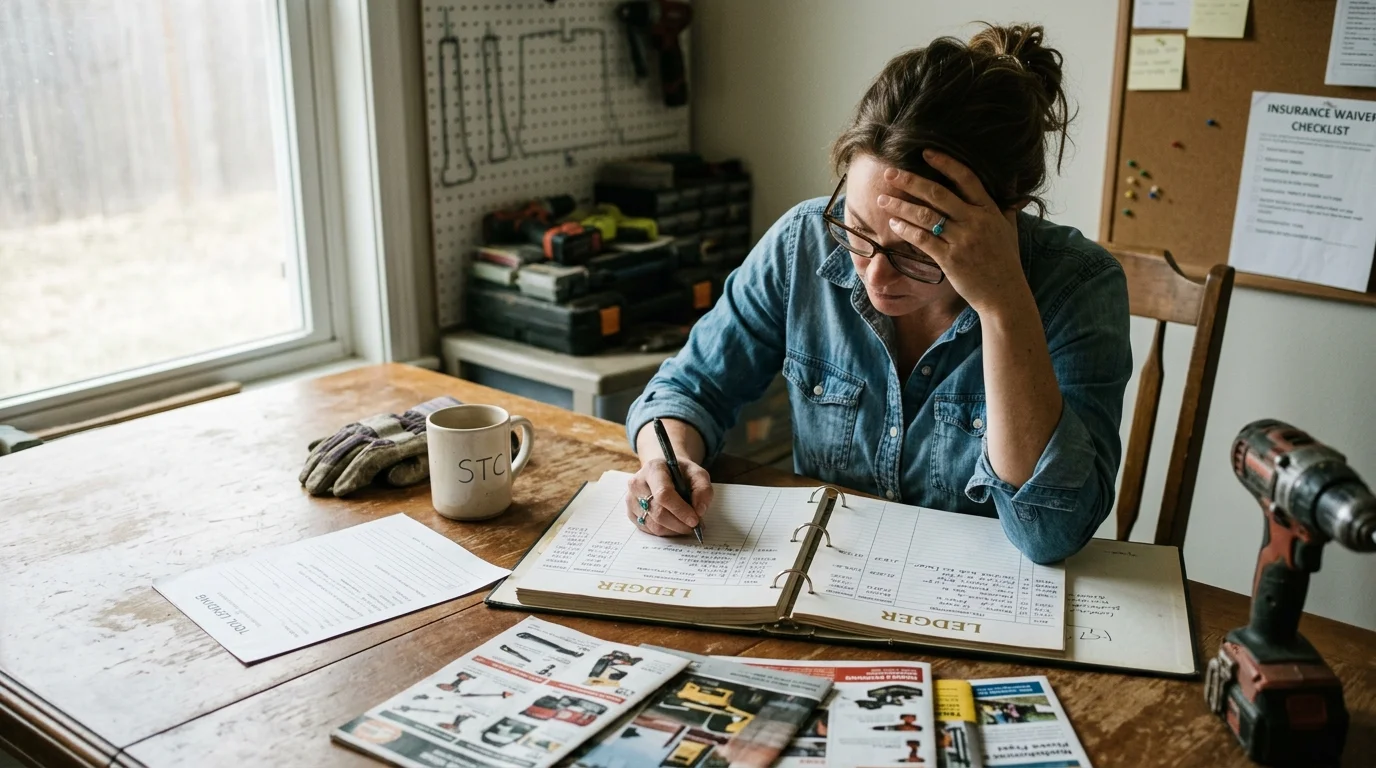
Arthur Vance, a retired industrial arts teacher, launched the Rust Belt Community Tool Depot in a 650-square-foot municipal basement. He negotiated a $100 monthly lease totaling $1,200 for the year.
Arthur filed Form 1023-EZ on March 14 for $275 and bought a $1,000,000/$2,000,000 Philadelphia Insurance Companies policy for $950 annually.
Software and tagging cost $920, covering a $600 annual myTurn subscription and $320 for a Zebra thermal printer with 1,000 polyester labels. Electrical testing gear added $180, while consumables like ten 10-inch Diablo blades and cords cost $1,400.
First-year operating expenses totaled $4,975 across all categories. A $2,500 neighborhood grant and 75 founding members at $40 annually ($3,000) left the library with 312 tools and a $525 cash reserve.
Hosting a Monthly Neighborhood Repair Café
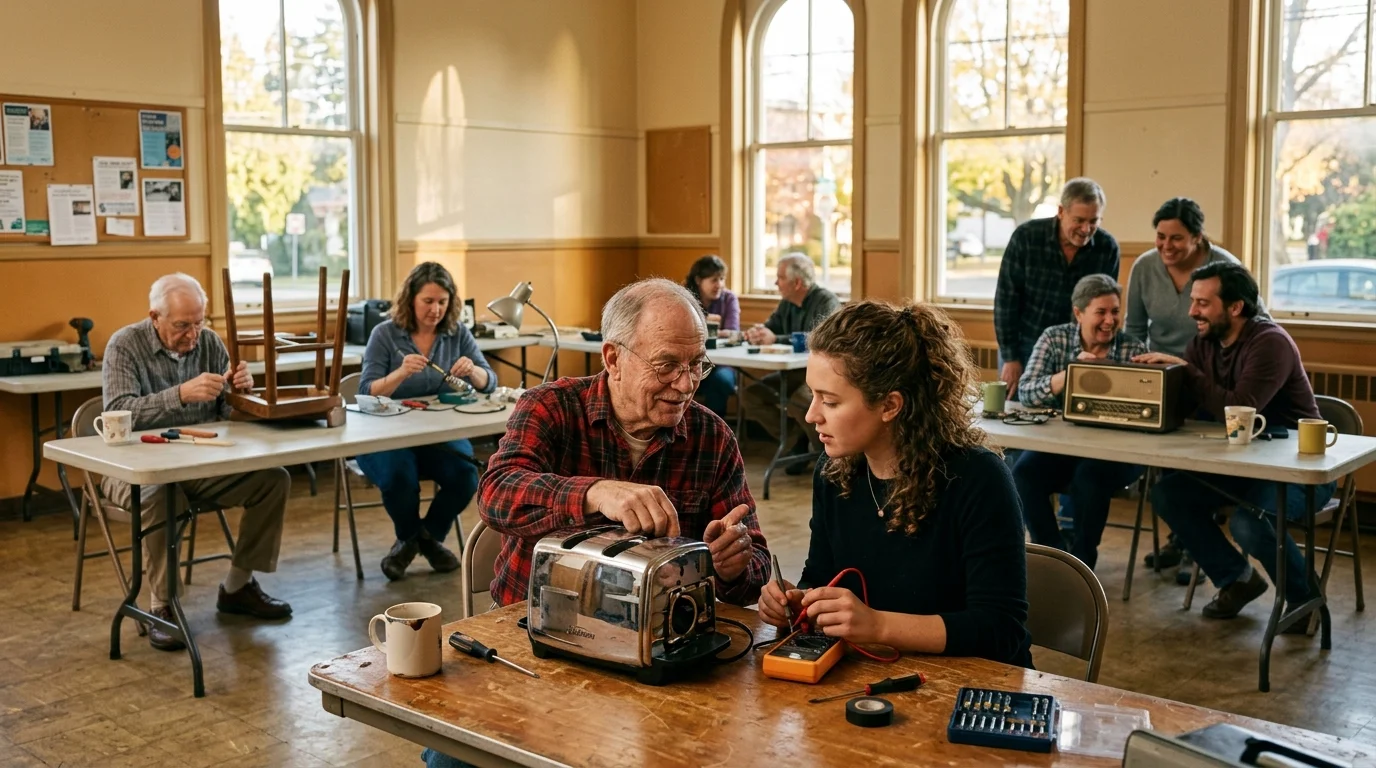
Adding a monthly repair café turns your basement shop into a practical social hub for making friends in a 55+ community. Teaching neighbors troubleshooting skills also extends teaching after retirement beyond the classroom.
Over 3,800 community repair cafés operate worldwide, and Repair Café International surveys show over 50% of volunteers are aged 60 or older. Its digital starter pack costs a voluntary €49 (about $53 USD) for templates, checklists, and RepairMonitor access.
Recruit retired electricians, machinists, and sewers on VolunteerMatch to staff four distinct stations:
- An intake desk where visitors sign liability waivers and describe malfunctions.
- An electrical station equipped with multimeters, bench power supplies, and soldering irons.
- A mechanical station stocked with hand tools, screw extractors, lubricants, and vice grips.
- A textile station outfitted with heavy-duty sewing machines, patches, and fabric shears.
Consistent monthly sessions build intergenerational trust while reinforcing safe tool habits across the neighborhood. Have a licensed municipal attorney review your final lease and borrower waiver before opening.
Disclaimer: This article is for informational and inspirational purposes. Life decisions are deeply personal, and we encourage readers to pursue their dreams while considering their unique circumstances, health, and financial situation.



1 Comment