
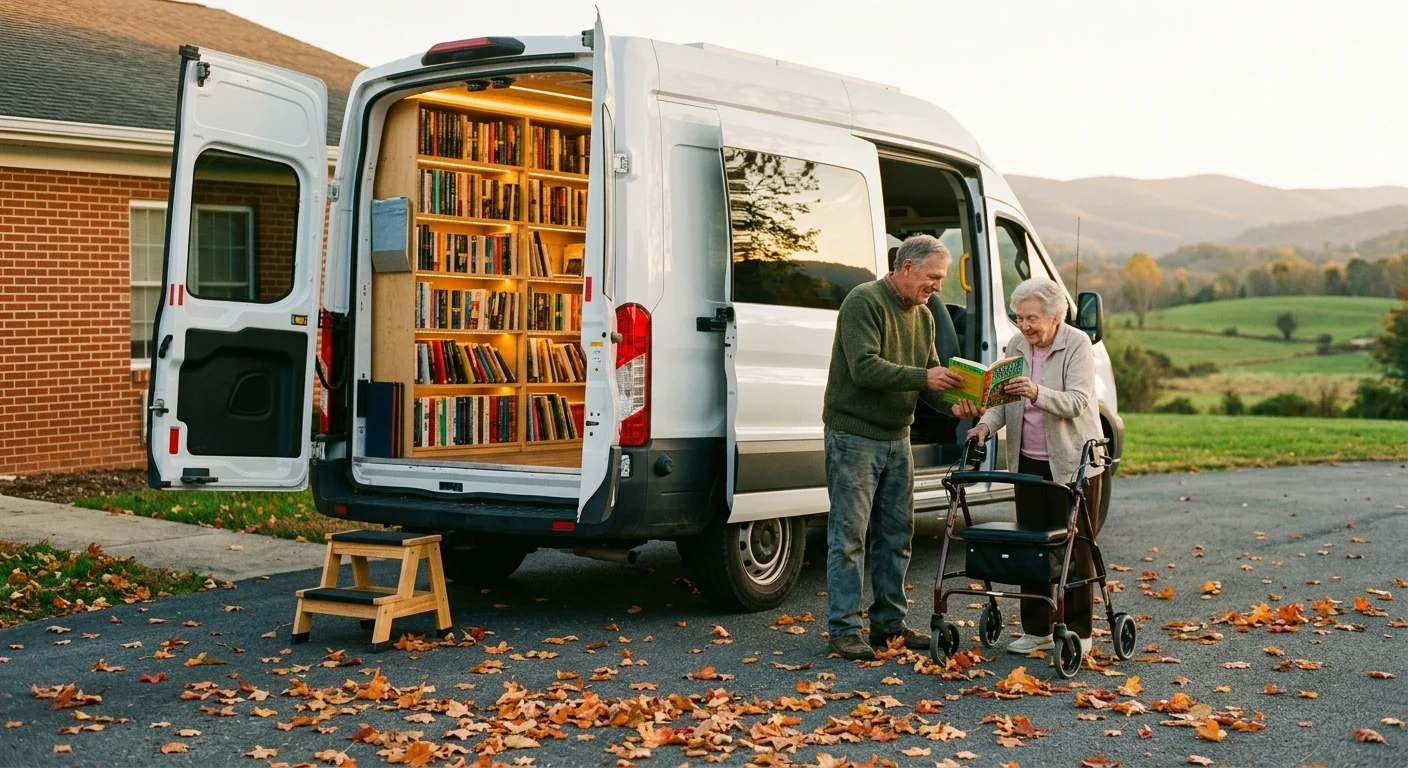
You spent decades balancing ledgers and managing transactions down to the cent. Now, starting a mobile library van lets you trade the teller counter for rural highways, delivering discovery directly to senior living doorsteps.
While industry observers assume outreach vehicles require massive institutional budgets, a solo retiree can launch and sustain an independent bookmobile on under $1,200 in monthly operating overhead without a commercial driver’s license.
By pairing financial discipline with thoughtful van modifications, your retirement second act can transform rural eldercare across entire county lines.
Chassis Selection and Weight Ratings for Senior Outreach
Your banking background taught you that solid assets prevent structural liabilities. Selecting a van platform requires that same precision, balancing gross weight against road stability.
Much like planning a retirement on wheels, choosing the right vehicle chassis establishes the mechanical foundation for your entire venture.
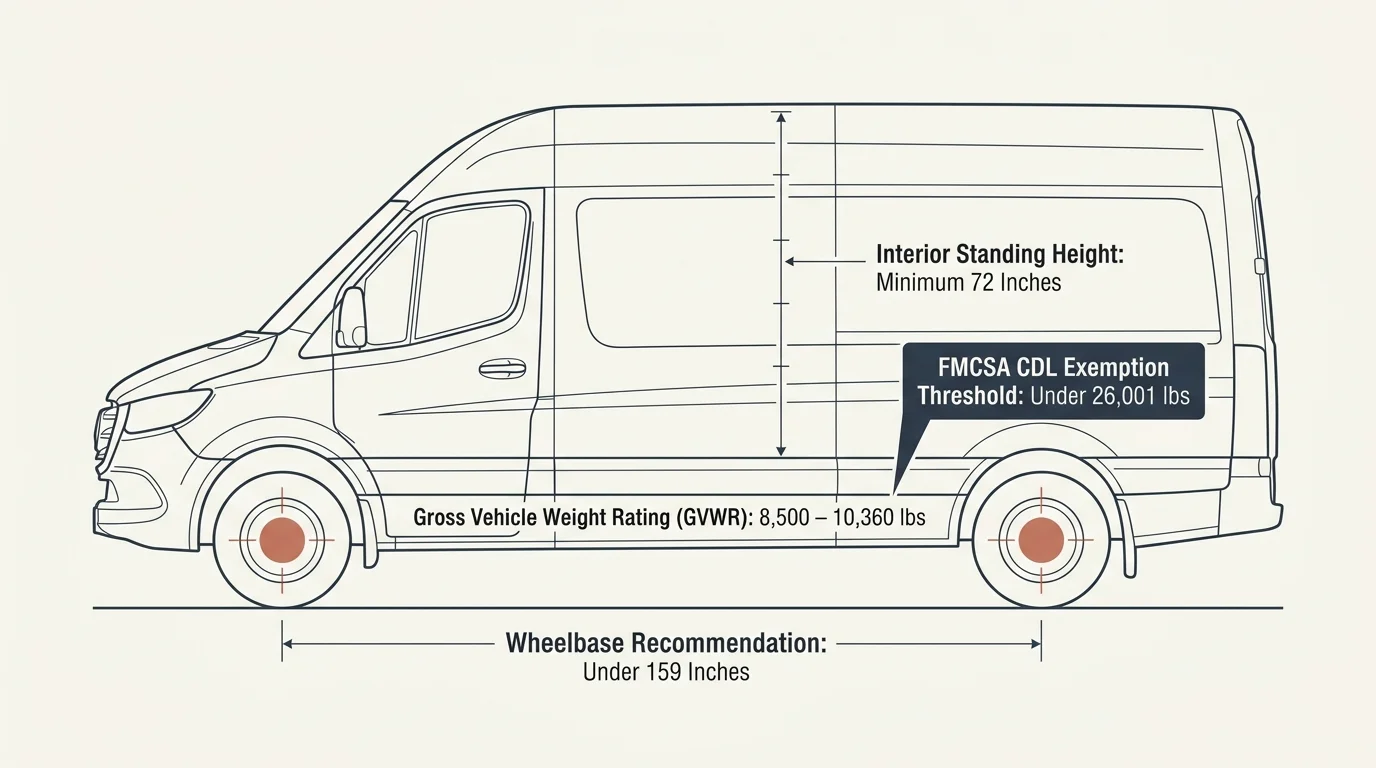
Under Federal Motor Carrier Safety Administration regulations in 49 CFR Part 383, you do not need a Commercial Driver’s License (CDL) if your vehicle stays under 26,001 pounds Gross Vehicle Weight Rating (GVWR).
Standard full-size cargo vans operate between 8,500 and 10,360 pounds GVWR. This classification allows you to drive legally on a standard Class D driver’s license while navigating tight facility parking loops.
A high-roof configuration is mandatory. You must provide at least 72 inches of standing headroom so patrons and volunteers can browse comfortably without stooping.
Extended-length wheelbases offer space for reading carts, but wheelbases exceeding 159 inches can complicate navigating narrow rural driveways. Look for used fleet vehicles with 45,000 to 75,000 miles to maximize value.
Interior Layout, Weight Distribution, and ADA Accessibility
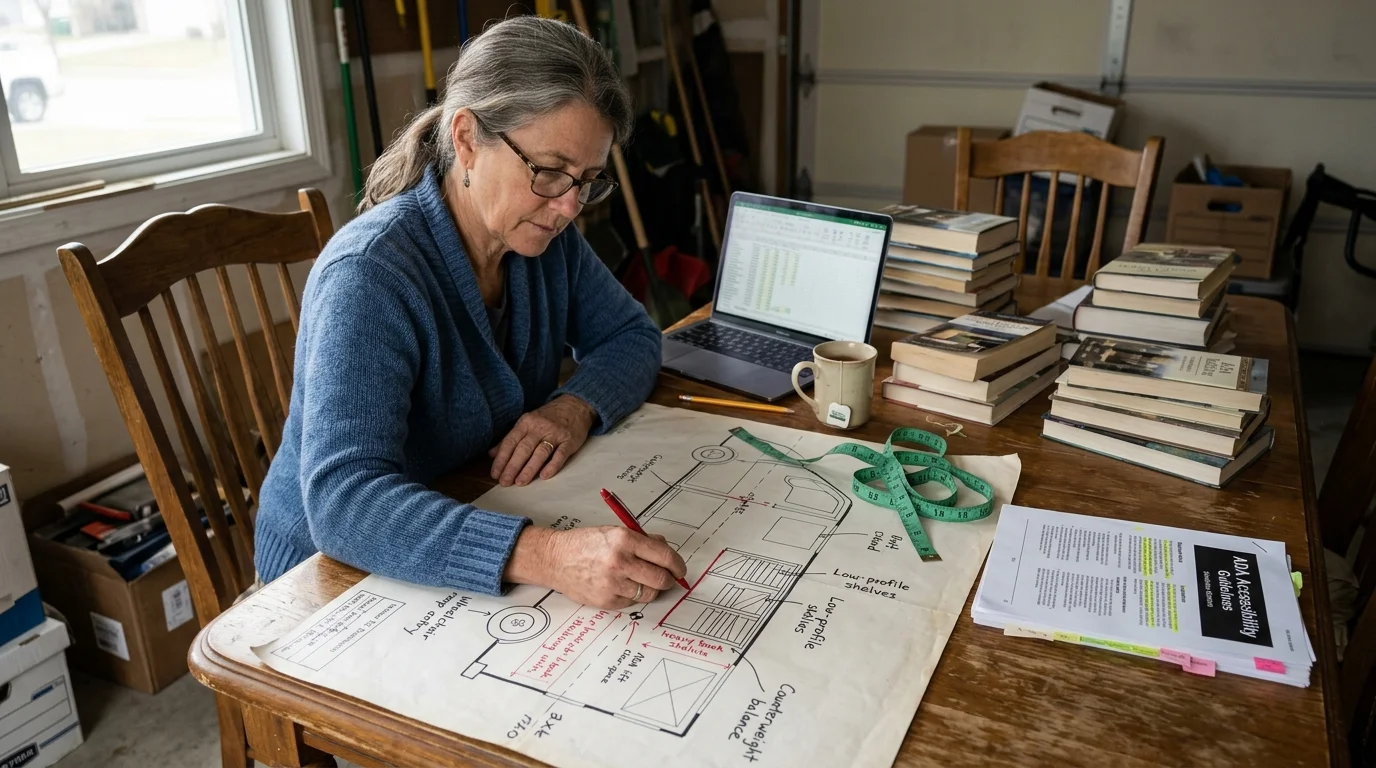
Mobile literacy outreach retirement projects succeed or fail on physical access. Many assisted living patrons rely on rolling walkers, canes, or electric wheelchairs to visit your shelves.
Similar to organizing a neighborhood tool lending library, establishing an efficient circulation setup in a confined space requires smart shelving and strict weight management.
Department of Transportation standards under 49 CFR Section 38.23 dictate accessibility parameters for passenger vehicles. Retrofitted lifts must support a minimum design load of 600 pounds to handle heavy bariatric chairs.
Install an electromechanical or hydraulic lift, such as a BraunAbility Century-2 series, at the rear or side sliding door. Ensure your door opening clearance measures at least 56 inches in height.
Books generate surprising mass; paper weighs roughly 35 to 40 pounds per linear foot. You must distribute this payload evenly over the axles to avoid suspension wear or dangerous roll characteristics.
Mount marine-grade aluminum or Baltic birch shelving directly to the van’s structural chassis ribs using riveted threaded inserts. Fasten each shelf with a 15-degree rearward tilt to keep books seated during transit.
- Anchor shelving units directly to steel chassis ribs with grade-8 bolts.
- Install flush, heavy-duty rubberized coin flooring over half-inch marine plywood.
- Position heavy reference and hardcovers on bottom shelves to lower the center of gravity.
- Mount 4,000K daylight-spectrum LED strip lighting overhead to assist aging eyes.
- Integrate continuous ceiling grab rails rated for 250 pounds of pull force.
Install a 200-amp-hour lithium iron phosphate (LiFePO4) auxiliary battery bank paired with a 2,000-watt pure sine wave inverter. This dedicated system powers the wheelchair lift, checkout scanner, and climate systems without idling the engine.

Worked Example: Complete Build Budget and Mechanical Retrofit
Precision budgeting ensures your mobile outreach remains solvent for years. Here is a fully itemized, field-tested financial blueprint based on retrofitting a 2021 Ford Transit 250 High Roof.
Just as with retirees launching a community foot clinic, detailed initial cost modeling prevents personal savings from eroding during outreach setup.
Our retired bank teller acquired the base vehicle for $28,500 with 52,000 miles on the odometer. She allocated $14,650 for conversion components and $7,500 for professional lift installation.
- Base vehicle purchase: $28,500 (2021 Ford Transit 250, 148-inch wheelbase).
- BraunAbility hydraulic lift installation and professional certification: $7,500.
- Subfloor, closed-cell spray insulation, and coin vinyl floor covering: $1,850.
- Custom aluminum shelving assemblies with retention lip hardware: $3,200.
- Auxiliary electrical setup (200Ah LiFePO4 battery, inverter, 300W rooftop solar): $2,800.
- Dometic rooftop auxiliary heating and air-conditioning unit: $2,400.
- Lighting, grab rails, step stools, and checkout counter fixture: $1,400.
- Vehicle branding, protective exterior sealant, and safety equipment: $3,000.
The total capital expenditure for the operational vehicle reached $50,650. By doing interior assembly herself and hiring professionals only for structural bolting and electrical certification, she saved roughly $18,000.
Organizations like Encore.org demonstrate how practical experience turns retirement into high-impact public service. Structured execution protects personal capital while serving rural populations.
Platform Comparison: Full-Size Cargo Vans for Library Conversions
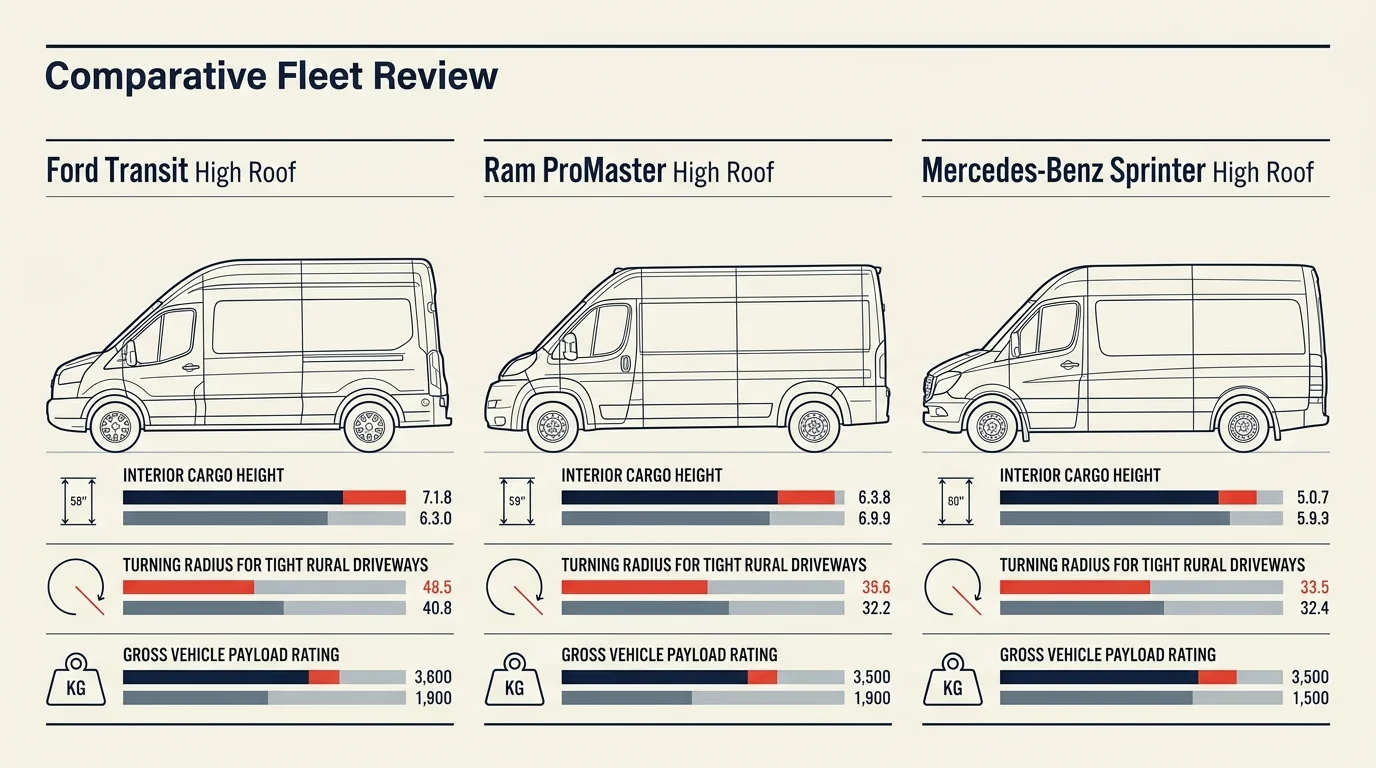
Every commercial van platform features distinct load limits, cargo geometry, and drive layouts. Evaluating these mechanical differences prevents costly maintenance headaches down the road.
Front-wheel-drive designs offer lower floor heights for easier step-ins, whereas rear-wheel-drive platforms tolerate heavier shelving cargo. Review the mechanical specifications below before purchasing your chassis.
| Chassis Model | GVWR Rating | Interior Cargo Height | Max Usable Payload | Turning Diameter | Average Used Price (2019-2022) |
|---|---|---|---|---|---|
| Ford Transit 250 High Roof | 9,070 lbs | 81.5 inches | 3,850 lbs | 40.0 feet | $27,000 – $34,000 |
| RAM ProMaster 2500 High Roof | 8,900 lbs | 76.0 inches | 3,910 lbs | 40.7 feet | $24,000 – $31,000 |
| Mercedes-Benz Sprinter 2500 High Roof | 9,050 lbs | 79.1 inches | 3,450 lbs | 45.0 feet | $32,000 – $42,000 |
The RAM ProMaster features a 21-inch ground-to-floor step height, making it the easiest entry point for ambulatory seniors using handrails. Its front-wheel-drive system performs reliably on wet asphalt and mild snow.
The Ford Transit offers higher ceiling clearance and widespread mechanics throughout rural counties. This domestic availability reduces maintenance downtime when sourcing parts away from major cities.

Sourcing High-Demand Large-Print and Audio Catalogs
Stocking a bookmobile for senior living homes requires curating for readability. Your collection should prioritize 16-point to 18-point typography, ergonomic physical weights, and clean auditory formats.
If you receive donated vintage titles with loose bindings or torn hinges, mastering basic antique book restoration can help you salvage fragile editions before placing them on your shelves.
Curating an engaging collection can also inspire facility staff to organize an on-site retirement book club to encourage discussion among avid readers.
Standard hardcovers often prove too heavy for patrons managing arthritis. Lightweight trade paperbacks in large font provide a far more comfortable reading experience for your visitors.
Partner directly with specialty publishers like Thorndike Press to access commercial catalog overruns and library discards at steep discounts. These books feature high-contrast black ink printed on anti-glare paper stock.
- Establish wholesale distribution relationships with primary large-print library jobbers.
- Acquire pre-loaded audio devices like Playaway units that operate without internet connectivity.
- Coordinate seasonal bulk transfers with local Friends of the Library sorting warehouses.
- Register qualifying vision-impaired patrons for the National Library Service for the Blind and Print Disabled.
- Maintain dedicated rotating bins for high-contrast puzzle books, photo essays, and local histories.
Always inspect used book donations under strong direct light before cataloging them. Reject water-damaged or musty paperbacks, as mold spores present respiratory hazards in enclosed van spaces.
Affix high-visibility classification labels along the spine bases using bold numbers. Simple three-digit genre categories work far better than traditional, complex decimal systems in a mobile browsing format.
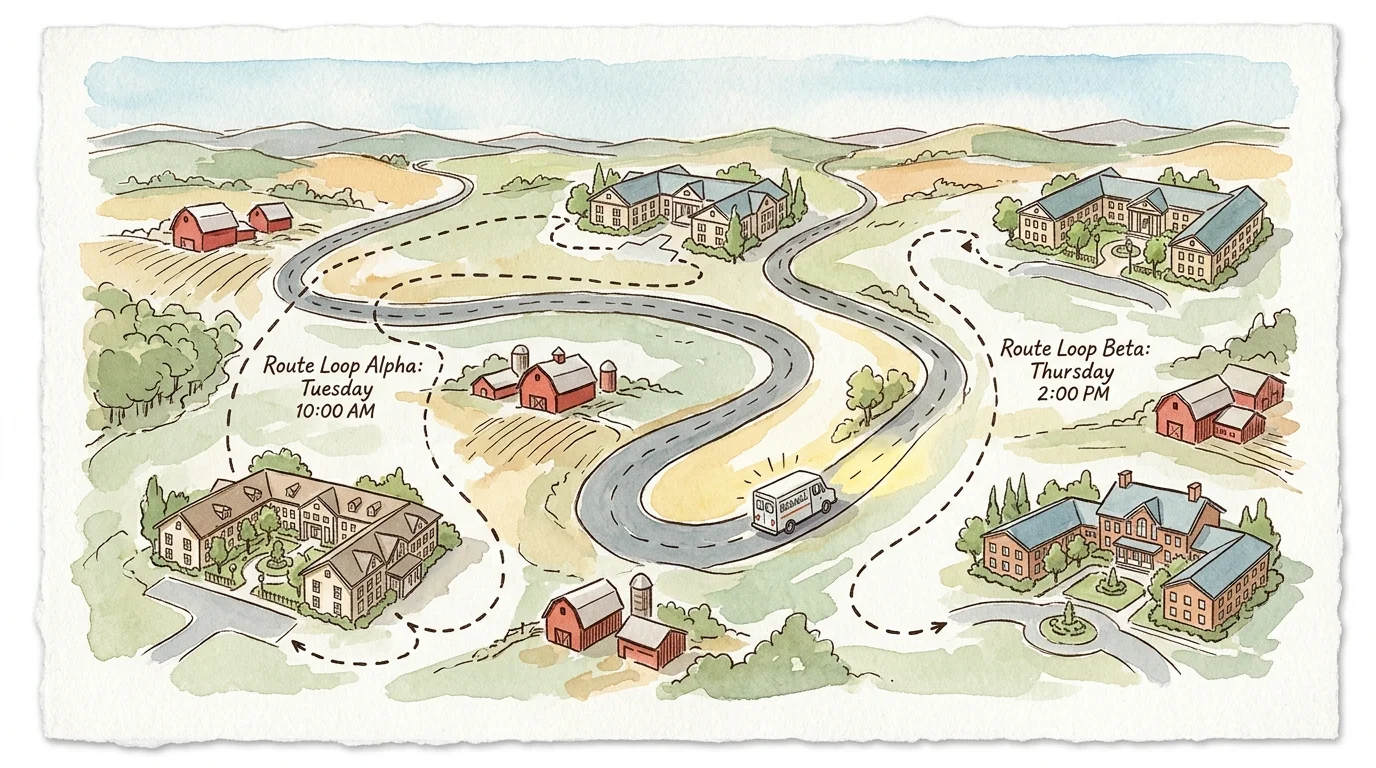
Route Design and Facility Schedules for Rural Senior Living
According to National Center for Assisted Living demographic data, roughly 43 percent of facilities maintain 10 beds or fewer. These smaller residential homes often get bypassed by standard municipal outreach services.
As demonstrated by successful mobile loan signing routes, establishing clustered geographic loops keeps daily mileage manageable and overhead costs predictable.
Plan your circuit around predictable bi-weekly or three-week loops. Consistent schedules give residents something to look forward to and allow facility staff to coordinate activity calendars around your arrival.
Group facilities by geographic clusters to limit road travel to under 45 miles each operating day. Concentrated routes lower your fuel burn and reduce physical fatigue behind the wheel.
Always arrange visits with facility activity directors at least two weeks before arrival. Confirm that the van’s parking spot remains flat, well-drained, and free of low-hanging tree branches.
- Survey regional care facilities across your county to tally total licensed residential beds.
- Map a recurring Tuesday-through-Thursday schedule that reserves Mondays for collection maintenance.
- Establish two-hour visiting windows: 90 minutes for patron browsing and 30 minutes for bedside visits.
- Exchange cell phone contact details with charge nurses to verify site conditions before you leave.
- Log all mileage, fuel use, and resident visitor headcounts immediately after each facility stop.
Bedside outreach demands compact presentation. Prepare a folding rolling cart that fits down 36-inch residential hallways so room-bound seniors can select books right from bed.

Formalizing County Agreements and Operating Memorandums
Operating a mobile service requires clear administrative boundaries. You must build transparent legal relationships between your mobile service, regional library boards, and participating facilities.
Draft a formal Memorandum of Understanding (MOU) with your county library system. A sound agreement lets you circulate library materials while extending their service radius into previously underserved rural zones.
Consult business advisors through SCORE Mentoring to structure your operational entity properly. Setting up a non-profit 501(c)(3) or an outreach-focused LLC protects your personal savings from potential liability.
Commercial vehicle liability insurance requires specific endorsements for mobile lending platforms. Secure coverage that explicitly includes volunteer driver riders and comprehensive general liability covering slips or falls outside the vehicle.
Include clear indemnification clauses in facility site agreements. These clauses ensure that host properties assume primary premises liability while your van is safely parked in their designated bus zones.

Grant Sourcing and Long-Term Fuel Balancing
Your operating spreadsheet should track diesel or gasoline expenditures against predictable grant disbursement cycles. Stable cash flows keep your outreach rolling despite changing economic conditions.
The AARP Community Challenge Grant program funds high-impact, community-based mobility enhancements. Opening every January, AARP Community Challenge Flagship Grants award from $500 up to $15,000 (averaging $10,000 to $12,000), but eligibility is restricted to 501(c)(3), 501(c)(4), and 501(c)(6) nonprofits and government entities—for-profit LLCs do not qualify.
State Library Agencies administer Library Services and Technology Act (LSTA) sub-grants. These awards often provide between $25,000 and $50,000 for verified outreach vehicles working in partnership with local municipalities.
Balance recurring fuel costs by establishing route sponsorship programs with local rural businesses. A single local pharmacy or agricultural cooperative can underwrite an entire month’s fuel in exchange for exterior branding.
- Pursue monthly $1,000 grassroots allocations through regional Awesome Foundation chapters.
- Present your impact data directly to rural electric co-op community development committees.
- Offer tiered corporate sponsorship plaques inside the van’s main interior browsing walkway.
- Run tax-deductible community micro-donation drives to fund annual replacement tires and oil services.
Review fuel consumption against your stop schedules every thirty days. If diesel prices increase by 15 percent, adjust route geometry rather than cutting book budgets or scheduled facility visits.
Frequently Asked Questions
Do I need a commercial driver’s license to operate a mobile library van?
No, standard Class D driver’s licenses cover vehicles with a Gross Vehicle Weight Rating below 26,001 pounds. Standard cargo conversions rarely exceed 10,000 pounds fully loaded with shelving and books.
How do you secure heavy bookshelves during road transit?
Anchor shelving frameworks directly into vehicle chassis ribs using structural grade-8 bolts and threaded fasteners. Angling shelf bases backward by 15 degrees stops books from sliding off during transit.
What grant sources support mobile book conversions?
The AARP Community Challenge Flagship Grant provides $500 up to $15,000 (averaging $10,000 to $12,000) for senior mobility projects, though eligibility is restricted to 501(c)(3), 501(c)(4), and 501(c)(6) nonprofits and government entities (for-profit LLCs do not qualify). State Library Agencies also distribute federal LSTA grants, while local community foundations offer smaller ongoing operational micro-grants.
How much does it cost to add an ADA-compliant wheelchair lift?
A certified commercial wheelchair lift, including professional installation and structural subfloor bolting, typically costs between $5,000 and $12,000. Public service vehicles require lifts rated for a minimum 600-pound capacity.
Disclaimer: This article is for informational and inspirational purposes. Life decisions are deeply personal, and we encourage readers to pursue their dreams while considering their unique circumstances, health, and financial situation.




3 Comments