
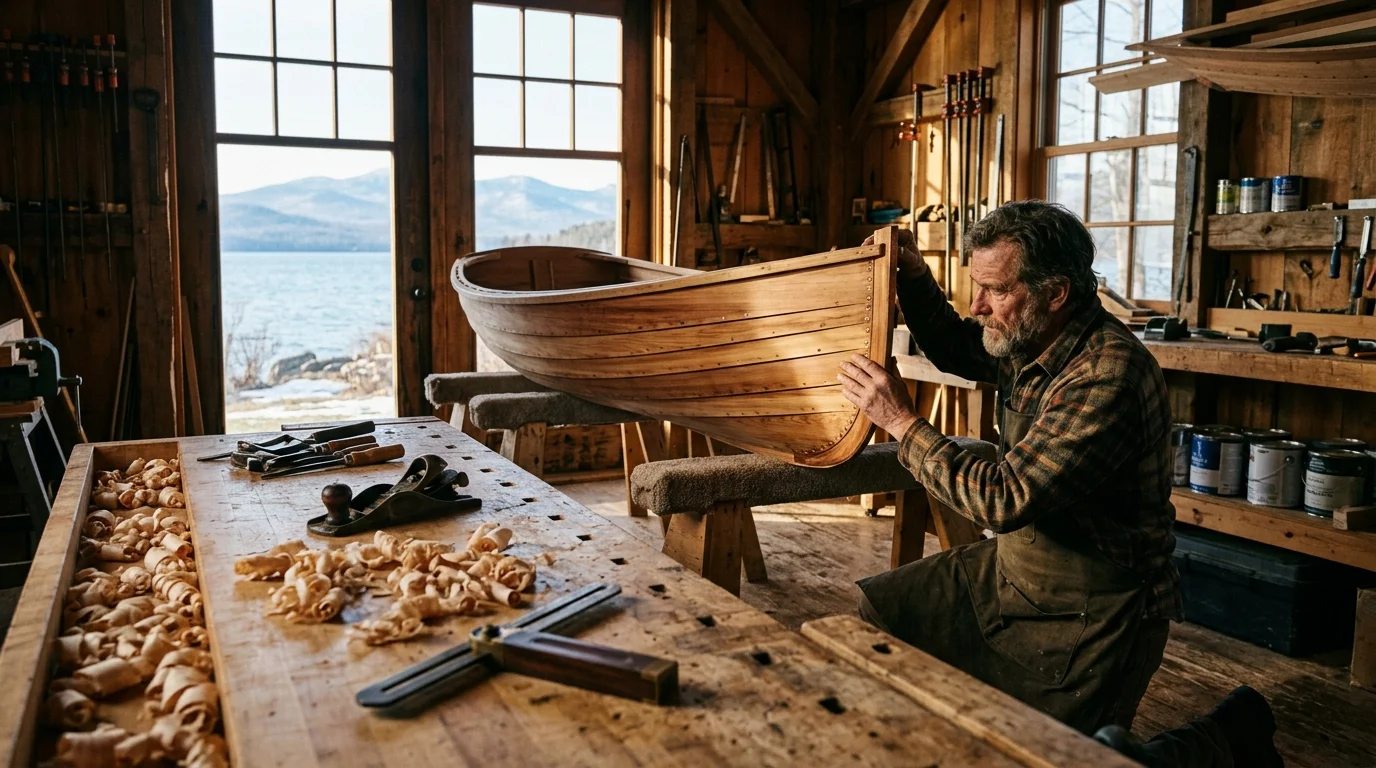
You can trade spreadsheets for cedar shavings and turn maritime preservation into a solvent, deeply satisfying encore career. Restoring classic Lake Champlain skiffs offers both intellectual rigor and tangible craftsmanship.
While many artisan workshops collapse under uncontrolled overhead, your accounting background gives you a distinct commercial edge. Disciplined cost controls turn traditional wooden boatbuilding into a predictable $10,000 to $25,000 annual supplemental income.
Mastering regional timber sourcing and winter curing thermodynamics allows you to preserve historic watercraft without risking your retirement savings.
The Champlain Skiff Heritage: Provenance and Hull Architecture
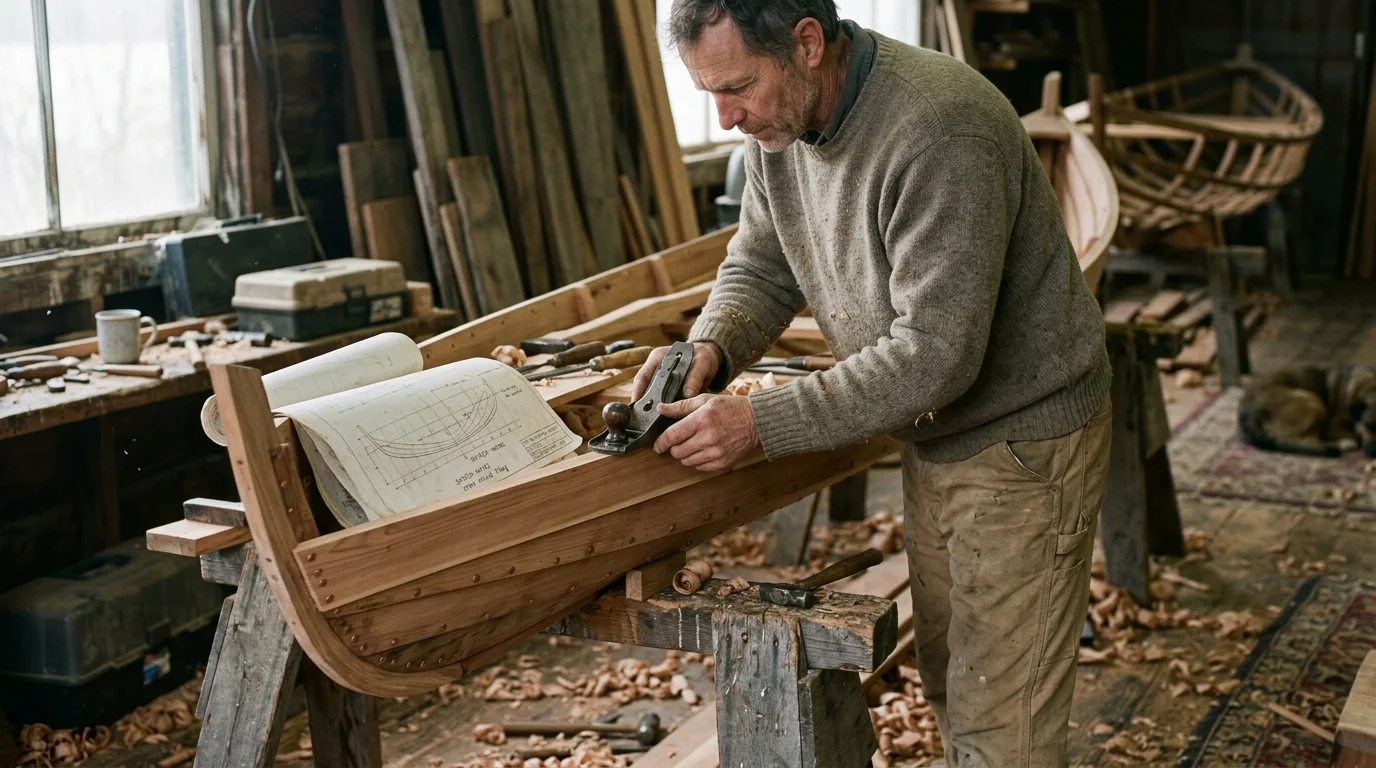
Lake Champlain has nurtured distinctive small-craft designs for over two centuries. The waterway demanded light, seaworthy rowing and sailing skiffs capable of handling sudden autumn squalls.
St. Lawrence skiffs, Adirondack guideboats, and Whitehall rowing craft dominated local liveries and private boathouses from Burlington to Basin Harbor. Each craft balances thin planking with steam-bent structural ribs.
The Lake Champlain Maritime Museum in Vergennes, Vermont, actively documents this vernacular architecture. Their historical collections preserve lines drawings and construction offsets for regional 14-to-16-foot double-ended skiffs.
As a retired mechanical accountant, you will immediately appreciate the geometric precision of these historic hulls. Hull offsets read like balance sheets where every dimension must reconcile perfectly across waterlines and buttocks.
Traditional Champlain skiffs share several construction hallmarks:
- Lapstrake or delicate carvel planking milled from native white cedar.
- Steam-bent white oak frames spaced as closely as two inches on center.
- Native white oak or tamarack stems selected for natural grain curvature.
- Copper clench-nail or riveted fastener patterns along every plank overlap.
- Transom knees and breasthooks cut from naturally curved apple or oak crooks.
Understanding these historical construction details prevents costly structural errors during restoration. Preserving original lines also protects the investment value of these regional artifacts.
Workshop Overhead: Facility Siting, Lease Rates, and Winter Thermal Dynamics
Workshop overhead represents your single largest financial variable. Commercial lease rates in Vermont’s Chittenden and Addison counties average $10 to $18 per square foot NNN annually.
Much like planning off-grid systems when trading tech for cold northern woods, keeping utility bills low in subzero weather hinges on meticulous thermal modeling.
Much like restoring antique books at home, running a successful artisan restoration business requires strict control over studio overhead and climate stability.
Clinton and Essex counties across the lake in New York offer slightly lower light-industrial rates. However, long travel distances between winter storage barns and your shop quickly erode profit margins.
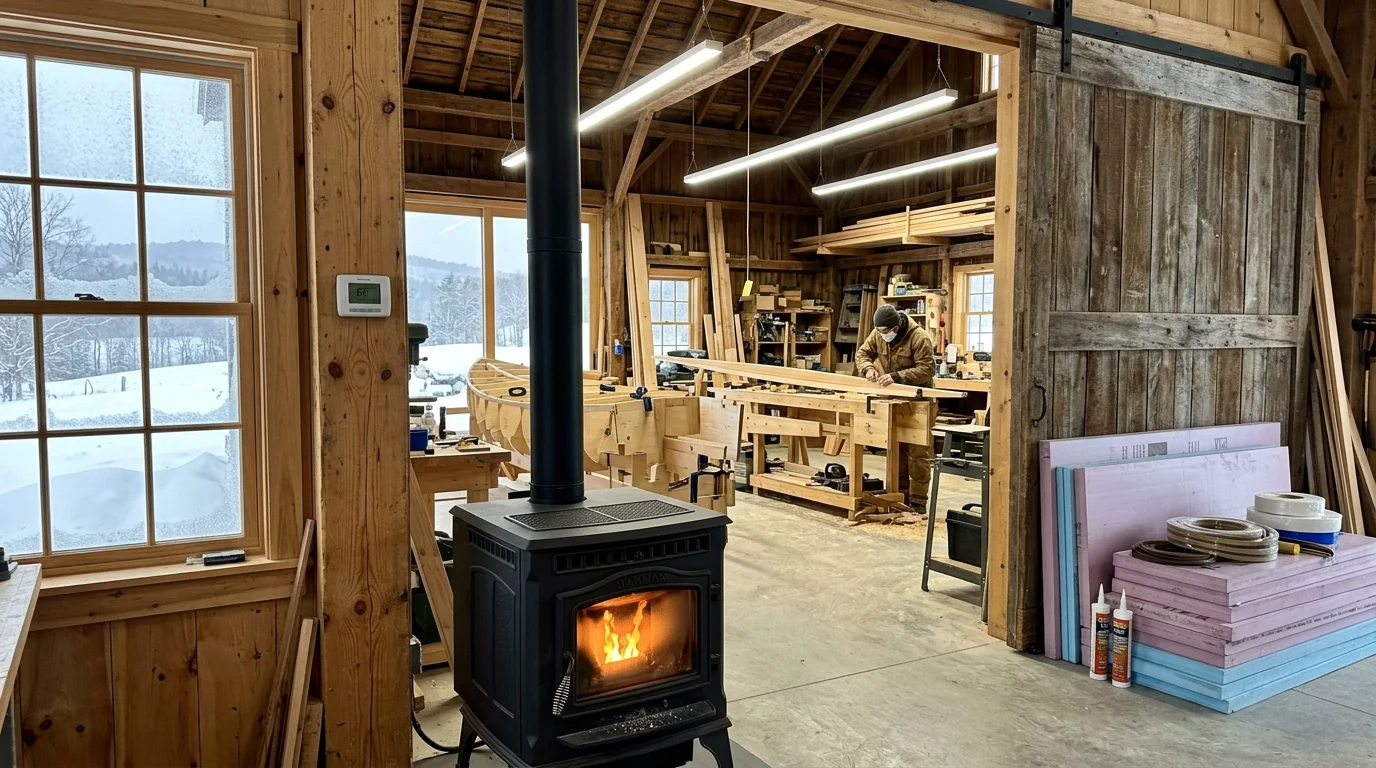
Constructing a dedicated, insulated pole barn on your own residential property delivers the highest long-term return on capital. An enclosed post-frame shell on a concrete slab runs roughly $25 to $40 per square foot, while a turnkey finished, insulated, wired, and heated 800-to-1,200-square-foot workshop typically costs $45 to $65+ per square foot.
This square footage accommodates two complete skiff restorations simultaneously alongside stationary machinery.
Champlain Valley winters pose a severe thermodynamic challenge for marine epoxies and spar varnishes. Average January low temperatures hover between 10°F and 14°F.
Epoxy resins and traditional phenolic spar varnishes require a strict 55°F to 65°F minimum cure environment. Failure to maintain these temperatures causes incomplete chemical cross-linking and surface blushing.
Winter shop heating using a ductless mini-split heat pump or direct-vent propane system costs $200 to $450 per month. Smart thermal zoning keeps your main shop at 50°F while heating a dedicated curing tent to 68°F.
You must also secure commercial general liability insurance for artisan craft restoration. Expect to pay $800 to $2,000 annually for standard $1,000,000 occurrence and $2,000,000 aggregate coverage.
| Facility Option | Square Footage | Monthly Overhead Cost | Thermal Management Complexity |
|---|---|---|---|
| Residential Post-Frame Barn | 900 sq. ft. | $250 – $450 (Heating & Power) | Low (Zone-controlled mini-split heat pump) |
| Commercial Lease (Chittenden County) | 1,000 sq. ft. | $1,200 – $1,800 (Rent + NNN + Heat) | Moderate (Shared industrial overhead) |
| Unheated Outbuilding + Heated Enclosure | 600 sq. ft. | $150 – $275 (Targeted micro-zone heating) | High (Requires constant monitoring of cure boxes) |
Controlling these fixed overhead costs ensures that seasonal work pauses do not drain your cash reserves. Your accounting training enables precise tracking of every thermal and electrical expense.
Tool Sourcing and Machinery Setup for Precision Joinery
Outfitting a high-precision marine restoration shop does not require industrial-scale machinery. An initial tooling investment of $4,000 to $9,000 equips you for complete keel-up rebuilds.
If space or budget restricts your machinery purchases, connecting with a local tool lending library can provide temporary access to specialized woodworking equipment.
Your centerpiece machine must be a 14-inch to 18-inch bandsaw with at least 12 inches of resaw capacity. High-end bandsaws like the Laguna 1412 or Rikon 10-326 cost between $1,200 and $2,800.
Equip your bandsaw with a 3/4-inch carbide-tipped blade for resawing raw cedar cants into flexible planking stock. Precise resawing minimizes wood loss on expensive marine timbers.
A 12-inch jointer/planer combination machine saves critical floor space while flattening warped stock. Quality combination units cost between $1,000 and $2,500 on the regional market.
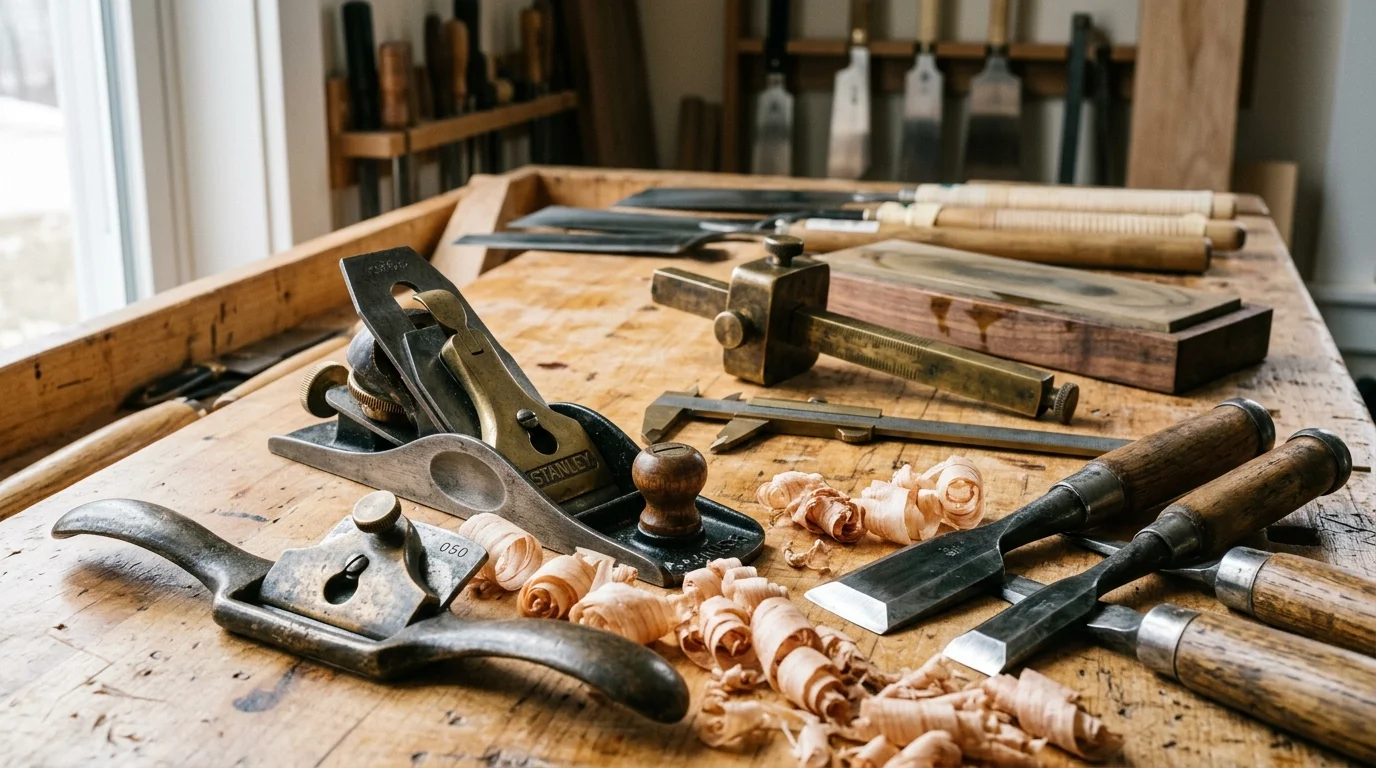
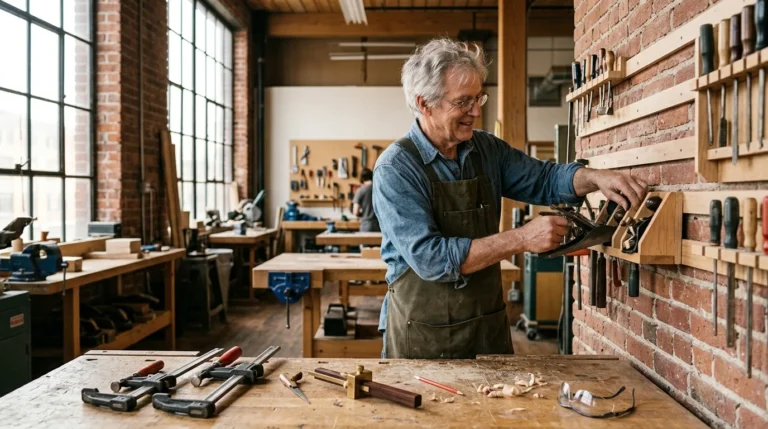
Manual woodworking tools provide the sensitive touch required when dressing delicate historic planks. Investing $400 to $800 secures essential hand tools that last a lifetime.
Your primary manual kit should include the following tools:
- A Lie-Nielsen No. 4 smoothing plane set with a 50-degree York pitch frog for reversing figure.
- A Veritas low-angle block plane with an adjustable mouth for trimming end-grain lapstrake gains.
- Two vintage convex drawknives for shaping oak stems and fairing sheer strakes.
- A set of Japanese butt chisels for mortising ribs into keelson pockets.
- A dedicated copper rove-set punch and backing iron for clench-nail fastening.
Steam-bending frames requires a dependable thermal steam system. You can assemble an exceptional steam setup for $150 to $350.
Pair an Earlex 1500-watt electric steam generator with a ten-foot insulated box built from cedar or Schedule 40 PVC pipe. Mount a digital meat thermometer into the exhaust end to verify a steady 212°F working temperature.
Marine Lumber Procurement: Species, Board Footage, and Fastener Schedules
Using standard retail lumber yards will instantly ruin a marine restoration project. You must procure verified, boatbuilding-grade softwoods and hardwoods through specialized regional sawmills.
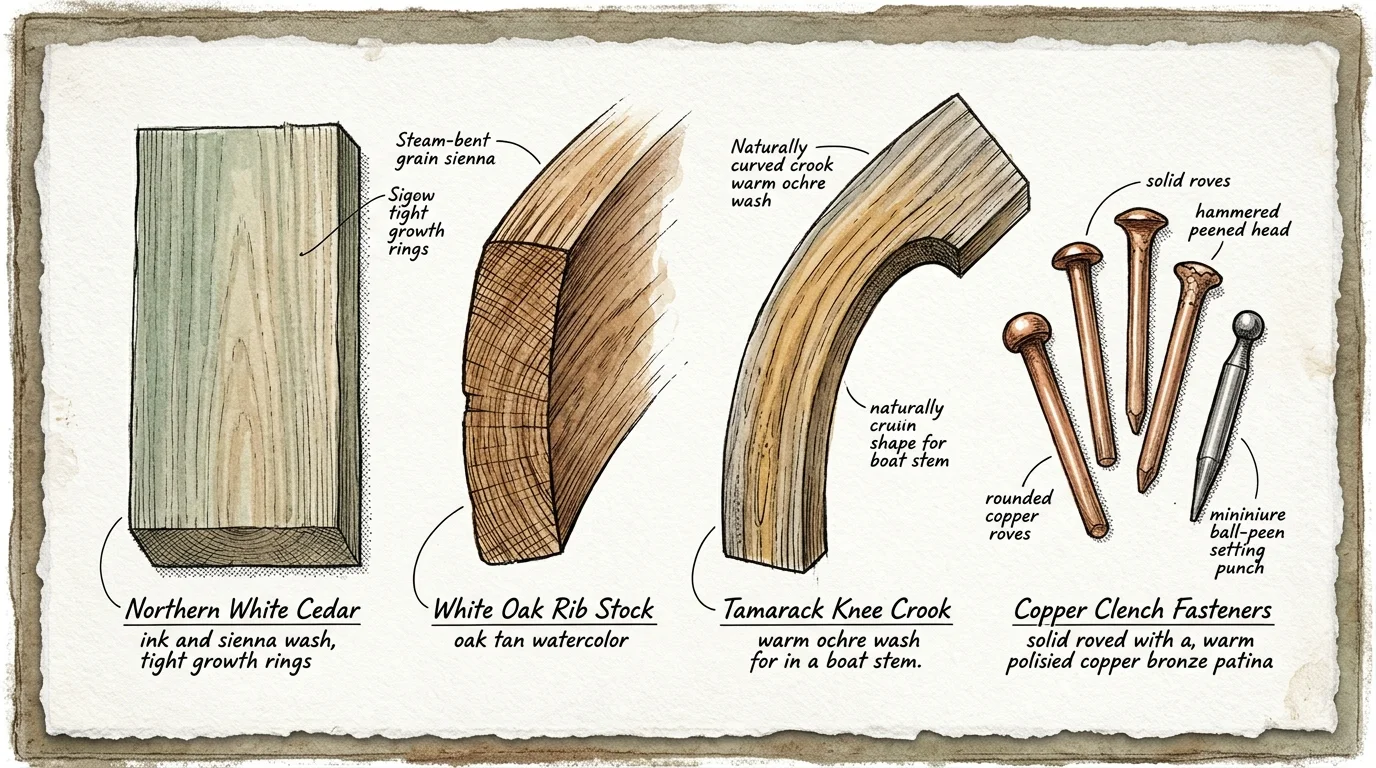
Northern White Cedar and Western Red Cedar remain the premier choices for skiff planking. Marine-grade clear, vertical-grain (CVG) cedar typically costs $10.00 to $18.00+ per board foot.
White cedar provides natural rot resistance and exceptional lightness. Western Red Cedar offers long, knot-free runs ideal for full-length planking without complex scarfed joints.
Steam-bent ribs, transoms, keels, and stems demand FAS-grade White Oak. White Oak contains closed cellular tyloses that block water penetration, unlike porous Red Oak.
Select green or air-dried White Oak runs roughly $6.00 to $10.50 per board foot. Avoid kiln-dried oak, as the industrial heating process crystallizes the wood lignins and prevents successful steam-bending.
Fastener schedules demand identical historical rigor. Never substitute standard marine stainless steel where original copper or silicon bronze belongs.
Follow these material procurement steps before taking an owner’s deposit:
- Inspect regional sawmills in Addison County or the Adirondack foothills for air-dried, quarter-sawn white oak flitches.
- Order cut silicon bronze wood screws and copper roves in bulk to reduce individual unit costs to $0.30 to $0.85 per fastener.
- Calculate fastener density precisely; a standard 14-foot skiff consumes between 800 and 1,500 individual fasteners.
- Procure premium marine spar varnish, such as Epifanes High Gloss, at $45 to $65 per quart.
- Budget for 4 to 6 full quarts of spar varnish to achieve a traditional 7-coat marine finish.
Purchasing high-grade consumables in volume protects your profit margins against sudden supply shocks. Your inventory tracking skills turn lumber storage into an organized corporate asset.

Project Timelines and Worked Financial Example: 14-Foot St. Lawrence Skiff
Underestimating labor hours remains the most common trap for newly independent marine craftspeople. Restorations divide cleanly into cosmetic refurbishments and keel-up structural rebuilds.
Establishing structured billing benchmarks mirrors the business discipline needed when running a garage-based repair workshop.
Much like restoring a classic car, pacing your restoration through clear milestone phases prevents burnout during long structural rebuilds.
A partial cosmetic restoration requires 80 to 150 labor hours. This work covers finish stripping, isolated plank repairs, refastening, and multi-coat spar varnishing.
A full keel-up rebuild demands 250 to 450 labor hours. For a retiree working 12 to 15 hours weekly, a full rebuild spans 6 to 10 calendar months.
Examine this worked financial scenario for restoring a 1908 14-foot Lake Champlain St. Lawrence skiff:
Phase 1: Direct Materials and Consumables
- 45 board feet clear Northern White Cedar planking: $292.50
- 18 board feet air-dried White Oak framing stock: $162.00
- 1,100 solid copper clench nails and roves: $495.00
- 5 quarts Epifanes High Gloss Spar Varnish: $270.00
- Consumables (sandpaper, epoxy barrier coats, tack cloths): $380.50
- Total Direct Materials: $1,600.00
Phase 2: Labor and Overhead Allocation
- Total tracked shop labor: 280 hours
- Artisan billing rate: $55.00 per hour
- Total gross labor billing: $15,400.00
- Total customer invoice (Labor + Materials): $17,000.00
- Shop heating and electrical overhead allocated (5 months @ $250/month): $1,250.00
- Shop insurance overhead allocated (5 months @ $100/month): $500.00
- Total project costs (Materials + Overhead): $3,350.00
- Net Pre-Tax Craft Income: $13,650.00
This financial result yields a net return of $48.75 per working hour after all overhead and materials clear. Completing two similar commissions per season produces over $27,000 in gross supplemental retirement earnings.
The structured tracking of each plank replacement prevents scope creep from eroding your billable margins. Every hour recorded on your timecards protects your artisan profitability.
Mentorship, Youth Apprenticeships, and Local Maritime Networks
Operating a solo shop does not mean working in isolation. Establishing community ties revitalizes both your local craft network and your working stamina.
Organizations like Encore.org highlight how encore careers gain purpose by connecting generational skills through meaningful community service.
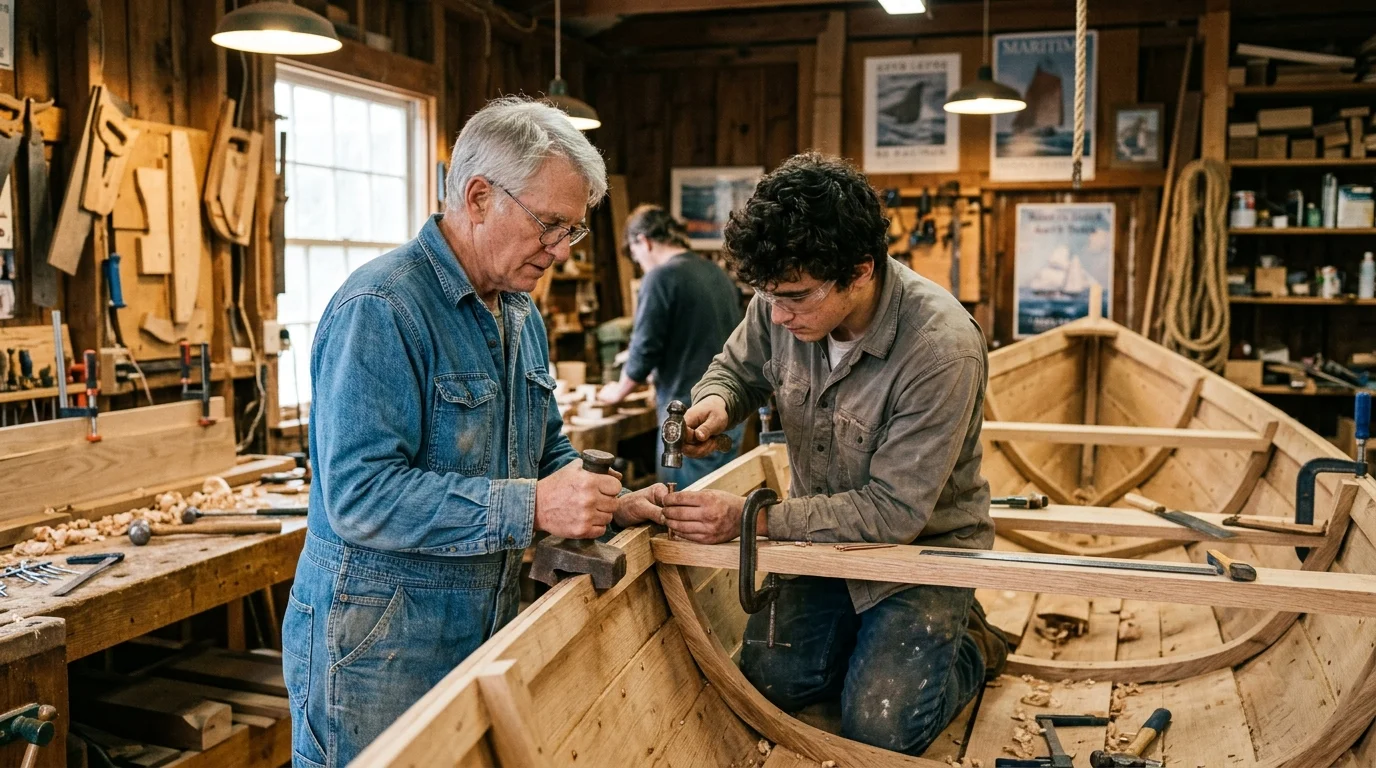
Partnering with regional educational programs connects your workshop to enthusiastic apprentice labor. The Champlain Longboats youth boatbuilding program demonstrates the enduring appetite young adults have for traditional woodcraft.
Taking on an apprentice for 6 to 8 hours per week creates mutual value. The apprentice receives master-level instruction in lofting, steam-bending, and joinery fundamentals.
In return, you gain an indispensable second pair of hands for labor-intensive operations. Clenching copper rivets requires one person driving from the exterior while a second bucks the rove inside the hull.
Structure your apprentice relationships with clear educational benchmarks:
- Establish strict safety certifications covering band saw operation and respirator use with organic vapors.
- Delegate rough stock breakdown and lumber sorting to train their eye for grain orientation.
- Teach steam-box timing protocols where planks must bend within thirty seconds of exiting the box.
- Assign final varnish sanding sequences to develop tactile awareness of wood fairness.
This mentorship dynamic enriches your retirement experience far beyond financial metrics. You transform your workshop into a vibrant local center of living maritime history.
Business Modeling: Artisan Hourly Rates, Contracts, and Tax Strategies
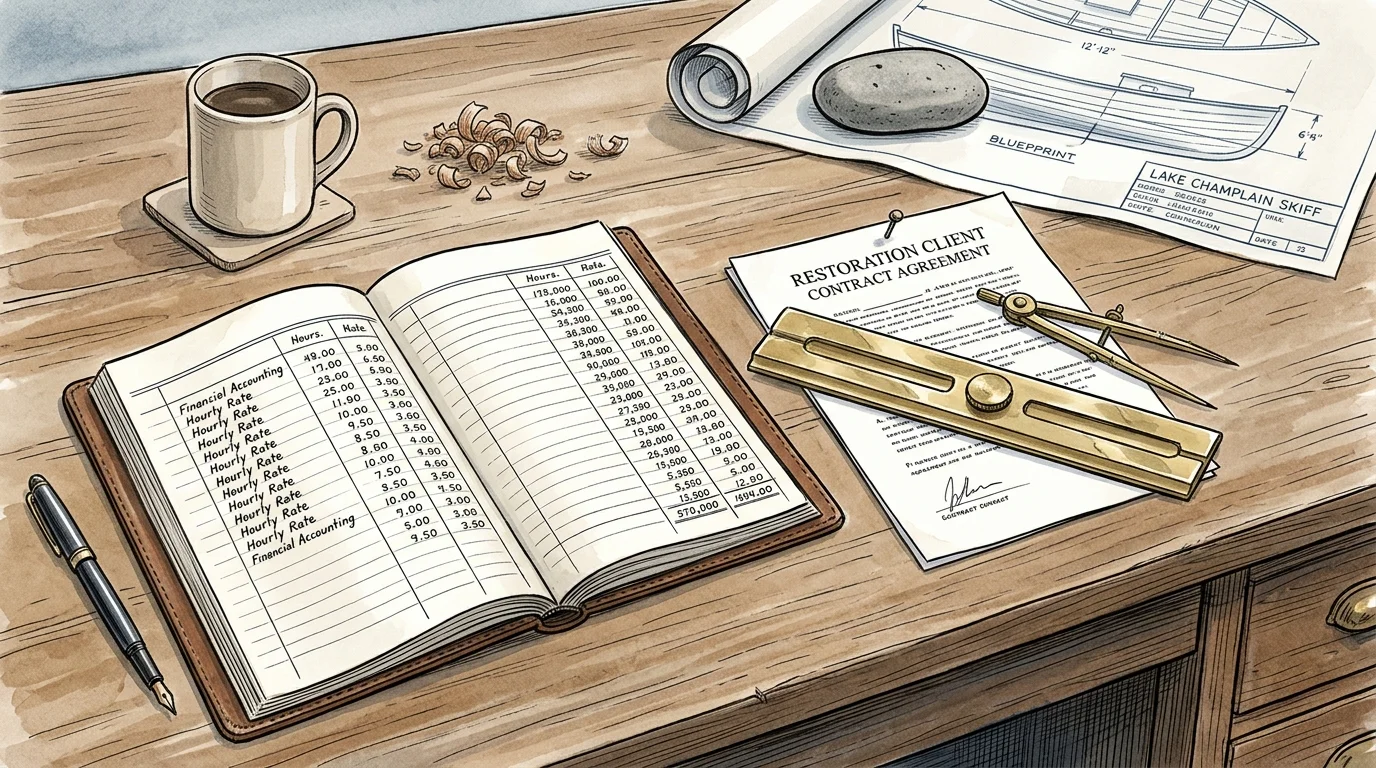
Many hobbyist woodworkers fail to operate as professional entities, exposing their personal assets to liability. You should establish your restoration enterprise as a formal single-member Limited Liability Company (LLC).
Commercial boatyards across Lake Champlain bill out marine carpentry at $75 to $150 per hour. As an independent retiree-craftsman with low overhead, you can price services competitively at $45 to $75 per hour.
Alternatively, pricing completed skiff restorations on a flat commission scale of $6,000 to $14,000 provides clear expectations for private collectors. Flat fees demand rock-solid initial hull condition assessments.
Before launching your commercial entity, consult with experienced business counselors like those at SCORE Mentoring to review your business framework and balance sheets.
Protect your enterprise with a formal restoration contract containing these non-negotiable clauses:
- A 30 percent non-refundable mobilization deposit prior to timber procurement.
- Progress billing milestones tied directly to structural phases (stem/keel repair, rib installation, final varnish).
- A concealed-damage clause allowing price renegotiation if hidden dry rot exceeds five percent of hull area.
- Clear customer storage fees if completed craft are not retrieved within thirty days of launch notification.
- A detailed warranty exclusion for seasonal wood movement caused by owner storage in climate-controlled indoor dry rooms.
Your business structure unlocks substantial tax advantages for equipment depreciation. Section 179 of the IRS tax code permits immediate expensing of qualifying machinery like bandsaws, planers, and dust collection systems.
You can also legitimately deduct the business-use percentage of workshop utilities, property taxes, and business insurance against your commission income. These business deductions significantly lower your overall retirement tax burden.
Frequently Asked Questions
How much shop space do I need to restore a 15-foot wooden skiff?
You need a clean working envelope of at least 12 feet by 24 feet, which equals roughly 300 square feet of dedicated project floor. This footprint allows clear walking room, tool clearance, and plank clamping access along the sheer lines.
Can I bend oak ribs in an unheated Vermont barn during winter?
No, you should never attempt steam-bending in sub-freezing temperatures. Cold ambient air chills hot oak frames within seconds, causing the wood fibers to crack instead of stretching smoothly around the mold.
How much supplemental income can a retired accountant realistically earn restoring boats?
An artisan restorer completing two to three skiff projects annually can realistically earn between $10,000 and $25,000 in net supplemental income. Your actual earnings depend on project scope, billing discipline, and overhead management.
What licensing or commercial insurance do I need in Vermont or New York?
You should register a domestic LLC with your state secretary of state and obtain standard commercial general liability insurance. A policy providing $1,000,000 occurrence and $2,000,000 aggregate coverage protects your personal nest egg against workshop injuries or property damage.
Launching Your Lake Champlain Restoration Chapter
Your analytical discipline, organizational competence, and attention to detail are rare assets in the maritime craft industry. Pairing financial precision with classic woodworking turns retirement into an extraordinary creative triumph.
Every historic cedar skiff you salvage preserves an irreplaceable piece of Lake Champlain’s sporting history. The rhythmic balance of physical labor and shop management keeps mind and body sharp.
Begin scouting local barn finds, build relationships with regional sawmills, and prepare your workshop spaces for winter heating. Your most rewarding career chapter is waiting to be shaped on the workbench.
Disclaimer: This article is for informational and inspirational purposes. Life decisions are deeply personal, and we encourage readers to pursue their dreams while considering their unique circumstances, health, and financial situation.




1 Comment