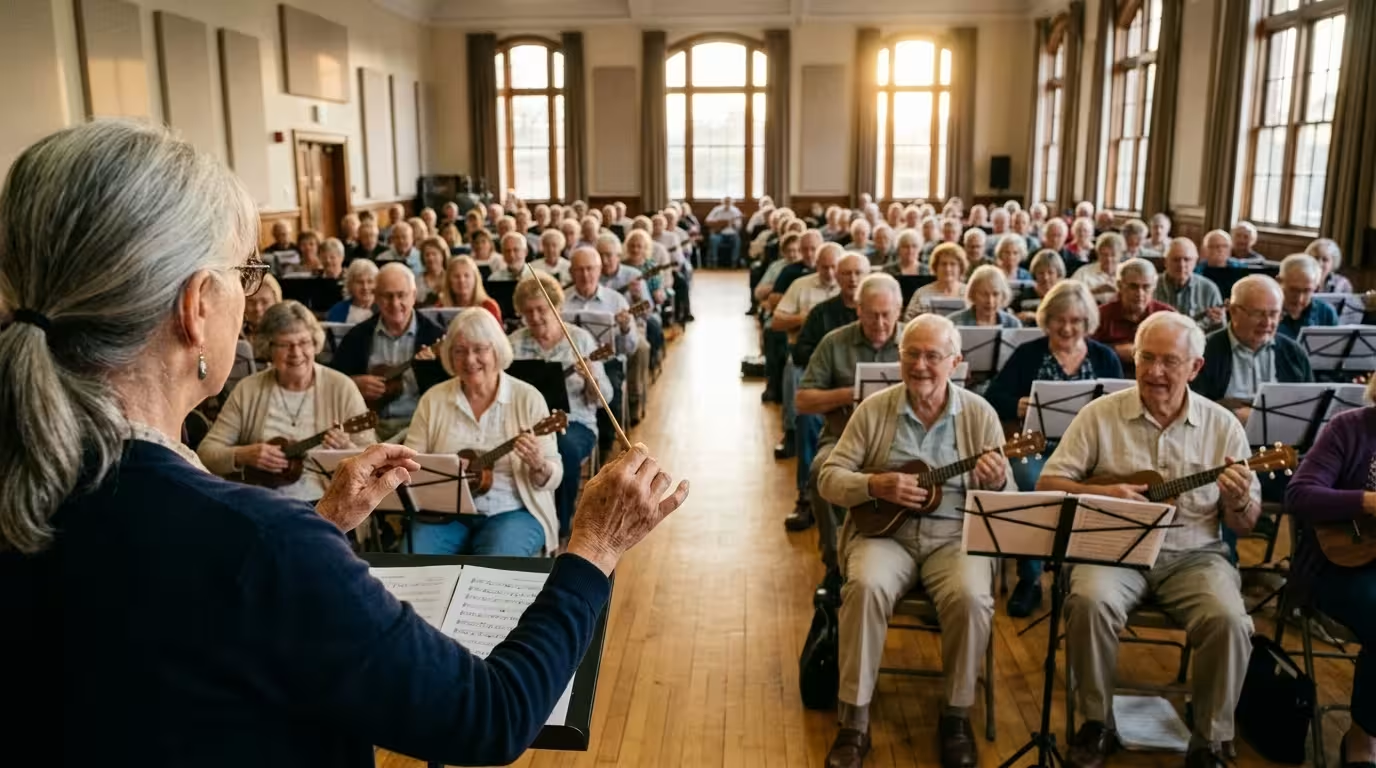
Your career in music education gave you decades of rehearsal podium experience, but retirement offers your most rewarding artistic chapter yet. You can channel those conducting skills into building a vibrant 40-piece senior ukulele orchestra.
Most community strums fail to scale because unamplified acoustic chaos and difficult fingerings discourage beginners. This guide reveals how to simplify notation, secure municipal rehearsal space, and amplify 40 players with balanced clarity.
By mastering chord-stamp transposition systems and tactical sound reinforcement, you will transform amateur players into an ensemble that energizes local community venues.
The Conductor’s Encore: Launching a Large Senior Orchestra
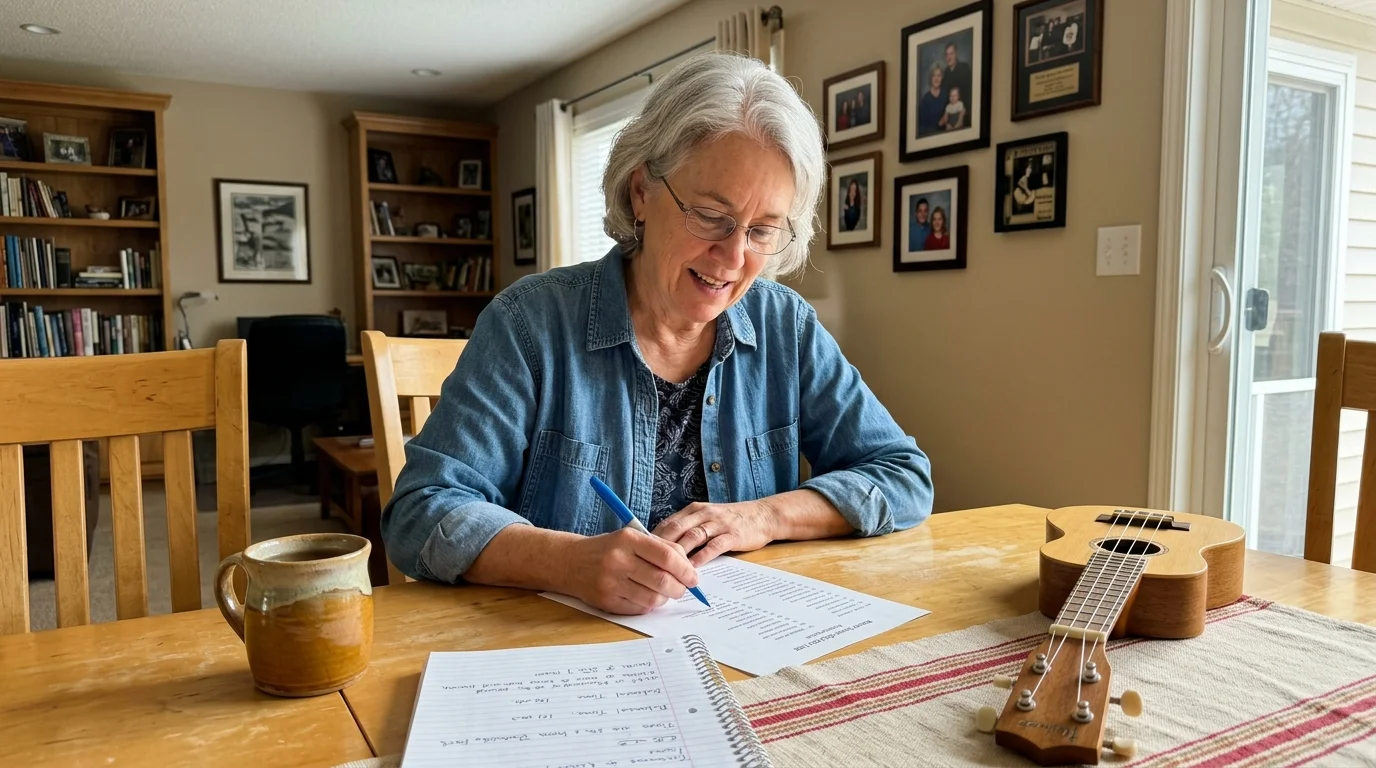
Retirement offers you the freedom to build musical communities on your own terms. Your classroom management background provides the exact organizational framework needed when starting senior ukulele club operations.
Many ensemble recruits also build foundational confidence by taking advantage of tuition-free college classes for seniors to audit music theory or ear-training coursework at local community colleges.
Many older adults long to make music but fear complex notation or difficult physical demands. The ukulele provides an accessible entry point that removes intimidation while delivering immediate, resonant success.
Research highlighted by the National Institute on Aging demonstrates that learning complex, novel musical tasks stimulates cognitive reserve and preserves fine motor dexterity. Group music-making also reduces social isolation by over 20 percent.
Your leadership bridges the gap between casual hobbyists and disciplined ensemble musicians. You are not running an unstructured jam session; you are cultivating an organized orchestra.
Organizations like Encore.org celebrate retirees who apply lifetime competencies to enrich local communities. Directing a 40-piece ensemble allows you to build artistic purpose while creating a cultural asset for your city.
Sheet Music Transposition and Chord Simplification for Aging Fingers
Osteoarthritis, basal thumb arthritis, and reduced joint flexion affect a significant percentage of musicians over age 60. Standard commercial songbooks feature chord voicings that trigger joint inflammation and derail novice players.
Much like adjusting action and string gauges on acoustic guitars for sensitive hands, adapting fretboard fingerings allows older players to make music without physical strain.
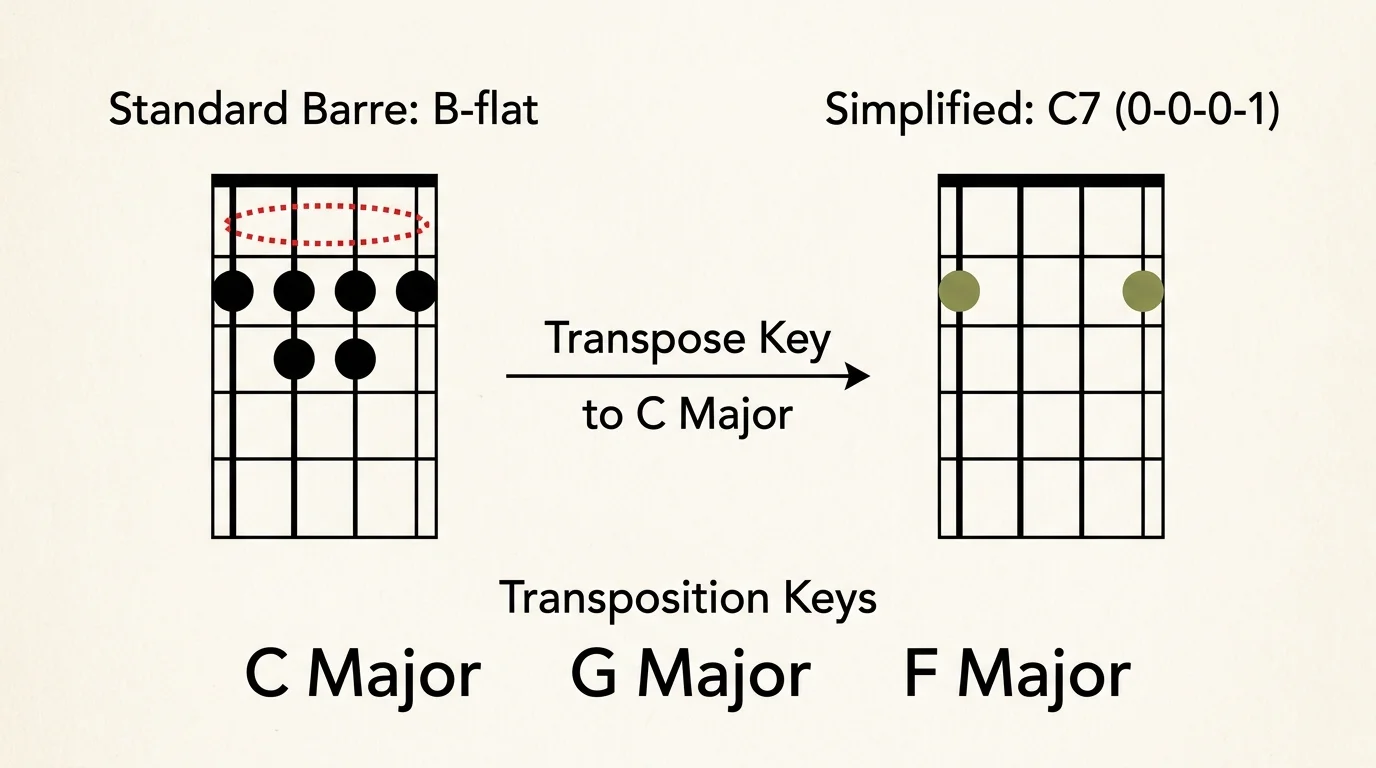
To keep forty musicians playing in clean unison, you must adapt sheet music to physical realities. Eliminating four-finger barre chords transforms frustration into rapid, fluid execution across your entire roster.
Implement a standardized visual chord stamp system on every custom lead sheet. Use self-inking rubber grid stamps to mark ergonomic chord fingerings directly above lyrical cues.
Apply these four transposition and fingering adaptations when formatting repertoire:
- Transpose standard keys into C major, G major, or F major to eliminate the dreaded B-flat barre chord.
- Substitute one-finger C7 (0-0-0-1) or Cmaj7 (0-0-0-2) voicings where standard four-string shifts create rhythmic pauses.
- Replace full E-major chords with an accessible E7 voicing (1-2-0-2), saving players from painful contortions.
- Color-code chord families on scores using high-visibility pastel inks to aid players with low-contrast vision.
A standard 40-piece ensemble creates severe acoustic clutter if all members strum identical open chords. Simplification does not mean sonic thinning; it ensures synchronized chord attacks across the group.
Provide two-finger open alternatives for difficult transitions. For instance, replace standard G (0-2-3-2) with an open G6 (0-2-0-2) for players experiencing reduced index-finger mobility.
Print all ensemble charts in a minimum 16-point bold sans-serif font like Helvetica or Arial. Older eyes struggle under low stage lighting with cramped, standard-issue sheet music.
Sectional Voicing and Layering Forty Acoustic Instruments
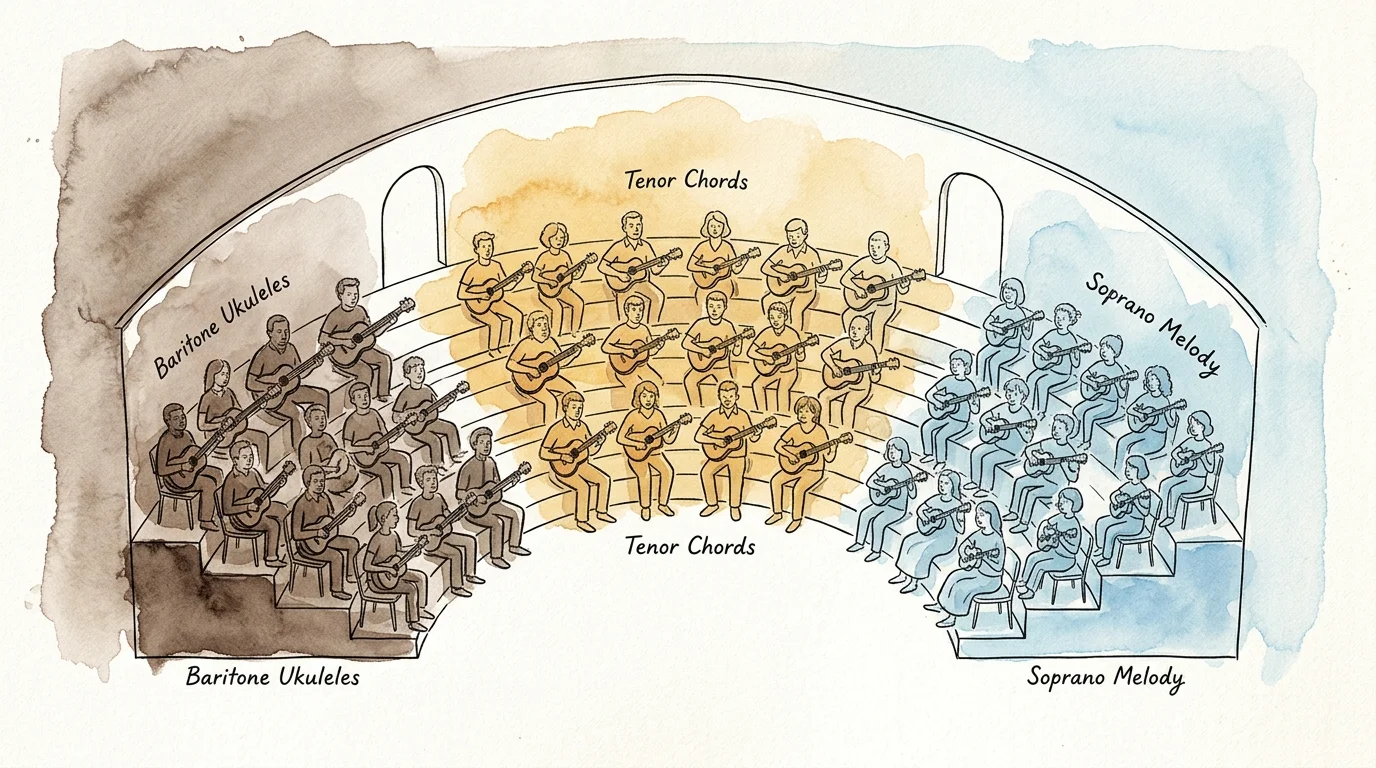
Forty acoustic ukuleles strumming identical down-strokes produce a muddy wall of sound that obscures melody. Successful senior music ensemble organizing relies on clean sectional stratification.
Divide your 40-member group into four distinct functional tiers based on instrument register and player experience. This arrangement mimics the dynamic architecture of a traditional brass or string choir.
- Section 1: Melody Specialists (8 Players) — Experienced musicians playing concert or tenor ukuleles using single-note tab lines or high-register chord melody.
- Section 2: Steady Rhythmic Choirs (18 Players) — Soprano and concert ukuleles executing foundational, simplified two-finger rhythm patterns with soft felt picks.
- Section 3: Harmonic Counterpoint (10 Players) — Tenor and baritone instruments filling mid-range harmony using open arpeggiated fingerpicking.
- Section 4: Low-End Anchor (4 Players) — U-Bass or baritone players providing punchy downbeat roots that stabilize tempo for the entire hall.
Stagger your physical seating configuration to optimize natural acoustic balance during rehearsals. Seat your low-end U-bass players dead center, flanked by your harmonic counterpoint sections.
Place your rhythmic choirs in an arc along the perimeter to surround the stage with steady momentum. Keep your melody specialists front and center where their single-note projection carries cleanly over the rhythm.
Appoint an experienced section leader for each quadrant of the orchestra. These lieutenants correct finger placement, assist struggling neighbors, and maintain focus throughout two-hour rehearsals.
Rehearsal Hall Logistics, Municipal Booking, and COI Requirements
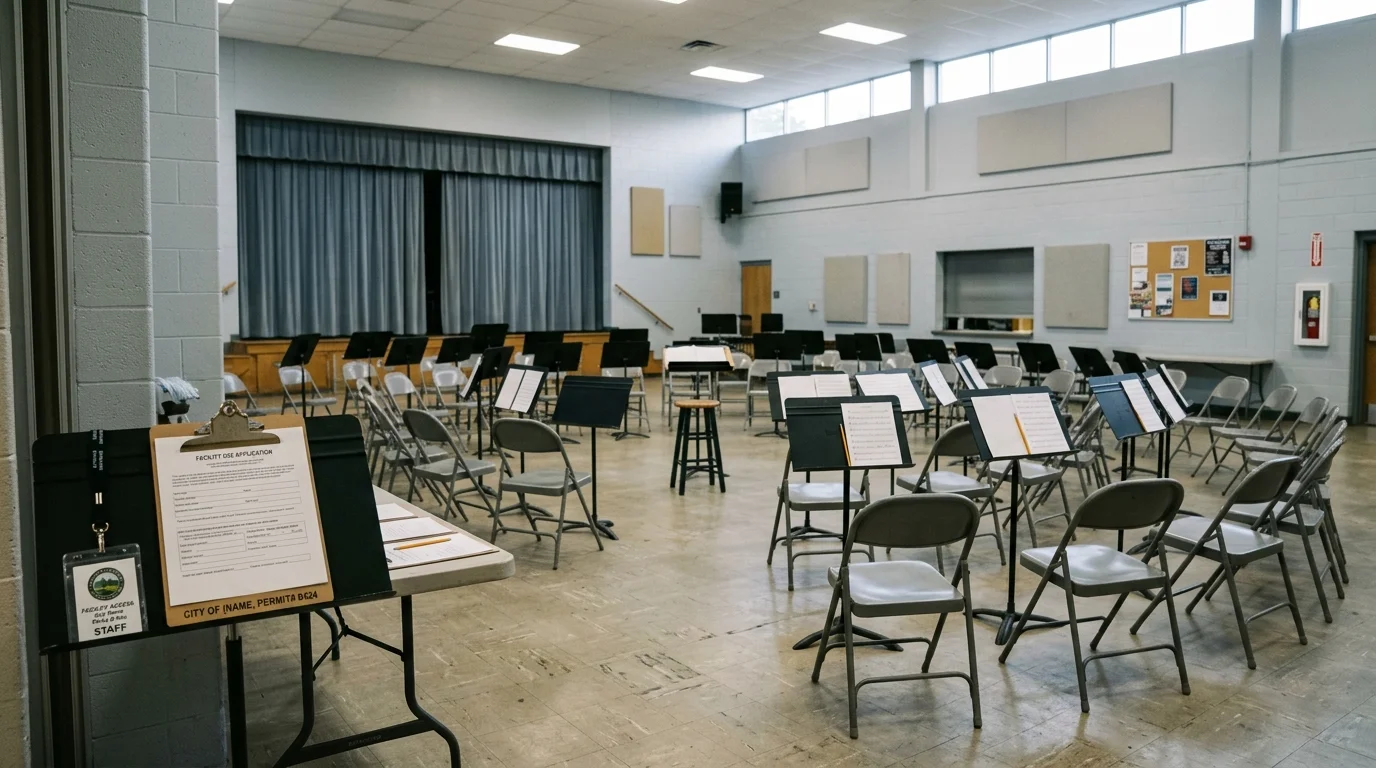
Finding a venue that accommodates 40 musicians, their gig bags, and instrument stands requires calculated planning. Standard living rooms or small library conference rooms fail immediately at this group size.
Target municipal community centers, senior centers, or local park district multipurpose rooms. These facilities offer step-free ADA accessibility, ample parking, and reliable climate control.
Commercial dance studios or private event rooms often charge $80 to $150 per hour. In contrast, municipal resident or non-profit rates range between $25 and $60 per hour.
Follow this facility evaluation checklist before signing a long-term hall reservation:
- Room Dimensions: Reserve at least 900 to 1,200 square feet to seat 40 musicians with 3 feet of elbow clearance.
- Acoustic Surfaces: Avoid rooms with uncurtained walls and bare concrete floors, which create unbearable flutter echoes.
- Access Profiles: Confirm dedicated ramp access and elevator availability for members wheeling instruments or rolling music bags.
- Power Distribution: Verify at least two distinct 15-amp electrical circuits near the performance riser for audio equipment.
Municipal recreation departments almost universally require an official Certificate of Insurance (COI). You must secure private general liability insurance naming the municipality as an additional insured.
Most cities require $500,000 to $1,000,000 in occurrence-based liability coverage to guard against facility damage or slip-and-fall incidents. Single-event or annual arts-group policies cost between $80 and $150 per event through specialty event brokers.
Draft an agreement template before approaching the facility manager. Emphasize that your group provides free civic performances at town celebrations in exchange for discounted rehearsal rental tiers.
Low-Cost Sound Reinforcement and Venue Amplification
Never attempt to mic 40 individual ukuleles with personal pickups or clip-on microphones. This approach creates an audio nightmare of tangled cables, extreme feedback loops, and chaotic balance issues.
Your forty acoustic instruments already generate 85 to 90 decibels of collective sound pressure in an enclosed hall. Your sound system exists solely to amplify lead vocals, solos, and bass definition above the strumming.
An all-in-one portable PA system rated between 375 and 500 watts provides sufficient headroom for senior living auditoriums and community gymnasiums. These units pack into a compact footprint that fits inside a single vehicle trunk.
| System Model | Rated Output (Watts) | Mixer Channels | System Weight (lbs) | Typical Retail Price | Best Ensemble Application |
|---|---|---|---|---|---|
| Yamaha STAGEPAS 400BT | 400W Peak | 8 Channels | 40.3 lbs | $899.99 | All-around clarity for 150-seat civic halls |
| Fender Passport Event Series 2 | 375W Class-D | 7 Channels | 44.0 lbs | $1,099.99 | Intuitive controls for vocal-heavy performances |
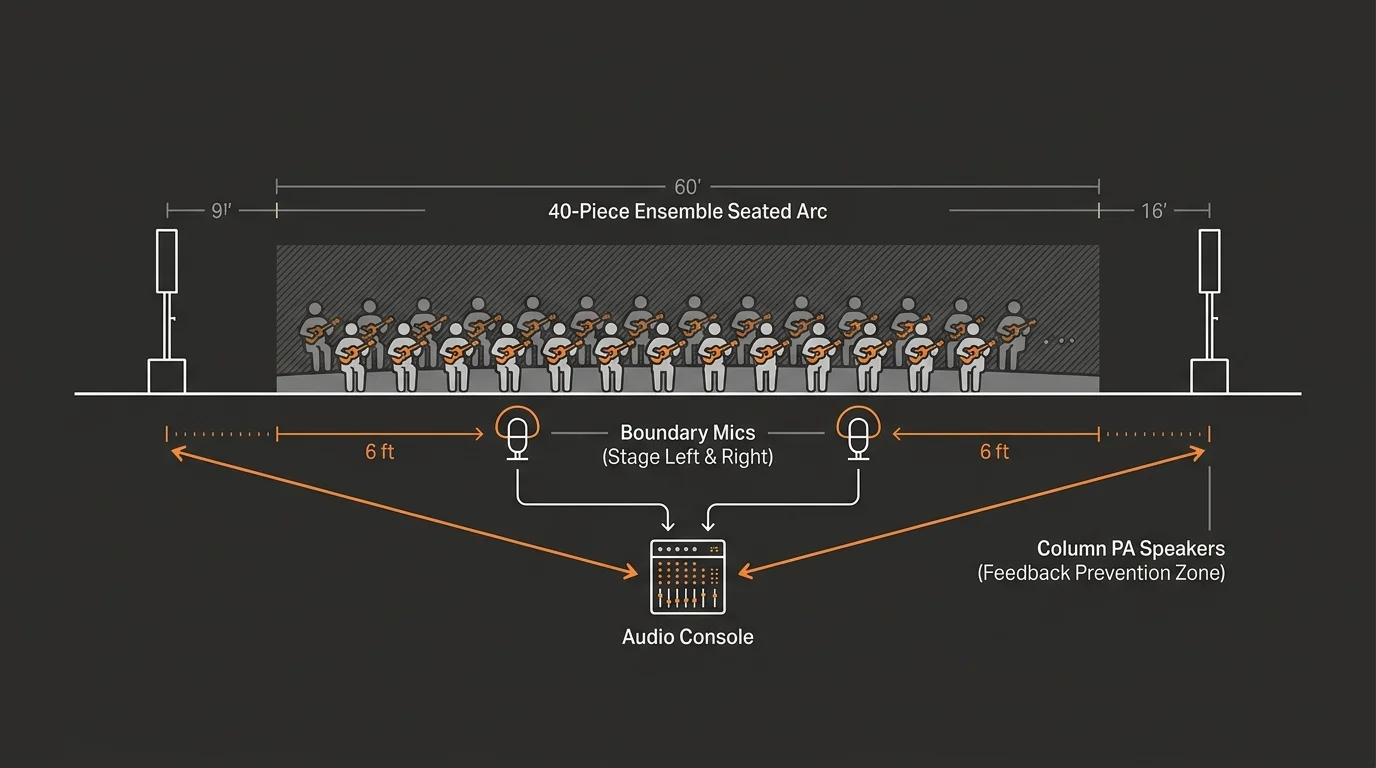
Deploy two wide-cardioid condenser microphones on heavy-base boom stands placed six feet in front of your front row. Angle the capsules 45 degrees downward toward the ensemble to capture balanced room acoustic blend.
Run your U-Bass directly into channel 1 or 2 using a standard direct box (DI box). This bypasses microphone bleed and keeps low-end frequencies tight, punchy, and clear.
Position your PA speaker cabinets slightly ahead of your condenser microphones and elevated six feet on tripod stands. This orientation prevents acoustic feedback while projecting vocal lines directly to seated audience ears.
Budgeting and Launch Timeline: A Worked 40-Player Financial Model
Launching a structured ukulele group for older adults requires financial transparency and predictable scheduling. A self-sustaining model relies on small member dues that cover facility, insurance, and equipment overhead.
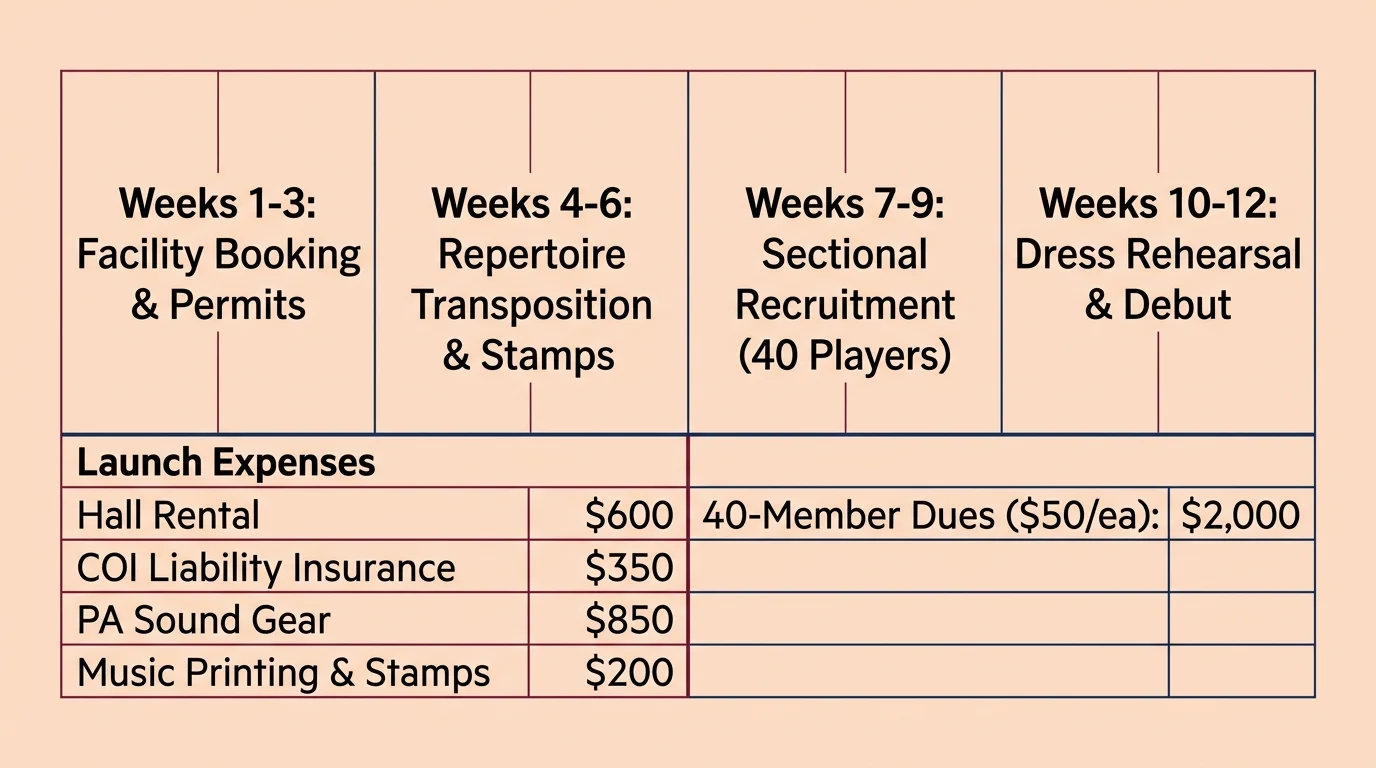
Here is a complete, fully costed 12-week fall rehearsal session leading to a public community debut:
- Municipal Hall Rental: $35/hour × 2 hours weekly × 12 rehearsal sessions = $840.00.
- Liability Insurance Policy: 12-week comprehensive municipal COI rider = $125.00.
- Sound Reinforcement: Yamaha STAGEPAS 400BT system amortized over 40 players = $899.99.
- Ensemble Materials: 40 heavy-duty plastic folders and chord stamps = $185.00.
- Total Program Overhead: $2,049.99 total operational expense.
Divide the $2,049.99 total cost across your 40 enrolled participants. Each musician pays a reasonable one-time seasonal registration fee of $55.00, generating $2,200.00 in total revenue.
This fee structure yields a protective $150.01 reserve fund for spare strings, tuner batteries, and emergency print runs. You deliver a premier educational experience while remaining entirely self-funded.
Execute your ensemble launch using this 12-week operational schedule:
- Weeks 1 to 2: Secure facility contract, issue COI to parks department, and deliver custom large-print binders.
- Weeks 3 to 5: Conduct unison rhythm fundamentals, establish left-hand fingering rules, and isolate bass sections.
- Weeks 6 to 8: Introduce two-part voicing arrangements and test portable PA microphone balance in the space.
- Weeks 9 to 11: Run full dress rehearsals with entrance, stage setup, and exit protocols under performance timing.
- Week 12: Present your 45-minute debut concert at the local civic center or regional library auditorium.
Navigating Public Performance Rights and 17 U.S.C. § 110(4)
Performing popular repertoire from the Great American Songbook or 1960s pop catalog raises immediate questions about public licensing. Directors often worry about steep fines from licensing agencies like ASCAP, BMI, or SESAC.
Fortunately, United States copyright law provides clear legal protection for community-driven senior ensembles. You do not need expensive commercial performance licenses when operating within clear educational and civic parameters.
Under Section 110(4) of the U.S. Copyright Act (17 U.S.C. § 110(4)), non-dramatic musical performances remain exempt from licensing fees if they meet specific criteria. Your ensemble fits this statutory safe harbor precisely.
To maintain full legal exemption under federal copyright law, ensure your performances satisfy these three strict rules:
- The performance must operate without any direct or indirect commercial purpose.
- None of the performers, organizers, directors, or promoters can receive financial compensation for their performance.
- No admission fee may be charged to attendees (or if admission is charged, all net proceeds must go directly to educational or charitable causes).
When booking shows at local parks or senior centers, keep your concerts free and open to the public. If a venue sells general admission tickets, verify that the host facility holds blanket institutional licensing.
This federal exemption allows your 40-piece ensemble to bring classic, recognizable music into the community freely. You can share joyful performances across your city without bureaucratic anxiety.
Frequently Asked Questions
What is the ideal ukulele size distribution for a 40-piece senior ensemble?
Aim for 20 concert ukuleles, 10 tenor ukuleles, 6 soprano ukuleles, and 4 U-bass instruments. Concert and tenor frames feature fret spacing that accommodates arthritic hands comfortably without feeling cramped.
How do we handle members who cannot read traditional sheet music?
Utilize stylized chord-over-lyric lead sheets enhanced with large chord-fret stamps. Avoid complex standard notation; instead, train beginners to follow rhythmic strum arrows and lyric cues while your section leaders guide pacing.
Can we plug our ukuleles directly into an audio mixer?
Avoid direct inputs for standard ukuleles because handling 40 active cables creates severe tripping hazards and ground hum. Amplify the room naturally using two high-quality condenser microphones, running only the U-bass direct.
How do we recruit 40 older adult players in a single community?
Advertise free workshops through municipal community centers, public library flyers, and local senior centers. Host an initial instrument petting zoo event where prospective players can try different ukulele sizes before registering.
Disclaimer: This article is for informational and inspirational purposes. Life decisions are deeply personal, and we encourage readers to pursue their dreams while considering their unique circumstances, health, and financial situation.