
A solo American retiree living on Social Security or a modest pension can relocate unassisted to Castelo Branco for under €1,400 per month. Coastal guides advising newcomers to handle tax numbers and leases after landing cause rejected D7 visas and insurance gaps.
Locking down your tax registration, domestic bank deposit, and registered lease in strict pre-departure order eliminates agency retainers and keeps overhead at €1,338 monthly. Following this six-step sequence lets you launch an invigorating second act without costly missteps.

Securing a Remote Portuguese Tax Number and Domestic Bank Deposit
First, before browsing apartments or booking consular dates, obtain a Portuguese taxpayer identification number (NIF) and open a local bank account. This step touches your registration with the Autoridade Tributária and a checking account at Caixa Geral de Depósitos or Novobanco.
Because you cannot visit a Finanças counter before leaving the United States, appoint a remote fiscal representative online and confirm the provider’s upfront fee before ordering. Waiting until arrival blocks you from opening the bank account required for your visa.
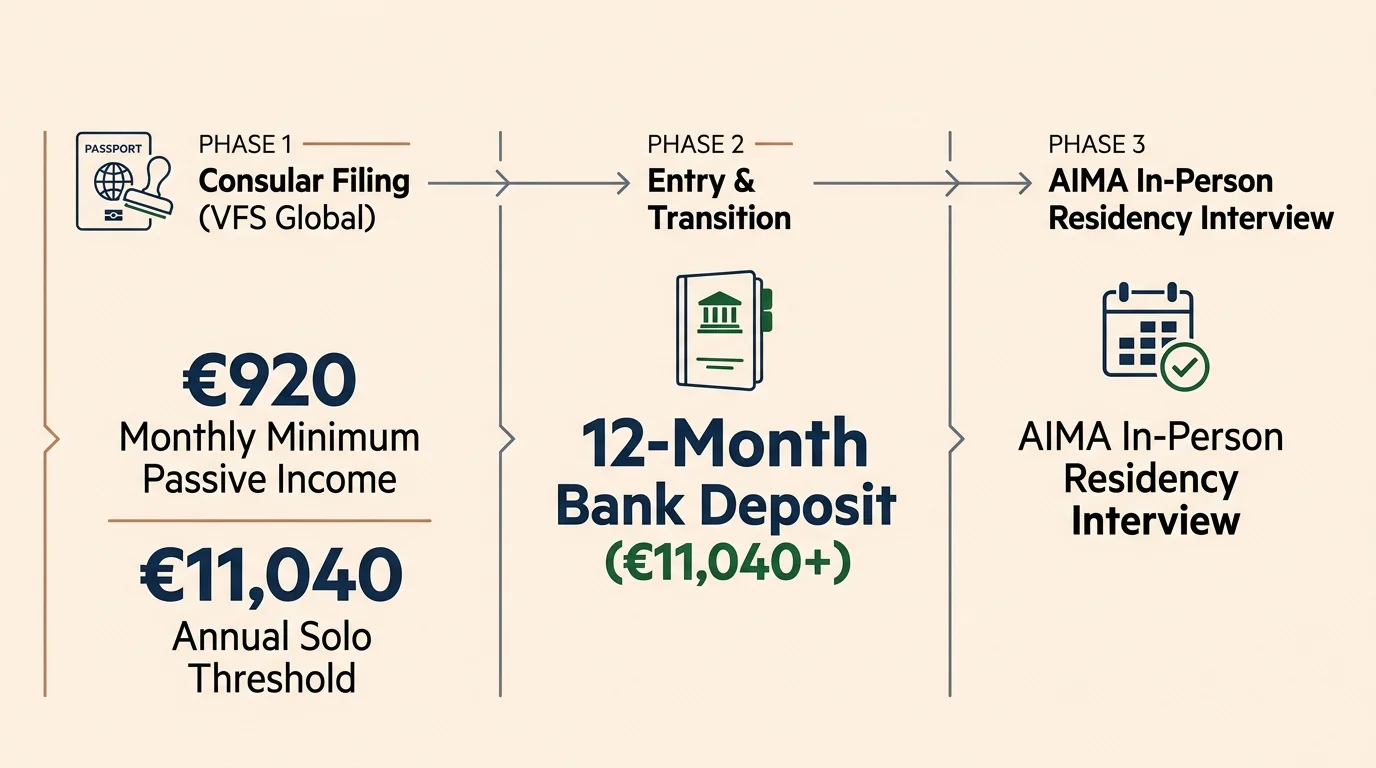
Immigration officials reject foreign bank statements, so deposit at least 12 months of living expenses totaling €11,040 into your Portuguese account. That balance satisfies the €920 monthly threshold, while proving €1,500 to €2,200 in regular pension income strengthens approval.
Building liquid cash often starts by downsizing for freedom, much like retirees weighing full-time RV living. Before moving on, check that your bank issues a stamped declaration displaying your name, NIF, and balance above €11,040.
Registering a Castelo Branco Lease on Portal das Finanças
Second, sign a 12-month residential lease in Castelo Branco before scheduling your consular visa appointment. This step touches your Portuguese checking account and the national tax portal, Portal das Finanças.
Unlike overpriced Lisbon or the Algarve, Castelo Branco pairs modern clinics, municipal gardens, and regional rail lines with modest rents. Some prospective expats test inland towns first by house-sitting across Europe before committing.
As a sample budget, a retiree earning a $2,400 net monthly pension (roughly €2,200) might rent a furnished 68-square-meter one-bedroom (T1) apartment for €500.00 monthly. Without local tax history, landlords commonly require €2,000 upfront covering two months advance rent plus two months security deposit.
Prevent wire fraud by requiring a written Contrato de Arrendamento listing the landlord’s legal name, tax number, and property address. Confirm the owner registers that contract on Portal das Finanças before wiring from your Portuguese IBAN.
Before moving on, check that you hold the official stamped Portal das Finanças registration receipt matching your lease dates and passport name. Consular officers reject unregistered private rental agreements.

Filing the D7 Consular Dossier and Entry Insurance via VFS Global
Third, lodge your D7 passive income application through VFS Global in the United States while your FBI background check remains within its 90-day Hague Apostille window. This step touches the VFS Global portal, federal apostille records, and entry travel insurance.
Compile these eight documents in exact order before your VFS Global appointment:
- Valid passport with at least six months remaining validity and two blank pages.
- Two recent color passport photos meeting Schengen biometric standards.
- Certified Social Security award letters, pension statements, or annuity distributions.
- Portuguese bank statement showing your NIF and an opening balance above €11,040.
- Registered 12-month Castelo Branco lease receipt or property deed.
- FBI criminal history background check with a Hague Apostille issued within 90 days.
- Travel medical policy offering €30,000 coverage and evacuation, costing around €310.
- Brief personal statement explaining your move to Central Portugal.
Pay the €110 visa fee plus approximately €40 in VFS processing charges. Unlike other frugal retirement tradeoffs, inland Portugal locks down predictable baseline costs before departure.
Before moving on, check that the 120-day double-entry visa placed inside your passport includes a scheduled appointment link with AIMA.

Transferring Utilities and Binding Over-65 Private Insurance
Fourth, immediately upon arriving in Castelo Branco, transfer household utilities into your name before the first billing cycle. This step touches local accounts with EDP Comercial, SMAS Castelo Branco, telecommunications provider MEO, and a domestic insurer.
Bring your passport, NIF, Portuguese IBAN, and stamped lease to local utility desks. Fixed inland bills mirror living solo on a $2,200 monthly budget.
In a sample monthly budget, €500.00 for rent, €82.00 for EDP electricity and gas, €23.00 for SMAS water, €45.00 for MEO fiber internet and mobile, €245.00 for groceries, €160.00 for dining, €35.00 for transit, €110.00 for incidentals, and €138.00 for senior insurance total €1,338 monthly (€16,056 yearly).
Basic Portuguese plans often cap enrollment between ages 65 and 70, creating a coverage trap for retirees arriving without domestic underwriting. Portuguese senior health plans accepted at private CUF and Hospital da Luz clinics—such as Multicare 60+ and Generali Tranquilidade Saúde +55 (note that Médis Vintage is discontinued)—require personalized age-banded quotes and underwriting simulations rather than flat public tariffs:
- Basic outpatient tiers: Start from €12–€40 per month (Generali Tranquilidade Saúde +55 starts from €12 per month for basic outpatient access).
- Comprehensive hospitalization coverage (age 65+): Typically ranges from roughly €100 to €250+ per month depending on coverage limits and medical underwriting.
Disclose pre-existing conditions honestly and inspect the Condições Gerais waiting periods, which run 60 days for routine consults up to 365 days for major surgery. Before moving on, check that paid utility bills show your Castelo Branco street address.
Completing AIMA Biometrics and Enrolling in Public SNS Healthcare
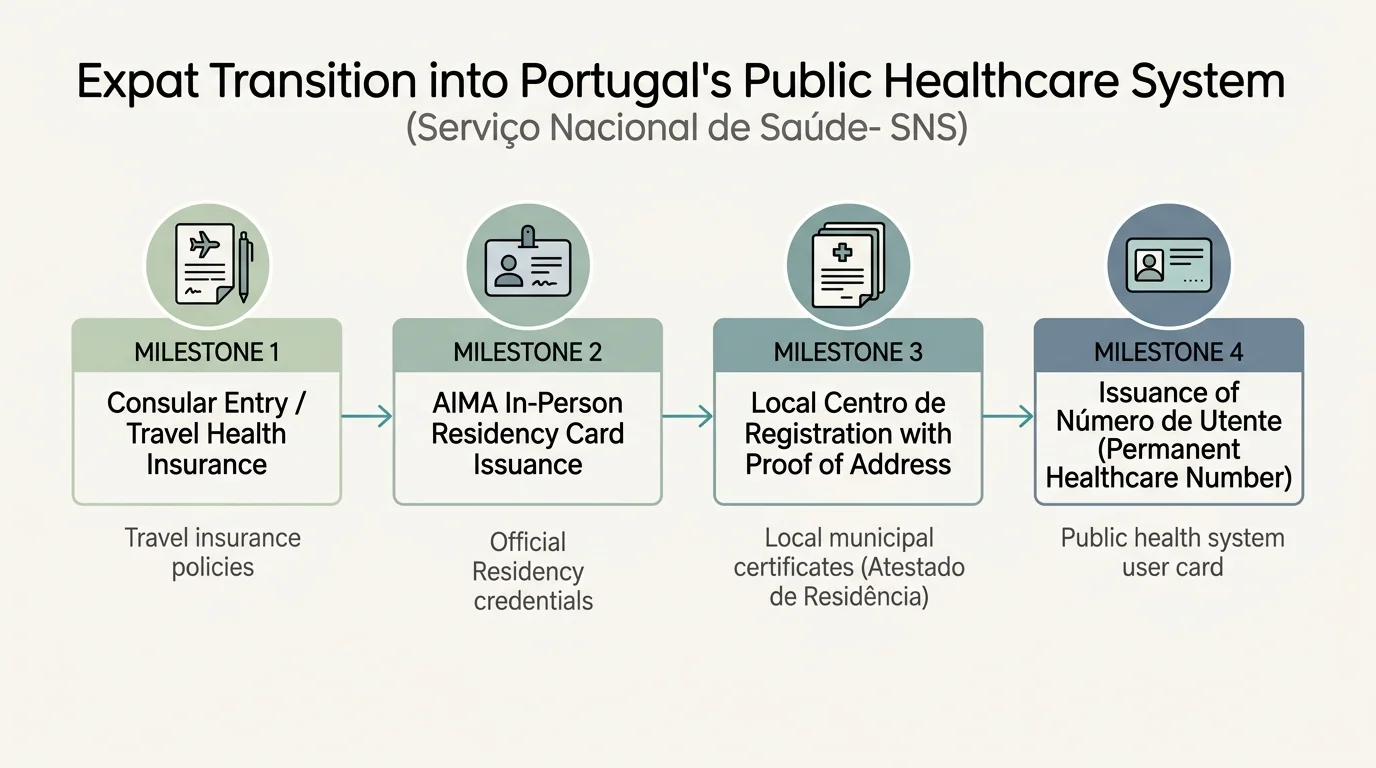
Fifth, attend your AIMA biometric interview before your 120-day entry visa expires, then register in the Serviço Nacional de Saúde (SNS). This stage touches your AIMA permit, parish Atestado de Residência, and clinic Número de Utente.
You cannot enroll in the SNS using your initial 120-day travel visa. At AIMA, verify original records, provide fingerprints, and pay roughly €150 to €170 for a two-year physical residence card.
Once your card arrives, visit the Junta de Freguesia with your lease and two registered local voters to obtain an Atestado de Residência. Present that certificate alongside your passport, residence card, and NIF at your regional Centro de Saúde.
Clerks assign your permanent Número de Utente free within two to four weeks. Under Decreto-Lei n.º 37/2022, public primary visits and diagnostic scans carry zero fees, and calling SNS 24 (808 24 24 24) avoids €14 to €18 emergency copays.
Walkable errands foster daily physical activity, which National Institute on Aging research links to cognitive vitality. Before moving on, check that your printed Número de Utente is active before dropping entry travel coverage.

Filing Post-NHR Taxes and Protecting Your €860 Monthly Surplus
Sixth, retain a licensed certified accountant (Contabilista Certificado) during your first autumn in Portugal, before crossing 183 days of residency. This step touches your annual IRS tax return filed with the Autoridade Tributária on Portal das Finanças.
Outdated internet claims still promise a 10 percent Non-Habitual Resident (NHR) rate, yet Portugal closed that regime to new applicants after 2023. Spending over 183 days annually subjects worldwide income to progressive IRS brackets from 13.25 percent to 48 percent.
Under the U.S.–Portugal tax treaty, U.S. civil-service pensions paid to non-Portuguese nationals are generally taxed only by the U.S. (Article 21), and U.S. Social Security benefits may also be taxed by the U.S. (Article 20(1)(b)). Private pensions and retirement distributions are taxed primarily in Portugal, and because U.S. citizens remain subject to annual IRS/FBAR filing under the treaty’s Saving Clause, retirees generally claim Foreign Tax Credits on their U.S. return to offset Portuguese taxes paid. AARP urges consulting cross-border tax specialists, and local accountants typically charge €300 to €600.
Adding a €2,000 lease deposit, €150 visa fee, €165 AIMA card fee, and €310 entry insurance to €16,056 in living costs puts total first-year spending at €18,681. On a €2,200 monthly pension, that still leaves more than €860 in monthly surplus.
That cushion funds guilt-free travel around continental Europe, regional cultural trips, walking the Portuguese Camino, or hosting family for a budget-friendly Portugal vacation with financial freedom to travel.
Community Portuguese classes foster authentic community and adventurous cross-cultural learning highlighted by Road Scholar. Before moving on to biennial permit renewal, check that your accountant delivers a stamped electronic filing receipt from Portal das Finanças.

Disclaimer: This article is for informational and inspirational purposes. Life decisions are deeply personal, and we encourage readers to pursue their dreams while considering their unique circumstances, health, and financial situation.