

A solo retiree living alone manages home maintenance chores while dealing with hand osteoarthritis and aging balance. Taking on the wrong indoor repairs without assistance risks severe injury or expensive structural damage.
Adults 65 and older average an estimated 53,100 emergency-room ladder and step-stool fall injuries each year, based on 2022–2023 CPSC data. Drawing a firm boundary at ground level keeps routine home upkeep safe, budget-friendly, and manageable for a single resident.
The Low-Climb Fall Trap on Step Stools and Stepladders
Solo homeowners often assume climbing two steps to clean a fixture or dust a ceiling vent carries negligible risk. That casual assumption triggers emergency-room visits that jeopardize personal independence.
Of those 53,100 annual CPSC-tracked ladder-fall visits, 38,700 involve other or unspecified ladders, 8,200 involve step stools, and 5,800 involve stepladders. Even minor indoor elevation removes stable floor contact when hand arthritis weakens an overhead grip.
Falls drove roughly 4.5 million emergency visits among adults 65 and older in 2024 per CDC older adult fall data. Even on a low step stool, OSHA ladder safety guidance requires three-point contact, level footing, and staying off the top step.
The cause of this failure is treating low indoor climbs differently from outdoor roof work. When you live alone, any loss of balance leaves you without immediate physical assistance.
The fix is adopting an absolute zero-ladder DIY rule that restricts all solo maintenance to floor level. Pair strict ground-level repairs with daily balance exercises to protect your stability across everyday floor surfaces.
Outsource roofline gutter cleaning, second-story exterior painting, and overhead fixture repairs to insured contractors. Never climb a step stool alone in an empty house.
The Plumbing Torque Trap with Brute Force and Caustic Cleaners
Minor plumbing leaks under kitchen and bathroom sinks quickly spiral out of control when stiff arthritic fingers fight seized fittings. Solo homeowners frequently grab heavy wrenches or dump corrosive store-bought chemicals into sluggish drains.
Silent toilet leaks waste thousands of gallons a year without dripping onto the floor. Homeowners often try bending float arms or overtightening brass nuts, cracking brittle plastic valves or shattering aged porcelain tanks.
Another common misstep is following advice to pour baking soda and vinegar down a slow drain. Mixing a base and an acid simply neutralizes both into water, sodium acetate salt, and carbon dioxide fizz, leaving hair and soap grease intact.
Reaching for caustic lye cleaners is an equally dangerous shortcut. These corrosive chemicals cause severe skin and eye burns and fail to dissolve dense mechanical hair blockages.
The cause is relying on chemical shortcuts or brute wrist force instead of low-torque mechanical methods. Arthritic hand joints cannot safely absorb the twisting strain of stuck metal pipe connections.
The fix begins with the simple EPA WaterSense toilet leak test. Put a few drops of food coloring in the tank; if color reaches the bowl within 10 minutes, replace the rubber flapper.
Replacing an adjustable fill valve or flapper requires zero climbing and minimal hand strength. Turn the supply knob slowly, towel-dry the tank base, and hand-tighten plastic locknuts rather than forcing them with pliers.
Clear bathroom hair blockages using a barbed plastic drain snake and a flanged plunger. For kitchen grease, flush with hot water and dish soap or use an enzymatic cleaner instead of hazardous chemicals.
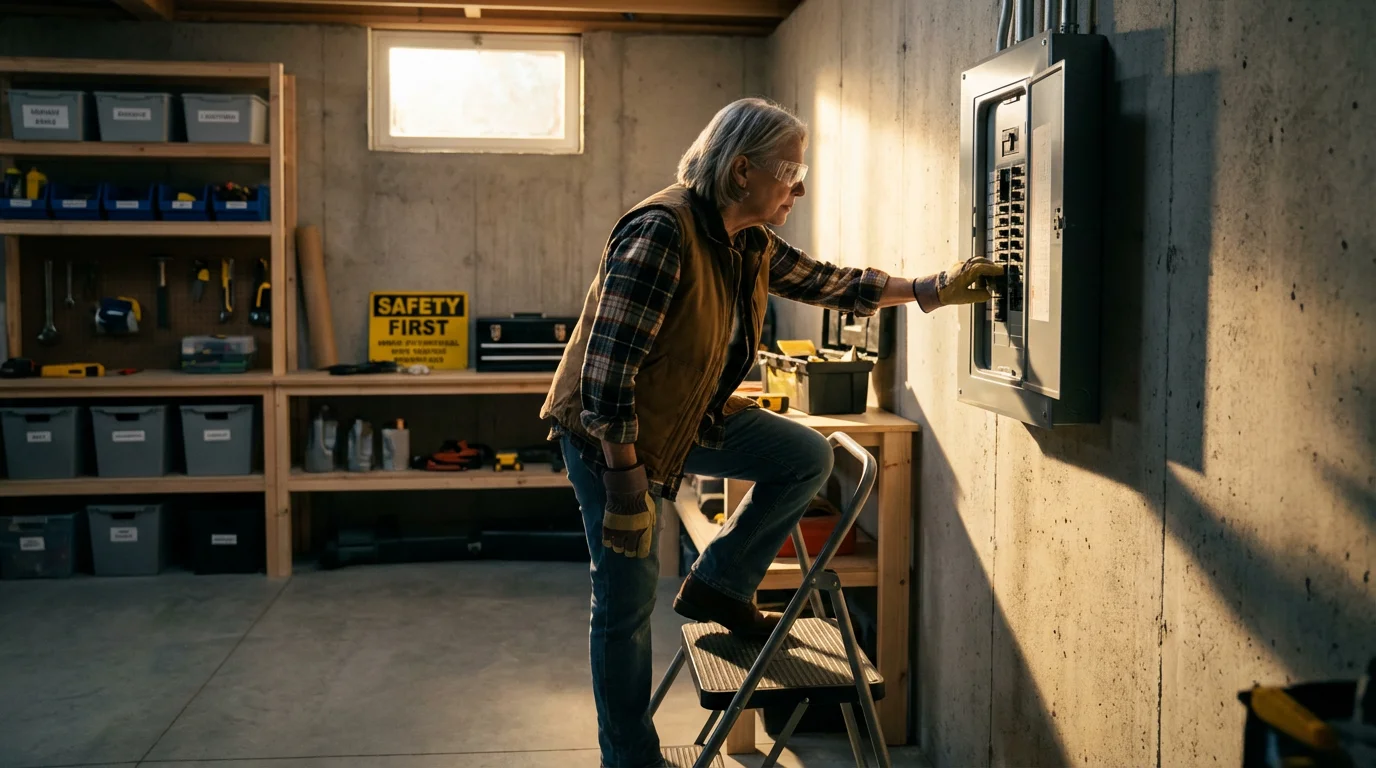
The Dim Electrical Trap and Skipped Voltage Verification
Older homes feature aging toggle switches, loose wall receptacles, and crowded circuit panels. Dim hallway lighting and reduced low-light vision turn routine switch plate updates into hazardous electrical surprises.
A homeowner frequently assumes flipping a wall switch off cuts all electrical current to the box. In multi-wire branch circuits or shared outlet boxes, live conductor wires often remain active behind the wall.
Twisting manual screwdrivers against stubborn terminal screws strains thumb joints and strips screw heads. Working in poorly lit alcoves prevents an aging eye from reading faint circuit index cards or identifying oxidized copper wiring.
The cause is relying on assumptions and inadequate lighting when working around residential house wiring. Dim vision and thumb osteoarthritis make fast, safe wire manipulation difficult.
The fix requires upgrading your ground-level electrical toolkit. A non-contact voltage tester like a Fluke VoltAlert checks outlets and switch boxes before your hands touch any metal screws or faceplates.
Shut off the specific branch breaker and verify power with a live-dead-live check: test a known live outlet, test the target switch, then retest the live outlet. If an outlet shows warm faceplates, a tripped main breaker, or damaged wiring, call a licensed electrician.
Wear a rechargeable 300-lumen headlamp to keep both hands free in dark closets and beneath sinks where eyes lose contrast. A 12V brushless installation driver like the Milwaukee M12 FUEL delivers up to 300 in-lbs of max torque with offset heads, sparing your wrists.
Test built-in GFCI buttons monthly across bathrooms, kitchens, and garages. If you add battery deadbolts or nightlights, follow smart-lock and home safety routines to manage maintenance on a firm schedule.
The Dryer Exhaust Fire Trap and Restricted Airflow
Dryer lint buildup creates an insidious fire hazard that hides behind heavy laundry appliances. A single homeowner managing a utility room alone often neglects the exhaust run to avoid wrestling heavy machinery across flooring.
Many older installations still rely on crushed foil accordion flex ducting behind the dryer. These ridged foil tubes trap combustible lint within their internal ribs and kink shut whenever the dryer slides against the back wall.
Lint buildup inside dryer ducts causes thousands of home fires every year. Restricted exhaust airflow also forces the heating element to run hotter and longer, driving up utility bills and wearing down machine bearings.
The cause is deferred maintenance caused by difficult appliance access and flexible hose materials that bend easily out of shape. Moving appliances without floor protection risks lower-back strain or painful joint flare-ups.
The fix follows verified U.S. Fire Administration dryer safety steps. Empty the lint screen after every single load, and clean the exhaust duct at ground level twice a year.
Unplug the appliance, slide it forward on low-friction pads, and vacuum behind the cabinet. Replace fragile foil accordion hoses with smooth rigid or semi-rigid metal ducting that resists crushing and lint accumulation.
Walk outside to confirm the exterior flapper hood opens freely while the dryer runs. If your home exhausts through a roofline or second-story duct, hire a professional duct-cleaning service rather than climbing outside.
The High-Tension Mechanism Trap in Garages and Bathrooms
Certain heavy mechanical components store massive kinetic energy that can unleash catastrophic force in milliseconds. Solo retirees often underestimate the mechanical danger inside overhead garage systems and improperly anchored safety rails.
Garage door torsion and extension springs counterbalance hundreds of pounds of door weight. Attempting to adjust these steel springs with basic hand tools can cause severe or fatal injuries if a winding bar slips from an arthritic hand.
A related structural trap occurs when homeowners mount bathroom grab bars directly into hollow drywall with plastic expansion anchors. Hollow wall anchors cannot withstand dynamic bodyweight during an unexpected slip or fall.
National Institute on Aging guidelines prioritize bathroom grab bars, secure railings, and upgraded lighting before cosmetic remodeling. However, securing hardware requires proper backing rather than simple surface screws.
The cause is misunderstanding structural load requirements and failing to identify pro-only tension mechanisms. A single homeowner cannot safely brace heavy mechanical assemblies or verify structural framing behind tile alone.
The Door and Access Systems Manufacturers Association classifies garage springs and lift cables as strictly pro-only repairs. Confine your garage maintenance to spraying silicone lubricant onto roller bearings, wiping photo-eye sensors, and testing safety auto-reverse mechanisms.
For bathroom safety additions, consult our home modification planning guide and check specs in the AARP HomeFit Guide. Hire a licensed remodeler to install solid wood blocking behind drywall so grab bars reliably withstand the required 250-pound pull force.
The Fatigue Trap and Unstructured Work Sessions
Joint pain and physical fatigue accumulate rapidly when working in awkward positions around the house. Pushing through joint discomfort leads to dropped tools, rushed decisions, and sloppy reassembly.
The cause of physical fatigue traps is working without joint support or attempting open-ended project marathons. Kneeling on bare tile compresses delicate knee bursae and aggravates lower back stiffness.
The fix is capping maintenance sessions at two hours and using joint-protective gear. A 1.5-inch closed-cell high-density foam kneeling pad cushions knees during baseboard caulking, toilet repairs, and lower-cabinet hinge adjustments.
Take a five-minute stretch break every 30 minutes, keeping lifted loads close to your torso. Consult your doctor or physical therapist about which kneeling postures suit your joints, and borrow specialized tools from a neighborhood tool lending library to avoid storing heavy equipment.
Assemble all required tools onto a single kitchen tray before starting work to avoid unnecessary trips across the house. Tackle four ground-level chores during a two-hour weekend window:
- Run the 10-minute toilet dye test to catch silent tank leaks.
- Clear lint from your ground-level dryer path and inspect the outdoor hood flapper.
- Swap a high-traffic round doorknob for an arthritic-friendly lever handle using your 12V driver.
- Press and reset every ground-level GFCI test button across kitchens, bathrooms, and garage outlets.
Write your circuit breaker numbers, furnace filter dimensions, and toilet flapper sizes inside a dedicated kitchen notebook. Having exact specs ready turns hardware store trips and contractor phone calls into effortless tasks.






6 Comments
Comments are closed.