

A retired adult aged 60 or older preparing to audit an advanced 300-level university lecture often runs into an immediate administrative barrier. State tuition waivers grant free classroom access, but high-demand upper-division seminars routinely fill before public senior registration opens.
Beyond personal enrichment, many older scholars use tuition waivers to build skills for a second career without incurring expensive continuing education fees.
Generic advice tells retirees to queue up on drop-add morning, but that approach leaves older scholars locked out of full classrooms. Securing a confirmed seat requires gathering specific institutional records early and obtaining faculty pre-clearance ten to fourteen days before registration begins.
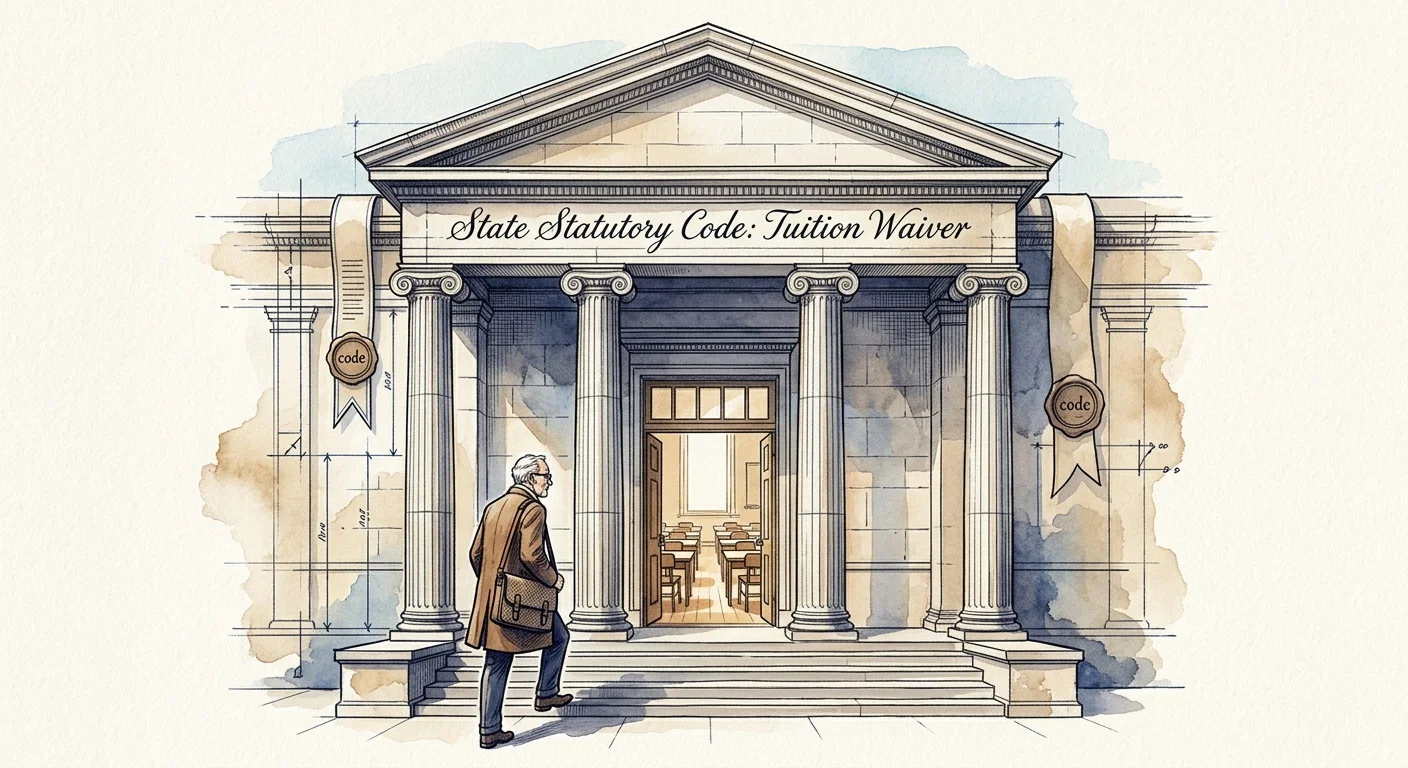
Setting Up Your University Account Thirty Days Ahead
Your first step begins at least thirty days before the academic term starts. You must establish an active student record before campus departments will evaluate senior enrollment paperwork.
Submit a formal non-degree lifelong auditor application through the admissions portal of your target public university. For example, Virginia learners applying under Va. Code § 23.1-640 use the institution’s senior admissions portal.
This step touches the university admissions portal and creates your formal student account profile. The system assigns a permanent university student ID number and generates campus login credentials.
Research from the Stanford Center on Longevity demonstrates that intergenerational classrooms cultivate cognitive vitality and social connection. Having your account operational ensures administrative barriers do not delay your campus integration.
Before moving on, log into the university student portal using your new username and password. Confirm that your student profile displays an active non-degree auditor status without general application holds.

Verifying Domicile Records and Program Exclusions Three Weeks Out
Three weeks before classes begin, you must clear institutional residency requirements and screen your chosen syllabus against state exclusions. Missing residency documentation freezes registration during the short drop-add window.
Submit your verification paperwork to the registrar’s residency office to satisfy in-state requirements. Under Virginia statute, auditors must show evidence of continuous 12-month in-state legal domicile.
This step touches the registrar’s residency verification form and your state tax records account. Supply a state driver’s license, voter registration card, or a state tax filing verifying physical residence.
If you pursue courses for academic credit rather than an audit, statutory caps apply. Virginia sets an annual income threshold of $23,850 for tuition-free credit study, while audits carry no income cap.
Auditors can register for up to 3 audit courses per term under Virginia rules. Statutory waivers readily support philosophy and humanities lectures across liberal arts departments.
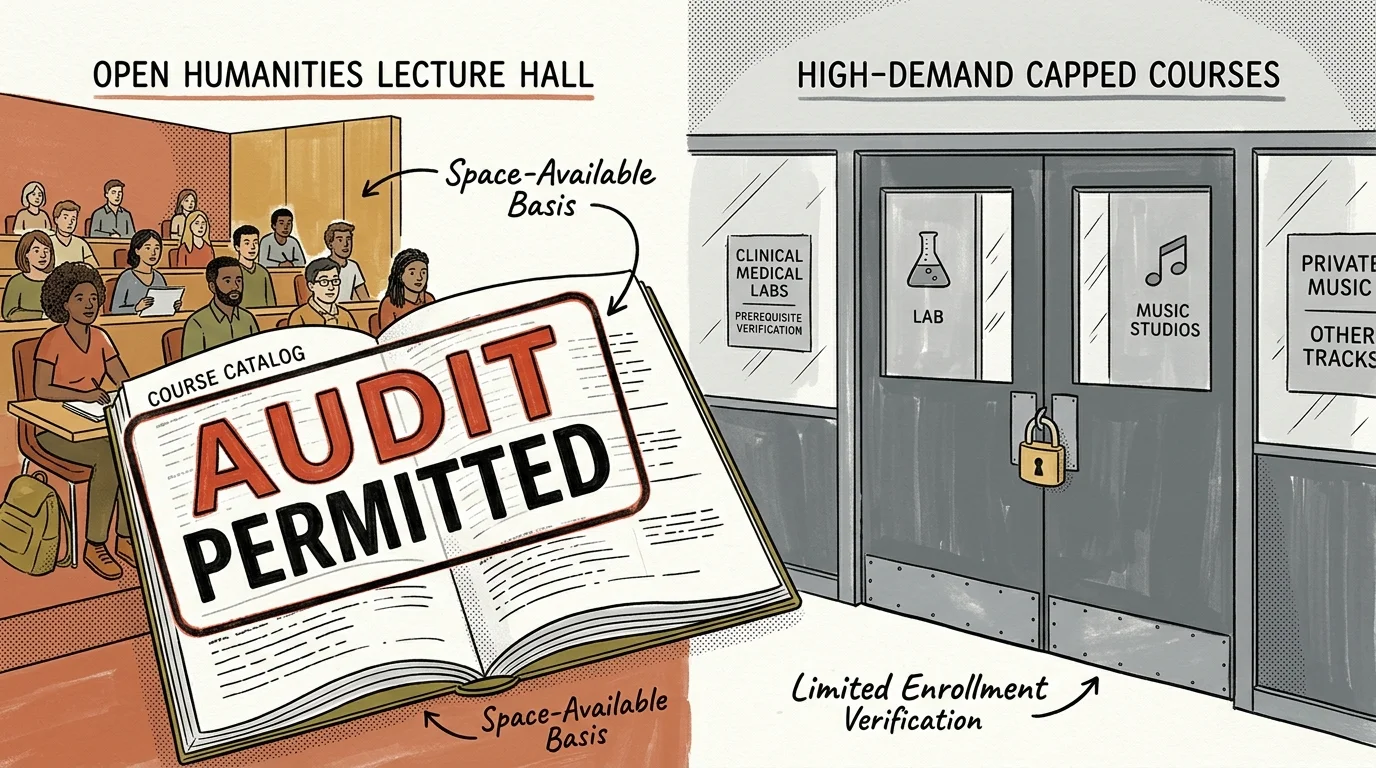
However, state regulations strictly exclude non-paying auditors from four specialized tracks. You cannot enroll in healthcare programs, post-graduate law curricula, self-supported extended education tracks, or private music studios.
Before moving on, verify your university account profile shows in-state residency classification. Check the online course schedule to confirm that your selected course section is not flagged as an excluded program.

Securing Faculty Pre-Clearance Ten to Fourteen Days Before Classes
Between ten and fourteen days before the term opens, initiate direct contact with the instructor. Senior waiver registrations operate on a space-available basis, making instructor endorsement necessary before public queues open.
Waiting until drop-add morning risks finding filled rosters or automated registration blocks on upper-division courses. Reaching out ten to fourteen days early establishes direct academic rapport.
This step touches your campus email account and the public departmental faculty directory. Check the university schedule portal for real-time seat numbers and total classroom capacities.
Send a polite, professional message directly to the instructor’s institutional email address. State your status as an older scholar seeking to audit under the state tuition waiver.
Research published by the National Institute on Aging emphasizes that demanding cognitive engagement supports neuroplasticity. Faculty members generally welcome passionate, engaged community members into their lecture halls.
Use a concise four-part framework to draft your instructor message:
- Identify yourself as a state senior tuition waiver participant seeking to audit that specific course title and number.
- State that you reviewed the schedule portal and observed that several seats remain open.
- Explain your intellectual background and express interest in the instructor’s published research or syllabus topics.
- Confirm that you will complete all readings and attend regularly without asking for graded exams or written feedback.
Before moving on, secure an explicit affirmative written email response from the professor. Save this pre-clearance confirmation as a PDF to present during final registration.

Submitting Senior Waiver Paperwork on Registration Opening Morning
Execute your formal course registration on the opening morning of the senior registration window. State universities open senior enrollment only after paying undergraduate priority windows conclude.
Submit your formal paperwork to the university registrar immediately when drop-add begins. Acting early ensures departmental clerks enter your override before classroom capacities fill.
This step touches the Senior Citizen Tuition Waiver Form and the university registrar enrollment system. You must submit your completed waiver paperwork alongside your written faculty pre-clearance email.
Request an administrative audit override from the registrar clerk or academic department administrator. Instruct the registrar to assign an audit grade mode to the registration.
Auditing university classes over 60 allows older students to experience classroom debate without the stress of grade-point averages. Your formal institutional transcript will record an administrative mark of “AU” rather than a letter grade.
Before moving on, verify that the course appears in your active schedule on your portal. Confirm that the grade mode explicitly displays “AU” and not a letter grade.

Auditing the Student Billing Ledger Twenty-Four Hours Later
Check your financial account balance exactly 24 hours after your course registration processes. State legislation waives instructional tuition, but billing software applies tuition charges by default until waivers process.
Review your student account ledger before the university’s published drop-add payment deadline. Catching automated billing errors early avoids institutional late payment penalties.
This step touches your university student financial account and payment portal. Verify that your base instructional tuition line item reflects a zero balance.
An auditor taking “ARTH 342: Renaissance Iconography” at George Mason University demonstrates how this accounting works. Standard in-state non-degree undergraduate tuition of $1,344.00 ($448.00 per credit across three credits for 2026–2027) is waived entirely by statute.
The student pays a $0 application fee via GMU’s Senior Citizen Application Fee Waiver. However, state waivers do not eliminate mandatory auxiliary fees.
Universities maintain required charges to support campus infrastructure and course operations:
- Campus parking permits ranging from $90 to $350 per semester depending on the selected lot zone.
- Digital courseware platforms and reading portals costing $65 to $140.
- Mandatory auxiliary campus health and transit charges often totaling $40 to $120 per academic term.
- Consumable art boards, laboratory manuals, and safety supplies requiring direct purchase.
In the George Mason University example, the student pays a $65.00 digital course access fee and a $185.00 campus parking permit. The total out-of-pocket cost is $250.00, yielding $1,344.00 in instructional savings for a complete term of study.
Before moving on, verify that the remaining account balance reflects only required auxiliary fees. Pay the auxiliary balance before the semester deadline to clear all financial holds.
Confirming Classroom Protocol and Discussion Expectations
Send a brief orientation message to the instructor two to three days before the first lecture. This final step clarifies your role in the classroom before you take your seat.
Touch your university email account to reach out to the professor. Confirm that your registration is complete and that your name appears on their official course roster.
Ask the instructor about their preferred auditor participation expectations for group seminar discussions. Individual professors retain full authority over seminar etiquette and student contributions.
Some faculty welcome active debate from experienced learners, while others prefer auditors to listen quietly to preserve discussion time for undergraduates. Clarifying expectations prevents misunderstandings during class discussions.
Before moving on, verify your syllabus access on the campus digital learning system. Review the assigned introductory readings and confirm your classroom building location to begin your semester smoothly.
Disclaimer: This article is for informational and inspirational purposes. Life decisions are deeply personal, and we encourage readers to pursue their dreams while considering their unique circumstances, health, and financial situation.






3 Comments