
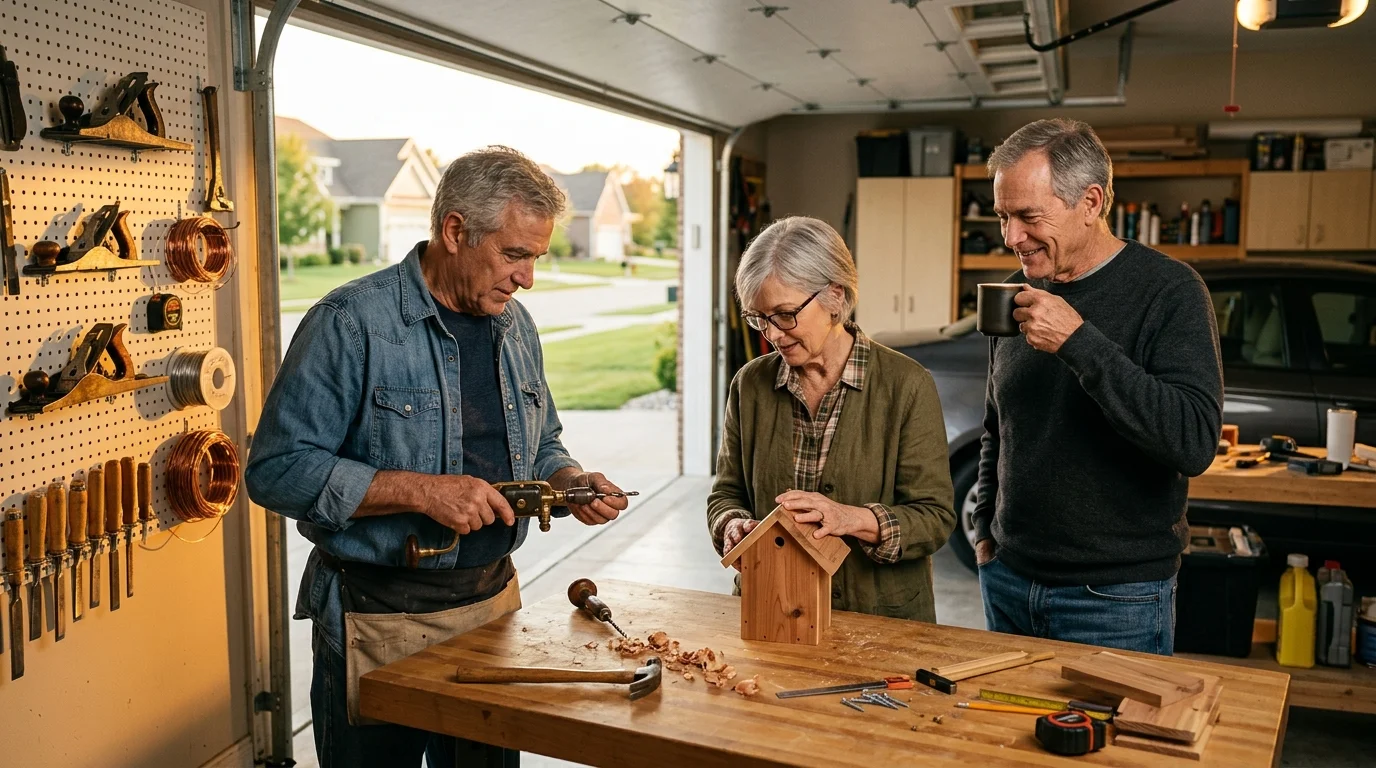
A newly moved retiree living in an age-restricted community who skips the morning golf scramble and pickleball courts often faces unexpected isolation. Master-planned developments organize social calendars around competitive athletics, leaving residents who prefer intellectual exchange or mechanical crafts feeling detached.
True camaraderie develops through shared practical tasks and focused problem-solving rather than mandatory athletic leagues or forced clubhouse mixers. Creating structured interest hubs allows quiet thinkers to build mutual trust by eliminating social performance anxiety.

Matching Your Domestic Footprint to the Right Social Hub
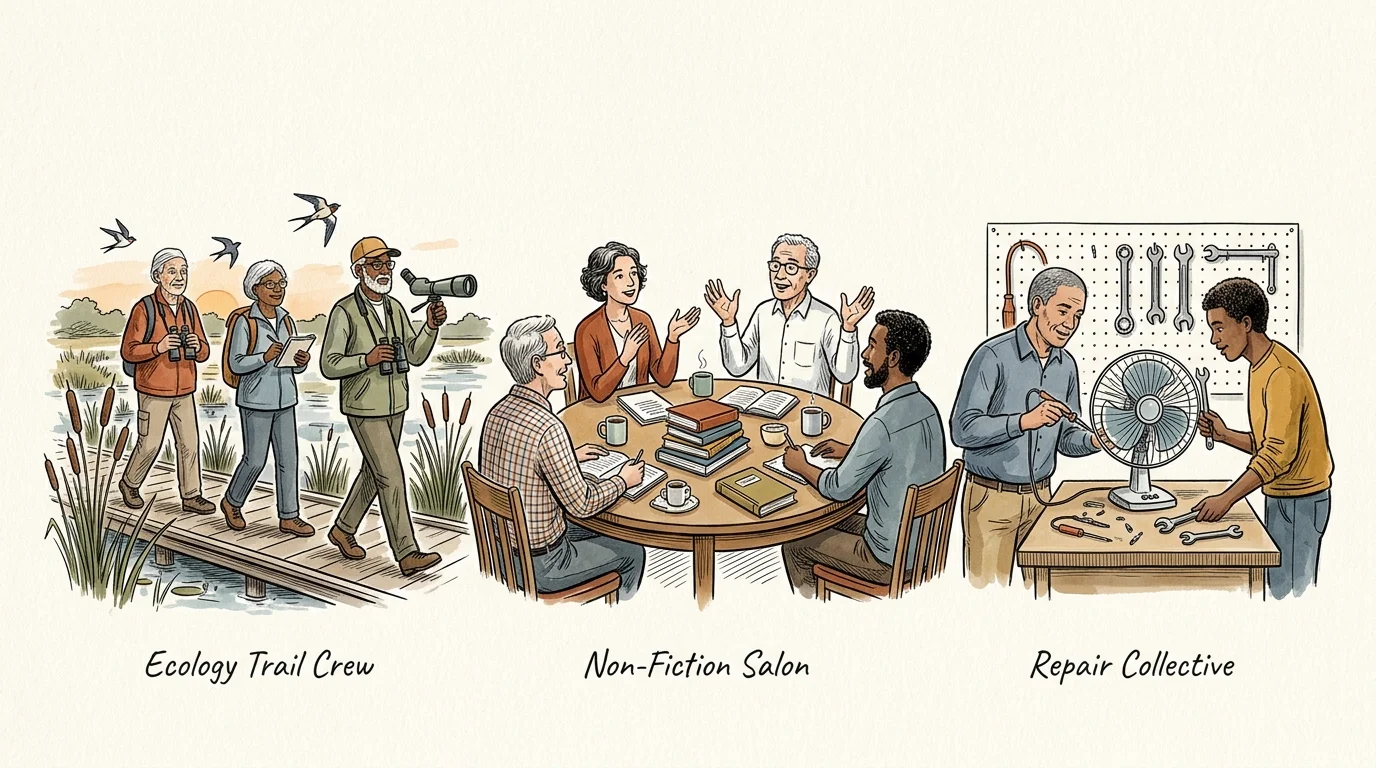
Selecting an alternative neighborhood hub depends on your available residential space, start-up capital, and weekly commitment. The following decision framework outlines four practical models that bypass small talk in favor of structured engagement.
| Hub Concept | Startup Budget | Weekly Time Commitment | Minimum Space Required | Primary Interaction Dynamic |
|---|---|---|---|---|
| Tool & Repair Collective | $25 – $50 (Signage & Hardware) | 2 to 3 Hours | 120 sq ft (Garage Bay) | Collaborative Task Problem-Solving |
| Non-Fiction Salon | $15 – $30 (Tea & Handouts) | 1.5 Hours | 150 sq ft (Living Room) | Intellectual Discourse & Debate |
| Dawn Trail Walkers | $0 | 3 to 4 Hours | Outdoor Public Trails | Side-by-Side Casual Dialogue |
| Documentary Circle | $20 – $40 (Streaming & Snacks) | 2.5 Hours | 180 sq ft (Media Room) | Visual Consumption & Analysis |
Under the Housing for Older Persons Act, 80 percent of occupied units in senior developments must house someone aged 55 or older. Dense housing alone does not spark friendship, so deliberate organization remains necessary.
A garage workshop demands physical room but delivers rapid neighborhood goodwill through home maintenance. In contrast, outdoor walking groups demand zero dollars and zero indoor square footage.
Evaluate your private living space honestly before inviting neighbors over. If entertaining in a living room feels overwhelming, an outdoor walking circle or an open-garage tool bench provides an easy, low-pressure alternative.
Establishing a Garage Tool Collective Around Shared Utility
A neighborhood tool collective builds authentic alliances by providing immediate domestic utility. Working side by side on practical repair projects eliminates social performance anxiety because neighbors focus entirely on the physical task at hand.
Begin by clearing a designated 120-square-foot corner in a standard two-car garage. This space establishes an orderly workbench area while leaving room for equipment display and safe foot movement.
Print 45 black-and-white informational flyers at a local print shop for $0.18 each, spending $8.10 total. Distribute these notices exclusively along your immediate cul-de-sac and adjacent streets to keep operations local.
The flyer invites nearby residents to an introductory 45-minute inventory coffee on Saturday at 9:30 AM. Emphasize that sharing machinery allows neighbors to avoid redundant personal purchases while maintaining their properties.
When five neighbors attend, catalog existing privately owned tools on a shared spreadsheet. The founding pool requires no club membership fees and relies strictly on equipment that members already own:
- One DeWalt DWE575 7-1/4-inch circular saw.
- One Werner 8-foot fiberglass stepladder.
- One Milwaukee M18 cordless brushless drill set.
- One Ames steel post-hole digger with fiberglass handles.
- Two torque wrenches and an automotive socket set.
In one neighborhood example, three members spent 90 minutes fixing a warped garden gate together over three weeks. That collaborative project saved the homeowner a $180 handyman fee and formed genuine mutual trust.
Hands-on maintenance provides an effortless bridge between neighbors who find traditional cocktail chatter uncomfortable. Members learn to teach practical mechanical skills while completing projects that improve local homes.
Operational Waivers and Association Covenants for Tool Hubs
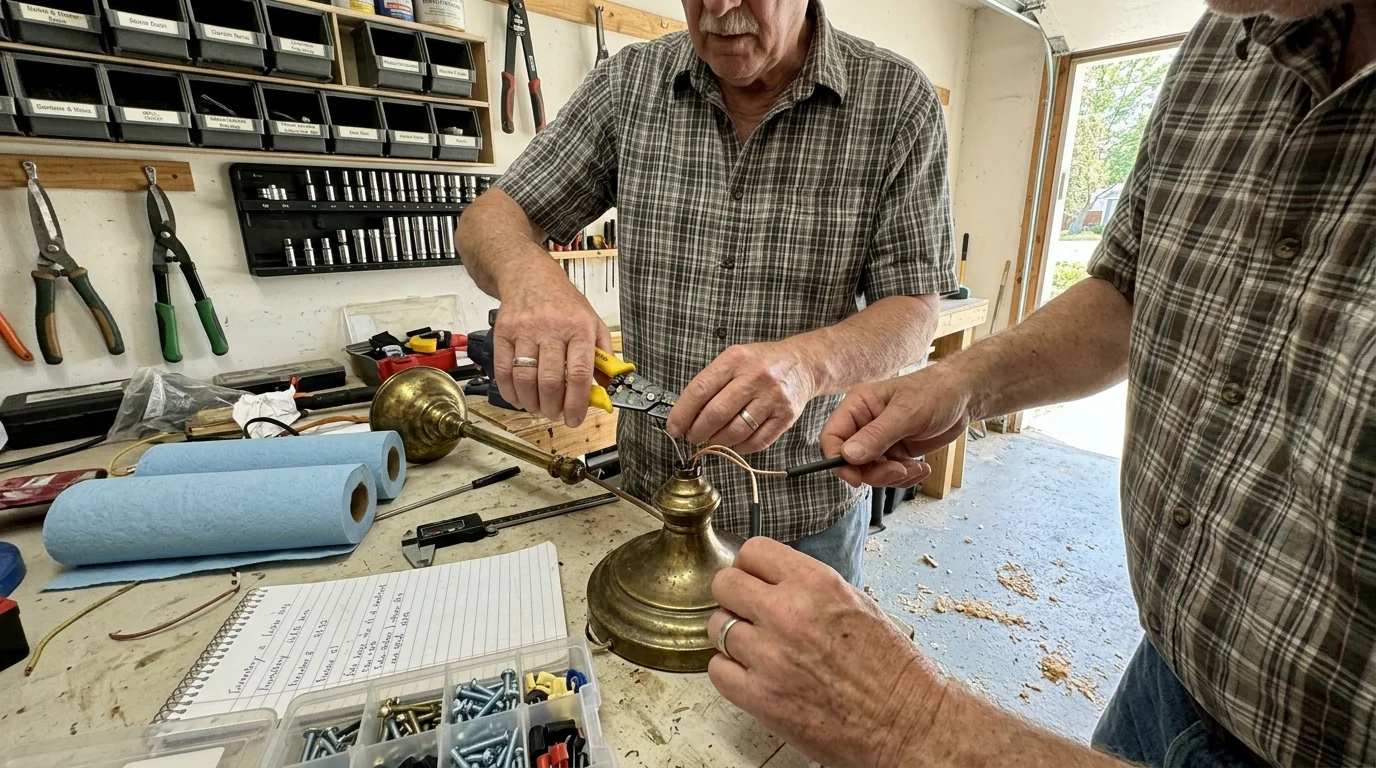
Operating an informal equipment collective inside an active adult village requires explicit liability protections and clear community rules. Establishing written borrowing terms early prevents misunderstandings between neighbors and board directors.
Every participating resident should sign an equipment release form before borrowing machinery. Use this standard agreement text:
“Borrowing Agreement and Release: I verify that I understand the proper operation of borrowed equipment and assume full responsibility for safe handling. I agree to wear eye protection, inspect gear before use, and release the owner from liability.”
“I agree to operate tools exclusively for personal residential tasks, return all equipment clean and undamaged, and report mechanical wear immediately.”
Verify that your homeowner policy includes basic personal property and guest coverage. Maintaining standard coverage shields the host from incidental accidents during collaborative garage work.
If association managers question the collective, resolve disputes by adhering to these operational guidelines:
- Confirm non-commercial status by proving the collective charges zero fees and generates zero business revenue.
- Mitigate cul-de-sac traffic by scheduling tool pickups individually and keeping driveway approaches unobstructed.
- Observe neighborhood quiet hours strictly by operating power saws and drills only within the enclosed garage bay.
- Gather signatures from five resident homeowners on a formal club charter if the board requires official facility registration.
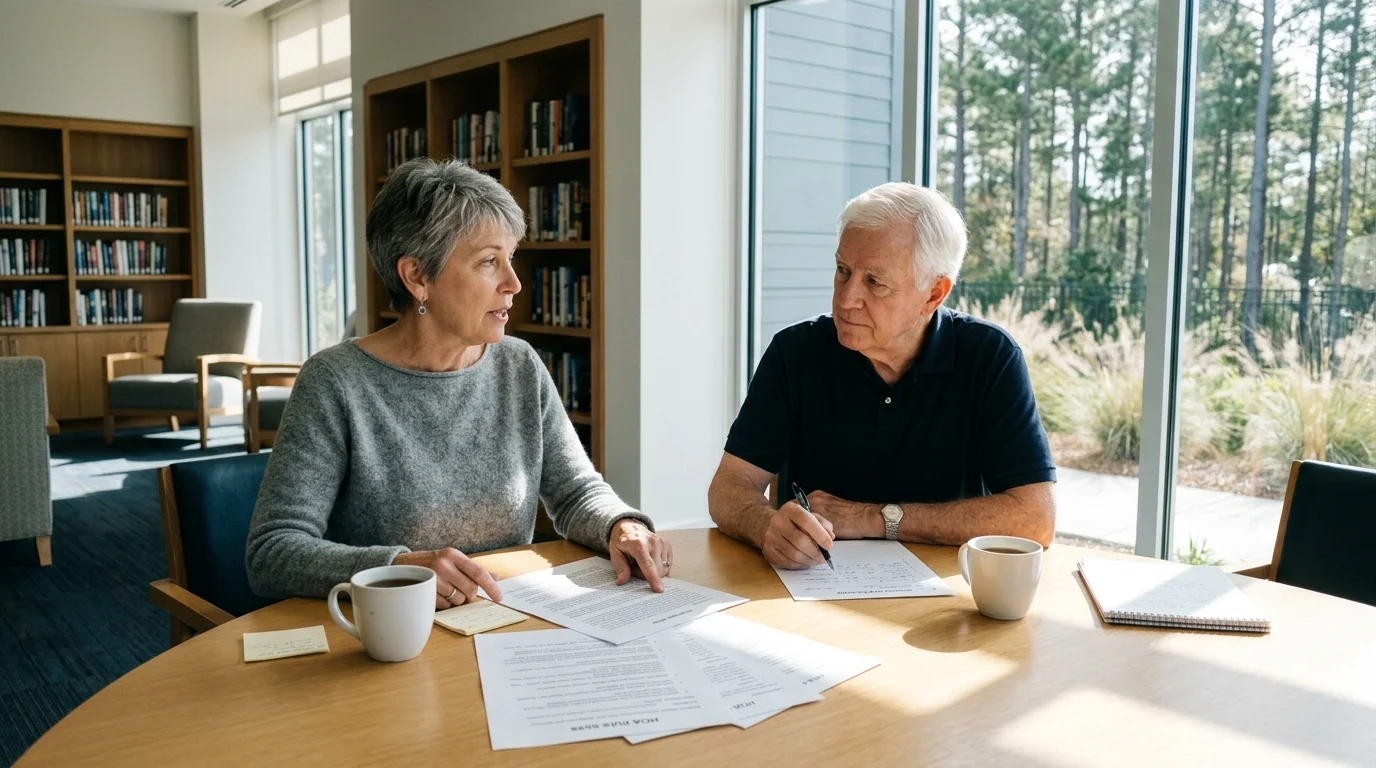
Most association covenants permit quiet private gatherings of fewer than ten residents. Operating transparently keeps the collective in full harmony with neighborhood regulations.
Mobilizing a Structured Non-Fiction Salon in Four Weeks
Retirees who prefer literary discussion over woodworking can launch a bi-weekly non-fiction salon. Following an organized four-week launch timeline establishes an intellectual hub without administrative friction.
Structuring early reading selections around accessible philosophical texts provides participants with a common framework to examine ethics and purpose without veering into polarizing current events.
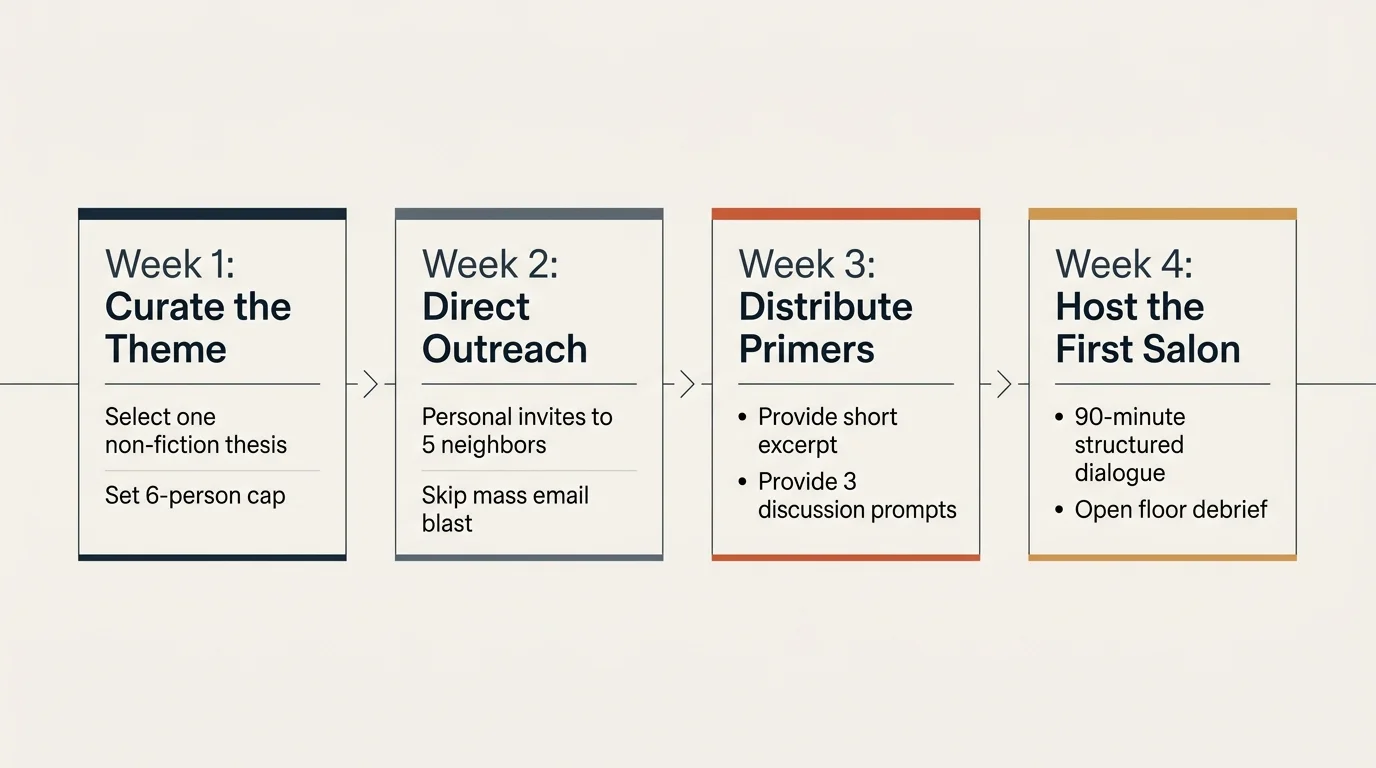
- Week 1: Curate the Concept. Select one compelling, accessible non-fiction title under 300 pages. Draft a one-page charter outlining meeting expectations and zero-gossip principles.
- Week 2: Direct Outreach. Post a clean invitation on the community bulletin board. Personally invite three neighbors who have expressed thoughtful views during neighborhood gatherings.
- Week 3: Distribute the Material. Confirm an initial cohort of six attendees. Send three core discussion questions via email alongside reminders for the upcoming gathering.
- Week 4: Host the First Session. Convene on Thursday evening from 7:00 PM to 8:15 PM sharp. Provide hot tea, spark conversation with the first question, and enforce strict speaking limits.
Establish firm conversational boundaries during the opening meeting. Salons fail when discussions deteriorate into complaints about health ailments or repetitive political commentary.
Maintain momentum by rotating discussion moderators for each selected book. Giving each attendee ownership turns passive visitors into active partners in the salon.
Scholars at the Stanford Center on Longevity highlight that intentional intellectual roles help preserve cognitive health throughout aging. Leading a discussion provides that mental stimulation.
Keep the core group small. A roster of six to eight dedicated thinkers fosters balanced debate far better than a crowded living room of twenty participants.
Coordinating Outdoor Walking Crews and Media Screenings
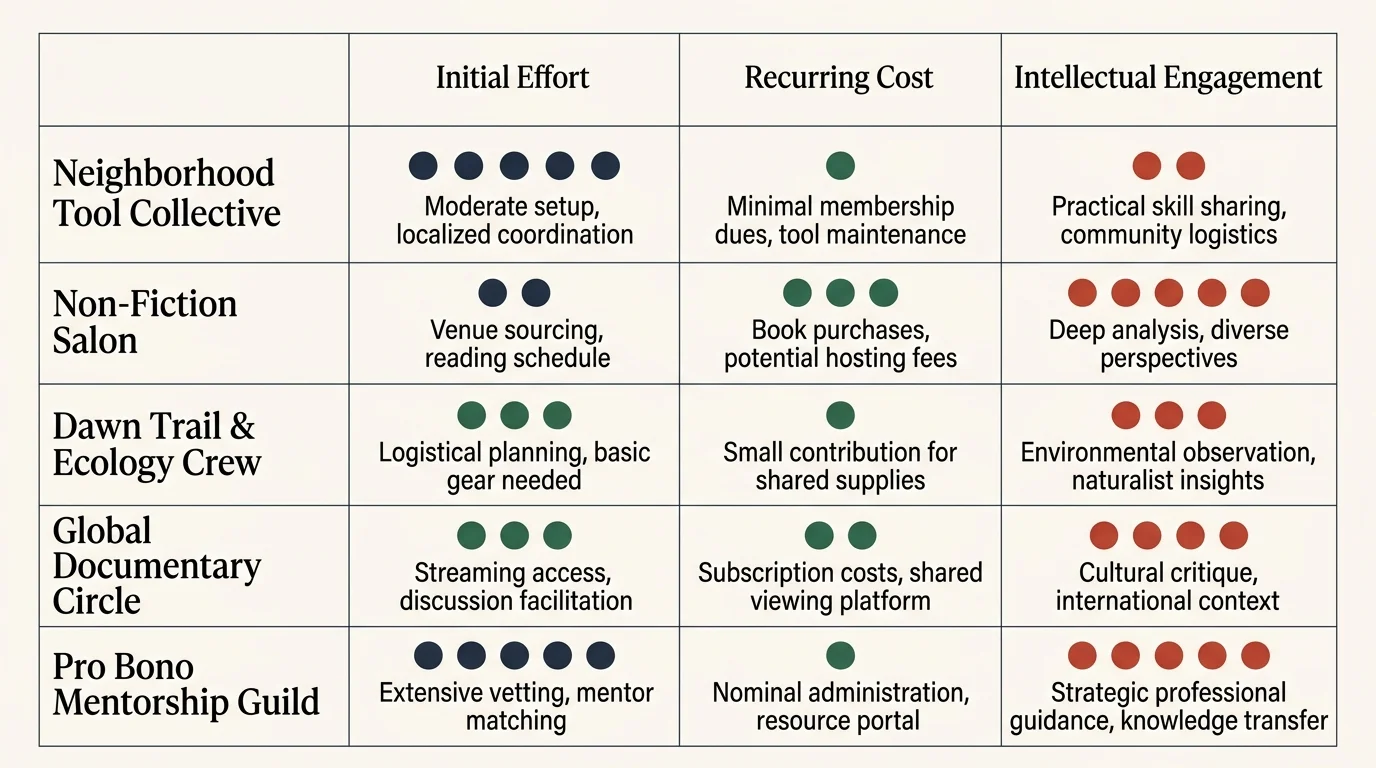
If hosting gatherings inside your home feels inconvenient, explore low-maintenance community formats. The dawn trail-walking crew offers brisk morning exercise focused on regional geography, native plant identification, and local bird watching.
Walking side by side outdoors requires zero financial investment. Strolling along local paths encourages relaxed, spontaneous conversation without the intensity of face-to-face living room discussions.
Residents who enjoy cinematic analysis can organize a global documentary circle. Members gather in a 180-square-foot media room for a 2.5-hour session involving a screening, modest snacks, and structured debate.
Other rewarding avenues include the pro bono mentorship guild for advising local students and the culinary guild for fermenting or baking sourdough.
Programs modeled after the Osher Lifelong Learning institute demonstrate that older adults thrive when challenged by serious topics. Replicating that structure locally attracts neighbors who value continued personal development.
Transforming Shared Projects Into Long-Term Personal Alliances
Convening regularly around tools or books creates an acquaintance network, but durable friendship requires genuine personal reciprocity. Alliances deepen when neighbors support one another through life transitions.
Research from the National Institute on Aging documents that meaningful social connections protect against cognitive decline and stress-related illnesses. Casual pleasantries at golf clubhouses do not deliver those benefits.
To move beyond surface conversation, ask reflective questions about past professional challenges, family histories, and personal creative pursuits:
- “What historical event or personal mentor shaped your perspective on the world most dramatically?”
- “What skills or disciplines are you actively trying to master during this chapter of your life?”
- “Which books or experiences completely overturned your view on an important topic?”
Listen attentively without immediately steering the discussion toward your own accomplishments. Attentive listening establishes mutual trust among peers who appreciate thoughtful conversation.
When a neighbor experiences an illness or bereavement, coordinate rapid assistance. Delivering a hot meal or handling an overdue repair converts a casual acquaintance into a loyal, lifelong friend.

Building a rich social life in an active adult community takes patience and deliberate intention. Focusing on utility and shared curiosity guarantees you build lasting friendships on your own terms.
Disclaimer: This article is for informational and inspirational purposes. Life decisions are deeply personal, and we encourage readers to pursue their dreams while considering their unique circumstances, health, and financial situation.






4 Comments