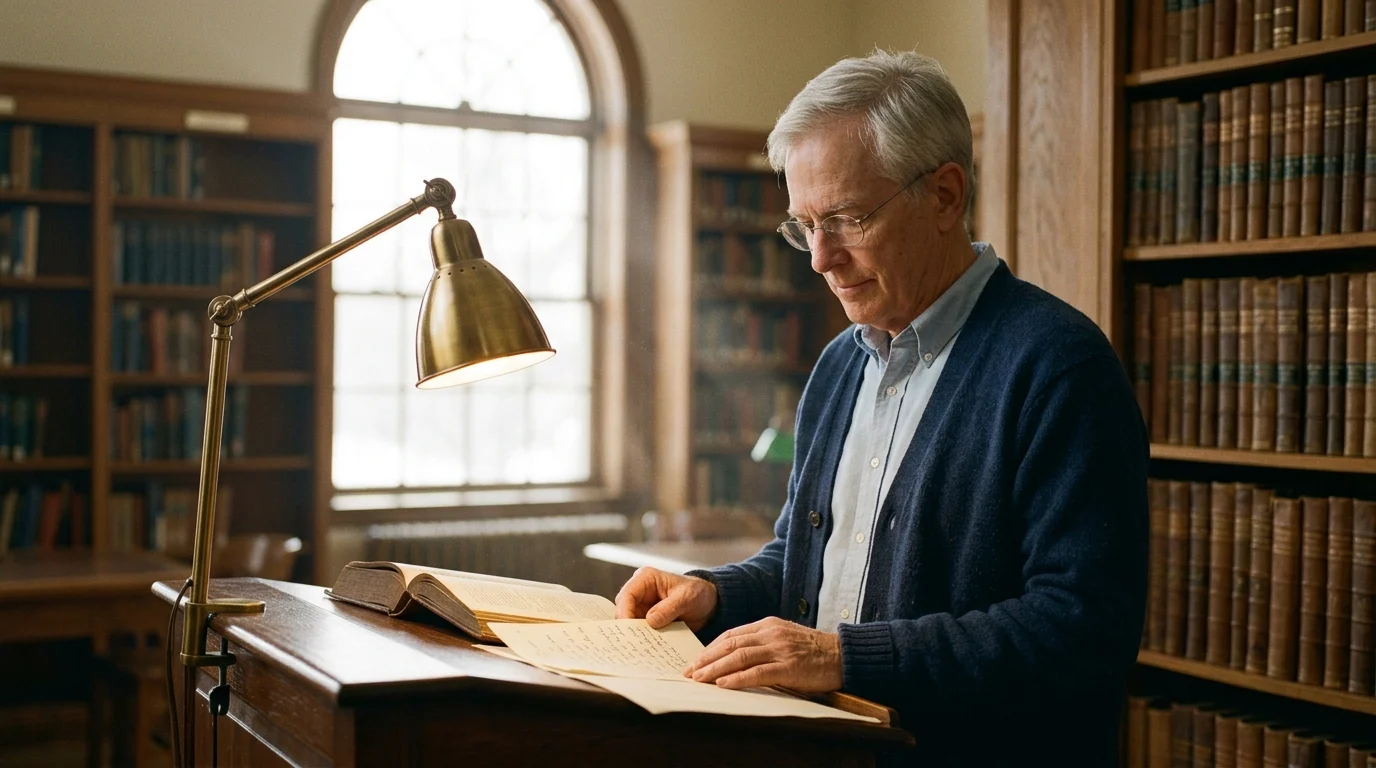
You can transform your deep knowledge of local history into a captivating public library lecture without letting stage fright paralyze your voice. Sharing your research with your community should feel like an invigorating achievement rather than an ordeal.
If you want to preserve neighborhood memories beyond live speaking events, launching a town elder oral history podcast offers another rewarding way to archive local stories.
Podium mastery after age 65 relies on a four-week rehearsal system that pairs teleprompter voice-tracking software with vocal conditioning tailored to aging vocal cords.
This structured engineering approach bypasses generic advice and builds verifiable confidence before you ever step up to the lectern.

The Biology of Presentation Anxiety After 65
Presentation anxiety is a biological reaction rather than a character flaw. Your autonomic nervous system misinterprets an eager community audience as an immediate physical threat.
Recognizing that this surge is a standard nervous system reaction helps with overcoming retirement fears as you step into unfamiliar spotlight roles.
Stepping in front of an audience is a prime opportunity for stepping outside your comfort zone in retirement, allowing you to channel nervous tension into purposeful community impact.
Data from the Chapman University Survey of American Fears shows that 33.7% of American adults fear public speaking. It remains one of the most widespread personal phobias across all age groups.
Furthermore, research from the National Institute of Mental Health identifies a 12.1% lifetime prevalence of social anxiety disorder among adults. Public speaking routinely activates this dormant apprehension.
Adrenaline surges into your bloodstream when you step toward a podium. Your heart rate quickens, your mouth dries out, and your breathing shifts into a shallow, rapid pattern.
These involuntary responses trigger vocal instability; they cause subtle tremolos, pitch spikes, and sudden memory lapses. You experience physical tension that interrupts your narrative rhythm.
Fortunately, you can retrain your physiological baseline through precise, deliberate physical interventions. Understanding your nervous system gives you the power to regulate it on command.
All the great speakers were bad speakers at first.
— Ralph Waldo Emerson
The regional public library offers an ideal, low-stakes environment for this transition. According to the Institute of Museum and Library Services, over 9,000 public library systems manage roughly 17,000 branches nationwide.
These local branches actively look for community historians to share neighborhood heritage. Their audiences come to learn from your wisdom, not to critique your performance.
Vocal Conditioning Exercises for Mature Vocal Cords
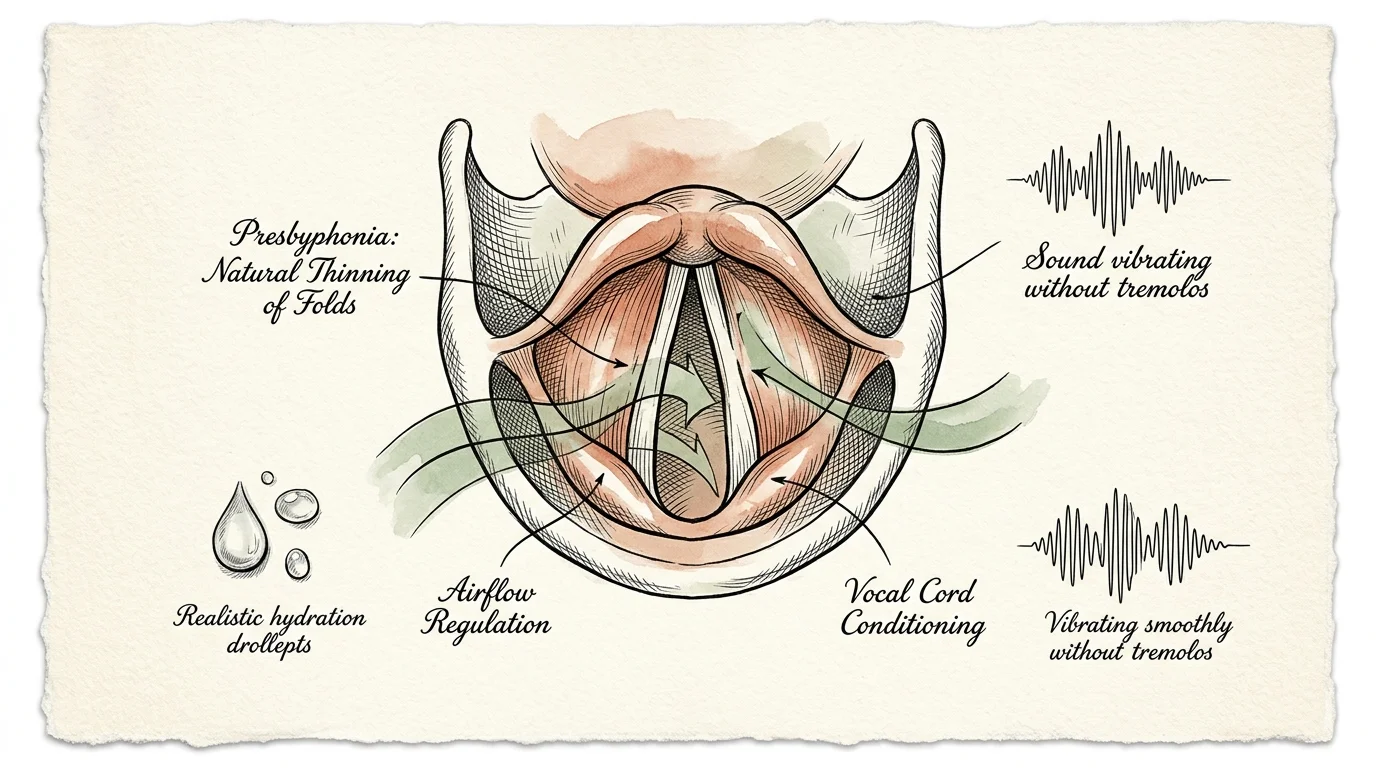
Vocal cords naturally lose elasticity, mass, and moisture as the decades advance. Clinical laryngologists term this structural evolution presbyphonia.
Thinning vocal folds struggle to close completely, which produces a breathy, strained tone during sustained speaking. You may run out of air mid-sentence if you do not condition these muscles.
The National Institute on Aging emphasizes proactive vocal preservation and respiratory conditioning to maintain physical endurance. Strengthening your vocal folds protects your delivery from fatigue.
You can rebuild breath control and vocal projection through daily phonation drills. Five minutes of deliberate conditioning each morning produces noticeable clarity within three weeks.
- Straw Phonation Therapy: Place a standard 6-millimeter drinking straw between your lips. Hum sustained pitch glides through the straw to balance back-pressure along your vocal tract.
- Diaphragmatic Rib-Expansion Drills: Inhale through your nose for four counts while expanding your lower ribs sideways. Release the air on a sustained, unvoiced “hiss” for twelve counts.
- Resonant Pitch Glides: Produce a gentle “nnn” sound starting at your lowest comfortable pitch. Glide smoothly up toward your higher register without straining your throat.
- Articulatory Lip Trills: Blow air past relaxed lips to create a motorboat vibration. This exercise relieves jaw tension and promotes effortless breath coordination before rehearsal.
Hydration directly affects how smoothly your vocal cords oscillate. Drink room-temperature water continuously throughout your preparation window.
Avoid hot coffee or ice-cold drinks in the two hours leading up to your presentation. Caffeine constricts mucosal tissues, while ice tightens the laryngeal muscles.
Pacing Mechanics and Voice-Activated Teleprompter Apps
Many first-time lecturers rely on traditional index cards or typed scripts resting flat on the wooden podium. Both options invite disaster when your hands begin to tremble.
Integrating presentation apps into your workflow is an inspiring example of upskilling for your second act to stay sharp and capable.
Adopting speech-tracking apps is a practical way to sharpen your retirement tech skills while eliminating the stress of lost place cards.
Glancing down at flat paper bends your neck downward at a 45-degree angle. This posture pinches your trachea, crushes your vocal resonance, and severs eye contact with the audience.
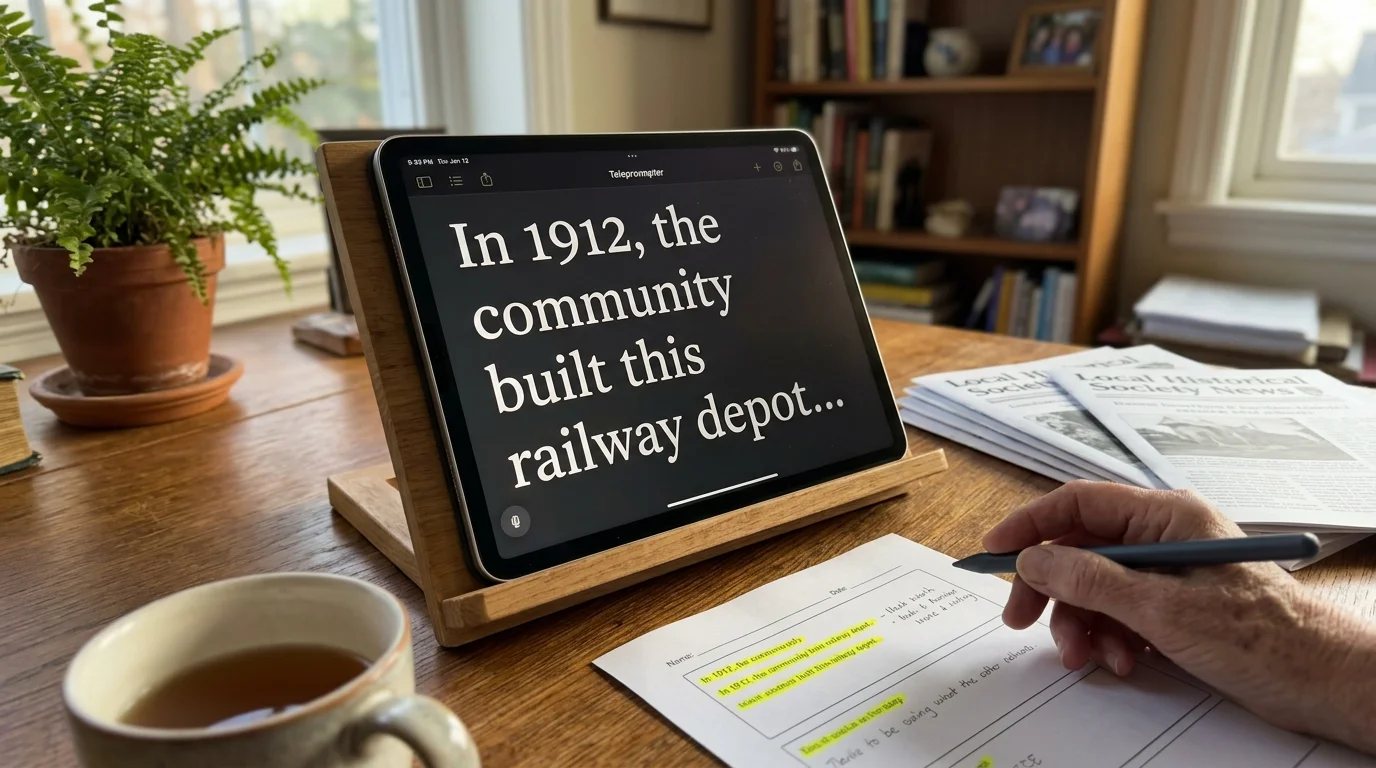
Modern teleprompter software solves these issues simultaneously. Mounting a tablet on the lectern keeps your chin up, your airway open, and your eyes locked with the room.
Modern voice-activated teleprompter engines listen to your speech through the microphone. They pause when you pause and resume scrolling only as you pronounce each subsequent word.
This automated synchronization frees you from the stress of chasing a mechanical scroll speed. You control the narrative pace entirely with your natural cadence.
Set your target delivery cadence to roughly 110 to 125 words per minute. This deliberateness allows historical dates, names, and geographic details to settle comfortably into the listener’s memory.
The 4-Week Toastmasters-Tested Rehearsal Protocol
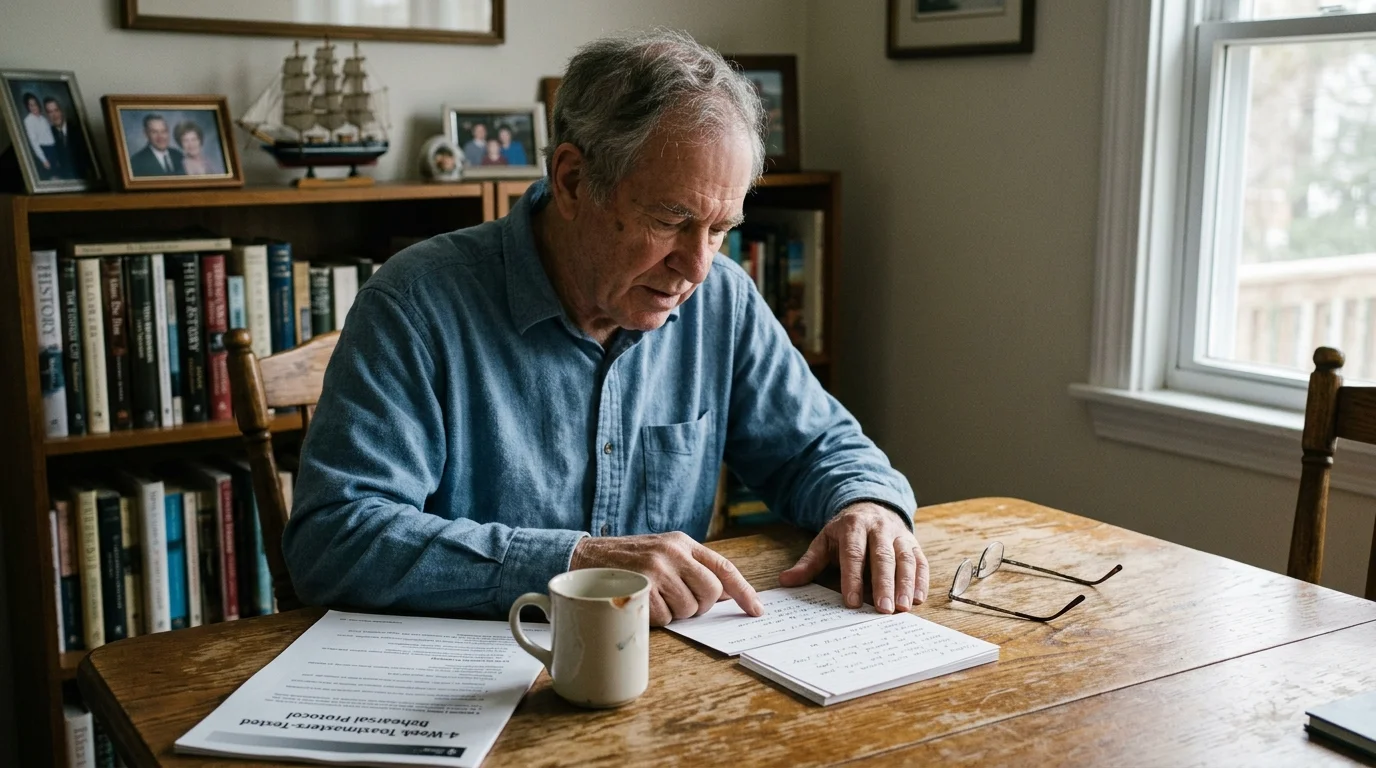
Lasting confidence requires an iterative, step-by-step rehearsal routine. Toastmasters International has refined structured speech training across more than 14,000 clubs in roughly 150 countries worldwide.
Stepping onto the stage gives you a meaningful pathway for reinventing yourself in retirement while sharing decades of accumulated insight.
Committing to an iterative rehearsal routine captures the joy of lifelong learning, demonstrating that mastering complex performance skills remains deeply gratifying at any stage.
Standard semiannual Toastmasters dues sit at $72 USD every six months, alongside an initial $25 new-member fee. Their core methodology emphasizes deliberate incremental pacing.
This four-week protocol adapts those proven speech mechanics specifically for community historians facing library lecterns. Dedicate thirty minutes each day to lock in your presentation.
- Week 1: Structural Script Architecture and Audio Mapping: Draft your core historical thesis into three distinct acts. Color-code critical dates, pause markers, and thematic transitions within your digital text file.
- Week 2: Vocal Mechanics and Straw Phonation Integration: Conduct ten minutes of daily vocal warm-ups before reading your lecture aloud. Practice pausing for three complete seconds after presenting vital historical statistics.
- Week 3: Voice-Tracking Software and Slide Synchronization: Run full rehearsals using your teleprompter application loaded onto a tablet. Coordinate slide advances so your speech transitions smoothly without awkward verbal filler.
- Week 4: Simulated Podiums and Dress Rehearsals: Stack books on a tabletop to simulate the 42-inch height of a library lectern. Practice your complete 45-minute lecture twice while wearing your planned presentation attire.
Never memorize your text verbatim word for word. Memorization generates brittle performance anxiety; if you drop a single sentence, your entire talk stalls.
Focus instead on internalizing your thematic progression. Let the teleprompter serve as a subtle guide rather than a rigid script you must recite.
Worked Scenario: The 45-Minute Regional History Lecture
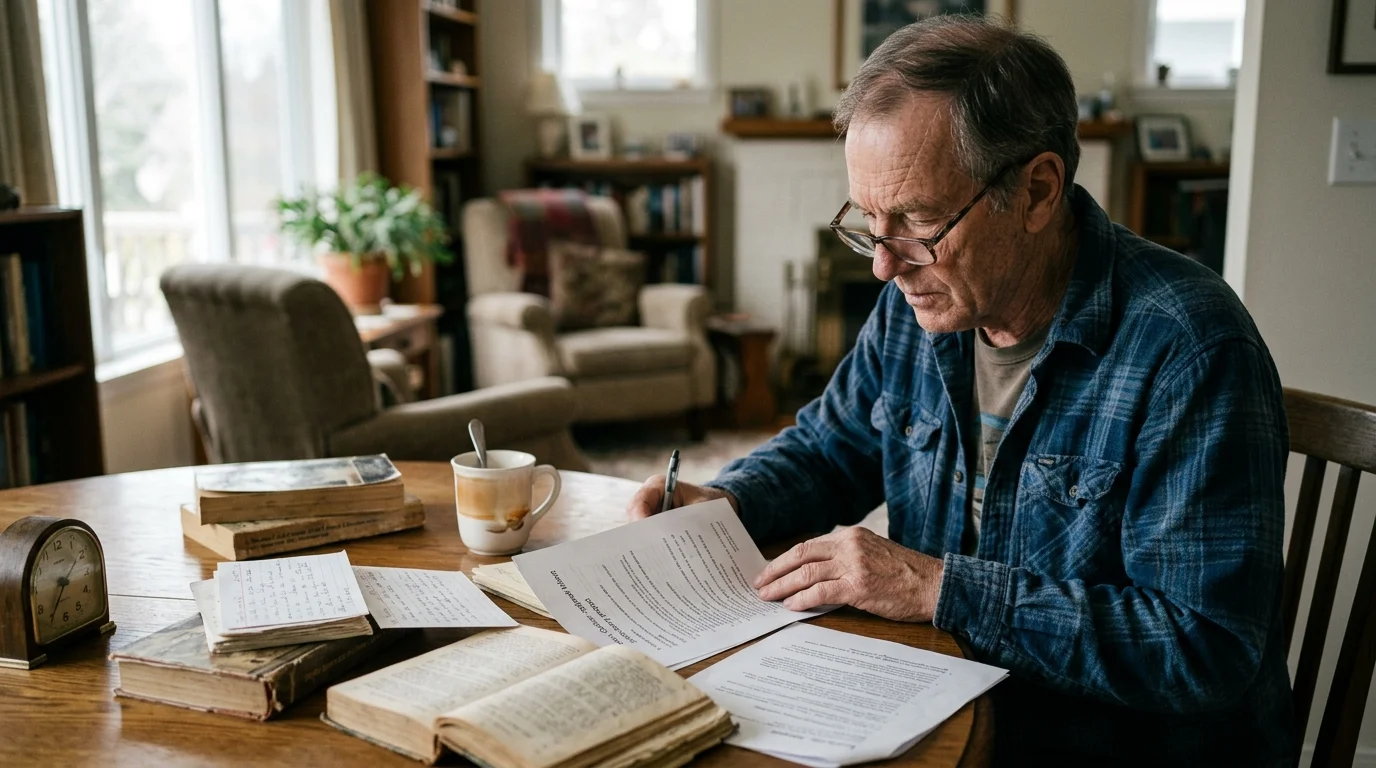
Consider this concrete scenario featuring Arthur, a 67-year-old retired civil engineer. He volunteered to deliver a lecture titled “Forging the Valley: The 1913 Canal Expansion” at his local municipal library.
Transforming oral presentations into written manuscripts is also a natural stepping stone toward writing your memoir for future generations.
Many engaging civic presentations originate from a personal genealogy journey that uncovers forgotten town records and regional milestones.
The library meeting space seats 60 people and features a standard 24-by-36-inch angled wooden lectern. The library director allocated Arthur a strict 45-minute time block.
Arthur partitioned his time allocation mathematically: 32 minutes for his spoken narrative and 13 minutes for audience questions. This precise boundary eliminated the common fear of running overtime.
At an ideal delivery speed of 110 words per minute, 32 minutes requires exactly 3,520 words. Arthur adjusted his working draft down from 5,200 words to hit this specific ceiling.
He divided his 3,520-word manuscript across 28 slide cues. This cadence scheduled one slide change every 70 seconds, or roughly every 125 spoken words.
Arthur loaded his manuscript into PromptSmart Pro running on a 10.2-inch Apple iPad. He set the software font to 42-point bold Helvetica, displaying six lines of text per screen.
Positioning the tablet 18 inches away from his eyes allowed him to read effortlessly without squinting. He placed visual breathing reminders — marked as [PAUSE / INHALE] — after every historical photograph.
On presentation evening, Arthur executed his plan without hesitation. His voice remained steady, his slides synchronized naturally, and his presentation concluded at precisely 32 minutes and 15 seconds.
Lectern Equipment and Teleprompter Specifications
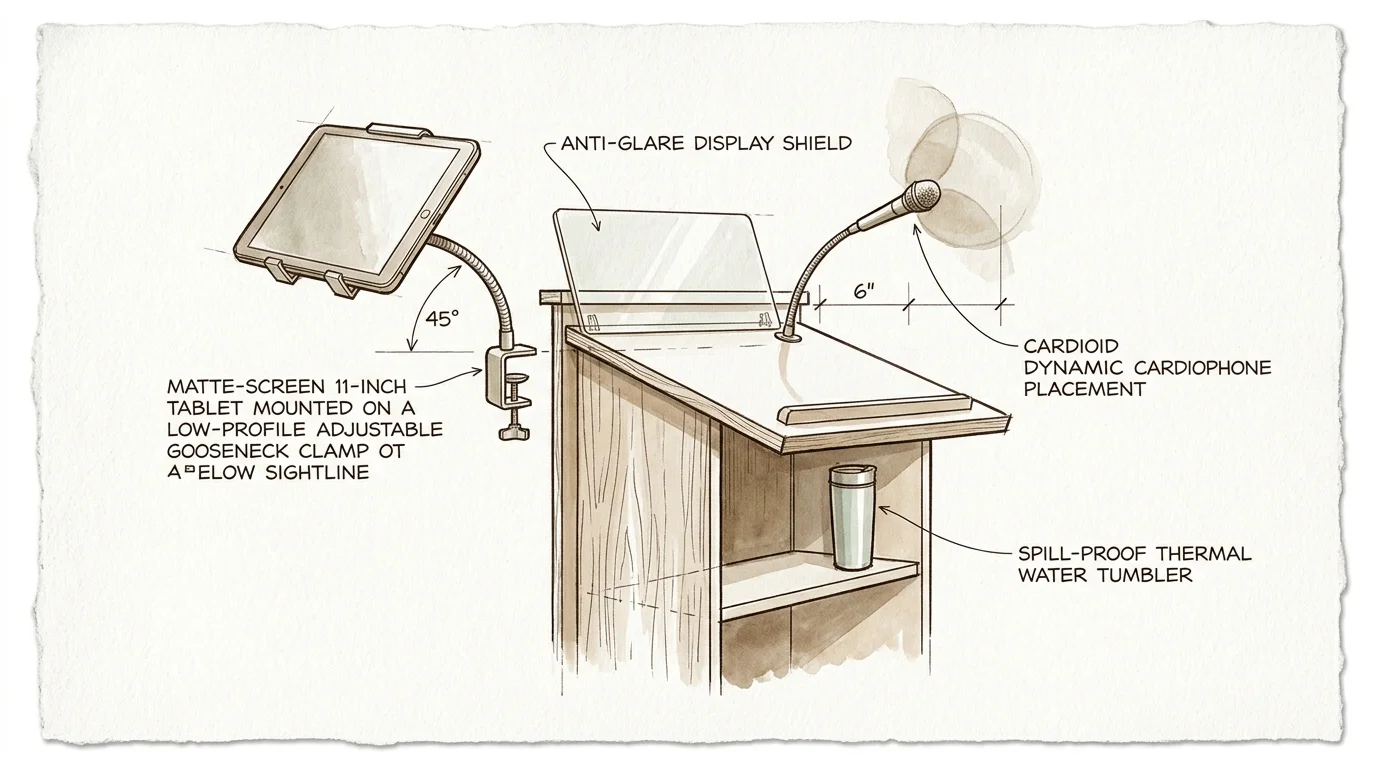
Selecting the right hardware and software setup protects you from technical failures at the podium. Test your complete configuration at home before entering the presentation venue.
Once you feel confident sharing your research indoors, you can take your stories to the streets by creating an independent walking tour business for visitors and neighbors.
The following comparison breaks down three teleprompter platforms suited for historical presentations in civic meeting rooms.
| Application / Tool | Operating Platform & Cost | Tracking Engine | Display Distance & Font Size |
|---|---|---|---|
| PromptSmart Pro | iOS / Android ($19.99/yr) | Patented VoiceSpeech Acoustic Audio Tracking | 16 to 20 inches / 40-48 pt bold sans-serif |
| Teleprompter Premium | iOS / Mac ($14.99 one-time) | Timed Auto-Scroll or Bluetooth Page Turner | 14 to 18 inches / 36-44 pt system font |
| Elegant Teleprompter | Android ($4.99 one-time) | Adjustable Constant Scroll Speed | 12 to 16 inches / 34-42 pt dynamic scale |
Invest in a sturdy, non-marring tablet easel with rubberized grips. Most library podiums feature smooth wooden surfaces where bare devices easily slide out of position.
Carry a 10-foot three-prong extension cord alongside an HDMI-to-USB-C display adapter. Regional libraries often feature aging audiovisual junction boxes that require longer reach.
- Presentation Remote: Choose a model with tactile forward and backward buttons rather than touch-sensitive pads.
- Screen Brightness: Set your tablet display to 85% brightness to counteract harsh overhead fluorescent lighting.
- Device Connectivity: Switch your tablet to Airplane Mode to prevent software alerts and email notifications from interrupting your script.
- Backup Printouts: Print a 16-point large-font emergency outline in a matte presentation binder as a physical contingency.
Arrive at the library 40 minutes before the scheduled start time. Walk behind the lectern, test the microphone gain, and verify your slide projection on the main screen.
Mastering Audience Dynamics and the Live Q&A
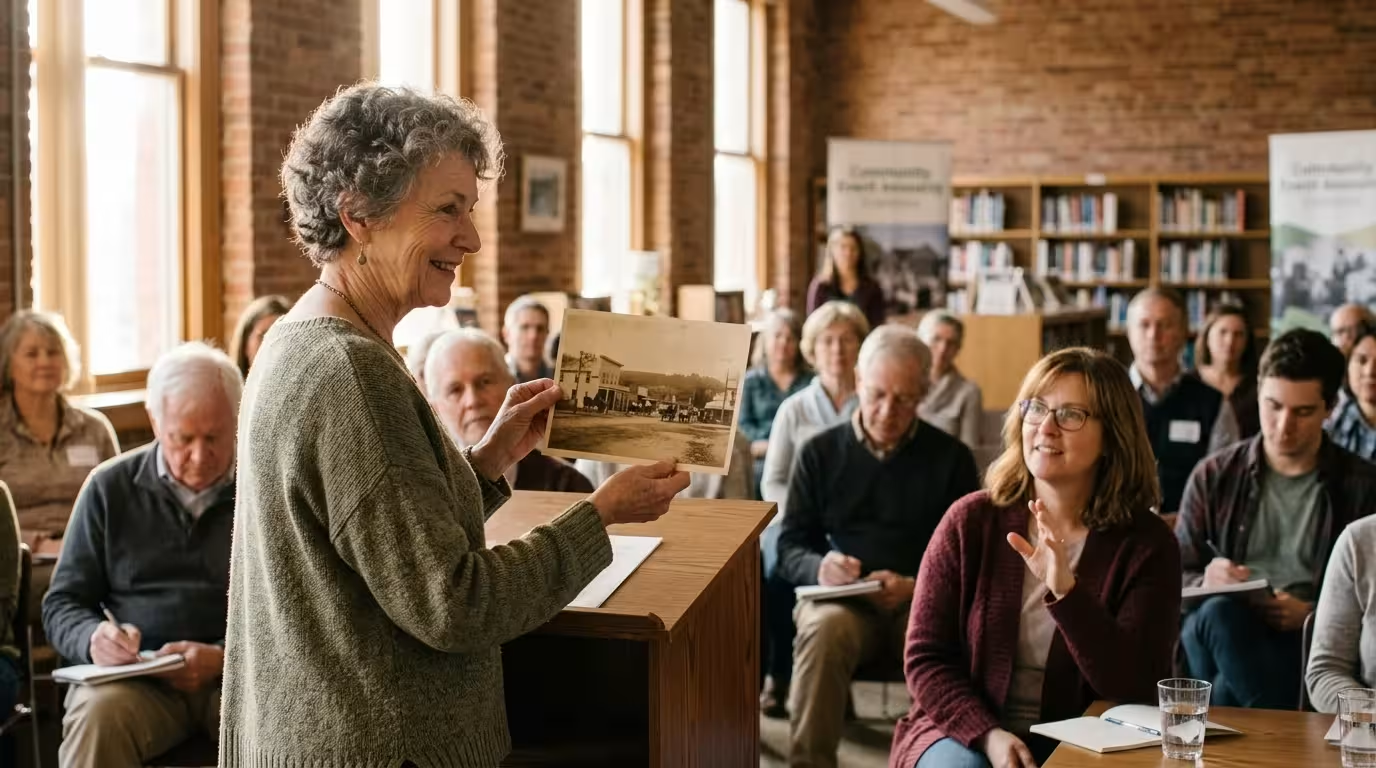
The transition from prepared remarks to the open question-and-answer period often triggers fresh performance anxiety. You no longer have a scrolling teleprompter to steer your direction.
Connecting with fellow history buffs during these discussions is an exceptional method for making friends in a 55+ community through intellectual pursuits.
Reclaim psychological control by instituting the “Three-Second Echo Method.” When an attendee finishes asking a question, pause silently for three full seconds before speaking.
This deliberate silence accomplishes two essential objectives. It shows the audience that you are considering the query carefully, and it lowers your resting heart rate.
Next, repeat the question aloud to the entire audience: “The gentleman in the third row is asking how the 1913 canal board funded its land purchases.”
Restating the prompt guarantees that every person in the hall hears the topic clearly. It also gives your brain ten valuable seconds to organize your historical response.
Never hesitate to acknowledge the boundaries of your research. A simple, confident phrase preserves your professional authority when you do not possess an immediate answer.
State clearly: “My current research focused on civil engineering blueprints, so I cannot confirm that private real estate figure today. Let us connect by the podium afterward to exchange notes.”
Audiences respect intellectual honesty. They attend local lectures to celebrate communal curiosity, not to interrogate community historians.
Expanding Your Lecture Reach Across Regional Venues
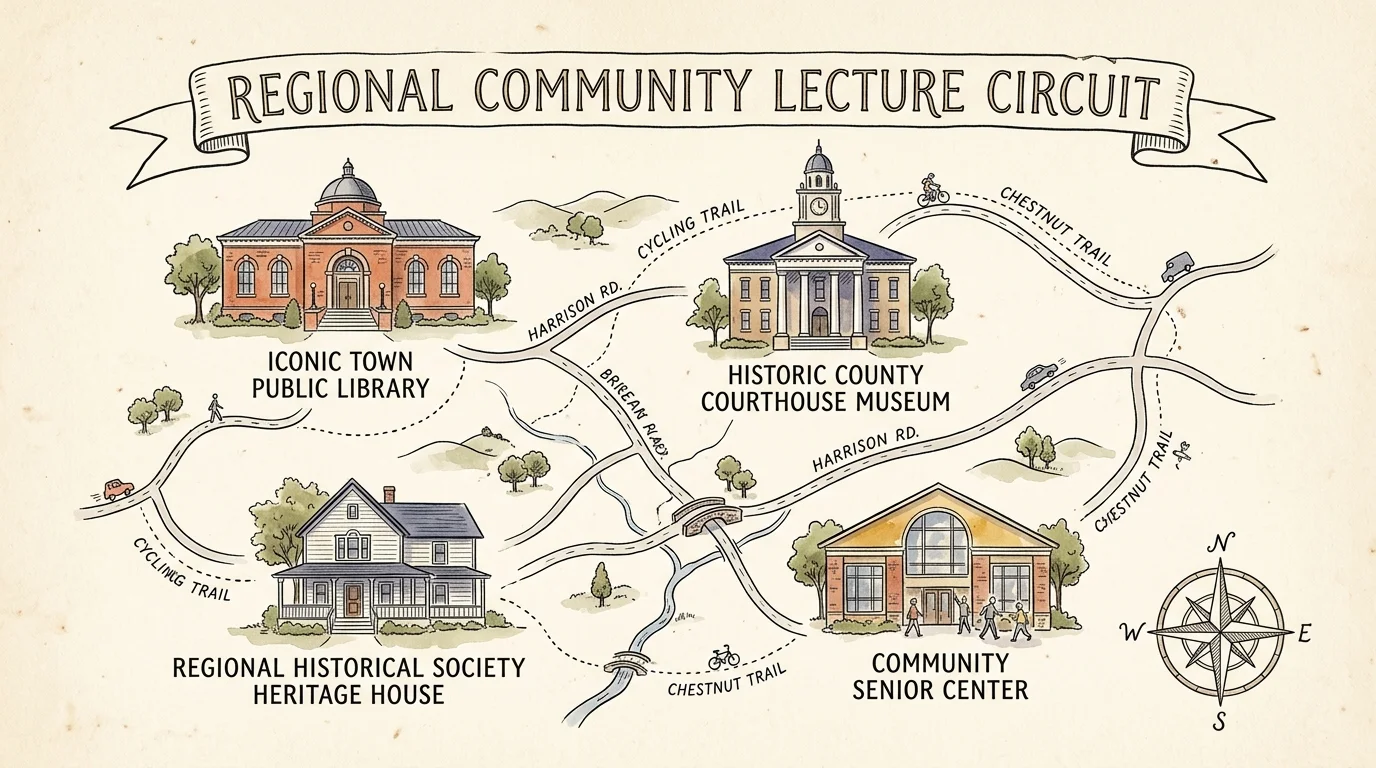
Your library talk marks the start of an extraordinary encore career as a community educator. The demand for localized, engaging historical storytelling spans well beyond single municipal branches.
If your library presentation sparks a deeper passion for community storytelling, you can expand further by creating an independent walking tour business to guide residents through historic landmarks.
The American Association for State and Local History census documents 21,588 history organizations nationwide. More than 80% operate on annual budgets under $200,000, creating an ongoing need for volunteer guest speakers.
You can also bring your presentations to the Osher Lifelong Learning network across the country. This consortium spans 125 campus-affiliated institutes serving more than 150,000 mature learners.
OLLI branches routinely recruit experienced community members to teach non-credit, non-graded history seminars. These environments celebrate interactive exploration over high-stress academic testing.
Organizations like Encore.org celebrate how retirees channel their expertise into impactful community leadership. Sharing forgotten regional stories preserves precious cultural heritage for future generations.
Approach each presentation as a gift of historical discovery to your neighbors. Your hard-earned knowledge deserves a public voice, and your community is waiting to hear your perspective.
Frequently Asked Questions
How do I handle sudden dry mouth while speaking at the podium?
Bite the tip of your tongue gently to stimulate natural salivary flow instantly. Keep room-temperature water at the lectern and pause deliberately to take a measured sip between slide transitions.
What should I do if my voice begins to shake during the first five minutes?
Drop your shoulders, exhale completely through your mouth, and push your feet firmly into the floor. Slow your delivery down by ten words per minute to let your diaphragmatic support steady your vocal cords.
Is it acceptable to admit to the audience that this is my first lecture?
Avoid announcing your nervousness or rookie status; doing so directs audience attention straight to your anxiety. Step up to the lectern, smile, deliver your opening statement, and let your historical slides carry the room.
How should I handle an audience member who interrupts with a correction?
Remain calm and use a non-defensive redirection: “Thank you for that perspective; local records often present conflicting accounts, so let us examine those archival differences after the talk.” This maintains your momentum.
Disclaimer: This article is for informational and inspirational purposes. Life decisions are deeply personal, and we encourage readers to pursue their dreams while considering their unique circumstances, health, and financial situation.