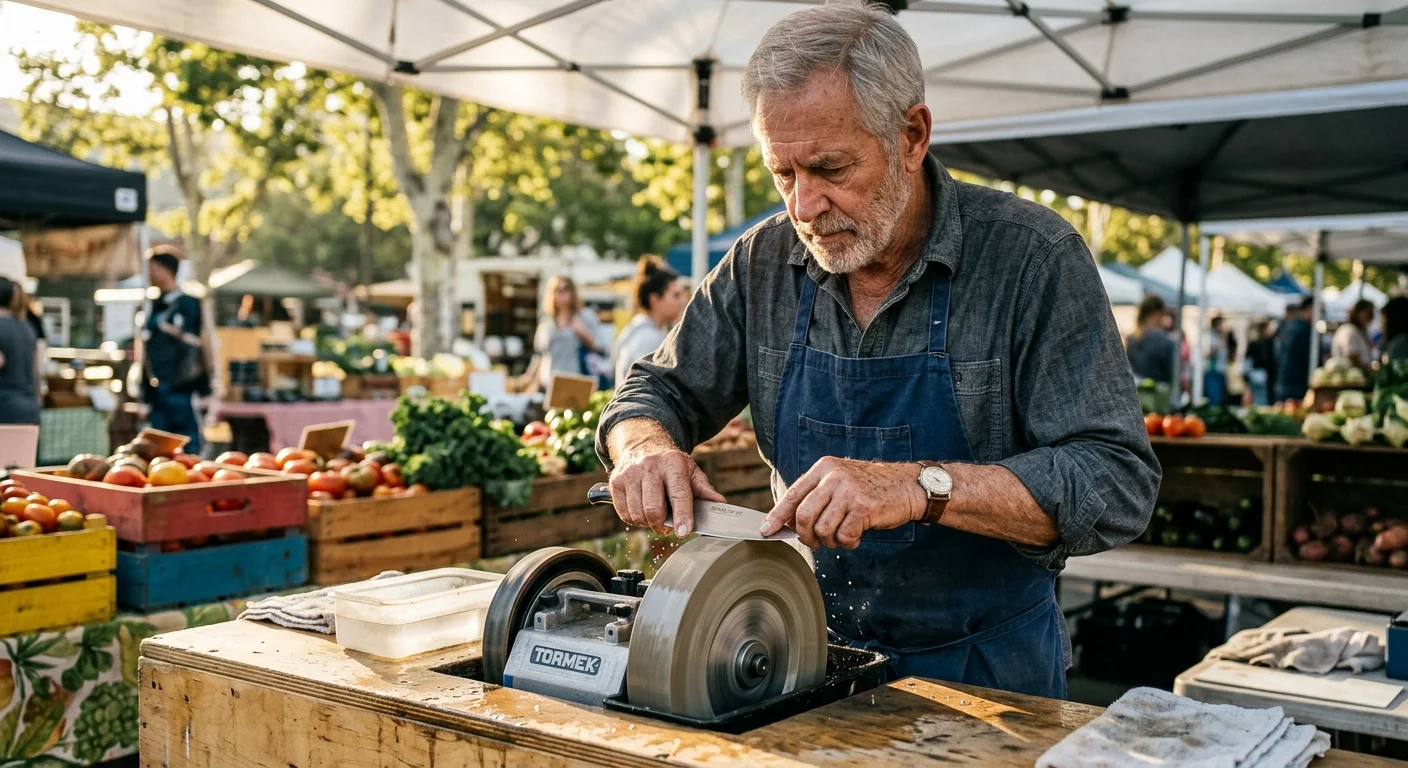
A retired woodworker with stiff, arthritic hands can turn decades of bevel and chisel experience into a four-hour Saturday farmers market sharpening booth without buying inventory. Water-cooled wet-stone sharpening produces zero dust or sparks and brings $250 to $450 in net revenue.
Generic vendor guides miss what derails older sharpeners: excluded knife insurance, intermittent motors that overheat mid-rush, and wrist torque across dozens of blades. Fixing each failure mode upfront protects both your joints and Saturday cash flow.
Insurance Exclusions and Permit Traps That Shut Down a Booth
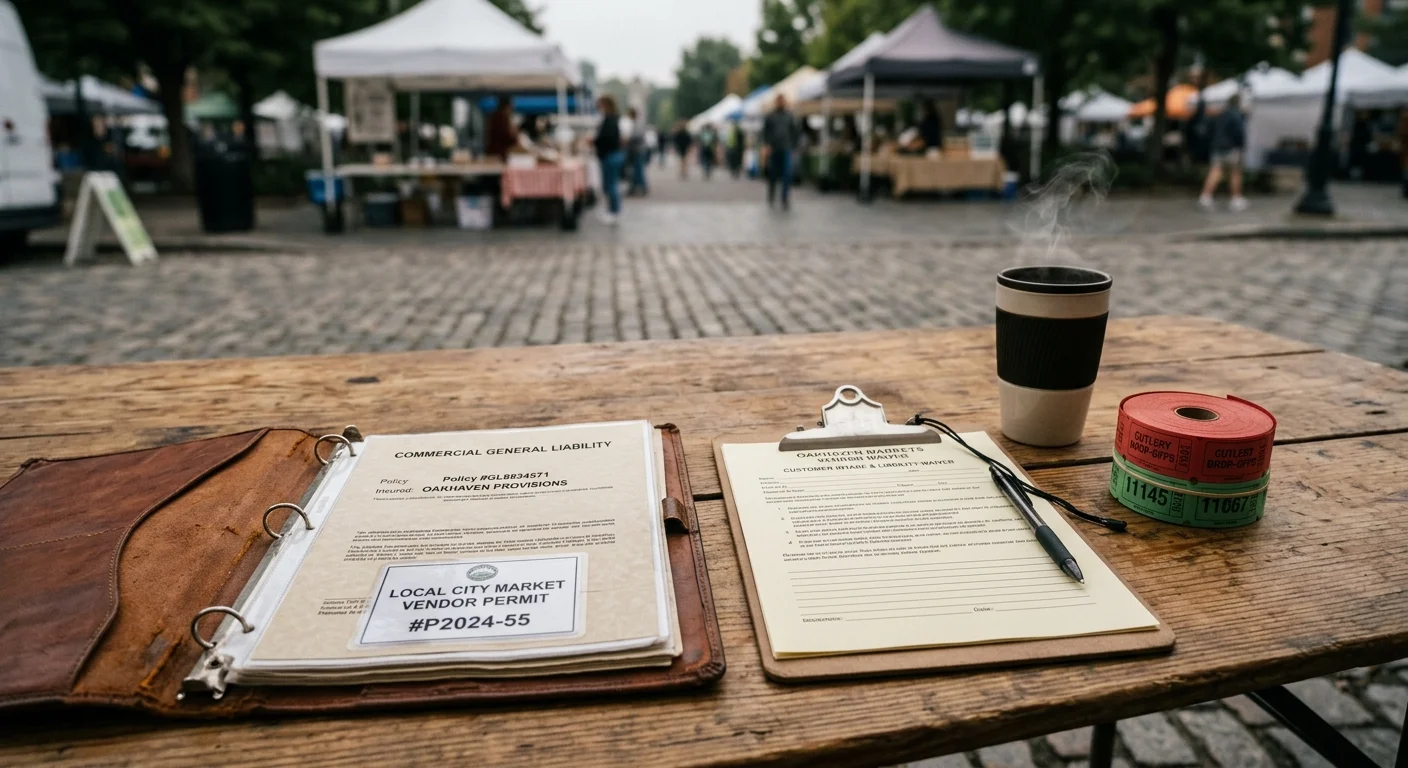
Buying a standard craft or food-vendor policy can get your booth barred on opening day. Food programs like FLIP and craft policies like ACT Insurance explicitly exclude knife exposures, leaving blade services uncovered.
Markets demand a Certificate of Insurance naming the market association as Additional Insured, usually with $1,000,000 per occurrence and $2,000,000 aggregate limits. Purchase general service liability coverage through Campbell Risk Management or NEXT Insurance, typically starting around $300 to $600 annually.
Managers also sometimes mistake kitchen-knife work for food prep and ask for commercial food-handling permits. Clarify that you handle no edible goods, and wipe blades with isopropyl alcohol before sheathing them in protective sleeves.
Paying $20 to $50 per single day also cuts earnings compared to a $250 to $600 seasonal package for twenty weeks. Consult free advisors at SCORE Mentoring to file fictitious name registrations and state tax certificates.
Intermittent Grinders That Overheat Mid-Morning
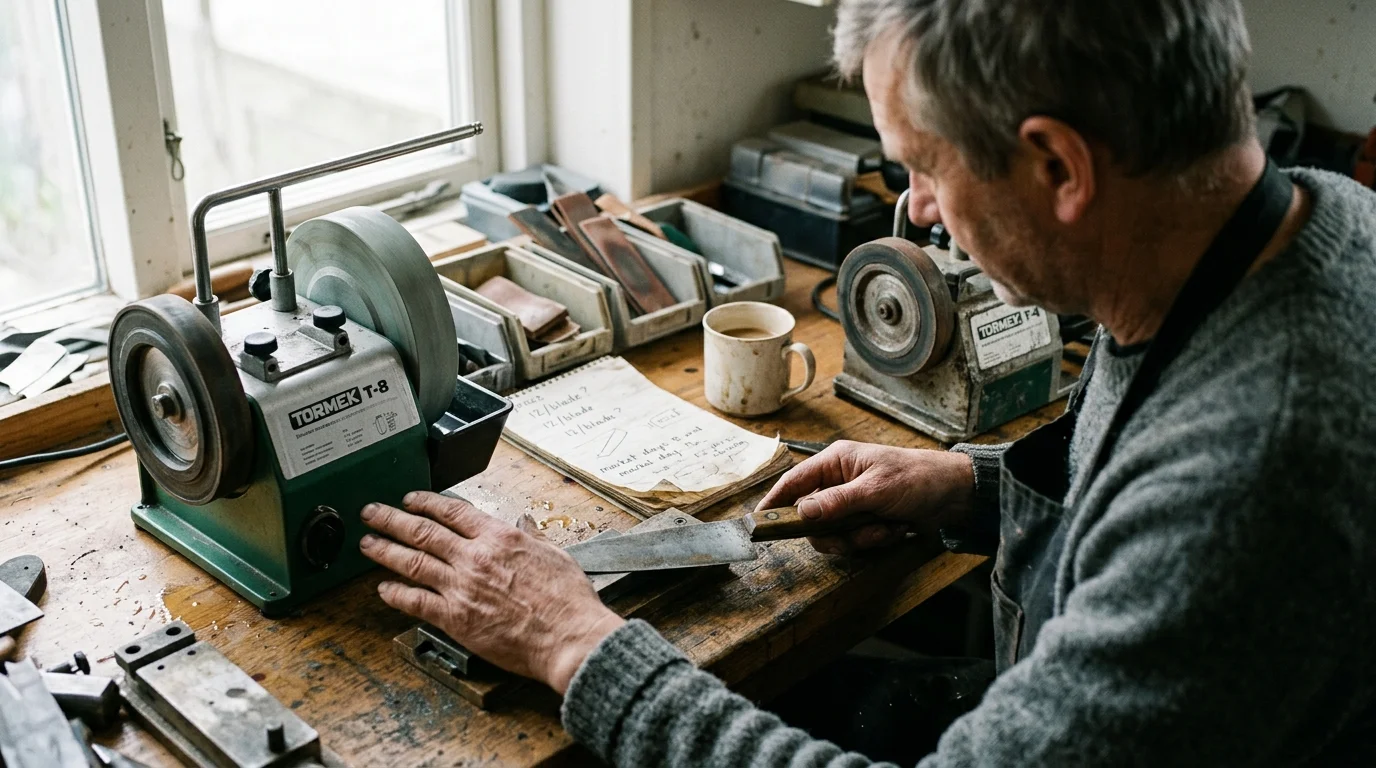
Saving upfront on a lighter grinder backfires when back-to-back chef knives exceed its duty limit. The Tormek T-4 Bushcraft or Standard (~$613 USD) uses a 120W motor rated for thirty minutes per hour and carries just a two-year commercial warranty.
The Tormek T-4 also spins faster at 120 RPM on a smaller 200-millimeter by 40-millimeter wheel. Commercial Saturday volume strains that compact motor and leaves less contact surface for wide cutlery.
Buy the Tormek T-8 Original (~$1,066 USD) for its 200W continuous-duty AC motor, 90 RPM speed, and 250-millimeter by 50-millimeter wheel. Registering it secures an eight-year commercial warranty (five years plus three upon registration).
Purchase the bundled knife kit to save approximately twenty percent on these essential attachments:
- KJ-45 Centering Knife Jig (~$63): Centers blades for symmetrical bevels.
- KJ-140 (~$77–$81, replacing the discontinued SVM-140): Stabilizes flexible blades and chef knives over eight inches.
- SVX-150 Scissors Jig (~$71): Matches angles on household shears, fabric scissors, and loppers.
- SP-650 Stone Grader ($35): Shifts the stone from 220 grit to 1,000 grit.
- PA-70 Honing Compound ($15): Charges the leather wheel to remove wire burrs.
Battery Mismatches and Water Hazards on the Power Table
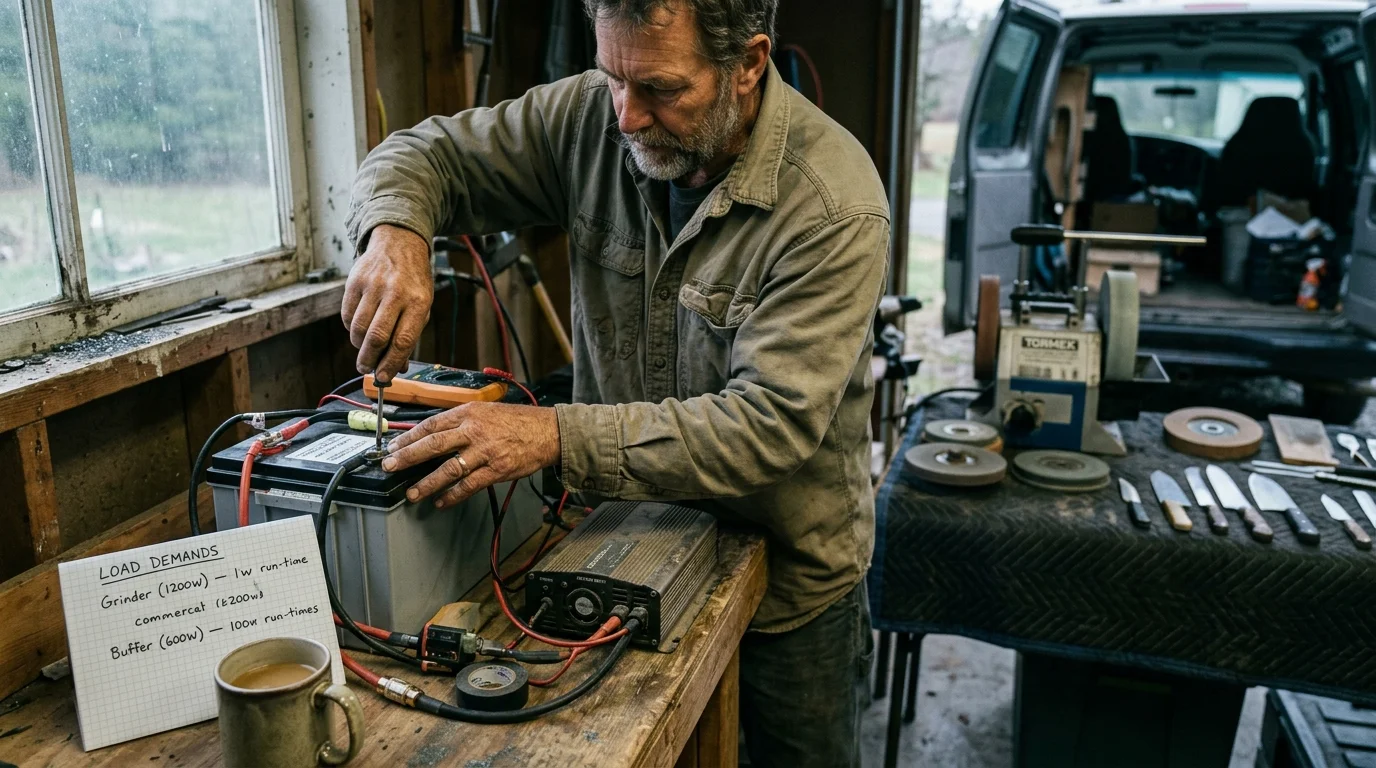
Relying on park outlets or noisy gas generators gets booths turned away before setup finishes. Cheap modified square-wave inverters also harm AC induction motors, while wet troughs drip along cords into live sockets.
Power the Tormek T-8, drawing 100 to 120 watts under friction, with a 500-watt-hour pure sine wave lithium station ($250 to $400) such as an EcoFlow River 2 Pro or Jackery Explorer 500.
Because active motor runtime stays under two hours per four-hour shift, a battery charged Friday evening finishes Saturday with thirty to forty percent remaining capacity. Pair it with three protective pieces:
- Heavy-Duty Switch Foot Pedal ($25): Controls wheel power by foot while hands hold the jig.
- Drip-Loop Extension Cord: Keeps stray water from running into electrical sockets.
- Weatherproof Station Cover: Protects the battery from splashes or morning drizzle.
Arthritic Grip Fatigue and Wrist Torque Across Thirty-Two Blades
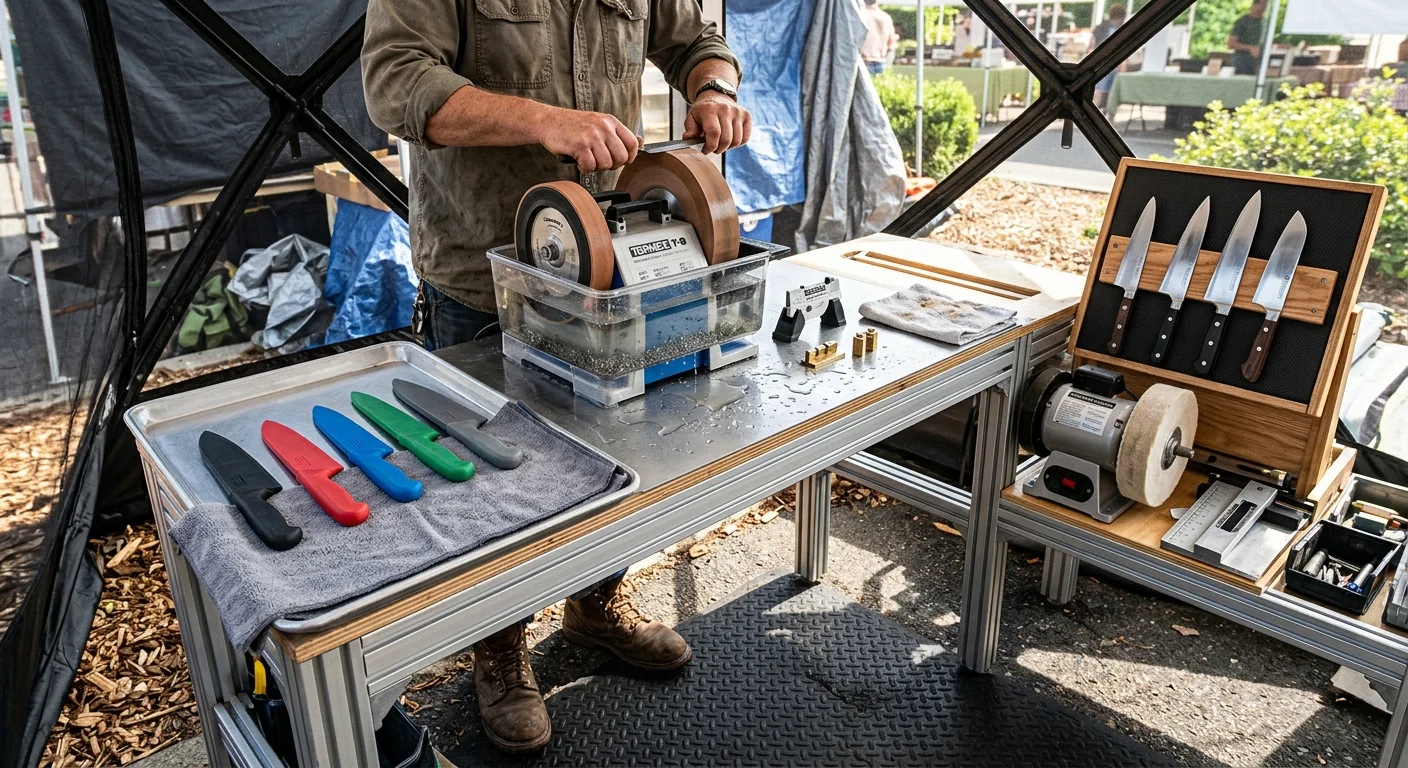
Freehand grinding forces arthritic thumbs and wrists to pinch wet steel across thirty-two tools in four hours. At eight items per hour, or six to seven minutes per blade, low tables hunch shoulders and reaching for switches torques tired elbows.
Set a height-adjustable folding workbench with locking legs at elbow height on an anti-fatigue mat, keeping total gear under eighty pounds. Clip a dry towel to your apron so cold trough water does not chill stiff finger joints.
Let the jigs hold blade angles instead of squeezing handles, and trigger the wheel with your foot pedal. Follow this eight-step loop for every ticket:
- Intake and Tagging: Log name and phone number on a two-part ticket and tape a matching number to the handle.
- Inspection: Check bevels under an LED magnifying lamp for chips, cracks, or warped tangs before quoting.
- Angle Matching: Use the Tormek AngleMaster WM-200 to set Western cutlery at 20 degrees per side and Japanese blades at 15 degrees.
- Water Bath Grinding: Grind the locked blade in clean trough water until an even burr forms.
- Honing and Stropping: Buff at matching angles on the PA-70 leather wheel to clear the burr.
- Paper Slice Testing: Test heel-to-tip sharpness on hanging phonebook paper or receipt tape.
- Sanitizing and Sheathing: Wipe clean with rubbing alcohol and slide into a rigid cardboard edge guard.
- Pick-Up Hand-Off: Text the customer and collect cash or tap-to-pay mobile payments against the ticket.
Unpriced Chip Repairs and Bottlenecks at Drop-Off
Skipping intake inspection leaves you eating extra grinding time when a customer drops off broken tips or deep edge chips. Reshaping damaged profiles means grading the stone coarser with the SP-650 Stone Grader before resetting the bevel.
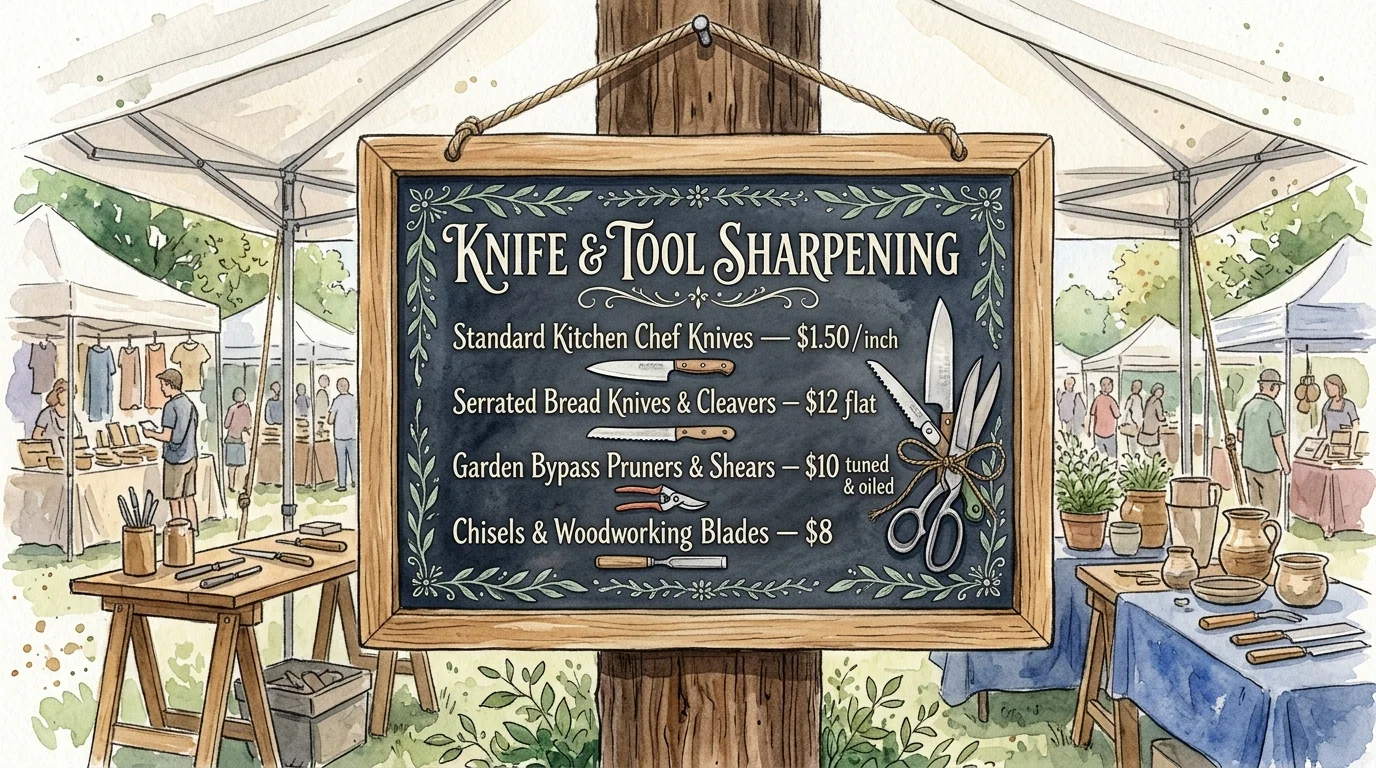
Measuring every blade at the counter also stalls drop-off lines when shoppers want to browse produce stalls. While $1.00 to $1.50 per blade inch is the standard benchmark, posting flat-rate tiers on an eye-level chalkboard speeds intake:
- Small Kitchen Cutlery (Under 6 inches): $7.00 flat rate for paring, utility, and steak knives.
- Large Kitchen Cutlery (6 to 10+ inches): $12.00 to $15.00 flat rate for chef, santoku, and carving knives.
- Serrated Bread Knives: $14.00 flat rate or per-inch pricing plus a $0.50 per inch gullet surcharge, finished on the leather honing wheel or shaped wheels.
- Fabric and Kitchen Shears: $10.00 to $14.00 per pair, including bevel reset and pivot tensioning.
- Garden Bypass Pruners and Loppers: $12.00 to $15.00 per unit, including wire-wheel cleaning and lubrication.
- Push-Mower Blades: $12.00 to $15.00 each for unmounted blades.
- Severe Tip and Chip Repairs: $3.00 to $5.00 surcharge quoted upfront.
Overlooking Overhead Fees and Overbooking Your Schedule
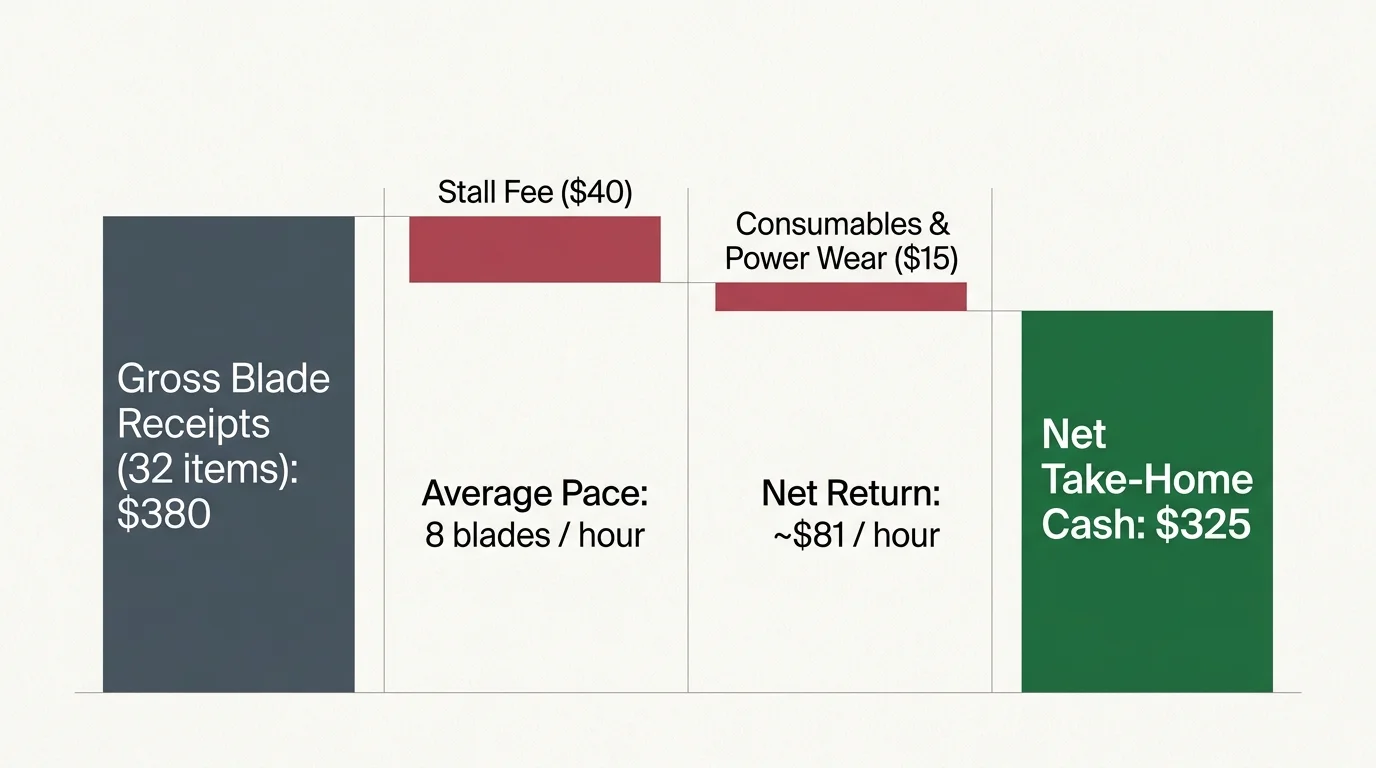
Counting Saturday cash as pure profit hides stall rent, prorated insurance, card fees, and consumables. Adding a Sunday market too soon can also flare up arthritic hands before your single-day routine feels effortless.
If you prefer using your hands to help neighbors without managing commercial permits and stall fees, starting a community repair cafe provides a rewarding volunteer-led alternative.
Model one Saturday morning first, arriving at 7:15 AM for an 8:00 AM to 12:00 PM market. Across eighteen customers and thirty-two tools, realistic gross revenue reaches $334.00:
- 14 large 8-inch chef knives at $1.50 per inch ($12.00 each): $168.00
- 8 small paring knives at flat rate ($7.00 each): $56.00
- 5 household and kitchen shears ($12.00 each): $60.00
- 3 garden bypass pruners ($14.00 each): $42.00
- 2 knife tip chip repairs ($4.00 surcharge each): $8.00
Subtracting $56.00 in daily operating overhead leaves $278.00 in clean net profit, or $69.50 per hour:
- Single-day stall fee: $35.00
- Prorated general liability insurance ($270 annual policy over 30 market days): $9.00
- Consumable supplies (honing compound, stone wear, edge guards, tags): $6.00
- Mobile card processing fees (approximately 3% on card transactions): $6.00
Repeating that single Saturday shift across thirty weeks yields over $8,300 in supplemental seasonal profit without overtaxing your hands. As Encore.org highlights, second-career artisans find purpose and community connection when skilled local services fit a sustainable pace.
Disclaimer: This article is for informational and inspirational purposes. Life decisions are deeply personal, and we encourage readers to pursue their dreams while considering their unique circumstances, health, and financial situation.