
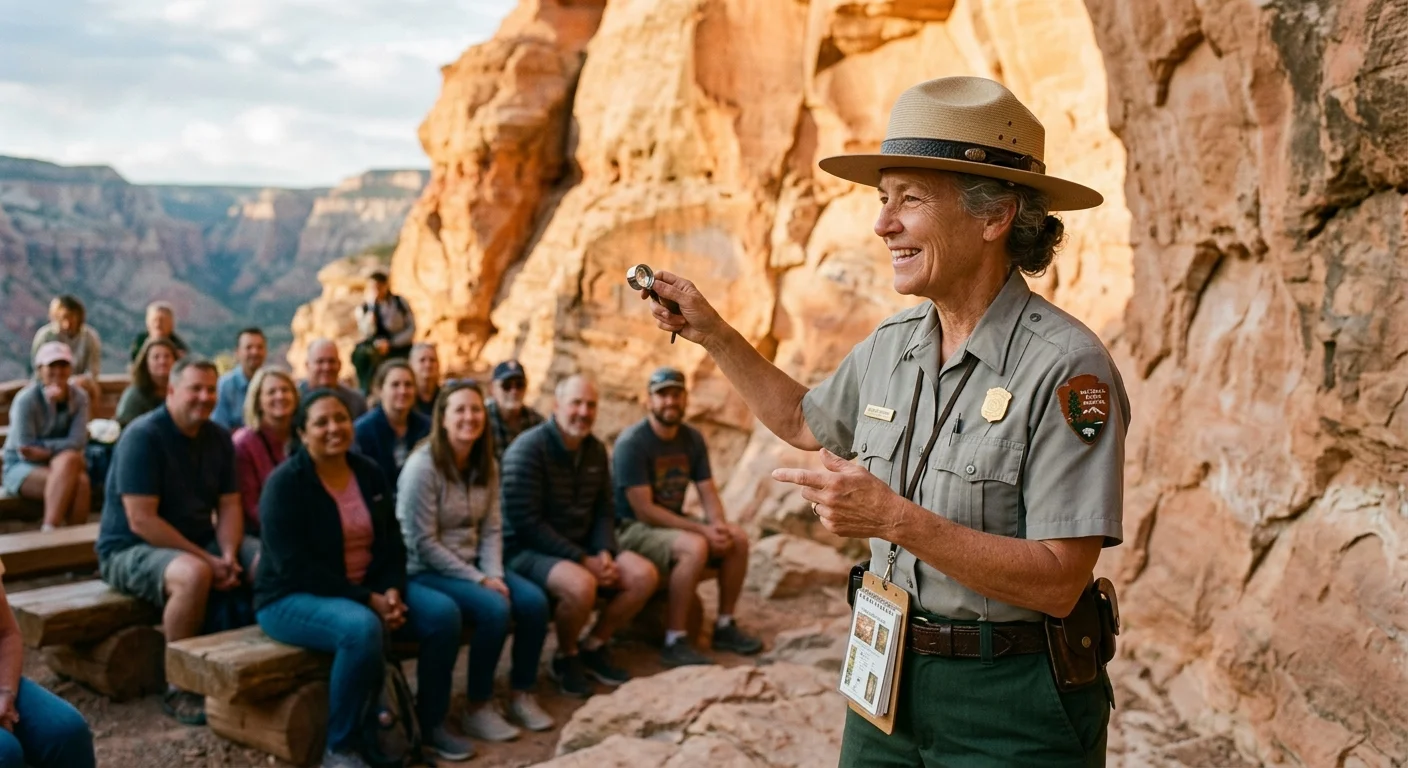
Your decades of teaching biology and earth science have prepared you for a vibrant encore career as an interpretive park ranger. The National Park Service actively benefits from your pedagogical skills and scientific background.
Most applicants fail federal hiring by shrinking their credentials onto private-sector resumes. Your classroom tenure directly qualifies you for GS-05 interpretive positions—bypassing lower entry tiers—if you document your teaching hours against federal specialized experience metrics.
Securing the badge requires navigating strict USAJOBS applicant cutoffs, seasonal housing deductions under federal circulars, and trail-readiness standards. Here is your step-by-step roadmap to trading the classroom for national park amphitheaters.
Translating Secondary Science Pedagogy into GS-0025 Specialized Experience
Federal human resources specialists do not evaluate job applications like school district principals. They strictly measure your background against the Office of Personnel Management (OPM) GS-0025 qualification manual.
As a retired science teacher, you possess deep expertise in public communication, lab safety, and natural science. These exact capabilities align with the core duties of an interpretive ranger.
Interpretive rangers translate complex environmental processes into engaging public presentations. Your classroom experience designing lesson plans and lecturing students fulfills this requirement directly.
Organizations like Encore.org champion second-career educators bringing immense civic value through public service roles. Your pedagogical background gives you a competitive advantage over younger applicants lacking public presentation skills.
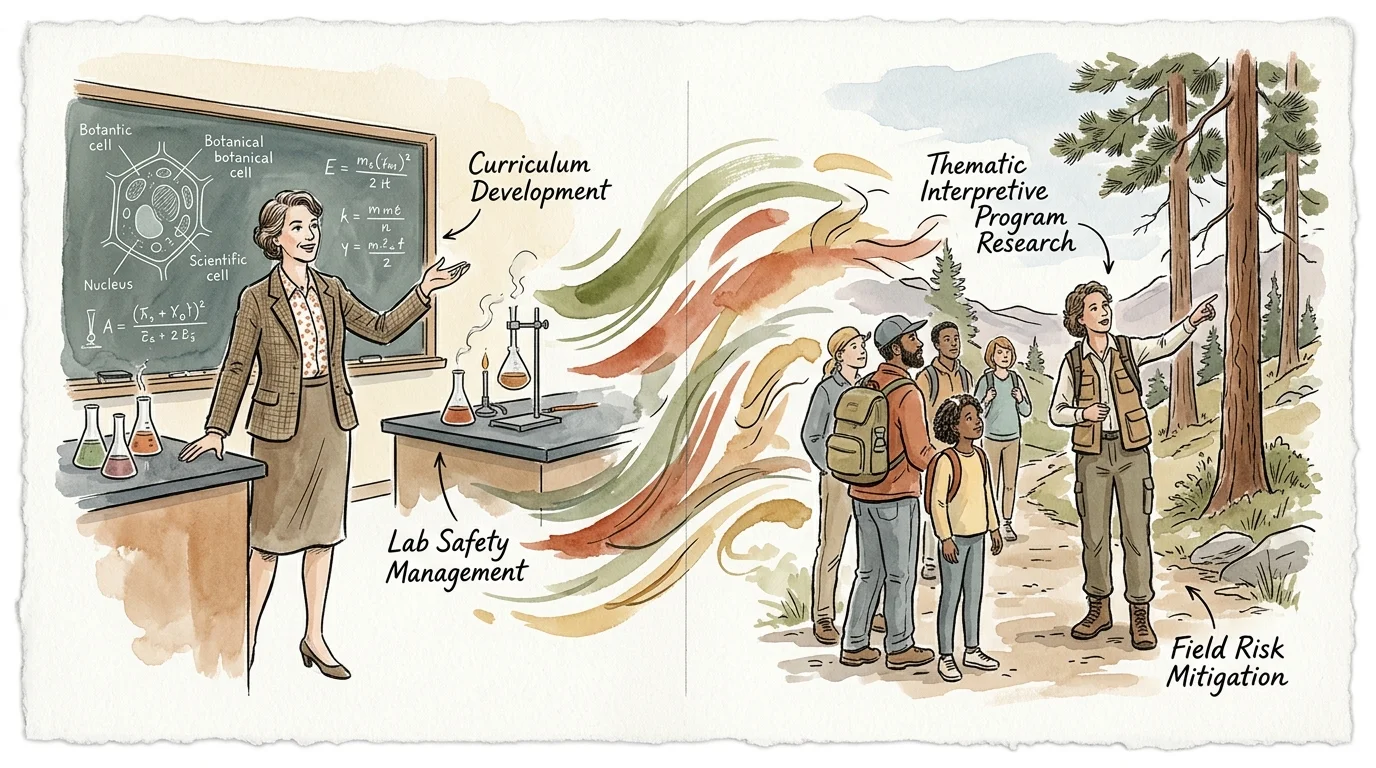
To satisfy the OPM standard, your resume must translate educational vocabulary into federal terminology. You must frame daily classroom teaching as public resource interpretation and educational program delivery.
- Curriculum Development: Translates to thematic interpretive program research and script writing.
- Laboratory Safety Management: Translates to public safety oversight, field risk mitigation, and hazard communication.
- Field Trips and Outdoor Demonstrations: Translates to guided interpretive walks, resource stewardship, and trail safety monitoring.
- Parent and Community Engagement: Translates to diverse stakeholder relations, visitor orientation, and public inquiries.
Never downplay your teaching tenure as mere general experience. When properly framed, every school year demonstrates direct mastery of interpretive ranger competencies.
Deconstructing Pay Grades: GS-04 Versus GS-05 Qualification Benchmarks
Seasonal interpretive rangers typically enter the federal system at either the GS-04 or GS-05 pay grade. Understanding the qualification boundaries between these tiers protects you from accepting lower compensation than you deserve.
Under the 2026 OPM General Schedule, a GS-04 Step 1 position carries a nationwide base salary of $31,103 ($14.90 per hour), or $36,409+ with minimum 17.06 percent “Rest of U.S.” locality or special-rate pay depending on geographic location.
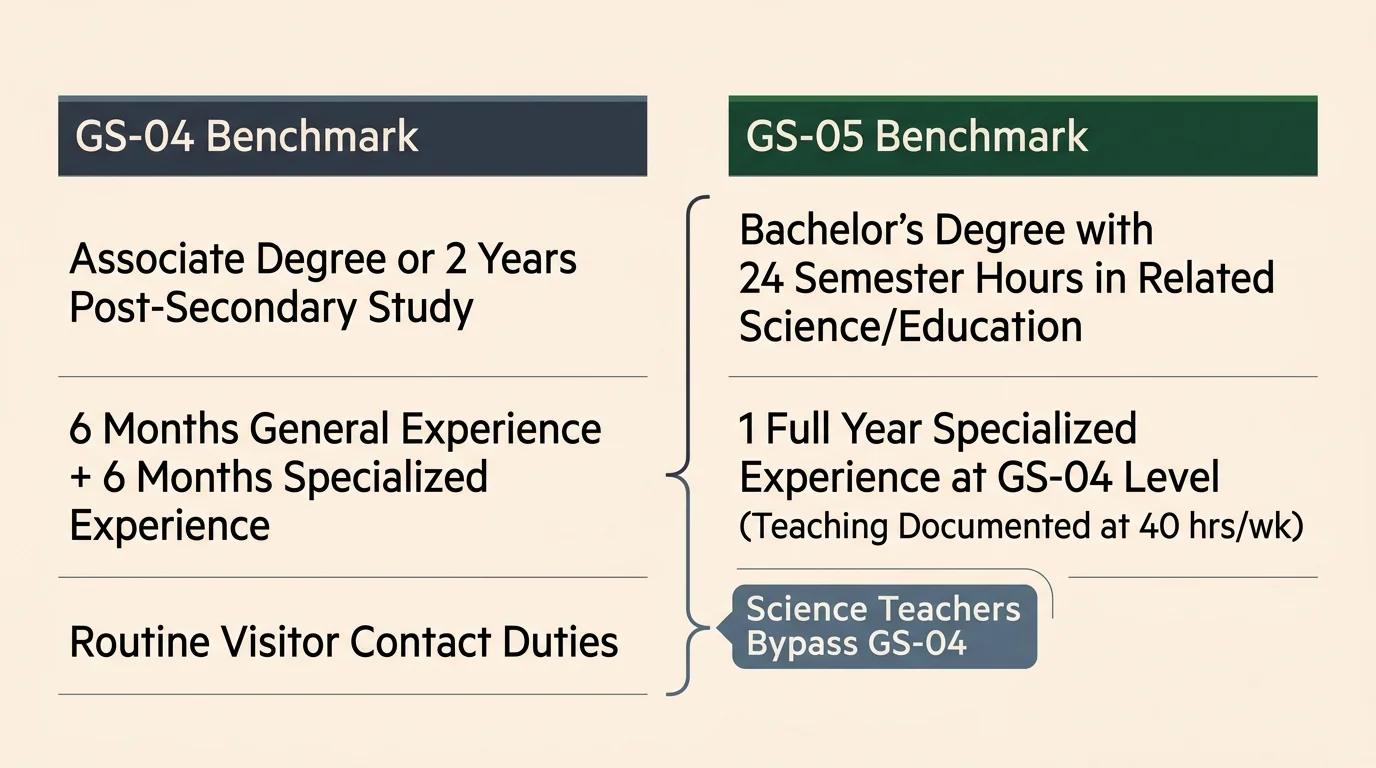
Qualifying for GS-04 requires two years of education above high school or six months of general experience paired with six months of specialized experience. Many general applicants enter here.
In contrast, GS-05 Step 1 positions start at a base salary of $34,799 per year ($16.67 per hour) before locality adjustments. Adding the minimum 17.06 percent “Rest of U.S.” locality pay brings total compensation to $40,736 per year ($19.52 per hour), and higher in major metro locality areas.
You qualify for GS-05 through education alone if you hold a four-year bachelor’s degree with major study in related fields. Qualifying subjects include biology, geology, botany, environmental science, or secondary education with a science concentration.
Alternatively, your decades of science teaching directly satisfy the requirement for one full year of specialized experience equivalent to GS-04 work. You can qualify through education, specialized experience, or a combination of both.
The Two-Page Federal Resume Formula: Beating the OPM Algorithm
A common mistake made by corporate and academic retirees is submitting an overly long resume. As of September 2025, OPM strictly caps federal resumes on USAJOBS at two pages for Title 5 positions—submitting a longer resume will disqualify your application.
A successful federal resume must prioritize concise, impact-driven bullet points within two pages while still keeping required details. Federal HR specialists cannot make assumptions; they credit experience only when every specific requirement is explicitly stated.
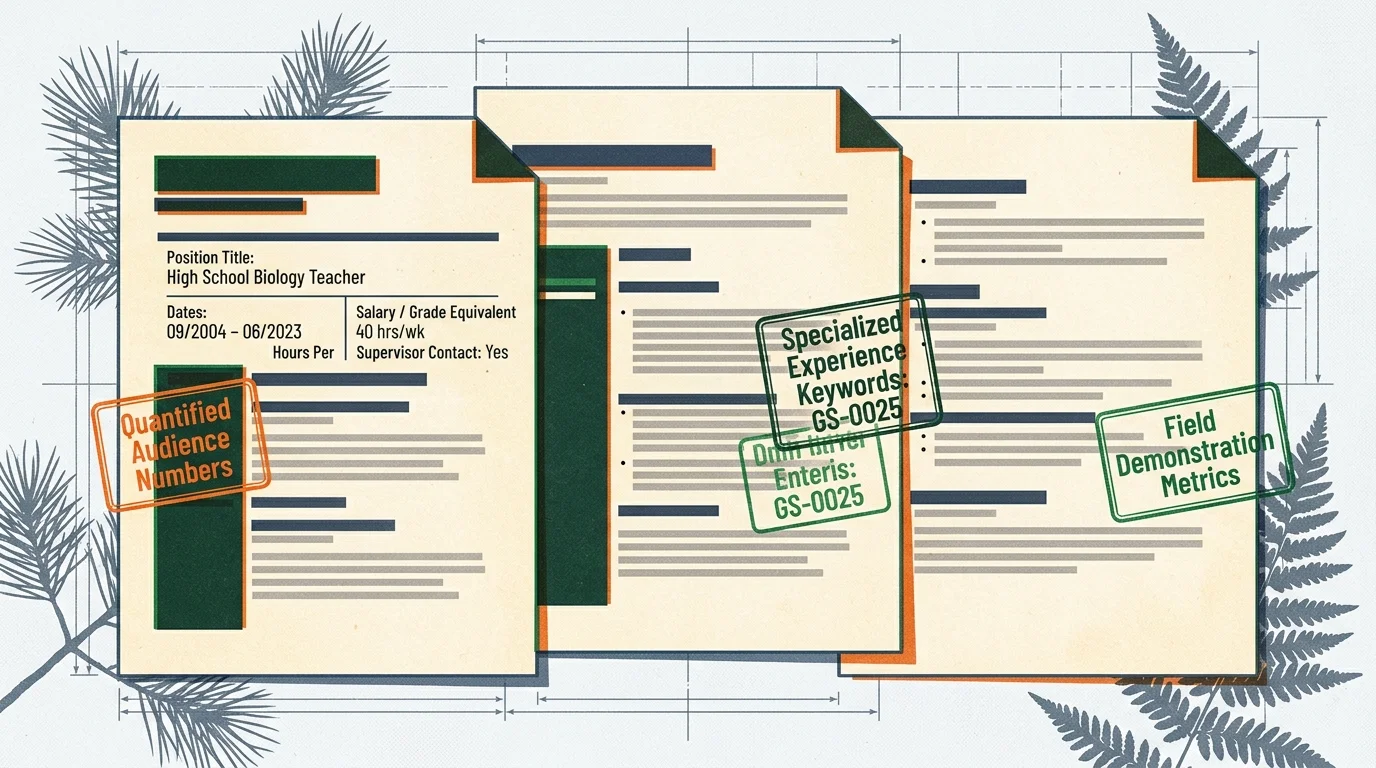
Each professional position on your resume must contain mandatory OPM administrative data in the job header. Leaving out even one of these details invalidates the work entry during evaluation.
- Exact Dates of Service: List month and year for both start and end dates (e.g., 08/2004 to 06/2023).
- Average Hours Per Week: Specify your exact work volume (e.g., 40 hours per week); federal HR cannot grant credit without this number.
- Supervisor Identification: Include your principal or department head’s full name, current phone number, and a notation stating “May contact.”
- Compensation History: Document your ending annual salary or school district pay step.
- Series and Grade Equivalent: Note the federal equivalent grade for context (e.g., GS-05 equivalent).
Following your header, write comprehensive narrative bullet points detailing your duties. Directly incorporate key phrasing from the vacancy announcement, such as public speaking, natural history interpretation, and visitor orientation.
The online application includes an Occupational Questionnaire with multiple-choice self-assessments. You must answer truthfully at the highest defensible level while ensuring your resume provides undeniable narrative proof for each rating.

Timing the Window: Navigating 100-Applicant Caps and USAJOBS Openings
Securing a summer ranger post requires understanding the federal hiring timeline. National Park Service summer seasonal listings go live between October and February, months before snow melts from park passes.
Most seasonal vacancies utilize strict applicant intake caps set at 100, 150, or 200 submissions. Postings automatically close at 11:59 PM Eastern Time on the exact day that cap is met.
Flagship parks like Grand Canyon, Zion, or Glacier regularly hit their applicant caps within 24 to 48 hours of posting. Hesitating for even one day can lock you out of an entire park season.
Create a USAJOBS account well before October and save pre-configured search alerts for GS-0025 roles across your target regions. Build your master two-page resume in the USAJOBS Resume Builder tool so you can submit within minutes.
Standard seasonal positions operate under 1,039-hour temporary appointment caps under Title 5 regulations. This limit equals roughly six months of full-time work, leaving your winters free for travel or rest.
Age limits do not apply to GS-0025 interpretive positions. While law enforcement rangers face mandatory retirement at age 57 under 5 U.S.C. §§ 8335, non-enforcement interpretive rangers have no maximum entry age.
The Age Discrimination in Employment Act (ADEA) legally protects all applicants aged 40 and older. The agency actively values mature professionals who communicate with poise and emotional maturity.
Former ranger Betty Reid Soskin retired from Rosie the Riveter National Historical Park in 2022 at age 100. Her celebrated career underscores that enthusiasm, intellect, and lived experience matter far more than youth.
Workforce insights from AARP confirm that encore workers bring superior dependability and mentoring capabilities to public teams. Your decades in education make you an exceptional candidate for park leadership.
Government Housing Realities: OMB Circular A-45, Dorms, and RV Pads
Landing a seasonal tentative job offer brings immense excitement, but park housing presents serious logistical challenges. Employee housing in remote national parks is notoriously limited, aging, and highly coveted.
Retirees traveling with their own rigs can also consider becoming an RV campground host as an alternative way to secure free campsite hookups in public lands.
Federal quarters are governed strictly by Office of Management and Budget (OMB) Circular No. A-45 and Department of the Interior Manual 400 DM 3. These documents establish rental charges and administrative guidelines.
Rental rates reflect local private-market rental comparables minus deductions for remoteness and shared amenities. The park automatically deducts your rental charges from your bi-weekly federal paycheck through automated payroll adjustments.
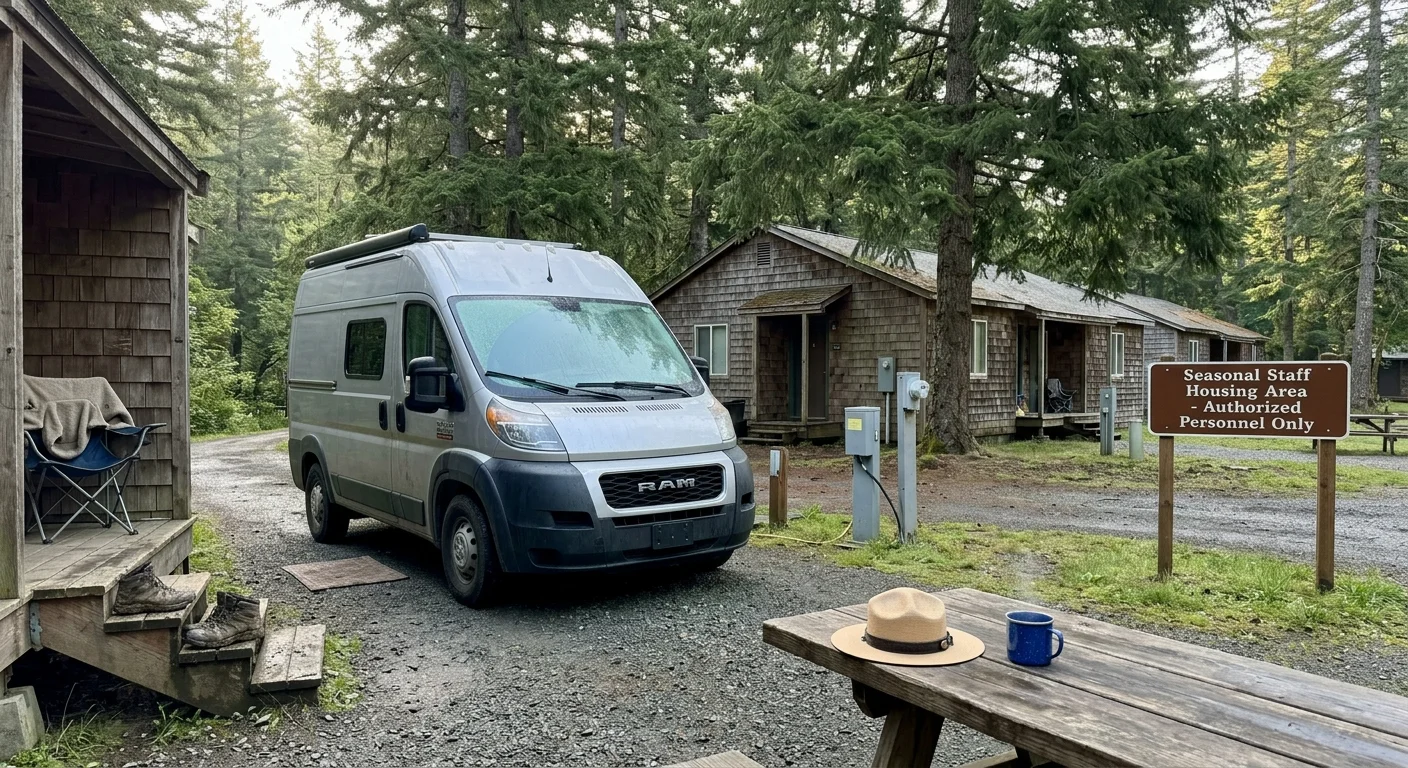
Park housing generally falls into three categories: shared dormitory rooms, rustic historic cabins, and designated employee RV sites. Shared dormitories provide a private bedroom alongside communal cooking and bathroom facilities.
Most shared park housing strictly prohibits personal pets due to communal living arrangements and local wildlife management rules. If you travel with dogs or cats, you must plan your living strategy carefully.
An RV pad provides the optimal balance of privacy, pet flexibility, and independence for many retired educators. Flagship parks often maintain dedicated employee RV campgrounds featuring complete electrical, water, and sewer utility hookups.

Comparing Seasonal Housing Options in National Parks
Choosing the right seasonal accommodation depends on your budget, privacy needs, and lifestyle equipment. Evaluating the trade-offs of each government housing option helps you select the best fit during the application process.
| Housing Type | Governing Standard & Utility Setup | Average Bi-Weekly Payroll Deduction (OMB A-45) | Pet Allowance & Space Constraints | Ideal Retiree Profile |
|---|---|---|---|---|
| Shared Employee Dormitory | OMB Circular A-45 Class C; shared central HVAC, communal kitchen, shared bathroom facilities. | $180 – $260 bi-weekly (deducted directly from payroll) | Strictly prohibited; single private bedroom (approx. 120–160 sq ft). | Solo seasonal rangers seeking minimal overhead and zero personal vehicle towing requirements. |
| Historic Rustic Field Cabin | OMB Circular A-45 Class B/C; independent wood stove or propane heat, private or shared bath. | $280 – $420 bi-weekly (deducted directly from payroll) | Rarely allowed; private detached structure (approx. 250–450 sq ft). | Couples or rangers desiring total privacy and immersion in wilderness settings. |
| Full-Hookup Employee RV Pad | 400 DM 3 standards; dedicated 30/50-amp electric, potable pressurized water, sewer hookup. | $120 – $210 bi-weekly (utility flat rate included) | Permitted per park pet guidelines; space limited only by rig length (typically 30–45 ft). | Rangers traveling with personal motorhomes, travel trailers, and domestic companion pets. |
Review housing availability notes within individual USAJOBS announcements before submitting your application. Some remote monuments require rangers to furnish their own trailers, while others require dormitory living.
Meeting Field Stamina Demands: Trail Walks, Elevation, and Sun Exposure
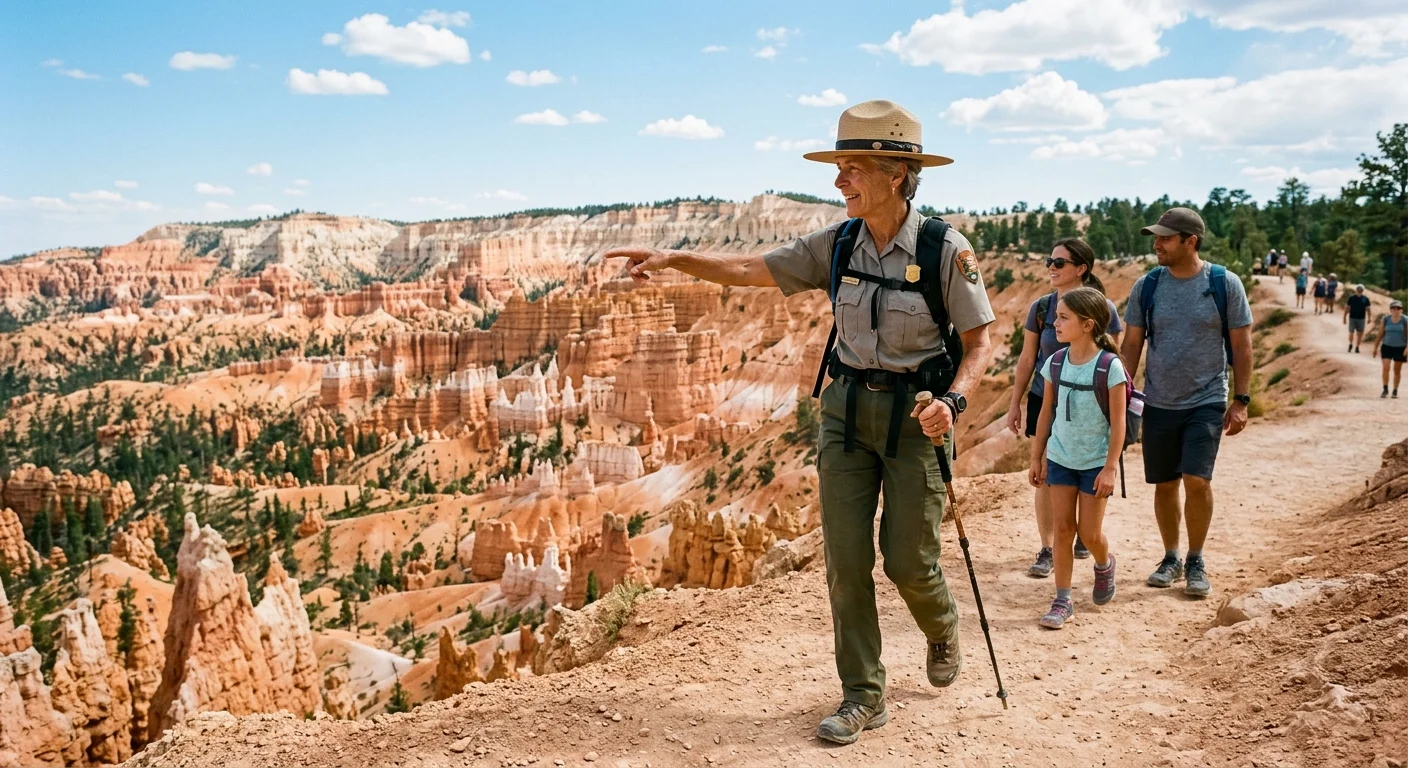
Interpretive rangers are mobile educators rather than sedentary lecturers. Your daily assignments will include guiding rocky trail tours, standing during outdoor patio talks, and managing bustling visitor center lines.
At parks like Bryce Canyon, Rocky Mountain, or Great Basin, you will deliver presentations above 8,000 feet of elevation. Thin mountain air, intense solar radiation, and sudden thunderstorms demand robust cardiovascular health.
Health researchers at the National Institute on Aging demonstrate that functional strength training and aerobic conditioning preserve joint stability and physical stamina. Developing personal physical resilience ensures you finish six-month seasons feeling energized rather than exhausted.
Begin physical preparation three to four months before your official reporting date. Emphasize low-impact conditioning that directly mirrors the repetitive mechanical demands of trail interpretation.
- Incline Hiking with Weight: Walk 3 to 5 miles thrice weekly wearing a 15-pound pack to simulate field gear and first-aid supplies.
- Sun and Heat Acclimatization: Train outdoors during midday warmth while wearing your broad-brim straw uniform hat and sun-protective layers.
- Hydration and Electrolyte Management: Practice drinking 3 to 4 liters of water daily during strenuous outdoor activity to prevent altitude dehydration.
- Vocal Endurance Exercises: Practice diaphragmatic breathing to project your voice outdoors against rushing river noise and mountain wind without straining your vocal cords.
Your decades of teaching standing up provide a solid foundation of daily endurance. Adjusting that base to high altitude and uneven trails ensures a safe and fulfilling season.
Financial Reality: A Worked Seasonal Compensation and Housing Deduction Example
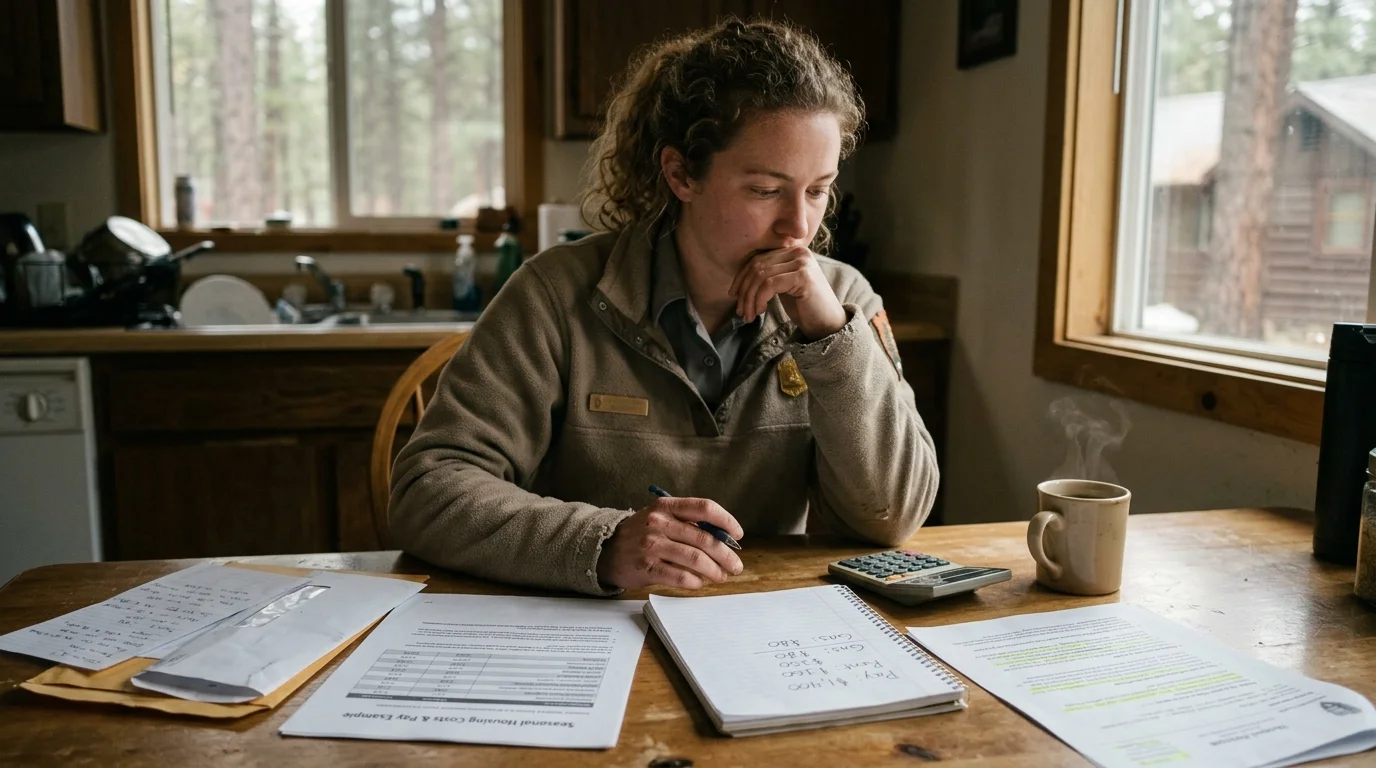
Seasonal rangering provides profound life enrichment, but understanding the financial balance sheet keeps your retirement budget stable. Calculating actual cash flow prevents unexpected surprises during your federal appointment.
Consider a realistic scenario for a GS-05, Step 1 seasonal interpretive ranger working a standard 1,039-hour appointment across 26 weeks. The position is located at a western mountain park within the “Rest of U.S.” locality area.
Under the 2026 General Schedule, the base hourly rate for GS-05, Step 1 is $16.67. Adding the mandatory 17.06 percent “Rest of U.S.” locality pay adjustment establishes an hourly wage of $19.52.
Working full-time at 40 hours per week yields an 80-hour bi-weekly gross pay of $1,561.60. Over 1,039 total hours, gross seasonal earnings equal $20,281.28.
Next, we calculate mandatory tax obligations and government quarters rent deductions under OMB Circular A-45. In this scenario, you reside in a standard shared park dormitory room.
- Gross Bi-Weekly Pay (80 hours at $19.52/hr): $1,561.60.
- Federal and State Income Tax Withholding (~18% combined): -$281.09.
- FICA and Medicare Contributions (7.65% mandatory): -$119.46.
- OMB Circular A-45 Dormitory Housing Payroll Deduction: -$210.00 bi-weekly (covers private room, utilities, shared kitchen).
- Net Bi-Weekly Paycheck Deposit: $951.05 deposited directly into your bank account.
Across the 13 bi-weekly pay periods of your 26-week appointment, your net take-home pay totals $12,363.65 after all housing costs and taxes. Your primary living shelter and utilities are completely settled before your check arrives.
For retired teachers drawing a state pension or retirement account distributions, this net federal paycheck offers comfortable discretionary spending. It fully covers food, trail gear, fuel, and weekend exploration across public lands.
Frequently Asked Questions
Does my high school teaching experience genuinely qualify as specialized experience for NPS ranger jobs?
Yes, secondary science teaching directly satisfies GS-05 specialized experience requirements when properly documented. Human resources credits your lesson design, public lecturing, safety supervision, and scientific explanation as direct matches for park interpretation.
Is there an upper age limit for applying to seasonal interpretive park ranger jobs?
No, non-law enforcement interpretive ranger positions (GS-0025) carry no upper age limit. The Age Discrimination in Employment Act protects applicants aged 40 and older across all federal seasonal hiring.
Can I bring my dog or cat if I live in seasonal park housing?
Most shared employee dormitories strictly forbid domestic pets to maintain hygiene and prevent conflicts. However, rangers living in self-contained employee RV pads or select private cabins are frequently permitted pets under local park policies.
How many hours can I work each year as a seasonal federal park ranger?
Standard seasonal temporary appointments under Title 5 hiring authorities are capped at 1,039 hours per service year. This limit equates to roughly six months of full-time, 40-hour workweeks.
When should I start searching USAJOBS for summer park ranger appointments?
You should begin monitoring USAJOBS between October and December for the upcoming summer season. Postings often fill their applicant caps within 24 to 48 hours, requiring immediate application submissions.
Disclaimer: This article is for informational and inspirational purposes. Life decisions are deeply personal, and we encourage readers to pursue their dreams while considering their unique circumstances, health, and financial situation.





1 Comment