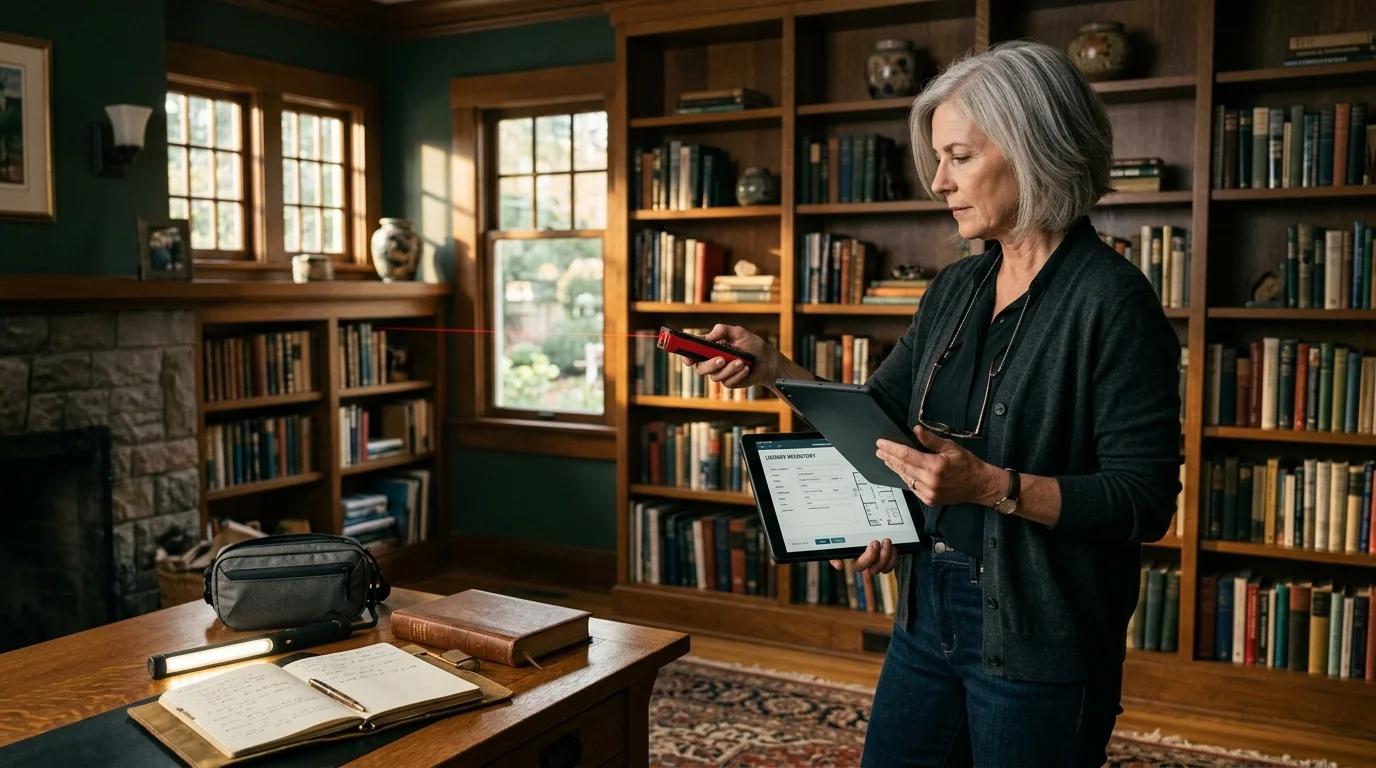
A retired operations executive over 60 can turn corporate risk skills into a home inventory firm without climbing ladders or crawling into attics. An audit-proof digital registry protects insurance policyholders while sparing your joints from marathon physical labor.
Most second-career advice pushes casual hourly organizing, which caps pay and drains stamina across long shoots. By billing per square foot with ground-level boundaries and under $1,500 in equipment, you can reach $74.58 per hour in an ordered thirty-day launch.
Why Ground-Level Risk Audits Beat Hourly Organizing After 60
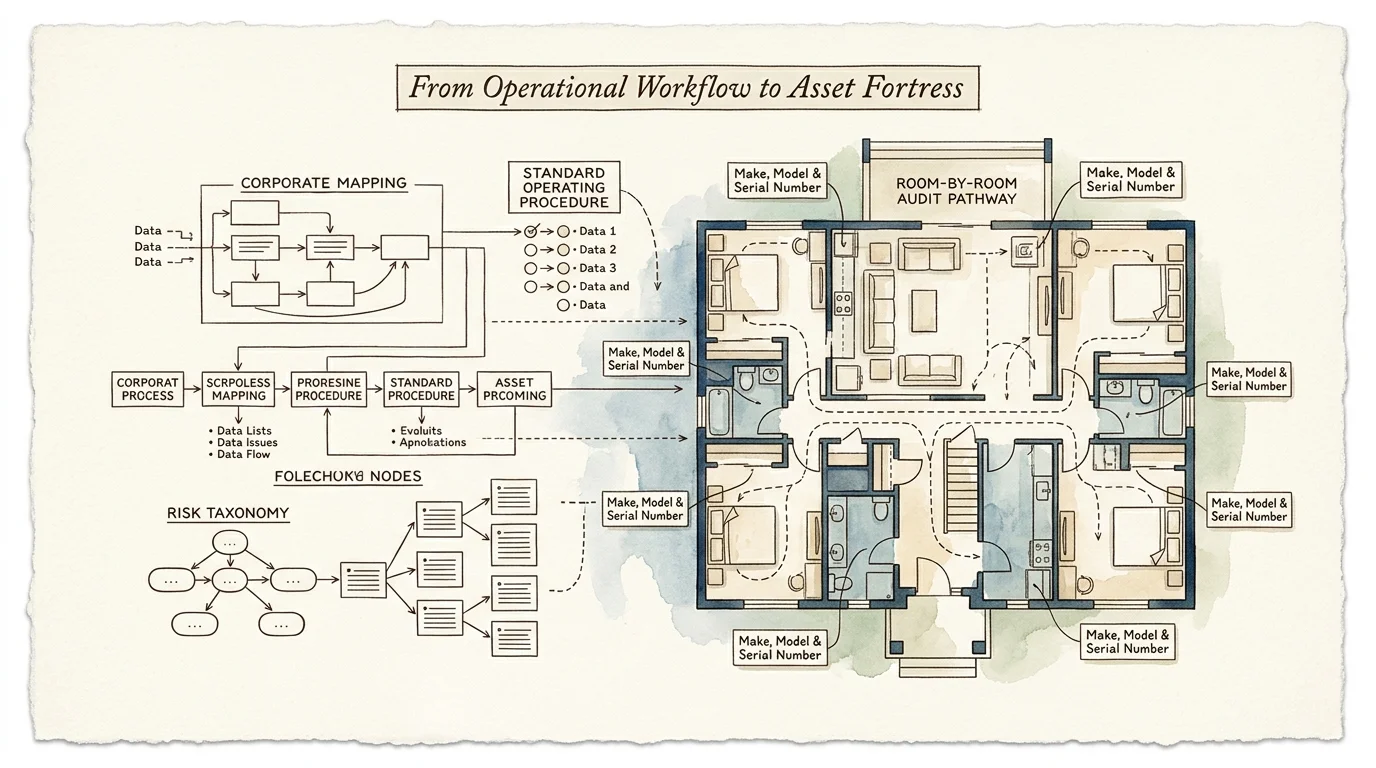
Casual organizers haul bins and crouch in closets for modest hourly pay. An operations-led audit avoids lifting altogether by documenting property through repeatable standard operating procedures.
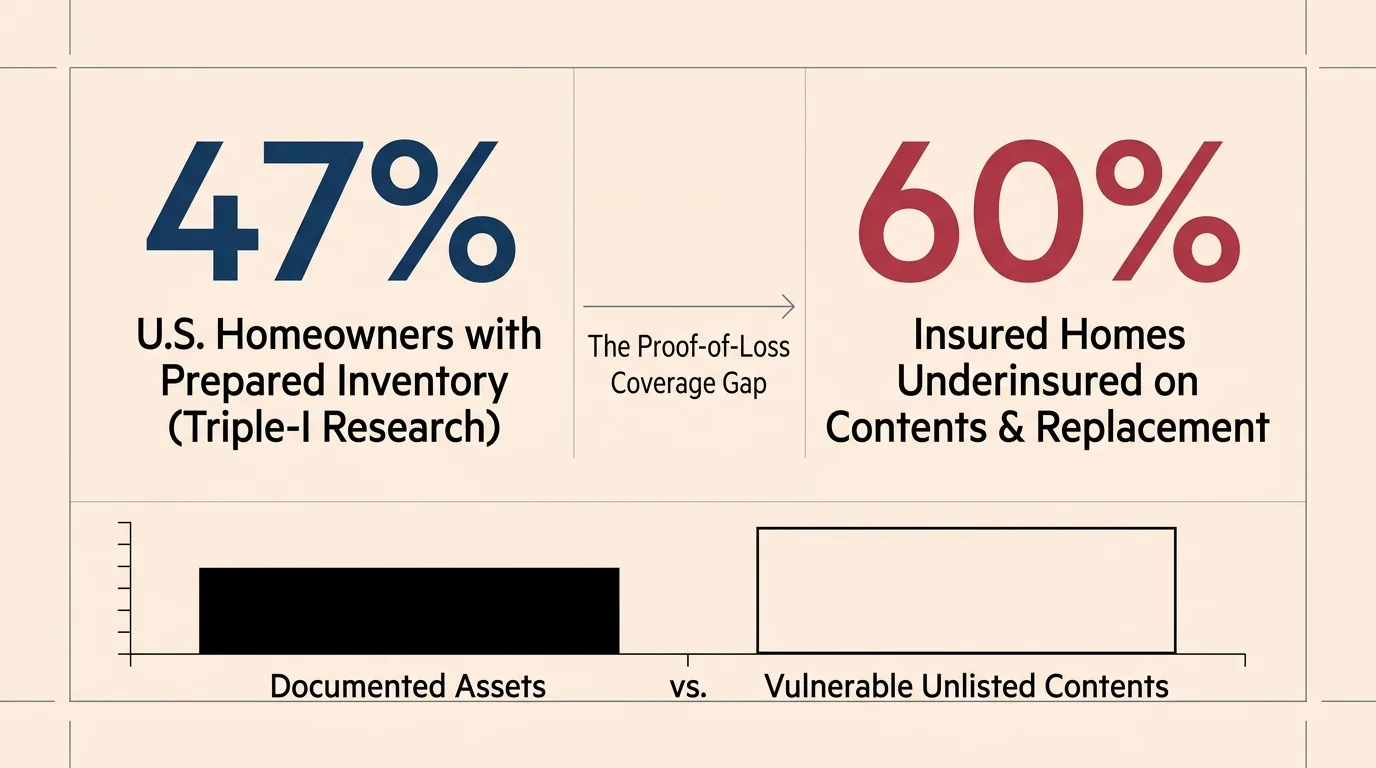
Insurance Information Institute (Triple-I) and Munich Re data show only 47% of U.S. homeowners maintain an inventory. Analyses from CoreLogic (Cotality) and Triple-I estimate that roughly 60% to two-thirds of U.S. homes are underinsured relative to full rebuilding costs.
ISO and Triple-I statistics show 5% to 5.3% of insured homes file property damage or theft claims annually. Without serial numbers and visual proof, homeowners accept lower payouts after fire, flood, or burglary.
Groups like Encore.org note experienced professionals thrive turning executive skills into specialized local services. Retirees who enjoy field checklists can also explore becoming a manufactured home inspector.
Your operational skills set an insurance audit apart from decluttering:
- Standard operating procedures: Repeatable room-by-room sequences that minimize backtracking across multi-level homes.
- Risk management protocols: Written boundaries that protect delicate property and keep your body off ladders.
- Data taxonomy management: Structured categories for electronics, fine art, firearms, and mechanical equipment.
- Vendor and partner communication: Fluent coordination with insurance adjusters, estate attorneys, and private clients.
Register Your LLC, Insurance, and Ground-Only Scope First
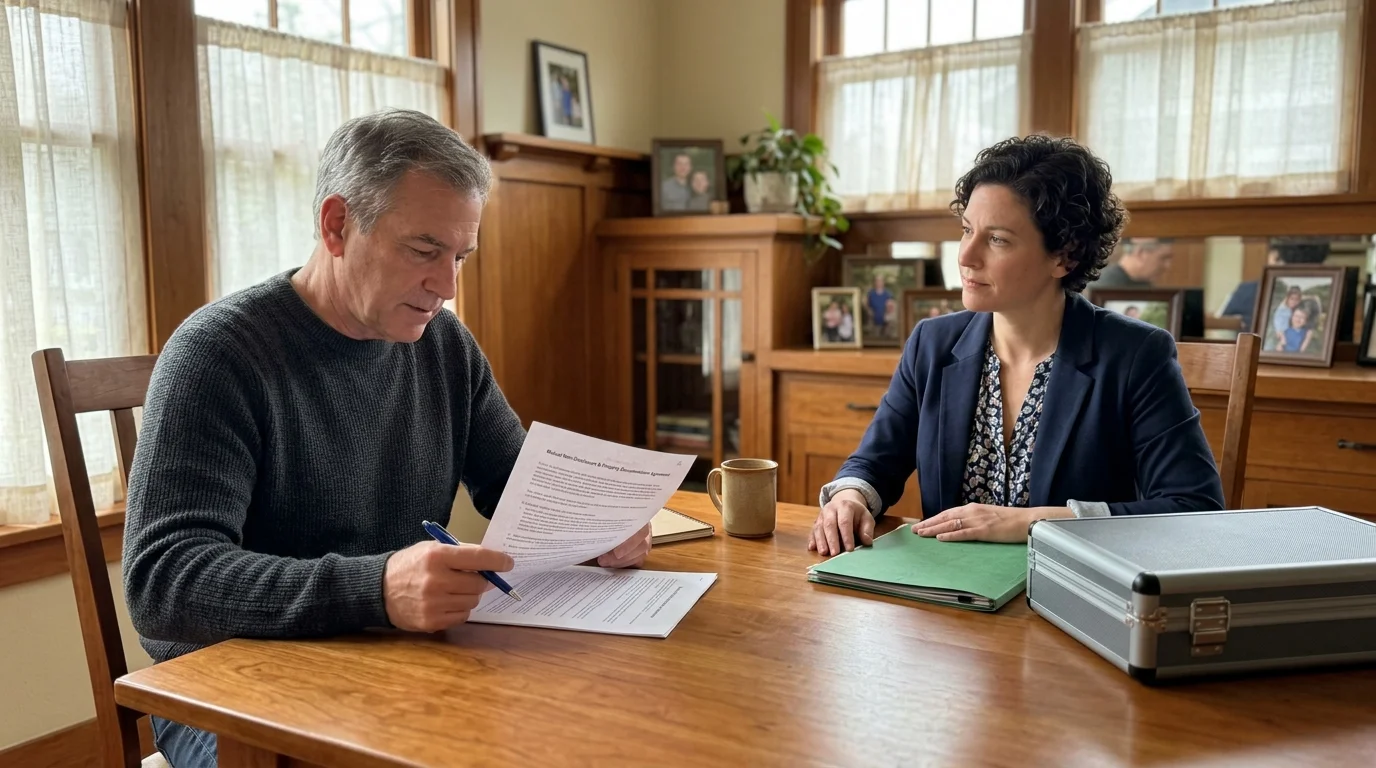
Complete legal, insurance, and boundary paperwork during the first five days of your thirty-day launch. Setting these rules first prevents liability gaps and unsafe climbing.
Register an LLC with your state and obtain an IRS Federal Employer Identification Number (EIN). Secure commercial coverage across two essential policies before entering any home:
- Commercial General Liability: Provides $1,000,000 to $2,000,000 in protection against accidental on-site property damage, such as knocking over an antique vase.
- Errors and Omissions (E&O) Insurance: Covers claims alleging missed documentation or data discrepancies during an insurance settlement dispute.
Combined, both policies generally cost $450 to $850 annually through small-business brokers. Draft a Non-Disclosure and Confidentiality Agreement (NDA) and a Limitation of Liability and Scope of Service clause.
Specify that you deliver objective documentation, not certified appraisals or gemological grading. Exclude ladder work, unfinished attics, and crawl spaces from on-site sessions.
Require the homeowner on-site and ask them to move high-shelf or attic items to tables beforehand. Clients must lock away firearms, cash, currency collections, and medications.
Check before moving on: Confirm you hold your IRS EIN letter, active liability and E&O certificates, and signed-ready NDA and scope forms.
Assemble a Lightweight, Ladder-Free Field Kit Second
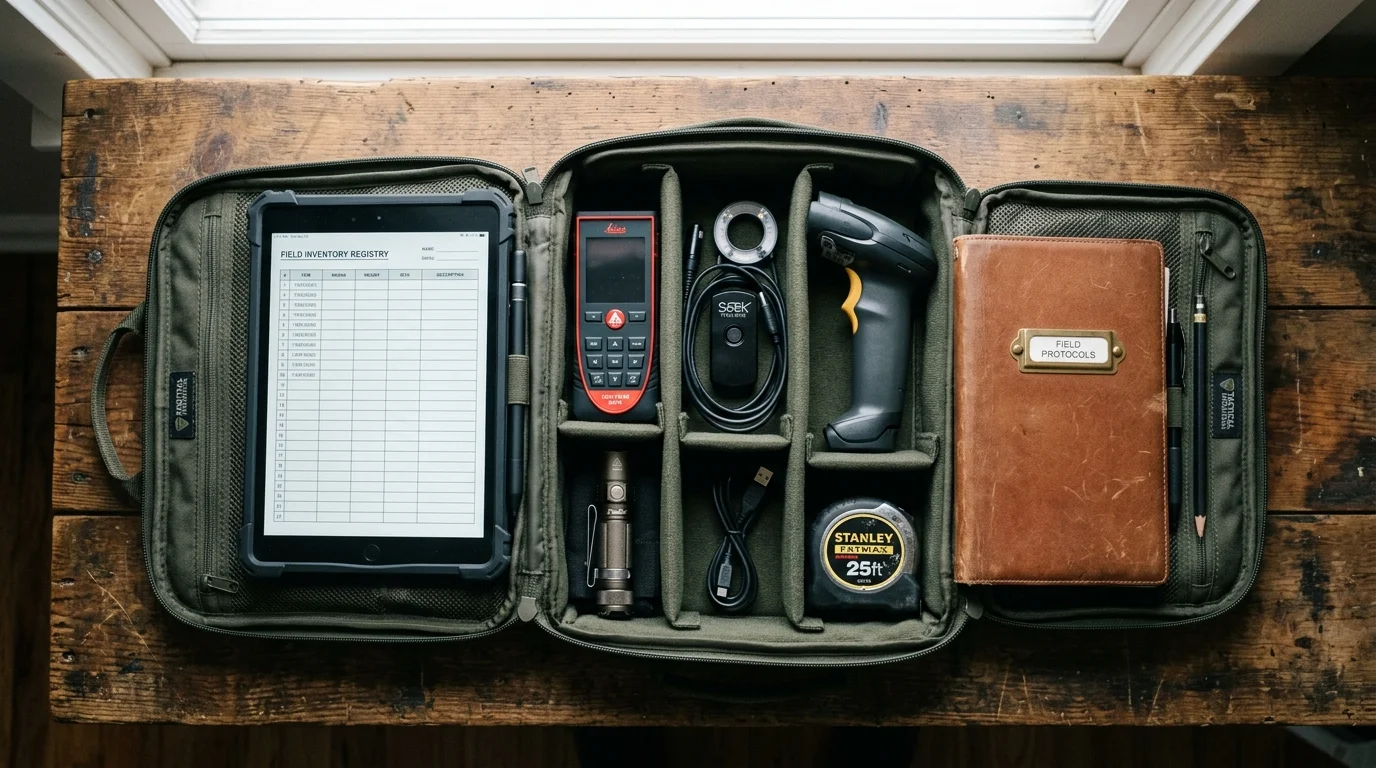
Order your kit during week two within your $800 to $1,800 startup budget. Long-range optics and tabletop lighting replace bulky trailers, manual tapes, and step stools.
Buy these five tools packed in an Apache 3800 protective case:
- Bosch Blaze GLM 50 C laser measure ($119.00): Calculates room dimensions up to 165 feet with ±1/16 in accuracy and Bluetooth sync while you stand comfortably.
- Apple iPhone 15 Pro or iPad Pro ($999.00): Captures 48-megapixel macro stills, 4K 60fps video sweeps, and LiDAR room measurements without extra camera bodies.
- Neewer 660 bi-color LED panel ($85.00): Battery-powered 3200K-5600K light with a 96+ CRI rating that brightens dark closets and basements from the doorway.
- Foldio2 Plus 15-inch macro box ($95.00): Triple-LED tabletop studio that lets you photograph estate jewelry, luxury watches, and coins while seated.
- Kingston IronKey Locker+ 50 64GB drive ($65.00): XTS-AES 256-bit hardware-encrypted USB drive used to deliver the final client archive.
Add shoe covers and white cotton gloves for fine art, porcelain, and silver. Staying under $1,500 protects capital while capturing serial numbers comfortably.
Check before moving on: Pair the laser measure via Bluetooth to your iPhone or iPad, test LED battery output, and verify one-hand carry comfort.
Configure Your Encrypted Vault and Paced Home Trial Third
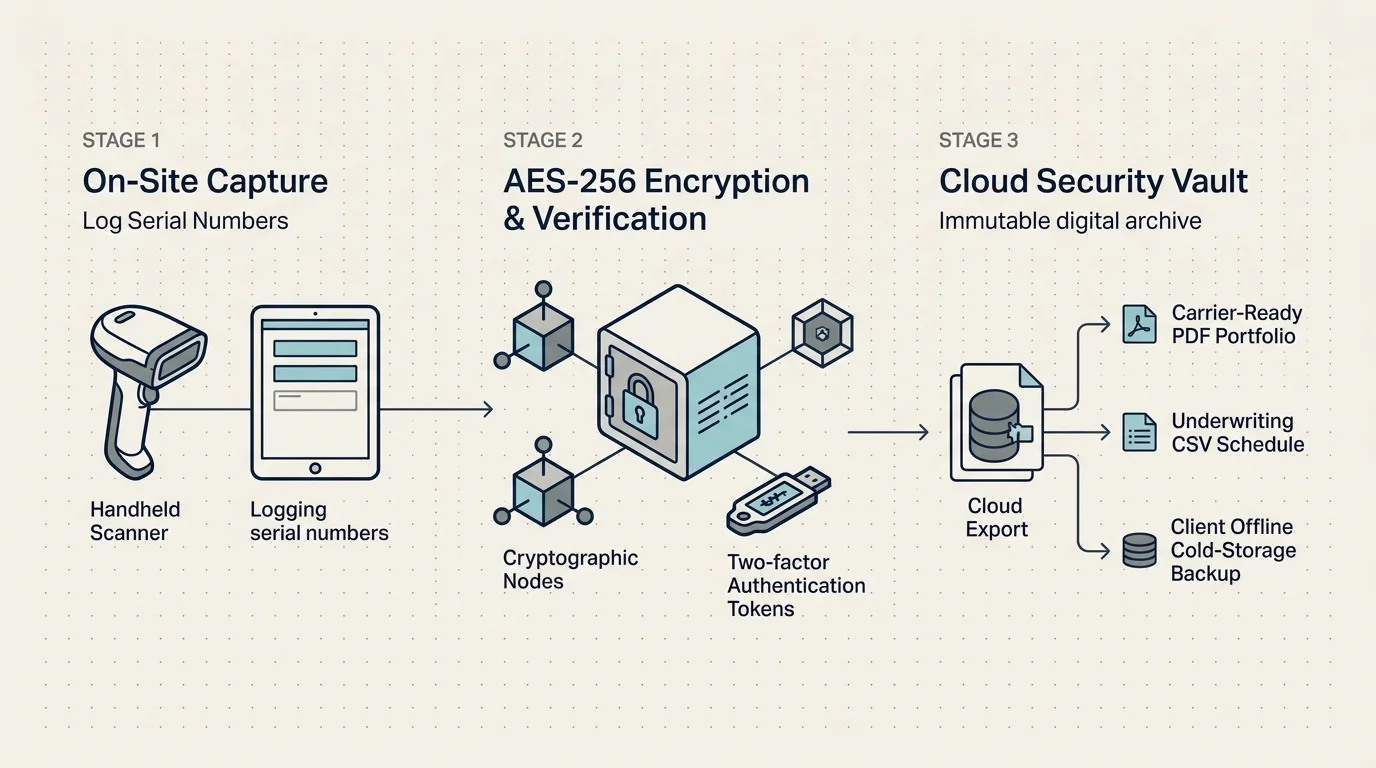
Open your vault account in week three and test it on your home. Avoid consumer spreadsheets or public cloud folders; build your client workflow on cloud vendors that hold current SOC 2 Type II attestation and use AES-256 bit encryption.
Choose one of three dedicated asset management platforms suited to insurance documentation:
- HomeZada Pro (HomeZada Professional): Cloud platform for managing multiple client properties, custom insurance claim binders, and client-access portals ($118 per-property one-time fee plus $58/property/year for mutual client access; consumer Premium plans cost $99/year).
- Sortly: Visual inventory system geared toward QR code tagging, barcode lookups, and receipt attachments.
- Under My Roof: iOS and macOS asset manager supporting detailed metadata fields and offline databases.
Walk your own home in two short blocks rather than one marathon shoot. Then run this five-step desk workflow:
- Import raw 4K wide-angle photographs and video sweeps into an encrypted staging folder.
- Enter manufacturer, model number, serial number, purchase year, and replacement estimate for each item.
- Attach digital receipts, formal appraisals, warranty cards, and certificates of authenticity to item records.
- Generate an indexed, hyperlinked Master PDF Insurance Binder organized by room and asset class.
- Export an immutable, password-protected archive onto a Kingston IronKey USB drive for the client fire safe, advising an off-site digital backup.
Check before moving on: Open your trial Master PDF Insurance Binder from the encrypted USB drive to confirm sharp serial numbers and working hyperlinks.
Set Per-Square-Foot Pricing and Split Audit Sessions Fourth

Set your rates in week four and request a free review from SCORE Mentoring. Executive mentors help encore entrepreneurs calibrate per-square-foot pricing locally.
Standard homes run $0.12 to $0.22 per square foot, and luxury estates command $0.25 to $0.40+. Set a $349 to $499 baseline under 2,000 square feet and $55 to $75 hourly for updates.
Average 2,500-square-foot homes take three to five hours on-site and two to three hours off-site. Consider a 2,800-square-foot nine-room home adding 14 sterling silver pieces and four oil paintings:
- Base Square-Foot Fee: 2,800 sq. ft. × $0.18/sq. ft. equals $504.00.
- Specialty Cataloging Add-On: 2.0 hours with the macro box at $65.00/hour equals $130.00.
- Hardware Deliverable: Two Kingston IronKey 64GB encrypted USB drives equal $70.00.
- Vault Pass-Through: 1-year HomeZada consumer Premium digital portal equals $99.00, bringing the total client invoice to $803.00.
Split standing capture from seated cataloging across 8.5 total hours:
- Ground-level photography: 4.0 hours, split into morning and afternoon blocks or two short days.
- Seated macro cataloging: 1.5 hours working comfortably at a table with your Foldio2 box.
- Off-site data entry: 2.5 hours indexing serial numbers and compiling the binder from home.
- Client delivery meeting: 0.5 hours handing over the encrypted USB drive and reviewing backups.
Subtracting $169.00 in drive and portal costs leaves $634.00 in net labor earnings, or $74.58 per hour.
Check before moving on: Verify your proposal template lists per-square-foot pricing, add-on hourly rates, and scheduled breaks before quoting prospects.
Build Insurance Agent Referrals and Launch Within Thirty Days
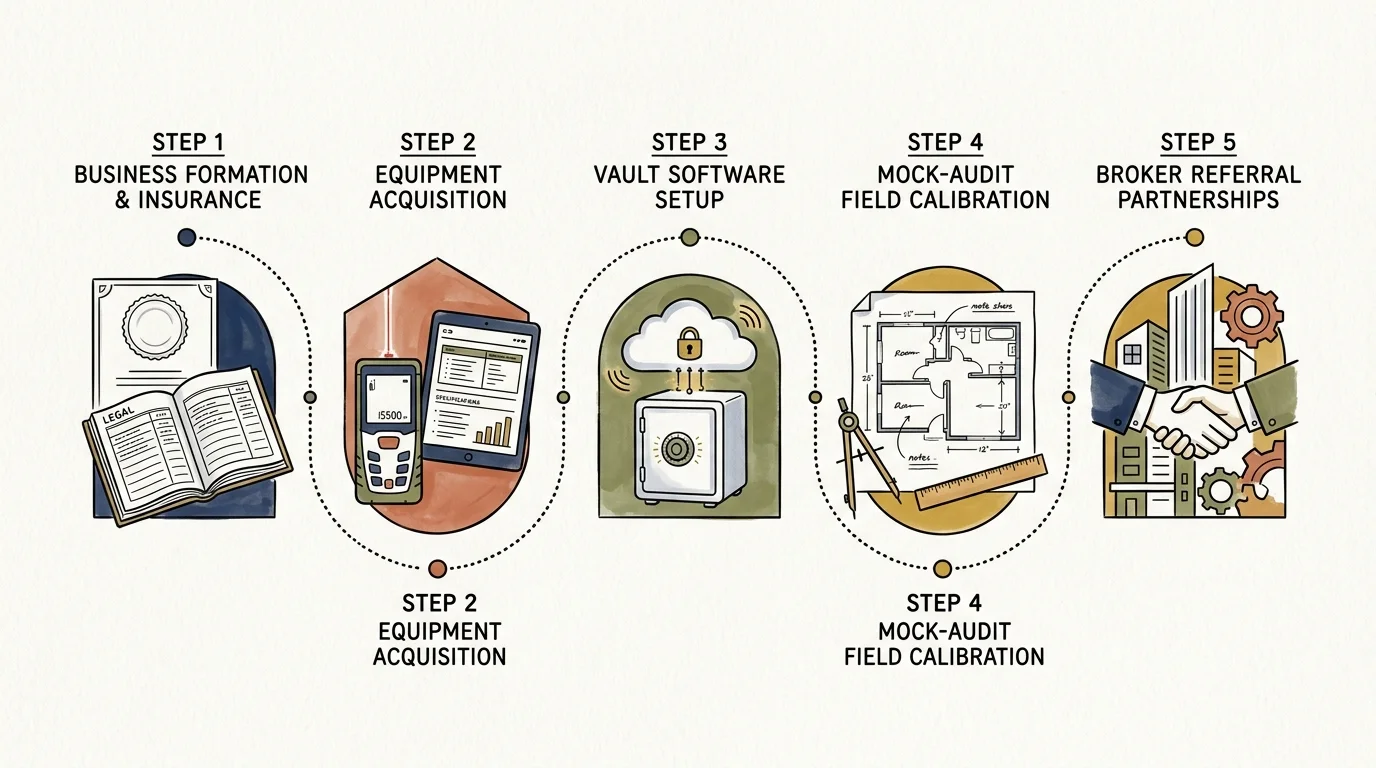
Late in week four, pitch independent insurance agents, wealth managers, and estate attorneys. Independent brokers refer best because documented replacement values speed claims and cut disputes.
Strip personal identifiers from your trial binder to share an anonymous sample study. Adjusters value exact model numbers and clear photos.
Send every client a pre-audit checklist confirming their attendance and staging of attic or crawl-space items on tables.
Check before your first paid audit: Confirm your anonymous sample binder is ready, referral meetings are booked, and every client agreement enforces ground-level access.
Disclaimer: This article is for informational and inspirational purposes. Life decisions are deeply personal, and we encourage readers to pursue their dreams while considering their unique circumstances, health, and financial situation.