
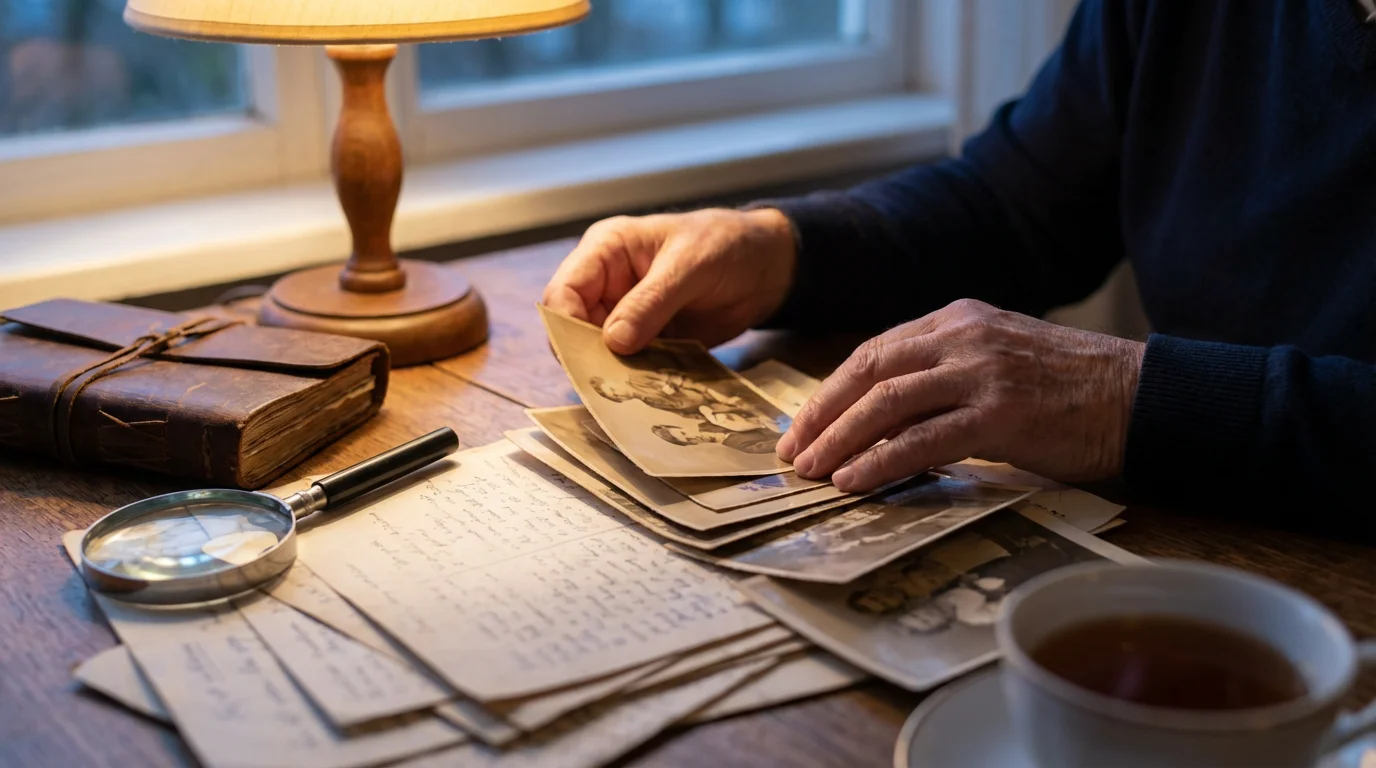
A retiree on a strict $0 budget can trace a grandfather born around 1898 without paid subscriptions, software, or DNA kits. Even when his surname fails automated 1950 Census searches, one 1940 Detroit street address cracks the entire trail.
Most guides push monthly memberships or genetic tests first, locking people into recurring fees while they copy unverified online trees. Reversing that order through an address-first, neighbor-mapping sequence across four free archives resolves handwriting mistakes before you spend a dollar.
Matching Your 1898 Research Roadblock to Free Archives
When the 1898 grandfather’s trail stalls, the mistake is usually searching the wrong archive for the missing clue. Match where your paper trail stops in this table before opening another browser tab or spending retirement cash.
| Where the 1898 Trail Stalls | Free Archive | 2026 Cost and Access | How It Cracks the Detroit Case | Workspace Check |
|---|---|---|---|---|
| Surname missing in 1950 Census | National Archives (1950census.archives.gov; archives.gov) | $0 online at home | Matches a 1940 Detroit address to a 1950 district; checks arrival files | Zoom to 125% or higher |
| Unknown maiden names or parish | FamilySearch (familysearch.org) | $0; locked films at 5,000+ centers | Pulls Detroit marriage indexes, church entries, and witnesses | Note collection numbers first |
| Missing funeral dates or siblings | Chronicling America (Library of Congress) | $0 online at home | Searches newspapers through 1963 across all 50 states | Save full-page PDFs locally |
| 1940 and 1950 or post-1950 gaps | Ancestry Library Edition; County Clerks | $0 library desk; clerk fees vary | Searches 7,000+ databases, directories, and local files | Book a 60-minute large monitor |
| Post-1950 records or DNA checks | County clerk copy or paid test | One-time fee or monthly fee | Applies five-part proof standard after free trails end | Mark cancellation and privacy rules |
Physical safety comes before screen time when pulling old boxes. CDC data shows falls are the leading cause of injury-related death after 65, so never climb a ladder or step stool to reach closet shelves.
Ask family or hire help to move heavy albums to a waist-high table, and store files in one free folder. Break every 30 to 45 minutes, keep wrists neutral, and ask your doctor or physical therapist about safe sitting intervals.
Using a 1940 Detroit Address to Crack the 1950 Census
Follow the National Archives beginner research method by starting with yourself and isolating one grandparent’s surname. Focusing on the grandfather born around 1898 prevents mixing up cousins and cuts wasted screen time.
Before opening any database, audit household lockboxes and family Bibles at table height. Every street address or date already on paper skips hours of dead-end searches.
- Birth, marriage, and death certificates listing parents’ names, birthplaces, and informants
- Obituaries, funeral programs, and cemetery deeds naming churches and surviving relatives
- Military discharge papers, naturalization certificates, and old passports showing ports and dates
- Annotated letters and photographs recording Detroit street addresses and maiden names
From those folders or a free 1940 Census search on FamilySearch, pull the grandfather’s 1940 Detroit street address at $0. That single address becomes your key when automated 1950 Census indexing garbles his surname.
Open 1950census.archives.gov, released April 1, 2022 under the 72-year confidentiality rule. That federal site holds roughly 6.57 million population schedules, 33,360 Indian Reservation schedules, 9,634 enumeration district maps, and 234,447 descriptions.
Match his 1940 Detroit street address to one 1950 Enumeration District using those 9,634 maps and 234,447 descriptions. Browsing that single district page by page locates his misspelled surname two doors from a married sister, still at $0.
Read the citizenship columns on both the 1940 and 1950 pages before closing the tab. If he was foreign-born, pair those entries with free passenger arrival lists, naturalization petitions, and alien files at archives.gov to uncover his overseas hometown and U.S. sponsor.
Uncovering Marriage Sponsors and Overseas Origins on FamilySearch
With the 1950 household and his married sister’s surname confirmed, open a free account on familysearch.org. Its global indexes cover birth, marriage, death, church, and census collections at $0.
When handwriting quirks still break surname searches in Detroit parish or civil indexes, substitute wildcard asterisks and filter by first name, birth year around 1898, and location. Log every spelling variation tested inside one free text file so you never repeat searches.
If direct entries stall, trace the FAN club, meaning Family, Associates, and Neighbors, along that 1940 Detroit block. Marriage witnesses, baptism sponsors, and nearby households like that married sister routinely expose hidden maiden names and migration paths.
When a promising marriage or church index shows a lock icon, do not pay a commercial site for the image. Write down the collection number and view it free at one of over 5,000 FamilySearch centers after checking hours on familysearch.org.
Fill remaining name gaps with brief phone calls to older relatives after asking permission. Keep interviews under 20 minutes and focus on concrete clues such as childhood streets, churches, maiden names, and siblings’ spouses.
Pairing those recorded memories with your home folders also supports writing your memoir for future generations. Ask relatives to identify unmarked album photos while you write names on archival paper slips.
Finding Detroit Obituaries and Street Clues in Historic Newspapers
Once census and church records narrow down death years, switch to Chronicling America at the Library of Congress. It offers digitized U.S. newspapers through 1963 across all 50 states, D.C., Puerto Rico, and the U.S. Virgin Islands for $0.
Search the 1898 grandfather’s surname, his married sister’s surname, or the 1940 Detroit street address inside newspaper pages. Local obituaries, estate notices, and church announcements often name surviving children, burial plots, and out-of-town siblings absent from census lines.
Download full-page PDFs directly into surname-and-year subfolders on your computer or flash drive rather than squinting at small web previews. Record the newspaper name, publication date, and page number in your citation log.
Bridging 1940 to 1950 Gaps at Library Terminals and County Offices
If the 1898 grandfather moved between 1940 and 1950 or died after 1963, book a 60-minute session at a participating public library. Ancestry Library Edition provides free on-site access to more than 7,000 U.S., Canadian, U.K., and international databases through ProQuest.
Bring only a lightweight flash drive, reading glasses, and your citation log to your library slot. Ask staff for a large-monitor workstation, raise browser zoom, and let staff lift heavy directories or load microfilm reels.
Because Ancestry Library Edition omits home logins and personal trees, save every discovered record image to your flash drive or email it before leaving. Never start a paid home trial before exhausting what your local library provides free.
Use library local-history rooms for city directories, yearbooks, and post-1963 newspaper microfilm before paying for official records. City directories fill in year-by-year Detroit addresses and occupations between 1940 and 1950 without waiting on clerk mail orders.
Browsing public index books at county clerk offices is free, though official copies carry fees. Confirm county clerk fees, identification rules, and mail-in procedures directly with the office before requesting a post-1950 certificate.
Verifying the 1898 Proof Chain Before Paying or Testing DNA
Copied public member trees spread wrong parents and fake birthplaces from one account to another. Test every link in your 1898 Detroit chain against the five-part Genealogical Proof Standard before adding it to your binder.
- Conduct reasonably exhaustive research across multiple independent record collections
- Write complete, accurate source citations so others can inspect the exact original record
- Analyze and correlate all evidence on a unified chronological timeline
- Resolve conflicting dates or facts by weighing who supplied the information and when
- Write a clear conclusion explaining how the cited evidence proves the relationship
Working through those four free archives resolves most U.S. paper trails from 1950 backward at $0. Save your cash until a post-1950 certificate or unindexed foreign record requires a specific one-time copy fee.
If you later choose one paid month of Ancestry.com (U.S. Discovery, World Explorer, or All Access), mark the cancellation deadline immediately. Report deceptive billing, fake research offers, or coaching pitches to the FTC at ReportFraud.ftc.gov.
Autosomal DNA kits are optional and confirm links back five or six generations only alongside paper records, carrying dedicated BCG standards and ethical protections. Because shared DNA amounts overlap across half-siblings, aunts, and grandparents, genetics cannot prove exact parentage alone.
Confirm living relatives are comfortable before sharing unexpected parentage or health results. Before mailing a kit, open AncestryDNA privacy settings or your provider’s controls to opt out of match lists, hide origins, and use initials.
Company ownership can change quickly, as seen when 23andMe filed Chapter 11 bankruptcy on March 23, 2025. Nonprofit TTAM Research Institute acquired its assets for $305 million on July 14, 2025.
An $18 million 43-state data-breach settlement followed in July 2026, alongside a $6 million California settlement in October 2026. Customers keep the right to delete genetic data, destroy samples, and opt out of research.
Back up your flash drive’s surname-and-year subfolders on your home computer. Record empty searches with dates and database names so you never repeat eyestrain.
Turn verified 1898 discoveries into shared projects for long-distance grandparents, or explore becoming a paid genealogist in retirement.




2 Comments
Comments are closed.