
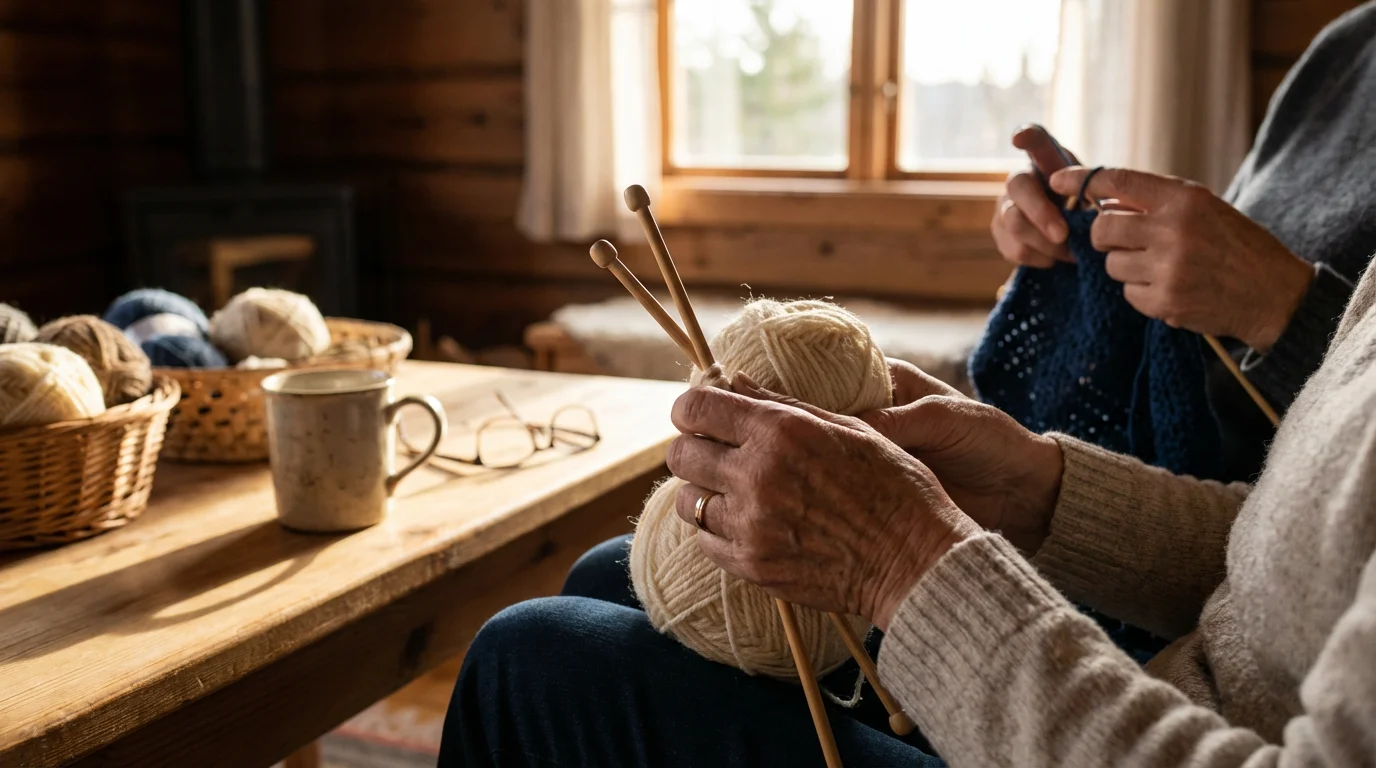
A retiree after 60 managing thumb-base osteoarthritis and changing eyesight often shelves knitting or crochet after one frustrating weekend, assuming patience or dexterity has faded. In reality, early abandonment comes from preventable mechanical friction, not declining creative drive.
Generic advice treats retirement needlework as passive joint exercise or endless tiny squares, yet pairing wide-grip tools with bright lighting and high-contrast yarn preserves comfort for ambitious adult hats, heirloom blankets, and weekly guild tables.
Specs, Guidelines, and Room Checks to Gather Before You Start
Before spending money on full needle sets or baskets of yarn, look up five official standards and community details. Having exact sizing, lighting, and donation numbers in hand turns guesswork into a lasting creative studio.
- Yarn and tool standards: Check the Craft Yarn Council’s Standard Yarn Weight System to pair #4 worsted labels with US 7 to 9 needles (4.5 to 5.5 mm) or US I-9 to K-10 1/2 hooks (5.5 to 6.5 mm).
- Joint safety rules: Pull up the Arthritis Foundation’s needlework guide for seating posture, break intervals, heat warnings, and yarn elasticity.
- Vision and glare benchmarks: Review American Optometric Association guidance on vision after 50 and check your chair’s task lamp and shade.
- Charity specifications: Read Knots of Love’s 2026 Maker Guidelines, Project Linus chapter dimensions, or Warm Up America! rules before buying fiber.
- Local group schedules: Check the Craft Yarn Council’s Guilds and Groups directory plus library calendars for circles with armrests and bright light.
Recording these specifications first protects your budget and prevents repetitive strain before your first stitch. Once those figures are written down, you can match tool geometry to the projects you actually want to make.
Using Your Joint and Vision Specs to Choose Knitting or Crochet
Applying your gathered Arthritis Foundation guidelines starts with comparing how each craft loads your wrists and thumb base. Choosing the right motion lets you plan multi-session blankets and wearable hats instead of stopping after a single swatch.
Crochet holds one active loop on a single hook, making errors easy to rip back. Slim shafts, however, demand wrist rotation and steady thumb pinching.
Knitting balances a full row across two needles. English throwing releases the right needle to wrap yarn, while Continental picking tensions yarn in the left hand with shorter strokes.
Long straight needles load growing hat or blanket weight onto your wrists. Lightweight birch or bamboo circular needles rest fabric in your lap and reduce glare.
| Craft and Method | Live Stitches Held | Joint and Motion Demand | Yarn Use and Error Recovery | Ergonomic Tool Option |
|---|---|---|---|---|
| English knitting (throwing) | Entire row stays live on needles | Right hand releases needle to wrap yarn; straight needles load wrists | Lower yarn usage per inch; dropped stitches unravel down columns | Birch or bamboo circular needles; KnitPro Cubics square shafts |
| Continental knitting (picking) | Entire row stays live on needles | Left hand tensions yarn continuously; shorter right-hand finger travel | Lower yarn usage per inch; dropped stitches require careful pickup | Lightweight birch circular needles resting project weight in lap |
| Crochet (single hook) | One active loop on hook | Hook-hand wrist rotation plus thumb-index pinch on slim shafts | Higher yarn usage per inch; mistakes rip back cleanly loop by loop | Clover Amour elastomer flat thumb rest; Furls wide MCP-support handle |
Ergonomic tool shapes protect joints during longer sessions. KnitPro Cubics offer flat square shafts, Clover Amour hooks add latex-free elastomer thumb rests with color-coded sizes, and Furls handles widen to brace your metacarpophalangeal (MCP) knuckle.
Wrapping standard shafts with tape or slipping on a yarn tension ring further cuts pinching. If repetitive finger tension still causes wrist numbness, ceramic slab hand-building without a wheel shifts fine grips to rolling pins and paddles.
Testing Tool Ergonomics Under $35 Before Buying Full Sets
Ambitious retirement crafting does not start with an expensive case of mismatched sizes. As of November 2026, one Clover Amour ergonomic crochet hook costs $10.75, compared with $93.95 for the 10-piece set (SKU 3672).
Lion Brand’s 2026 beginner guide pairs #4 medium worsted yarn with 4.5 to 5.5 mm hooks for crisp, easy-to-count stitches. Buying one ergonomic tool and one light-colored skein keeps your trial kit under $35.
- One ergonomic hook or needle: Choose one Clover Amour H/5.0 mm hook at $10.75, or one birch circular needle in US 7 (4.5 mm) or US 8 (5.0 mm).
- One light-colored #4 worsted skein: Verify the #4 symbol and 200 to 225 yards in cream, sage, or sky blue for a full hat.
- Blunt large-eye yarn needle: Weaves tails cleanly between plies without splitting yarn.
- Split-ring stitch markers: Clip onto edges or round starts to track stitch counts.
- Small scissors: Trims finished tails neatly.
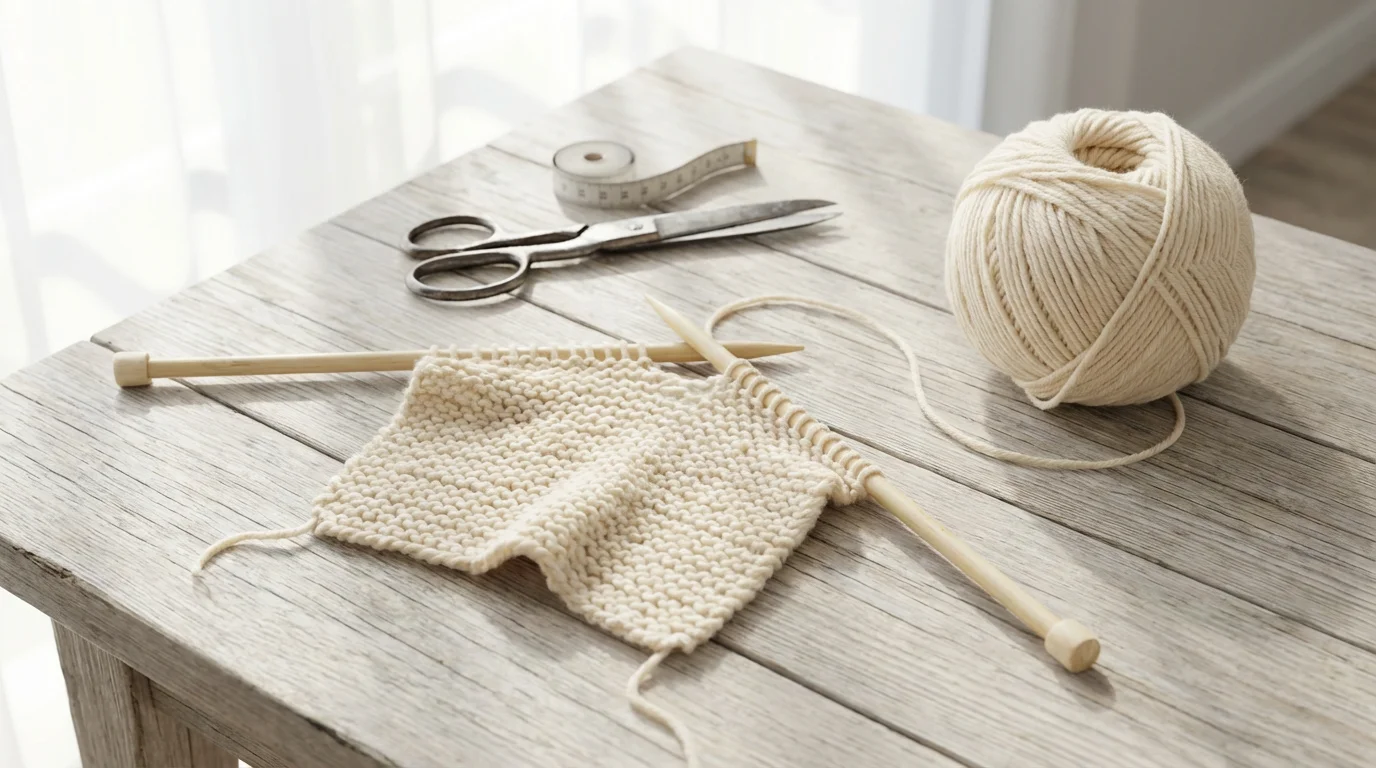
At age 68 with thumb arthritis and presbyopia, buying one $10.75 Clover Amour H/5.0 mm hook, one 220-yard #4 skein, markers, and a yarn needle tests hand comfort on a real hat before buying sets.
Chair Support, Glare Control, and Elastic Fibers for Multi-Hour Comfort
Workspace habits support multi-week projects as much as hook shape. Per the Arthritis Foundation, use an adjustable chair supporting your back, legs, arms, and elbows.
Take a three-to-five-minute break every 30 to 45 minutes to stand and stretch fingers. Warm stiff hands with paraffin dips or hand warmers, skipping heat if joints look red or inflamed.
Ask your doctor or physical therapist whether compression gloves suit your hands.
Under American Optometric Association guidance for vision after 50, direct bright task lighting onto your lap through a translucent shade to cut needle glare.
Skip black, navy, and fuzzy novelty yarn, picking smooth, tightly plied cream, sage, or sky blue instead. For knitting, the Arthritis Foundation recommends elastic wool or wool blends over stiffer cotton because they cushion sore knuckles.
If shoulder fatigue or finger tension still limits full-size afghans, broader loom motions offer another fiber path. Ergonomic tabletop rigid-heddle weaving produces textured cloth using balanced two-hand strokes rather than fine pinching.
Weekend Projects That Build Skill Toward Adult Hats and Blankets
Skip six-foot scarves initially, as repetitive rows strain joints before completion. Compact items give clear milestones while building skill for adult garments and blankets.
- Warm Up America! section (7 by 9 inches): Work #4 washable acrylic at a US 7 (4.5 mm) knit gauge; one 200-yard skein makes several rectangles for community blankets.
- Preemie or NICU beanie (10 to 13 inches around, 4 to 5 inches tall): Work approved #4 yarn at roughly 5 stitches per inch on US 7 or US 8 needles; one 200-to-225-yard skein yields several caps.
- Adult Medium hat (20 to 22 inches around, 7 to 8 inches tall): Work 200 to 225 yards of #4 worsted yarn on US 7 or US 8 needles (or 4.5 to 5.5 mm hooks) at roughly 5 stitches per inch.
Make a four-inch test square and match your count to the pattern’s four-inch gauge. Adjusting tool size by half a millimeter eases tight stitches that strain knuckles.
Work three 30-minute blocks Saturday and two Sunday, pausing four minutes to stretch. Those 2.5 hours finish a 7-by-9-inch square without soreness.
Certified Charity Specs and Local Guilds for Purpose-Driven Makers
Steady tension lets you craft for medical charities with confidence. Checking your gathered specs ensures every finished piece passes strict hygiene and fiber rules.
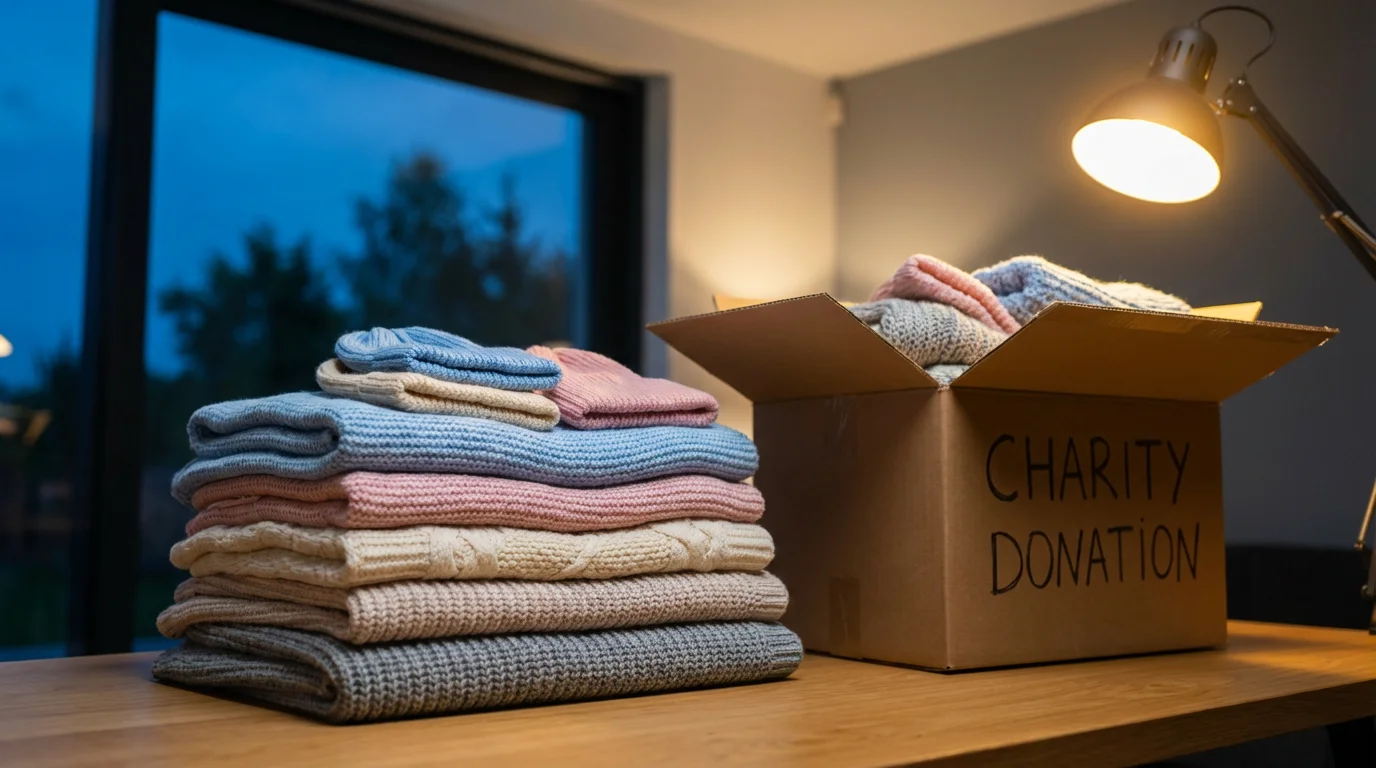
- Knots of Love: Under 2026 Maker Guidelines, hand-knit or hand-crocheted chemo caps (Small 18 to 20 by 6.5 to 7 inches, Medium 20 to 22 by 7 to 8 inches, Large 22 to 24.5 by 8 to 10 inches), preemie beanies, and NICU blankets in approved yarns qualify; loomed hats and fleece are rejected. Keep fabric non-lacy, weave ends flat, wash unscented and pet-hair-free, enclose a Submission Form, and mail to 615 Main St. W #877, Ashland, WI 54806.
- Project Linus: Accepts new, washable handmade blankets for ages 0 to 18, typically 40 by 60 inches down to 36 by 36 inches per local chapter rules, with zero smoke odor, pet hair, pins, or buttons.
- Warm Up America!: Accepts 7-by-9-inch sections in #4 washable acrylic at a US 7 (4.5 mm) knit gauge for community blankets.
Crafting beside peers solves twisted stitches faster than online videos. Use the Craft Yarn Council’s Guilds and Groups directory to find local chapters of The Knitting Guild Association (TKGA) and Crochet Guild of America (CGOA), plus library circles.
Visit once to confirm supportive armchairs and bright lighting, bringing a 7-by-9-inch square so you can talk without losing count.
If no fiber guild meets nearby, community calendars list craft tables alongside book clubs and other social hubs beyond golf and pickleball. Turning comfort into a weekly ritual keeps your hands active.

3 Comments
Comments are closed.