
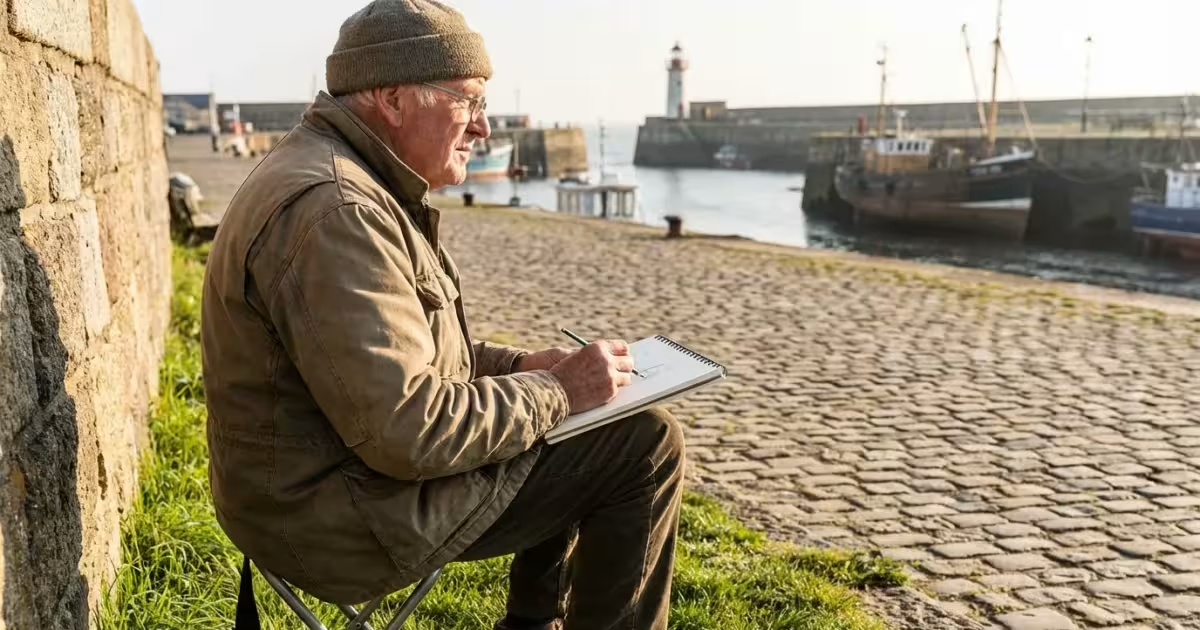
Your retirement years beckon, offering a magnificent canvas for new adventures and profound self-discovery. This is your moment to redefine possibilities, to pursue long-held dreams, and to embrace fresh passions with open arms. Imagine a life rich with observation, creativity, and connection, where every day presents an opportunity to see the world through a refreshed lens.
Sketching offers exactly that opportunity. It is a vibrant, accessible pursuit that invites you to pause, observe, and engage with your surroundings in a deeply meaningful way. Whether you are an absolute beginner or rekindling an old interest, senior sketching can transform your retirement into an active, mindful, and visually rich experience. You possess the time, the wisdom, and the unique perspective to capture the beauty around you, one thoughtful line at a time.
Why Sketching Is Your Next Great Retirement Adventure
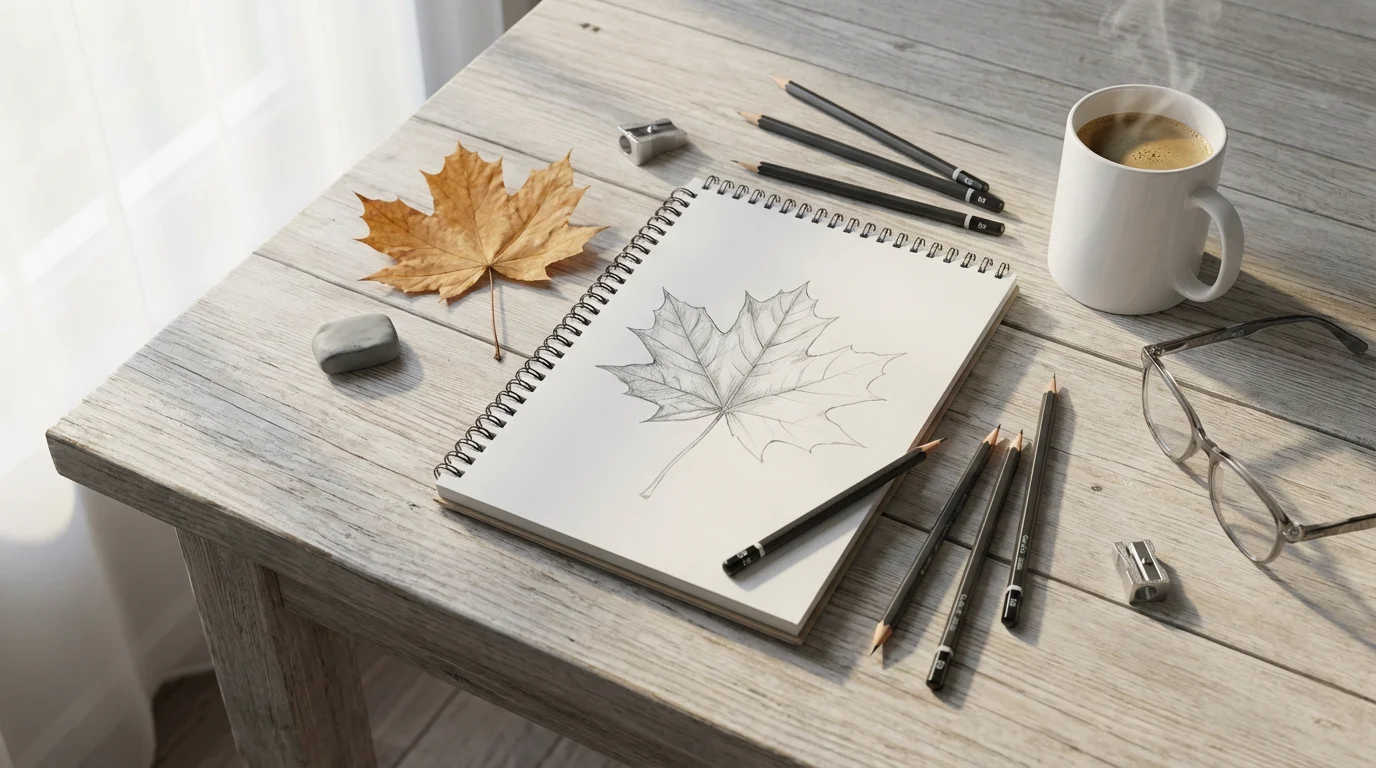
Retirement invites you to explore, to learn, and to create. Sketching fits beautifully into this ethos, providing a portable, low-cost activity that delivers immense personal rewards. It is not about producing masterpieces, but about the process, the observation, and the pure joy of making marks on paper.
Engaging in senior sketching stimulates your brain, enhances hand-eye coordination, and sharpens your observational skills. Studies highlighted by the National Institute on Aging consistently show that creative pursuits contribute significantly to cognitive health and overall well-being in later life. Your brain thrives on novelty and challenge, and sketching provides both in abundance.
You gain a fresh appreciation for the everyday world, noticing details you once overlooked. A simple tree, a bustling street scene, or a cherished coffee cup suddenly become subjects for exploration. This renewed sense of curiosity fuels a fulfilling retirement, encouraging you to look closer and dream bigger about your surroundings.
“Creativity takes courage.” — Henri Matisse
Your Essential Toolkit: What You Need to Start Senior Sketching
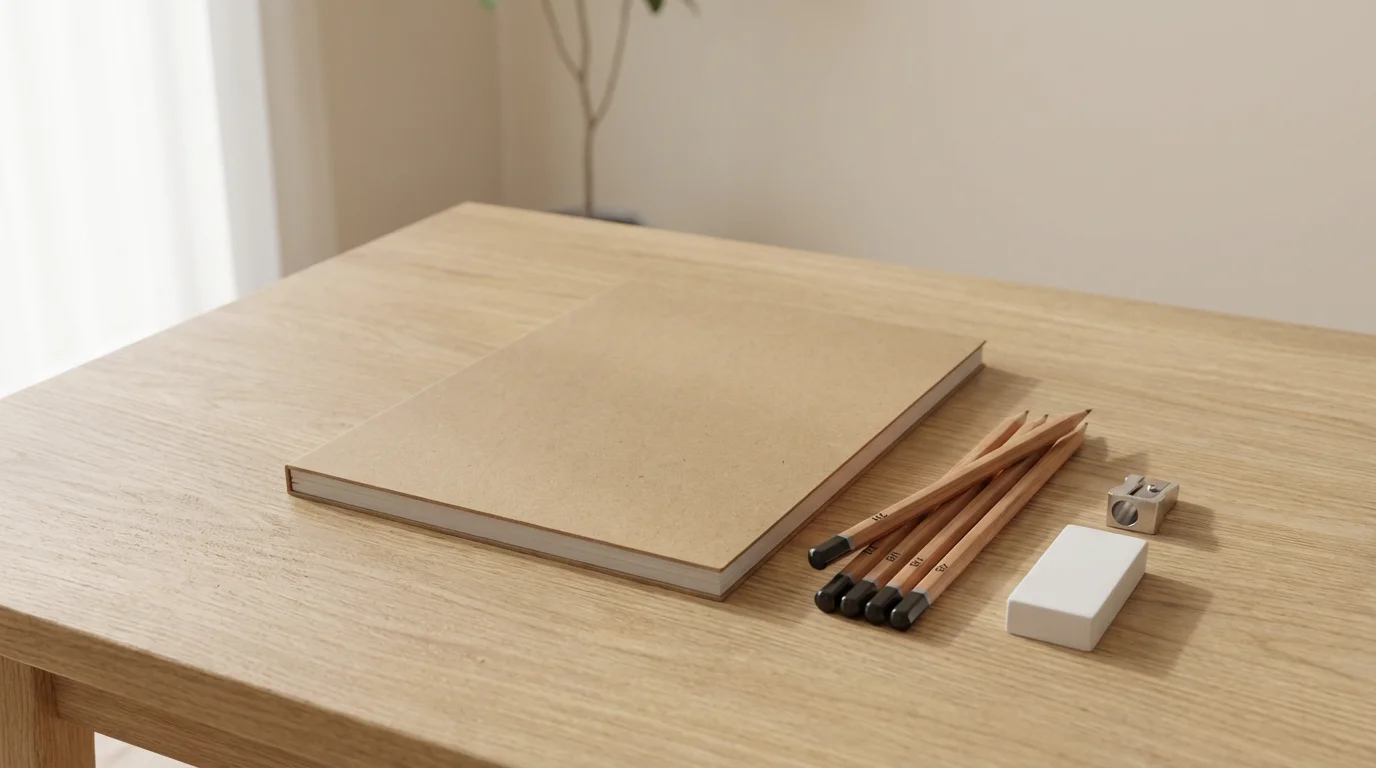
Starting your sketching journey requires minimal investment and space. Do not feel intimidated by elaborate art stores or complex equipment lists. The beauty of sketching lies in its simplicity. Here is a breakdown of what are essential sketching supplies for beginners:
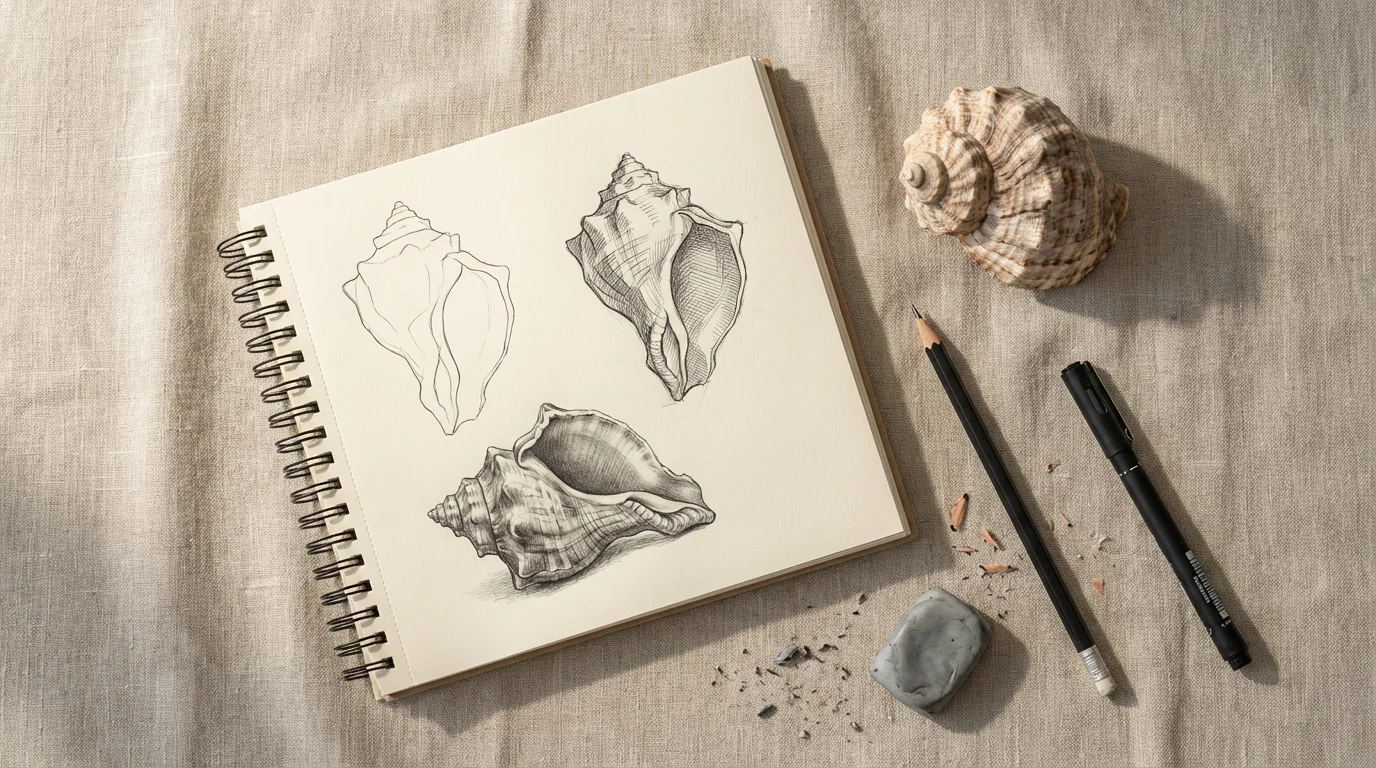
- Sketchbook: Choose a sketchbook that feels comfortable in your hands and suits your style. A spiral-bound book lays flat, which is convenient. Look for paper that is at least 80lb (130gsm) to prevent ink bleed-through. Sizes like 5×8 inches or 9×12 inches are versatile for beginners.
- Pencils: A basic set of graphite pencils is perfect. Aim for a range including B (softer, darker marks), HB (standard), and H (harder, lighter marks). A 2B, HB, and 2H pencil will cover most needs.
- Eraser: A kneaded eraser allows you to lift graphite gently without damaging the paper. A plastic eraser works well for cleaner, more precise corrections.
- Pencil Sharpener: A small, portable sharpener keeps your pencils ready. Some sharpeners collect shavings, which is ideal for sketching on the go.
- Fine-Tip Pen (Optional): Many sketchers enjoy adding ink lines. A waterproof, archival fine-tip pen, like a Pigma Micron (01 or 03), provides crisp lines that will not smudge if you later add watercolors.
- Portable Watercolors or Markers (Optional): For adding a splash of color, a small set of travel watercolors or a few dual-tip markers can bring your sketches to life.
Remember, the goal is to begin. You do not need every item on this list immediately. Start with a pencil and a sketchbook, and expand your supplies as your interest grows. Many experienced artists stick to a very simple toolkit.
Unlocking Creativity: Basic Drawing Techniques for Beginners
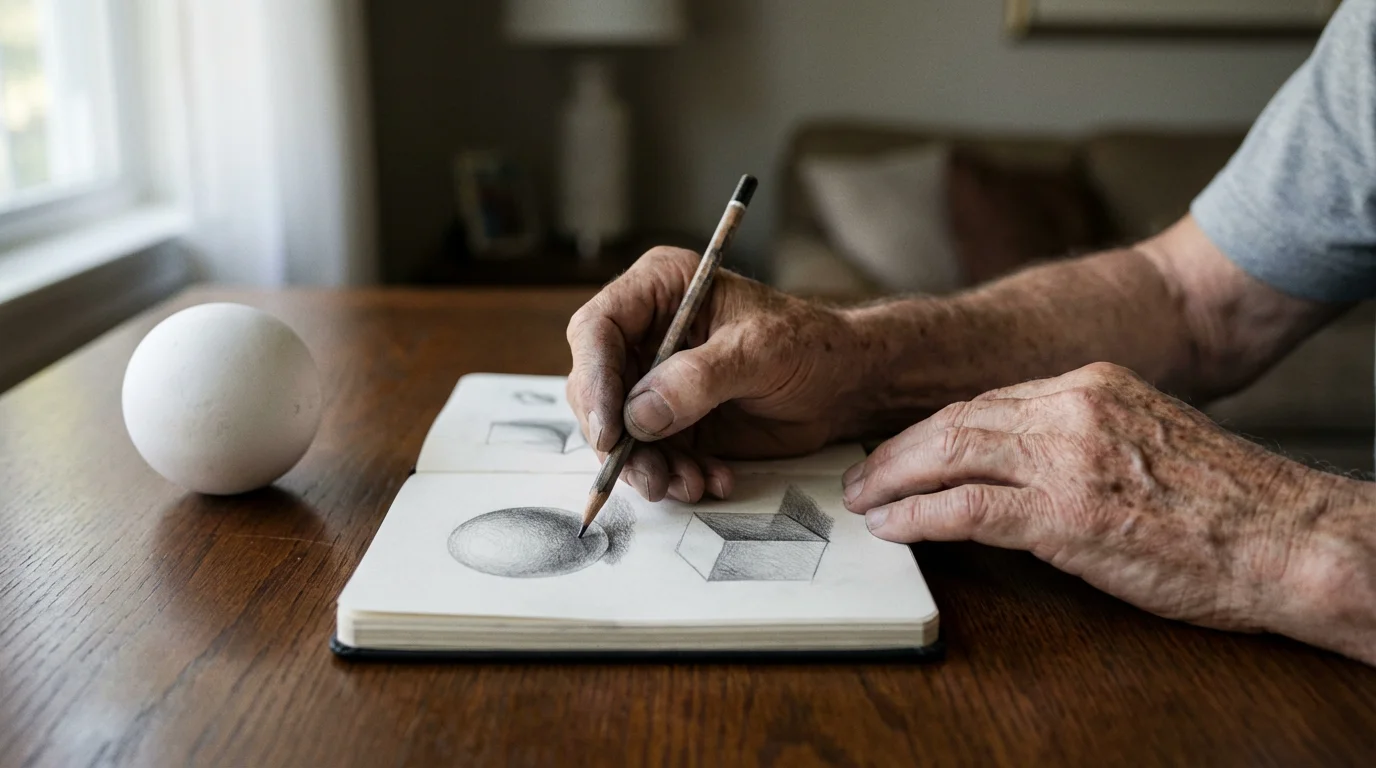
Learning drawing techniques begins with fundamental skills that build confidence and control. Do not worry about perfection; focus on exploration. These initial steps will set a strong foundation for your senior sketching journey.
- Line Quality: Experiment with different pressures to create varied line weights. A lighter touch for initial guidelines, a firmer hand for definitive contours. Practice drawing straight lines, curved lines, and broken lines.
- Basic Shapes: Everything you see can be broken down into simple geometric shapes: circles, squares, triangles, and cylinders. Practice drawing these shapes accurately from different angles. This forms the skeleton of your drawing.
- Gesture Drawing: Capture the essence of a subject quickly, focusing on movement and overall form rather than intricate details. This builds speed and observation. Try sketching people in motion or animals in just 30-60 seconds.
- Negative Space: Instead of drawing the object itself, draw the space around it. This helps you see shapes more accurately and avoids preconceived notions of the object.
- Shading and Value: Practice creating a range of tones from light to dark using your pencil. This gives your sketches depth and dimension. Observe how light falls on objects and creates shadows.
Consistent practice with these drawing techniques will noticeably improve your understanding of form and perspective. You are training your eye and hand to work together, a beautiful synergy for your creative spirit.
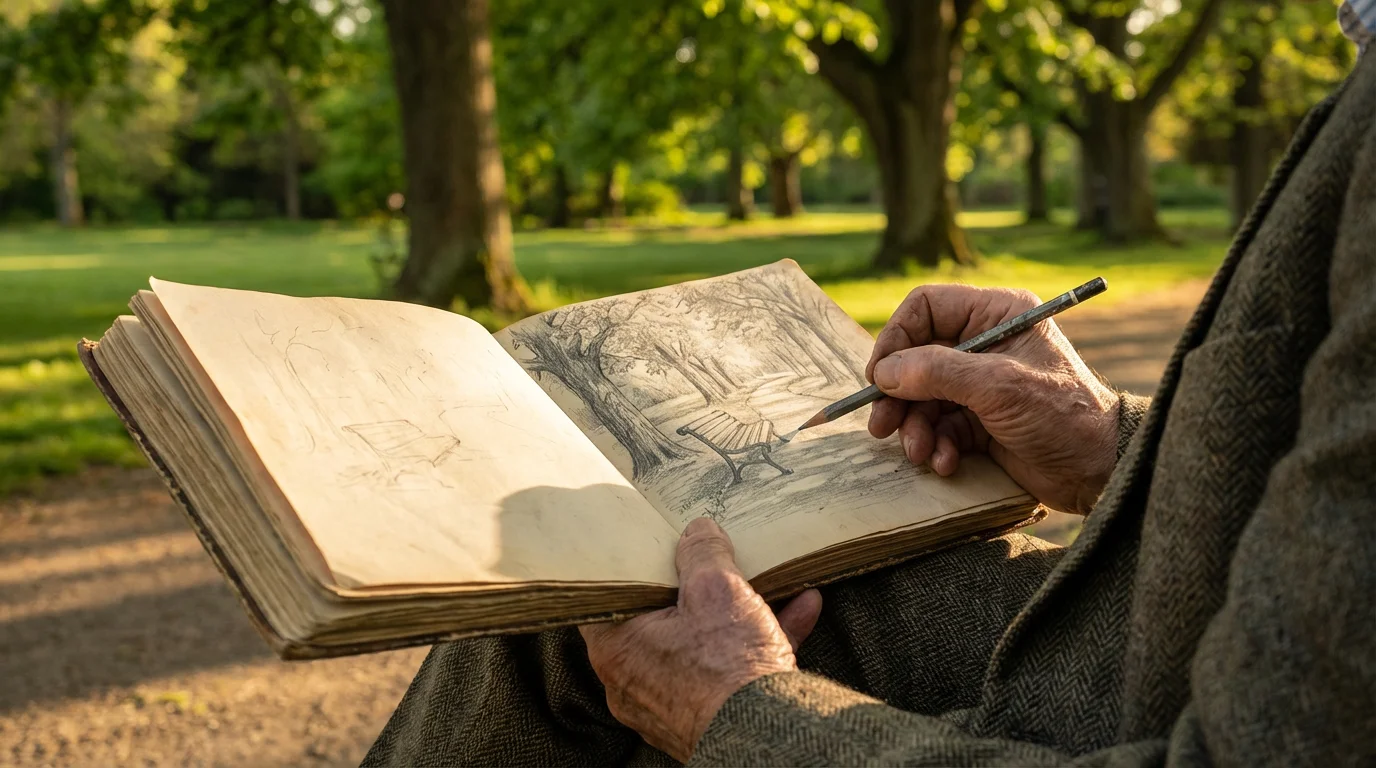
Finding Your Subjects: Where to Sketch and What to Draw
The world is your studio, filled with endless inspiration for senior sketching. Once you have your essential sketching supplies, you only need to open your eyes and let curiosity guide you. Do not feel pressured to find grand, complex scenes.
Consider these readily available subjects:
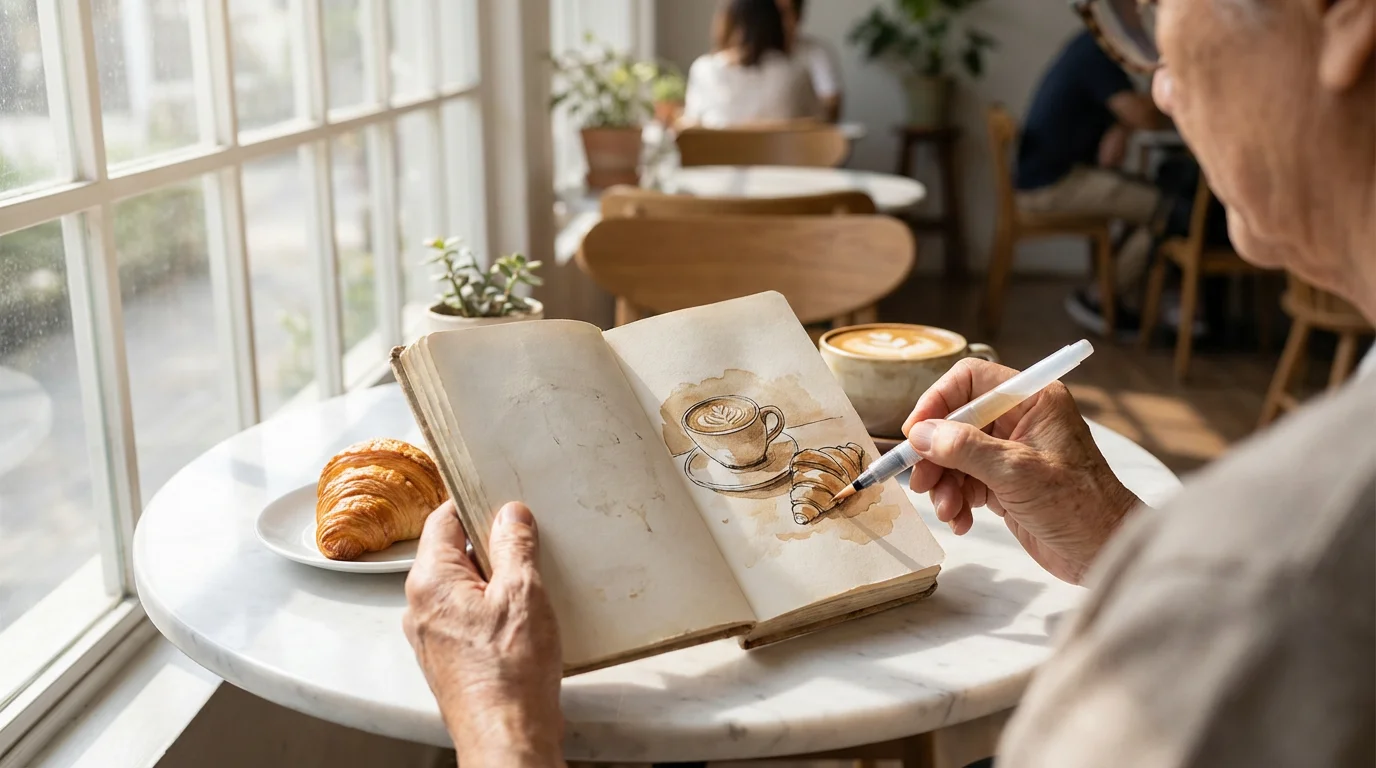
- Your Home: Sketch everyday objects like your favorite mug, a potted plant, or the view from your window. The familiarity allows you to focus on form and light without feeling overwhelmed.
- Local Cafés or Parks: These public spaces offer a dynamic range of subjects, from people sipping coffee to children playing, to natural landscapes. Blend in, observe, and capture moments.
- Gardens and Nature Trails: Flowers, leaves, trees, rocks, and even insects provide intricate details and organic forms perfect for practice. Focus on textures and patterns.
- Travel Destinations: When you travel, your sketchbook becomes an invaluable companion, a unique way to document your experiences. Sketch historical buildings, local markets, or scenic vistas. You create a personal visual diary.
- People and Animals: Start with quick gesture drawings. Capture poses and movements. Do not worry about perfect likeness; focus on the energy and character.
What to draw is truly up to you. Choose subjects that genuinely interest you. Your enthusiasm for the subject will translate into more engaging sketches. The act of choosing itself is part of the creative process.
Building Your Skill: How to Improve Your Sketching Skills
Like any fulfilling pursuit, improving your sketching skills comes with consistent, mindful practice. Embrace the learning journey, celebrate small victories, and remain patient with yourself. This is your time to explore and grow, not to achieve instant mastery.
Here are actionable steps to elevate your senior sketching abilities:
- Sketch Regularly: Aim for short, frequent sketching sessions rather than long, infrequent ones. Even 15-20 minutes a day makes a significant difference. Regularity builds muscle memory and sharpens observation.
- Learn from Others: Seek out online tutorials, local art classes, or sketching groups. Watching how others approach a subject provides new perspectives. Organizations like Osher Lifelong Learning Institutes often offer art courses tailored for older adults.
- Copy the Masters (for study): Replicate sketches by artists you admire. This is not for plagiarism, but to understand their techniques, line work, and compositional choices. It is a powerful learning tool.
- Get Feedback: Share your work with a trusted friend, family member, or a supportive sketching community. Constructive feedback offers valuable insights for growth. Remember, art is subjective, so filter feedback thoughtfully.
- Keep a Sketchbook Journal: Date your sketches. This allows you to track your progress over time, seeing how far you have come. It also serves as a wonderful visual record of your life and observations.
- Challenge Yourself: Once comfortable, try drawing more complex subjects, experimenting with new mediums, or sketching under different lighting conditions. Push your boundaries gently.
The journey of how to improve your sketching skills is personal and rewarding. Each line you draw, each observation you make, adds to your unique artistic voice.
Embracing Imperfection: The Joy of the Sketchbook
Perhaps the most liberating aspect of senior sketching is the freedom to embrace imperfection. Your sketchbook is a sanctuary for experimentation, a place where mistakes are simply learning opportunities. It is not a gallery for public display, unless you choose it to be.
Release the pressure of creating a “perfect” drawing. The joy comes from the act itself, from the focused attention, and from the quiet conversation between your eye, your hand, and the paper. Many professional artists consider their sketchbooks sacred spaces for raw ideas and quick studies, not polished works.
An imperfect line or a distorted perspective tells a story, reveals your personality, and makes your sketch uniquely yours. Celebrate these quirks. They reflect your individual way of seeing the world, an invaluable asset in your retirement years.
Your sketchbook becomes a tangible record of your presence, your observations, and your evolving perspective. It is a testament to a life actively lived and deeply felt.
Connecting Through Art: Sharing Your Work and Finding Community
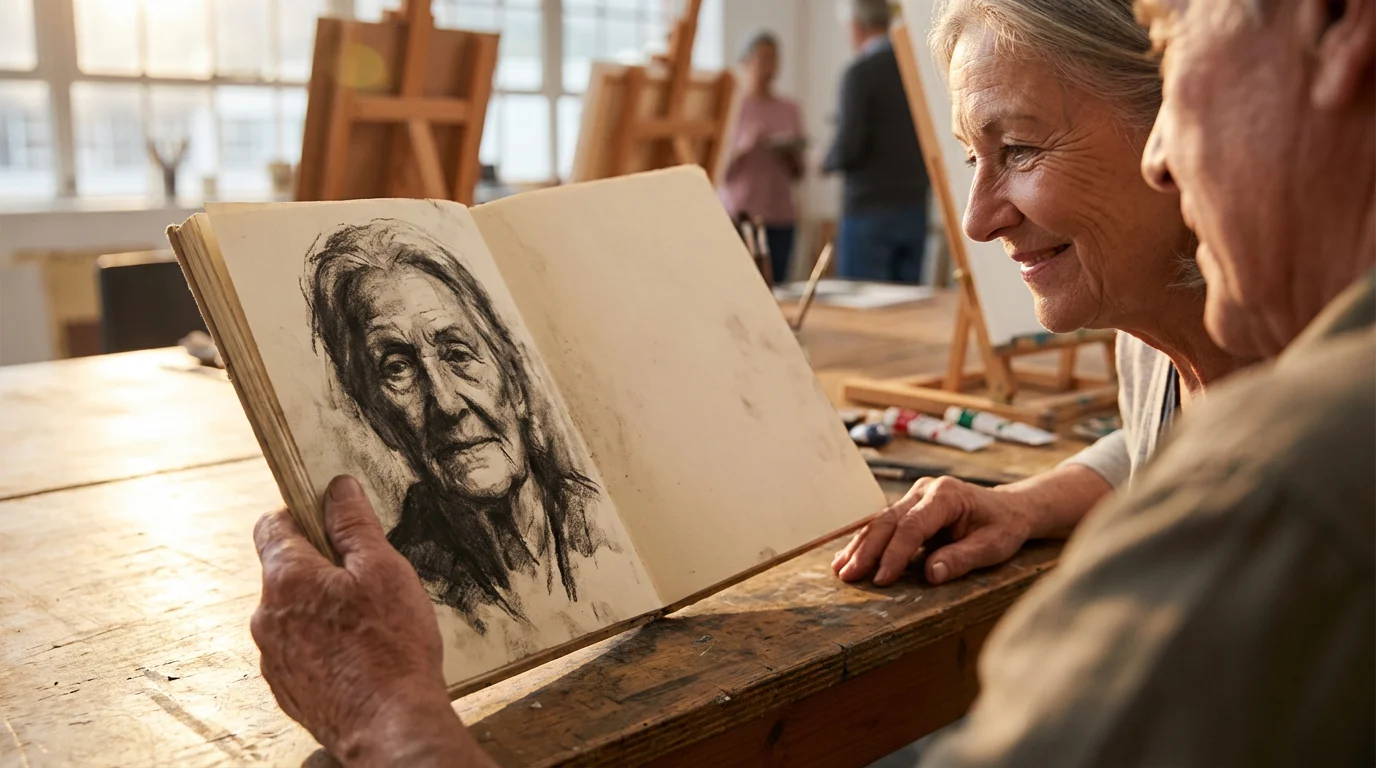
While sketching can be a deeply personal endeavor, it also offers wonderful avenues for connection and community. Sharing your work, even if just with a few trusted individuals, can be incredibly validating and inspiring. It opens doors to new friendships and shared experiences.
Consider these ways to connect:
- Join a Local Art Group: Many communities have sketching or drawing groups that meet regularly. These provide a supportive environment for learning, sharing, and receiving gentle feedback.
- Online Art Communities: Websites and social media platforms offer vast communities of artists at all levels. You can share your sketches, view others’ work, and participate in challenges.
- Attend Workshops and Classes: In-person or online workshops are excellent for meeting fellow enthusiasts and learning from experienced instructors. Check local community centers, art schools, or even travel programs like Road Scholar which offers art-focused adventures.
- Gift Your Art: A small, personal sketch makes a thoughtful and unique gift for friends and family. This act of giving can foster connection and appreciation.
- Host a “Sketch & Sip”: Gather a few friends, some sketching supplies, and beverages. It is a relaxed way to introduce others to the joy of drawing and to share a creative afternoon.
Art provides a universal language. When you share your sketches, you are sharing a piece of your vision, sparking conversations and building bridges with others who appreciate the beauty of creative expression.
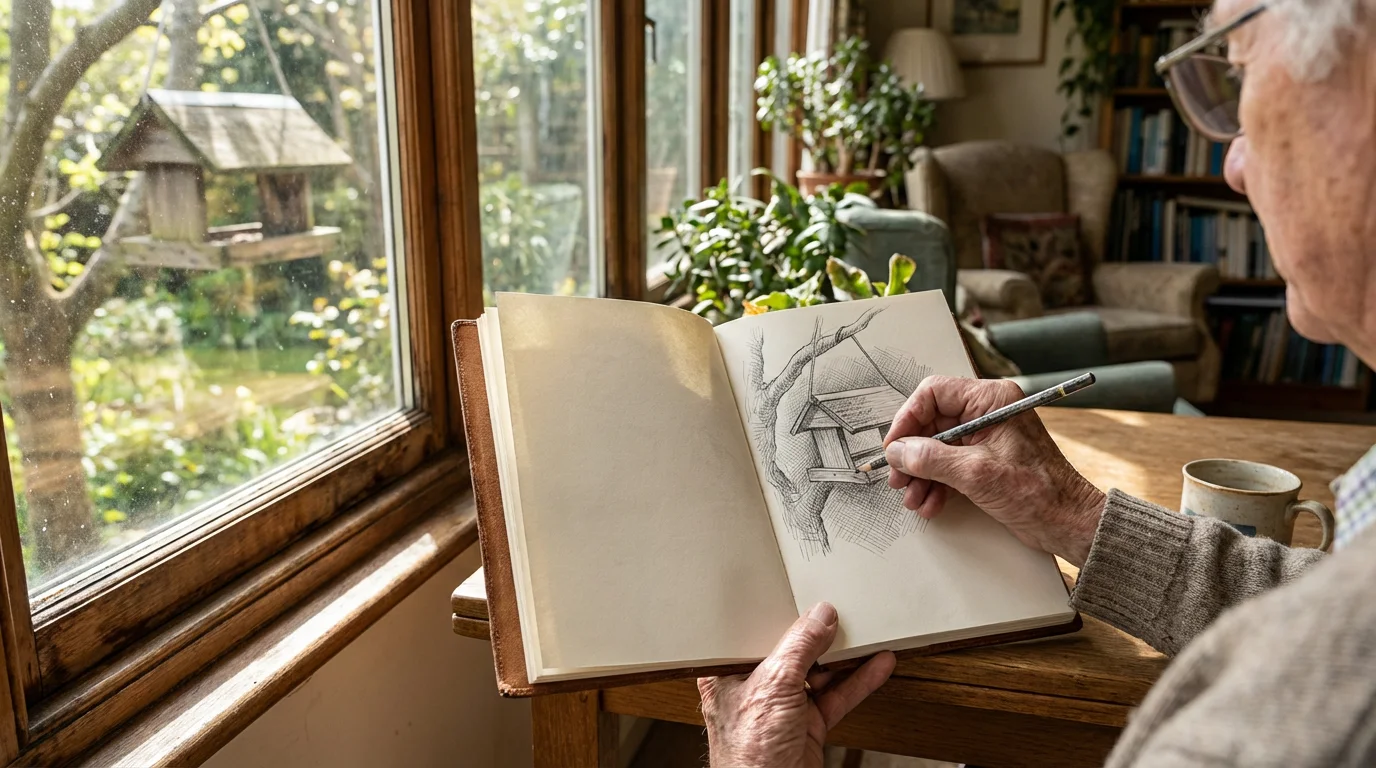
Sketching as a Path to Presence and Mindfulness
In a world often filled with distractions, sketching offers a powerful antidote. It demands your full attention, drawing you into the present moment with a singular focus. This inherent quality makes sketching an exceptional practice for cultivating mindfulness.
When you are sketching, your mind quiets. Worries about the past or future fade as you concentrate on the curve of a leaf, the interplay of light and shadow, or the texture of a building. You become fully immersed in the act of observation and creation. This sustained focus acts as a form of active meditation.
The benefits extend beyond the drawing itself. Regular engagement with mindful activities like sketching can reduce stress, enhance focus in other areas of your life, and foster a deeper appreciation for your surroundings. Your retirement years are the perfect time to cultivate such enriching practices.
Embrace sketching as more than a hobby; see it as a tool for living more fully, more present, and more creatively in every moment.
Frequently Asked Questions
Is it ever too late to start sketching?
Absolutely not! Many people discover their passion for art later in life. Your retirement years offer the perfect opportunity to begin, free from the pressures of work schedules. Your life experience and unique perspective will enrich your artistic endeavors immensely. There is no age limit on curiosity or creativity.
What are essential sketching supplies for beginners?
You truly need very little to begin. A good quality sketchbook, a few graphite pencils (like 2B, HB, 2H), an eraser (kneaded and plastic), and a small sharpener form an excellent basic kit. You can always add fine-tip pens or portable watercolors later as your interest develops.
How can I improve my sketching skills if I feel I have no natural talent?
Talent is often a myth; practice, observation, and persistence are the real keys. Focus on consistent effort. Take online tutorials, join a beginner’s art class, or simply sketch what you see every day. The more you practice drawing techniques, the more your skills will grow. Remember, improvement is a journey, not a destination.
Are there health benefits to senior sketching?
Yes, absolutely. Engaging in creative activities like sketching offers numerous cognitive and emotional benefits. It enhances hand-eye coordination, sharpens observational skills, reduces stress, and promotes mindfulness. These activities contribute significantly to overall brain health and mental well-being in your retirement years, keeping your mind agile and engaged.
Where can I find inspiration for subjects to sketch?
Inspiration is everywhere! Start with everyday objects around your home: a coffee cup, a plant, or the view from a window. Venture into local parks, gardens, or cafes. When traveling, sketch landmarks or street scenes. The key is to look closely and observe the details, allowing your curiosity to guide your choice of subject.
Disclaimer: This article is for informational and inspirational purposes. Life decisions are deeply personal, and we encourage readers to pursue their dreams while considering their unique circumstances, health, and financial situation.



Leave a Reply